Australia’s top five animals might not be ‘big’ but they are mighty. And seeing these iconic animals in the wild on beautiful beaches or bush walks is as awe-inspiring as it gets.
1. Koala, Magnetic Island, Qld
Spot wild koalas high in the veil of branches against a blue sky in the gum trees lining the picturesque Forts Walk. Magnetic Island (Yunbenun) is home to northern Australia’s largest colony of wild koalas.
You can see them here curled up like rolls of carpet, asleep in the crooks of trees. Or moving slowly in single-minded grace to graze on gum leaves. While local star Rod the Cod is a draw for divers visiting Magnetic Island, fans of the Netflix series Izzy’s KoalaWorld will be hoping it’s the herbivorous marsupials making cameos.
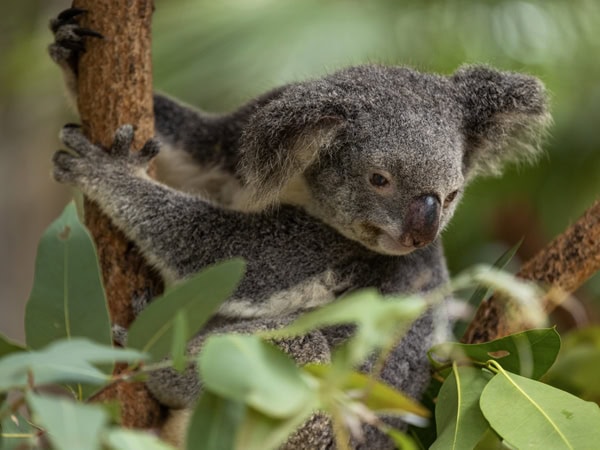
Spot wild koalas high in the veil of gum tree branches. (Image: Tourism Australia)
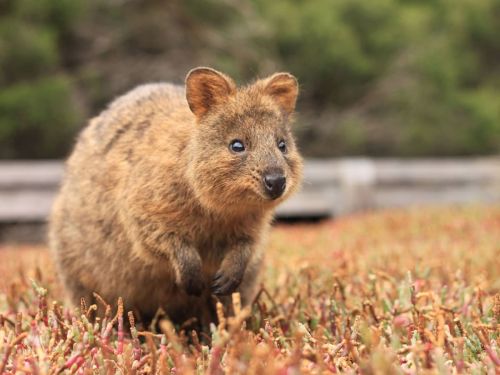
2. Quokka, Rottnest Island, WA
It’s simply not possible to reach peak quokka. The world’s happiest animal remains a beacon for visitors to Wadjemup (Rottnest Island) who come for the cute marsupials and stay for the carefree (and car-free) Rotto vibes.
These adorable animals are only found off the coast of Perth and are best known for becoming a social media sensation, posing with a cute grin for the camera.
The ultimate main character move in 2024 is to go to Rotto and clock a quokka without posting it to your Insta feed. Go on, we dare ya.
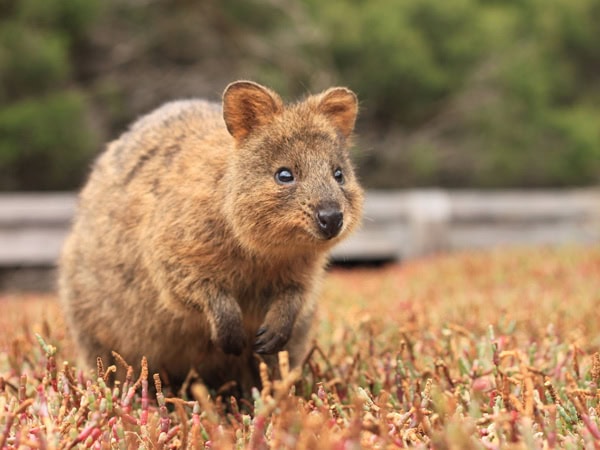
Meet the world’s happiest animal on Rottnest Island. (Image: Tourism Australia)
Need tips, more detail or itinerary ideas tailored to you? Ask AT.
AI Prompt
3. Wombat, Maria Island, Tas
Did you know that wombats can sprint up to 40 kilometres an hour? Or that they produce cube-shaped poo?
You will feel like you’re in an episode of BBC’s Planet Earth when wandering around Maria Island’s chiselled landscape looking for the endemic Tasmanian wombat. This species is smaller than its mainland mates and has a diverse habitat that stretches from the coast to the alpine areas of Australia’s most southern state.
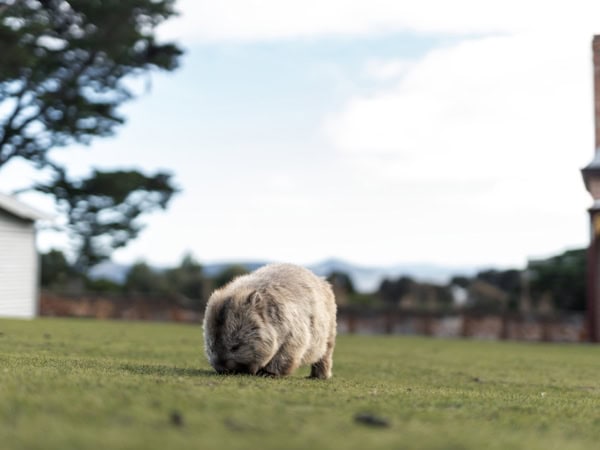
Wombat’s are faster than you think… (Image: Tourism Australia)
4. Kangaroo, Pebbly Beach, NSW
Spotting roos through the canvas mesh of your tent at Pebbly Beach Campground is as iconic as it gets. It’s easy to spot the resident herbivores hunched over the grass that encircles the beach in Murramarang National Park.
The best time to see kangaroos on NSW’s Pebbly Beach is at dawn and dusk when the sea and the sky become one. Sometimes you will see the macropods using their long muscular tails and hind legs to bound across the sand. Other times you will see a baby Joey cradled in a mother’s pouch.
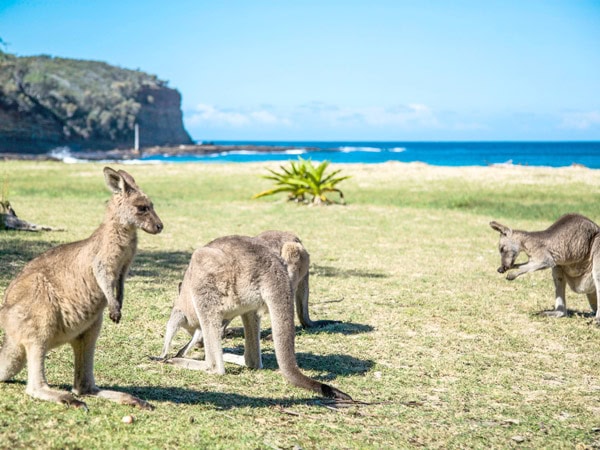
It’s easy to spot the resident herbivores on Pebbly Beach. (Image: Destination NSW)
5. Platypus, Great Otway National Park, Vic
When British scientists first saw the platypus in the late 18th century, some of them were said to have thought the specimen was a hoax. Yes, this native Australian monotreme appears most extraordinary, with the beak of a duck seemingly grafted onto the head of a four-legged animal.
It’s one of many reasons why spotting these endangered creatures in Victoria’s Great Otway National Park is such a thrill. While your ecologist guide at Otway Eco Tours can’t guarantee you will see platypuses in the wild on a canoeing tour, they have a 95 per cent success rate.
This native Australian monotreme appears most extraordinary. (Image: Getty Images/phototrip)
Carla Grossetti has written across print and digital for Australian Traveller and International Traveller for more than a decade and has spent more than two decades finding excuses to eat well and travel far. A prestigious News Corp cadetship launched her career at The Cairns Post, before a stint at The Canberra Times and The Sydney Morning Herald gave way to extended wanders through Canada, the US, Mexico, Central America, Asia and Europe. Carla was chief sub editor at delicious and has contributed to Good Food, Travel & Luxury, Explore Travel, Escape. While living in London, Carla was on staff at Condé Nast Traveller and The Sunday Times Travel desk and was part of the pioneering digital team at The Guardian UK.
Thredbo in summer is a nature lover’s dream of show-stopping alpine beauty, cool mountain air and magical moonlit adventure.
For many of us, Thredbo calls to mind shimmering slopes and snow-dusted gums, but come summer, this Alpine resort transforms into a playground of an entirely different kind. A cool mountain retreat despite the season, Thredbo summer hikes are astonishingly beautiful, criss-crossing over dramatic peaks, pristine glacial lakes and abundant flora and fauna.
From approachable tracks for novice walkers to more challenging hikes across the Main Range and even journeys under moonlight, Thredbo puts on an unforgettable show of natural splendour all summer. Lace up your walking boots and take the chairlift from Thredbo village to embark on a self-guided exploration or a tour of the Snowy Mountains’ most compelling landscapes.
These eight unforgettable hiking experiences are only available in summer and offer an alpine adventure like you’ve never experienced before.
1. Full Moon Hike to Mt Kosciuszko
Stand atop Mt Kosciuszko at full moon.
There’s something almost mystical about hiking by the light of a full moon. This guided experience begins with a 15-minute chairlift ride, where you’ll admire the Thredbo Valley below, bathed in the fading sun.
Once at the top, you’ll pass rivers, alpine lakes and spot nocturnal wildlife on your way to the Kosciuszko Lookout and Lake Cootapatamba. By the time you reach the summit, sunset is well underway as you watch day give way to night and the alpine landscape magically illuminated by the lunar glow. Enjoy a hot chocolate here before following the path back to Eagles Nest, brightened by the night sky.
The only thing that could level up the celestial beauty of a full moon hike would be a super full moon hike. Following the same route, you’ll meet the moon when it is largest and closest to Earth by ascending to the summit of Mount Kosciuszko at an elevation of 2228 metres. From such a height, it almost feels as though you could reach out and touch its glowing surface.
Given the rarity and splendour of the super full moon, limited spots fill up fast for this awe-inspiring hike, so be sure to book the 5 December in advance.
3. Lunar Eclipse Hike
See dazzling celestial displays.
What could be more extraordinary than witnessing a lunar eclipse from Australia’s highest peak? Whether you’re a keen astronomer or simply revel in nature’s beauty, this guided 13-kilometre hike will place you on top of Mount Kosciuszko just as Earth passes between the sun and moon, throwing shade over the lunar surface before transforming it with a deep-red hue.
It’s an epic place to witness one of our galaxy’s most spectacular and rare light shows. Apart from the dazzling celestial display, you’ll also enjoy walking through the moon-bathed landscape, an evening chairlift ride, and a hot chocolate at the summit.
Book now for 3 March.
4. New Moon Hike
Catch the changing skies of a new moon.
A stargazer’s delight, the darkness of a new moon gives the Milky Way full permission to dazzle with its shimmering display. Both astronomers and photographers will relish this opportunity to observe and capture the starry skyscape from the lofty height of Australia’s highest peak, Mount Kosciuszko. Departing Thredbo Village at dusk and leaving its twinkling lights far below, you’ll arrive at the summit in time to see the sun slip away and the stars appear.
Embark on a gentle entry into the Snowy Mountain scenery with an amble along the Thredbo River. This self-guided hike hugs the river and wanders along the valley floor, revealing snow gum forests, swimming holes and little waterfalls that make for revitalising cold plunges in the summer heat.
6. Merritts Nature Track
Stop at swimming holes along the way.
On warm summer days, venturing into the cooler air of Thredbo’s alpine tracks offers relief from the heat. Particularly if you set course for the four-kilometre Merritts Nature Track, where there are opportunities to take a refreshing dip in swimming holes along the way.
The two-to-three-hour self-guided hike meanders through towering ancient trees (dubbed the ‘Pixie Forest’ by locals), takes in stunning mountain vistas and is soundtracked by the melody of birdsong. Stop for a picnic and discover a hidden natural infinity pool, the location of which is given away by the roar of a cascading waterfall.
7. Mt Kosciuszko Summit Tour
Follow a guide along Mt Kosciuszko’s summit.
While you can easily steer yourself to Australia’s most iconic peak without a guide, following an expert guide to the summit of Mount Kosciuszko will colour your experience with a deeper knowledge of the landscape and its wild inhabitants. The 13-kilometre return trail puts the alpine scenery on display with 360-degree views from the highest spot in the country.
The walk begins at the top of the Kosciuszko Chairlift and takes around four to six hours to complete, but is gentle enough to be embarked upon by all ages.
8. Snowies Alpine Walk Experience
Join a two- or three-day experience along Snowies Alpine Walk.
If you’re looking to truly untether from daily life and embark on a real immersion in Thredbo’s stunning alpine scenery, pack your hiking boots for the newest multi-day walk in the mountains. The Snowies Alpine Walk can be tackled over two or three days and includes nightly accommodation in the iconic Thredbo Alpine Hotel, daily buffet breakfast, packed lunch and dinner vouchers, plus daily transfers to and from trail heads in a brand-new Defender.
The two-day experience covers 24 kilometres, while the three-day experience almost doubles that at 44 kilometres. Along the way, explore barely trod landscapes, vast high-country plains and uplifting mountain horizons.