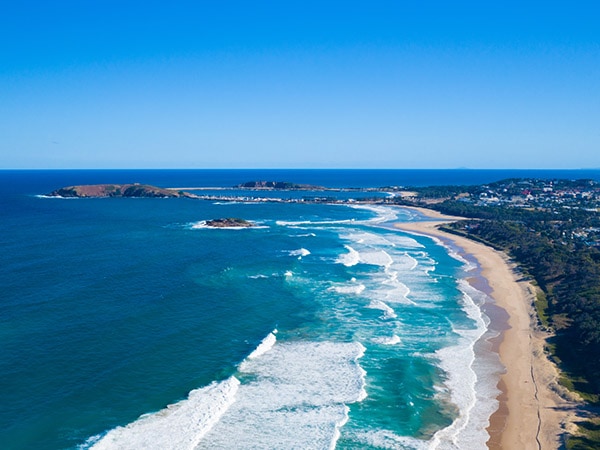
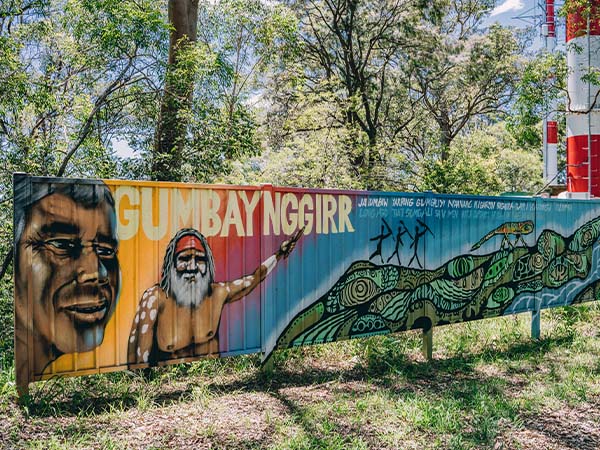
The revival of Gumbaynggirr language has been central to the strong cultural identity evident in the local Indigenous community on the Coffs Coast/Gumbaynggirr Country.
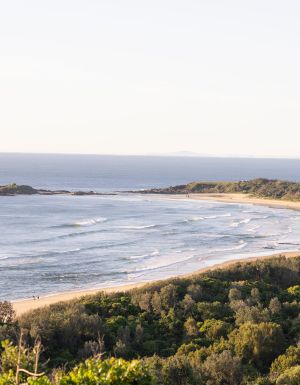
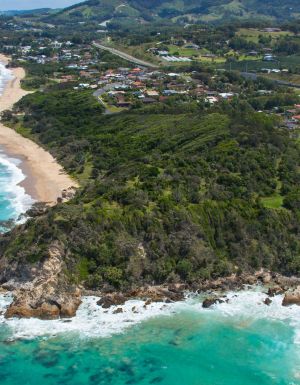
No gaze could be more gentle than that of Uncle Barry Hoskins as he stands in the grassy clearing near Niigi Niigi/Sealy Lookout overlooking the Coffs Coast in Gumbaynggirr Country on the NSW Mid North Coast. The 69-year-old is a proud Gumbaygnirr man, who grew up on a nearby mission and whose mum was a member of the Stolen Generations.
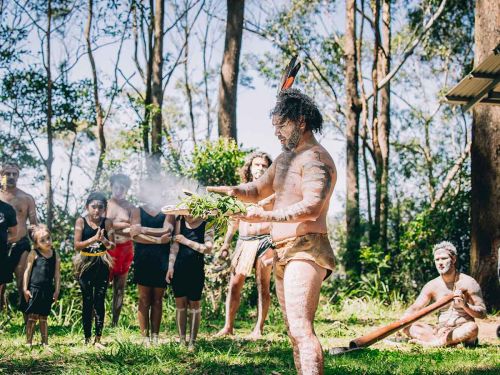
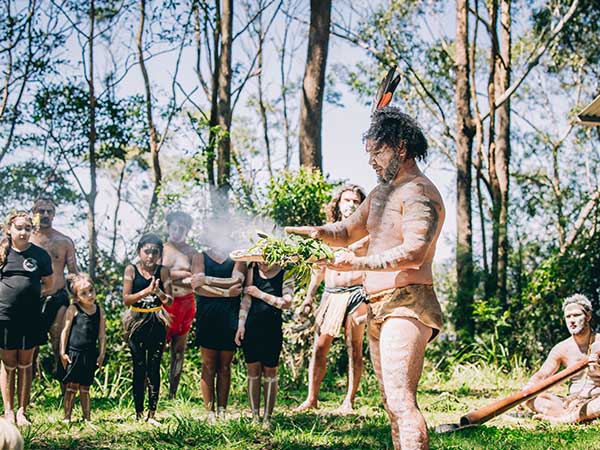
“Giinagay ngiinda? How are yas? Yaam ngaya ngulungginyay. I am a Gumbaynggirr Elder. Yaam nganyundi wajaarr. This is my Country." Standing behind Uncle Barry is Nathan Brennan, one of the 20-strong members of the Wajaar Ngaarlu Dancers, who sets a pile of fragrant lemon myrtle leaves alight and invites visitors to “scoop the smoke" from the smouldering coolamon (wooden vessel) to “clear the mind, body and spirit".
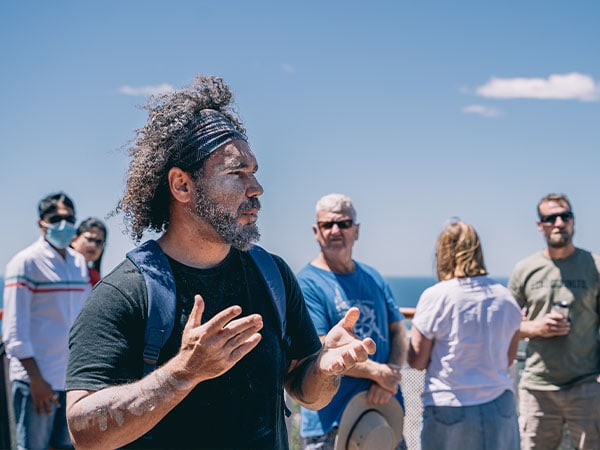
Clark Webb, CEO of Bularri Muurlay Nyanggan Aboriginal Corporation (BMNAC), invites Uncle Barry to deliver the ‘Welcome to Country’ as both a mark of respect and a way to provide the local elder with the opportunity to practise culture, a right he and so many of his fellow Indigenous Australians had been denied for decades. Bularri Muurlay Nyanggan translates to ‘two-path strong’, which nods to Webb’s goal when he established the not-for-profit corporation in 2010 to be “strong in culture, strong in education".
After performing the ‘Welcome to Country’ for the 30-odd visitors gathered around the grass clearing in Orara East State Forest to enjoy the Giingan Gumbaynggirr Cultural Experience, Uncle Barry closes his eyes as if peering back into his past.
“As a young fella growing up on the mish [mission] here, we didn’t have access to culture. There was no culture. No tool making. No dancing. No singing. No language. But thanks to the efforts of the young Indigenous people here today we are bringing back our culture, while also sharing insights into the real history of Australia," Uncle Barry says.
“I learned more about culture from these young fellas than I did when I was a kid as it simply wasn’t allowed," he explains.
Rebuilding a lost language
Uncle Barry says the way of life for the Gumbaynggirr people of the Coffs Coast region had been all but destroyed when they were forbidden to speak their local dialect, conduct ceremonies or use traditional medicines. In fact, hundreds of words and stories may have been lost forever if it weren’t for the discovery, in 2002, of notes made by American linguist Gerhardt Laves, which have become integral to the partial rebuilding of the Gumbaynggirr language.
The University of Chicago postgraduate student visited the Coffs Harbour region to analyse and study Australian Indigenous languages between about 1929 and 1931. Laves’ linguistic notes and stories, some of which were waterlogged, and damaged by mould, were digitised and donated to the Australian Institute of Aboriginal and Torres Strait Islander Studies (AIATSIS) library.
It’s not without controversy that the Papers of Gerhardt Laves include annotations about mourning customs and sacred sites as well as the detailed language cards. But Webb says the Papers also contain stories of ‘the first canoe’, a ‘sea story’, a ‘grass story’ and a ‘moon story’ – all songlines being revitalised during the monthly cultural tours, which include performances by the Wajaar Ngaarlu Dancers.
Webb says while the wounds of the past often surface during his tours, they also provide a way to connect with the broader community and preserve his people’s stories and songlines.
“These songlines exist in the landscape where we walked and travelled and met and told stories on," says the 37-year-old, who is set to open NSW’s first bilingual Aboriginal language school in February 2022 and to expand on not-for-profit BMNAC’s offerings with the construction of an eco-resort with 30 glamping sites.
“I want to ensure our Aboriginal youth are strong in their identity and achieve educational success through our learning centres and cultural camps. The vision is for the eco-resort to provide another dedicated space for cultural experiences on the Coffs Coast [NSW’s first ECO Destination] and to create a long-term sustainable financial income stream," he says.
Need tips, more detail or itinerary ideas tailored to you? Ask AT.
AI Prompt
Rituals Bond Community
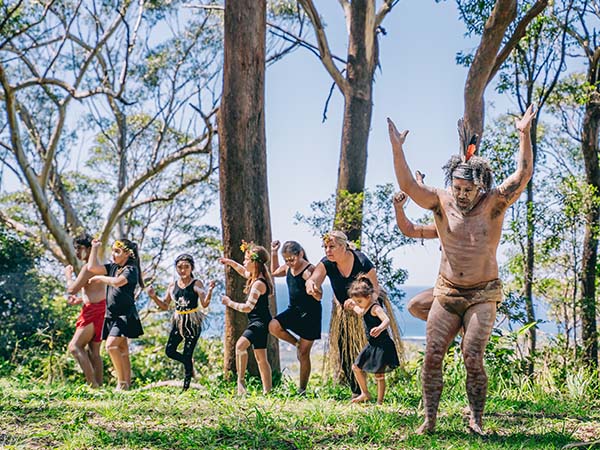
As Webb bends down to tend the fire, Brennan starts to hiss through his teeth, while the troupe of dancers turn and twist behind him, telling the story of the first train that ever arrived in Armidale on 2 February 1883.
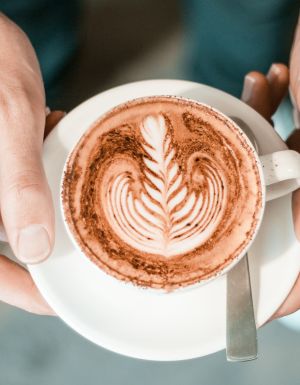
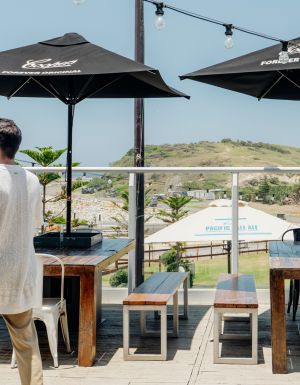
The dancers set the scene and we listen, in awe, to the stories surging up from their ancestors. As well as dancing on Country, this unforgettable and immersive cultural experience includes a guided talk down the Gumgali Track and a visit to Indigenous- run Nyanggan Gapi cafe located at Niigi Niigi/Sealy Lookout in the eco-tourism certified precinct of Bruxner Park Flora Reserve, near to where the planned eco-resort will be built.
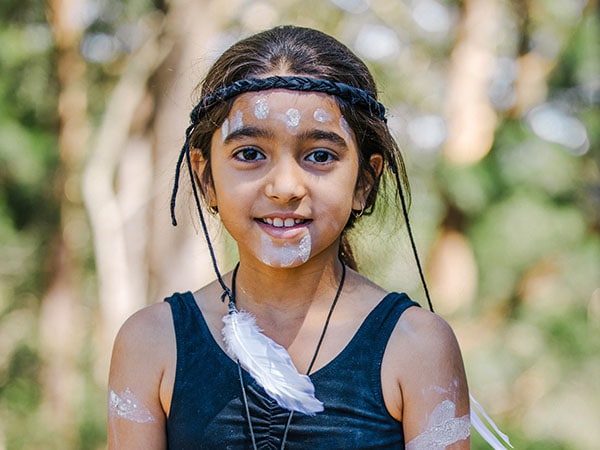
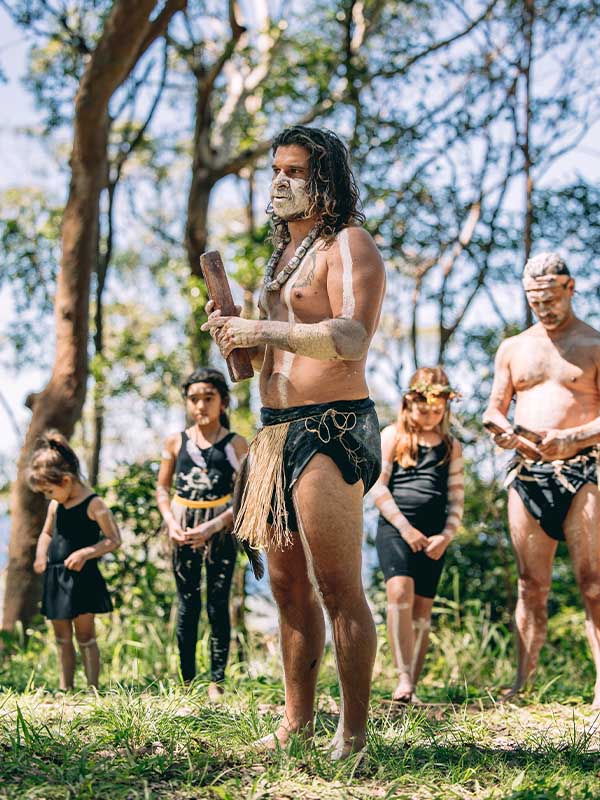
After a smoking ceremony amid the gums, which stand their ground around the space, Brennan and Webb – who share a common ancestor – are followed around by a procession of sisters, brothers, aunties and children who are all adorned with clay-white body paint. Brennan – who, at 38, is the CEO of the Coffs Harbour and District Aboriginal Land Council – then takes a few steps forward and back, and smiles at the children who strive to keep pace and emulate his moves. As the soft light pours through the trees, Brennan then gathers the young children by his side as he addresses the audience.
“After 60,000 years of knowledge I simply refuse to be the broken link," he says. “I want my legacy to be one of learning and to leave the next generation feeling hopeful."
Multi-generational Voices
Brennan says the Gumbaynggirr people were traditionally known as ‘the sharing people’ because their Country was a place of plenty and that generosity is evident today as they share language, songs, stories, dances and ceremonies that are central to their identity. As the dancing continues, the crowd laughs as the most diminutive member of the troupe is swallowed up in a tangle of limbs as the children kangaroo hop toward the crowd, to the rhythm of the clapsticks.
All around there are children in summer hats, TAFE students with pen and paper, taking notes, tourists sitting on camp chairs and local families spread out on blankets. As if on cue, a gaagum (kookaburra) flies to a branch above the makeshift stage and laughs as Uncle Barry smiles and says, “That is one of our ancestors".
After hearing Dreaming stories of how the gaagal (ocean), juluum (mountain) and bindarray (river) were formed on Gumbaynggirr Country, we follow Brennan on an interpretative walk to Korora Lookout to hear Creation stories of how the land was made and how the yugiirr (dolphins) worked with the local Indigenous people to herd the fish to shore.
As the bush brims with birdsong, Webb stops and, with all the drama and timing of a poet, pauses and addresses the group: “Yaam darruy nginumbala gayigu (It’s good to speak with you)." And with that, the air feels charged, as these ancient words, stories, songlines start to pulse through the land once again.
Weekly travel news, experiences
insider tips, offers, and more.
A traveller’s checklist
Getting there
Virgin Australia has re-introduced services from Sydney to Coffs Harbour. Flights from Melbourne will resume late March. You can book a flight at virginaustralia.com
Playing there
To learn more about the Giingan Gumbaynggirr Cultural Experience, visit bmnac.org.au; experience Gumbaynggirr culture on the water with a Wajaana Yaam Sup tour; or get active with C-Change Adventure Kayaking.
Green light: NSW’s first Eco Destination
The Coffs Coast is NSW’s first accredited Eco Destination, with the Mid North Coast region recognised for its certified sustainable destination management practices. Wajaana Yaam Gumbaynggirr Adventure Tours is one of six ECO-certified operators and experiences that bolstered the Coffs Coast’s credentials to be considered a destination for conscious travel. What this means for responsible travellers is they can travel here knowing there are sustainable tourism experiences on offer and they can leave a lighter footprint.
Want to see more stories from Australian Traveller in your Google search results?
- Click here to set Australian Traveller as a preferred source.
- Tick the box next to "Australian Traveller". That's it.