A recent addition to Luxury Lodges of Australia, Bullo River Station offers a window into life on a working NT cattle station, where outback hospitality meets untold adventure.
All is calm at Bullo River Station as I sip my sundowner while gazing out across the homestead’s well-tended lawn. Brahman cows graze in a paddock beyond. On the horizon, the contours of a craggy range place this otherwise pastoral scene squarely within the rugged outback. The sky unrolls before me like a sheet of blotting paper suffused with orange, pink, purple and blue.
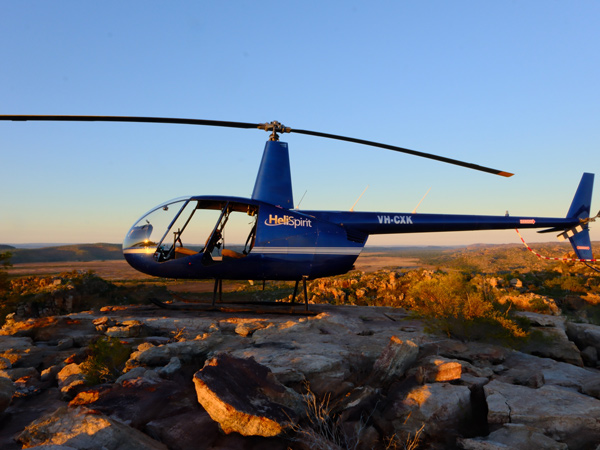
As if out of nowhere in the evening stillness, a chopper roars into frame. It lands just over the fence and, blades whirring to a stop, unloads two of our fellow guests.
Hair still drying from a wild swim at a waterfall and fresh from a spectacular sunset, they are breathless and exhilarated and apologise for disrupting the peace of our pre-dinner cocktail hour. But I know the feeling.
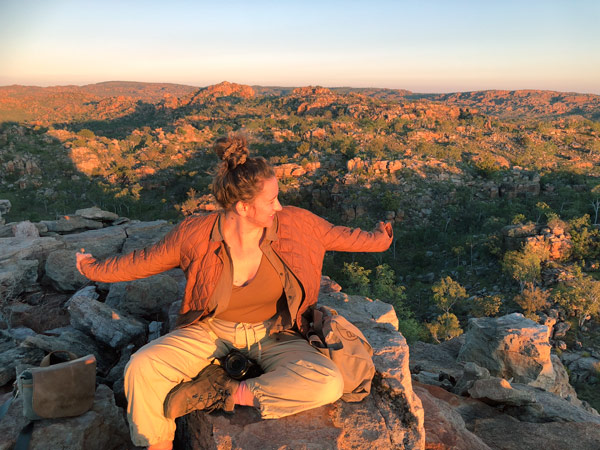
Just this morning, my partner and I had swooped back into the same spot ourselves, windswept and giddy from a helicopter adventure with pilot Harry Shaw. We’d taken off from the station in the early twilight and within minutes were soaring above a wilderness of broken sandstone.
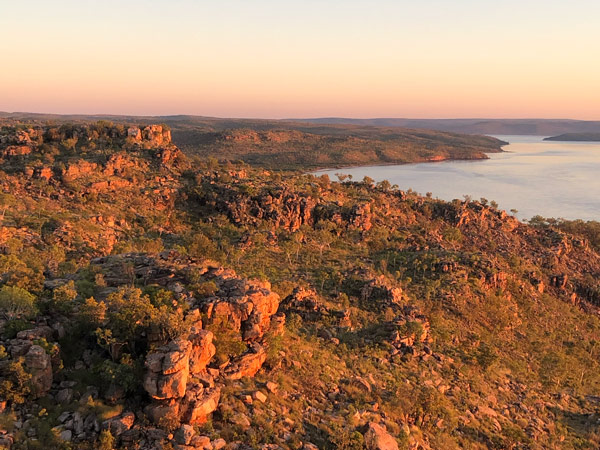
“We’re just going to come in and land on one of these pinnacles over here," Harry had said with the casualness of someone laying out a picnic rug, before executing it with the same level of ease. We hopped out of the chopper in time to watch the sun come up over the magnificent landscape just 200 kilometres south of the Timor Sea.
A location unlike any other
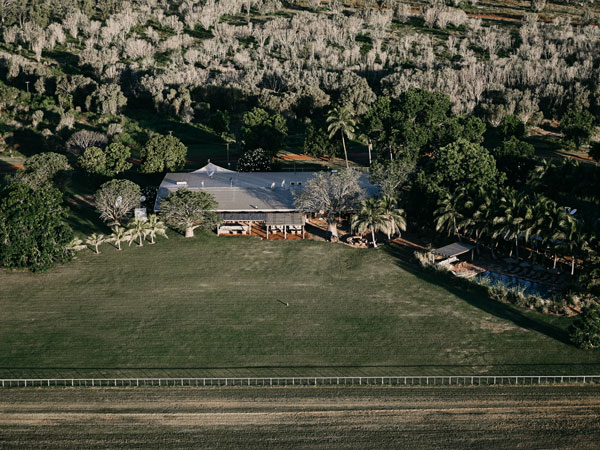
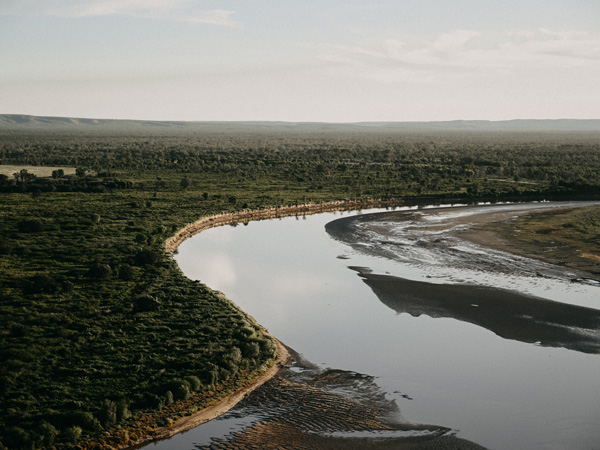
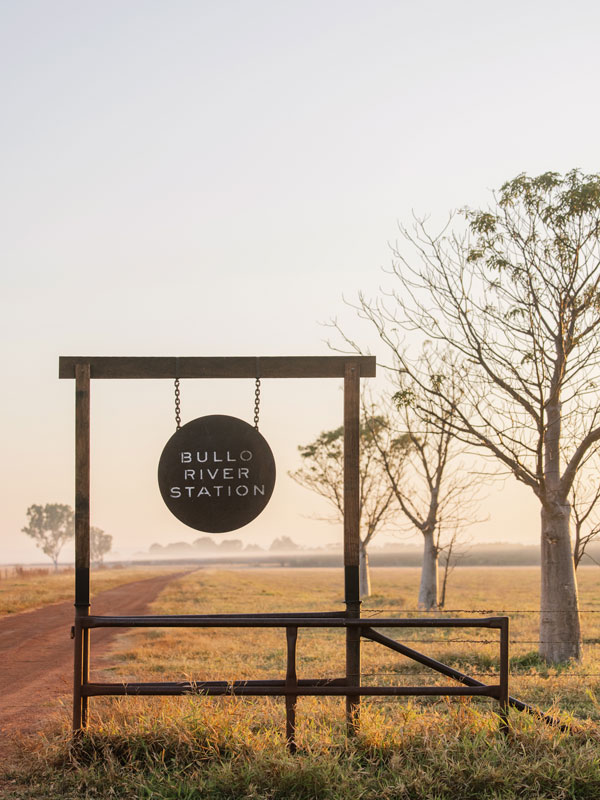
Bullo River Station is a working cattle station set on more than 160,000 hectares of privately owned countryside at the confluence of the Bullo and Victoria rivers.
A journey here defines the concept of ‘luxury of experience’ but defies just about everything else – from convention to geography. Technically in the Northern Territory, locally considered part of the Kimberley and traditionally Miriwoong and Gajirrawoong Country, it occupies its own unique time, space and place.
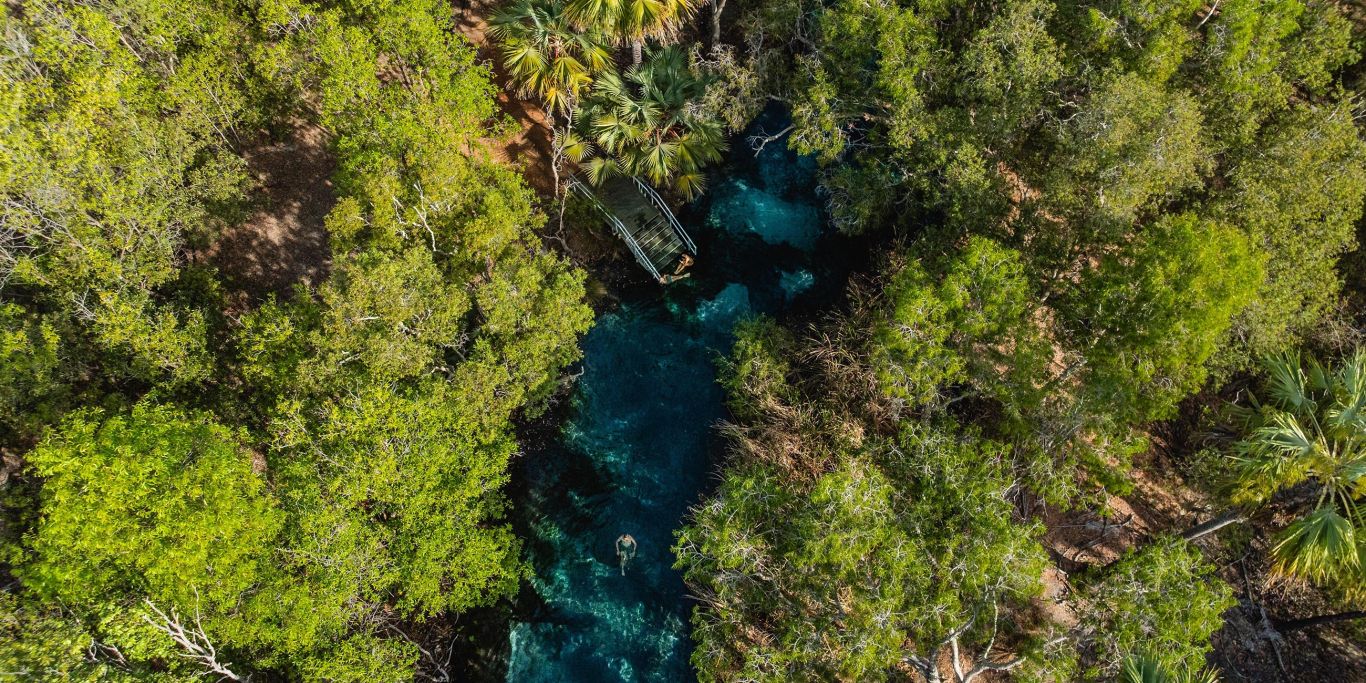
Seeing it from above – as we did this morning and on our air transfer from Kununurra two days ago – gives the best perspective of an epic landscape carved and braided by gorges and waterfalls.
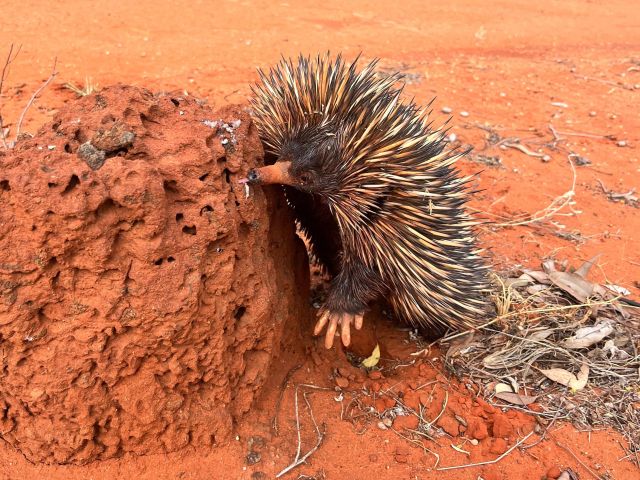
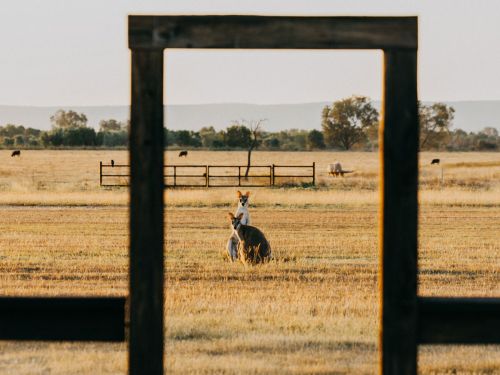
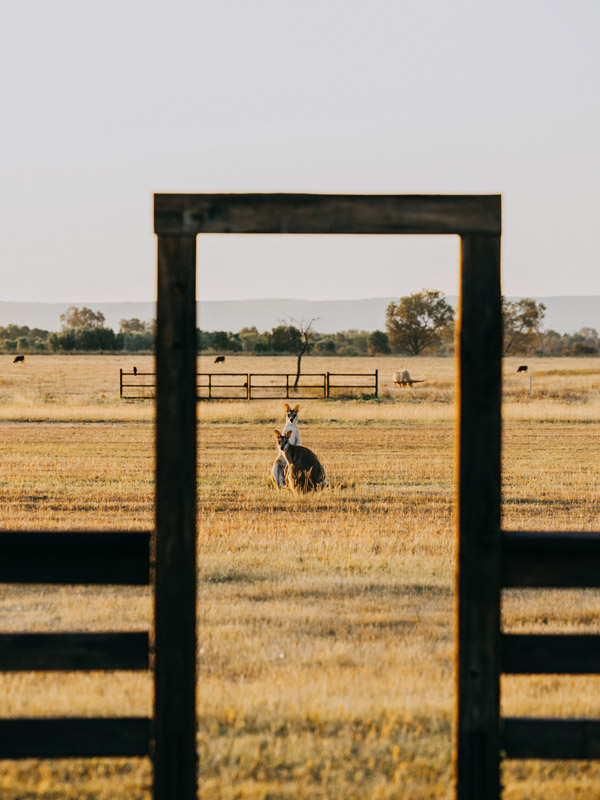
Here, saltwater crocodiles swim in snaking rivers, rugged hills conceal extraordinary rock art and vast grass plains are sprinkled with boab trees. The meeting of saltwater and freshwater creates a diversity of ecosystems harbouring everything from the omnipresent crocs to wild buffaloes, wallabies, dingoes and a cacophony of native and migratory birds.
Luxury Lodges of Australia’s new offering
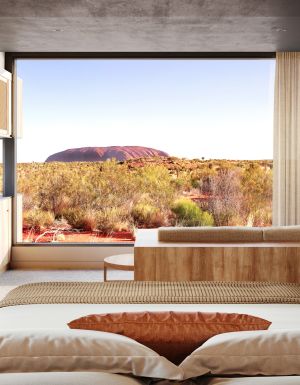
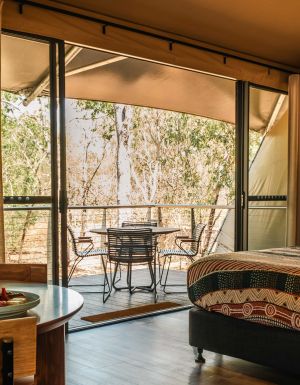
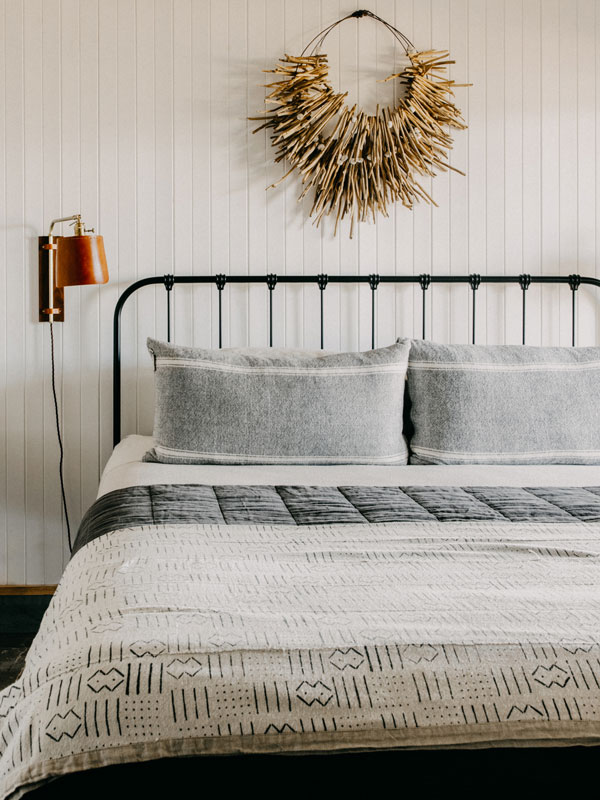
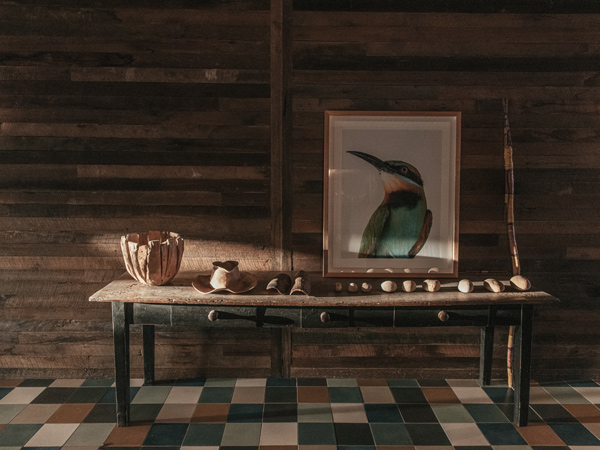
Bullo River Station is one of the most recent additions to the Luxury Lodges of Australia portfolio. And its homestead – kitted out with 12 guestrooms by interior designer Sibella Court with a palette drawn from the landscape – welcomes guests who have a sense of adventure and appetite to observe the workings of a remote outback property of such vast proportions.
They might have heard of a chapter of Bullo River Station’s earlier history: Sara Jane Henderson became a household name after she published her autobiography, From Strength to Strength, in 1993, which documented how she successfully rebuilt the indebted station following her husband’s death. It was Sara’s daughter, Marlee Ranacher, and her husband, Franz, who opened it up to tourism in 2001.
Current owners Alexandra Burt, proprietor of Voyager Estate in the Margaret River wine region, and husband Julian, bought the property in 2017 and have set it on a path towards transformation again.
Their groundbreaking new approach to land management has already seen cattle numbers reduced to assist with the rehabilitation of land and some grazing areas returned to native bush to increase wildlife populations. A collaboration with the Australian Wildlife Conservancy sees projects conducted onsite such as scientific biodiversity monitoring, research, weed control, planned burning and feral herbivore management.
The vision is one where pastoral activities and conservation can thrive side by side, combined with a low-impact tourism experience that will be enhanced further still when a sensitive redevelopment of its homestead and guest wing, again under the design direction of Sibella Court, is completed in time for the 2027 season.
Need tips, more detail or itinerary ideas tailored to you? Ask AT.
AI Prompt
A station full of adventures
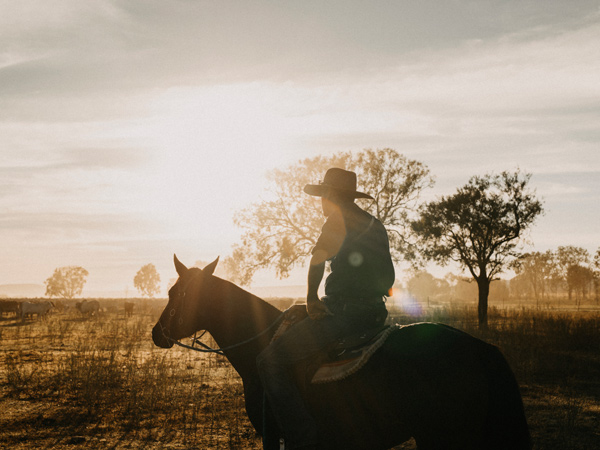
Each day at Bullo is seamlessly tailored as a series of adventures, buffered by enough moments of pause – a meditative moment, coffee and fresh-baked cookie in hand, or an hour in repose by the palm-fringed pool – to let the red dust we’ve kicked up settle and the experiences sink in.
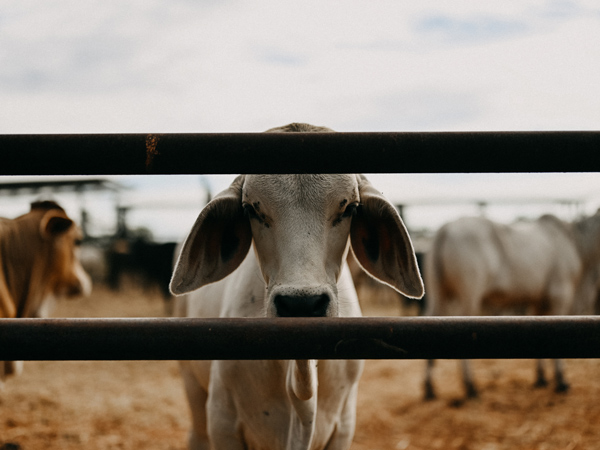
A station tour offers a window into life on the land, from the cattle yards cleverly designed by station managers Joe and Catherine Atkins to help manage a 2000-strong Brahman-cross herd to the best-practice methods employed to ensure Bullo River Station is as self-sustainable as possible.
A meatworks is planned to help achieve this goal and complement a pioneering program of breeding Wagyu bulls with Brahman cows for a quality beef to serve the domestic market.
Huge sheds are given over to solar batteries that produce 80 per cent of the station’s electricity requirements, and an ever-growing kitchen garden roaming with chooks is abundant with rocket, radishes, spinach, sweetcorn, pumpkins, beetroots and more. All of which will end up on the plates of guests, lodge staff and ringers alike.
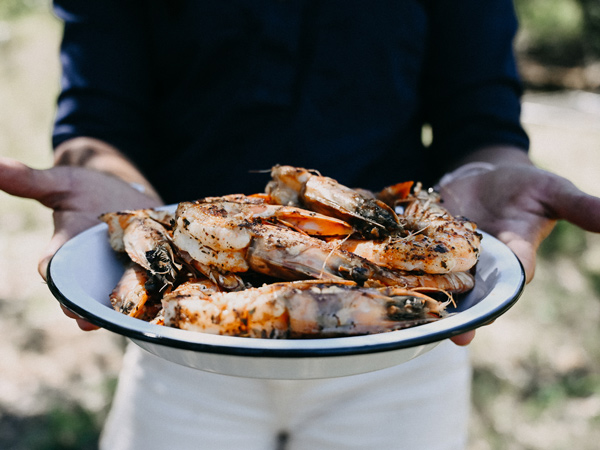
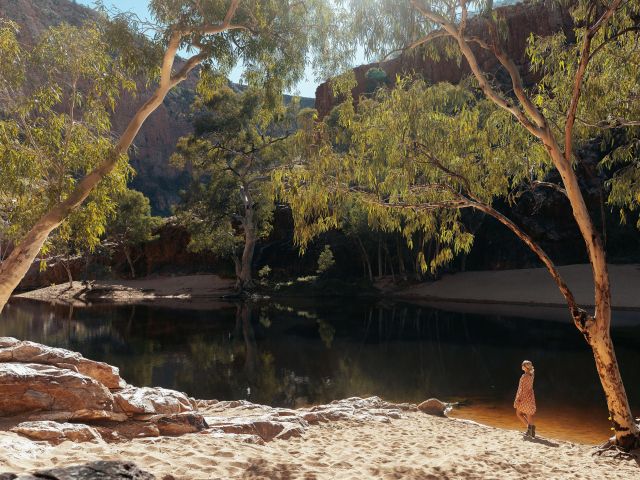
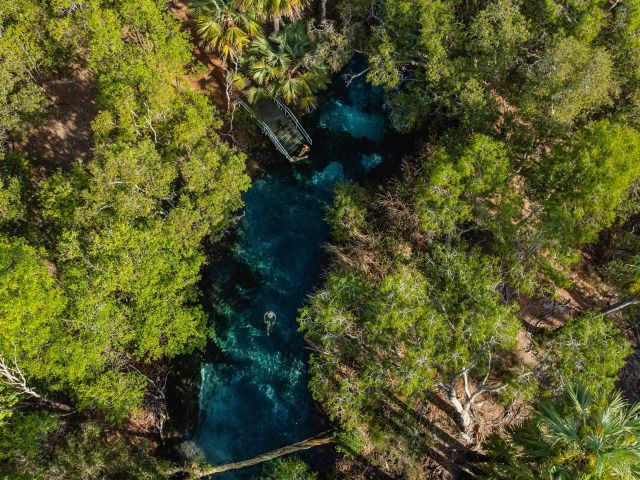
A morning stroll while the mist is low takes us to a billabong where whistling ducks, magpie geese and brolgas convene. During one 4WD jaunt on the property, a stop at Marlee’s Bath, the site of one of Marlee Ranacher’s stock camps, is a chance to cool off in a jewel-like waterhole followed by a barbecue lunch cooked on a cast-iron fire.
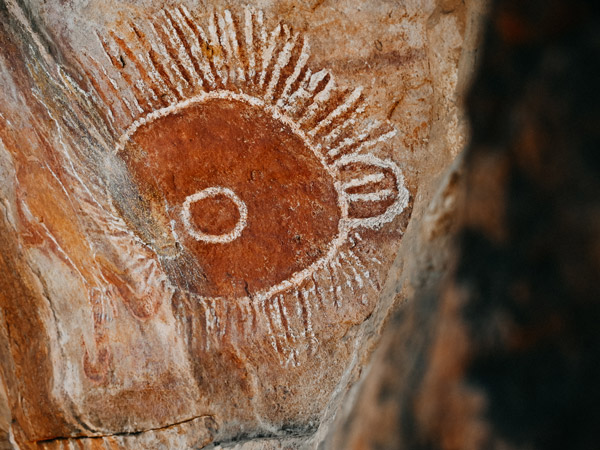
In another moment, a scramble takes us up to hidden rock-art galleries bursting with vivid life that are still being interpreted by the land’s original caretakers, the Miriwoong and Gajirrawoong people.
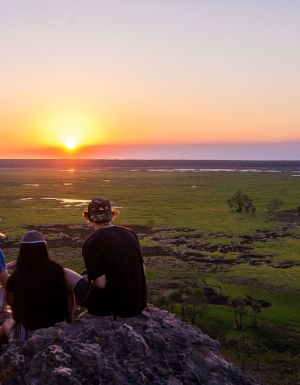
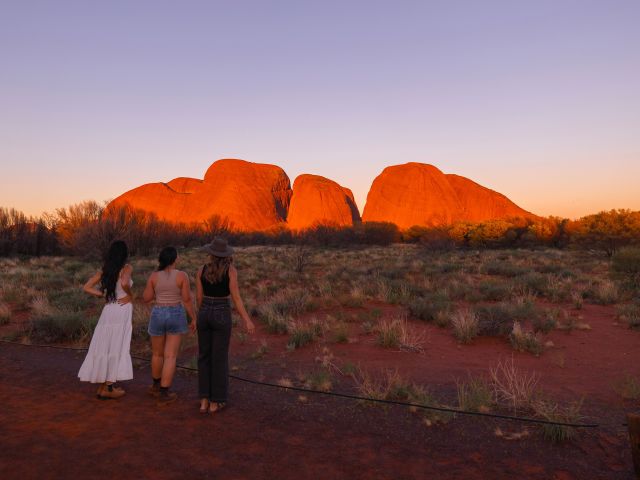
One evening we make our way through bush blooming with flame-red miniata to the edge of an escarpment for a sunset that fills the range of our vision. We toast to the moment with a glass of Voyager Estate 2022 sparkling chenin blanc.
Our experiences are led by spirited guides who share their knowledge of the property with an infectious passion and appropriately wide-eyed awe.
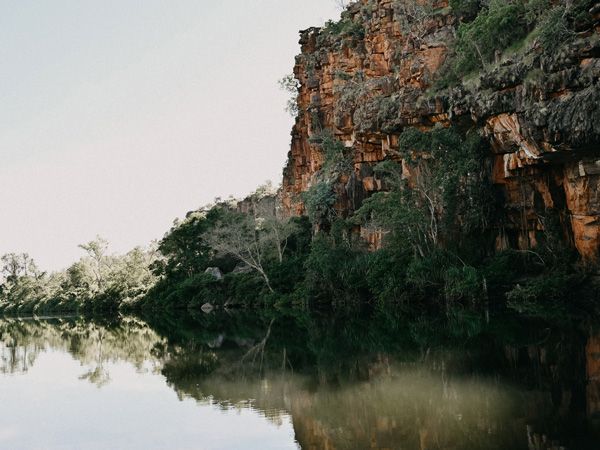
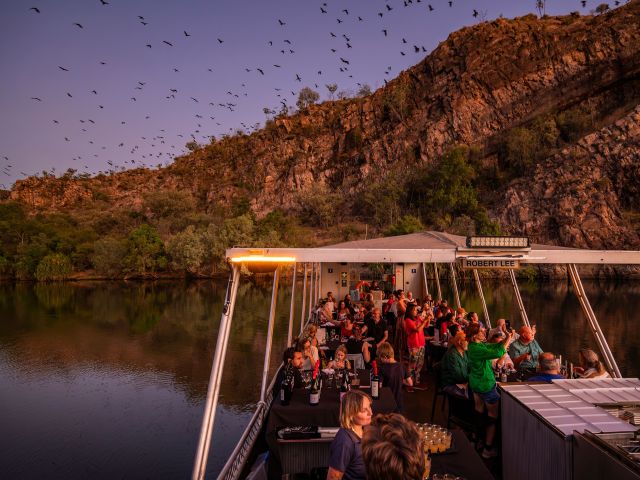
In six months from now, when Bullo has closed to guests for the season, Elizabeth Shoepe will be back home in the snowy wilds of the Pacific Northwest. But for now, she is steering us along the Bullo River in a small electric motorboat, eyes trained for red-winged parrots and rainbow bee-eaters. And she seems in her element.
The river is flanked by freshwater mangroves, paperbarks and pandanus in a shock of lush green redolent of the Top End. And towering over us, those red cliffs that are so very Kimberley; Bullo River Station is a unique location where the two places meet, Elizabeth posits.
Light reflected off the water casts a mirrorball effect on the rock as we round a bend. “I call this Turtle Cove," she says. “A handful of freshwater turtles live here."
Elizabeth dreams of working in remote lodges all around the world and was drawn here because: “I wanted outback. I wanted small and intimate. I wanted a place with a lot of heart." And she got that in spades.
The Bullo philosophy
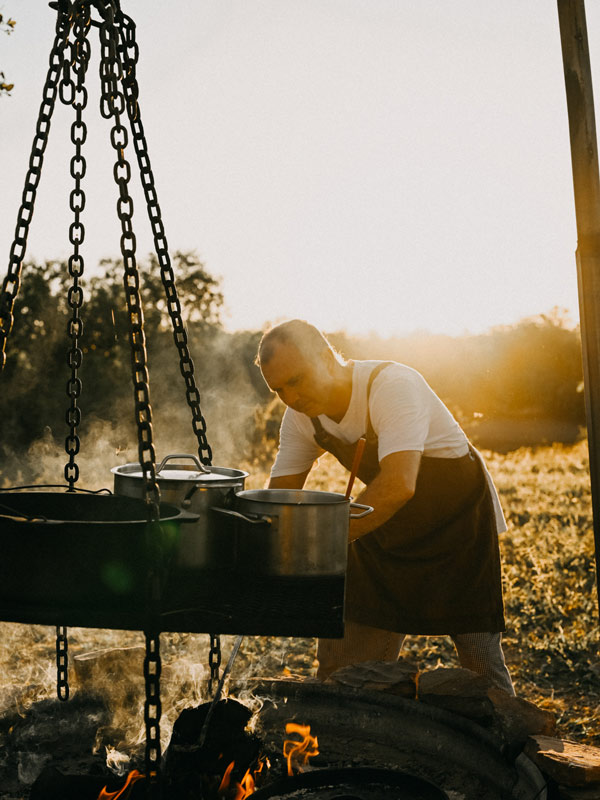
Chef David Rayner nearly took a job in Antarctica – but landed at Bullo River Station instead. Here, the British-born chef, who helped pioneer Australia’s local produce movement with Noosa’s River House two decades ago, and later with Thomas Corner Eatery, has also been in his element.
The Bullo philosophy is all about working with what is available, not least produce growing in the kitchen garden like the rosella we tasted last night, swirled into ice cream made velvety by the addition of freshly laid eggs. “This is how food should be," David says. “Hours old; it’s wonderful."
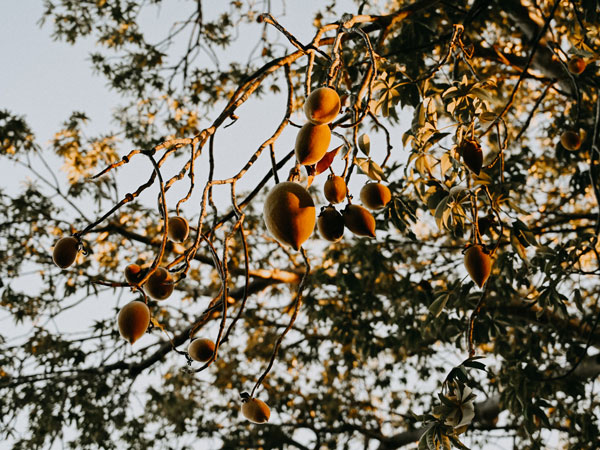
Mangoes drip from the trees in December when the property is closed to guests and will be stored in Cryovac so there is a full supply for the year. Excess tomatoes, eggplants and papayas are made into pickles, chutneys, relishes and jams. Bullo beef is undoubtedly the star of the show.
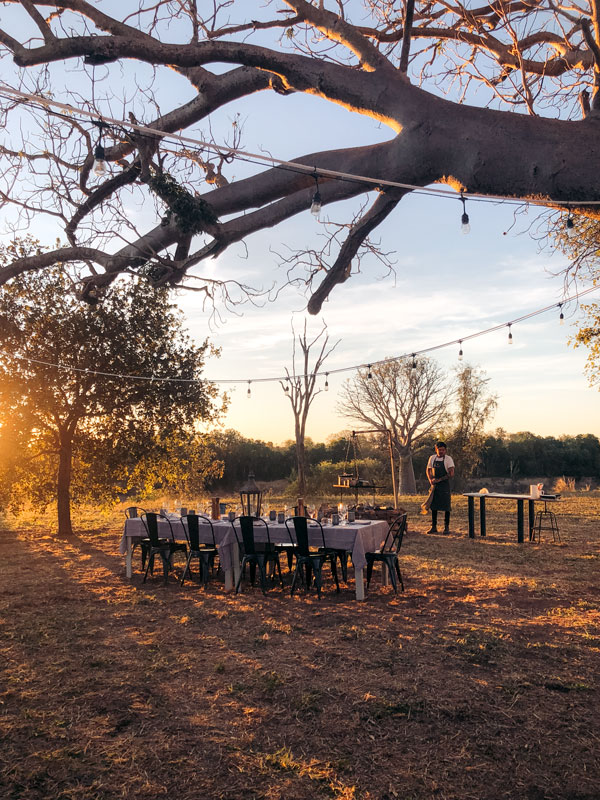
One memorable evening, we gather in the glow of golden hour under the canopy of a majestic silvery boab. As the sun slips away, we settle in for a stockman’s dinner with fellow guests alongside Catherine and Joe, who share stories of modern station life.
There’s damper to start, torn at the table. The slow-braised Bullo beef is served with fire-roasted snake beans fresh from the garden and buttery Paris mash in an authentic if elevated tribute to the stockmen of old.
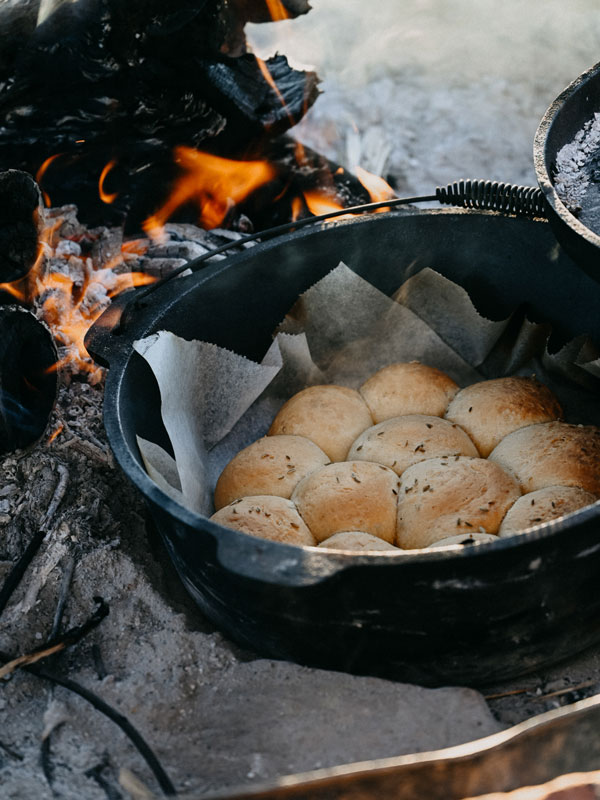
While each travelling party spends the day with their own private tour guide, evenings at Bullo River Station are communal affairs. Cocktails as the kookaburras and corellas trill their dusk chorus. A fresh and hearty meal served with outback hospitality and Margaret River wines.
A nightcap at the fire pit and maybe a spot of stargazing if conditions are right. Evenings are our crossroads of adventure – where we all come together bursting with stories. Like the one about a sunset swim at a waterfall you can only reach by helicopter. If these excursions into the landscape reflect the soul of Bullo River Station, then breaking bread afterwards lies at its heart.
Weekly travel news, experiences
insider tips, offers, and more.
A traveller’s checklist
Getting there
Air transfers provide the best access to Bullo River Station and the chance to see the property from above. A private charter plane to its homestead airstrip takes 90 minutes from Darwin/Garramilla or 30 minutes from Kununurra. Air transfers are also available to/from a number of other locations including El Questro or Bamurru Plains.
Helicopter transfers from Darwin (120 minutes) or Kununurra (40 minutes) can also be arranged. If self-driving through the region, the station can also be accessed by 4WD from the Victoria Highway (road access is not guaranteed at certain times of the year). Allow three to four hours from Kununurra (200 kilometres), seven to eight from Katherine (460 kilometres) and nine to 10 from Darwin (800 kilometres). 4WD hire vehicles can be arranged through Budget or Thrifty at Kununurra Airport.
Staying there
Bullo River Station is a Luxury Lodge of Australia. Its 2025 season all-inclusive rates are $1250 per adult or $900 per child (3-16) per night in April (the end of the wet season), and $1450 per adult or $900 per child (3-16) per night from May to September (dry season), inclusive of accommodation in king bedrooms, all meals, refreshments and beverages (including wine, beer and spirits).
Daily activities with a dedicated guide are also included, such as observing cattle station and mustering activities (subject to seasonality), fishing, tours of rock art, gorges and waterholes, 4WD activities on the property, stargazing, and a six-minute helicopter scenic flight per adult.
Redevelopment plans
Bullo River Station will close to guests for the 2026 season while it undergoes a redevelopment of its homestead and guest wing. The sensitive renovation is steered by Perth/Boorloo-based architecture firm MJA Studio, which will work closely with Sibella Court (interior designer behind the homestead’s existing guest wing) and will include more generous guestrooms and a new two-bedroom family suite.
All will be underpinned by Bullo’s energy-efficient ethos, requiring less cooling and increasing the property’s water-capture and solar-power-generation abilities.
Want to see more stories from Australian Traveller in your Google search results?
- Click here to set Australian Traveller as a preferred source.
- Tick the box next to "Australian Traveller". That's it.