The ultimate Darwin to Uluṟu road trip guide

hero media

The drive from Darwin to Uluṟu is no ordinary road trip – it’s a bucket list journey through some of Australia’s most unforgettable landscapes. Wind your way past towering termite mounds, lush tropical bush, and that deep red earth the Northern Territory is famous for, with roadhouses, hot springs, art centres and shady plunge pools breaking up the kilometres.

This guide covers the best stops, driving distances, road conditions, accommodation options, and insider tips to help you plan the perfect trip.

Best time to take a Darwin to Uluṟu road trip
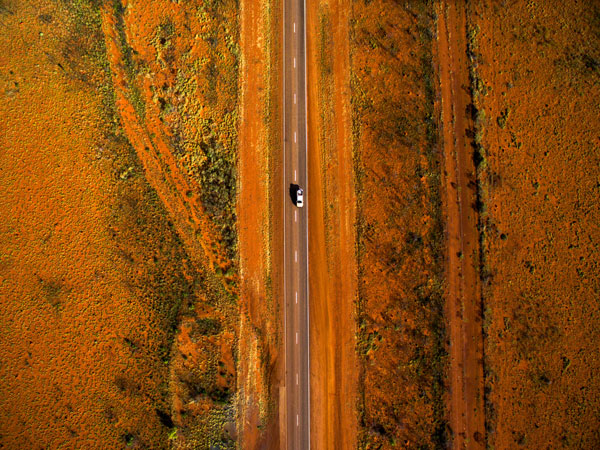
a road trip through the Northern Territory
Embark on an epic road trip through the Northern Territory. (Image: Tourism NT/Sam Earp)

The dry season (May to September) is the best time for a Darwin to Uluṟu road trip, offering clear skies, cooler temperatures and fewer road closures. The wet season (November to April) can bring flooding, intense heat and unpredictable road conditions, making travel more challenging.

Darwin to Uluṟu distance and drive time

Total distance: 1,950 km

Recommended duration: 7 to 14 days

Road conditions: Fully sealed highways, with some unsealed detours if you venture off the Stuart Highway

Darwin to Katherine (320 km, about 3.5 hours)
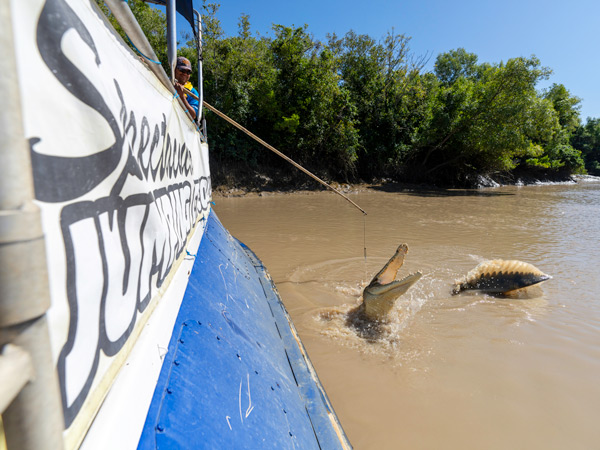
feeding crocodiles during a Jumping Croc Cruise, Adelaide River
See salties up close on a Jumping Croc Cruise. (Image: Tourism NT/Tourism Australia)

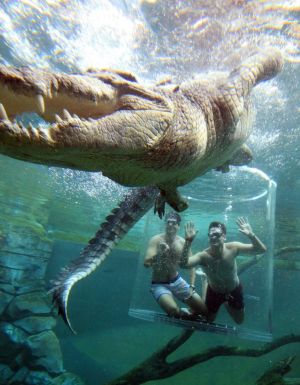
Wave goodbye to Darwin’s sea breeze and head south – first stop, Litchfield National Park, home to croc-free swimming spots like Wangi Falls and Buley Rockhole, where cool cascades and shady pools deliver instant relief from the heat. Further down the track, the Adelaide River region offers two contrasting pit stops: get your heart racing on a Jumping Croc Cruise, where salties launch from the water just metres from the boat, or slow things down at the beautifully kept Adelaide River War Cemetery, a moving tribute to those who served in WWII.
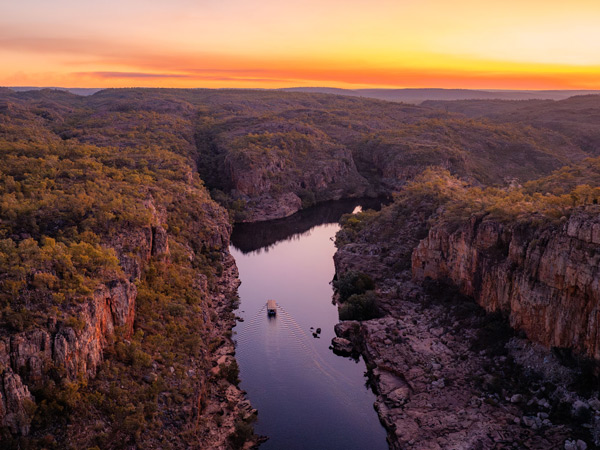
an aerial view of Nitmiluk (Katherine) Gorge
A scenic river cruise past stunning sandstone cliffs at Nitmiluk Gorge. (Image: Tourism NT/Nic Morley)

Just before Katherine, take a detour left to Edith Falls (Leliyn) boasting gorgeous swimming holes framed by red cliffs, grassy banks and a series of waterfalls. Once in Katherine, drift through the warm, glassy hot springs, where little turtles paddle alongside and kids launch into the main pool with cannonball flair. Then it’s on to Nitmiluk (Katherine) Gorge, where towering cliffs and a winding river set the scene for boat cruises, overnight kayaking trips or scenic hikes with views that are well worth the effort.

Where to stay
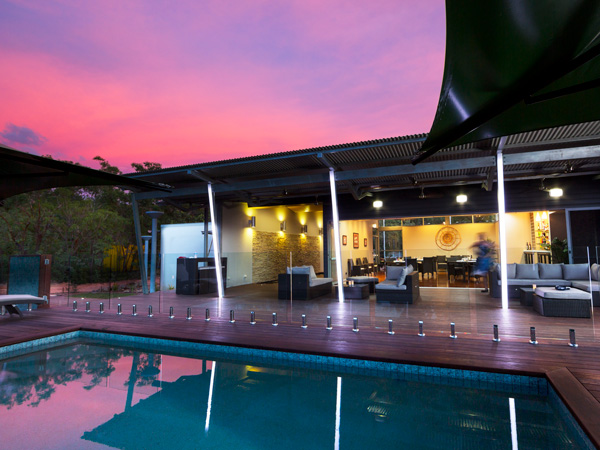
sunset view at the pool, Cicada Lodge, Darwin
Cicada Lodge at sunset. (Image: Tourism NT/Peter Eve)

For a luxe stay right in the heart of nature, Cicada Lodge delivers – think elegant rooms, stunning views, and a close connection to the surrounding landscape of Nitmiluk National Park. If you’re after something mid-range, Knotts Crossing Resort is a solid pick – comfortable, close to town, and with a pool that’s a lifesaver in the heat. Travelling on a budget or keen to camp? Discovery Parks – Katherine has you covered with shady sites, a relaxed vibe and fresh, well-equipped two-bedroom cabins if you’re after a bit more comfort.

Need tips, more detail or itinerary ideas tailored to you? Ask AT.

AI Prompt

Katherine to Tennant Creek (675 km, about 7 hours)
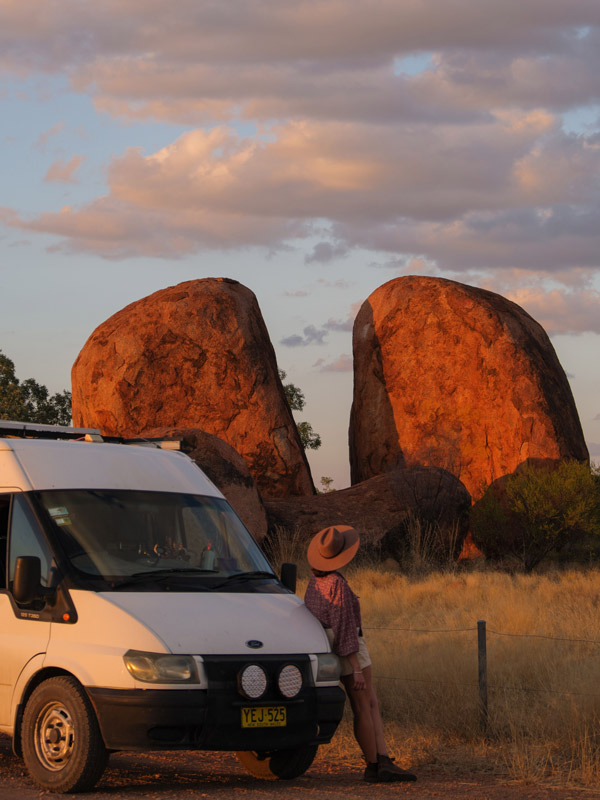
a 4WD stopping by the Karlu Karlu/Devils Marbles
The iconic Devils Marbles (Karlu Karlu). (Image: Tourism NT/@betsybiglap)

The drive south leads to Mataranka, home to the stunning thermal pools surrounded by lush palms, where you can float in warm, crystal-clear water before heading to the famous Daly Waters Pub. This legendary outback watering hole is adorned with bras, banknotes, and road trip memorabilia, making it an essential stop for a burger and a cold drink in true Territory style. Further down the highway, Karlu Karlu (Devil’s Marbles) appears as giant, rounded boulders seemingly stacked by nature itself.

Where to stay
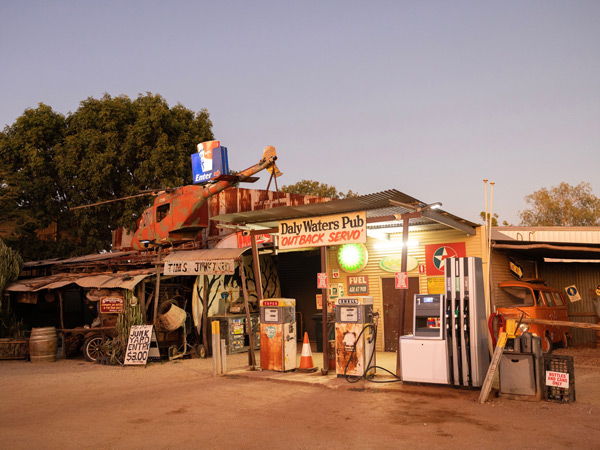
the pub exterior of Daly Waters Pub
Daly Waters Pub is a vibey pit stop serving NT beef and barra. (Image: Tourism NT/Sean Scott)

Accommodation is sparse between Katherine and Tennant Creek, but Daly Waters Pub offers a lively overnight stop with quirky rooms and a classic roadhouse atmosphere. In Tennant Creek, Bluestone Motor Inn is a reliable mid-range option, providing comfortable rooms and a pool. For a more rugged experience, Banka Banka Station offers budget-friendly camping and cabins on a working cattle station.

Tennant Creek to Alice Springs (510 km, about 5 hours)
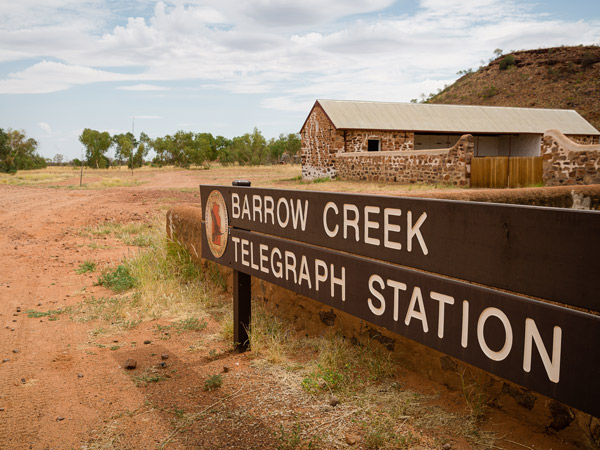
the Barrow Creek Telegraph Station signage
The Barrow Creek Telegraph Station used to be a staging camp for army convoys. (Image: Tourism NT/Kate Flowers)

The vast outback stretches ahead, with Barrow Creek Telegraph Station offering a glimpse into Australia’s early communication history, complete with eerie remnants of the past. Further south, the Tropic of Capricorn Marker signals the transition into the arid heart of the country, where the landscape becomes more dramatic and the horizon stretches endlessly. Closer to Alice Springs, Simpsons Gap in the West MacDonnell Ranges is a must-visit, with towering cliffs framing a peaceful waterhole that often attracts black-footed rock wallabies.

Where to Stay
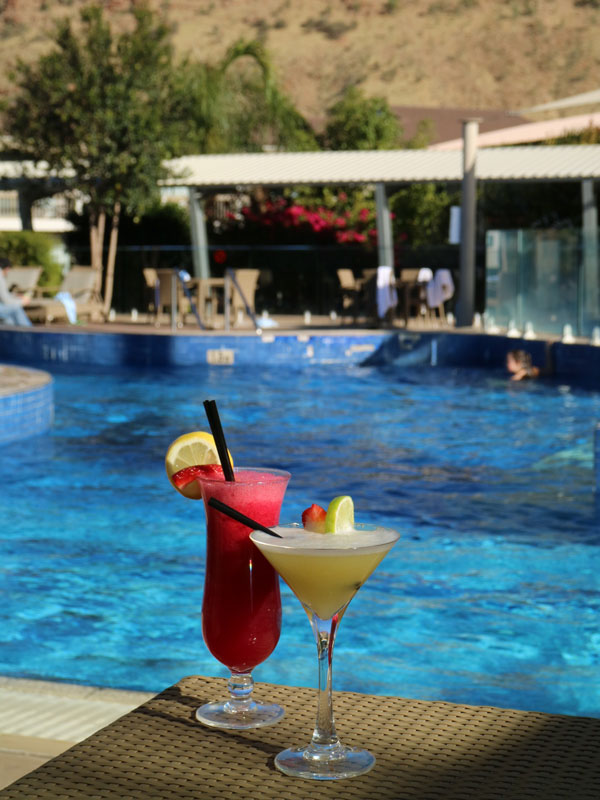
cocktail drinks by the pool, Crowne Plaza Alice Springs Lasseters
Sip on refreshing cocktails by the pool at Crowne Plaza Alice Springs Lasseters. (Image: Tourism NT/Christopher Nayna)

For a dose of top-end comfort, Crowne Plaza Alice Springs Lasseters delivers with 205 roomy stays, multiple dining spots, a superb pool and a fitness centre that’s basically a gym lover’s dream. Nearby, DoubleTree by Hilton offers 228 sleek rooms and those signature warm cookies on check-in – plus prime access to the casino and convention centre. Travelling light on the wallet? Discovery Parks – Alice Springs has you covered, with a well-equipped, family-friendly caravan park that doesn’t skimp on amenities.

Alice Springs to Kings Canyon (330 km, about 3.5 hours)
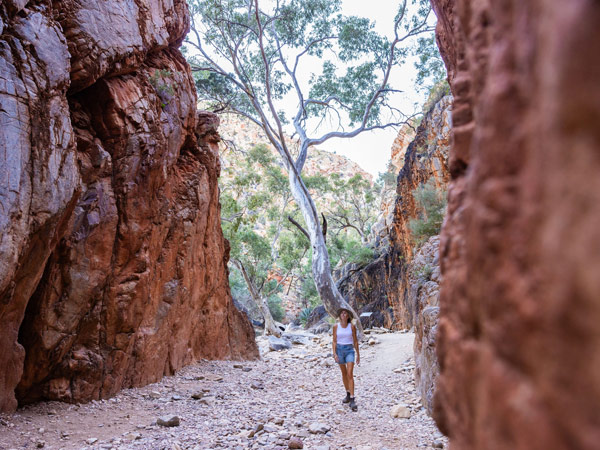
a woman walking past sheer red cliffs at Simpsons Gap
Stroll past sheer red cliffs at Simpsons Gap. (Image: Tourism NT/Sean Scott)

The road west leads into the breathtaking West MacDonnell Ranges, home to the formidable 223-kilometre Larapinta Trail – a demanding, multi-day trek that ranks among Australia’s toughest.

Along the way, you’ll stumble upon some unmissable spots: Simpsons Gap, where sheer red cliffs loom overhead and black-footed rock wallabies dart between shadows; Ellery Creek Big Hole, offering a bracing (read: freezing) dip in its serene waterhole; and Standley Chasm, which blazes fiery red when the midday sun hits just right.
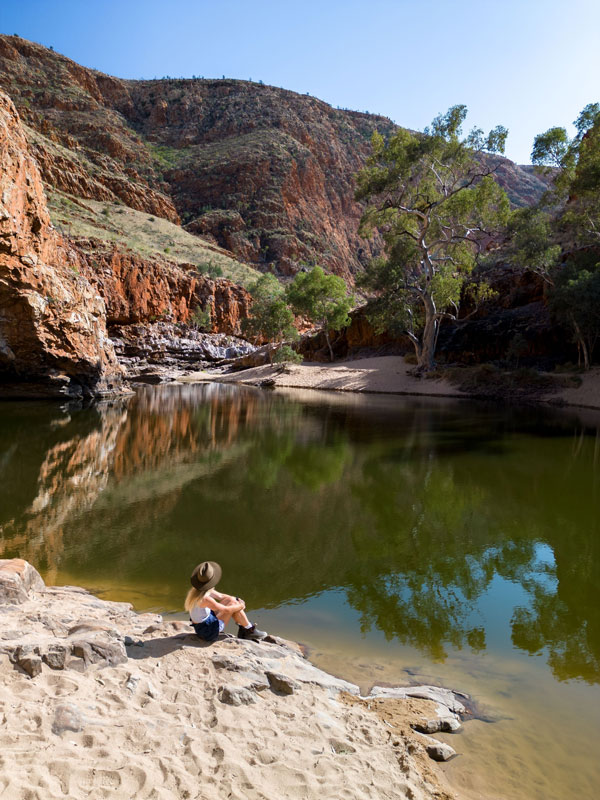
a woman sitting on a rock at Ormiston Gorge
The natural pool at Ormiston Gorge beckons for a dip. (Image: Tourism NT)

The historic Ochre Pits deserve a detour for their vivid earth pigments, while Ormiston Gorge and Glen Helen provide a double hit of dramatic cliffs and cool, swimmable waters. Don’t miss the four-hour Kings Canyon Rim Walk, a challenging yet unforgettable hike offering panoramic views over the canyon’s rugged landscape.

Weekly travel news, experiences
insider tips, offers, and more.

Where to stay
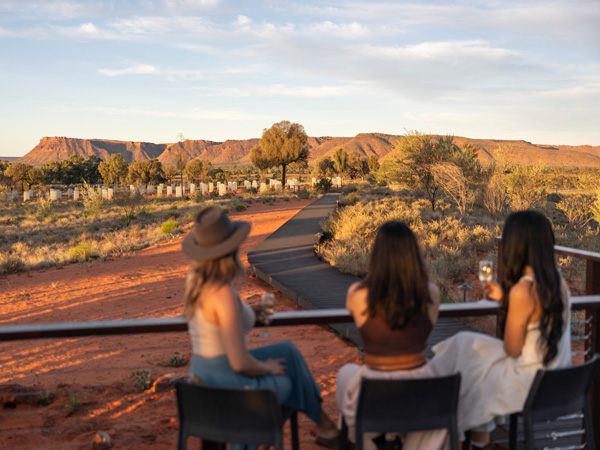
three women looking out the scenic landscape at Discovery Resorts - Kings Canyon
Soak up sweeping desert views from Discovery Resorts – Kings Canyon. (Image: Tourism NT)

If you’re after a resort-style escape, Discovery Resorts – Kings Canyon serves up hotel rooms and glamping tents with outback views that do all the talking. For something more rugged, Kings Creek Station – a working cattle station 36km from Kings Canyon – offers safari tents, cabins and classic camping under the stars, along with buggy tours that kick up some serious red dust.

Kings Canyon to Uluṟu (330 km, about 3.5 hours)
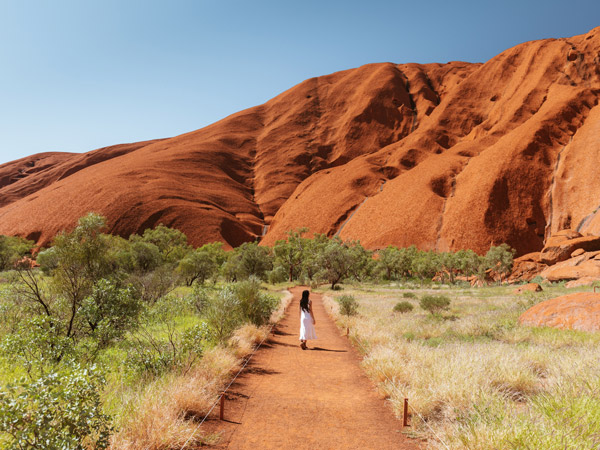
a scenic landscape at Uluru-Kata Tjuta National Park
See another side to Uluru-Kata Tjuta National Park. (Image: Tourism NT/Lola and Jira/Uluru-Kata Tjuta National Park)

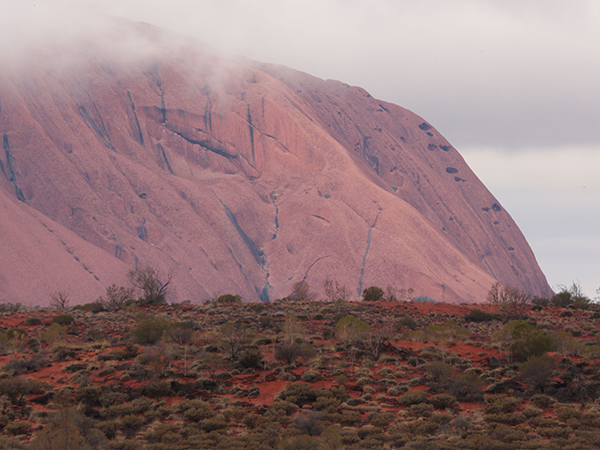
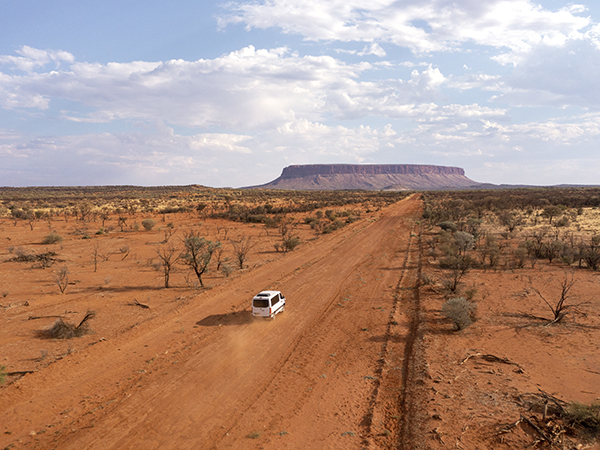
The final leg to Uluṟu hums with anticipation, but don’t speed past Mt Conner – this flat-topped giant often fools first-timers, looming large on the horizon before giving way to the real thing. As you near Uluṟu, the landscape shifts, the red earth deepening in tone, the monolith slowly rising into view like something from another world.

Once inside Uluṟu-Kata Tjuṯa National Park, take your time on the base walk, tracing the rock’s contours and weathered grooves. Then head to Kata Tjuṯa, where the towering domes of Walpa Gorge serve up one of the region’s most dramatic walks. Whether you ride, fly, Segway, cycle, walk or jog – there are plenty of ways to experience this extraordinary place.

Where to Stay

For a luxurious experience, Sails in the Desert offers 228 lavish rooms, fine dining and art displays. Desert Gardens Hotel provides a mid-range option with comfortable rooms and great views of Uluṟu. For those wanting to camp or stay on a budget, Ayers Rock Campground offers powered sites and cabins just a short drive from the rock.

Road conditions and essential supplies
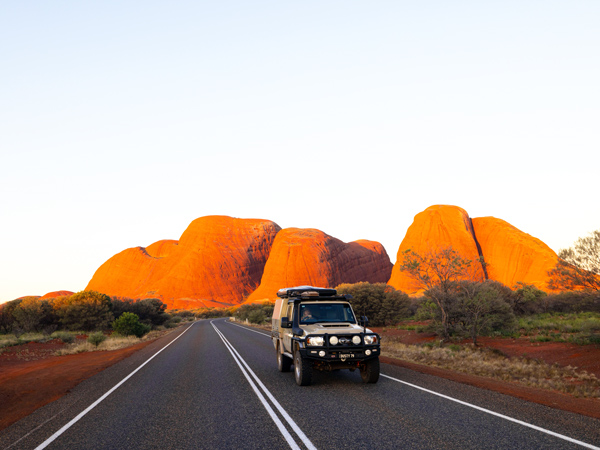
a 4WD driving to Kata Tjuṯa
A road trip in true Northern Territory style. (Image: Tourism NT/Sean Scott)
  • The Stuart Highway is fully sealed but can be remote in sections, so it’s best to refuel at every major town to avoid running low.
  • Phone reception is limited outside of main stops, so consider carrying a satellite phone or UHF radio for emergencies.
  • Supplies are available in larger towns like Katherine, Tennant Creek and Alice Springs, but carrying extra water, snacks and a first-aid kit is essential for a safe and smooth journey.

Discover the best things to do when you’re in Uluṟu

Want to see more stories from Australian Traveller in your Google search results?

  1. Click here to set Australian Traveller as a preferred source.
  2. Tick the box next to "Australian Traveller". That's it.
Leah McLennan
Leah McLennan is a freelance writer based in Darwin. She was a journalist in Sydney for over a decade and counts her time as travel editor for Australian Associated Press as one of the highlights of her career. From exploring remote campsites in the Top End with her family, to seeking out new art galleries in faraway cities, she’ll grab an adventurous or arty travel experience within her reach.
View profile and articles
hero media

Discovering East Arnhem: Australia’s most unique and rewarding corner

    Joanne Millares Joanne Millares

    Hard to reach and harder to forget, East Arnhem offers something rare in modern travel: the chance to slow down and experience Country on its own terms.

    The sky feels bigger in East Arnhem. It stretches wide and uninterrupted above rouged earth, stringybark woodland and beaches so empty they seem to belong to another era. The coastline curves for kilometres without a footprint and the horizon runs on forever.

    For comedian Lou Wall, the scale of the place was the first thing that hit them.

    “The sheer openness,” they say. “The sky feels infinite and the land stretches out endlessly. It’s pretty breathtaking visually.”

    But the physical landscape is only part of the story. The real reward isn’t only the scenery but the shift in perspective the journey brings. Visitors stop trying to tick off the destination and a real engagement takes over.

    “It made me never want to travel again,” Wall jokes. “In that I never wanted to leave East Arnhem.”

    Getting there

    Aerial shot of East Arnhem’s coastline as cars trace the curve of the shore.
    Sail along the remote coastline on an expedition cruise.

    Reaching East Arnhem is part of the adventure. Travellers typically fly into Gove Airport near Nhulunbuy via Darwin or Cairns, or arrive by expedition cruise along the remote coastline. Others make the journey overland along rutted dirt roads that cut through East Arnhem’s small pockets of monsoon forest.

    However you arrive, there’s a distinct feeling of crossing into somewhere different. Permits are required to visit the region, reflecting the fact that this is Yolŋu land where communities and traditional owners maintain deep cultural connections to Country.

    The extra planning becomes part of the experience. By the time visitors arrive, they understand they’re entering a place not just of respect, but also patience and curiosity.

    At one with nature

    East Arnhem’s  landscapes leave a strong imprint. For Wall, one place in particular still lingers in their memory: Ngalarrkpuy, also known as Lonely Beach, near Bawaka Homeland.

    “I genuinely felt like I was living inside an Instagram filter,” they say. “One of the most stunning feats of nature I’ve ever seen. The water was so clear I swear I could see even the fish smiling.”

    Across the region, natural experiences unfold at a slower pace. Fishing, beachcombing and island hopping reveal the rhythm of the coastline. The tides shape daily life and the vastness of the landscape makes even simple moments feel downright cinematic.

    For visitors with limited time, Wall says the Bawaka Homeland experience is unmissable.

    “I just left and I’m already planning when I can get back there.”

    The sense of remoteness is part of the appeal. In a country where many beaches are crowded and well-trodden, East Arnhem’s coastline still feels wonderfully wild.

    Immersing in local culture

    A visitor spends a meaningful moment alongside Yolŋu guides, gaining insight into their deep cultural knowledge and connection to the land.
    Experience authentic moments with the locals.

    Culture is woven through every experience in East Arnhem. Visitors have the opportunity to spend time on Country with Yolŋu guides and knowledge holders who share stories and traditions that have been passed down for generations.

    For Wall, one of the most powerful moments came during a conversation with a Yolŋu elder.

    “I got to meet a traditional elder, Mayalil, in Nhulunbuy,” they say. “Listening to her talk about her home made the land feel alive in ways I couldn’t have imagined.”

    The region is also home to internationally recognised Aboriginal art centres where artists shape works deeply connected to land and family knowledge.

    Music carries the same cultural energy. East Arnhem has produced globally recognised artists such as King Stingray and Baker Boy, blending Yolŋu language, storytelling and contemporary sound.

    Wall experienced this musical spirit first-hand.

    “A jam session around the fire was it for me,” they say. “Letting the deep joy and history of their music wash over me…  and meeting a few of the King Stingray musicians was unreal.”

    These moments of human connection often become the most memorable part of a visit.

    Spotting local wildlife

    An aerial view of the beach shows tiny figures lined up across the white sand, moving as if in a rhythmic dance.
    Step into a world where nature reigns.

    The wildlife of East Arnhem adds another layer to the experience. The region is home to an extraordinary range of animals, from waterbirds and turtles to dugongs, dolphins and the formidable saltwater crocodile.

    Wall admits they didn’t actually spot a croc during their visit.

    “Devastatingly, I didn’t see one,” they laugh. “But with all the stories from the locals I definitely gained a healthy respect for caution.”

    Some of the most memorable wildlife encounters can be surprisingly small., At Banubanu Beach Retreat on Bremer Island, Wall remembers walking along the beach one morning and watching it come alive.

    “As you walk through the sand you see hundreds of crabs scurrying into their holes as you pass by,” they say. “Such a small thing, but it was completely magical.”

    Moments like this reveal the quieter rhythms of East Arnhem, where even the smallest creatures seem to play a part in the landscape.

    Visitors who make the journey soon learn the most important travel tip of all.

    “Go in open-minded with a sense of curiosity,” Wall says. “Be prepared to ditch your plans. The land and the locals will guide you on an adventure no spreadsheets could ever compete with.”

    And most importantly, they add, don’t rush.

    “The land and people deserve your time and attention. You’ll be all the better for slowing down.”

    For more information on visiting East Arnhem, head to eastarnhem.com.au.