Your ultimate guide to the Tiwi Islands

hero media
The Tiwi Islands: a far-flung northern sanctuary where there’s art, footy and fishing fever abound.

Until recently, the Tiwi Islands have been just a blip on the tourism radar. While barramundi hunters and football selectors have been pretty hush-hush about their fertile hunting grounds, interest in this fascinating area and the Tiwi people who call it home is on the rise.

Before you take a ferry ride up from Darwin for a window into Top End Aboriginal culture and friendliness, you need to check out our guide to the islands below.

Why go to the Tiwi Islands?
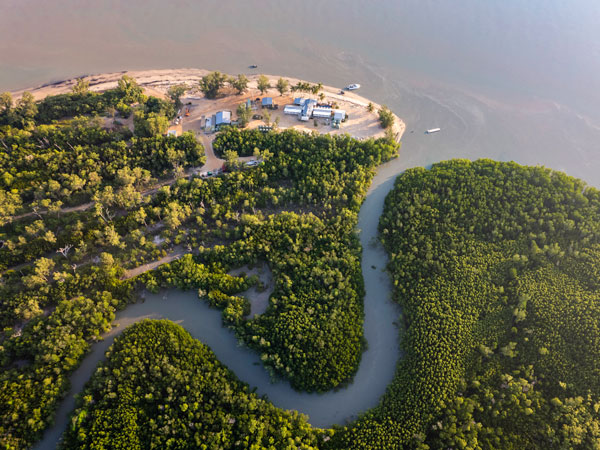
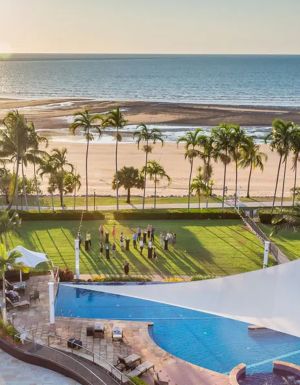
an aerial view of Tiwi Island Retreat.
Tiwi Island Retreat is a tropical oasis on Bathurst Island. (Image: Tourism NT/Tourism Australia)

Surrounded by azure waters 80 kilometres north of Darwin, the Tiwis – also known as ‘The Islands of Smiles’ for its residents’ joie de vivre – is an archipelago of 11 islands, with Bathurst and Melville the largest of these.

About 90 per cent of the Tiwi population is Aboriginal and, despite cohabitating with European settlers since the 1800s, Tiwi traditions and culture remain strong.

Locals date and marry according to skin group rules, cultural pride reigns supreme, and the three Tiwi passions – footy, art, and fishing – colour life on the islands. This trio of activities also captures the main drawcards of a journey here.

Art lovers, fishing fans, and Aussie Rules spectators find much to love about this tropical oasis.

How to get to the Tiwi Islands?
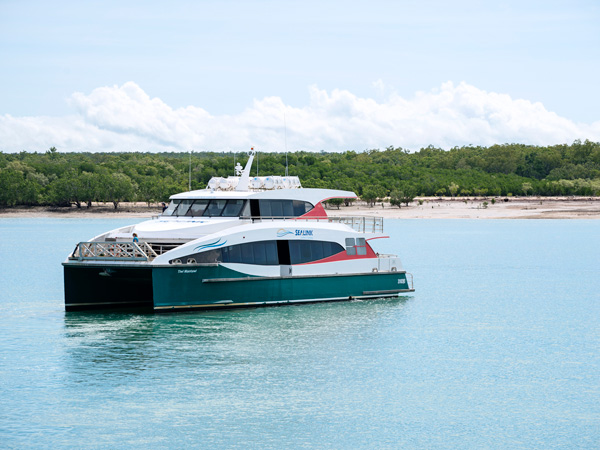
a ferry going to Tiwi Islands
A SeaLink NT ferry arriving at Bathurst Island for a Tiwi Tours day trip. (Image: Tourism NT/Shaana McNaught)

Take a 2.5-hour ride with SeaLink NT Ferries from Darwin to Wurrumiyanga on Bathurst Island, book a tour, or catch a 20-minute flight from Darwin Airport with Fly Tiwi.

When to visit the Tiwi Islands

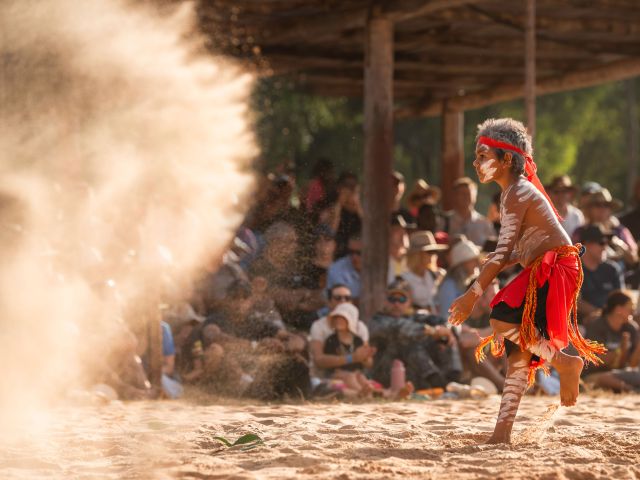
football players gather at the Tiwi Islands Grand Final and Art Sale
Football players with their arms linked at the Tiwi Islands Grand Final and Art Sale. (Image: Tourism NT/Shaana McNaught)

Anglers can happily fish here all year round. Otherwise, the Top End dry season – which runs from May until September – offers travellers the most comfortable weather.

That said, the biggest event on the Tiwi calendar – the Footy Grand Final and Art Sale – is in July in 2025, and day tours operate from April to November.

The main event on the Tiwi calendar? That’d be the Footy Grand Final and Art Sale, happening in July 2025. But if you can’t make it to the big day in July, day tours run from April through to November.

Permits and other Tiwi Islands tips and tricks
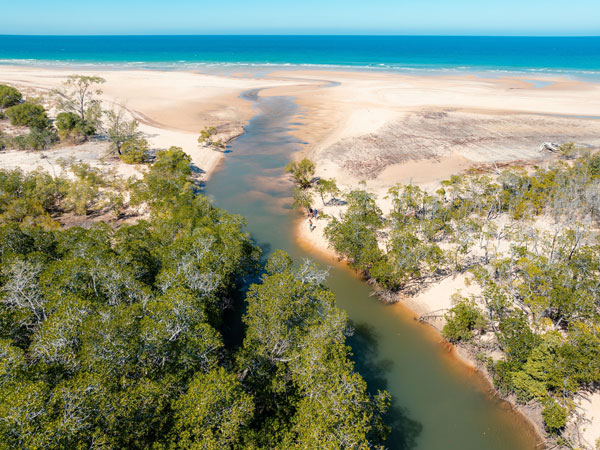
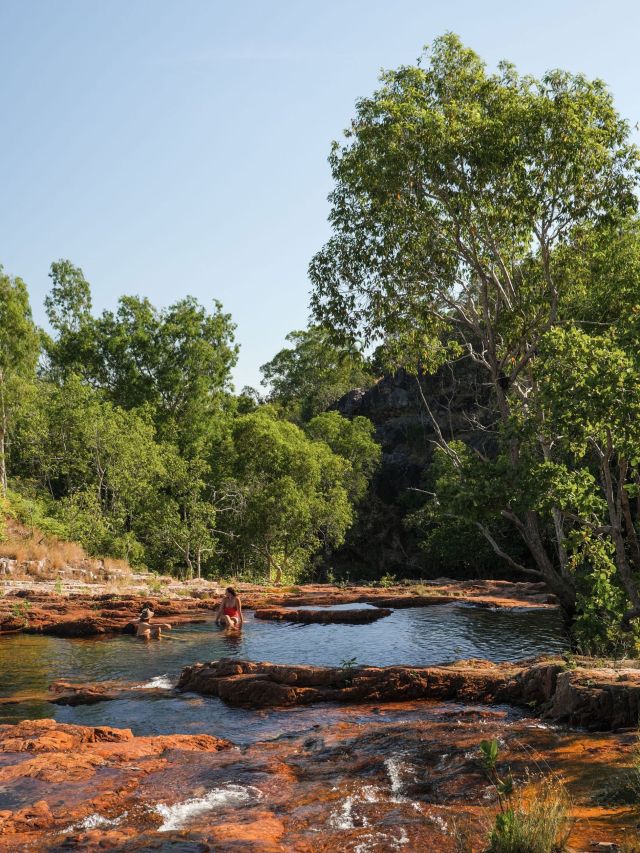
the Tarntipi Bush Camp on Tiwi Islands
The Tarntipi Bush Camp is within a short walk to a beach and a freshwater spring. (Image: Tourism NT/Nic Morley)

Tiwi communities occupy Aboriginal-owned land, so if you’re travelling independently, rather than on an organised tour, you’ll need to apply for a permit through the Tiwi Land Council.

The exception to this rule applies to those visiting via SeaLink Ferry to Wurrumiyanga – you can wander around the cultural precinct here permit-free. Bring your own food as there are no cafes or takeaway food joints on the islands.

Need tips, more detail or itinerary ideas tailored to you? Ask AT.

AI Prompt

What to do on the Tiwi Islands?

ART COLLECTING
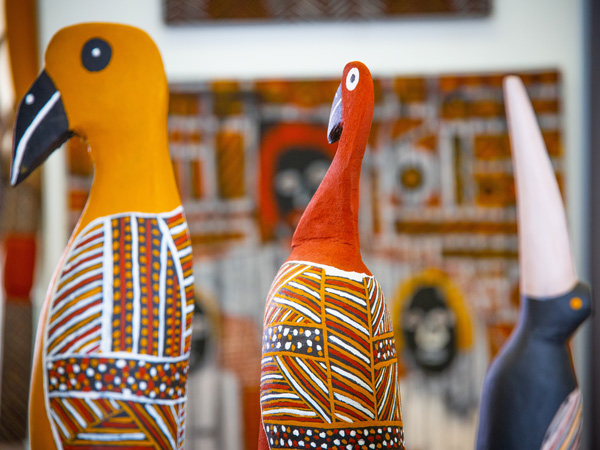
ironwood carved birds at Jilamara Arts and Craft Association, Tiwi Islands
Carved Tiwi Tokwanpini (birds) and Tjurrukukini (owls) with ochre paintings at Jilamara. (Image: Tourism NT/Felix Baker)

There’s a depth and playfulness inherent in the art made by the Tiwis’ stock of artists. For starters, Tiwi painters use ochre paints rather than acrylics, and ironwood carvings of totem animals – such as owls, cockatoos and brolgas – are in abundance, as are brightly coloured fabrics in a suite of whimsical designs.

Take a stroll around the islands’ three key art centres to absorb the whole gamut and pick up a Tiwi creation for keeps. Tiwi Design on Bathurst Island is a hub for screen-printed fabrics and ironwood animal carvings, among other gems.

At Jilamara on Melville Island, you can encounter ironwood carved birds and Tutini poles (for Pukamani, funeral ceremony), hand screen-printed textiles and some of the archipelago’s more famous artists, such as Timothy Cook, a former winner of the National Aboriginal and Torres Strait Islander Art Awards. Also on Melville Island, Munupi Arts is known for its pottery, as well as its works by female and emerging artists.

Check out our review of the Tiwi Island art tour to learn more.

FISHING
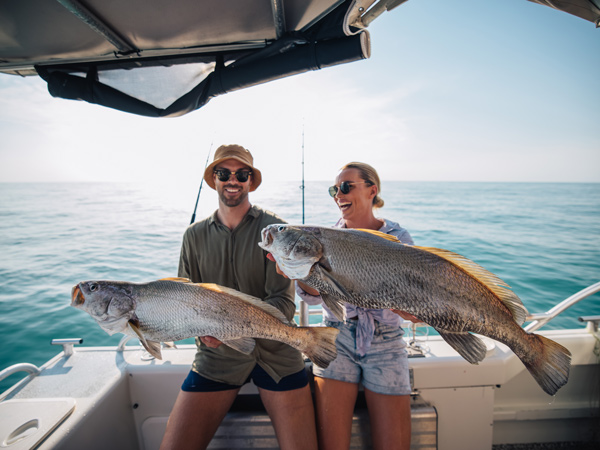
big catch with Yknot Fishing Charters
Prepare for your next big catch with Yknot Fishing Charters. (Image: Tourism NT/Backyard Bandits)

The Tiwi Islands have a reputation as a foolproof fishing destination. It doesn’t matter what the tides are doing, there’s always somewhere to hook a whopper.

Common catches include mangrove jacks, golden snapper, jewfish, coral trout, trevally, tuna, Spanish mackerel, and, of course, barramundi.

Hire a boat and camp if you prefer a more rustic, affordable and earthy alternative to a fishing lodge.

For a mere $10 per night, the islands offer three basic campsites for recreational anglers. You’ll find Camp Point and Robertson Creek on Melville Island, and Shaggy’s (Tinkanrow) on Bathurst Island.

Note: you’ll still need a permit for this option and should allow 30 working days for it to be processed.

TIWI ISLAND TOURS
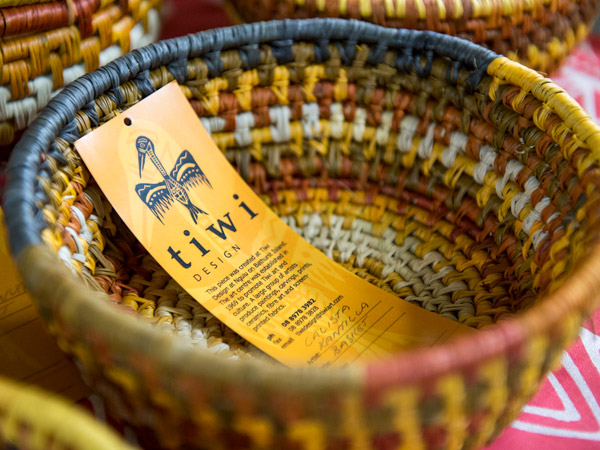
a woven basket at Tiwi Islands annual art sale
Aboriginal art for sale at Tiwi Design. (Image: Tourism NT/Shaana McNaught)

SeaLink NT and AAT Kings all offer one-day tours that start with a ferry trip to Wurrumiyanga and include visits to Tiwi Design, Patakijiyali Museum (displaying traditional art and depictions of Tiwi dreaming stories), and the community’s Mission Precinct, which features a beautiful, art-lined wooden Catholic Church.

Tour highlights include making your own screen-printed fabric at Tiwi Design, witnessing a smoking ceremony and chatting with local Tiwi ladies while they weave baskets or paint.

Weekly travel news, experiences
insider tips, offers, and more.

TIME YOUR TRIP WITH A SPECIAL EVENT
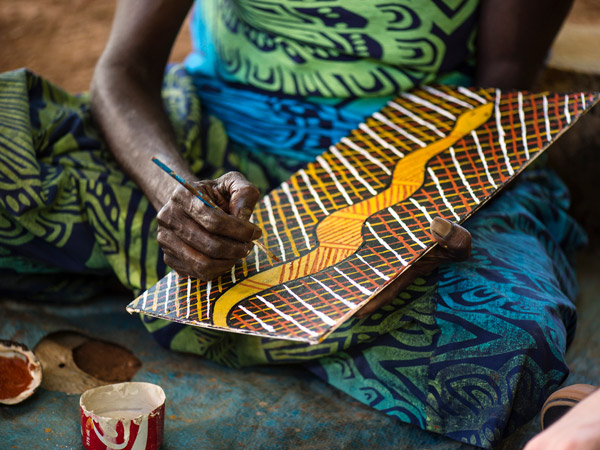
Aboriginal art on a Tiwi Islands day tour
Take to the Tiwi Islands for an art tour. (Image: Tourism NT/Shaana McNaught)

The Tiwis’ annual footy final is taking place on 20 July 2025. It’s a huge day both for Tiwi Islanders and those keen to sample islander pride, art and football culture.

Travel by ferry for early morning art sales from all three Tiwi art centres, grab a gourmet burger and, when the afternoon arrives, take a seat at the Tiwi Islands Grand Final.

This high-octane event sells out almost every year – so make sure to book early.

Where to stay on the Tiwi Islands?
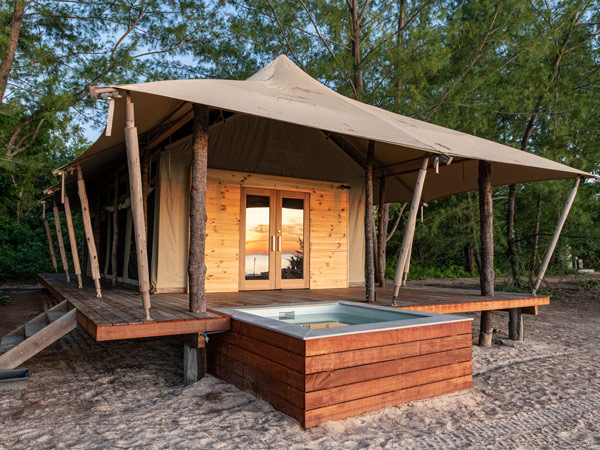
a glamping eco-lodge at Tiwi Island Retreat
A glamping eco-lodge with a relaxed beach-style vibe. (Image: Tourism NT/Tiwi Island Retreat)

The accommodation in the Tiwi Islands is mostly tailored to fishing travellers, but it also caters for those keen on unplugging somewhere seriously remote and beautiful.

The best of Tiwi’s small cluster of lodges is the luxurious Tiwi Island Retreat on the outer edge of Bathurst Island. Getting here involves a 20-minute flight from Darwin, a 50-minute troopy ride, and a short boat trip.
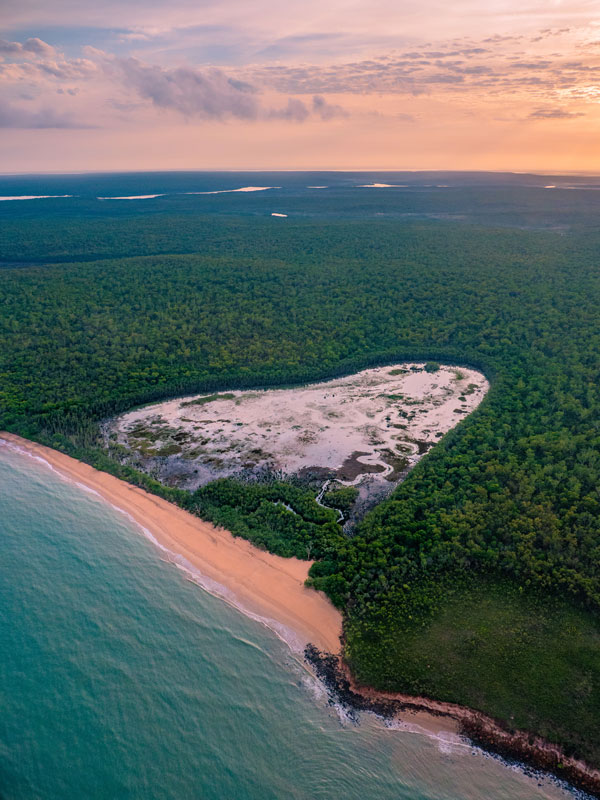
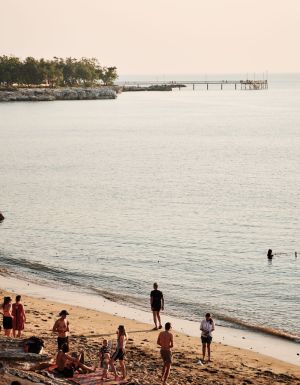
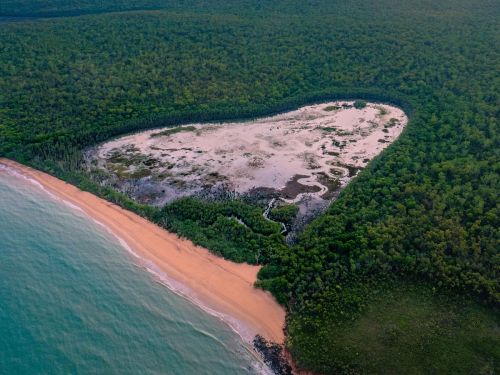
a beach near Tiwi Island Retreat
Wetlands near Tiwi Island Retreat. (Image: Tourism NT/Mark Fitz)

Set on a sandy beach lined with towering coconut palms, the retreat has a pool, an expansive deck, shared bathrooms and coastal-styled rooms. It’s also known for its cocktail-drink-welcome, plus the friendliness of its skippers who lead you to the finest fishing spots (if fishing is your thing). There’s a two-night minimum stay and prices include food, transfers to Darwin and activities on the island.

Also on Bathurst Island, but at Wurrumiyanga (where the ferry arrives from Darwin), Tiwi Enterprises runs the Mantiyupwi Motel, featuring 30 rooms, each with an ensuite bathroom and kitchenette.

On Melville Island, Tiwi Islands Adventures operates the Melville Island Lodge, which can accommodate up to 20 guests. It sits on the waterfront in the tiny township of Milikapiti (Snake Bay). From Darwin, the lodge is a 30-minute flight away – or reachable by sea, if you’re taking the slow road.

Planning a tropical getaway? Make sure to include Tiwi Islands in your bucket list and go for a Tiwi Islands art tour.

Originally written by Kate Bettes with updates by Leah McLennan

Kate Bettes
Kate Bettes is a freelance travel writer. Whether having a picnic in Vietnamese jungle with new friends, or partying in the back of a limousine in Hollywood, Kate’s experiences have left her with the sneaking suspicion that the best travel memories happen when you least expect. It’s this feeling - and how to get it - that she loves to write about.
View profile and articles
hero media

Discovering East Arnhem: Australia’s most unique and rewarding corner

    Joanne Millares Joanne Millares

    Hard to reach and harder to forget, East Arnhem offers something rare in modern travel: the chance to slow down and experience Country on its own terms.

    The sky feels bigger in East Arnhem. It stretches wide and uninterrupted above rouged earth, stringybark woodland and beaches so empty they seem to belong to another era. The coastline curves for kilometres without a footprint and the horizon runs on forever.

    For comedian Lou Wall, the scale of the place was the first thing that hit them.

    “The sheer openness,” they say. “The sky feels infinite and the land stretches out endlessly. It’s pretty breathtaking visually.”

    But the physical landscape is only part of the story. The real reward isn’t only the scenery but the shift in perspective the journey brings. Visitors stop trying to tick off the destination and a real engagement takes over.

    “It made me never want to travel again,” Wall jokes. “In that I never wanted to leave East Arnhem.”

    Getting there

    Aerial shot of East Arnhem’s coastline as cars trace the curve of the shore.
    Sail along the remote coastline on an expedition cruise.

    Reaching East Arnhem is part of the adventure. Travellers typically fly into Gove Airport near Nhulunbuy via Darwin or Cairns, or arrive by expedition cruise along the remote coastline. Others make the journey overland along rutted dirt roads that cut through East Arnhem’s small pockets of monsoon forest.

    However you arrive, there’s a distinct feeling of crossing into somewhere different. Permits are required to visit the region, reflecting the fact that this is Yolŋu land where communities and traditional owners maintain deep cultural connections to Country.

    The extra planning becomes part of the experience. By the time visitors arrive, they understand they’re entering a place not just of respect, but also patience and curiosity.

    At one with nature

    East Arnhem’s  landscapes leave a strong imprint. For Wall, one place in particular still lingers in their memory: Ngalarrkpuy, also known as Lonely Beach, near Bawaka Homeland.

    “I genuinely felt like I was living inside an Instagram filter,” they say. “One of the most stunning feats of nature I’ve ever seen. The water was so clear I swear I could see even the fish smiling.”

    Across the region, natural experiences unfold at a slower pace. Fishing, beachcombing and island hopping reveal the rhythm of the coastline. The tides shape daily life and the vastness of the landscape makes even simple moments feel downright cinematic.

    For visitors with limited time, Wall says the Bawaka Homeland experience is unmissable.

    “I just left and I’m already planning when I can get back there.”

    The sense of remoteness is part of the appeal. In a country where many beaches are crowded and well-trodden, East Arnhem’s coastline still feels wonderfully wild.

    Immersing in local culture

    A visitor spends a meaningful moment alongside Yolŋu guides, gaining insight into their deep cultural knowledge and connection to the land.
    Experience authentic moments with the locals.

    Culture is woven through every experience in East Arnhem. Visitors have the opportunity to spend time on Country with Yolŋu guides and knowledge holders who share stories and traditions that have been passed down for generations.

    For Wall, one of the most powerful moments came during a conversation with a Yolŋu elder.

    “I got to meet a traditional elder, Mayalil, in Nhulunbuy,” they say. “Listening to her talk about her home made the land feel alive in ways I couldn’t have imagined.”

    The region is also home to internationally recognised Aboriginal art centres where artists shape works deeply connected to land and family knowledge.

    Music carries the same cultural energy. East Arnhem has produced globally recognised artists such as King Stingray and Baker Boy, blending Yolŋu language, storytelling and contemporary sound.

    Wall experienced this musical spirit first-hand.

    “A jam session around the fire was it for me,” they say. “Letting the deep joy and history of their music wash over me…  and meeting a few of the King Stingray musicians was unreal.”

    These moments of human connection often become the most memorable part of a visit.

    Spotting local wildlife

    An aerial view of the beach shows tiny figures lined up across the white sand, moving as if in a rhythmic dance.
    Step into a world where nature reigns.

    The wildlife of East Arnhem adds another layer to the experience. The region is home to an extraordinary range of animals, from waterbirds and turtles to dugongs, dolphins and the formidable saltwater crocodile.

    Wall admits they didn’t actually spot a croc during their visit.

    “Devastatingly, I didn’t see one,” they laugh. “But with all the stories from the locals I definitely gained a healthy respect for caution.”

    Some of the most memorable wildlife encounters can be surprisingly small., At Banubanu Beach Retreat on Bremer Island, Wall remembers walking along the beach one morning and watching it come alive.

    “As you walk through the sand you see hundreds of crabs scurrying into their holes as you pass by,” they say. “Such a small thing, but it was completely magical.”

    Moments like this reveal the quieter rhythms of East Arnhem, where even the smallest creatures seem to play a part in the landscape.

    Visitors who make the journey soon learn the most important travel tip of all.

    “Go in open-minded with a sense of curiosity,” Wall says. “Be prepared to ditch your plans. The land and the locals will guide you on an adventure no spreadsheets could ever compete with.”

    And most importantly, they add, don’t rush.

    “The land and people deserve your time and attention. You’ll be all the better for slowing down.”

    For more information on visiting East Arnhem, head to eastarnhem.com.au.