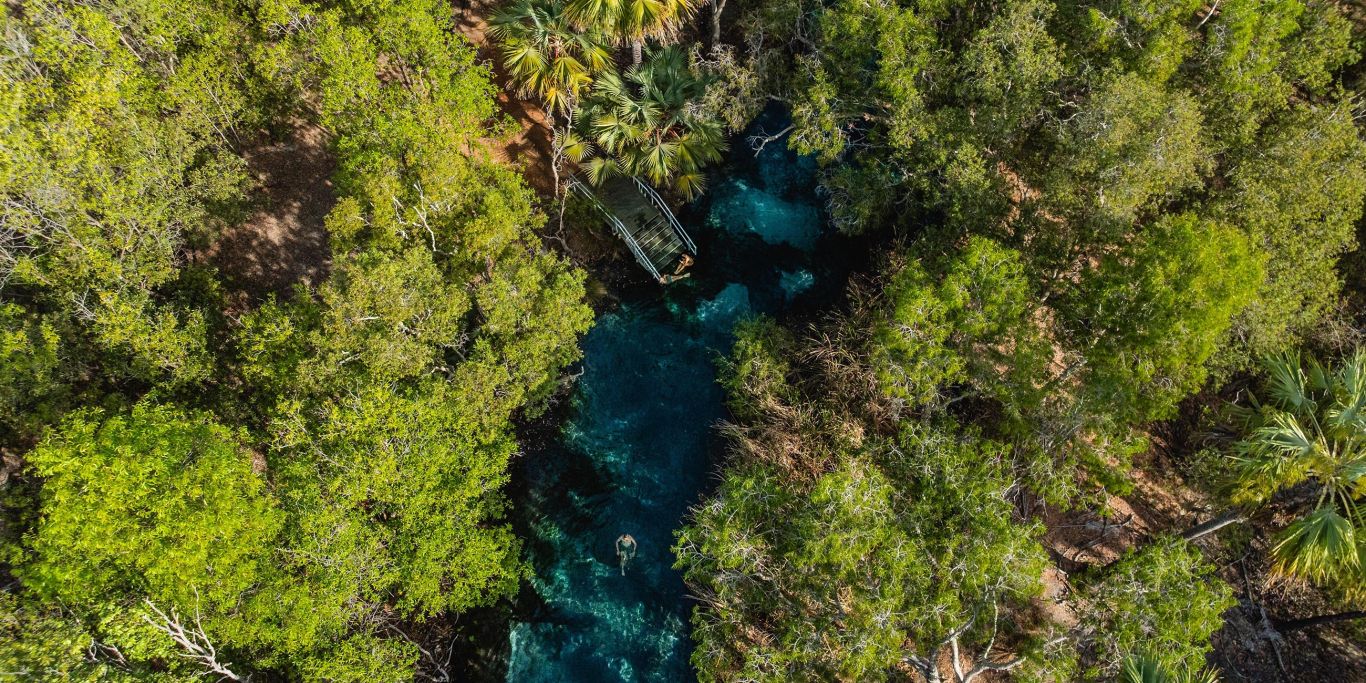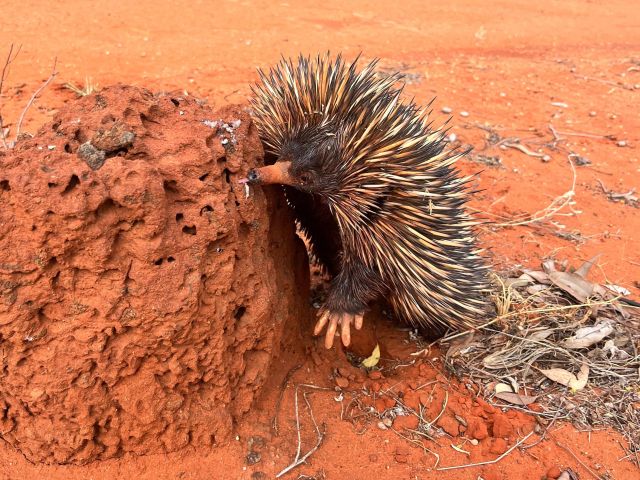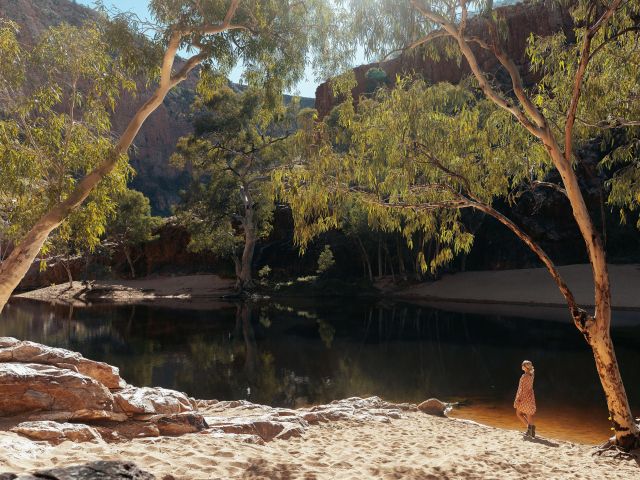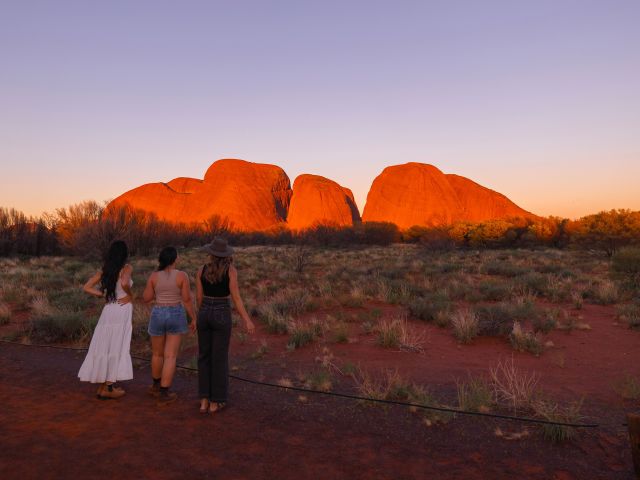
How to road trip Kakadu and itineraries for visiting

hero media
There’s no shortage of great tours on offer, but to road trip Kakadu via a do-it-yourself driving adventure? That’s pretty hard to beat.

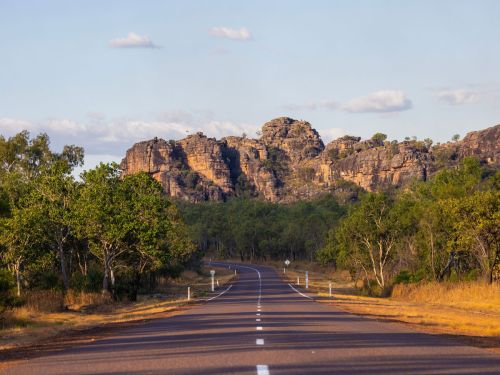
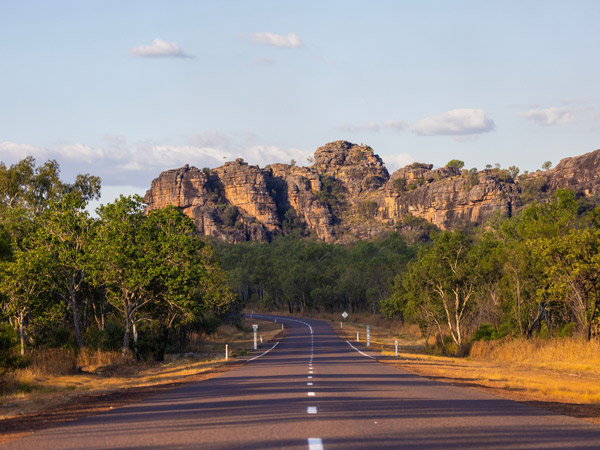
Getting to Kakadu is the easy part. From the south, it’s 150 kilometres from Katherine via the Stuart and Kakadu highways, but most people come from Darwin since that’s the closest airport. The drive will take you around an hour and a half, and the road into the park is sealed and open year-round, although you do need to keep an eye out for wandering cattle, buffalo and kangaroos.

Once you’re in the park a sealed all-weather road runs right through the centre of the wilderness, roughly forming a triangle from the two highways with the township of Jabiru at the apex. This triangle forms the classic Top End Road Trip.

Road trip Kakadu on sealed roads
crocodiles at Cahill’s Crossing, Kakadu
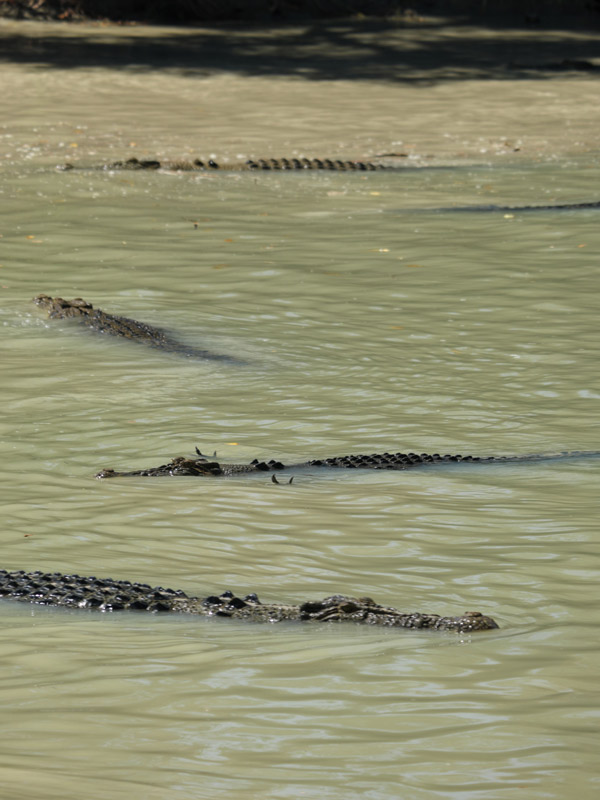
Stay clear of the water when you pass by Cahill’s Crossing. (Image: Tourism NT/@betsybiglap)

All of the must-see road trip Kakadu attractions are accessible via sealed roads, meaning it’s easy to take a 2WD. However, in the wet season, be sure to check the Kakadu access report, as thunderstorms can cause flooding.

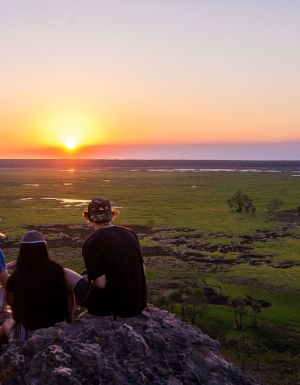
What can you see via sealed roads in Kakadu? The magnificent rock art galleries at Ubirr and Nourlangie, toward the Western edge of the park, are not to be missed. Visit Ubirr at sunset for the most incredible views.

Cahill’s Crossing, one of the best places in Kakadu National Park for spotting crocodiles, is on the way to Ubirr. It has a spacious car park and sealed roads. The recently expanded viewing platform is very safe and a hit with kids, too.

The tour hub of Cooinda and nearby wildlife-filled Yellow Water Billabong are easily accessible from Kakadu National Park’s main road. A cruise on the billabong is a highlight of a road trip in Kakadu.

The Yurkmikmik walks and Motor Car Falls are at the end of an unsealed road, however, this particular road is 2WD-friendly during the dry season.

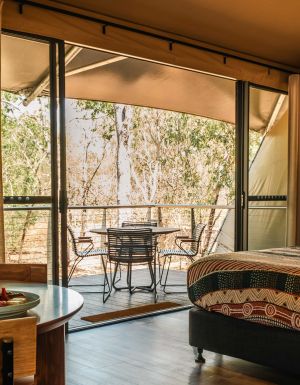
All the popular accommodation options and most of the parks that cater for caravans are on sealed, 2WD-friendly roads.

Road trip Kakadu on unsealed roads
a road trip to Kakadu
The drive will take you around an hour and a half to Kakadu National Park. (Image: Tourism NT/Sean Scott)

You don’t need a 4WD to see the best of Kakadu, although if you do have one, there are a few special spots where their high clearance comes in handy.

Even with a 4WD, be sure to check the Kakadu access report. Road closures are common and can even happen during the dry season, and no matter how experienced you are at 4WD techniques, stay away from closed roads as flooding can be deep and extensive.

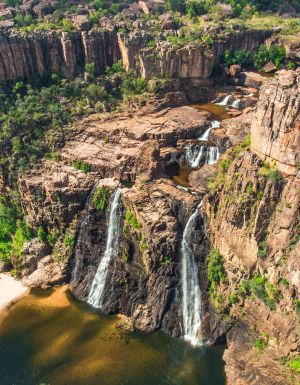
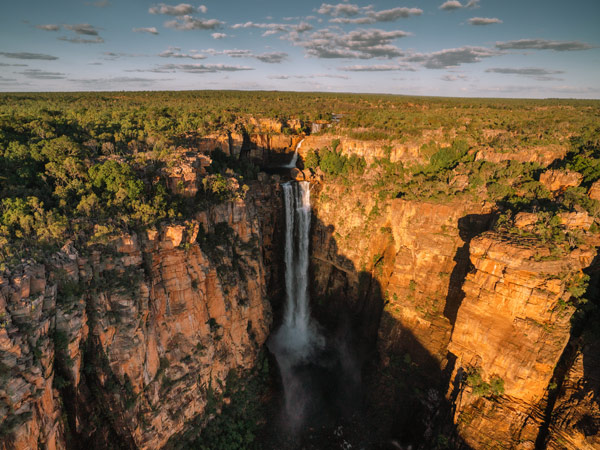
The stunning Jim Jim Falls and Twin Falls are on many travellers’ Kakadu bucket lists, but they are quite challenging to access. At the end of a lengthy 50km unsealed 4WD track, expect deep corrugation, narrow single-lane areas and shallow water crossings, especially earlier in the dry season. Take your time (allow at least two hours) and be aware of drivers returning in the opposite direction.
an aerial view of Jim Jim Falls, Kakadu
See the spectacular Jim Jim Falls on a scenic flight. (Image: Tourism NT/@helloemilie)

The popular Sandy Billabong campground is at the end of a 12km 4WD-only track that starts at the Muirella camping area. If you have a 4WD, it’s a great spot to camp as the billabong is teeming with birdlife.

At the end of a 14km unsealed road is Maguk, an incredible waterfall and swimming spot in Kakadu National Park. This road is often very corrugated and care should be taken when driving. During the wet season, the road is closed.

Need tips, more detail or itinerary ideas tailored to you? Ask AT.

AI Prompt

Camping on a Kakadu road trip
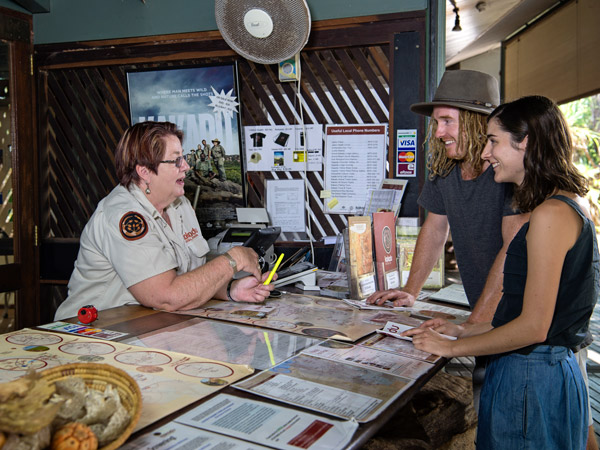
Kakadu guests arriving at Bowali Visitor Centre
Learn more about road conditions and campsites at Bowali Visitor Centre. (Image: Tourism NT/Shaana McNaught)

There are more than 25 designated campgrounds in Kakadu, ranging from commercial caravan parks to remote bush camping sites with no facilities, as well as bush campgrounds with toilets and hot showers.

Hiring a campervan is a great option if you have flown to Darwin: most come with basic camping gear. However, it is worth checking your policy when renting a campervan or caravan in the Northern Territory, as many rental companies will have rules around off-road driving and even unsealed-road driving.

It is also imperative that you know the clearance of your vehicle and its capabilities. Do not take a 2WD campervan or caravan on 4WD tracks, as it is easy to get bogged or damage the vehicle. Some campgrounds in Kakadu are 4WD access only, but plenty will accommodate for your vehicle. If in doubt, visit the Bowali Visitors Centre for up-to-date information about road conditions to campsites.

Kakadu road trip tips

  • Avoid driving after dusk and before dawn: your chances of colliding with an animal are very high, can lead to serious accidents, and most car hire insurance policies do not cover you for the damage.
  • Check the fine print: Many hire car companies will not allow their cars on dirt roads – even SUVs. Most will not allow you to drive off-road.
  • Download your maps: The visitor centres frequently run out of maps, so download one from parksaustralia.gov.au. The free ‘Visit Kakadu’ app (iTunes and Android) is also helpful, but the maps are easier to read on a tablet than on a phone. Also, download your phone maps for the area, as there is limited reception through Kakadu National Park.
  • Be 4WD prepared: You’ll need a snorkel fitted to your vehicle if you drive on 4WD tracks in the wet season and on some roads during the dry season. Be sure to follow appropriate 4WD protocol, such as lowering your tyre pressure depending on the road condition.
  • Always fill up with fuel: Fuel is available at Jabiru, Cooinda and Pine Creek, but these locations can be hours apart, so never drive past a fuel stop if you are below half a tank, unless you are sure you have enough to make it to the next fuel stop. Fuel in Kakadu National Park can be expensive, so it’s best to enter with a full tank. No fuel is available at Goymarr Roadhouse.

Kakadu road trips in the wet season
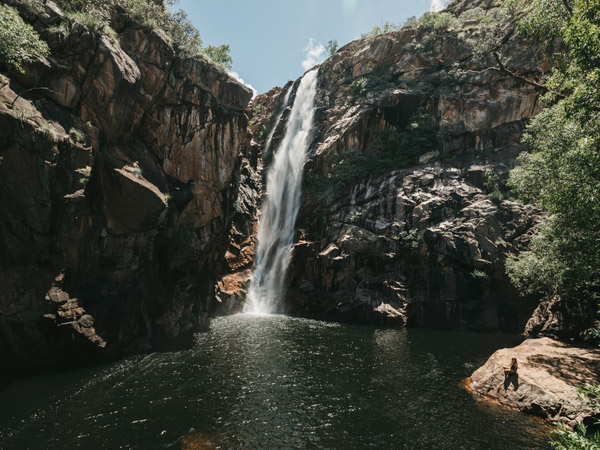
the Motor Car Falls in Kakadu
Motor Car Falls is one of the only waterfalls you can access in Kakadu during the wet season. (Image: Tourism NT/Jarrad Seng)

The wet season is a beautiful time to visit Kakadu National Park, and there are still plenty of must-do attractions that are accessible year-round. It’s important to keep an eye on the Kakadu access report and check daily for any road closures or hazards.

Can go: The Arnhem and Kakadu highways remain open, as do the roads to Nourlangie, Ubirr and Cooinda, although they may close after big storms. The road to the Yurmikmik walks is also often accessible, including Motor Car Falls.

Can’t go: The roads to Jim Jim and Twin Falls are closed. The best way to see these is on a scenic flight. Old Jim Jim Road, Maguk and Sandy Billabong are also out of action. Many minor unsealed roads are closed; those that remain open are 4WD-only, and some bush campgrounds are closed.

Check out our Kakadu FAQs for more.

Road trip Kakadu itineraries

Kakadu in three days

Day 1: 

  • Drive Darwin to Jabiru
  • Head to Bowali Visitor Centre
  • Visit Cahills Crossing to spot some crocodiles
  • Enjoy the sunset at Ubirr
  • Camp at Merl Campground (Luxe option: Crocodile Hotel, Jabiru)

Day 2: 

  • Take a two-hour Guluyambi Cultural Cruise up the East Alligator River
  • See the amazing art at Nourlangie Rock
  • Do a sunset cruise on Yellow Water Billabong
  • Camp at Mardugal campground (Luxe option: Cooinda Lodge)

Day 3: 

  • Spend the morning luxuriating at Maguk
  • Drive back to Darwin

Weekly travel news, experiences
insider tips, offers, and more.

Kakadu in five days

  • Follow the three-day itinerary, stay an extra two nights at Mardugal Campground or Cooinda Lodge

Day 3: 

  • Visit Jim Jim Falls (4WD only)
  • Camp at Sandy Billabong (take a chair and watch the birds descend at sunset)

Day 4: 

  • Luxuriate at Maguk (4WD only)
  • Camp at Maguk Campground

Day 5:

  • Enjoy one of the Yurmikmik walks
  • Drive to Darwin

Kakadu in eight days

  • Follow the five-day itinerary, plus:
  • Stay an extra night at Jabiru and do the Bardedjilidji Walk along the Alligator River
  • Stay an extra two nights at Mardugal Campground or Cooinda Lodge and walk out to Gubara Pools
  • Add in a full-day 4WD tour, especially if you are travelling with a 2WD

Want to see more stories from Australian Traveller in your Google search results?

  1. Click here to set Australian Traveller as a preferred source.
  2. Tick the box next to "Australian Traveller". That's it.
Melissa Mason
Melissa Mason is a freelance journalist who loves road tripping and car snacks. Previously holding Editor roles at ELLE, marie claire, Broadsheet and Pedestrian.TV, she now writes travel and lifestyle content for a wealth of Australian titles like SMH, Mamamia and Urban List, as well as copywriting for international brands. Outside of writing, she loves walks with her dog Ted, a great Sunday afternoon with friends, and op shopping. If she could be anywhere right now it would be lounging on a hammock at a tropical resort with a great romantic fantasy book.
View profile and articles
hero media

Untouched wilderness & unexpected pub crawls: 8 experiences you’ll only find in the NT

(Credit: Tourism & Events NT/ Sean Scott)

    Kassia Byrnes Kassia Byrnes
    The Northern Territory isn’t just different – it’s a whole new world. From the friendly locals and varied landscapes to its cultural layers, there’s nowhere else in Australia quite like it.

    The Northern Territory has to be experienced to be believed. The majesty of Uluṟu doesn’t quite hit until you’re standing before it. The untouched beauty of Arnhem Land strikes the heart in a way you can’t imagine. The quirky and friendly locals and the festivals they throw impart stories that won’t be forgotten. And that’s just the beginning. From natural hot springs and local larrikins to deep cultural ties and ancient stories, these are the experiences to be discovered only in the NT.

    1. Swim in pristine natural hot springs

    woman swimming in Katherine Hot Springs only in the nt
    Dive into Katherine’s crystal clear thermal springs. (Credit: Tourism & Events NT/ Backyard Bandits)

    The NT’s natural hot springs are truly picturesque. Katherine’s crystal clear thermal springs sit on the banks of the Katherine River, framed by nature. Picnic grounds and scenic walking tracks make it easy to linger.

    In Elsey National Park, the teal waters of Bitter Springs have long been popular with locals. It’s not uncommon to spot turtles as you drift with the gentle current, palm trees waving on the banks. The park also contains Mataranka Thermal Pool, a sandy-bottomed swimming hole sitting at a cosy 34°C year-round.

    2. Explore the Red Centre Light Trail

    Light Towers Kings Canyon
    Head to Kings Canyon to see the Light Towers. (Credit: Tourism & Events NT)

    Uluṟu-Kata Tjuṯa National Park is more than just a place; it’s earned its name as Australia’s cultural heart. Here, a wealth of stories is held by its Traditional Owners, the Aṉangu. And while there are many ways to connect, in more recent years, the Red Centre Light Trail has offered visitors one more way to interpret all this landscape holds.

    Wander the Light Towers at Kings Canyon and watch the Field of Light transform the land before Uluṟu as day turns to night. Also, be sure to take in Wintjiri Wiṟu by light artist Bruce Ramus, sharing the Aṉangu’s Mala story.

    Arrive in April to experience Parrtjima, a free annual 10-night festival of light, featuring installations, workshops and more.

    3. See unrivalled views from a helicopter

    helicopter ride over kakadu only in the nt
    See Kakadu from the air. (Credit: Tourism & Events NT/ Sean Scott)

    There’s no better place in the world to hit the skies in a helicopter. Soar over thundering waterfalls, world-famous wetlands and the floodplains of Kakadu National Park. A bird’s-eye view brings a special type of magic to this one-of-a-kind landscape.

    You can also meet local characters on the pub crawl of a lifetime as you fly between some of the NT’s best and most remote pubs.

    4. Discover the start of Western Arrarnta art

    Hermannsburg Potters only in the nt
    Book ahead to visit Hermannsburg Potters. (Credit: Tourism & Events NT/ Felix Baker)

    Hermannsburg is one of the most unique towns in Australia. This historic mission town holds several claims to fame, including being the birthplace of Western Arrarnta art – a renowned style of Indigenous art using vibrant, naturalistic watercolours to depict Central Australian desert landscapes. Book ahead from April to September to visit Hermannsburg Potters, a collective of dedicated Western Arrarnta artists.

    Other options to see this art style near Alice Springs include the Araluen Arts Centre, Iltja Ntjarra (Many Hands) Art Centre and Standley Chasm (Angkerle Atwatye).

    5. Spot crocs on a cruise

    Crocodile being fed on a cruise on the Adelaide River nt
    Spot wild crocs up close. (Credit: Tourism Australia)

    The NT is the only territory that feeds wild crocs, putting the ‘wild’ in wildlife spotting experience. Join a cruise along the Adelaide River, just an hour from Darwin, to see these not-so-gentle prehistoric giants in their natural habitat.

    Be sure to stop into Humpty Doo or Noonamah for lunch on your way back to Darwin. Here, you’ll experience a real NT roadhouse.

    6. Experience local Indigenous cultures

    young participant at the Garma Festival Nhulunbuy arnhem land
    Time a trip to Nhulunbuy for the Garma Festival. (Credit: Tourism & Events NT)

    The NT offers some of the best opportunities to experience the world’s most ancient living culture. Head to Nhulunbuy in East Arnhem mid-year for the Garma Festival, Australia’s largest Indigenous gathering, with four days of song, dance and art sharing Yolngu culture. Stop into Buku-Larrnggay Mulka Centre in nearby Yirrkala while you’re there, current home of the Yirrkala Church Panels. Painted in 1963, they form one of the first ‘title deeds’ to Country.

    Join a celebration of Indigenous music, art, culture and sport at the Barunga Festival, 80 kilometres from Katherine, every June. And year-round, book an Indigenous-led tour through Ubirr, one of the oldest rock art sites in Australia.

    7. Meet the larrikins of Alice Springs

    competitors in Henley on Todd Regatta
    Henley on Todd Regatta might be one of the NT’s whackiest events. (Credit: Tourism & Events NT/

    Head to Alice Springs at any time of year and you’ll be guaranteed to meet some colourful locals. But to really get to the heart of the eccentricities, mark a few dates on your calendar.

    March brings one of the best Pride events in the world, fabAlice. Inspired by the iconic Aussie movie The Adventures of Priscilla, Queen of the Desert, which was filmed in Alice Springs over 25 years ago, the festival has a strong focus on the art of drag and celebrates LGBTQI+ communities, as well as self-expression in general.

    Come August, Todd River’s typically dry, sandy bed comes alive with the world’s only dry river boating event, the Henley on Todd Regatta.

    8. Swim in a waterfall with no one else around

    Upper Cascades in Litchfield National Park
    Swim in the Upper Cascades with no one else around.

    So few of Australia’s most beautiful places remain untouched, but that’s not true in the NT. Take a short hike through monsoon forest in Litchfield National Park (just over an hour’s drive outside of Darwin) to reach the secluded Cascades swimming area. Here, take a dip in the lower or upper cascade pools, both surrounded by rugged bushland. And you’ll probably have it all to yourself.

    Plan your Northern Territory trip of a lifetime at northernterritory.com.