The Litchfield National Park guide you need to read

hero media
Rock formations, stunning natural pools, thundering waterfalls and monsoon rainforest: it may not be as well-known as its bigger neighbour, Kakadu, but there are a lot of reasons to visit Litchfield National Park. Whether on a tour or on your own, here’s everything you need to know.

In a territory literally swathed in wild landscapes brimming with some of the world’s most striking wildlife, the fact Litchfield is at the top of tourists’ must-visit lists says a lot. Simply put, the park has the NT trifecta: it’s easy to reach, offers affordable accommodation, and its attractions are worthy of repeat visits. Located 115 kilometres’ south of Darwin, it’s easy enough to rise in the city early, tick off the main waterfalls and be back in your harbourfront hotel by sunset as it’s only an hour and 20 minutes by car. But our advice is to slow it right down: Litchfield deserves more and so do you.

My biggest tip for a truly awesome Litchfield experience is to stay in the park and get out of bed not long after the sun comes up every morning. The waterfalls can become crowded by noon, so opt for a light breakfast and fast-track to your designated natural plunge pool so you have it all to yourself for a little while.
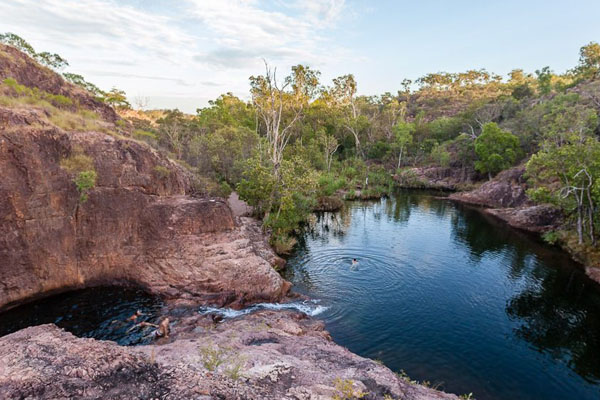
Waterfalls at Litchfield National Park
The beautiful Litchfield National Park (photo: Sarah Mackie).

Darwin to Litchfield National Park

The best way to “do" Litchfield is with a 4WD and tent, camper trailer or caravan – or, if you need to hire a vehicle, a campervan. There’s a Britz/Maui branch in Darwin; be sure to check its seasonal opening hours. One of the best things about Litchfield is that it’s accessible to 2WDs, however, the sturdier your vehicle the more (unsealed) roads you’ll be able to venture down. For more on road-tripping in the NT, check out AT’s guide.
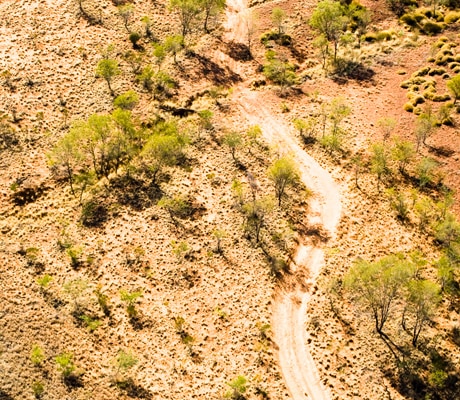
Driving in the NT
Many of the Northern Territory’s most stunning sites, and a few of its more direct routes, are 4WD access only.

If none of those options work, you can join a tour: AAT Kings offers short-break Kakadu and Litchfield itineraries, and NT Air runs helicopter tours of numerous park attractions if you feel like splurging. If you opt for a self-guided tour, the closest service station and convenience store to Litchfield is at Batchelor.
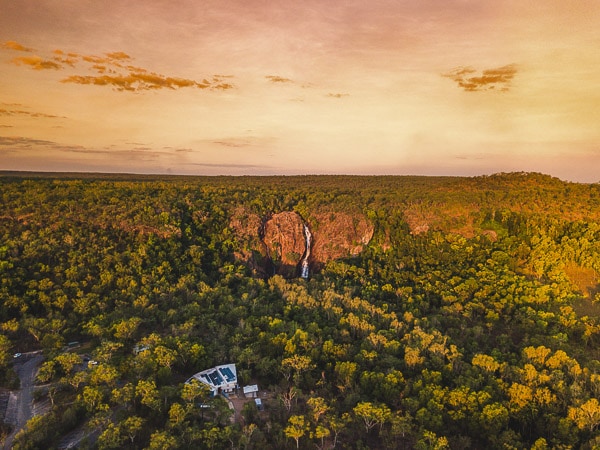
Get set for real adventure and connect with nature at Litchfield National Park. At just over an hour from Darwin, it’s every local’s favourite day trip.

What you need to know about Litchfield weather

When planning your trip, you need to give serious thought as to what type of experience you want, as Top End weather will play a big role in which campgrounds, attractions and roads are open. The peak tourist season is winter or “the dry" (May to October) because this is when you can roam fairly freely and swim in the waterholes without fear of spying a pair of croc eyes within arm’s reach. However, campgrounds can book out, so it’s best to plan ahead. In the tropical summer (November to April), some roads and walking tracks close, but most of the park is open year-round and there are viewing platforms from which you can watch the falls.
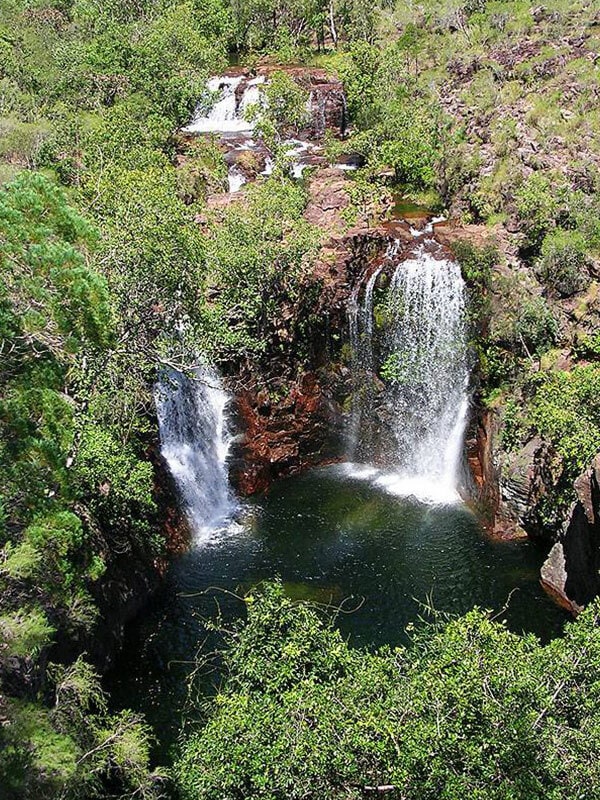
Litchfield waterfalls
Litchfield has incredible waterfalls during the wet season.

Litchfield waterfalls and swimming spots

Litchfield National Park is famous for its thunderous waterfalls and natural swimming holes and there are a handful of truly spectacular ones you really don’t want to miss on your visit.

Florence Falls

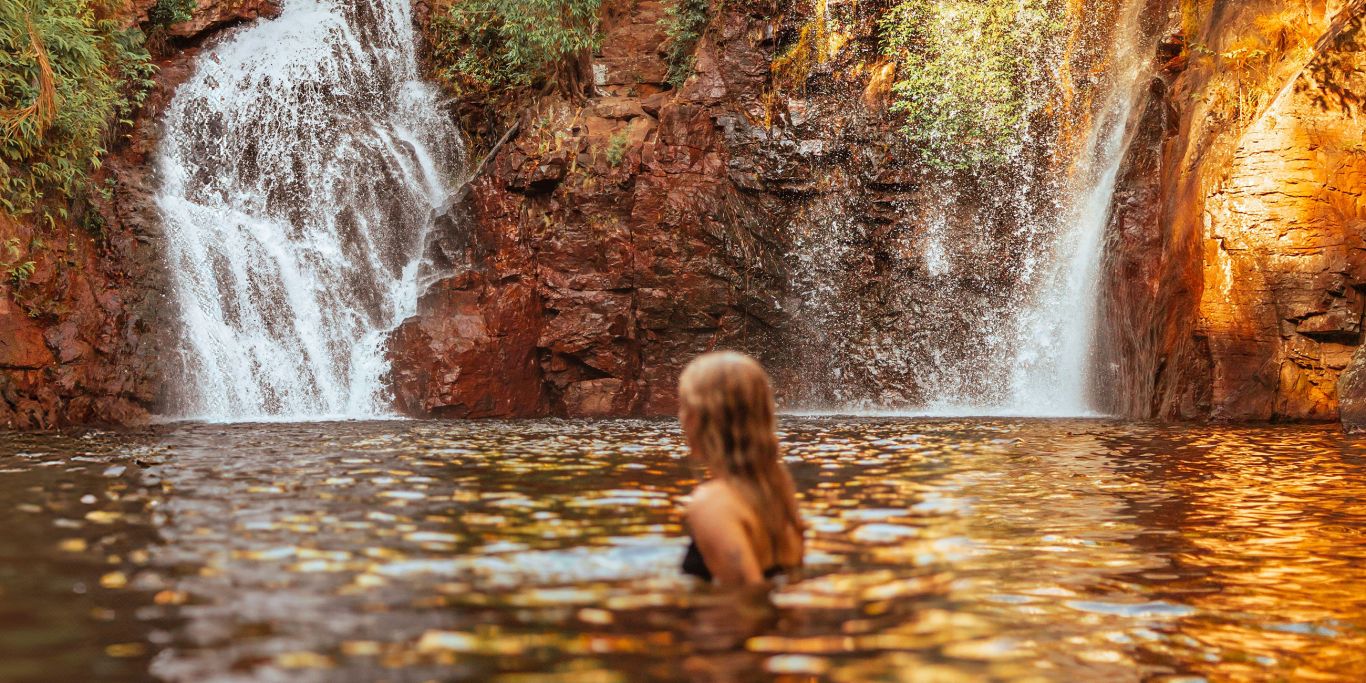
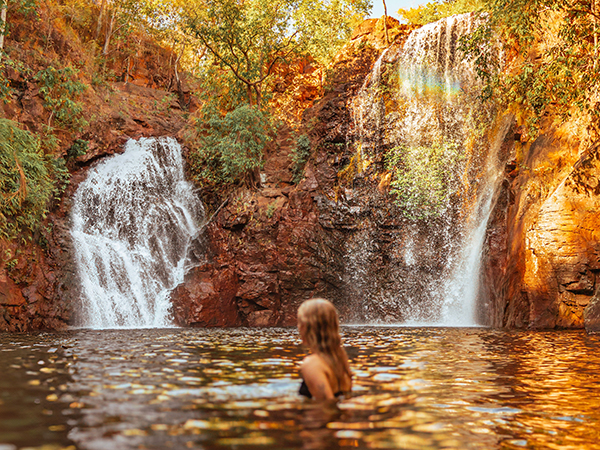
The twin cascades of Florence Falls make it undoubtedly Litchfield’s star attraction. Families splash about in a rockery, big kids scale rock walls so they can backflip into the abyss, and everyone else bobs about in the cool, dark drink, in inflatable rings, occasionally being lured to the waterfalls for a shoulder pummelling.

The spring-fed falls are easy to reach and if you have a couple of days at Florence you should greet them from both angles: walk alongside the creek from Florence Falls Campground (4WD-only) and down the (160) stairs from the main car park above the falls. From the car park, there’s also a path that leads to a small lookout which commands great views that you will have to jostle alongside busloads of tourists to enjoy.
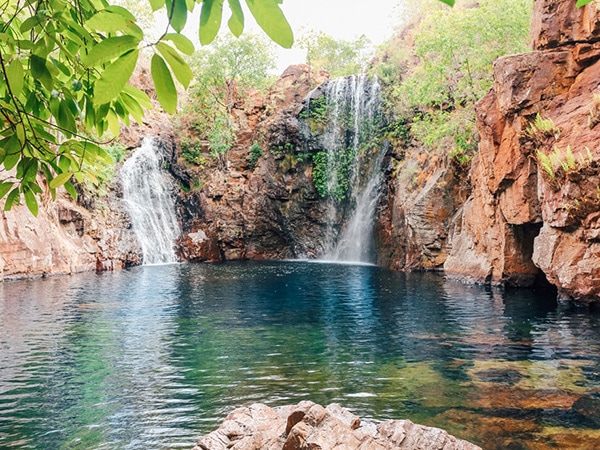
Florence Falls Litchfield
Litchfield’s star attraction, Florence Falls.

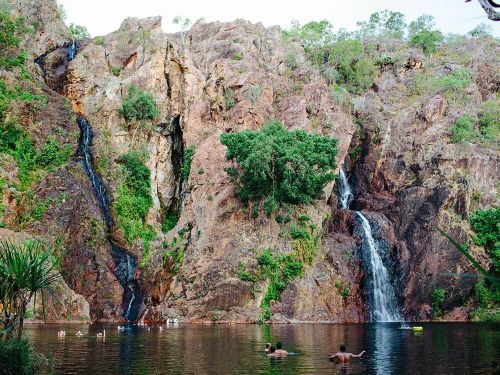
Wangi Falls

The other big name in Litchfield is Wangi. The pool at the base of the double waterfall is much bigger than Florence and there’s also a large, timber platform to spread out on. A boardwalk skirts part of the water’s edge, while a trail leads away into monsoon rainforest. If you’re craving some holiday exercise, follow the path up the mountain and over the top of the waterfall before descending back to the cool pool below. You’ll want to be reasonably agile and fit to enjoy the walk, although it is suitable for tenacious toddlers.

I also love the grassy picnic area at the entry to the falls, which is a top spot for chilling out; expect free wi-fi. If you don’t feel like packing your own lunch, check out Wangi Falls Cafe near the car park.
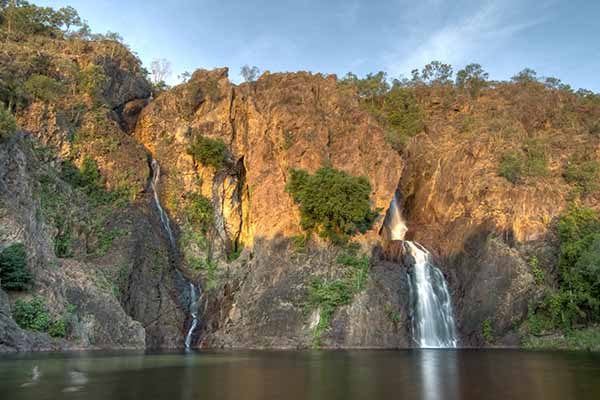
Wangi Falls, Litchfield National Park
Breathtaking Wangi Falls at sunset.

Buley Rockhole

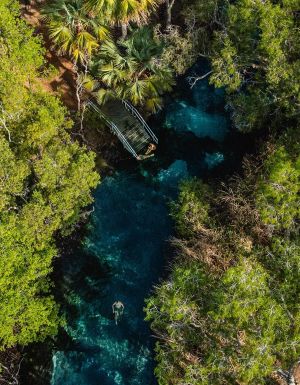
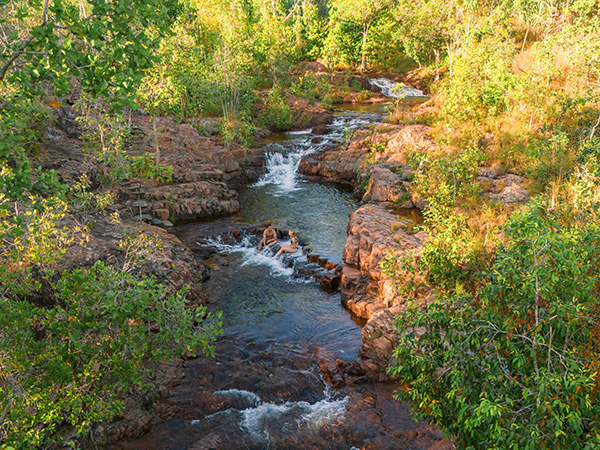
One of the most accessible swimming spots is Buley Rockhole, which is also the best for young families due to the fact it comprises a series of pools. The top pools are fairly shallow and safe for toddlers, while teens will love the lower, deeper holes. The fresh water is crystal clear and makes for a deliciously revitalising start to the day.
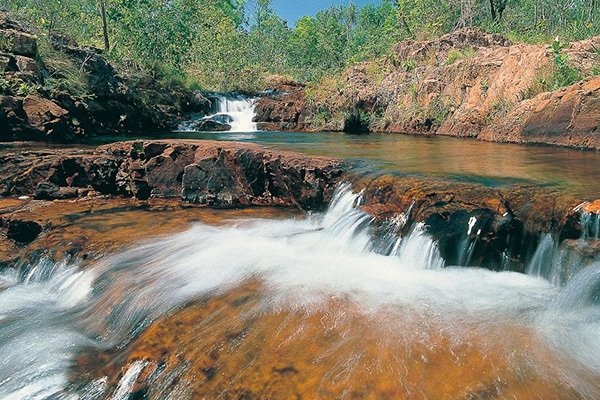
Buley Rock Pools
Buley Rock Pools in Litchfield National Park.

Tolmer Falls

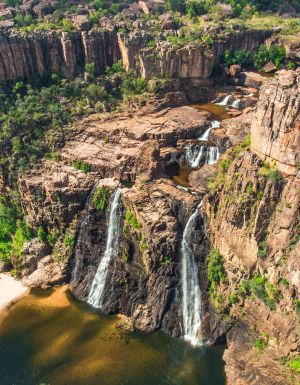
If you’re staying a few days and are keen to venture beyond the three most popular waterholes, there are a few others you can check out. Tolmer Falls is considered by some visitors as the most spectacular in the park due to its 100-metre drop, and can be reached via a sealed road and the 1.6 kilometre (45-minute) Tolmer Falls loop walk. You can’t swim here but you can soak in the views from two platforms.

Tjaynera Falls and Surprise Creek Falls

There is also Tjaynera Falls (Sandy Creek Falls) and Surprise Creek Falls, both of which can only be reached by 4WD. Tjaynera is a little different to the rest in that the 3.4-kilometre (return) trail in is surrounded by paperbarks and fairly dry in comparison to the monsoon forest of the other areas. It’s also a quieter option if you’re after somewhere secluded, as is Surprise Creek Falls. To reach the latter, you’ll have to tackle river crossings.
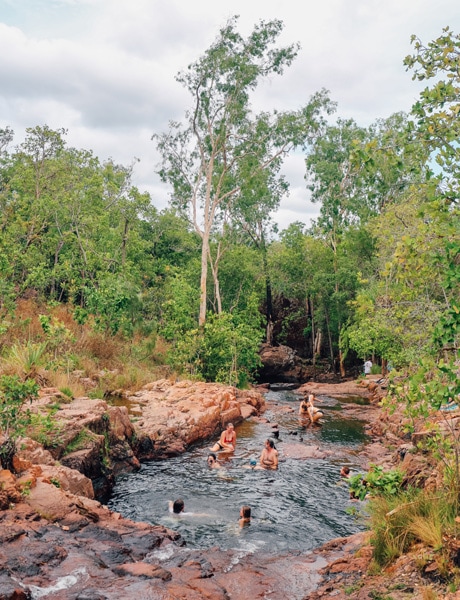
Buley Rockhole, Northern Territory
Float inside a network of peaceful waterholes at Buley Rockhole.

Litchfield National Park attractions

Waterfalls aren’t the only reason to visit, there are many more unique experiences to be had in Litchfield National Park, from termite mounds to a lost city and a butterfly farm.

Magnetic Termite Mounds

As you enter Litchfield, you’ll notice a field of termite mounds. Some rise as high as two metres and there are hundreds of them, making a pretty quirky photo op. The termites have cleverly built their knife-like homes so the broad backs of the mounds face east and west, and the temperature inside remains stable in the NT’s heat. There are also cathedral termite mounds that rise up to four metres; they’re best viewed from the boardwalk.

The Lost City

If strange formations fascinate you, also make time for The Lost City, a series of large sandstone towers eroded by the elements. With maze-like patterns, the pillars get their name for their resemblance to a long-forgotten city. It’s the perfect place to let your imagination run wild, and creative kids will love it. Note: you will need to be adept behind the wheel to reach this captivating place as the single-lane 4WD track is rough and often impassable in the wet season.
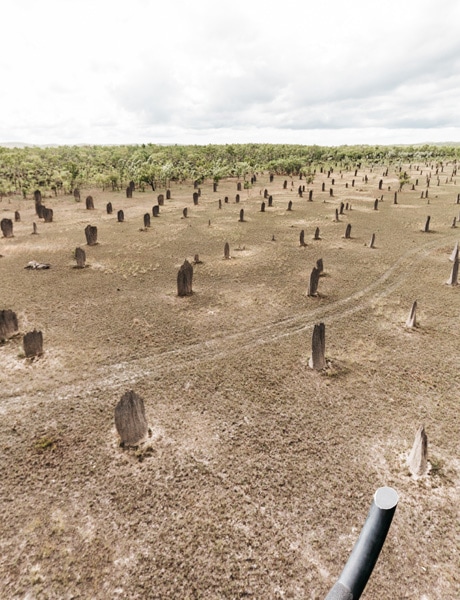
Make sure to stop off at the Magnetic Termite Mounds.

Blyth Homestead

Finally, you can add a little history lesson to your park stay by dropping into historic Blyth Homestead, the former residence built by a family of pioneers in the 1920s. Abandoned in the 1960s, the property was also the site of a tin mine. Again, you’ll need a 4WD to reach the homestead, which is inaccessible during summer; entry is free.

Butterfly Farm

If you’re teaching your kids about metamorphosis or simply want to experience an off-beat tourism attraction (something the Territory is famous for), call into Batchelor Butterfly Farm and Petting Zoo at the end of your Litchfield stay. Journalist Jennifer Pinkerton describes the enclosure as “slightly weird, but absolutely beautiful" and you can learn about Australian species on daily tours. The farm is a 30-minute drive from Litchfield National Park.

Litchfield camping

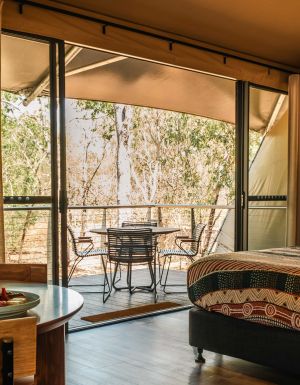
The small and tidy Old 4WD Florence Falls Campground (now 2WD accessible) offers the best base for campers. Sites are suitable for vans, campers and tents, and there’s a clean and modern shower and toilet block, too. There is another 2WD campground up the road.

If you’re a long-term traveller keen to hang around, check out nt.gov.au for any openings for volunteer campground hosts. These positions can be taken up to a year in advance but, if you’re organised and snag one, you can stay in one of the best national parks in Australia for free, in exchange for keeping it spic and span.

For more incredible sites and attractions to see nearby, read our travel guide to Darwin and the Northern Territory.
Jennifer Ennion
Jennifer Ennion is a freelance travel and ski journalist who loves encouraging people to spend more time outdoors. From snorkelling with belugas in sub-Arctic Canada to hiking the Himalayas, Jennifer is constantly searching for stories that inspire readers to push their boundaries.
See all articles
hero media

8 Red Centre locations to explore after seeing the new movie, Kangaroo

Spend a few days visiting the real-life Central Australian locations that inspired the new film everyone is talking about, and discover why Alice Springs is such an important part of Australian culture.

In the credits of the new Australian film Kangaroo , the first name under ‘cast’ should read ‘The Northern Territory ’. Not only is Alice Springs (and the surrounding landscape) integral to the movie itself, but the spiritual heart of Australia and its local Indigenous owners also inform the look and feel of every frame, explains Producer Trisha Morton-Thomas of Brindle Films, who also plays Charlie’s grandmother Gwennie.

“By setting Kangaroo in Alice Springs (Mparntwe), the film embraces how visible Aboriginal people are here, and the living Aboriginal culture that is woven through this community,” she explains.

still from kangarro film
See Kangaroo, then visit the real-life filming locations.

And while shooting in such a sacred part of the Northern Territory required extra planning, it was something the cast and crew were highly invested in.

“There are incredibly significant sacred sites and places of deep cultural stories in the area, that at times are very gender-specific, which we’ve kept out of the production,” she explains. “Even if overhead drone footage captures a sacred site that isn’t meant to be seen by other people outside of that clan, we’ve made sure to omit it from the film.”

If Kangaroo piqued your interest in a Central Australian holiday, we don’t blame you. Read on to discover eight places featured in the movie that you can visit in real life – and get planning. Don’t forget to pack sunscreen and a hat.

1. Alice Springs/ Mparntwe

artist at Many Hands Art Centre
Visit the galleries of Alice Springs, like Many Hands Art Centre. (Image: Tourism NT/ Helen Orr/ Many Hands Art Centre)

The red and dusty streets of the film’s fictional town of Silvergum were filmed on the outskirts of Alice Springs. And, while the art gallery featured in the film is fictional, Alice Springs is a hub of creativity. See the work of local artists at the Araluen Art Centre , Yubu Napa Art Gallery , Iltja Ntjarra (Many Hands) Art Centre and the famous Tjanpi Desert Weavers .

2. The Kangaroo Sanctuary & Kangaroo Rescue Centre

The Kangaroo Sanctuary Alice Springs, the inspiration for the Kangaroo move
Visit the movie’s inspiration at Kangaroo Sanctuary. (Image: Tourism NT/ Kangaroo Sanctuary)

Kangaroo was inspired by the journey of Chris ‘Brolga’ Barns, who founded the now world-renowned Kangaroo Sanctuary based in Alice Springs. For lead actor, Aussie Ryan Corr, the animals were central to the movie, alongside the landscapes.

“The animals in this story were a real calling point for me,” he explains. “What this story tries to tell us about the connection between humans and animals is beautiful.”

To gain a real insight into the fauna and flora of the Red Centre, you can visit the Kangaroo Sanctuary on a sunset tour, where you might even get the chance to hold a baby kangaroo.

3. Ormiston Gorge

woman walking along the edge of Ormiston Gorge near alice springs
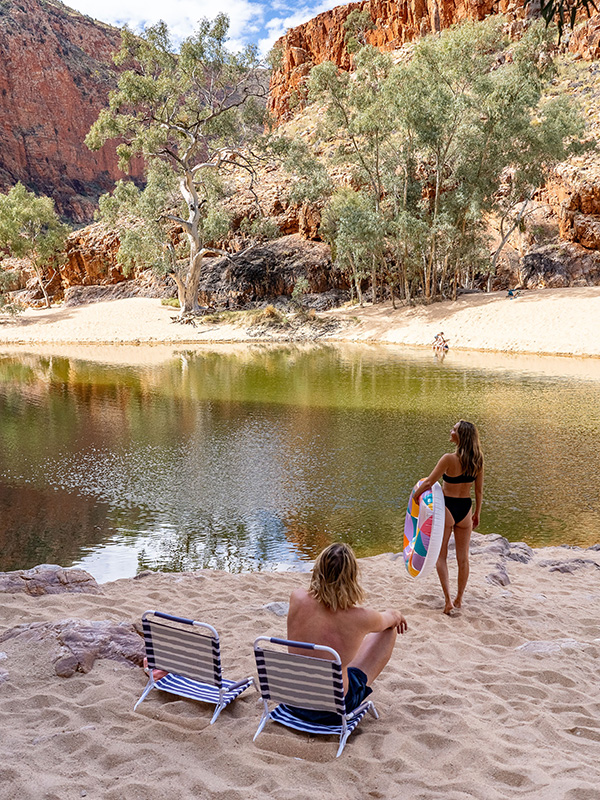
Take a dip in Ormiston Gorge. (Image: Tourism NT/ @domandjesso)

The film captures the raw beauty of the West MacDonnell Ranges, known in the Arrernte language as Tjoritja. This national park is rich in Indigenous culture and stark geological wonders.

Only a 15-minute drive from Alice Springs, Tjoritja offers visitors the chance to camp, hike and swim among ancient landscapes (most attractions are less than a three-hour drive away).

Ormiston Gorge , a cooling oasis in among the red desert sands, is one of the most popular destinations, no doubt because of the permanent swimming hole and towering red cliffs. From here, visitors can also embark on the beautiful Ormiston Pound Walk and the shorter – more accessible – Ghost Gum Walk. Bring your bathers – it’s safe for swimming.

4. Standley Chasm

woman walking through Standley Chasm near alice springs
Wander through Standley Chasm. (Image: Tourism NT)

The 1.2-kilometre walk to nearby Standley Chasm will be a highlight for any visitor as the imposing 40 metre-high chasm walls project strength and ancient wisdom.

Visit at midday to experience the path illumined by the midday sun. Not only will you fill your camera roll with vibrant red images of the gorge and its intoxicating shadows, but you can also camp nearby in a powered or unpowered site so you can watch the brilliance of the desert stars fill the night sky after dusk.

5. Simpsons Gap

three people walking on path through simpsons gap near alice springs
Walk the trails of Simpson’s Gap. (Image: Tourism NT/ Helen Orr)

Closer to Alice Springs, the photogenic Simpsons Gap is the perfect place to spot the endangered Black-footed Rock wallaby near the permanent watering hole. While swimming isn’t permitted, soaking up the sun and views certainly is.

Explore the area’s numerous walking trails, appreciate the soaring cliffs on either side of the ‘gap’ and pick out the shooting locations of Kangaroo in the area.

6. Ellery Creek Big Hole

aerial of Ellery Creek Big Hole near alice springs
Dive into Ellery Creek Big Hole. (Image: Tourism NT/ Tourism Australia)

When it comes to classic Northern Territory landscapes, you can’t go past Ellery Creek Big Hole/ Udepata : tall gum trees sidling up to a refreshing watering hole (fed by the West MacDonnell Ranges and surrounded by rugged red cliffs.

Swim in the cooling waters, hike the cliff tops, watch for birds and even stargaze as you camp here overnight. It’s locations like this that attracted the film’s director Kate Woods to the project.

“It humbles you to be in this environment: it’s so beautiful, so old and so vast,” she explains. “I was thrilled to get a chance to … shoot such a beautiful story in the incredible landscape of the Northern Territory.”

7. Larapinta Drive

aerial of Larapinta Drive into alice springs
Drive along Larapinta Drive. (Image: Tourism NT)

There is no better way to get a feel for how the characters arrived at the fictional Central Australian town of Silvergum than to travel along the iconic state road, Larapinta Drive.

Connecting Alice Springs to the mighty King’s Canyon in the west, via the historic community of Hermannsburg, this road takes in the West MacDonnell National Park, Alice Springs Desert Park and artist Albert Namatjira’s house, among other attractions. Take your time, bring a camera and prepare for numerous stops along the way.

8. Todd River

competitors in Henley on Todd Regatta, alice springs
Join in the fun of the quirky Henley on Todd Regatta. (Image: Tourism NT/ TImparja Creative)

Meandering through Alice Springs like a lazy Western Brown snake, the Todd River is a central part of Alice Springs culture. Known as an ‘intermittent river’, the Todd can go from a dry dusty riverbed to a flowing waterscape in less than 15 minutes after heavy rainfall.

When it’s dry, the famous Henley on Todd Regatta fills the sandy riverbed with handmade ‘boats’ carried by sailors. This is the world’s only dry river boating event, and it’s referenced in the ‘Silvergum Boat Race’ in the movie. Inspired by the real-life event, the characters built quirky “Flintstones-style boats” and competed in teams.

See Kangaroo in cinemas now, and start planning your NT getaway at northernterritory.com.