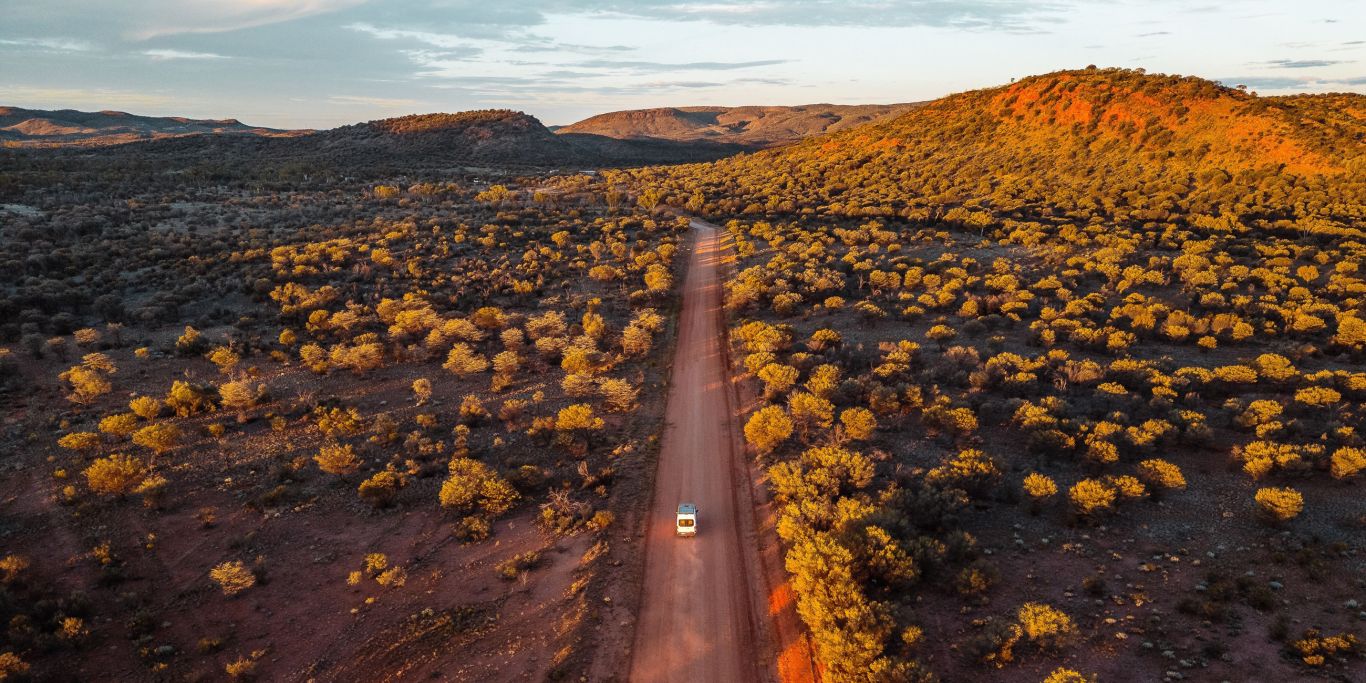
hero media

I visited the Red Centre in low season – here’s why you should too

Image: Tourism NT/@domandjesso

From icons seen in a new light to moments few experience, the Red Centre rewards travellers who visit when most don’t. Consider this your guide to the Red Centre in low season.
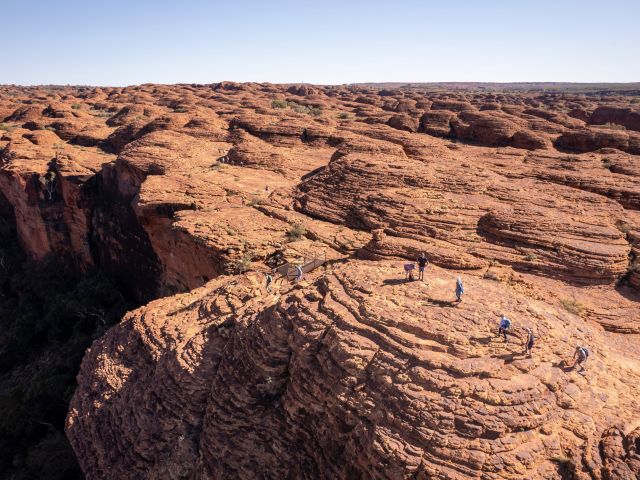
the Kings Canyon/Watarrka plateau from above
Hiking across the Kings Canyon/Watarrka plateau. (Image: Tourism NT/Mark Fitzpatrick)

Looking down on our small group of walkers from all sides are the cliff faces we just scrambled over. They form cake-like layers of deep, earthy reds and surprisingly vibrant greens, with a few splashes of black and white where the elements have had their way.

One holds a more resounding presence than the rest as we stand at the bottom of this natural amphitheatre. Another hiker has dubbed it ‘the sphinx’ and I can’t think of a better description for its rocky form. It appears to swivel its head, watching us as we continue our rocky trail along the Mpaara Loop within Finke Gorge National Park – stopping occasionally to admire colourful wildflowers and dancing birdlife. Later, we discover we didn’t imagine its presence. Traditional Owner Conrad Ratara confirms over dinner that it’s part of an important story. But he can’t tell us any more than that.

Eco-camping in Finke Gorge National Park
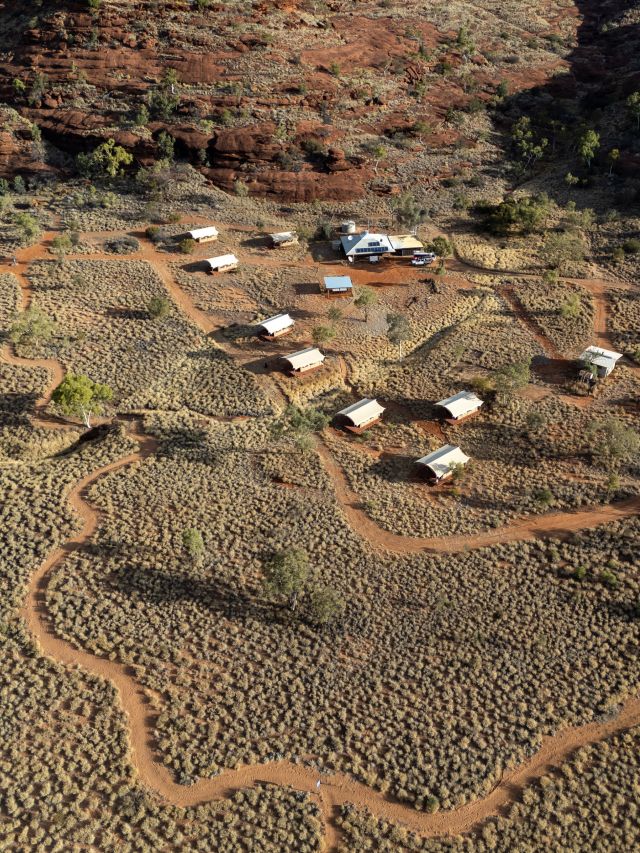
a safari-style eco tent at Yalka Ratara Eco Camp
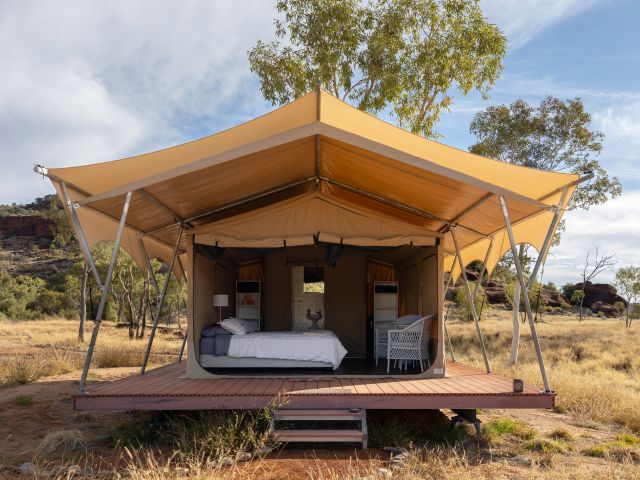
A safari-style eco tent at Yalka Ratara Eco Camp. (Image: Sarbo Studio)

We’re staying the night at Conrad’s glamping site, Yalka Ratara Eco Camp. He’s opened it exclusively to Intrepid Travel and guests on the six-day Red Centre & Uluṟu Tour . In return, Intrepid has helped him turn this long-time dream into a reality. “I had my dream for more than 30 years," Conrad tells us that evening. “I’m proud and happy to be standing with all you people."

The camp sits within Finke Gorge National Park, on the oldest river system in the world and near Palm Valley. Eight eco-designed tents have been set up around camp, all with front-row seats to the landscape around us. The riverbed is currently dry as a bone, despite recent rain in the region. Soft buttery sand gives way to smooth light-coloured rocks, which give way to scraggly spinifex grass.
a large goanna in Red Centre
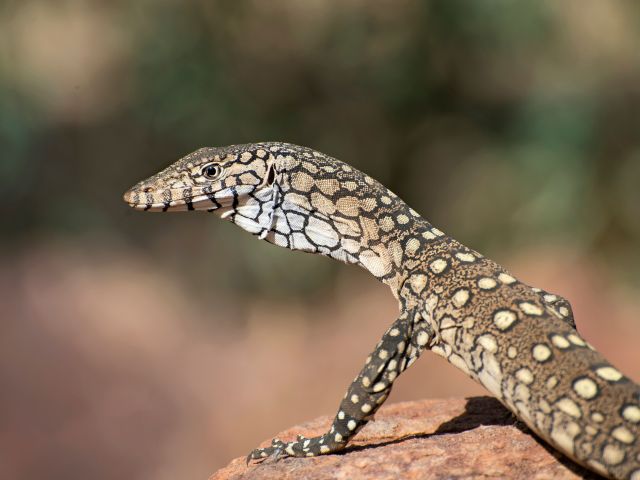
A large goanna monitors the landscape. (Image: Tourism NT/Shaana McNaught)

Ghost gums care not for where the river may choose to flow and dot themselves along the entire way. Locals make themselves known in quiet moments – like the perentie goanna that wanders slowly in front of my tent.

Hiking the Red Centre in low season
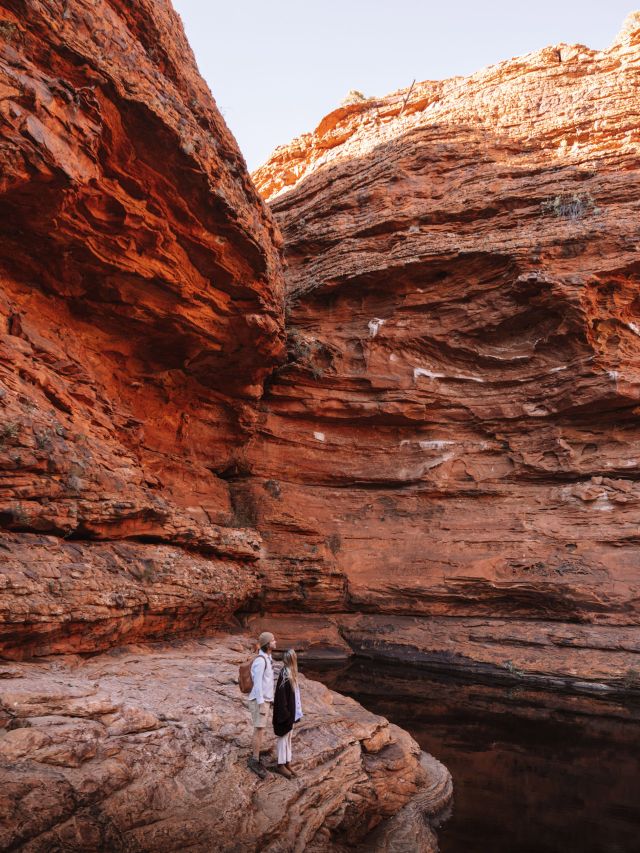
a couple at Kings Canyon
A quiet moment of stillness, looking up in awe at the walls of Kings Canyon. (Image: Tourism NT/@75vibes_)

We’re travelling in November at the start of the Red Centre’s low season, which extends through the summer months. While weather that oscillates from dramatic storms to blistering heat keeps most tourists away, there’s a special magic to this time that so few get to witness. We experience that magic in full flow at Kings Canyon/Watarrka. “Look out there," says John Stafford, our tour guide. He is pointing to the dark grey clouds rolling towards us as we stand at the base of the infamous Heartbreak Hill – a name given to the steep climb at the beginning of the Kings Canyon Rim Walk. They seem to be swallowing up the blue sky at a pace, making their way towards us.

We make it to the top before the rain breaks. Up here, it almost feels like we’ve left Australia behind and hit the craggy rock walls of Sedona, USA. Yet the almost hut-like domes of rock are so uniquely Australian. The storied beauty of this walk has not been overstated. The deep reds of the rim juxtapose with the greens and whites of the cycads, gum and witchetty trees, and bush tomatoes in the canyon below. The keen eyes of our guide spot a little rock wallaby gazing in our direction with disinterest.
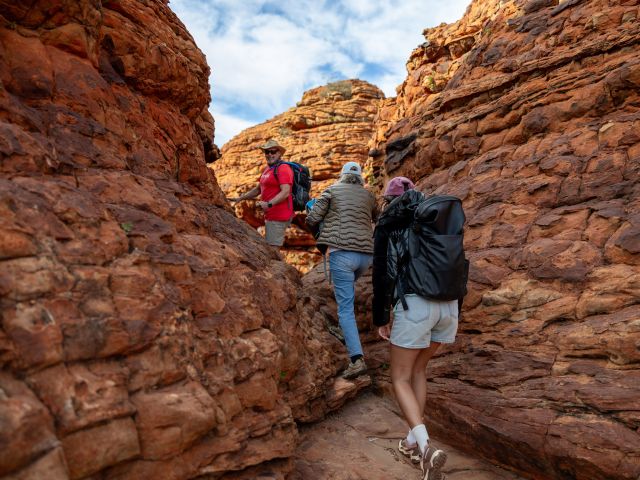
hikers walking through Priscilla’s Gap
Squeezing through ‘Priscilla’s Gap’. (Image: Sarbo Studio)

We just make it through Priscilla’s Gap (a section of the trail made famous in the 1994 film The Adventures of Priscilla, Queen of the Desert) when the heavens open again. Within minutes, what had been parched earth flows with temporary rivers that pour into the canyon below as a series of waterfalls. It turns the striking landscape into one of ethereal beauty – almost like a mermaid might pop out of the filling pools at any moment. Pools like the iconic Garden of Eden, always beautiful, are now full to the brim thanks to a thundering waterfall. It’s a natural phenomenon so rare that most hikers don’t ever set eyes on it. “I’ve been [leading tours here] for 28 years," says John, in awe, “and I’ve never seen this."

As strange as it may sound, being soaked to the bone, crossing flowing waterways that hadn’t been there moments before and seeing this desert beauty in its low-season form was an experience that would have been worth the trip on its own.

Exploring Indigenous stories and ancient landscapes
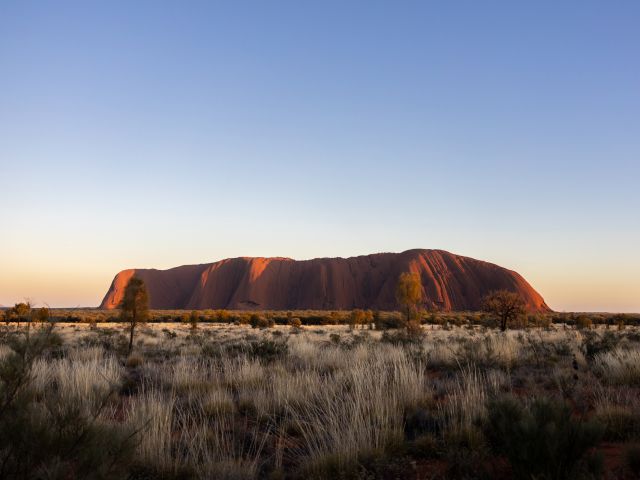
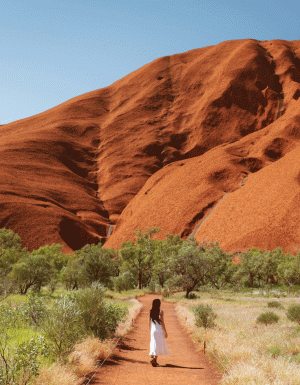
Uluru at dusk
See Uluru at dusk when every curve, crease and ancient contour catches the light. (Image: Sarbo Studio)

Kings Canyon is not the only icon we get to visit on this journey through the Red Centre, where history is quite literally written into the earth.

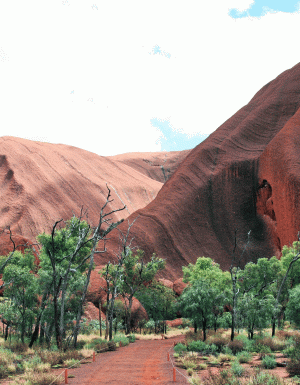
That history can be seen in the Jukurrpa stories shared by our Aṉangu guides, Sascha and her uncle Phillip, along the Kuniya Walk from one edge of Uluru into the Muṯitjulu Waterhole tucked into its jellybean-like folds. We see Uluṟu in every light, from the soft colours of sunrise to the vibrant glow of sunset. I’m not sure Uluṟu will ever be empty of tourists, or minga (ants), as Sascha calls them. But this time of year does thin out the crowds.
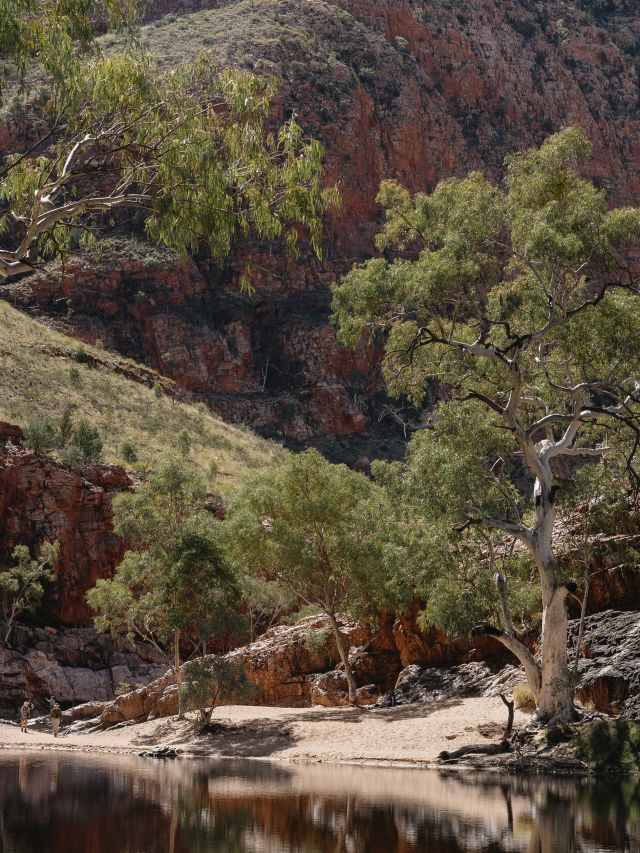
a swimming hole at Ormiston Gorge
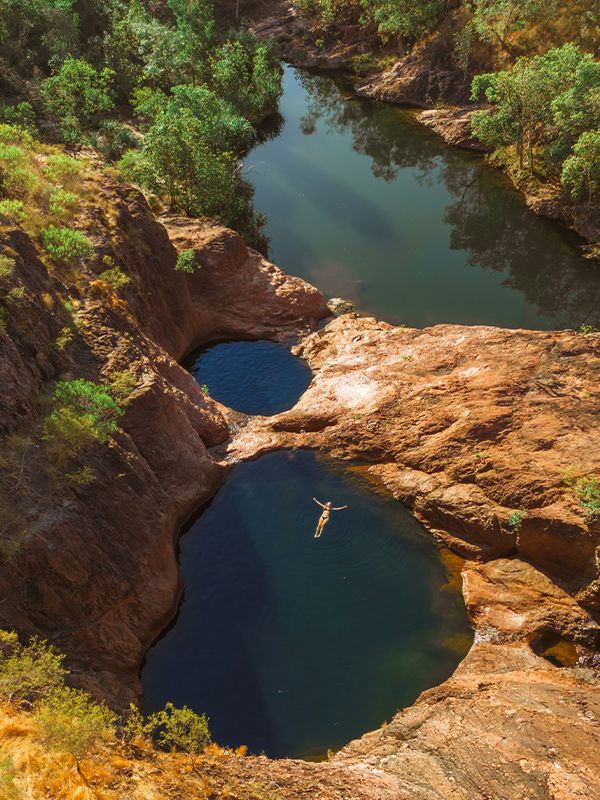
A cool, glassy pool at the base of Ormiston Gorge offers relief from the heat. (Image: Sarbo Studio)

History can also be seen in the landscape’s scars from unearthly events. Like the 20-kilometre-wide crater of Gosse Bluff/Tnorala, left by the impact of a comet striking Earth around 150 million years ago. Or the jagged layers of sediment, pushed up from underground by tectonic plate activity and left reaching out of the earth to create the MacDonnell Ranges, which we wind our way through to reach the culturally significant Simpsons Gap/Rungutjirpa. And Ormiston Gorge, a picture-perfect swimming hole that we almost have to ourselves.

Stargazing in Alice Springs
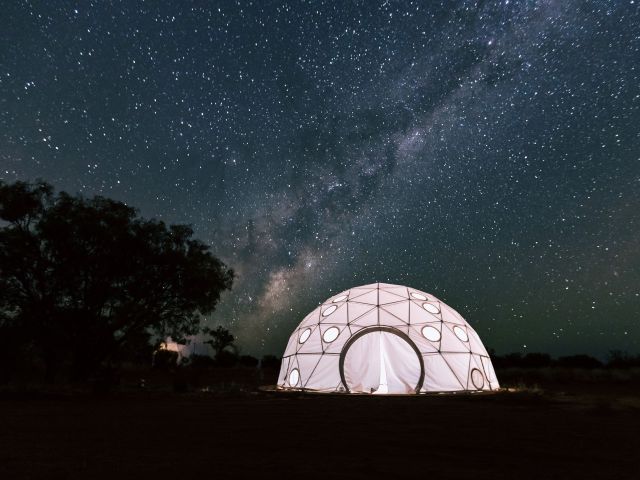
the Earth Sanctuary World Nature Centre
Enjoy dinner and a show under a dark desert sky at Earth Sanctuary. (Image: Tourism NT/Plenty of Dust)

History is written in the skies above, something we get a first glance at during a stargazing experience at the Earth Sanctuary World Nature Centre in Alice Springs/Mparntwe on our final night. Looking up at this dark sky, sparkling with stars uninterrupted by human lights, it feels just as vast as the land we’ve been road tripping over.

Up there, the more scientists learn, it seems, the more there is still to learn. Down here, in the heart of this vast country, the same holds true: the more of it I witness, the more there is still to discover. Come rain or shine.

A traveller’s checklist

Yalka Ratara Eco Camp from above
Yalka Ratara Eco Camp sits softly on the earth. (Image: Sarbo Studio)

Getting there

Most major Australian cities have direct flights to Ayers Rock Airport, with free shuttle buses to accommodation. Alternatively, fly to Alice Springs/Mparntwe, then drive for about 4.5 hours.

Playing there
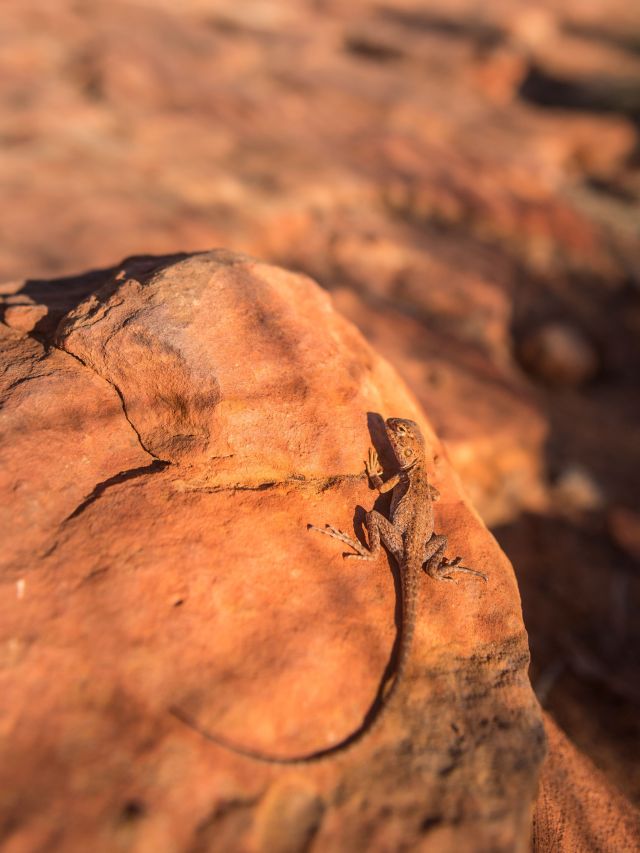
a lizard at Kings Canyon
A ring-tailed dragon. (Image: Tourism NT/Matt Glastonbury)

Intrepid Travel’s six-day Red Centre & Uluṟu Explorer runs year-round. Prices start from $2583 per person, with all accommodation, transport and some meals and activities included.

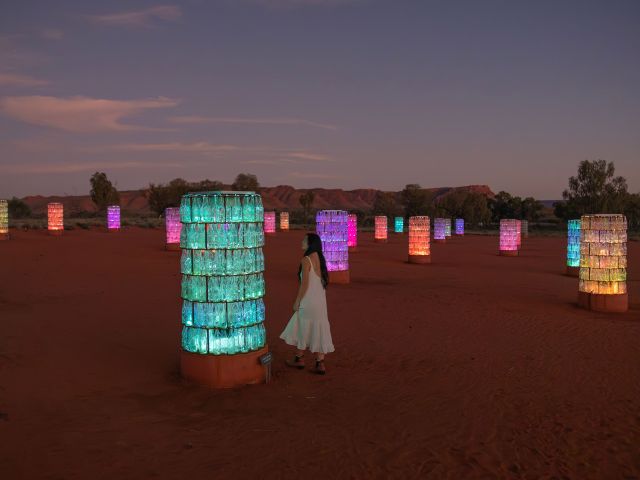
Low season is an incredible time to visit the Red Centre. Burnt landscapes are transformed by thundering waterfalls – a sight very few get to see – and there are fewer crowds than in the peak season. Walking trails are typically open, as are iconic experiences such as Bruce Munro’s Field of Light (an optional extra if you travel with Intrepid).

Kassia Byrnes
Kassia Byrnes is the Native Content Editor for Australian Traveller and International Traveller. She's come a long way since writing in her diary about family trips to Grandma's. After graduating a BA of Communication from University of Technology Sydney, she has been writing about her travels (and more) professionally for over 10 years for titles like AWOL, News.com.au, Pedestrian.TV, Body + Soul and Punkee. She's addicted to travel but has a terrible sense of direction, so you can usually find her getting lost somewhere new around the world. Luckily, she loves to explore and have new adventures – whether that’s exploring the backstreets, bungee jumping off a bridge or hiking for days. You can follow her adventures on Instagram @probably_kassia.
See all articles
hero media

Red earth, light shows and ancient culture: discover the ultimate NT road trip

(Credit: Tourism & Events NT/ Ben Savage)

    Kassia ByrnesBy Kassia Byrnes
    The Northern Territory is made for road trips, and this one hits all the highlights.

    Craggy mountain ranges, inviting waterholes, ochre soil: the landscape of the Northern Territory is asking to be explored by road and foot. There are many iconic road trips to choose from here, but none so all-encompassing than the roughly 3000 kilometres of sealed road that make up Explorer’s Way.

    Spend 14 days (or more, to really make the most of it) driving this route from Adelaide, hitting the NT near the small settlement of Kulgera before later finishing in Darwin. Along the way, you’ll find nearly all the territory’s most iconic sights.

    Discover some of the top highlights that make Explorer’s Way one of Australia’s most incredible road trips.

    1. Alice Springs

    echidna at Alice Springs Desert Park
    See the locals at Alice Springs Desert Park. (Credit: Tourism & Events NT)

    Recently hitting the big screen again with the story of The Kanagroo Sanctuary , there’s a lot to surprise you in Alice Springs.

    Three distinct desert habitats – desert rivers, sand country and woodland – are recreated over 1300 hectares at Alice Springs Desert Park . Time your visit for a presentation or a free bird show.

    Later, turn your attention to the skies above, taking a dive into local astronomy at Earth Sanctuary . You’ll find a range of experiences, from a 90-minute toe-dip into the stars through to an overnight adventure.

    Alice Springs packs a surprising punch with its tasty dining options, including pub grub and unique brews at Alice Springs Brewing Co , tapas and pizza at Epilogue Lounge and tasty cafe fare at the quirky Page 27 .

    2. Tjoritja/West MacDonnell National Park

    woman standing at Ormiston Gorge
    Dive into Ormiston Gorge. (Credit: Tourism & Events NT/ Dom and Jesso)

    Beginning 15 minutes from Alice Springs and stretching across 161 kilometres, Tjoritja/West MacDonnell National Park is packed with striking ancient landscapes and inviting water holes.

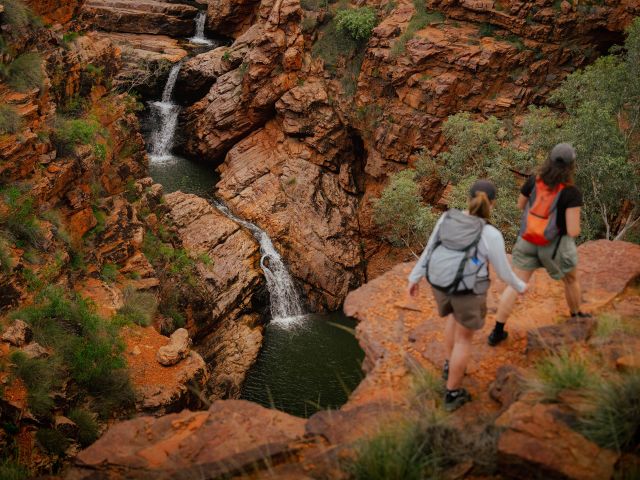
    Visit Standley Chasm – traditionally known as Angkerle Atwatye, meaning ‘Gap of Water’ – to take in its bold red and orange hues, and to observe the diverse bird species, lizards and wallabies that call it home.

    Cool off in one of several picturesque natural swimming holes, like Ellery Creek Big Hole and Ormiston Gorge.

    3. Uluru & Kata Tjuta

    three women looking at Kata Tjuta at sunset
    Explore Kata Tjuta. (Credit: Tourism & Events NT)

    Visiting the Cultural Heart of Australia is something everybody should experience. There are so many side trips in the Red Centre you could easily spend a week here, but to get the most out of a short time, park the car then get out on foot.

    Take the 10-kilometre Base Walk around the entirety of Uluru or join a free, ranger-guided Mala Walk along part of the base, learning about Tjukurpa (creation stories) and geology as you go.

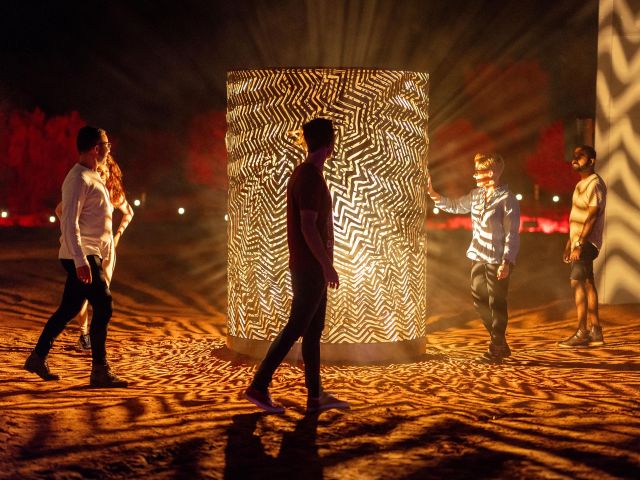
    For a change of pace, wait until nightfall and wander through the iconic Field of Light display by celebrated artist Bruce Munro, or see the Wintjiri Wiru lightshow that shares the ancient Mala story using drones, lasers and projections.

    4. Tennant Creek

    pson looking at Karlu Karlu (Devils Marbles) northern territory
    See the ancient granite boulders of Karlu Karlu (Devils Marbles). (Credit: Tourism & Events NT/ Dom And Jesso)

    Tennant Creek was Australia’s third-largest gold mining town in the 1930s, and visitors can discover that history at Battery Hill Mining Centre – and even try their own hand at gold fossicking.

    For a completely different side of history, pop into Nyinkka Nyunyu Art & Culture Centre , which preserves and shares Warumungu culture through art, performance, a museum and more.

    Just outside town, find the ancient granite boulders of Karlu Karlu (Devils Marbles). A site integral to important stories held by the Warumungu, Kaytetye, Warlpiri and Alyawarra peoples, the boulders appear to almost have dropped out of the sky and seemingly continue to defy gravity.

    5. Mataranka

    aerial of people swimming in bitter springs northern territory
    Dive into Bitter Springs. (Credit: Tourism & Events NT/ Ben Savage)

    A town made famous by the novel We of the Never Never by Jeannie Gunn (and a movie of the same name), Mataranka is also known for its sandy-bottomed thermal pool, Bitter Springs , within Elsey National Park. Follow a 500-metre loop track around these spring-fed pools that stay a toasty 34°C year-round, before choosing your favourite spot to dive into. Enjoy the local birdlife while you relax.

    Elsewhere in the park, find historical sites, several scenic walks and Roper River, which is perfect for boating and fishing.

    6. Nitmiluk National Park

    Nabilil Dreaming Sunset Dinner Cruise
    Join a sunset cruise with Nabilil Dreaming. (Credit: Tourism & Events NT/ Lachlan Gardiner)

    Nitmiluk National Park is sandstone country, with 13 stunning gorges and plenty of waterfalls waiting to be explored.

    One of the most beautiful spots can be found along the 62-kilometre Jatbula Trail, a five-to-six day bushwalk that follows an ancient Jawoyn songline from Nitmiluk Gorge to Leliyn (Edith Falls). Numbers are restricted and book out quickly, so be sure to plan well ahead. Not up for the hike? Drive right up to the falls and enjoy a dip without the challenge.

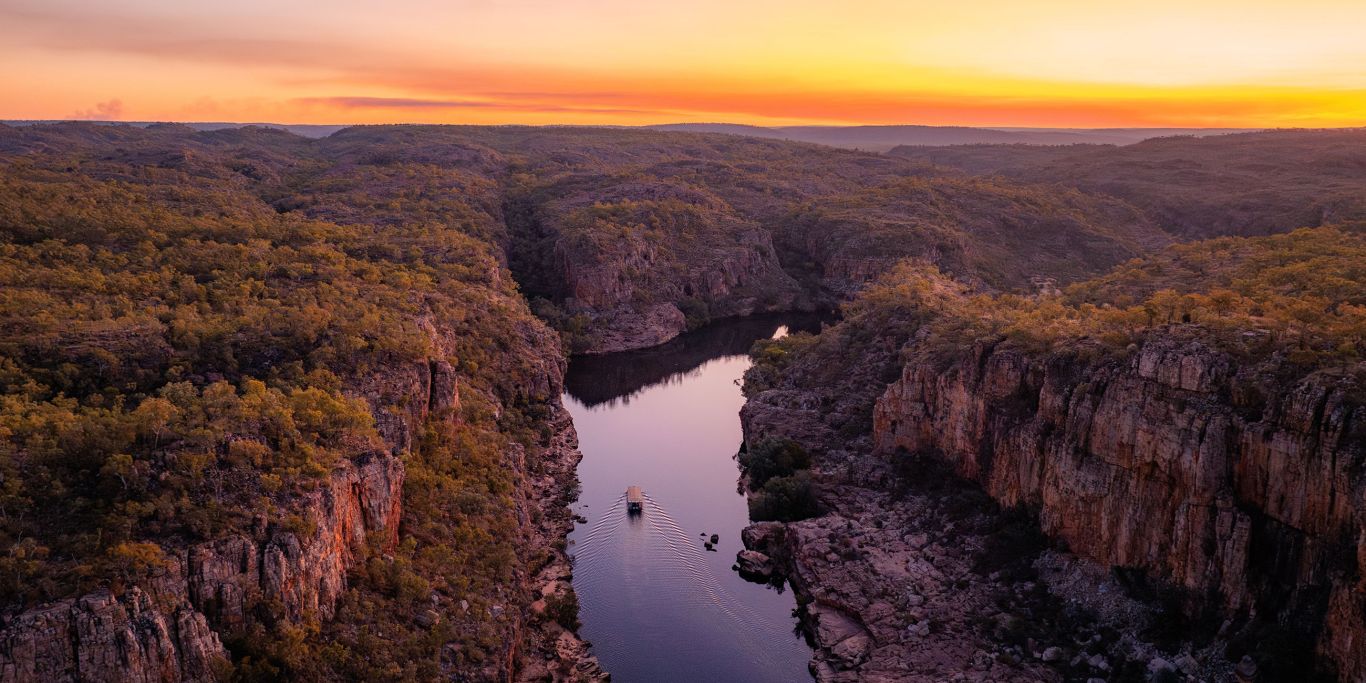
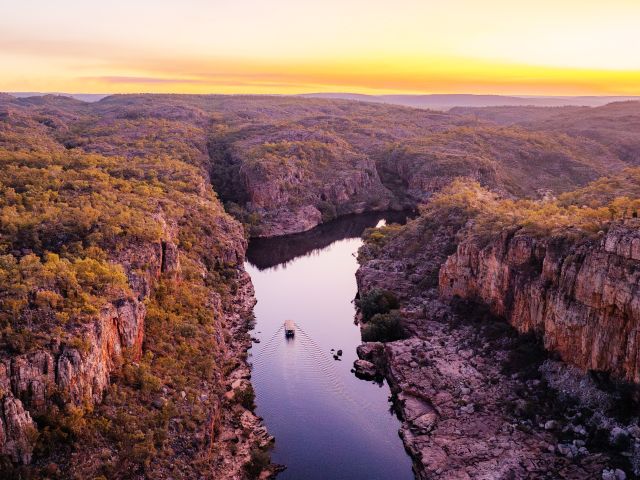
    Elsewhere, explore Nitmiluk (Katherine) Gorge. Paddle a kayak through the river running through the canyon, or save your energy on a Nabilil Dreaming Sunset Dinner Cruise , discovering the stories and ways of the Jawoyn people while enjoying a candlelit dinner as the cliffs around you shift colour and glow with the changing daylight.

    Continue your cultural journey at local art centres like Godinymayin Yijard Rivers Art & Culture Centre or Mimi Aboriginal Art & Craft .

    7. Litchfield National Park

    cathedral termite mounds in Litchfield national park
    Be awed by giant cathedral termite mounds. (Credit: Tourism & Events NT/ As We Wander)

    Just over an hour’s drive from Darwin lies the beautiful Litchfield National Park. It’s famous for stunning waterfalls and swimming holes, including Buley Rockhole, Wangi Falls, Florence Falls and Tjaynera Falls.

    Here you’ll also find hundreds of giant – and magnetic – cathedral termite mounds that are truly a sight to see. Ageing up to 100 years old, you won’t find mounds like these outside the northern parts of Australia. Stroll along the accessible boardwalk to see them up close.

    8. Darwin

    darwin street art
    Darwin art is streets ahead. (Credit: Tourism & Events NT/ Mark Fitzpatrick)

    This list wouldn’t be complete without the territory’s capital city: Darwin. Situate yourself upon arrival with a stroll through the main streets, admiring the many art murals by local, interstate and international artists. They’re all remnants of the annual Darwin Street Art Festival , one of Australia’s longest running street art festivals.

    Stop to recharge along Darwin’s Waterfront Precinct , an area of delectable restaurants, public swimming pools and free events. And, of course, it would be wrong to leave the city without enjoying a bowl of laksa at Mindil Beach Sunset Market as the sun goes down.

    Learn more and start planning your Explorer’s Way road trip at northernterritory.com/drive.