Australia’s Grand Canyon: Kings Canyon, NT

hero media
Anita Kelman camps out under the stars at Kings Creek Station and hikes Kings Canyon’s rim.

Gazing down from a plane high above Central Australia, all appears orange-bronze and desert flat. But once on the ground, the landscape evolves to become vividly varied. Many gather at Uluru and her neighbour Kata Tjuta. However my journey is to another geological gem of the Northern Territory. Situated approximately 350 kilometres south-west of Alice Springs is Watarrka National Park, home to Kings Canyon.

Arriving just before dusk by 4WD, our outback campsite at Kings Creek Station is dusty and swarming with busy Herculean ants. Unperturbed, the manager directs the group towards a fenced section in the opposition direction. With late November evening temperatures mild at 18 °C, we linger around the camp fire before laying our swags out to rest beneath the scattered ghost gum trees.
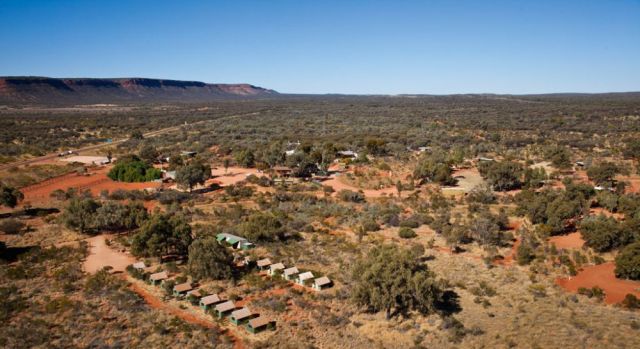
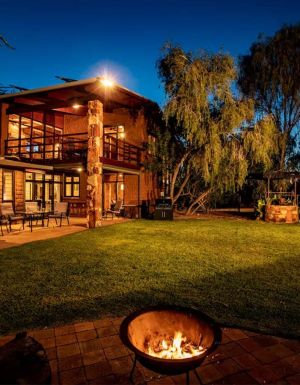
Kings Creek Station Property

Sleeping outdoors exposed to nature is a humbling and ethereal experience. The night sky opens and stars slowly begin to emerge, growing brighter until the entire expanse is filled with silvery celestial bodies dancing amongst the darkness. I pause to ponder the vastness of the galaxies high above and smallness of humanity before drifting into peaceful slumber.
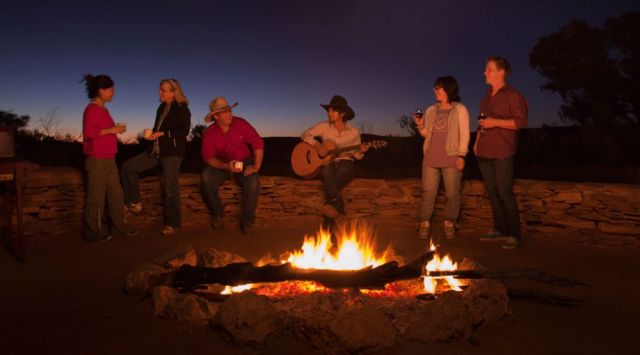
Kings Creek Station evening entertainment
Campfire at Kings Creek Station

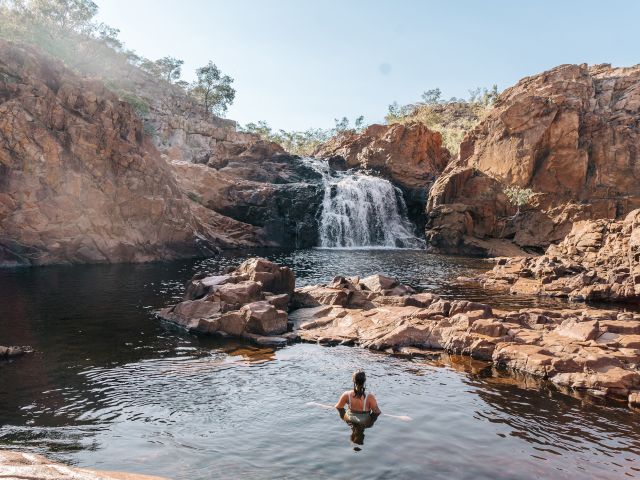
Rising early to avoid the heat, Kings Canyon awaits. Our challenge is the Canyon Rim Walk, a six kilometre hike touted for its hidden treasures in the form of a sandstone domed lost city, a contoured rock amphitheatre and a swimming hole in the mythically titled Garden of Eden.

The initial ascent up uneven steps to the crest of the canyon ridge prompts the heart to pump quicker. Forced deep breaths fill the lungs with crisp air while a gentle easterly breeze cools the sweating brow. My recently filled water bottle is quickly drained to half.

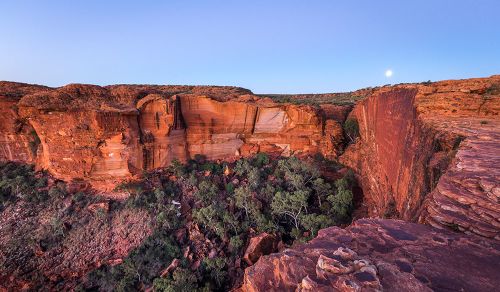
Following the path, I traverse along rocky terrain through corridors hedged by petrified formations. The sediment and ancient fossils have intertwined forming distinctive wavy layers. The plateau provides an opportunity for admiring the spectacular landscape far below.

Careful not to stray too close to the edge, I eagerly look out over the valley. The views are certainly impressive and one must pause to envision the ancestors of old taking shelter in the small caves and overhangs. Tawny trees congregate along the basin floor, their roots sucking nutrients from the mineral-rich soil and shallow mountain streams.
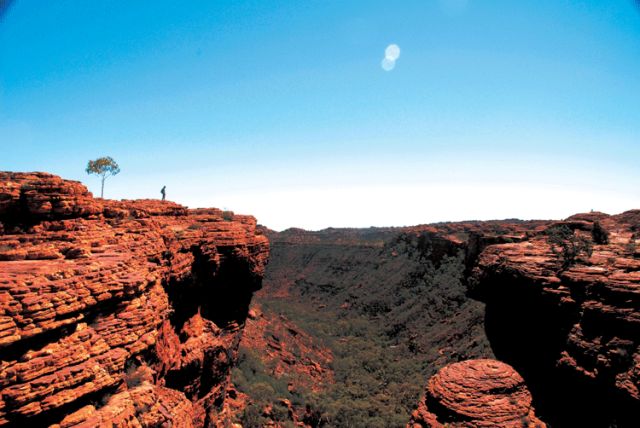
The view from the top of Kings Canyon Rim Walk
The view from the top of the Kings Canyon Rim Walk

Prostrating upon the heated rock ledge, I absorb the sun’s energy. A curious bee, perhaps attracted by my pale skin, lands and in fright releases its sting into my exposed belly. I feel sad not only for the throbbing pain beneath my flesh but for inadvertently causing the demise of this small creature of the canyon.

Time is up and the group maneuvers back onto the main trail. The canyon slopes gently down past more rocky structures towards the car-park and an awaiting picnic.

Before my Central Australian holiday I had never heard of Wattarrka National Park. But having visited and experienced the magic of Kings Canyon, it is now my favourite location in the Australian outback.

Need tips, more detail or itinerary ideas tailored to you? Ask AT.

AI Prompt

Kings Creek Station and Kings Canyon details

Walking the Rim in Kings Canyon

The breathtaking sandstone chasm plunging 270m is one of Australia’s most dramatically beautiful places – a slash of deep green in a red landscape. Hidden deep in Watarrka National Park three hours north of Uluru, Kings Canyon offers two trails: the Creek Walk and the Canyon Walk.

“Vertigo with orange walls. It’s a bit of a hike to the top – so start at dawn – but no-one whinges about the rewards. Take a dip in the springs on your way back down." says travel writer, John Borthwick

The 1.5km Creek Walk is quite flat, up the centre of the canyon to a lookout point. The Canyon Walk, however, is for the committed walker only, as the first 300-400m are straight up a steep incline at the canyon edge. It’s hugely rewarding, though, with delights all the way round, including the Garden of Eden valley and the Lost City’s weathered rocks.

Did you know? The original custodians of the park are the Luritja people, and they’re still represented among the three Aboriginal groups that live in the park. The name Watarrka comes from the Luritja name for Umbrella Bush.

How to get there: Kings Canyon is located in the Watarrka National Park, 323km southwest of Alice Springs. There are several stopovers on the way to the Canyon, including Jim’s Place on the Stuart Highway, as well as Erldunda and Mt Ebenezer.

Best time to go: Anytime, but beware that it is very hot during the summer months.

Further information: Watarrka National Park,

Weekly travel news, experiences
insider tips, offers, and more.

Kings Creek Station Accommodation

Where is it?  Luritja Road, just outside the Watarrka National Park. From Uluru it is 300km; from Alice Springs it is 300km on dirt roads or 450km on sealed roads. Access by 2WD or 4WD (check conditions) or by light aircraft, airstrip on property. Open: year-round.

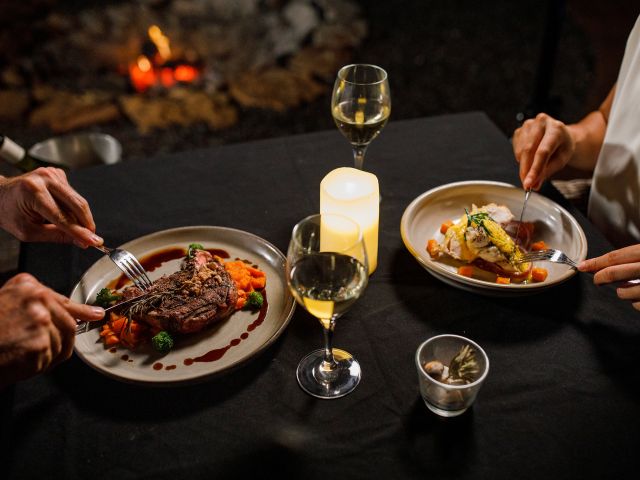
What makes it so special? Covering 1800 square kilometres, Kings Creek Station was established in 1982 as a cattle and camel property by Ian Conway and his wife Lyn. You can visit the Stockcamp to watch live camel and horse handling, eat damper and drink billy tea, go on camel rides and quad-bike safaris to explore the red sand dunes, mulga scrub and golden fields of spinifex. There are also scenic helicopter flights over Kings Canyon and the West MacDonnell Ranges. For an extra fee they’ll set you up at a remote camp for a romantic dinner and night under the stars in swags.

Accommodation options: Unpowered and powered campsites as well as safari-style canvas-sided cabins with power and shared facilities .

Further information: (08) 8956 7474; www.kingscreekstation.com.au

For more information on Kings Canyon & things to do in the NT, visit the official Northern Territory website at northernterritory.com

Want to see more stories from Australian Traveller in your Google search results?

  1. Click here to set Australian Traveller as a preferred source.
  2. Tick the box next to "Australian Traveller". That's it.
hero media

Discovering East Arnhem: Australia’s most unique and rewarding corner

    Joanne Millares Joanne Millares

    Hard to reach and harder to forget, East Arnhem offers something rare in modern travel: the chance to slow down and experience Country on its own terms.

    The sky feels bigger in East Arnhem. It stretches wide and uninterrupted above rouged earth, stringybark woodland and beaches so empty they seem to belong to another era. The coastline curves for kilometres without a footprint and the horizon runs on forever.

    For comedian Lou Wall, the scale of the place was the first thing that hit them.

    “The sheer openness,” they say. “The sky feels infinite and the land stretches out endlessly. It’s pretty breathtaking visually.”

    But the physical landscape is only part of the story. The real reward isn’t only the scenery but the shift in perspective the journey brings. Visitors stop trying to tick off the destination and a real engagement takes over.

    “It made me never want to travel again,” Wall jokes. “In that I never wanted to leave East Arnhem.”

    Getting there

    Aerial shot of East Arnhem’s coastline as cars trace the curve of the shore.
    Sail along the remote coastline on an expedition cruise.

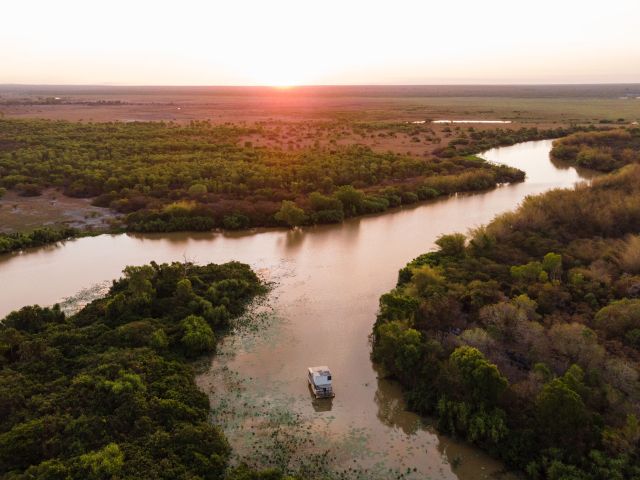
    Reaching East Arnhem is part of the adventure. Travellers typically fly into Gove Airport near Nhulunbuy via Darwin or Cairns, or arrive by expedition cruise along the remote coastline. Others make the journey overland along rutted dirt roads that cut through East Arnhem’s small pockets of monsoon forest.

    However you arrive, there’s a distinct feeling of crossing into somewhere different. Permits are required to visit the region, reflecting the fact that this is Yolŋu land where communities and traditional owners maintain deep cultural connections to Country.

    The extra planning becomes part of the experience. By the time visitors arrive, they understand they’re entering a place not just of respect, but also patience and curiosity.

    At one with nature

    East Arnhem’s  landscapes leave a strong imprint. For Wall, one place in particular still lingers in their memory: Ngalarrkpuy, also known as Lonely Beach, near Bawaka Homeland.

    “I genuinely felt like I was living inside an Instagram filter,” they say. “One of the most stunning feats of nature I’ve ever seen. The water was so clear I swear I could see even the fish smiling.”

    Across the region, natural experiences unfold at a slower pace. Fishing, beachcombing and island hopping reveal the rhythm of the coastline. The tides shape daily life and the vastness of the landscape makes even simple moments feel downright cinematic.

    For visitors with limited time, Wall says the Bawaka Homeland experience is unmissable.

    “I just left and I’m already planning when I can get back there.”

    The sense of remoteness is part of the appeal. In a country where many beaches are crowded and well-trodden, East Arnhem’s coastline still feels wonderfully wild.

    Immersing in local culture

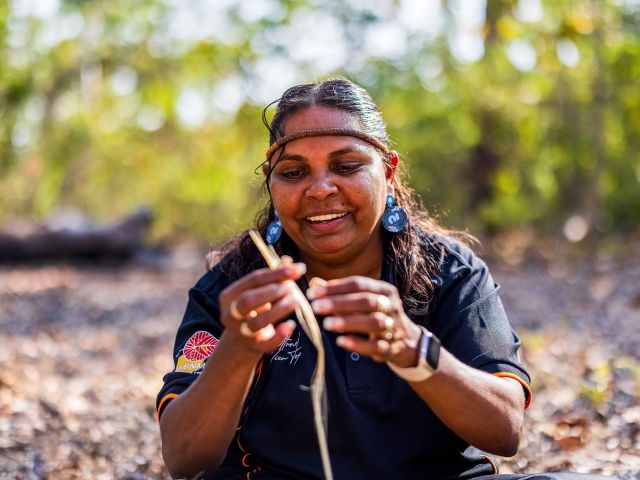
    A visitor spends a meaningful moment alongside Yolŋu guides, gaining insight into their deep cultural knowledge and connection to the land.
    Experience authentic moments with the locals.

    Culture is woven through every experience in East Arnhem. Visitors have the opportunity to spend time on Country with Yolŋu guides and knowledge holders who share stories and traditions that have been passed down for generations.

    For Wall, one of the most powerful moments came during a conversation with a Yolŋu elder.

    “I got to meet a traditional elder, Mayalil, in Nhulunbuy,” they say. “Listening to her talk about her home made the land feel alive in ways I couldn’t have imagined.”

    The region is also home to internationally recognised Aboriginal art centres where artists shape works deeply connected to land and family knowledge.

    Music carries the same cultural energy. East Arnhem has produced globally recognised artists such as King Stingray and Baker Boy, blending Yolŋu language, storytelling and contemporary sound.

    Wall experienced this musical spirit first-hand.

    “A jam session around the fire was it for me,” they say. “Letting the deep joy and history of their music wash over me…  and meeting a few of the King Stingray musicians was unreal.”

    These moments of human connection often become the most memorable part of a visit.

    Spotting local wildlife

    An aerial view of the beach shows tiny figures lined up across the white sand, moving as if in a rhythmic dance.
    Step into a world where nature reigns.

    The wildlife of East Arnhem adds another layer to the experience. The region is home to an extraordinary range of animals, from waterbirds and turtles to dugongs, dolphins and the formidable saltwater crocodile.

    Wall admits they didn’t actually spot a croc during their visit.

    “Devastatingly, I didn’t see one,” they laugh. “But with all the stories from the locals I definitely gained a healthy respect for caution.”

    Some of the most memorable wildlife encounters can be surprisingly small., At Banubanu Beach Retreat on Bremer Island, Wall remembers walking along the beach one morning and watching it come alive.

    “As you walk through the sand you see hundreds of crabs scurrying into their holes as you pass by,” they say. “Such a small thing, but it was completely magical.”

    Moments like this reveal the quieter rhythms of East Arnhem, where even the smallest creatures seem to play a part in the landscape.

    Visitors who make the journey soon learn the most important travel tip of all.

    “Go in open-minded with a sense of curiosity,” Wall says. “Be prepared to ditch your plans. The land and the locals will guide you on an adventure no spreadsheets could ever compete with.”

    And most importantly, they add, don’t rush.

    “The land and people deserve your time and attention. You’ll be all the better for slowing down.”

    For more information on visiting East Arnhem, head to eastarnhem.com.au.