Top Uluṟu tours for an unforgettable trip

hero media
Finally booked that trip to Uluṟu? Don’t head off without reading this list of top Uluṟu tours there first.

The spectacular is a bucket-list item for most Australians, as well as travellers from further afield. And it’s no wonder. This glowing monolith isn’t just a force to be reckoned with in the wider Australian cultural imagination; it also forms the centre of many stories for the Aṉangu people who consider Uluṟu, as well as many of the surrounding watering holes, caves and gorges, deeply sacred. With so many stories to be told and to listen to at this UNESCO World Heritage Site, our list of top tours will make it easier to get every drop out of your visit to the Red Centre

Uluṟu sunrise and sunset tours

Uluṟu & Kata Tjuṯa Scenic Flight with Fly Uluru

Watch the sunrise from the air over one of the world’s most iconic views, that of Uluṟu. To take in a majestic birds-eye-view, book with Fly Uluru , who operates Ayers Rock Helicopters and Ayers Rock Scenic Flights.
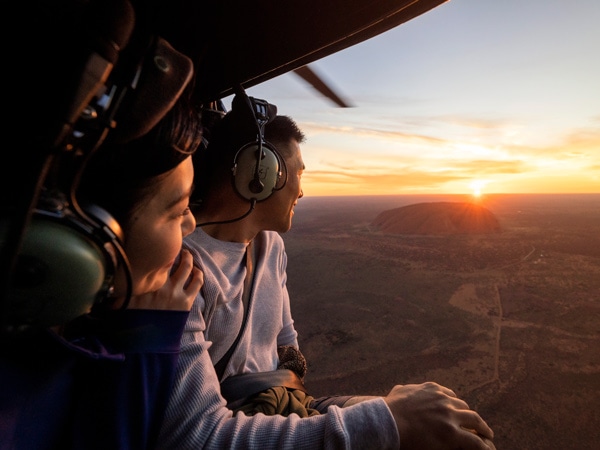
a couple viewing Uluru at sunrise on a helicopter flight
Fly above the breathtaking Uluru rocks while admiring the sunrise. (Image: Tourism NT/Shaana McNaught)

Fly Uluṟu has been flying in the outback since 1989 and is still going strong. Head out for a 40- or 30-minute spin on a plane or helicopter at sunrise or sunset on the Uluṟu & Kata Tjuṯa Scenic Flight, or extend to two hours to include sights like Lake Amadeus and King’s Canyon. Their 15-minute Uluṟu Rock Blast 15-minute tour starts from $145.
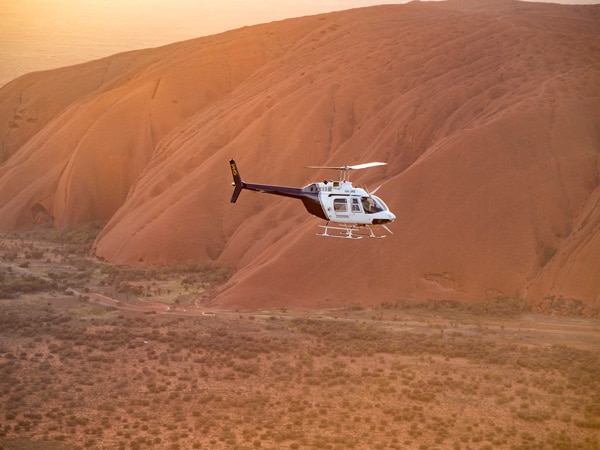
Uluru sunrise helicopter flight
Get the most amazing views of the desert surrounds. (Image: Tourism NT/Shaana McNaught)

Uluṟu Camel Tours

Alternatively, you can opt for this golden hour tour where your feet are a lot closer to the ground — but still not quite touching. Uluṟu Camel Tours is a family-friendly group, that runs mid-morning and sunrise and sunset camel rides through the sands of the Red Centre.
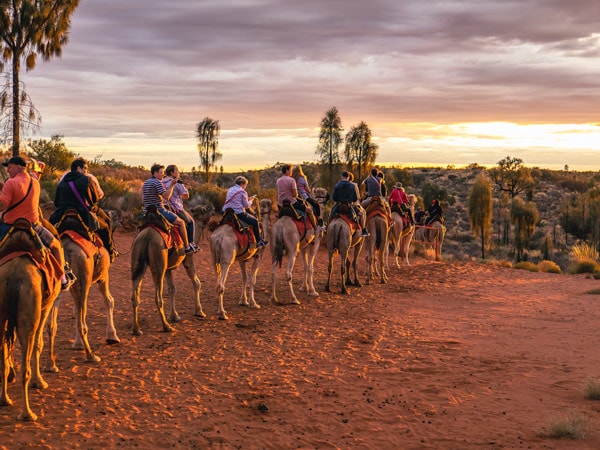
a group of travellers riding a camel during sunset in Uluru
Enjoy an hour of a camel ride during sunset or sunrise. (Image: Tourism NT/Plenty of Dust)

Watch the colours change, as you listen to your guide tell you about the surrounding flora and fauna, all from behind the hump of your noble desert steed. Prices from $135 include freshly baked beer damper with jams, tea and coffee.
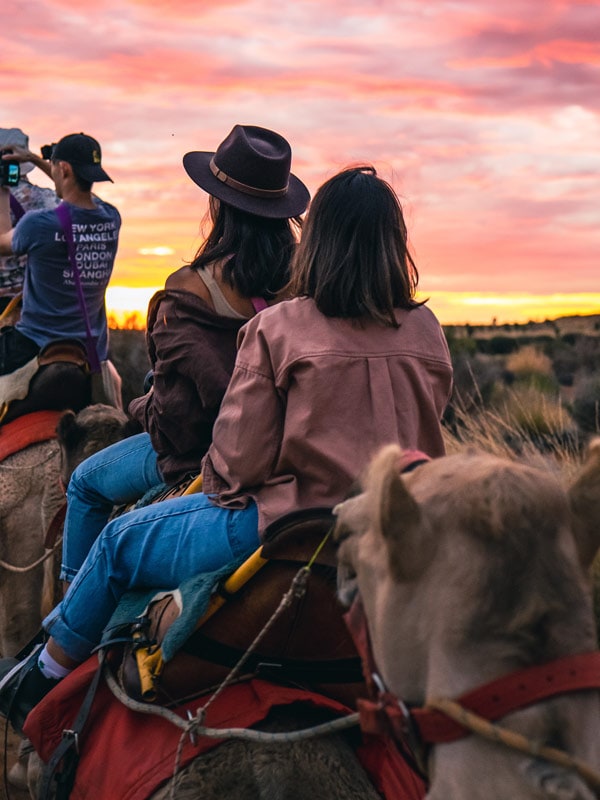
a group of tourists capturing the sunset while riding a camel
Admire the Uluṟu landscape as the colours change over the horizon. (Image: Tourism NT/Plenty of Dust)

Uluṟu Sunrise and Field of Light tour with AAT Kings

While nothing can compete with watching the dawn break over Uluṟu and Kata Tjuṯa , the tens of thousands of light that comprise artist Bruce Munro’s Field of Light installation sure gives it a run for its money. Watch the shifting hues of this massive artwork wax and wane as the frosted spheres dim as the sun comes up. Costs run from $75 per person.
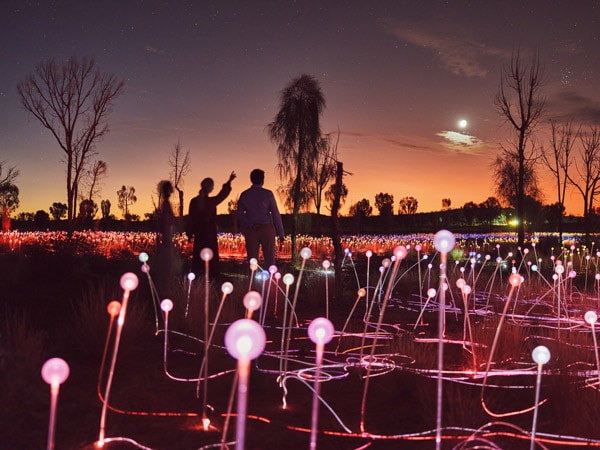
a field of lights glowing vibrantly
Catch the spectacular Field of Light. (Image: Tourism NT/Tourism Australia)

Sunrise with Uluṟu Motorcycles

Hey there, Easy Rider. Fancy seeing the sandstone monolith on the back of a Harley? Stupid question. Book onto Uluṟu Motorcycles’ Sunrise Harley tour to be chauffeured around on the back of your bike by a rider, who will take you to the Talinguru Nyakunytjaku viewing area before doing a lap of Uluṟu. From $229 for 90 minutes.
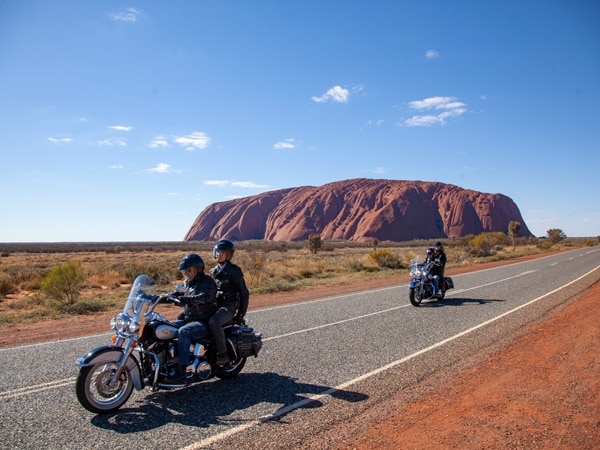
motorcycle riders navigating the roads of Uluru
Ride a Harley-Davidson across the beautiful Uluṟu-Kata Tjuṯa National Park. (Image: Tourism NT)

Uluṟu day tours

Ranger-guided Mala Walk

Did you know you can get a free guided walk of the base? Take the Mala Walk at the base of Uluru , which is named for the Mala people (the local Aṉangu’s peoples ancestors), with a local ranger. Learn about the meaning of the rock art along the ancient walls, and hear the Tjukurpa (creation stories) of the formations here. The walk is two kilometres and wheelchair accessible. It ends at Kantju Gorge, which is a wonderful place to finish and watch the sunset.
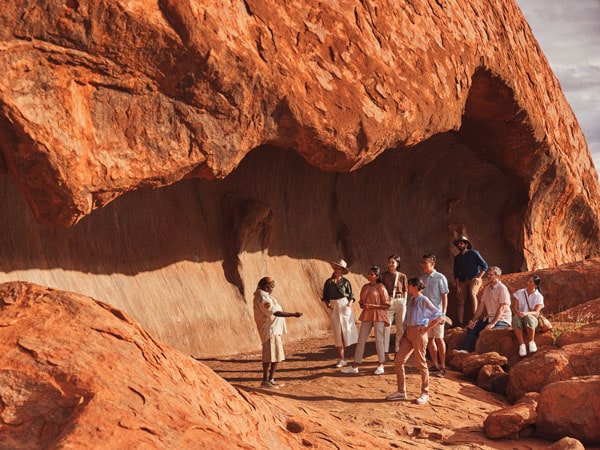
a group of travellers on a Mala Walk tour at Uluru
Take the scenic path from Mala carpark to Kantju Gorge. (Image: Tourism NT/Tourism Australia)

Ulurṟu Morning Guided Base Walk with AAT Kings

Go the whole hog with this guided 10.5-kilometre walk around Uluṟu’s base , which starts when you are picked up an hour before sunrise. Next is a light breakfast, before starting on the Kuniya Walk and watching the desert wake up around you.

As you walk, you will hear stories of Tjukurpa, stop by the Kantju Gorge and see the rock art of the Mutitjulu Waterhole, and hear about the battle between Kuniya, the woman python woman, and Liru, the poisonous brown snake man, that occurred here, with their story told in the landscape . The cost starts from $189 and includes return travel.
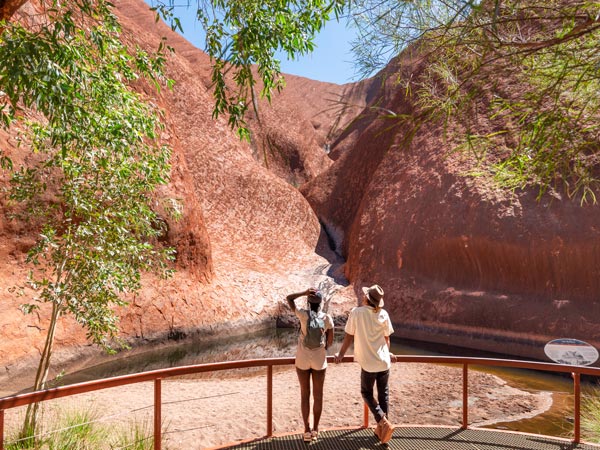
two tourists capturing the Mutitjulu Waterhole
Marvel over the Aboriginal rock art at the Mutitjulu Waterhole. (Image: Tourism NT)

Uluṟu Segway Tours

Don’t try to be a snob, segways are the bomb. Easy to use and fun; you get to travel as a tight group from the fast walkers to the slow pokes.
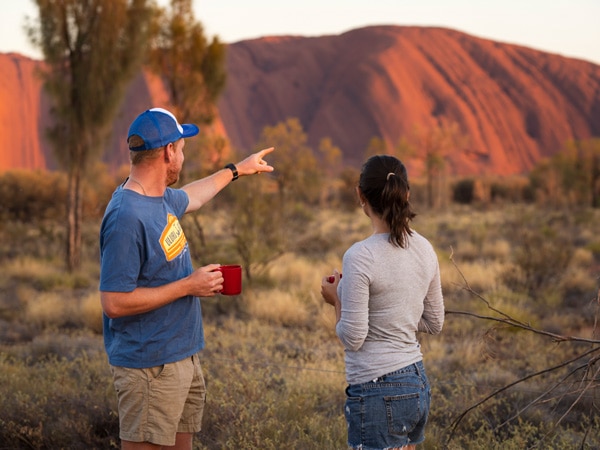
a couple gazing out the Uluru landscape
Get up close and personal with the picturesque landscape of Uluṟu. (Image: Tourism NT/Tourism Australia)

Try out a small group tour with Uluṟu Segways and journey 12 kilometres around the base of Uluṟu on a guided tour. Options include tours that include and exclude returns, as well as sunset tours that come with nibbles and sparkling wine. Priced from $149.
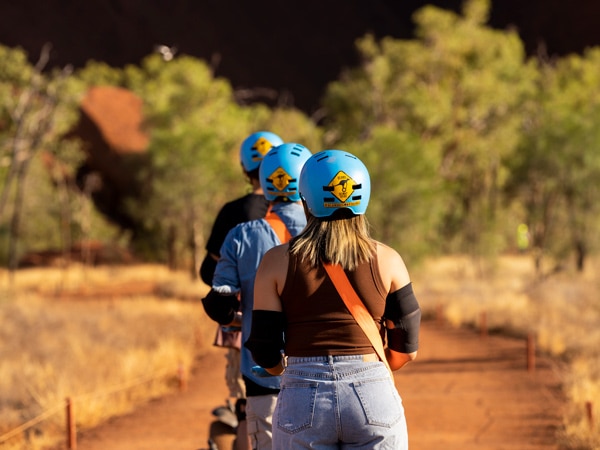
a group of travellers wearing a helmet during an Uluru Segway Tour
Explore the entire Uluṟu without having to walk. (Image: Tourism NT/Tourism Australia)

Cave Art Tour with Maruku Arts

The Maruku Arts group is an Indigenous-owned and operated organisation, whose name literally means “belonging to black". Staggeringly, almost 900 Aṉangu artists make up the collective.
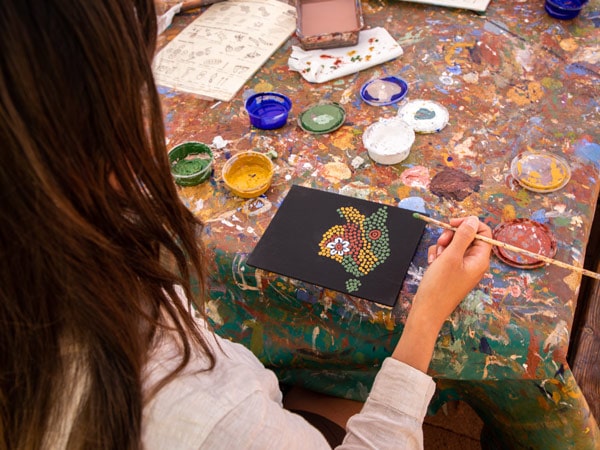
a local Anangu artist and her Maruku dot-painting artwork
Witness the wonders of making a Maruku dot painting. (Image: Tourism NT/The Salty Travellers)

Support their work and learn from their knowledge on the Cave Art Tour, which sees travellers take the Kuniya Walk to hear the Tjukurpa stories.
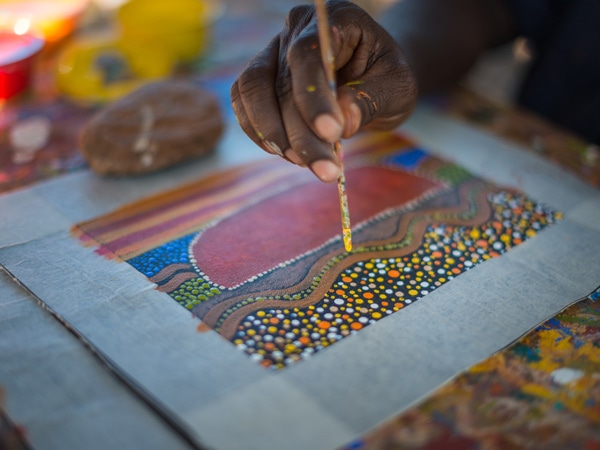
dot painting using the hands
Learn about the ancient symbols used in Aṉangu art. (Image: Tourism NT/Matt Glastonbury)

The stories are first told by your Aṉangu guide in Pitjantjatjara, then in English. Prices are from $89 . Pair with a dot-painting workshop taught by a local Aṉangu artist, assisted by an interpreter from $72.
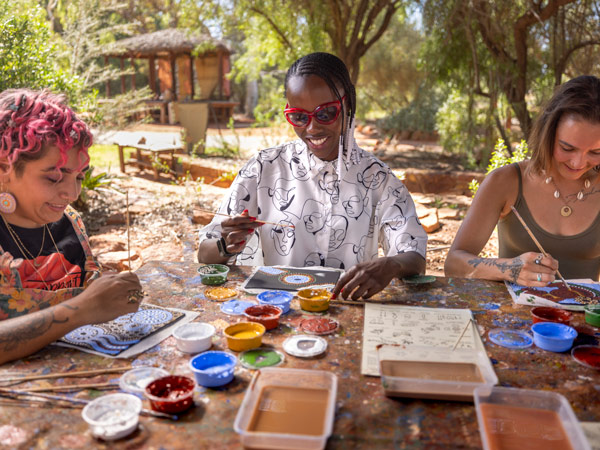
three women participating in a Maruku Arts dot painting workshop
Immerse in the colourful Aṉangu art culture. (Image: Tourism NT)

Uluṟu Sunrise and Kata Tjuta Tour with AAT Kings

Venture out to see Uluṟu’s sister site of Kata Tjuṯa with this AAT Kings tour. Begin the day before the crack of dawn as you watch the sunrise at Talinguru Nyakunytjaku , the viewing area. Next, drive to Kata Tjuṯa, a sacred space for Anangu men, as your guide tells you the history of the surrounding parklands.
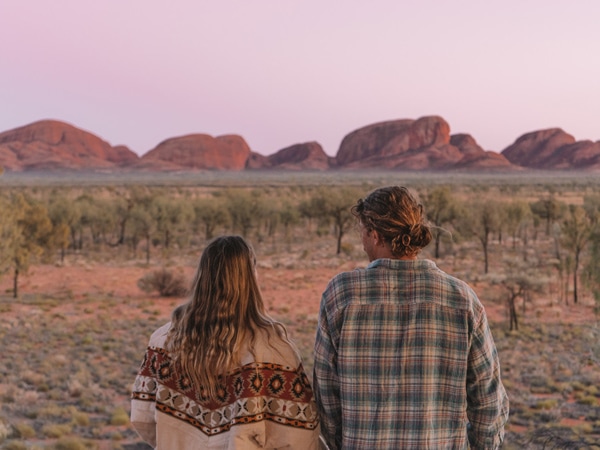
a couple admiring Kata Tjuta
Catch stunning sunrise views amidst the rugged landscape. (Image: Tourism NT/Salty Aura)

On your arrival at the steep-sided domes, the group will explore Walpa Gorge and check out the oasis there. While you are allowed to visit the sacred space of Kata Tjuṯa, remain respectful and be careful what you photograph; you don’t want to reveal hidden secrets of the area.
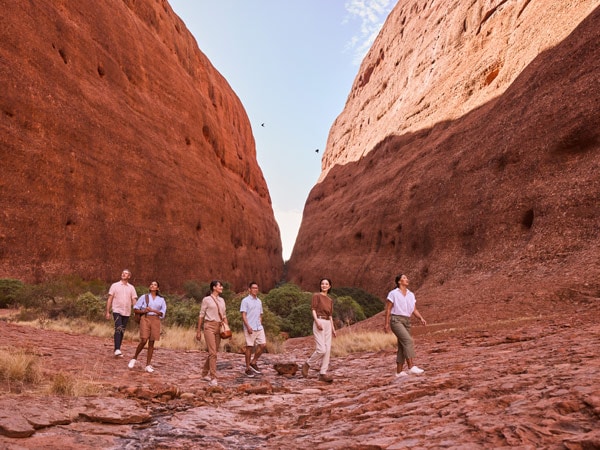
a group of travellers exploring Walpa Gorge
Go on a scenic sunrise tour across Uluṟu’s marvellous jagged scenery. (Image: Tourism NT/Tourism Australia)

Uluṟu food tours

Tali Wiṟu

An intimate night of fabulous dining that will take your sense of taste on a veritable tour.
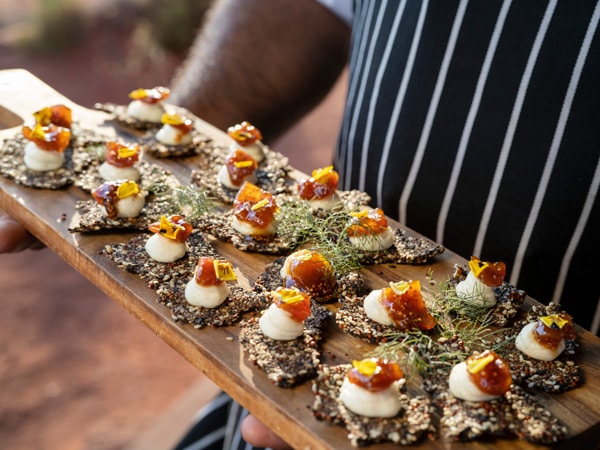
appetisers beautifully arranged on a plate
Indulge in the appetising Tali Wiṟu dining experience. (Image: Tourism NT/Tourism Australia)

The Tali Wiṟu dining experience sees you travel out to a nearby dune (the name ‘Tali Wiṟu’ means beautiful dune), for a night of bush tucker canapes, a three-course meal, and matched wines. And when we say bush tucker, we’re not talking about your average crocodile steak — or making any part of this experience snappy.
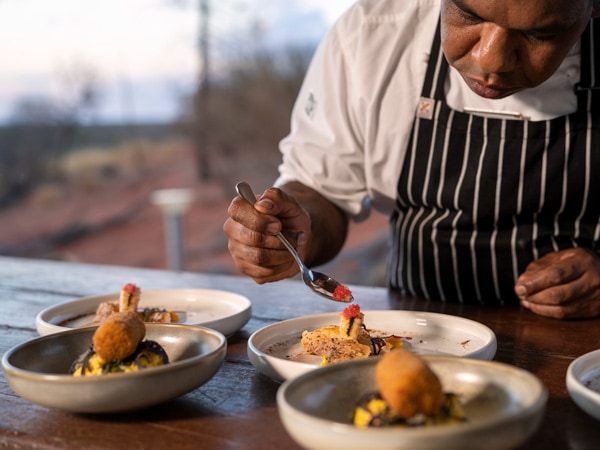
a chef carefully prepares the dishes for Tali Wiru dining
Savour international flavours carefully curated just for you. (Image: Tourism NT/Tourism Australia)

Instead, delight over course after course of quandong coulis and native warrigal greens, toothfish with bush honey marinated heirloom carrots, gulguk (green ant) gin and tonics, kangaroo croquettes and more.
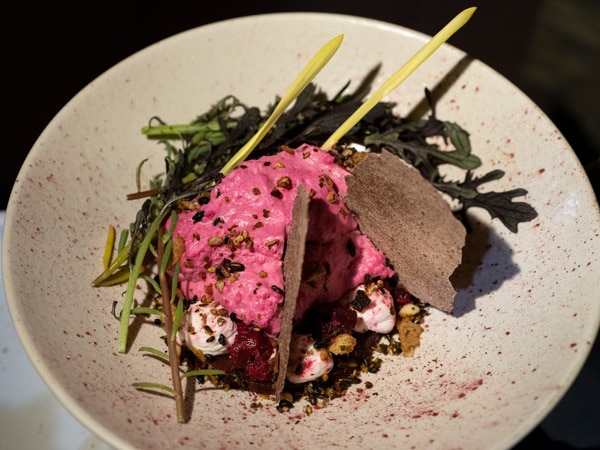
one of the dishes included in the four-course meal during your Tali Wiru dining experience
Each meal bursts with ornamental flavours. (Image: Tourism NT/Tourism Australia)

Your time out among the dunes also includes a didgeridoo performance and Indigenous storytelling. The price starts from $440 per person.
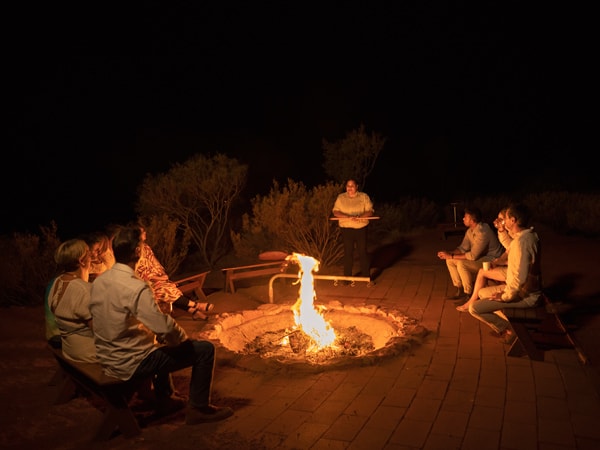
a group of people sitting around a bonfire during their Tali Wiru dining experience
Experience dining with a bonfire setup. (Image: Tourism NT/Tourism Australia)

Sound of Silence with Field of Light

Pair one of the most famous Uluru dining experiences with one of the most celebrated artworks, Bruce Munro’s Field of Light.
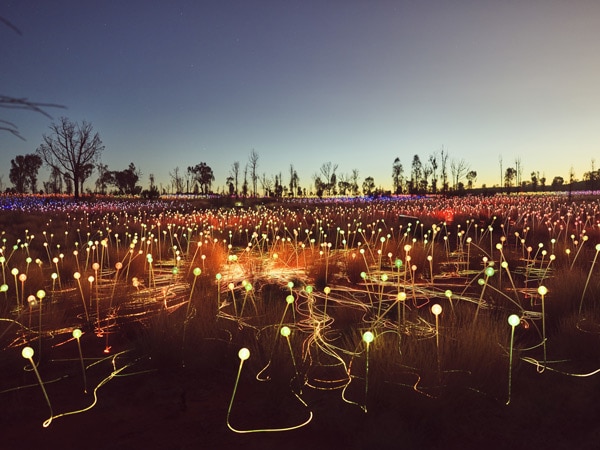
the spectacular field of light in Uluru
Be surrounded by a field of colourful lights. (Image: Tourism NT/Tourism Australia)

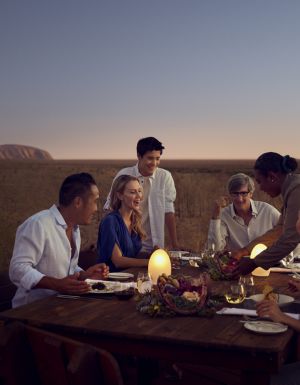
Get picked up at your hotel, where you’ll be taken out to the outback between Kata Tjuṯa and Uluṟu, for canapés, wines and a barbecue buffet characterised by indigenous flavours. Includes installation entry, ​​a three-course bush tucker menu, a stargazing talk and a didgeridoo performance.
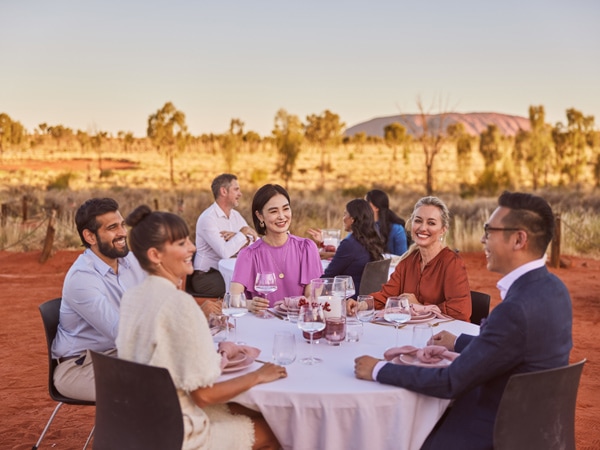
a group of travellers having dinner
Drink and dine under the Southern Desert sky. (Image: Tourism NT/Tourism Australia)

Still hungry? The best options for dining at Uluṟu can be found here.

Self-guided tours

Self-guided Uluṟu base walk

You don’t need a guide to do the Uluṟu base walk (although there is a free one available, see above). Instead, have some spiritually refreshing alone time as you follow the rock around its base along the 10-kilometre track. It is recommended to start at the Mala car park, and to do so in the early hours in hotter weather. There is water and toilets available on the hike, and a map can be found at Parks Australia.
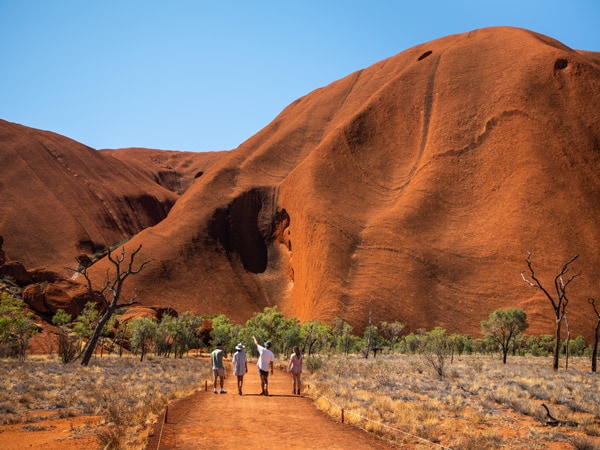
travellers walking at the base of Uluru
Traverse the Uluṟu scenic path during a self-guided base walk. (Image: Tourism NT/The Salty Travellers)

Uluṟu Bike ride

After attending the free presentation on the Uluṟu-Kata Tjuṯa National Park and Aṉangu culture at the Cultural Centre, and checking out some of the art and activities there, it’s time to pick up the bikes and head on out. Outback Cycles has bicycle rentals , which you can hire between sunrise and late afternoon.
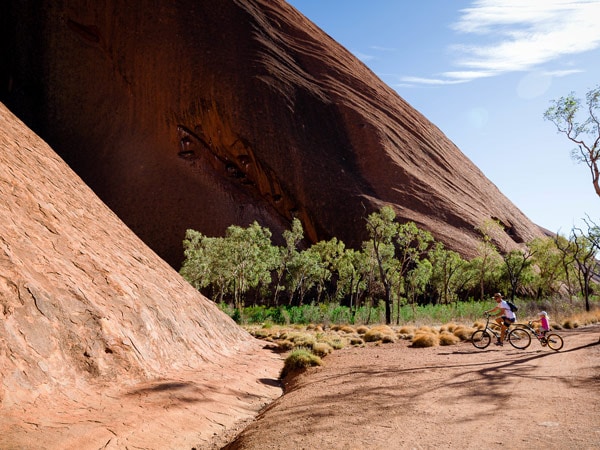
cycling around Uluru
Hop on a bike and explore the rugged landscapes. (Image: Tourism NT/Kate Flowers)

Family tours at Uluṟu

Free tours at Ayers Rock Resort

If you’re staying near Uluṟu, chances are it’ll be at Ayers Rock Resort, which offer a whole range of free activities you can check out. See a Bush Tucker Experience with a free cooking demonstration, check out the local flora and bush foods with a guide in the gardens of the Desert Gardens Hotel, sign up for the daily tour of the Gallery of Central Australia (GoCA) (read more about GoCA in our three-day itinerary) and take a visit to pat the camels at the Uluṟu Camel Tour petting farm.
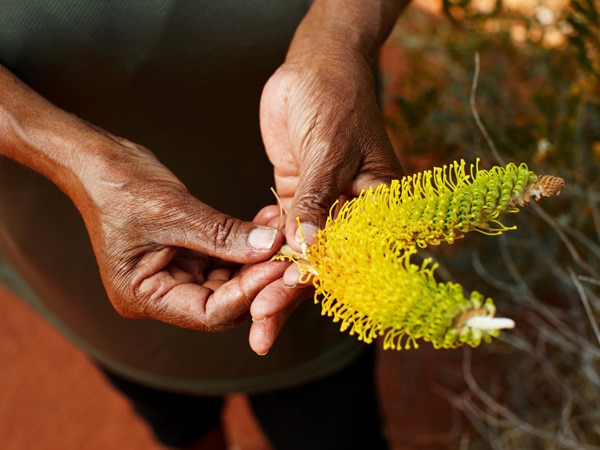
a person holding a local flora during the Bush Tucker Experience at Ayers Rock Resort
Learn about the indigenous bush food ingredients at the Ayers Rock Resort. (Image: Voyages Indigenous Tourism Australia)

Uluru Astro Tours

The whole family will love gazing up at the stars that lie above Uluru-Kata Tjuta National Park at night, listening quietly as the resident guide explains the astronomy of the planets and heavenly bodies above.
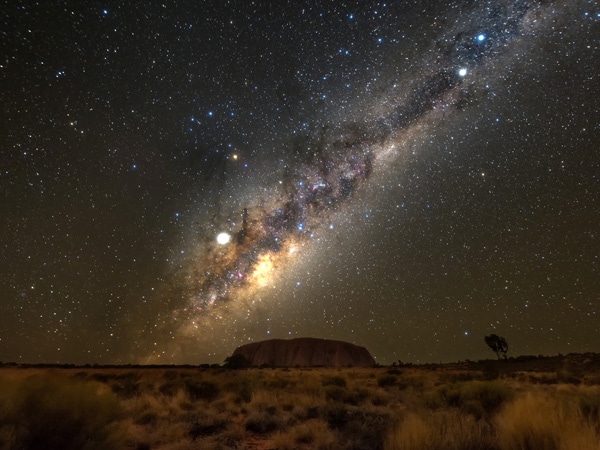
Uluru under the night sky
Gaze at the night sky lit by a thousand stars in the Milky Way. (Image: Tourism NT/New Asia Pacific Travel Pty Ltd.)

Uluru Astro Tours has a special permit to run stargazing tours in the park, so it is well worth booking this small-group experience. Children are from $60 and adults are from $99 for this 2.5-hour tour.
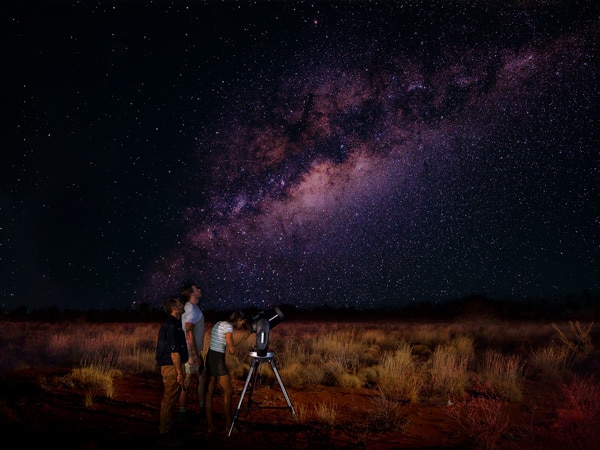
three people stargazing at night in Uluru
Head to Uluru for a deep stargazing experience you’ll never forget. (Image: Voyages Indigenous Tourism Australia)
Have you booked your stay in Uluru yet? Check out our ultimate guide to visiting Uluru.
Kate Bettes
Kate Bettes is a freelance travel writer. Whether having a picnic in Vietnamese jungle with new friends, or partying in the back of a limousine in Hollywood, Kate’s experiences have left her with the sneaking suspicion that the best travel memories happen when you least expect. It’s this feeling - and how to get it - that she loves to write about.
See all articles
hero media

8 Red Centre locations to explore after seeing the new movie, Kangaroo

Spend a few days visiting the real-life Central Australian locations that inspired the new film everyone is talking about, and discover why Alice Springs is such an important part of Australian culture.

In the credits of the new Australian film Kangaroo , the first name under ‘cast’ should read ‘The Northern Territory ’. Not only is Alice Springs (and the surrounding landscape) integral to the movie itself, but the spiritual heart of Australia and its local Indigenous owners also inform the look and feel of every frame, explains Producer Trisha Morton-Thomas of Brindle Films, who also plays Charlie’s grandmother Gwennie.

“By setting Kangaroo in Alice Springs (Mparntwe), the film embraces how visible Aboriginal people are here, and the living Aboriginal culture that is woven through this community,” she explains.

still from kangarro film
See Kangaroo, then visit the real-life filming locations.

And while shooting in such a sacred part of the Northern Territory required extra planning, it was something the cast and crew were highly invested in.

“There are incredibly significant sacred sites and places of deep cultural stories in the area, that at times are very gender-specific, which we’ve kept out of the production,” she explains. “Even if overhead drone footage captures a sacred site that isn’t meant to be seen by other people outside of that clan, we’ve made sure to omit it from the film.”

If Kangaroo piqued your interest in a Central Australian holiday, we don’t blame you. Read on to discover eight places featured in the movie that you can visit in real life – and get planning. Don’t forget to pack sunscreen and a hat.

1. Alice Springs/ Mparntwe

artist at Many Hands Art Centre
Visit the galleries of Alice Springs, like Many Hands Art Centre. (Image: Tourism NT/ Helen Orr/ Many Hands Art Centre)

The red and dusty streets of the film’s fictional town of Silvergum were filmed on the outskirts of Alice Springs. And, while the art gallery featured in the film is fictional, Alice Springs is a hub of creativity. See the work of local artists at the Araluen Art Centre , Yubu Napa Art Gallery , Iltja Ntjarra (Many Hands) Art Centre and the famous Tjanpi Desert Weavers .

2. The Kangaroo Sanctuary & Kangaroo Rescue Centre

The Kangaroo Sanctuary Alice Springs, the inspiration for the Kangaroo move
Visit the movie’s inspiration at Kangaroo Sanctuary. (Image: Tourism NT/ Kangaroo Sanctuary)

Kangaroo was inspired by the journey of Chris ‘Brolga’ Barns, who founded the now world-renowned Kangaroo Sanctuary based in Alice Springs. For lead actor, Aussie Ryan Corr, the animals were central to the movie, alongside the landscapes.

“The animals in this story were a real calling point for me,” he explains. “What this story tries to tell us about the connection between humans and animals is beautiful.”

To gain a real insight into the fauna and flora of the Red Centre, you can visit the Kangaroo Sanctuary on a sunset tour, where you might even get the chance to hold a baby kangaroo.

3. Ormiston Gorge

woman walking along the edge of Ormiston Gorge near alice springs
Take a dip in Ormiston Gorge. (Image: Tourism NT/ @domandjesso)

The film captures the raw beauty of the West MacDonnell Ranges, known in the Arrernte language as Tjoritja. This national park is rich in Indigenous culture and stark geological wonders.

Only a 15-minute drive from Alice Springs, Tjoritja offers visitors the chance to camp, hike and swim among ancient landscapes (most attractions are less than a three-hour drive away).

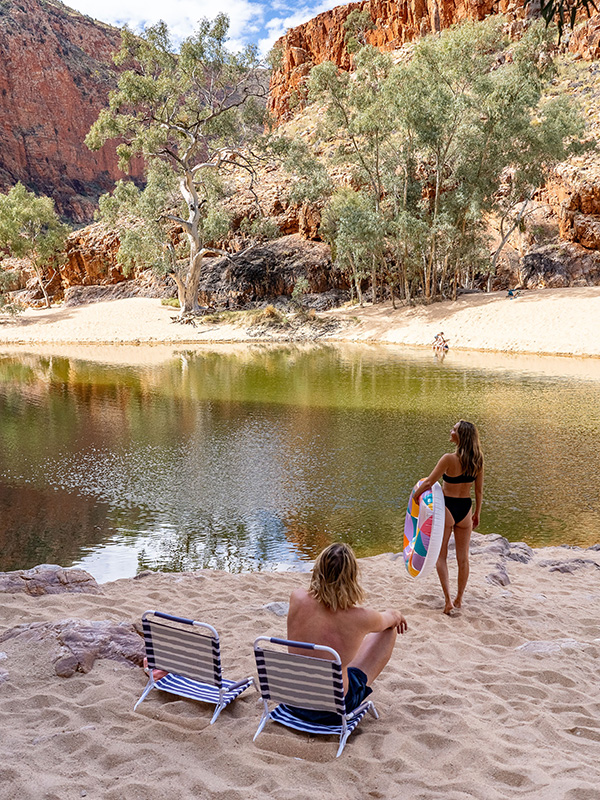
Ormiston Gorge , a cooling oasis in among the red desert sands, is one of the most popular destinations, no doubt because of the permanent swimming hole and towering red cliffs. From here, visitors can also embark on the beautiful Ormiston Pound Walk and the shorter – more accessible – Ghost Gum Walk. Bring your bathers – it’s safe for swimming.

4. Standley Chasm

woman walking through Standley Chasm near alice springs
Wander through Standley Chasm. (Image: Tourism NT)

The 1.2-kilometre walk to nearby Standley Chasm will be a highlight for any visitor as the imposing 40 metre-high chasm walls project strength and ancient wisdom.

Visit at midday to experience the path illumined by the midday sun. Not only will you fill your camera roll with vibrant red images of the gorge and its intoxicating shadows, but you can also camp nearby in a powered or unpowered site so you can watch the brilliance of the desert stars fill the night sky after dusk.

5. Simpsons Gap

three people walking on path through simpsons gap near alice springs
Walk the trails of Simpson’s Gap. (Image: Tourism NT/ Helen Orr)

Closer to Alice Springs, the photogenic Simpsons Gap is the perfect place to spot the endangered Black-footed Rock wallaby near the permanent watering hole. While swimming isn’t permitted, soaking up the sun and views certainly is.

Explore the area’s numerous walking trails, appreciate the soaring cliffs on either side of the ‘gap’ and pick out the shooting locations of Kangaroo in the area.

6. Ellery Creek Big Hole

aerial of Ellery Creek Big Hole near alice springs
Dive into Ellery Creek Big Hole. (Image: Tourism NT/ Tourism Australia)

When it comes to classic Northern Territory landscapes, you can’t go past Ellery Creek Big Hole/ Udepata : tall gum trees sidling up to a refreshing watering hole (fed by the West MacDonnell Ranges and surrounded by rugged red cliffs.

Swim in the cooling waters, hike the cliff tops, watch for birds and even stargaze as you camp here overnight. It’s locations like this that attracted the film’s director Kate Woods to the project.

“It humbles you to be in this environment: it’s so beautiful, so old and so vast,” she explains. “I was thrilled to get a chance to … shoot such a beautiful story in the incredible landscape of the Northern Territory.”

7. Larapinta Drive

aerial of Larapinta Drive into alice springs
Drive along Larapinta Drive. (Image: Tourism NT)

There is no better way to get a feel for how the characters arrived at the fictional Central Australian town of Silvergum than to travel along the iconic state road, Larapinta Drive.

Connecting Alice Springs to the mighty King’s Canyon in the west, via the historic community of Hermannsburg, this road takes in the West MacDonnell National Park, Alice Springs Desert Park and artist Albert Namatjira’s house, among other attractions. Take your time, bring a camera and prepare for numerous stops along the way.

8. Todd River

competitors in Henley on Todd Regatta, alice springs
Join in the fun of the quirky Henley on Todd Regatta. (Image: Tourism NT/ TImparja Creative)

Meandering through Alice Springs like a lazy Western Brown snake, the Todd River is a central part of Alice Springs culture. Known as an ‘intermittent river’, the Todd can go from a dry dusty riverbed to a flowing waterscape in less than 15 minutes after heavy rainfall.

When it’s dry, the famous Henley on Todd Regatta fills the sandy riverbed with handmade ‘boats’ carried by sailors. This is the world’s only dry river boating event, and it’s referenced in the ‘Silvergum Boat Race’ in the movie. Inspired by the real-life event, the characters built quirky “Flintstones-style boats” and competed in teams.

See Kangaroo in cinemas now, and start planning your NT getaway at northernterritory.com.