Amazing dining experiences near Uluṟu

hero media
From fine bush tucker dining to cheap barbecue cook-ups, you’ll be ready to devour the desertscape once you’ve read about these top Uluru restaurants and dining experiences.

Wild watermelons. Billy goat plums. Emu prosciutto. Tjanmata and wakati, honey ants and maku. Tarulka and wakalpuka seeds; there is a long list of flavours and foods you will likely taste for the very first time in the Red Centre. Those with an adventurous palate will reap the rewards.

But where to start? From eating delicate indigenous-flavoured nibbles under the stars to supporting Indigenous employment at local cafes, here are our top dining experiences near Uluru.

Fine dining near Uluru

Tali Wiru

Paroo kangaroo tartare? Quandong coulis and native warrigal greens? Kakadu plum compote? If your fork fingers are twitching right now, it’s time to book the Tali Wiru experience. Available at the Ayers Rock Resort, Tali Wiru means ‘beautiful dune’ in local Aṉangu language, and is one of the highlights at Uluru when it comes to experiencing bush-tucker fine dining.

Tali Wiru native ingredients Uluru
Tali Wiru is one of the highlights at Uluru when it comes to experiencing bush-tucker fine dining. (Image: Voyages Indigenous Tourism Australia)

You and a small group will travel out to the dunes to dine on canapes, followed by three courses paired with wines from the desert kitchen run by a talented team of Indigenous staff, and flavoured by foraged foods. And it doesn’t finish there — your time out among the dunes also includes a didgeridoo performance and Indigenous storytelling.

Prices start from $440 per person.

Guests dining at Tali Wiru at Uluru
Tali Wiru means ‘beautiful dune’ in local Aṉangu. (Image: Voyages Indigenous Tourism Australia)

Sounds of Silence [closed for maintenance until February 2025]

Perhaps one of the most famous dining experiences in Uluru is the Sounds of Silence. The night begins with you being picked up at your hotel, and taken out to the outback between Kata Tjuta and Uluru, for canapes, wines and a BBQ buffet characterised by Indigenous flavours, all as the sun sets. The night also includes a stargazing talk, where the speaker will explain to you the meaning and stories behind the constellations above.

Guests dining at Sounds of Silence at Uluru
Watch the sun set over Uluru at Sounds of Silence. (Image: Voyages Indigenous Tourism Australia)

It is highly recommended to combine this with a night at Bruce Munro’s Field of Light, the installation that saw 50,000, gently glowing lights installed in the Central Australian desert. A Night at Field of Light includes entry to the exhibition, a three-course bush tucker menu, a stargazing talk and a didgeridoo performance.

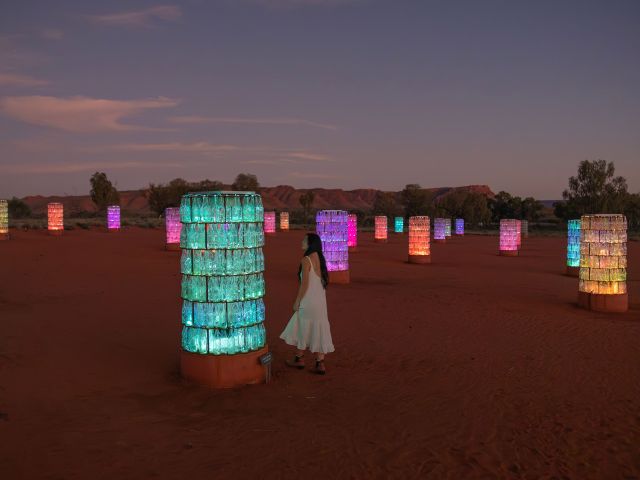
Field of Light at Uluru
Bruce Munro’s Field of Light is one of Uluru’s biggest attractions. (Image: Voyages Indigenous Tourism Australia)

A Night at Field of Light starts from $335 for adults, while Sounds of Silence is from $234.

Dining at a Night at Field of Light in Uluru
A Night at Field of Light is a must-see. (Image: Voyages Indigenous Tourism Australia)

Need tips, more detail or itinerary ideas tailored to you? Ask AT.

AI Prompt

Uluru restaurants

Arnguli Grill & Restaurant

For an intimate dinner, the Arnguli Grill & Restaurant at the Desert Gardens Hotel is the place to head in the Ayers Rock resort. Arnguli (the Pitjantjatjara word for bush plum) dishes up food underscored with Indigenous flavours of the surrounding landscape. Opt for a native tasting plate if you’re not sure where to start.

Arnguli Grill & Restaurant in Desert Gardens Hotel. Arnguli, the Pitjantjatjara word for bush plum, offers an extensive menu and signature grill selection and a quality variety of Australian wines. Enjoy premium dining in a romantic, intimate setting.
Arnguli dishes up food underscored with indigenous flavours of the surrounding landscape. (Image: Voyages Indigenous Tourism Australia)

Mangata Bistro & Bar

Next door, you will find the Mangata Bistro & Bar. Named for the desert quandong, Mangata’s speciality is buffet breakfast, as well as light lunches and dinners. Tuck into native peppered kangaroo kebabs, a hearty bowl of wallaby ragu pasta, or a green paw-paw mango salad after a midday dip in the nearby pool.

Mangata Bistro Bar interior at Uluru
Tuck into native peppered kangaroo kebabs or a green paw-paw mango salad at Mangata. (Image: Voyages Indigenous Tourism Australia)

Ilkari Restaurant

Located at the five-star Sails in the Desert, Ilkari Restaurant is the place to be if you’ve opted for a buffet breakfast while staying here. Ilkari (the Pitjantjatjara word for sky) serves up a range of breakfasts, from continental pastries and fruit and Western-style cooked eggs and bacon to Asian soups and an omelette station. You can also opt to return for dinner, where there is another buffet menu, which incorporates Indigenous bush tucker flavours. And — keep the kids calm — there is a chocolate fountain, too.

Interior of Ilkari Restaurant at Sails in the Desert, Uluru
Ilkari Restaurant is the place to be if you’ve opted for a buffet breakfast while staying here. (Image: Voyages Indigenous Tourism Australia)

Uluru cafes

Walpa Lobby Bar

Named after the Pitjantjatjara word for wind, Walpa Lobby Bar offers casual lunch and dinner, as well as tapas-style eats come evening. These oh-so-scrummy nibbles include baked camembert with quandong jam, emu koftas with river mint yogurt, and avocado, green pea and desert lime guacamole on tortillas. Sit up at the bar to consume, order a cocktail, and indulge in a spot of people-watching.

Interior of Walpa Lobby Bar at Sails in the Desert in Uluru
Walpa Lobby Bar offers casual lunch and dinner, as well as tapas-style eats come evening. (Image: Voyages Indigenous Tourism Australia)

Weekly travel news, experiences
insider tips, offers, and more.

Geckos Cafe

If you’d rather go a la carte come breakfast time, head to the Town Square to Geckos Cafe. Serving up a range of modern Australian breakfast staples from bircher muesli and poached eggs on toast, to toasted banana bread and croissants, there is also pizza and pasta here for lunch and dinner. After something more hearty? Burgers, parmis and fish and chips are also dished up at Geckos.

Cheap eats near Uluru

Outback Pioneer BBQ and Bar

Grab your tongs, crack open that beetroot can and fire up the barbie — it’s time to get extra Aussie at the Outback Pioneer BBQ and Bar. Located out at the Outback Pioneer Hotel, this DIY barbecue experience is available to try out every evening, and from lunch on Sundays. Simply pick out your preferred cut (emu sausages, kangaroo skewers and more are available among more familiar offerings of steak and barra), and cook away. Sides are available as well.

Rather have someone else do the cooking? The nearby Outback Pioneer Kitchen has hearty pub fare, to be consumed at communal tables where you can meet fellow travellers.

Couple sitting at barrel at Outback Pioneer Hotel and Lodge in Uluru
The DIY barbecue experience is available to try out every evening. (Image: Voyages Indigenous Tourism Australia)

Kulata Academy Cafe

One of the most cost-effective places to go in Yulara also has one of the best reasons to go there. As well as serving up sandwiches, pies, salads, smoothies and desserts from around the $9 mark for breakfast and lunch, Kulata’s staff are trainees of the resort’s National Indigenous Training Academy. This means you are supporting them to get their skills polished up for a career in hospitality. We’ll sip a smoothie to that.

Bush Tucker Talk

Did you know a stay at the resort includes a whole heap of free experiences? And for the culinary-minded among you, we’d recommend putting the Bush Tucker Talk at the top of your list. This 45-minute talk gives you an introduction to Indigenous bush tucker food, and even includes a cooking demonstration. Runs daily at 1 pm.

Bush-Food-Experience-with-ili-bush-figs-quandongs
The 45-minute talk gives you an introduction to Indigenous bush tucker food, and even includes a cooking demonstration. (Image: Voyages Indigenous Tourism Australia)
Want to know what else to do at Uluru? Check out our guide to Uluru here.

Want to see more stories from Australian Traveller in your Google search results?

  1. Click here to set Australian Traveller as a preferred source.
  2. Tick the box next to "Australian Traveller". That's it.
Kate Bettes
Kate Bettes is a freelance travel writer. Whether having a picnic in Vietnamese jungle with new friends, or partying in the back of a limousine in Hollywood, Kate’s experiences have left her with the sneaking suspicion that the best travel memories happen when you least expect. It’s this feeling - and how to get it - that she loves to write about.
View profile and articles
hero media

8 reasons why the low season is the best time to explore the Northern Territory

Credit: Tourism and Events NT

September to April in the Northern Territory rewards those who seek adventure.

Sure, the Northern Territory shines during the high season, but did you know it transforms into lush magnificence in the summer low season? From September to April, hundreds of waterfalls roar into action, vegetation flourishes and natural pools swell, all thanks to spectacular storms. This is when some of the country’s best arts and cultural events hit the calendar, too.

Travelling at this time of year means you’ll also be rewarded with off-peak travel pricing on accommodation, tours and experiences, and can even enjoy many of the top sites all to yourself.

1. Kings Canyon is transformed

Kings Canyon Rim Walk Garden Of Eden in the rain
Kings Canyon transforms in the low season. (Image: Kassia Byrnes)

Kings Canyon’s towering sandstone domes and crevasses are a sight to behold year-round, but during the low season you can witness a rare phenomenon. This ancient outback wonder’s arid landscape bursts to life when it rains, temporarily transforming it with waterfalls that thunder down the cliffs. At the base of the canyon is the verdant Garden of Eden and its permanent watering hole.

2. John Hayes Rockhole is a natural wonder

Two women hiking to John Hayes Rockhole, one of the unforgettable experiences during the best time to explore the NT.
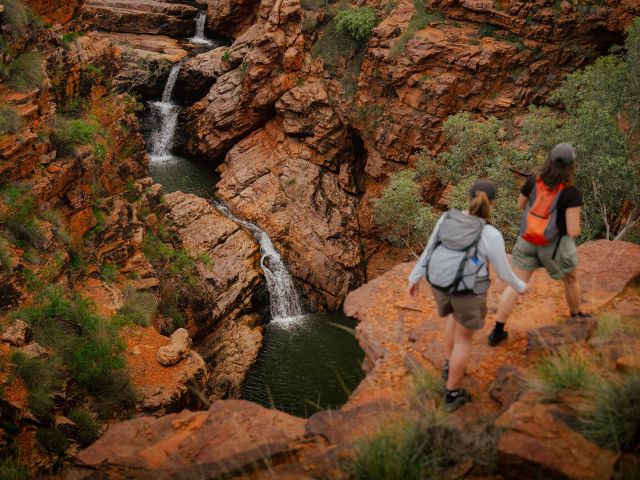
Hike to a desert oasis. (Credit: Tourism and Events NT)

Hidden in the Trephina Gorge Nature Park in the East MacDonnell Ranges, John Hayes Rockhole is an oasis waiting to be discovered. Visit the narrow canyon during the high season, and you may see only a sandy creekbed, but after rain in the low season the pool is full of cool water. It’s accessible via a 4WD-only track off the Ross Highway, or you can set out early and join the nine-kilometre Trephina Ridgetop Walk. The reward for undertaking the hike is worth every step, and there’s a dedicated, tent-only campground for those who’d like to soak up the serenity overnight.

3. The Red Centre Light Trail shines bright

A woman admiring The Light Towers, one of the must-see attractions during the best time to explore the NT.
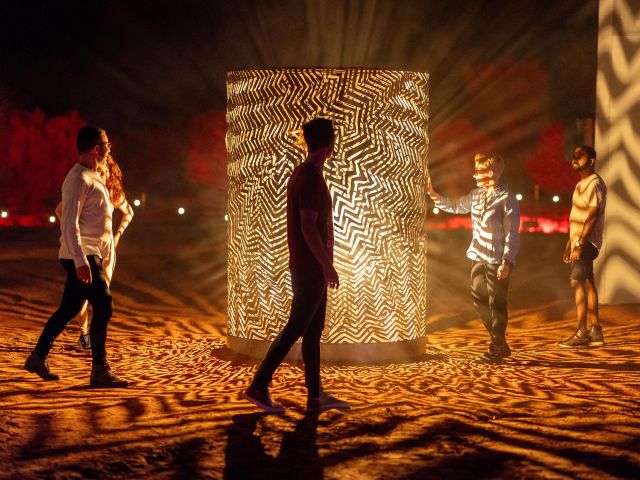
Watch the Outback light up after sunset. (Credit: Tourism and Events NT)

The Red Centre’s rich cultural heritage and lack of light pollution make it the ideal setting for immersive light shows, and you can experience the most iconic ones on an epic six-day road trip in April. Witness the Parrtjima cultural festival in Mparntwe (Alice Springs) before heading to Kings Canyon for Bruce Munro’s Light-Towers, where 69 glowing towers shine to a celestial soundscape. At Uluṟu, Munro’s Field of Light blankets the red soil with glowing frosted-glass stems, and the Wintijiri Wiru drone show lights up the sky in front of the sacred cultural site. Along the way you’ll witness the changing landscapes of the desert from the West MacDonnell Ranges to the Valley of the Winds.

4. The Parrtjima festival lights up the Red Centre

Festival lights illuminating the Northern Territory, showing why the best time to explore the NT is during festival season.
Witness the magic of Parrtjima. (Credit: Tourism and Events NT)

For 10 days every April, the Red Centre turns into a dazzling display of colour for the Parrtjima festival. Held at Alice Springs Desert Park, the unmissable celebration shines a spotlight on the world’s oldest living culture using modern technology. Artworks by local Aboriginal artists are transformed into large-scale illuminated installations with accompanying soundscapes, offering a unique opportunity to see the spectacular sunburnt landscapes, night skies and 300-million-year-old West MacDonnell Ranges in a new light. The jam-packed line-up of art and cultural events also includes workshops, markets, short films, talks and live music.

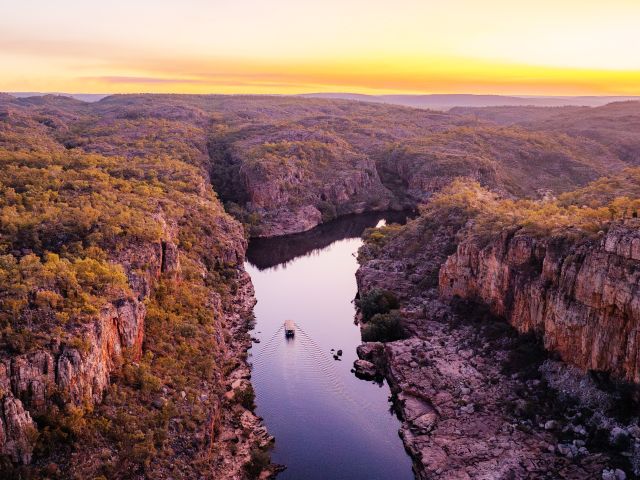
5. Cruising along Nitmiluk Gorge is breathtaking

Aerial view of Nitmiluk Gorge, showcasing its dramatic cliffs and waterways.
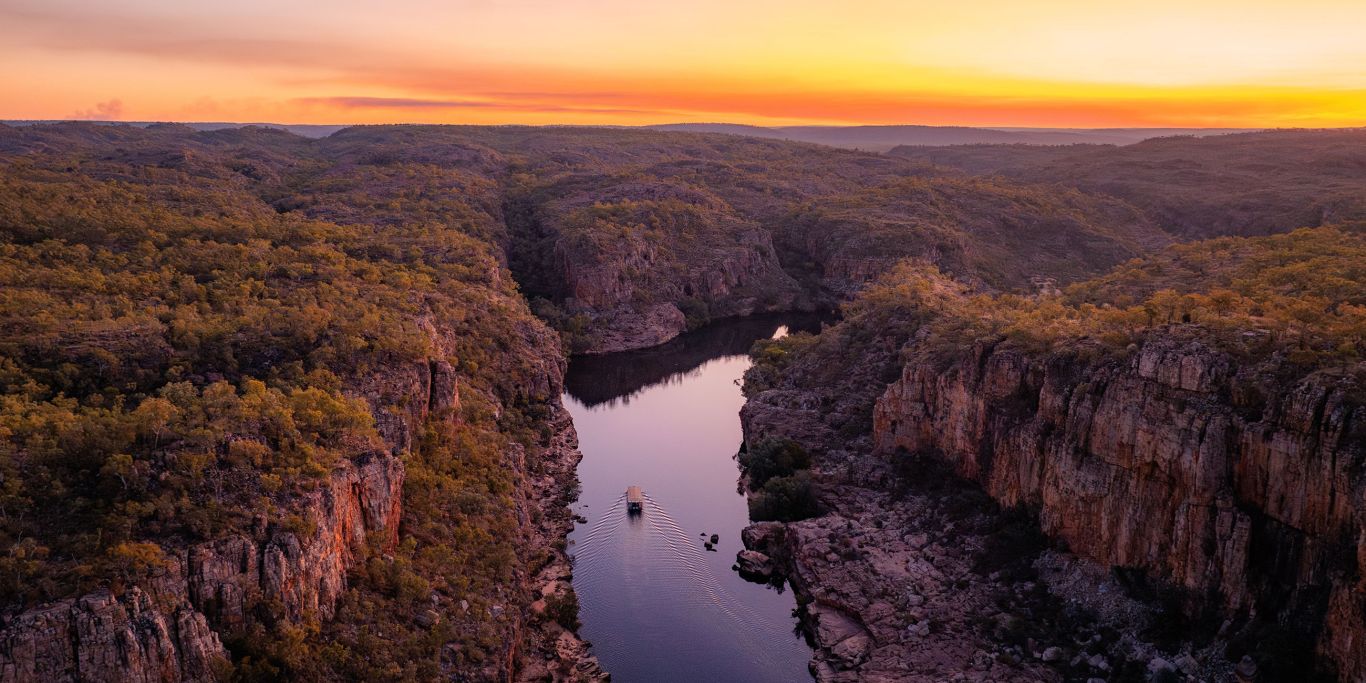
Sail between towering sandstone cliffs. (Credit: Tourism and Events NT/Nic Morley)

Drifting down the emerald waters of Nitmiluk (Katherine) Gorge between towering red sandstone cliffs carved over millions of years, all while waterfalls stream down around you, is an experience like none other. Nitmiluk Katherine’s two-hour NitNit Dreaming Two Gorge Tour sails through gorges past ancient rock art while a local guide imparts knowledge about the Jawoyn culture and significance of the landscape.

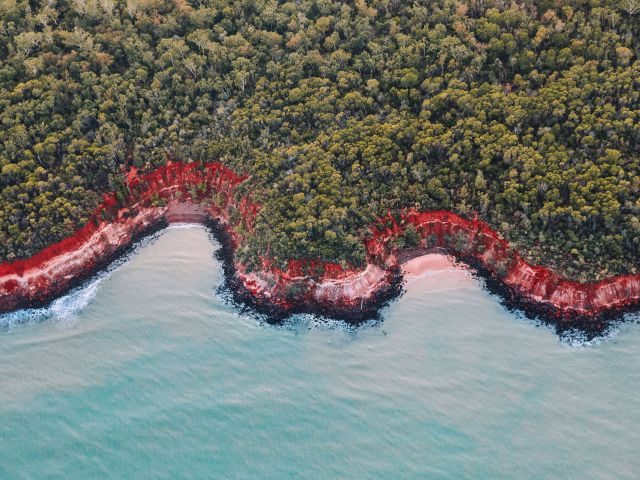
6. You can explore local culture on the Tiwi Islands

A quick boat ride from Darwin lies the peculiarly pink shores of Melville Island, Tiwi Islands. Populated by the hilariously cheeky Indigenous Tiwis, stepping onto the Islands is like stepping back in time. Sweeping rusty dirt roads meander through the eucalypt forest and are interspersed only by small communities and freshwater springs.
Immerse yourself in Tiwi culture. (Credit: Tourism and Events NT/Elise Cook)

Take an 80-kilometre ferry ride from Darwin to arrive at the Tiwi Islands, an archipelago of 11 picturesque islands and a haven for art lovers and anglers. On the Tiwi By Design walking tour you’ll be guided to the Tiwi Design Art Centre, one of Australia’s oldest art centres, to observe local artists in action and join a screen printing workshop.

If you’re more partial to sinking a line, book a stay at Tiwi Island Retreat in April. It’s one of the best months to fish for barramundi, and their world-class fishing adventures are your best chance at reeling in a prized catch.

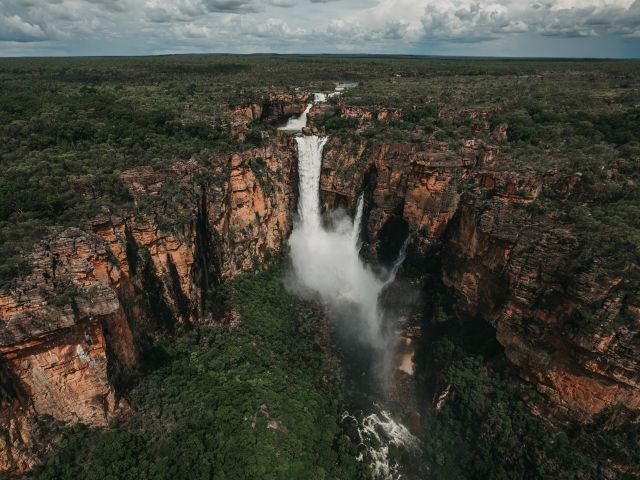
7. Scenic flights over Kakadu’s waterfalls are jaw-dropping

Jim Jim Falls from above during a wet season helicopter tour. Covering nearly 20,000 square kilometres, Kakadu National Park is teeming with wildlife, home to important Aboriginal rock art sites, and takes in diverse and exotic landscape.
Soar above Jim Jim Falls. (Credit: Tourism and Events NT/Jarrad Seng)

Seeing Kakadu National Park’s gushing waterfalls and dramatic escarpments from above offers a dose of unparalleled beauty – and it’s all best witnessed in the low season.

Taking flight from Darwin, Kakadu Air Services offers an unforgettable experience, with doorless helicopters revealing unobstructed views of the 1.8-billion-year-old landscape. Soar above the untouched savannah that turns into a tropical green paradise, marvel at the thunderous Jim Jim Falls and Twin Falls, and whiz through ancient sandstone canyons. If you’re lucky, the scenery will look all the more dramatic with rolling tropical storm clouds in the distance.

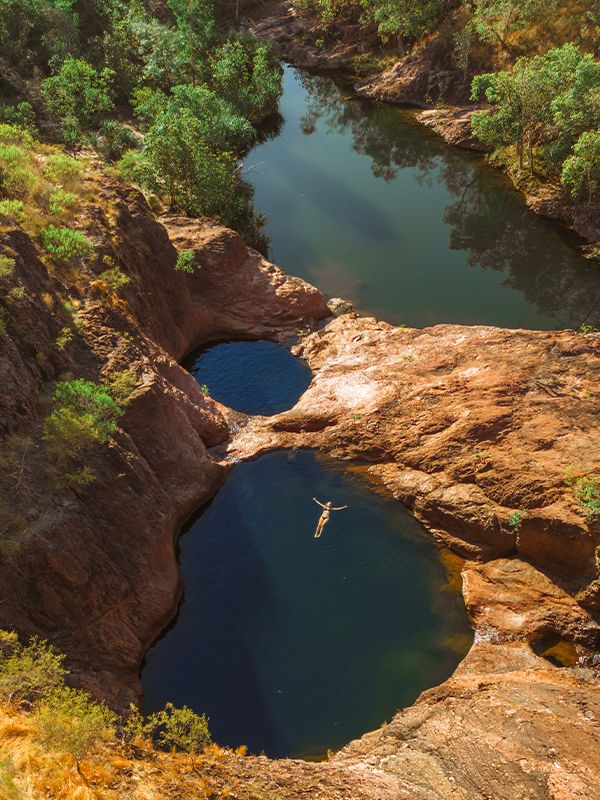
8. Litchfield National Park is an amazing place to cool off

Litchfield National Park
Dive into natural swimming holes. (Image: Tourism NT/Joshua Griffen)

Litchfield National Park is peppered with stunning natural swimming pools for you to beat the heat in. Take a refreshing dip in pristine, crocodile-free spots such as Buley Rockhole, a series of spring-fed cascading pools, and the nearby Florence Falls, which is enveloped by monsoon rainforest and features a crystal-clear plunge pool fed by a 15-metre-high waterfall. Be sure to check the Northern Territory Parks & Reserves website for closures before you go.

Start planning your low season adventure of a lifetime at northernterritory.com.