7 Flinders Ranges tours that will enrich your experience

hero media
This sprawling mountain range is vast and filled with mystery, but the right tours can help unlock the secrets of an ancient and beguiling landscape.

From a distance, the serrated ridges and deep gullies of the Flinders Ranges are as forbidding as they are impressive. But up close this sunburnt range of rust-coloured mountains is brimming with fascinating stories. Adnyamathanha traditional owners talk of the ancient and powerful forces that sculpted this land, while the resident astronomers at Arkaroola give form to the stars that glitter across some of the clearest night skies you’ll ever see.

Immaculately preserved fossil beds and sheer rock walls that expose millions of years of geological history tell a story older than time. There are countless adventures to be had in the region, but connecting with a local on one of these Flinders Ranges tours can help bring this ancient landscape to life, providing an entirely new perspective on one of Australia’s most enchanting regions.

1. Scenic flight over Ikara (Wilpena Pound)
Scenic Flight over Wilpena Pound in the Flinders Ranges
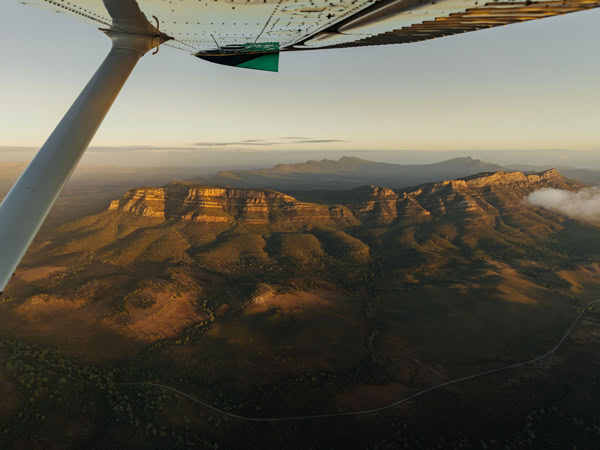
See Ikara (Wilpena Pound) from a bird’s-eye view. (Image: Emilie Ristevski)

You could easily spend weeks driving through every gorge, creek and canyon that cuts through the majestic Flinders Ranges. Or you can do things the easy way and see them all at once from above.

Join an early morning scenic flight over Ikara (Wilpena Pound) and you can watch the shrubs and spinifex tussocks quickly recede into tiny specks as the entire landscape magically transforms into a three-dimensional dot painting.

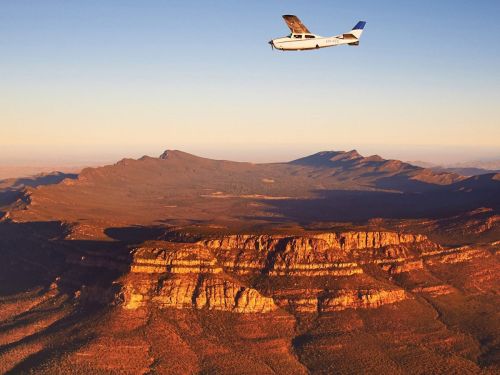
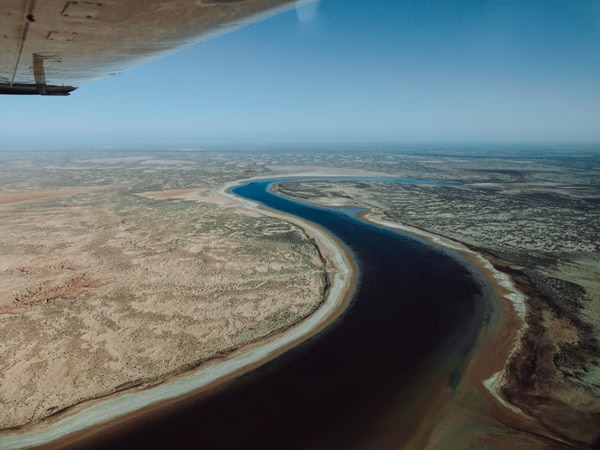
A 20-minute flight will take you over the Elder and Heysen Ranges as the first rays of the sun bring a golden glow to Ikara’s perfectly curved walls, while longer tours can bring you all the way to the glittering expanse of Kati Thanda-Lake Eyre.
an aerial view of the Kati-Thanda Lake
Kati Thanda-Lake Eyre is stunning. (Image: South Australian Tourism Commission)

2. See the dawn of life on Earth in Nilpena Ediacara National Park
a fossil tour inside Nilpena Ediacara National Park
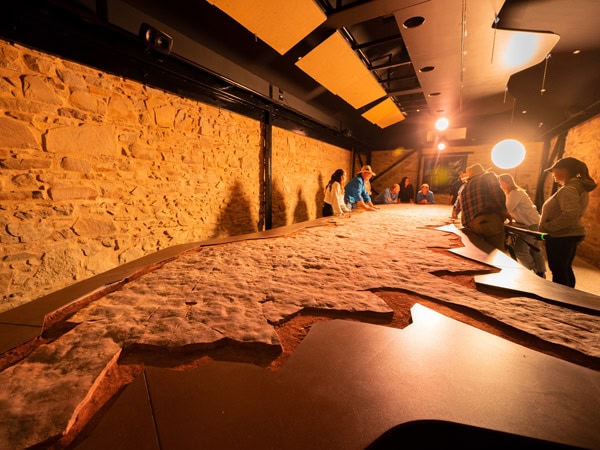
Discover a breathtaking collection of fossils at Nilpena Ediacara National Park. (Image: (Image: Tourism Australia/South Australian Tourism Commission)

Opened in 2023, Nilpena Ediacara is South Australia’s youngest National Park. But those fortunate enough to visit will discover a breathtaking collection of fossils more than twice as old as the first dinosaurs. 550 million years ago, this entire region lay at the bottom of a shallow tropical sea, and the perfectly preserved fossil beds nearby are so significant that they’ve lent their name to the Ediacaran era when complex life first emerged.

The only way to enter the park is on a two-hour guided tour that takes in the 1870s shearer’s quarters and blacksmith’s shop before bringing visitors in to view a giant bed with more than 200 fossils that look like sand dollars, anchors and giant spirals. An array of six interlinked projectors spotlights individual fossils from different angles and shows how they would have moved over the ocean floor, while young visitors in particular will get a thrill from the opportunity to touch these unbelievably ancient specimens.

Need tips, more detail or itinerary ideas tailored to you? Ask AT.

AI Prompt

3. Walk with the Traditional Owners
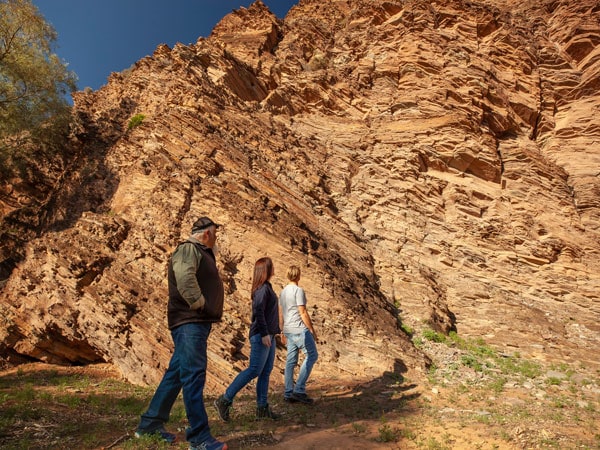
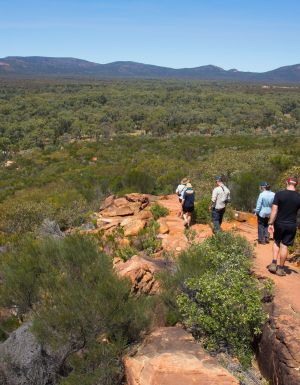
a group of travelers exploring the rock walls, Wilpena Pound Resort
Wilpena Pound Resort holds a range of tours. (Image: Tourism Australia)

The word ikara means “meeting place" in the language of the Adnyamathanha people, and Ikara (Wilpena Pound) has been an important ceremonial site for tens of thousands of years. Geologists have their version of how this vast natural amphitheatre was formed, but take a walk with the traditional owners and you’ll get a very different perspective and this living, breathing land.

Wilpena Pound Resort holds a daily welcome to country and a range of tours that let you learn the stories of the local flora and fauna, as well as how two fearsome serpents shaped many of the features of the landscape before coiling up to form the impressive rock walls that encircle the pound.

You can also join Adnyamathanha guides as they visit the vibrant paintings at Akurra Adnya (Arkaroo Rock) and the ancient rock carvings of the eerily quiet Sacred Canyon (which is only accessible on an Adnyamathanha-guided tour).

4. Go on a ghost tour with a difference in Blinman
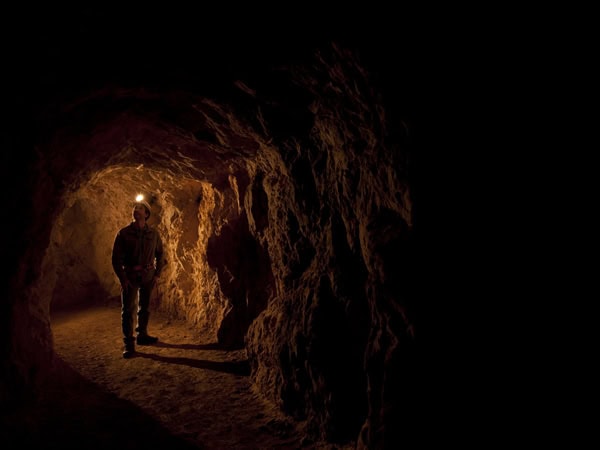
the Blinman Mine Tour, Flinders Ranges
Venture down the narrow tunnels in Blinman. (Image: South Australian Tourism Commission)

Though it now has a permanent population of just 20, Blinman was once a thriving frontier town with 1500 residents. And it was the bustling copper mine that brought fortune hunters from as far away as Cornwall. Daily mine tours take you back to the 1860s with a sound and light show that illuminates the narrow tunnels and demonstrates what life would have been like for these hardy miners and their families.

If you’re feeling especially brave, stick around on Friday or Saturday night for a lantern-lit ghost tour that tells the stories of the poor souls who perished in the mine and populates the shafts with Cornish spirits, including the diminutive piskies, mischievous knockers and fearsome buccas.

5. Spot some stars at Arkaroola Wilderness Sanctuary
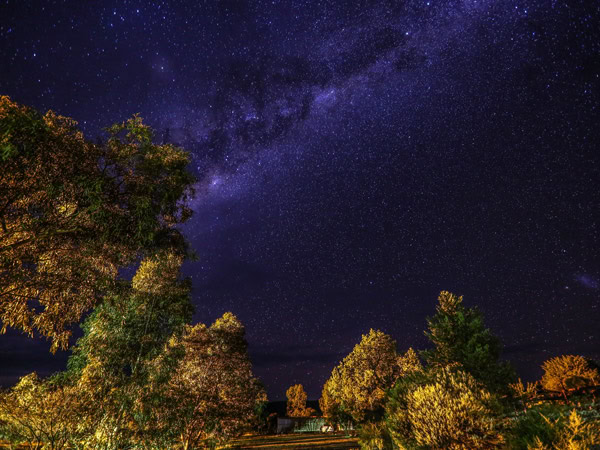
the Arkaroola Night Sky
Go stargazing at Arkaroola Wilderness Sanctuary. (Image: Tourism Australia)

Low humidity and a complete absence of light pollution make Arkaroola Wilderness Sanctuary one of the best places to go stargazing in the country. In fact, conditions are so good that the property was recently named Australia’s second Dark Sky Sanctuary.

Exploring the fabulously rugged landscape around Arkaroola Village is one of the highlights of any Flinders visit, but once the sun goes down the resident astronomers emerge to guide visitors around the night skies. Guests can choose from several tours that let them gaze up at the heavens from specially designed reclining chairs or venture deep into space at a high-powered observatory that offers a closer view of planets and other celestial bodies.

Weekly travel news, experiences
insider tips, offers, and more.

6. Tackle one of Australia’s Great Walks at Arkaba
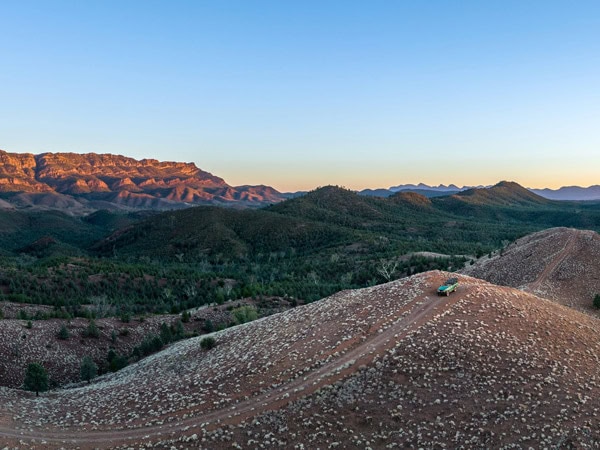
Arkaba Conservancy in Flinders Ranges
Arkaba is one of the best places to get a sense of just how full of life this arid region can be. (Image: Isaac Forman)

Since the former sheep station at Arkaba was destocked in 2014, the local flora and fauna have rebounded, and the highly successful rewilding project has made it one of the best places to get a sense of just how full of life this arid region can be. Explore the property by foot on the three-day Arkaba Walk and you’ll trek over weathered peaks, into dramatic ravines and through patches of forest filled with animal and birdlife.

And despite the seeming isolation, each night is spent at a bush camp that epitomises outback luxury with chef-prepared meals enjoyed around a campfire, swags featuring a turndown service and steaming mugs of tea delivered to your private sleeping platform while you admire the sunrise.

7. Relive the golden age of rail on the Pichi Richi Railway
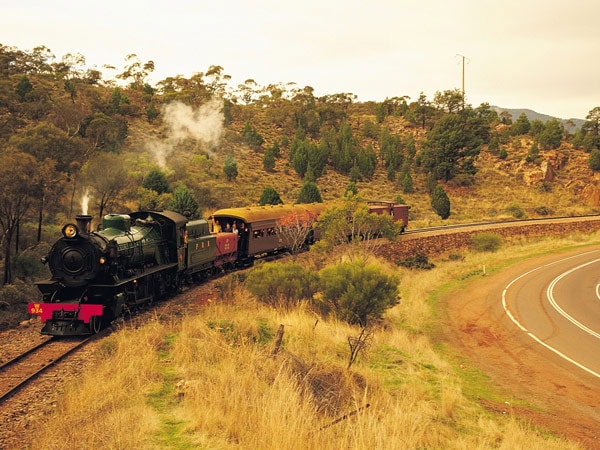
the Pichi Richi Railway, Flinders Ranges
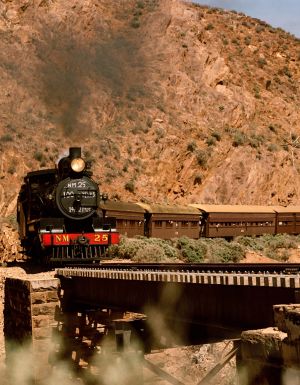
Relive the golden age of rail on the narrow-gauge Pichi Richi Railway. (Image: South Australian Tourism Commission/Peter Fisher)

If you think the Flinders Ranges are remote, spare a thought for the pioneers who once faced a weeks-long wagon trip to stock up on supplies in Port Augusta. For them, the arrival of the railway in 1879 was a cause of great celebration, and it was such a success that it was eventually extended all the way to Alice Springs.

Much of the line fell into disuse after the Ghan was rerouted through less flood-prone regions, but you can still relive the golden age of rail on the narrow-gauge Pichi Richi Railway from Port August to Quorn. Lovingly restored Ghan carriages from the 1920s and an elaborately decorated Edwardian railcar known as the Coffee Pot still follow the original route over dry stone walls, heritage iron bridges and steep cuttings as they traverse the Pichi Richi Pass, a picturesque gorge that cuts through the Southern Flinders Ranges.

For more inspiration and itinerary tips, read our travel guide to the Flinders Ranges.

Alexis Buxton-Collins
Alexis Buxton-Collins spent his twenties working as a music journalist and beer taster before somehow landing an even dreamier job as a freelance travel writer. Now he travels the world from his base in Adelaide and contributes to publications including Qantas, Escape, The Guardian and Lonely Planet. Alexis has never seen a hill he didn't want to climb and specialises in outdoor adventures (he won the 2022 ASTW award for best nature/wildlife story for a feature on Kangaroo Island). When he's not scouring South Australia for the newest wineries and hikes, he's looking for excuses to get back to spots like Karijini and Ningaloo.
View profile and articles
hero media

Good food, beautiful nature & history: your guide to a long weekend in West Gippsland

(Credit: Rob Blackburn)

    Carla Grossetti Carla Grossetti
    From rainforest walks and scenic drives to historic gold-rush towns and standout regional dining experiences, you can find it all in West Gippsland.

    Hover over West Gippsland on Google Earth and you’ll see vast tracts of land spread out like green velveteen around the Toorongo Falls Reserve. It’s a landscape that feels almost impossibly lush for a region sitting little more than an hour from Melbourne.

    Track southeast in late autumn and early winter and you’ll see pockets of the Mt Baw Baw Plateau dusted in snow. In addition to the forests of mountain ash veined with creeks and rivers, there are pastures and farmland cross-stitched together to form pretty patchworks.

    But West Gippsland isn’t defined by scenery alone: in addition to its awe-inspiring nature, a Venn diagram of the region includes gold-rush history and great culinary experiences.  Spend a long weekend here and it quickly becomes clear how often these three overlap.

    Getting there

    Messmates Dining west gippsland
    Spend the weekend eating and exploring in West Gippsland. (Credit: Messmates Dining)

    Getting to West Gippsland involves as easy drive – it’s just over an hour out of Melbourne along the Monash Freeway.

    Not driving? Catch the train from Melbourne on the Gippsland line, terminating at either Traralgon or Bairnsdale, and hop off at Warragul or Drouin.

    Visit historic villages

    Walhalla historic township
    Wander into Australia’s Gold Rush history at Walhalla. (Credit: Rob Blackburn)

    The West Gippsland region is on the Traditional Lands of the Kulin and Kurnai nations, specifically linked to the Bunurong, Gunaikurnai and Wurundjeri Peoples, whose connection to Country stretches back thousands of years.

    European settlement occurred in the 19th century as timber cutters, farmers and gold seekers pushed into the region’s dense forests. Small towns grew around sawmills and railway lines, and many of those gold rush settlements, timber towns and railway villages still shape the character of the region today.

    The most evocative of these is Walhalla Historic Township, a remarkably preserved gold-rush township tucked deep in the mountains. In the late 1800s, it was one of Victoria’s richest goldfields. Today visitors can step inside that history at the Long Tunnel Extended Gold Mine, where underground tours reveal the scale of the mining operation that once powered the town’s prosperity. Nearby, the Walhalla Goldfields Railway retraces part of the original narrow-gauge line through the valley, offering a slow journey past forest and river scenery.

    Further west, Noojee is a classic mountain village. It’s surrounded by dense forest and waterfalls and has become a natural base for exploring the Baw Baw region. Just outside town, Noojee Trestle Bridge stands as one of West Gippsland’s most striking relics of the rail era. The towering wooden structure is the tallest surviving trestle bridge in Victoria and today forms the centrepiece of an easy scenic walk with wide views across the valley.

    Alpine Trout Farm west gippsland
    Catch your own lunch at Alpine Trout Farm. (Credit: Nicky Cawood)

    At Alpine Trout Farm near Noojee, visitors can fish for trout in mountain-fed ponds before enjoying the catch prepared fresh onsite. It’s a simple experience that reflects the area’s long connection to the surrounding waterways.

    Back in Warragul, the region’s main service town, the story shifts from heritage to modern regional life. With galleries, restaurants and sweeping views across the rolling farmland of Gippsland, the town has become a lively hub linking the district’s past with its evolving food and cultural scene. Drive through the town and you’ll find heritage buildings, old pubs and weatherboard cottages that hint at the area’s early days as a frontier landscape.

    In other towns the past survives in quieter ways – a historic hall here, a century-old bakery there.

    Walks, waterfalls and wild places

    Toorongo Falls in west gippsland
    Stroll Toorongo Falls Reserve. (Credit: Nicky Cawood)

    Even simple roadside stops can feel cinematic in West Gippsland. The region also delivers plenty of opportunities to lace up your walking shoes.

    One of the region’s most rewarding nature escapes lies just outside Noojee at Toorongo Falls Reserve. A network of walking tracks winds through the cool-temperate rainforest where towering mountain ash trees filter the light and the air smells of rich, damp earth. The 2.2-kilometre trail to the viewing platform overlooking Toorongo Falls is short, but spectacular, as the water cascades down over moss-covered rock faces into a cool, green gully in Little Toorongo River.

    Further north, the Mount Baw Baw Alpine Resort offers year-round adventures. In winter, the mountain attracts skiers and snowboarders. The warmer months are just as compelling, with scenic drives to see alpine wildflowers, mountain bike trails and panoramic hiking routes that open across the plateau.

    Cyclists and walkers looking for a more relaxed pace can follow the Rokeby Neerim Rail Trail, which traces a former railway line through farmland and small Gippsland villages. The mostly flat trail passes rolling paddocks, creeks and historic bridges, making it an easy way to drop it down a gear when exploring the countryside.

    Taste the best eats of West Gippsland

    Hogget Kitchen west gippsland
    Taste the best of the region at Hogget Kitchen.

    For many travellers, the real drawcards of West Gippsland are the food and wine. The region sits in the heart of Victoria’s fertile dairy country, and that agricultural backdrop has helped shape a dining scene where seasonal produce and local provenance take centre stage.

    Hogget Kitchen has helped put Warragul firmly on the radar for serious regional dining in West Gippsland. Here, head chef and owner Trevor Perkins runs the kitchen alongside well-known winemakers William (Bill) Downie and Pat Sullivan. Hogget Kitchen lives up to its promise of exceptional destination dining; what lands on the table depends largely on what nearby farms have harvested that week as well as a wine list from Wild Dog Winery and other Gippsland producers.

    Warragul is also where you’ll find Messmates Dining where the kitchen team is led by Michelin-trained chefs. The Euro-leaning bistro and wine bar brings a polished edge to the local dining scene using produce sourced from across West Gippsland.

    For something more casual, the century-old Noojee Hotel is the kind of hub that every traveller dreams of finding after a long drive. Expect generous pub classics served on the sunny deck in summer or beside the crackle of a log fire in winter.  Nearby, rustic Toolshed Bar, Bistro & Cabins is the place to go for a wood-fired pizza topped with smoked local trout paired with Gippsland wine, making it a rewarding stop for lunch or an overnight stay.

    Time your visit with the Truffle Festival

    Food lovers visiting in winter should consider timing their trip to coincide with Noojee Truffle Festival, running from 10 July to 2 August 2026. The inaugural event celebrates the region’s emerging truffle industry with tastings, special menus and events built around one of winter’s most prized ingredients.

    Start planning your long weekend in West Gippsland at visitgippsland.com.au.