The top places you should stop along the Nullarbor

hero media
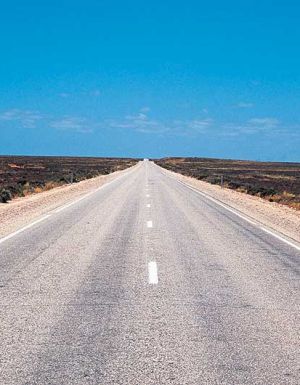
The Nullarbor crossing is infamous among road trippers, with legends of how monotonous the 1256-kilometre route across southern Australia can be.  But there is plenty to surprise travellers embarking on the journey.

From cool ‘outback’ pubs and awesome ranch-style campsites to eerie horror-movie-style motels you should drive straight past, the Nullarbor is an iconic Aussie road trip that cements itself in your subconscious. Dismiss the rumours of mind-numbing boredom, get the music cranking and prepare yourself for a sometimes beautiful but often quirky journey.

Don’t miss: Driving the Nullarbor in summer: what you need to know

Your first stop in the east: Ceduna

There’s not much in Ceduna, South Australia, except a pretty foreshore, jetty and basic services, but it’s the last big-ish town you’ll come across before you head west and, therefore, the eastern launching point for any adventure across the Nullarbor. This is where you fill up on fuel (it’s worth comparing prices at the few service stations), stock up on groceries and ensure you have plenty of water for the journey.
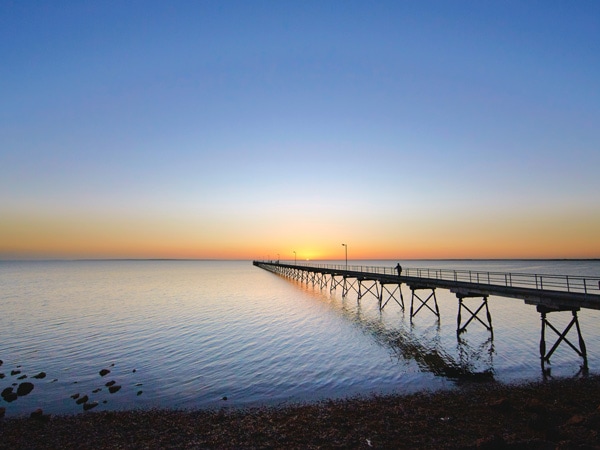
Ceduna Jetty, SA
Ceduna in SA is the last big-ish town you’ll come across. (Image: South Australia Tourism Commission)

It’s also wise to pop into the Visitor Information Centre, as the staff members are a wealth of knowledge and you can pick up a detailed paper map to help you plot your route and number of travel days (four is a good amount).

Surfers’ secret: Cactus Beach

You’d be forgiven for thinking you’d stepped onto the set of a 1980s surf doco when arriving at Cactus Beach, officially called Point Sinclair Camping Ground. It’s a half-hour detour (21km) off the Eyre Highway at Penong but it’s worth it. Cactus is one of the first accommodation options after Ceduna and a highlight for any ocean-loving road-tripper.
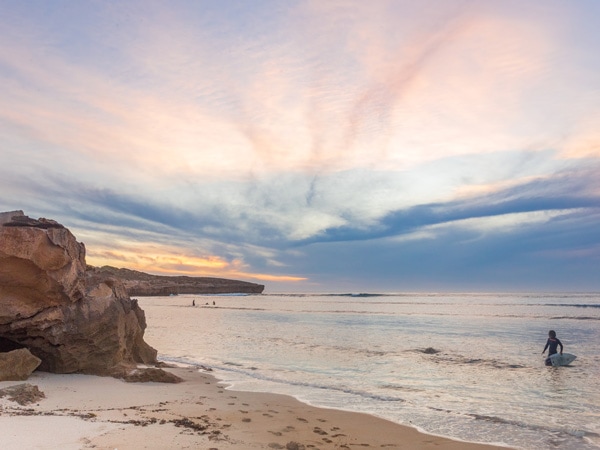
Cactus Beach SA
Cactus Beach is a half-hour detour but worth it for the surf and camping spot. (Image: Michael Waterhouse Photography

Picture vintage caravans and 4WDs protruding from coastal scrub just metres from roaring waves that have attracted surfers for decades. Of course, you don’t have to camp here – you could just come for the surf – but the campsite is cool, with firewood topped up daily, a rudimentary camp kitchen where wetsuits and garlands of shells hang side by side, and two cold showers, including a “little old ladies’ shower" where privacy is guaranteed and wetsuits prohibited. Around the corner from the campground is Port Le Hunte, a wharf and shark-netted swimming area.
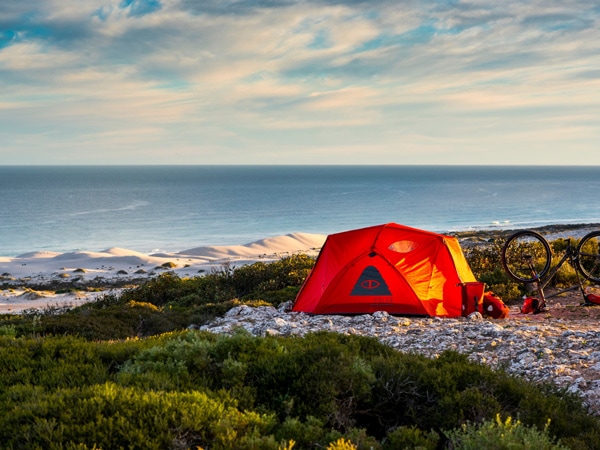
Camping at Eyre Peninsula
There are plenty of good camping spots by water during this part of the journey. (Image: Che Chorley)

Don’t miss: Crossing the Nullarbor: your top questions answered

Sand dunes & history: Fowlers Bay

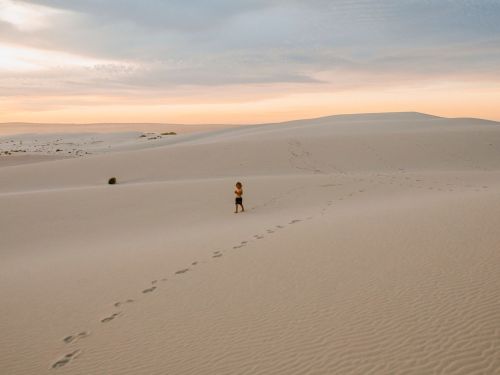
If you’re fascinated with small Aussie towns then you’ll find Fowlers Bay one of the most curious stops along the Nullarbor. Odd in appearance due to the towering sand dunes encroaching on the buildings and the empty streets, this little-known town offers a peaceful respite from the bitumen. Named by English navigator Matthew Flinders in 1802, Fowlers Bay consists of a mix of historical stone houses and ramshackle fishing shacks, with a quiet beach, wharf and general store where you’ll be able to grab a cuppa and bite to eat.
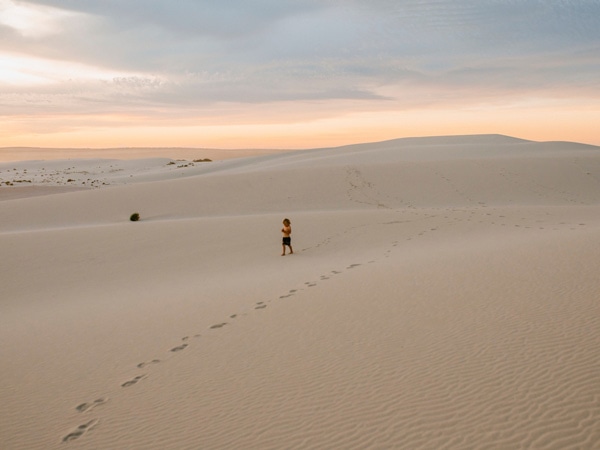
Sand dunes at Fowlers Bay Conservation Park SA
Visit the towering sand dunes of Fowlers Bay Conservation Park. (Image: Naomi Mackie/@boys_run_free)

There are few people about the day I visit, meaning we share the foreshore with only a handful of other road-trippers and enjoy a bayside lunch before scaling the nearby dunes. From the top of the dunes, there are great 360-degree views, so make sure you take your camera. This once active port remains a good place to cast a fishing line off the wharf or beach, and has a reputation for great whale watching between May and October. The dirt road in can be heavily corrugated so take it slow and give yourself plenty of time to get there.
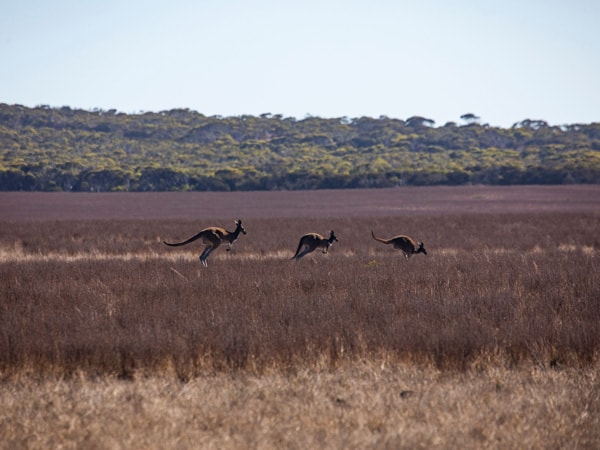
Kangaroos in Fowlers Bay SA
Spot the wildlife along the road as you pass through Fowlers Bay. (Image: Kane Overall)

After Fowlers Bay, you’ll pass through the long stretch known as Yalata. Keep an eye out for the great native animal road sign that’s worth a selfie.

Roadhouse stops: Nullarbor Roadhouse & more

There are plenty of roadhouses along the Nullarbor where you can top up your fuel, stretch your legs and fill your belly. One of the best is Nullarbor Roadhouse, where the manager is friendly and you can grab a coffee and slice of cake. It’s also a good spot to stay the night (there’s a motel and campground) as there’s a tidy little bar with a pool table and pinball machine. Be sure to wander over to the still-standing original roadhouse from the 1950s before moving on. Another great roadhouse full of character is Cocklebiddy Motel, over the border in WA. Again, there’s a quirky little bar and diner.
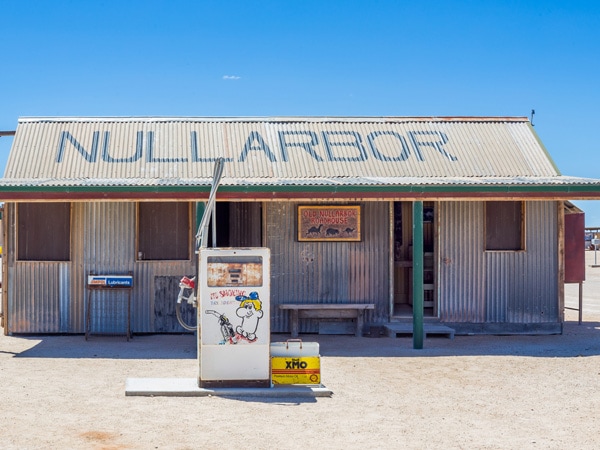
Nullarbor Roadhouse is one of the best places to stay or stop for food when crossing the Nullarbor. (Image: Michael Waterhouse Photography)

Caiguna is a somewhat weird stop and reminiscent of the roadside motels you see in American horror films – though, I’m sure they’re not like that inside – and besides, some might find that concept thrilling. Although the roadhouse itself is large and clean, the playground in front is a little dilapidated and looks somewhat unsafe; best not to linger.

The end of the line: Norseman

Norseman marks the end of the Nullarbor but it’s no oasis. This town is tiny and travellers still have a couple of hours’ driving before reaching the worthy stops of Kalgoorlie to the north or Esperance to the south. What Norseman is good for is more fuel, grabbing essential groceries and letting the kids run amok in the large public playground. And, of course, celebrating the official end of the Nullarbor crossing.
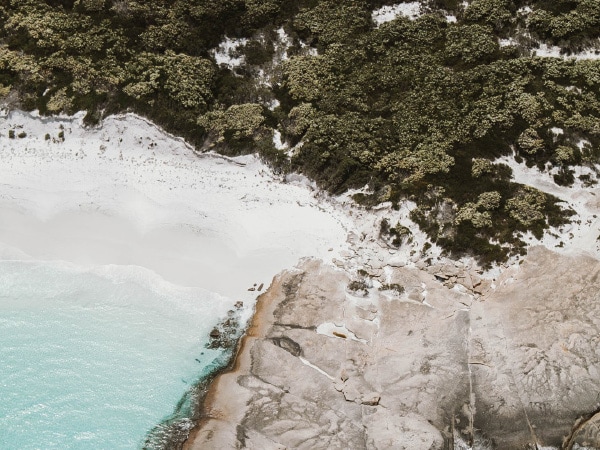
The Esperance landscape
Continue on from Norseman to Esperance in WA.
More: 10 Greatest Road Trips in Australia
Jennifer Ennion
Jennifer Ennion is a freelance travel and ski journalist who loves encouraging people to spend more time outdoors. From snorkelling with belugas in sub-Arctic Canada to hiking the Himalayas, Jennifer is constantly searching for stories that inspire readers to push their boundaries.
See all articles
hero media

8 Red Centre locations to explore after seeing the new movie, Kangaroo

Spend a few days visiting the real-life Central Australian locations that inspired the new film everyone is talking about, and discover why Alice Springs is such an important part of Australian culture.

In the credits of the new Australian film Kangaroo , the first name under ‘cast’ should read ‘The Northern Territory ’. Not only is Alice Springs (and the surrounding landscape) integral to the movie itself, but the spiritual heart of Australia and its local Indigenous owners also inform the look and feel of every frame, explains Producer Trisha Morton-Thomas of Brindle Films, who also plays Charlie’s grandmother Gwennie.

“By setting Kangaroo in Alice Springs (Mparntwe), the film embraces how visible Aboriginal people are here, and the living Aboriginal culture that is woven through this community,” she explains.

still from kangarro film
See Kangaroo, then visit the real-life filming locations.

And while shooting in such a sacred part of the Northern Territory required extra planning, it was something the cast and crew were highly invested in.

“There are incredibly significant sacred sites and places of deep cultural stories in the area, that at times are very gender-specific, which we’ve kept out of the production,” she explains. “Even if overhead drone footage captures a sacred site that isn’t meant to be seen by other people outside of that clan, we’ve made sure to omit it from the film.”

If Kangaroo piqued your interest in a Central Australian holiday, we don’t blame you. Read on to discover eight places featured in the movie that you can visit in real life – and get planning. Don’t forget to pack sunscreen and a hat.

1. Alice Springs/ Mparntwe

artist at Many Hands Art Centre
Visit the galleries of Alice Springs, like Many Hands Art Centre. (Image: Tourism NT/ Helen Orr/ Many Hands Art Centre)

The red and dusty streets of the film’s fictional town of Silvergum were filmed on the outskirts of Alice Springs. And, while the art gallery featured in the film is fictional, Alice Springs is a hub of creativity. See the work of local artists at the Araluen Art Centre , Yubu Napa Art Gallery , Iltja Ntjarra (Many Hands) Art Centre and the famous Tjanpi Desert Weavers .

2. The Kangaroo Sanctuary & Kangaroo Rescue Centre

The Kangaroo Sanctuary Alice Springs, the inspiration for the Kangaroo move
Visit the movie’s inspiration at Kangaroo Sanctuary. (Image: Tourism NT/ Kangaroo Sanctuary)

Kangaroo was inspired by the journey of Chris ‘Brolga’ Barns, who founded the now world-renowned Kangaroo Sanctuary based in Alice Springs. For lead actor, Aussie Ryan Corr, the animals were central to the movie, alongside the landscapes.

“The animals in this story were a real calling point for me,” he explains. “What this story tries to tell us about the connection between humans and animals is beautiful.”

To gain a real insight into the fauna and flora of the Red Centre, you can visit the Kangaroo Sanctuary on a sunset tour, where you might even get the chance to hold a baby kangaroo.

3. Ormiston Gorge

woman walking along the edge of Ormiston Gorge near alice springs
Take a dip in Ormiston Gorge. (Image: Tourism NT/ @domandjesso)

The film captures the raw beauty of the West MacDonnell Ranges, known in the Arrernte language as Tjoritja. This national park is rich in Indigenous culture and stark geological wonders.

Only a 15-minute drive from Alice Springs, Tjoritja offers visitors the chance to camp, hike and swim among ancient landscapes (most attractions are less than a three-hour drive away).

Ormiston Gorge , a cooling oasis in among the red desert sands, is one of the most popular destinations, no doubt because of the permanent swimming hole and towering red cliffs. From here, visitors can also embark on the beautiful Ormiston Pound Walk and the shorter – more accessible – Ghost Gum Walk. Bring your bathers – it’s safe for swimming.

4. Standley Chasm

woman walking through Standley Chasm near alice springs
Wander through Standley Chasm. (Image: Tourism NT)

The 1.2-kilometre walk to nearby Standley Chasm will be a highlight for any visitor as the imposing 40 metre-high chasm walls project strength and ancient wisdom.

Visit at midday to experience the path illumined by the midday sun. Not only will you fill your camera roll with vibrant red images of the gorge and its intoxicating shadows, but you can also camp nearby in a powered or unpowered site so you can watch the brilliance of the desert stars fill the night sky after dusk.

5. Simpsons Gap

three people walking on path through simpsons gap near alice springs
Walk the trails of Simpson’s Gap. (Image: Tourism NT/ Helen Orr)

Closer to Alice Springs, the photogenic Simpsons Gap is the perfect place to spot the endangered Black-footed Rock wallaby near the permanent watering hole. While swimming isn’t permitted, soaking up the sun and views certainly is.

Explore the area’s numerous walking trails, appreciate the soaring cliffs on either side of the ‘gap’ and pick out the shooting locations of Kangaroo in the area.

6. Ellery Creek Big Hole

aerial of Ellery Creek Big Hole near alice springs
Dive into Ellery Creek Big Hole. (Image: Tourism NT/ Tourism Australia)

When it comes to classic Northern Territory landscapes, you can’t go past Ellery Creek Big Hole/ Udepata : tall gum trees sidling up to a refreshing watering hole (fed by the West MacDonnell Ranges and surrounded by rugged red cliffs.

Swim in the cooling waters, hike the cliff tops, watch for birds and even stargaze as you camp here overnight. It’s locations like this that attracted the film’s director Kate Woods to the project.

“It humbles you to be in this environment: it’s so beautiful, so old and so vast,” she explains. “I was thrilled to get a chance to … shoot such a beautiful story in the incredible landscape of the Northern Territory.”

7. Larapinta Drive

aerial of Larapinta Drive into alice springs
Drive along Larapinta Drive. (Image: Tourism NT)

There is no better way to get a feel for how the characters arrived at the fictional Central Australian town of Silvergum than to travel along the iconic state road, Larapinta Drive.

Connecting Alice Springs to the mighty King’s Canyon in the west, via the historic community of Hermannsburg, this road takes in the West MacDonnell National Park, Alice Springs Desert Park and artist Albert Namatjira’s house, among other attractions. Take your time, bring a camera and prepare for numerous stops along the way.

8. Todd River

competitors in Henley on Todd Regatta, alice springs
Join in the fun of the quirky Henley on Todd Regatta. (Image: Tourism NT/ TImparja Creative)

Meandering through Alice Springs like a lazy Western Brown snake, the Todd River is a central part of Alice Springs culture. Known as an ‘intermittent river’, the Todd can go from a dry dusty riverbed to a flowing waterscape in less than 15 minutes after heavy rainfall.

When it’s dry, the famous Henley on Todd Regatta fills the sandy riverbed with handmade ‘boats’ carried by sailors. This is the world’s only dry river boating event, and it’s referenced in the ‘Silvergum Boat Race’ in the movie. Inspired by the real-life event, the characters built quirky “Flintstones-style boats” and competed in teams.

See Kangaroo in cinemas now, and start planning your NT getaway at northernterritory.com.