From oyster hotspots to Mars-like desert dwellings, these are the top towns to tick off down south.
South Australia may be one of the most underrated states in Australia. From world-class wineries in the Clare Valley to remarkable sinkholes in Mount Gambier, the southerly region is brimming with unique reasons to visit. Its towns are surrounded by incredible landscapes spanning coast to outback, and filled with produce-led restaurants, boutique shops and local creativity. We’ve drawn from Australian Traveller’s 100 best Aussie towns to visit list, judged by a panel of industry experts and well-travelled Aussie legends, to bring you the best towns in South Australia.
1. Willunga
Overall rank: 7/100
Kaurna Country

This historic village in McLaren Vale draws oenophiles for its proximity to wineries that press up against its edges. Start your weekend with a beach swim, then drift inland for a mooch around the farmers’ market in town before a slow circuit of the region’s cellar doors, such as Chapel Hill Winery. “McLaren Vale is the perfect wine region, blending coast, countryside and character," says panellist Imogen Eveson. “Willunga is the cute town that captures it all."
Don’t miss: A tipple at Hither & Yon cellar door, located in the town’s original 1860s butcher shop on its historic High Street.
2. Hahndorf
Overall rank: 32/100
Kaurna Country
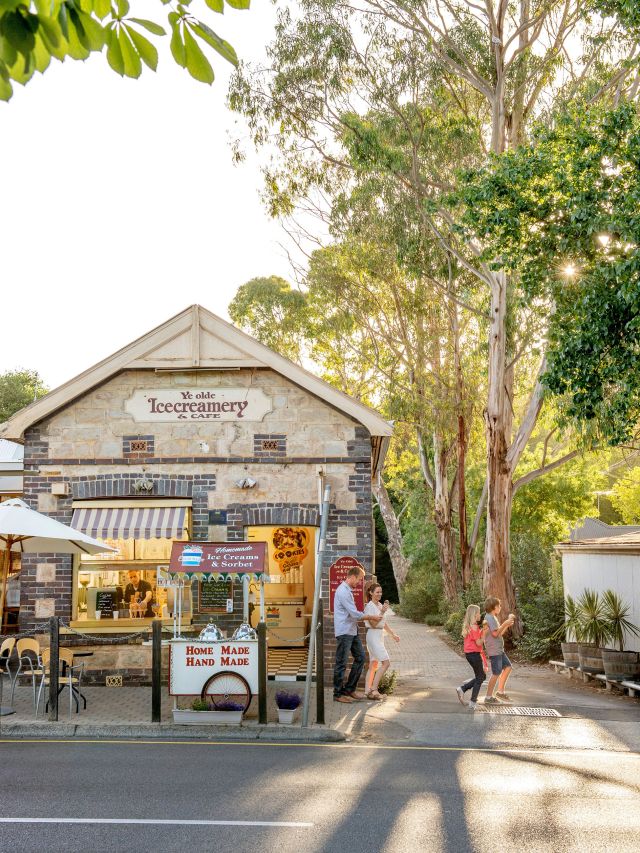
Whoever said you can’t find a true taste of Germany in Australia has clearly never set foot in Hahndorf, a welcoming, Lutheran-settled artisan village perched in the Adelaide Hills. The township is Australia’s oldest surviving German settlement and is dotted with homey bakeries, pubs and craft stores along High Street, as well as a collection of excellent wineries. “Sure it’s the ‘bum-burner’ salamis that may lure us here, but it’s the living history that is the glue to keep us there," adds panellist Catriona Rowntree.
Don’t miss: Picking your own strawberries at Beerenberg Farm from November through April.
3. Robe
Overall rank: 40/100
Boandik Country

“Robe has a lot to offer: coastal living, fabulous food and history," says panellist Paul Hamra. It’s a sentiment that quickly proves itself. Once one of South Australia’s busiest international ports and top towns to visit, Robe wears its storied past gracefully, with well-preserved historic buildings meeting the rugged beauty of the Limestone Coast. In the summertime, sun-seeking holidaymakers gravitate here to enjoy sprawling beaches, sand dunes and cutesy cafes. And, of course, Robe’s crayfish – which have earnt a reputation in their own right.
Don’t miss: The Obelisk at Cape Dombey, a 12-metre, red-and-white sentinel that once guided ships into Guichen Bay. Looming over the point and visible from 16 kilometres out at sea, it’s an unmistakable town icon.
4. McLaren Vale
Overall rank: 49/100
Kaurna Country

It’s an easy 40-minute car zip from festival capital Adelaide to McLaren Vale, which hosts its own happenings. The calendar of events centred in and around this hub includes the Grenache & Gourmet Festival and Fleurieu Film Festival, where wine, food and storytelling intersect. As panellist Paul Hamra puts it, McLaren Vale is a “magnificent backdrop for a wine region", pairing innovative dining with a coastline that ranks among Australia’s best.
Don’t miss: The events woven into the Tasting Australia program when chefs, winemakers and producers converge on McLaren Vale as part of its regional line-up.
Need tips, more detail or itinerary ideas tailored to you? Ask AT.
AI Prompt
5. Clare
Overall rank: 51/100
Ngadjuri Country

South Australia’s Riesling Trail links a string of boutique cellar doors (including Shut the Gate) along 35 kilometres of disused railway line, making it one of Australia’s best wine regions to explore on two wheels. Clare is at the centre of the valley that is defined by the varietal – off-dry rieslings with a mineral edge that are perfect for food pairing. “Clare has an incredible wine region. It’s great for food and wine touring," says panellist Paul Hamra.
Don’t miss: Clare Valley Gourmet Week from 15-18 May; it’s Australia’s longest-running wine and food festival.
6. Mount Gambier
Overall rank: 61/100
Boandik Country
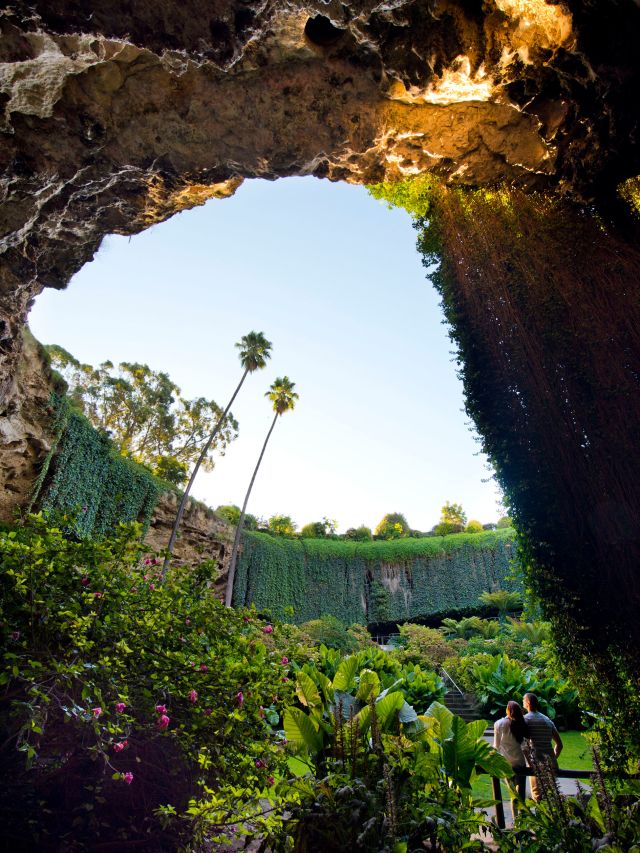
This Limestone Coast hub is famous for its sinkholes and volcanic craters. “Blue lakes and underground surprises," rhapsodises panellist Irene Jones. But Mount Gambier’s arts scene is a worthy understudy. The Riddoch Arts and Cultural Centre is South Australia’s largest regional gallery, with an ever-evolving roster of national, regional and local exhibitions that’s earnt it a spot among the best towns in South Australia. Its permanent collection celebrates the culture of the region that is lived every day: stretching out beyond town to vineyards planted in rich terra rossa soil and rolling beaches.
Don’t miss: Swimming in the remarkable Little Blue Lake and visiting the verdant Umpherston Sinkhole.
7. Coffin Bay
Overall rank: 66/100
Nauo Country
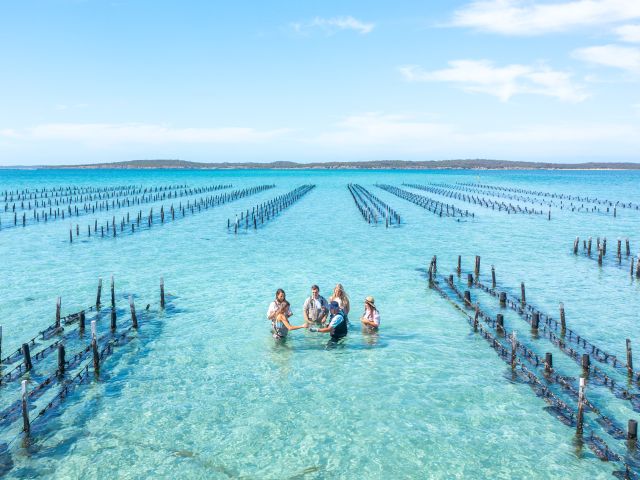
This beautiful beach town opens onto stunning views of the glittering SA bay the town is named after. “Taste amazing oysters at a local oyster farm," suggests panellist Ben Hall. “Enjoy them freshly shucked and relax while soaking up the views from a deck overlooking beautiful Coffin Bay." As well as being justifiably famous for its world-class oysters and natural environment, Coffin Bay has its fair share of sea life with southern right whale sightings common from May to October.
Don’t miss: Cutty’s Tours’ 45-minute guided glass-bottom boat tour that showcases the work being done as part of the Oyster Reef Regeneration Project.
8. Penneshaw
Overall rank: 67/100
Ngarrindjeri, Kaurna & Narungga Country
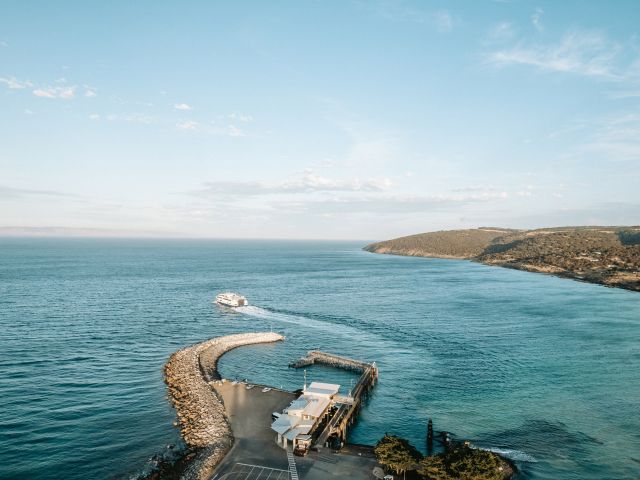
Perhaps best known as the landing spot for the Kangaroo Island ferry, Penneshaw deserves to be acknowledged as a destination in its own right. Here, at the arrival point, travellers get their first inkling of the full-blown beauty of the island. Shoulders drop, tensions dissolve and relaxation overrides your nervous system. Lean into it and book into an Island Alive experience. This wellness retreat offers massage, breathwork and contrast therapy under the guidance of a Wim Hof instructor.
Don’t miss: Kangaroo Island Sculpture Trail, which winds through dunes, boardwalks and swing bridges for 1.5 scenic kilometres.
Weekly travel news, experiences
insider tips, offers, and more.
9. Tanunda
Overall rank: 72/100
Ngadjuri Country (Barossa sits across the lands of Ngadjuri, Peramangk & Kaurna peoples)

“You’re going to shop your little heart out here," says Catriona Rowntree. She’s not wrong. A clever strategy for a wine aficionado is to take an empty suitcase: the history-rich town is in the heart of the Barossa Valley and on the doorstep of the region’s best wineries. Between tastings, there are restaurants such as Appellation at The Louise that make it a breeze to eat and drink well.
Don’t miss: The iconic Barossa winery, Château Tanunda, where winemaker Jeremy Ottawa is known for nurturing some of the oldest vines in the world.
10. Coober Pedy
Overall rank: 87/100
Antakirinja Matu-Yankunytjatjara Country
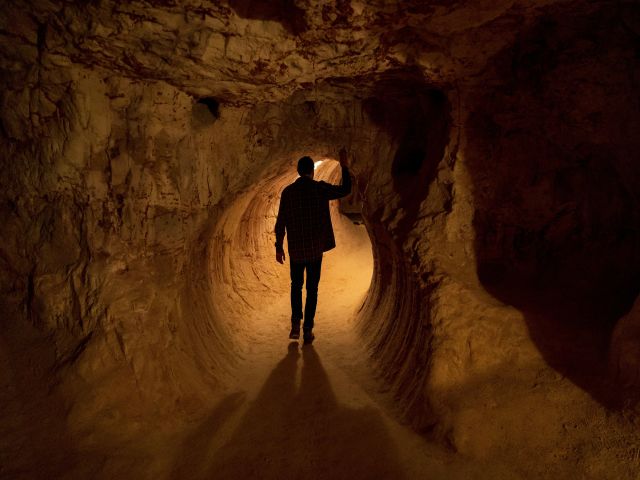
This tiny outpost between Adelaide and Alice Springs/Mpartnwe was thrown into the spotlight when opal was discovered here a century ago and has since become one of our quirkiest outback towns. The name Coober Pedy comes from an Aboriginal term for ‘white man in a hole’. The moniker was for the miners who built the town into and under the lunar-like landscape, to escape the scorching sun and cold desert nights. “There’s nothing like it in the world. It drips of authenticity," says panellist Adrian Williams. That authenticity is the very reason why it’s one of the most unique towns to visit in South Australia.
Don’t miss: Aboriginal-owned Kanku-Breakaways Conservation Park, a striking desert reserve that looks like it has been painted on the horizon, around 25 kilometres north of town. It’s home to 60 native flora species and fauna such as the red kangaroo and echidna.
11. Quorn
Overall rank: 94/100
Nukunu Country
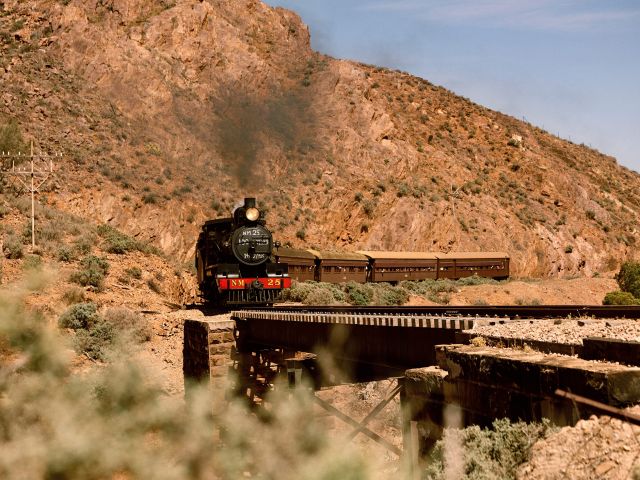
In the heart of the Flinders Ranges, Quorn oozes “old railway charm," says panellist Irene Jones. It was once a crossroads on the Central Australian Railway to Oodnadatta and the Trans-Australian Railway between Port Augusta and Kalgoorlie. Today, the heritage Pichi Pichi Railway continues to operate scenic journeys through outback vistas of gum-lined creeks and ancient rocky outcrops. And in news, legendary train The Ghan will stop here on its journeys to Darwin in 2027.
Don’t miss: Flinders Gin, a family-owned distillery crafting native botanical-flavoured gin within restored stables in Quorn.
This article is part of Australian Traveller’s 100 best Aussie towns to visit, as chosen by a panel of industry experts, well-known Aussies and travel insiders. See our full list of 100 best Aussie towns here and visit the special 100 best Aussie towns hub here.
Want to see more stories from Australian Traveller in your Google search results?
- Click here to set Australian Traveller as a preferred source.
- Tick the box next to "Australian Traveller". That's it.

Editor
View profile and articles