10 of the best things to do on the Great Ocean Road

hero media
If you’re planning a Great Ocean Road trip, there are plenty of places to stop and things to do while driving on one of the world’s most scenic roads.

Travelling to Victoria soon? Of all the things to do, Great Ocean Road exploration should be at the top of your list. The world-famous Great Ocean Road cuts its way through a bewitching limestone wilderness that is fringed by native bushland teeming with wildlife on one side and the wild beauty of the Southern Ocean on the other.

Along the 255-kilometre route, there is plenty to see and do: from watching humpbacks breaching from a coastal whale-watching platform to booking into a chocolate-making masterclass. Here are the places worth stopping at on the Great Ocean Road.

1. Take in the wild beauty of the Port Campbell National Park

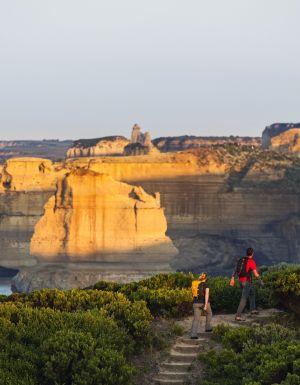
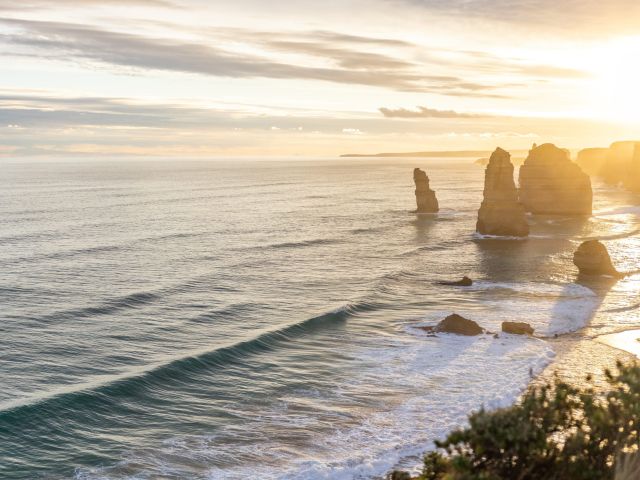
One of the better-known highlights along the Great Ocean Road is the Twelve Apostles. Do not miss seeing this offshore collection of limestone stacks rising proudly out of the ocean, standing 45 metres high. The lookout is located within the Port Campbell National Park  and taking time to marvel at them is a requirement of every journey to the region.
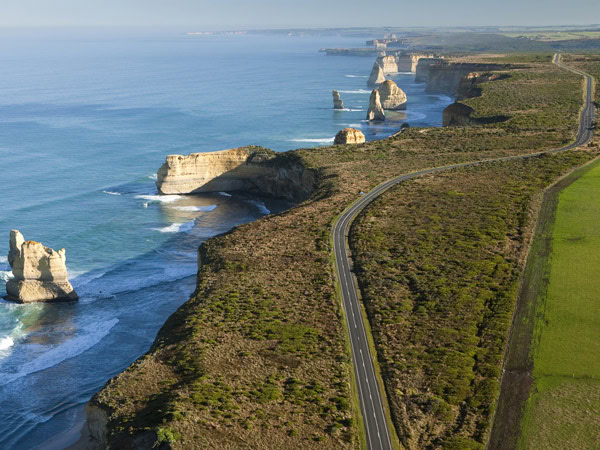
view of the Twelve Apostles from Port Campbell National Park
Capture the majestic Twelve Apostles from Port Campbell National Park. (Image: Visit Victoria)

But don’t just stop at the Twelve Apostles. The Port Campbell National Park has plenty more natural attractions to explore, including London Bridge , an offshore natural arch located just a few minutes’ drive west of the Apostles. The stack, which was formed by a gradual erosion process, was connected to the mainland until 1990 when it collapsed to create a detached double-span natural bridge.
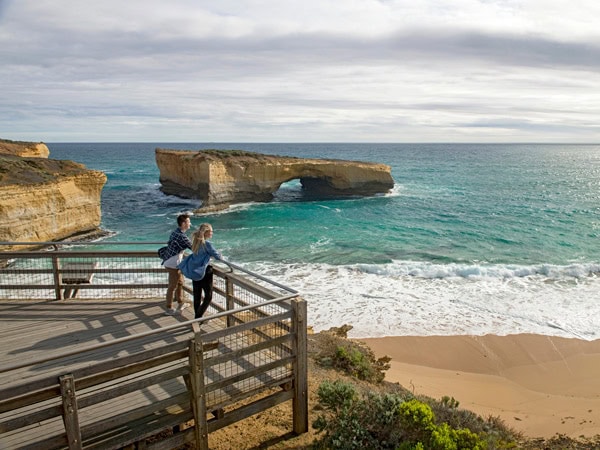
two people standing on the London Bridge lookout
London Bridge offers stunning views of the limestone stacks. (Image: Visit Victoria)

2. Get a sugar hit at Great Ocean Road Chocolaterie & Ice Creamery

Open every day except Christmas Day, this popular pitstop in Bellbrae is fun for all the family. Book a spot in the Chocolate Discovery class to craft your own chocolate bar and taste a selection of the chocolaterie’s finest or sit down for a decadent chocolate high tea in the private experience room. If you’re short on time and just want a bite to eat, the all-day cafe menu has a mix of savoury and sweet items, including waffles and croissants for brunch, burgers and stone-baked pizzas for lunch, and scones and old-fashioned sundaes for dessert.

3. Head to one of the famed lookouts

The Great Ocean Road provides much by way of rich scenic grandeur – best appreciated from one of the many viewing platforms you’ll find along the way.

Teddy’s Lookout

Take a short drive to the top end of George Street  to find the renowned views of the Great Ocean Road sighted on many a Lorne postcard. It delights just as equally in person.

Logans Beach

Between June and September, female southern right whales return to Logans Beach in Warrnambool to birth their young. They often swim within a hundred metres of the shore and a specially constructed platform has been built to view them at play.
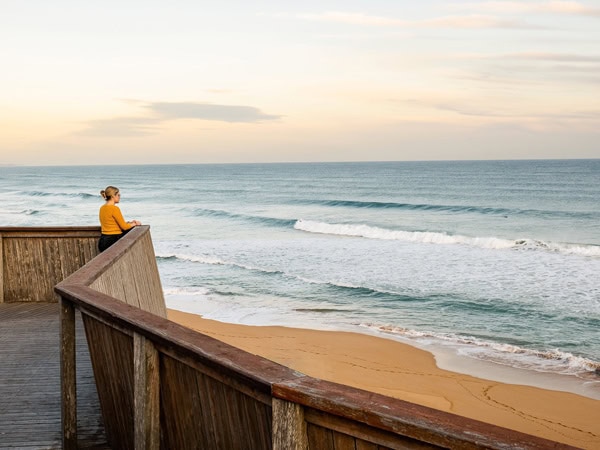
a woman looking out to the sea at Logans Beach
Logans Beach is renowned for its breathtaking views. (Image: Visit Victoria)

Cape Patton

Located between Kennett River and Wongarra, Cape Patton  provides dramatic views of the windswept coastline. It marks the western end of what was considered the Great Ocean Road when first constructed by World War One veterans. A plaque at the lookout tells the story.
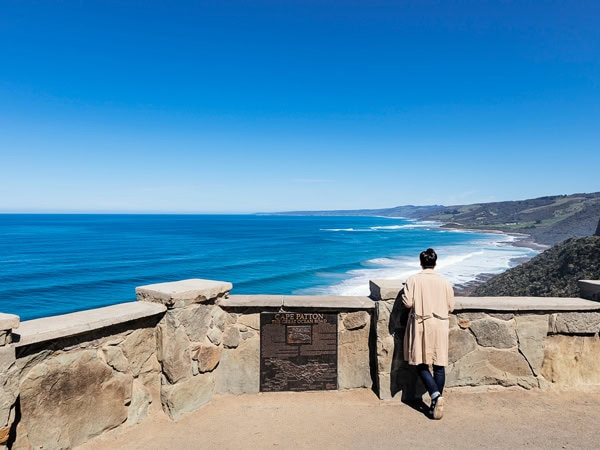
a woman admiring views at Cape Patton
Take in sweeping ocean vistas. (Image: Visit Victoria)

Twelve Apostles

Visit the Twelve Apostles at dawn or hang around after the sun goes down to see little penguins – they come ashore each evening on the beach at the base of the 70-metre cliffs.
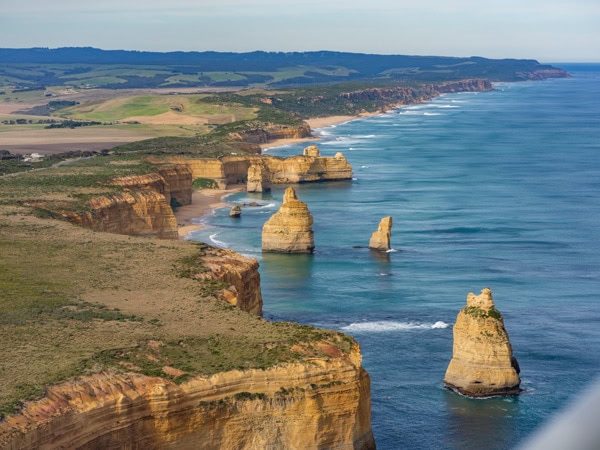
a scenic aerial landscape of the Twelve Apostles
The isolated sandstone pillars stand up to 50 metres high. (Image: Visit Victoria)

4. Pay a visit to QDos Arts in Lorne

While Lorne mightn’t be known for its artistic prowess, one venue does well to showcase its unassuming talent. QDos Arts  is a studio, gallery, cafe and sculpture park that specialises in fine and contemporary art. It’s the first space of its kind in the region, hosting many gallery exhibitions each year. There is also boutique accommodation onsite, with luxury Japanese-style tree houses perfect for couples or solo travellers.

5. Become a part of the local festival scene

The residents of the Great Ocean Road love a good bash – and visitors can expect a celebration for everything from folk music to seafood.

In March, the Port Fairy Folk Festival  – or ‘folkie’ – transforms the historic fishing village into a four-day reverie of musical and theatrical delights. Feast on international and local folk, blues and roots artists alongside street theatre, comedy performances, interactive workshops and inspiring talks.
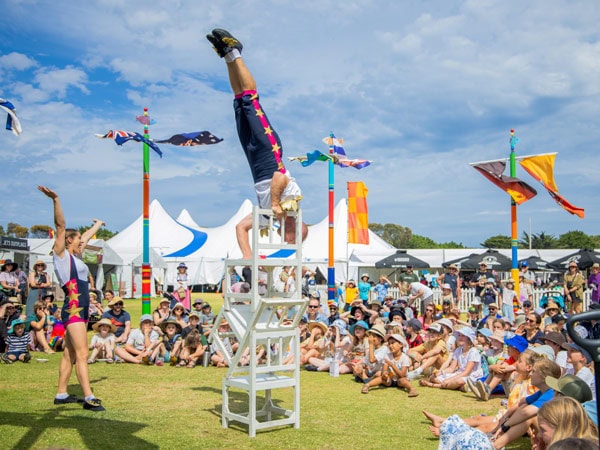
people gathering at the Port Fairy Folk Festival
Dynamic energy fills the air at the Port Fairy Folk Festival.

The Bonney Upwelling is the epic natural ocean occurrence that powers a seven-month feeding frenzy for the region’s marine animals. Upwelling Festival celebrates the commencement of this incredibly rich ecological food web with an epic one-day event. Held on the first Saturday in November, visitors and locals alike come for the music, market stalls and whale boat racing, and stay for the absurd street parade of aquatic ornaments and fish flags.

The Apollo Bay Seafood Festival  is a great way to continue the marine celebrations. The gourmet extravaganza dishes up world-class, locally sourced seafood, straight from the ocean to the people. Take your pick of the morning catch direct from the fishermen, order food from the pop-up restaurants and drink your way through an extensive offering of craft beer, wine and cocktails.

6. Taste some of the Great Ocean Road’s finest

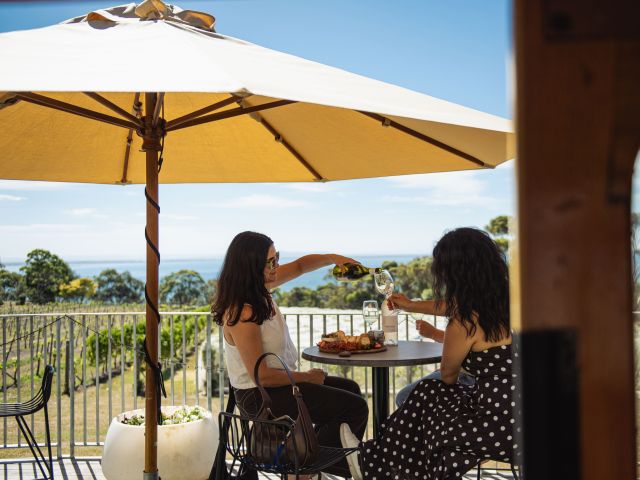
Located in the busy beach town of Torquay, the Great Ocean Road Gin distillery  is open on select days seasonally. The owner, Ann Houlihan, uses local botanicals to produce her high-quality, small-batch gin. The citrus-forward Guvvos variety (named after a favourite surfing spot of Ann’s daughter) features a number of botanicals local to the Surf Coast region, including coast daisy, saltbush, pigface, kelp and indigenous eucalypts. Stop by the shop to grab a bottle of gin or some classic G&Ts in a can to take the edge off a warm summer afternoon.
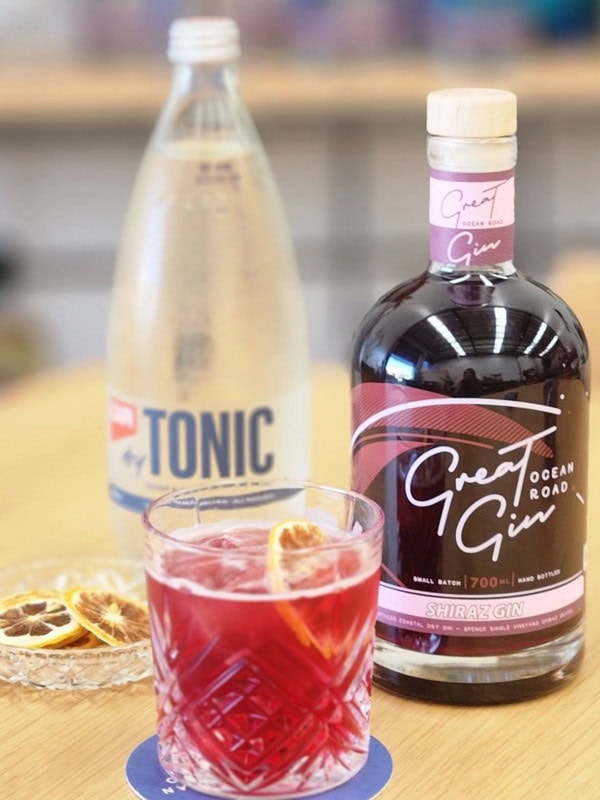
gins and classic G&Ts at the Great Ocean Road Gin distillery
Sip on classic G&Ts or a shiraz G&T.

7. Discover some under-the-radar natural gems

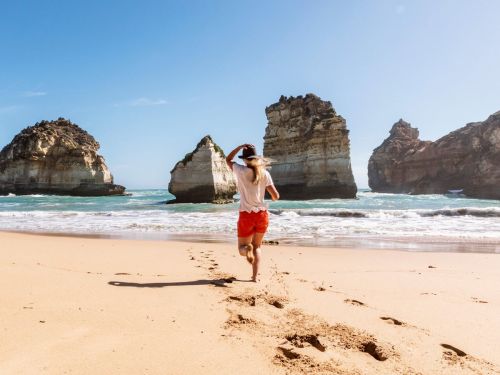
While the heavy hitters are definitely worthy of exploration, you should also consider adding some of these lesser-known gems to your itinerary. In summer, locals swim at Childers Cove . Drive 19 kilometres west of Peterborough and turn off the Great Ocean Road at Nirranda South to find its wonderful seascapes.
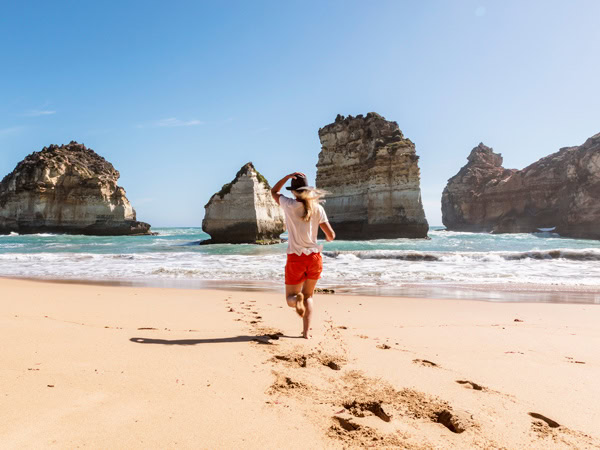
a person walking with trail of barefeet on the sandy beach at Childers Cove
Frolic barefoot in the sand at Childers Cove. (Image: Visit Victoria)

For striking limestone cliffs, dramatic rocks and relatively few people, try Bay of Islands and the Bay of Martyrs. Both are located near Peterborough and feature sprawling headlands to traverse and colourful wildflowers to admire, minus the heavy crowds that converge at some of the more famous sites during high season.
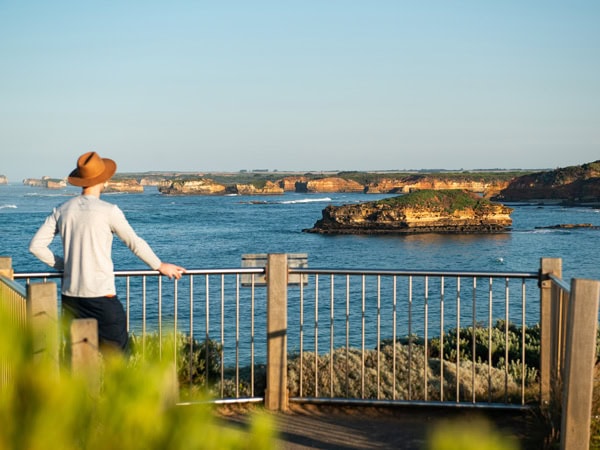
a man admiring the view on the Bay of Islands
Admire dramatic views of the bay. (Image: Visit Victoria)

8. Take a surfing history lesson in Torquay

Torquay is world-renowned as Australia’s surfing headquarters – making it worthy of a spot on your Great Ocean Road hit list. The Australian National Surfing Museum  on Beach Road (of course!) is a great place to start.
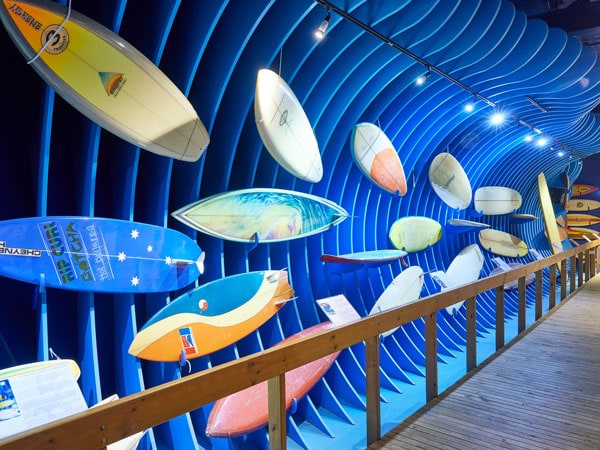
surfboards on a blue background at The Australian National Surfing Museum
Start your day by immersing yourself in the country’s vibrant surf culture. (Image: Visit Victoria)

Learn about the history and evolution of the sport and gain an understanding of exactly how it cemented itself as part of our national identity.
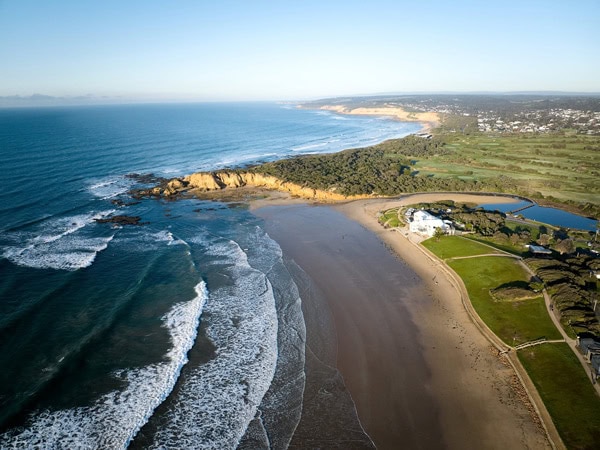
an aerial view of Torquay Beach
Torquay Beach is renowned for its spectacular surf breaks. (Image: Visit Victoria)

If you’re a keen surfer, you’ll find plenty of action at Jan Juc, Torquay front and Torquay back beaches. Finding breaks suitable for intermediate or beginner surfers shouldn’t be too hard, but as always, watch the conditions and ask for advice if you’re unsure.
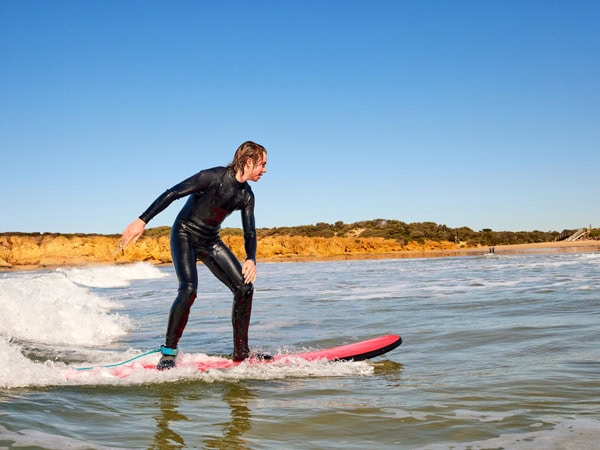
a surfer riding a surfboard at Torquay Beach
Surf’s up! (Image: Visit Victoria)

As the home of the famous Rip Curl Surfing Competition , Bells Beach is an iconic surf spot known around the globe.
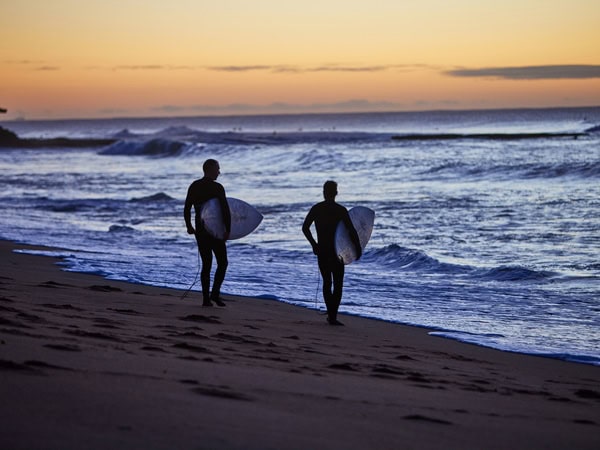
surfers holding their boards at Bells Beach
Get your surfboards ready at Bells Beach. (Image: Visit Victoria)

Powerful Southern Ocean swells roll in over the shallow reef, giving visitors a front-row seat to the waves that draw thousands of surfers from around the world each year.
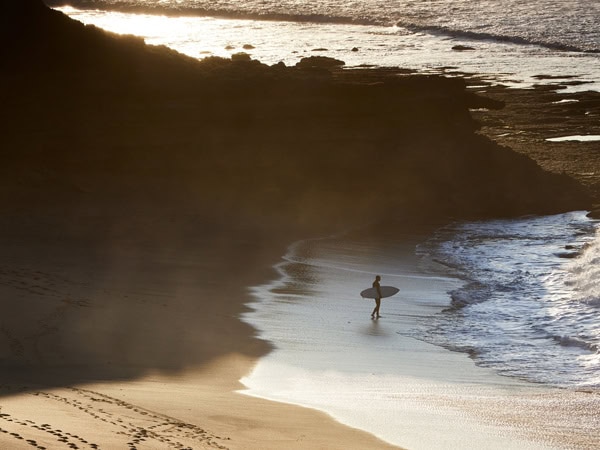
a surfer on Bells Beach at sunrise
Hit the waves at first light. (Image: Visit Victoria)

Watch local surfers ride the waves from one of the cliffside vantage points – the clifftop carpark has great views.

Top off your assimilation with a visit to one of the major surf brand giants that call Torquay home: both Rip Curl and Quicksilver have stores in town for you to visit to stock up on surf gear and summer threads.
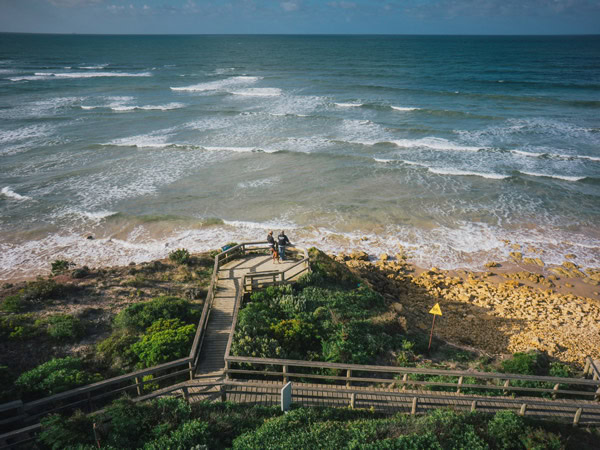
the lookout on Torquay Beach
The water conditions at Torquay Beach are ideal for surfing. (Image: Visit Victoria)

9. Walk to Griffiths Island

This ruggedly beautiful one-hour walk in Port Fairy takes in secluded beaches, a shearwater colony and the old 19th-century lighthouse. It’ll guide you along all the best scenic locations of Port Fairy, past heritage buildings and old stone churches.
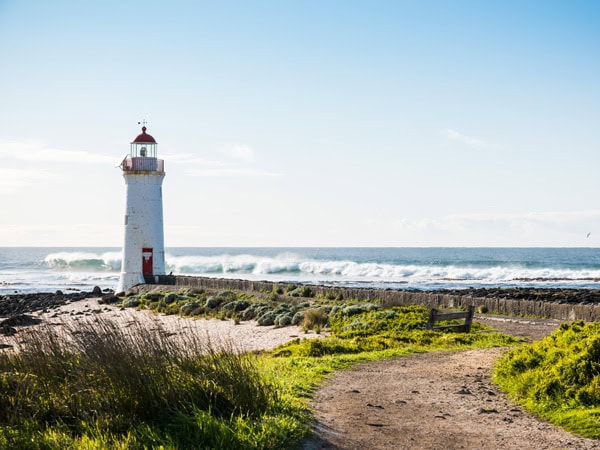
the Port Fairy lighthouse on Griffiths Island
The 19th-century lighthouse stands proudly on Griffiths Island. (Image: Visit Victoria)

Named after John Griffiths, who established Port Fairy’s whaling industry on the island in the 1830s, the island  is home to a shearwater bird colony. Each day they return in swarms to their nests after fishing out at sea. Be sure to keep on the walking track to avoid disturbing the nests burrowed into the sand.
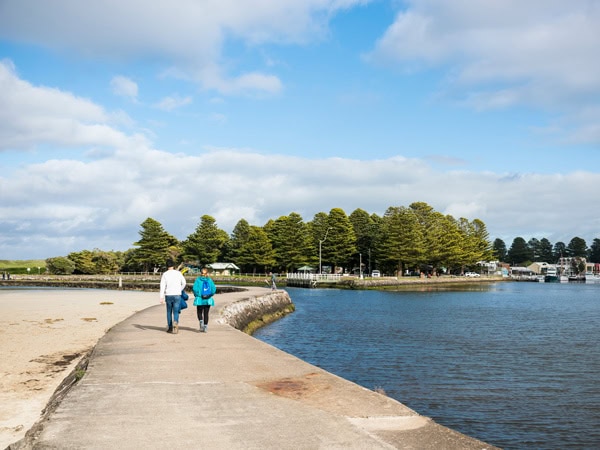
a couple walking on a piece of land at Griffiths Island
Go for a peaceful island walk. (Image: Visit Victoria)

10. Explore the Winter Whale Trail

If you’re travelling along the Great Ocean Road from May to September, be sure to keep the possibility of a whale sighting top of mind. During this period, it’s possible to spot migrating southern right whales, humpbacks, blue whales and even orcas if you’re lucky. There are some great vantage points along the trail, including the Logans Beach Whale Viewing Platform in Warrnambool, East Beach in Port Fairy and Wade Street Viewing Platform in Portland, although if you’re near the beach you could be blessed with a whale sighting at almost any time during this period – a solid reason to get along to the Great Ocean Road during the cooler months if ever there was one!

Discover the best restaurant along the Great Ocean Road.

Jo Stewart
Jo Stewart is a freelance features writer who pens stories about nature, pop culture, music, art, design and more from her home in the Macedon Ranges of Victoria. When not writing, you can find her trawling through vinyl records and vintage fashion at op shops, antique stores and garage sales.
See all articles
hero media

Explore historic wine towns and sculpture trails on a 3-day self-guided Murray River cruise

Slow down and find your rhythm on a Murray River journey through time and place. 

Trust is a funny thing. It seems not that long ago that my mother was insisting on pouring the milk into my cereal bowl, because she didn’t trust me not to slosh it over the table, and yet here I am on the Murray River at Mildura in far north-west Victoria, being handed the keys to a very new and very expensive luxury houseboat. 

After a crash course in how not to crash, I’m at the wheel of the good ship Elevate – pride of the All Seasons fleet – guiding her upstream past red-ochre cliffs as pelicans glide above the rippled river and kookaburras call from reedy banks. There’s a brief moment of breath-holding while I negotiate a hairpin turn around a jagged reef of skeletal, submerged gum trees, before a cheer rings out and calm descends as the timeless river unfurls in front of us.    

Murray River
The Murray River winding through Yarrawonga. (Image: Rob Blackburn)

Setting sail from Mildura 

Murray River birds
Home to a large number of bird species, including pelicans. (Image: The Precint Studios)

A journey along the Murray River is never less than magical, and launching from Mildura makes perfect sense. Up here the river is wide and largely empty, giving novice skippers like myself the confidence to nudge the 60-tonne houseboat up to the riverbank where we tie up for the night, without fear of shattering the glass elevator (the boat is fully wheelchair accessible) or spilling our Champagne.  

My friends and I spend three days on the water, swimming and fishing, sitting around campfires onshore at night, and basking in air so warm you’d swear you were in the tropics. The simplicity of river life reveals an interesting dichotomy: we feel disconnected from the world but at the same time connected to Country, privileged to be part of something so ancient and special.  

Stop one: Echuca  

19th-century paddlesteamers
A historic 19th-century paddlesteamer cruises along the Murray River. (Image: Visit Victoria)

The six-hour drive from Melbourne to Mildura (or four hours and 20 minutes from Adelaide) is more than worth it, but you don’t have to travel that far to find fun on the river. Once Australia’s largest inland port, Echuca is the closest point on the Murray to Melbourne (two hours 45 minutes), and you’ll still find a plethora of paddlesteamers tethered to the historic timber wharf, a throwback to the thriving river trade days of the 19th century. The PS Adelaide, built in 1866 and the oldest wooden-hulled paddlesteamer operating in the world, departs daily for one-hour cruises, while a brand-new paddlesteamer, the PS Australian Star , is launching luxury seven-night voyages in December through APT Touring.  

The town is also a hot food and wine destination. St Anne’s Winery at the historic Port of Echuca precinct has an incredibly photogenic cellar door, set inside an old carriage builders’ workshop on the wharf and filled with huge, 3000-litre port barrels. The Mill, meanwhile, is a cosy winter spot to sample regional produce as an open fire warms the red-brick walls of this former flour mill.  

Stop two: Barmah National Park 

Barmah National Park
Camping riverside in Barmah National Park, listed as a Ramsar site for its significant wetland values. (Image: Visit Victoria/Emily Godfrey)

Just half-an-hour upstream, Barmah National Park is flourishing, its river red gum landscape (the largest in the world) rebounding magnificently after the recent removal of more than 700 feral horses. The internationally significant Ramsar-listed wetland sits in the heart of Yorta Yorta Country, with Traditional Owners managing the environment in close partnership with Parks Victoria. Walkways weave through the forest, crossing creeks lined with rare or threatened plants, passing remnants of Yorta Yorta oven mounds and numerous scar trees, where the bark was removed to build canoes, containers or shields.  

The Dharnya Centre (open weekdays until 3pm) is the cultural hub for the Yorta Yorta. Visitors can learn about the ecological significance of the Barmah Lakes on a 90-minute river cruise, led by a First Nations guide, or take a one-hour, guided cultural walking tour along the Yamyabuc Trail.  

Stop three: Cobram 

Yarrawonga MulwalaGolf Club Resort
Yarrawonga Mulwala Golf Club Resort. (Image: Visit Victoria)

Continue east to Cobram to find the southern hemisphere’s largest inland beach. Swarming with sun-seekers in summer, the white sand of Thompson’s Beach is shaded by majestic river red gums and dotted with hundreds of beach umbrellas, as beachgoers launch all manner of water craft and set up stumps for beach cricket. But the beach is at its most captivating at sunset, when the crowds thin out, the glassy river mirrors the purple sky, and the canopies of the gum trees glow fiery orange. 

The region is also home to some fine resorts and indulgent retreats. Yarrawonga Mulwala Golf Club Resort has two riverside championship golf courses, luxury apartments and self-contained villas. While not strictly on the Murray, the historic wine town of Rutherglen is rife with boutique (and unique) accommodation, including an exquisitely renovated red-brick tower in a French provincial-style castle at Mount Ophir Estate. Fans of fortified wines can unravel the mystery of Rutherglen’s ‘Muscat Mile’, meeting the vignerons and master-blenders whose artistry has put the town on the global map for this rich and complex wine style.  

Stop four: Albury-Wodonga 

First Nations YindyamarraSculpture Walk
First Nations Yindyamarra Sculpture Walk is part of the Wagirra Trail. (Image: Carmen Zammit)

Follow the river far enough upstream and you’ll arrive at the twin border cities of Albury-Wodonga. The Hume Highway thunders through, but serenity can be found along the five-kilometre Yindyamarra Sculpture Walk – part of the Wagirra Trail that meanders through river wetlands just west of Albury in Wiradjuri country. Fifteen sculptures by local First Nations artists line the trail, conveying stories of reconciliation, enduring connection to culture, local Milawa lore and traditional practices. It feels a long way from Mildura, and it is, but the pelicans and kookaburras remind us that it’s the same river, the great conduit that connects our country. 

A traveller’s checklist  

Staying there

New Mildura motel Kar-rama
New Mildura motel Kar-rama. (Image: Iain Bond Photo)

Kar-Rama is a brand-new boutique, retro-styled motel in Mildura, with a butterfly-shaped pool and a tropical, Palm Springs vibe. Echuca Holiday Homes has a range of high-end accommodation options, both on the riverfront and in town. 

Playing there

BruceMunro’s Trail of Lights in Mildura
Bruce Munro’s Trail of Lights in Mildura. (Image: Imogen Eveson)

Artist Bruce Munro’s Trail of Lights installation, comprising more than 12,000 illuminated ‘fireflies’, is currently lighting up Mildura’s Lock Island in the middle of the Murray. Murray Art Museum Albury (MAMA) is a hub for contemporary art, with a rotating roster of exhibitions, and is a major outlet for young and First Nations artists. 

Eating there

Mildura’s diverse demographic means it’s a fantastic place to eat. Andy’s Kitchen is a local favourite, serving up delicious pan-Asian dishes and creative cocktails in a Balinese-style garden setting. Call in to Spoons Riverside in Swan Hill to enjoy locally sourced, seasonal produce in a tranquil setting overlooking the river.