It can take travelling all over the world to appreciate how incredibly unique our country is. This was true for our co-founder, whose journey to the Kimberley 20 years ago sparked an idea. He heads back to where it all began.
Broome and I have history. It started 20 years ago when, after living overseas for five years, I returned to my island home with an English girlfriend. And, in an effort to show her some of this vast country, we headed off for a week at the seminal, iconic and luxury Cable Beach Club Resort & Spa in Broome.
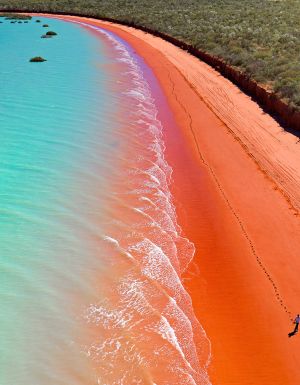
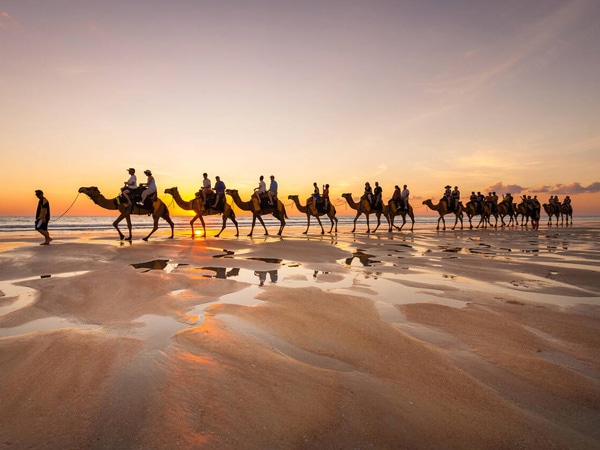
As we came into land over Roebuck Bay, the mesmerising colours of the northwest edge of Australia made such an impression on me that I had an epiphany: “Why the hell haven’t I seen my own country?"
And, as the wheels of the Virgin Blue jet hit the tarmac in Broome, the vision for Australian Traveller was born: a brand that would celebrate what is magnificent and magical about this country. I love Rome, Tuscany, Paris, Newfoundland, Corfu. But in the context of having seen so much of the world, how good is Australia?
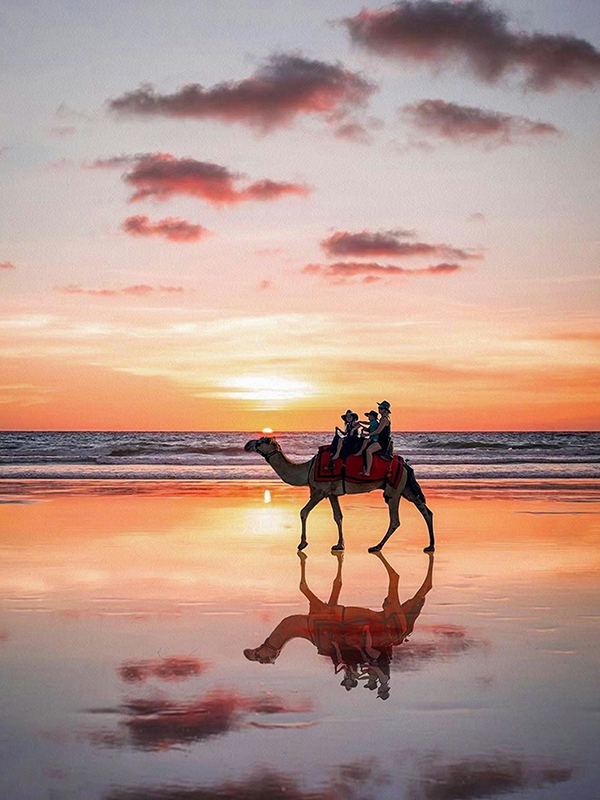
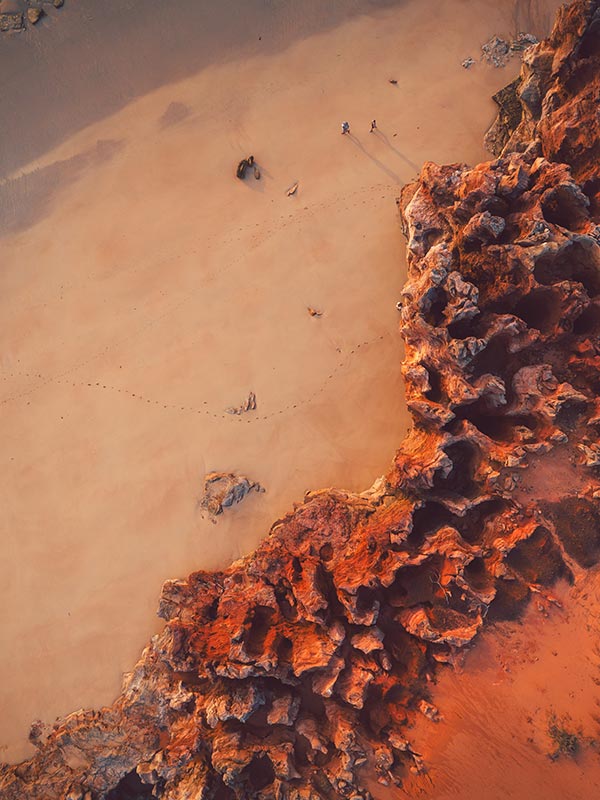
The colours of Broome
And the rest, they say, is history. Well, not quite. There was the year of planning and dreaming. The years of living like a student and selling our houses (both my business partner Nigel Herbert and I had to ‘refinance’ the business in the first six months from the proceeds of selling our only assets).
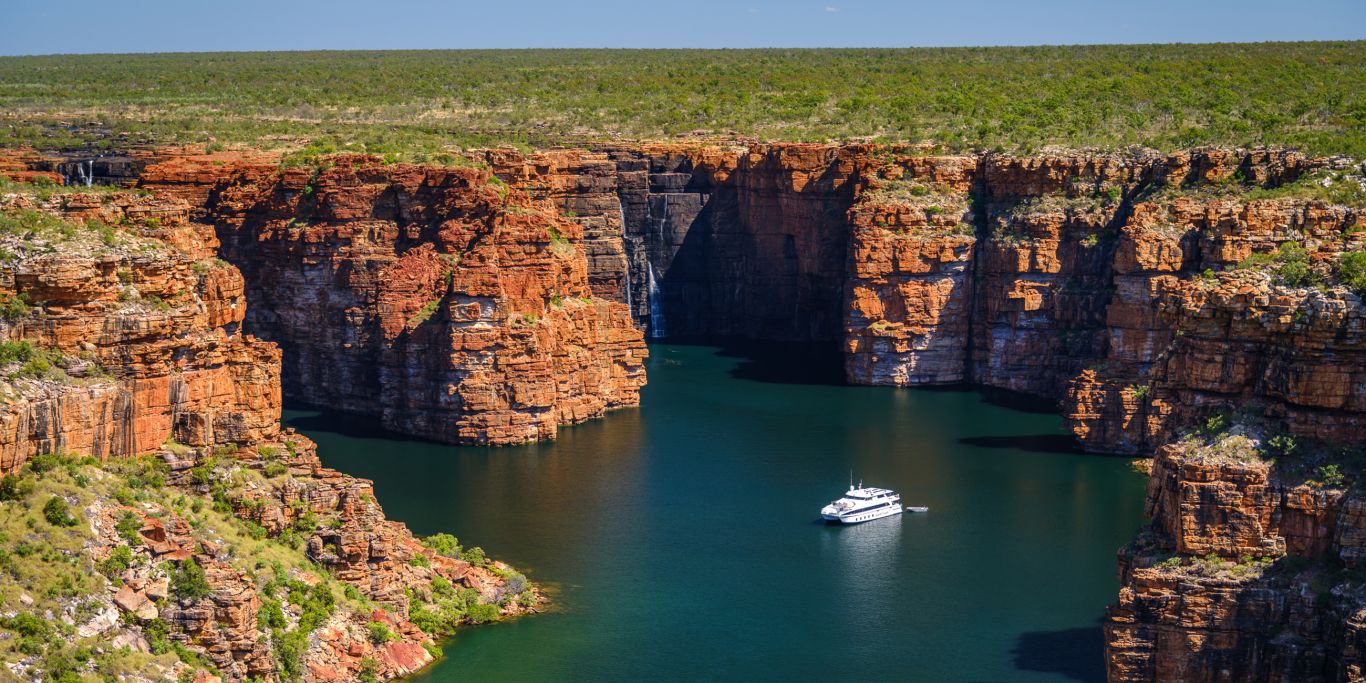
Looking back now, it seems obvious that Broome and the Kimberley would have this profound effect on me. These are destinations that make you really appreciate just how special and different Australia is to other parts of the world.
In the intervening years I have felt that profound sense of the exceptional time and time again in many parts of Australia: Wilpena Pound/Ikara, Arnhem Land, Wilsons Promontory (Wamoon), Uluru, Port Stephens on Worimi Country and K’gari are just a few that spring to mind. And that feeling extends to the thrill of being able to share this passion with the readers of Australian Traveller.
Broome, the Kimberley, Australian Traveller and I are deeply connected, but I had not returned until recently. Two decades on, during my second visit, I find more connections that deepen my bond to this antipodean point of Australia from my home in Sydney.
An evolving journey
The world has changed. But more significantly, I have changed. I return now as a husband and dad, but not particularly wiser. The more I learn, the more I realise how little I know.
My body has also changed. My son has recently started calling me ‘one leg’ on account of my MS-affected gait. I am a living example that Australia is a land that is best enjoyed when all limbs work effortlessly together.
But that is changing. Accessible tourism is now firmly on the agenda for tourism businesses in Australia and one of three content pillars of Australian Traveller. The second is conscious travel; we aim to make sure all our readers understand the impact of the choices they make in their travels.
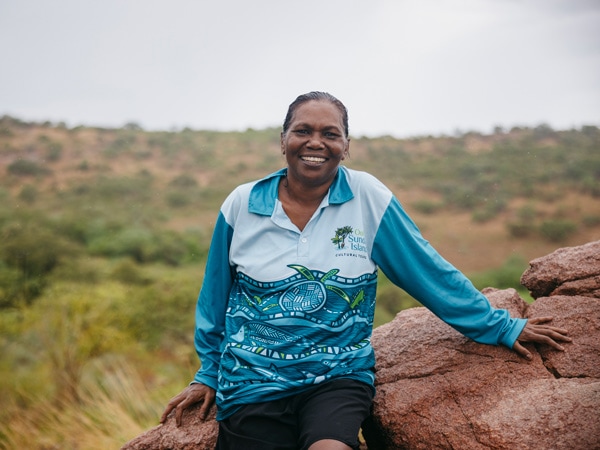
The final pillar that is important for us to support is Indigenous tourism, which leads me to Cygnet Bay Pearl Farm, two and half hours north of Broome. It’s here I meet Rosanna Angus, recent recipient of ‘Best Tour Guide in the Country’ at Australia’s Top Tourism Town Awards 2023, and experience her Oolin Sunday Island Cultural Tours .
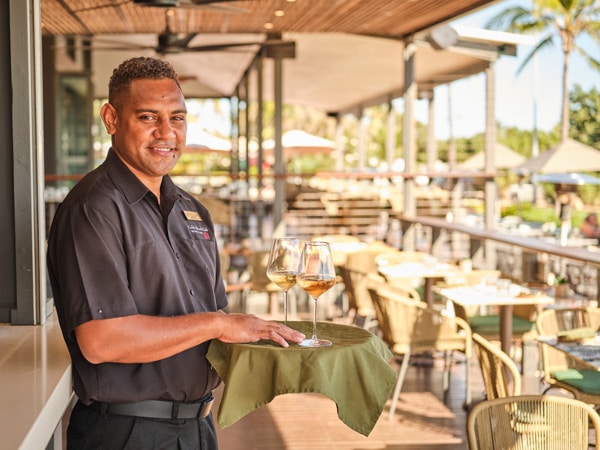
Dinner on the balcony of the restaurant at Cygnet Bay Pearl Farm reveals the quintessential Kimberley Coast that floored me two decades ago. I feast on prawns, pearl meat and scallops smothered in a mango chilli puree that is just perfect. The meal reminds me that the single biggest change in the last 20 years of travel in Australia has been the improvement in epicurean experiences in the regions.
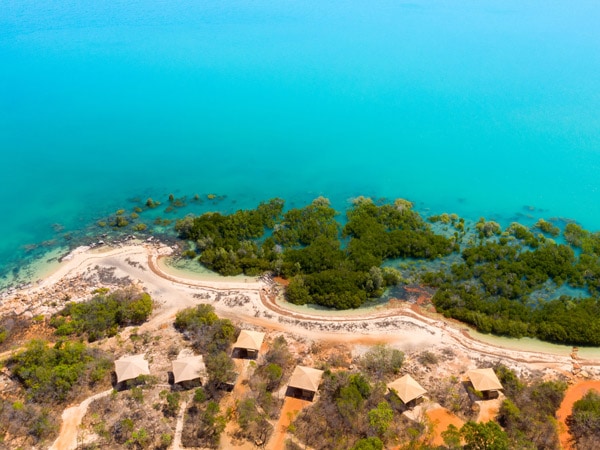
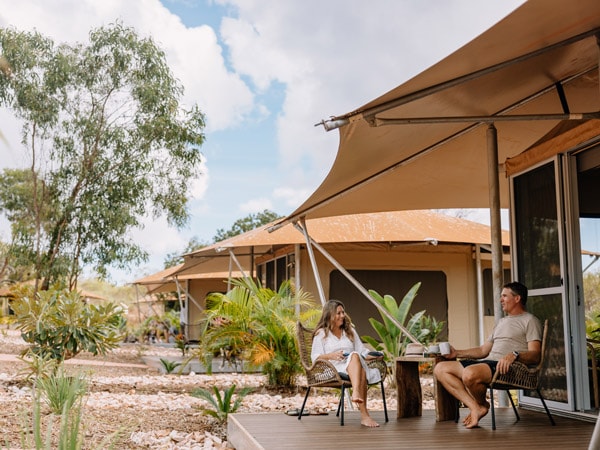
Another incredible meal two days later at Zookeepers by Spinifex Brewing Co. in Broome provides further testament to that. The prawn toast is loaded with fresh crustaceans and drizzled with zingy mayonnaise. The pork and barra bao buns are equally magnificent. Back in Cygnet Bay, the glamping tents with luxurious beds and en suite bathrooms are a contrast to the rugged landscape. As the food in regional and remote Australia improved, so too did the accommodation offerings.
A cultural exchange
I meet Rosanna at the Cygnet Bay Pearl Farm reception the following morning. One of the Traditional Owners of the Bardi and Jawi people, she is warm with a wicked sense of humour and greets me with a big hug despite us never having met before.
“Our mob were the first stand-up paddleboarders," she says with a laugh as we admire an old raft that hangs against the outside kitchen wall at Cygnet Bay. How the Jawi would paddle between islands is no mean feat considering the enormous pearl-friendly tides create some monstrous eddies and whirlpools.
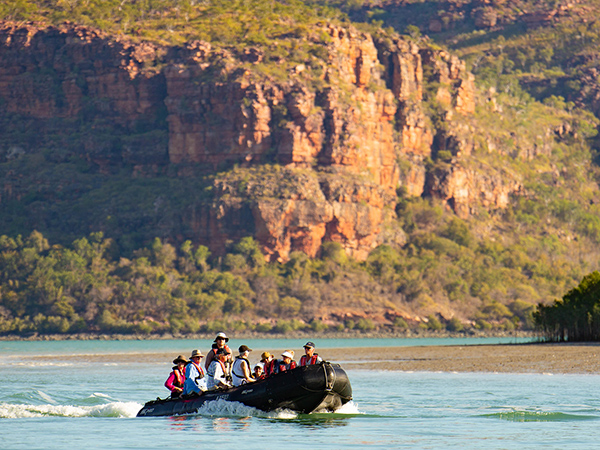
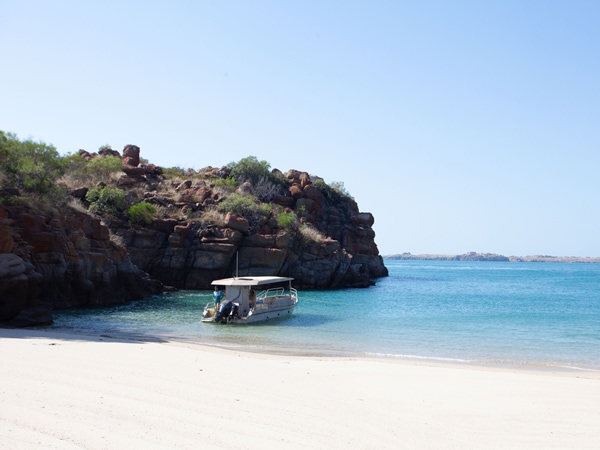
As we motor towards Ewuny (Sunday Island) on one of Cygnet Bay’s many high-speed sightseeing boats, Rosanna shares a trove of remarkable pictures that reveal the life of the Jawi people pre- and post-the arrival of the missionaries at the turn of the 20th century.
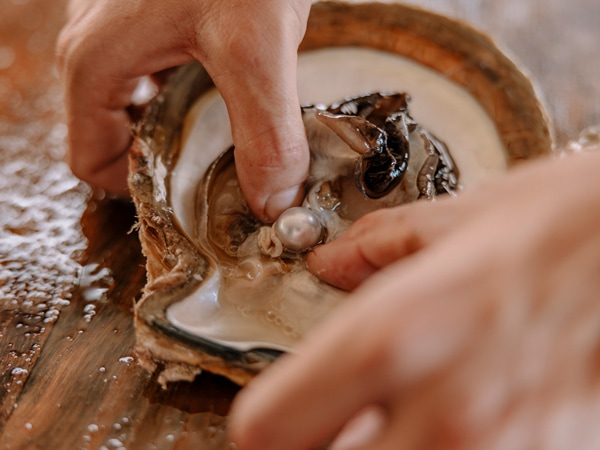
Some of the photos show Elders and chiefs adorned with headdresses and pearl shells. Others show the Bardi and Jawi people dressed in Victorian-era clothing. Rosanna, contrary to my instincts, is not altogether unforgiving of the missionaries, acknowledging the role they played in equipping her Elders with skills that would prove useful in the context of colonial Australia.
“I want people to know my Ancestors were here before the mission and that survival in community was not an issue back then because we knew how to live on Country. But the missionaries also taught us useful things, like how to read and write, and mechanical skills, which enabled the old people to get work and an income and survive in the modern world," she says.
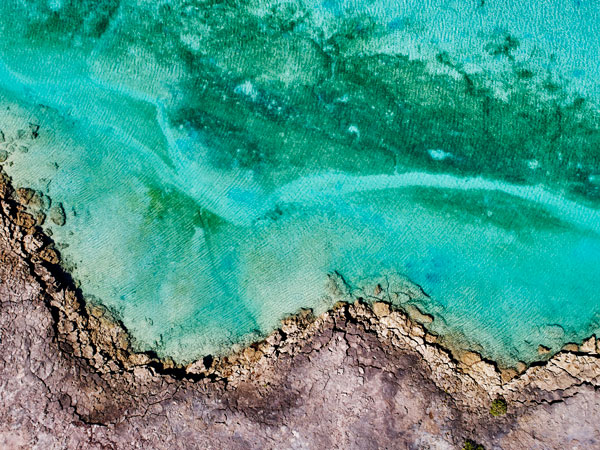
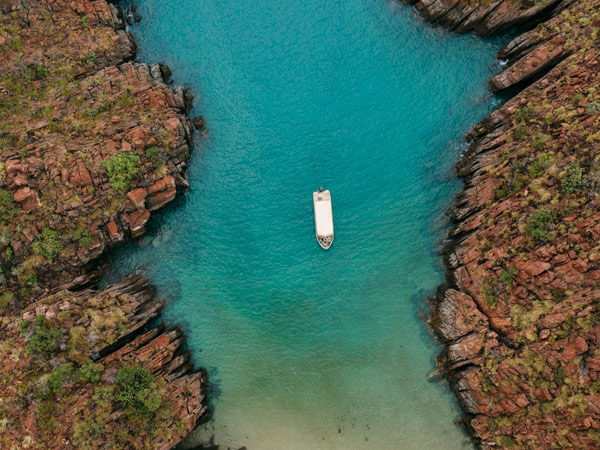
Today, because I can’t make the walk up to the missionaries’ buildings, Rosanna decides to take me to her favourite and most special place on the island; Goodngarngoon (place of running water). ‘Running water’ refers to the pandanus-fringed, spring-fed creek that trickles the length of the small gorge to the sea.
“I love this beach. It’s good liyarn," Rosanna tells me. I couldn’t agree more. Staring out of the narrow cove through the striated cliffs as eagles soar above, my liyarn, or soul, is certainly soothed.
The place where everything begins
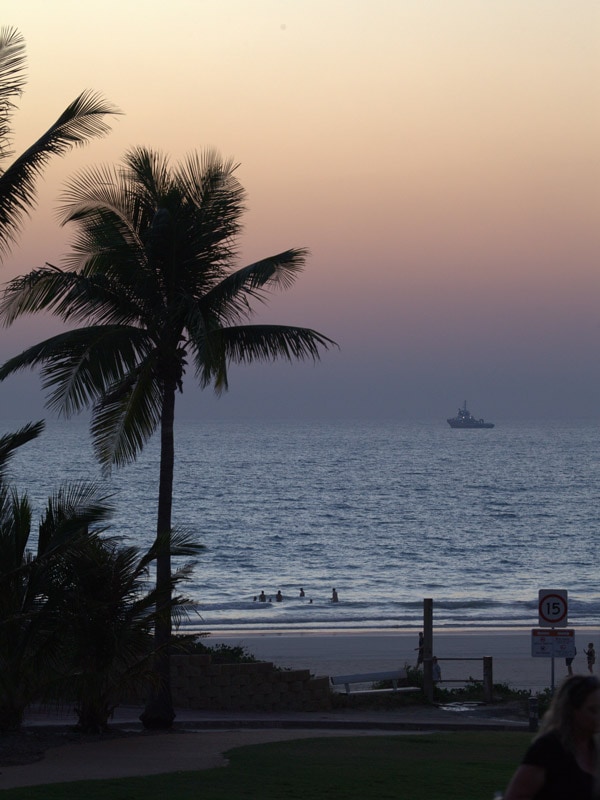
Back in Broome on a half-day town tour with Broome & Around Tours , we pass Minyirr Park, which hugs the western edge of Cable Beach all the way to Gantheaume Point.
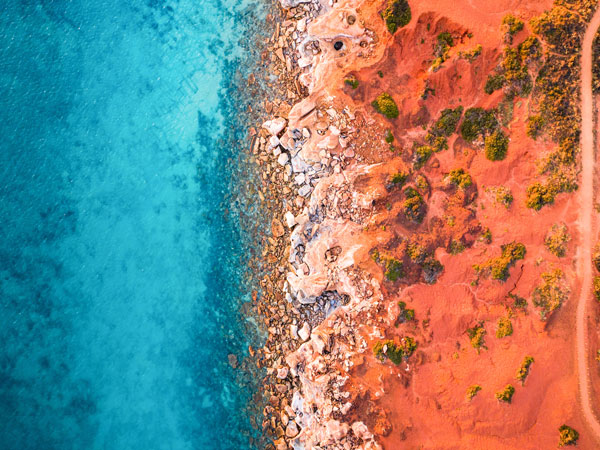
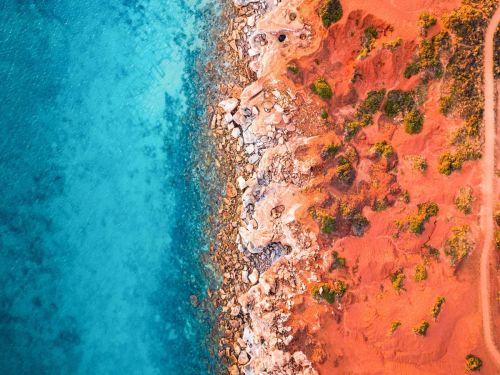
“Minyirr means birthplace and is meant to be the place where everything in the Yawaru culture began," tour guide Dooma Harp reveals. I immediately recognise Gantheaume Point. It was one of our most successful covers. (Former editor Lara Picone has also selected it as her favourite cover). It feels like the very edge of Australia, because it kind of is. Again, it is the colours that amaze me: the contrast of the blue sea and eroded rocks that look like fossilised drops of rusted, molten iron.
I learn from Dooma that green and red are used in most of the houses and structures in Broome because those are the colours of the luggers. When the mother of pearl industry collapsed after the Second World War, the excess paint was used in the town.
The view from above (again)
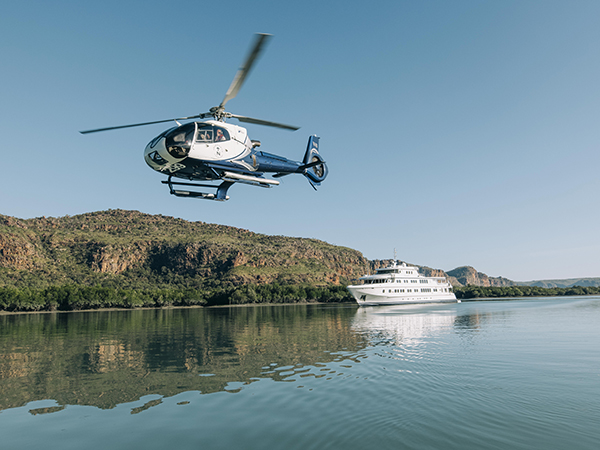
Hilary Wilkins was landing in Perth from the UK around the time I arrived in Broome 20 years ago. Today she is my chopper pilot.
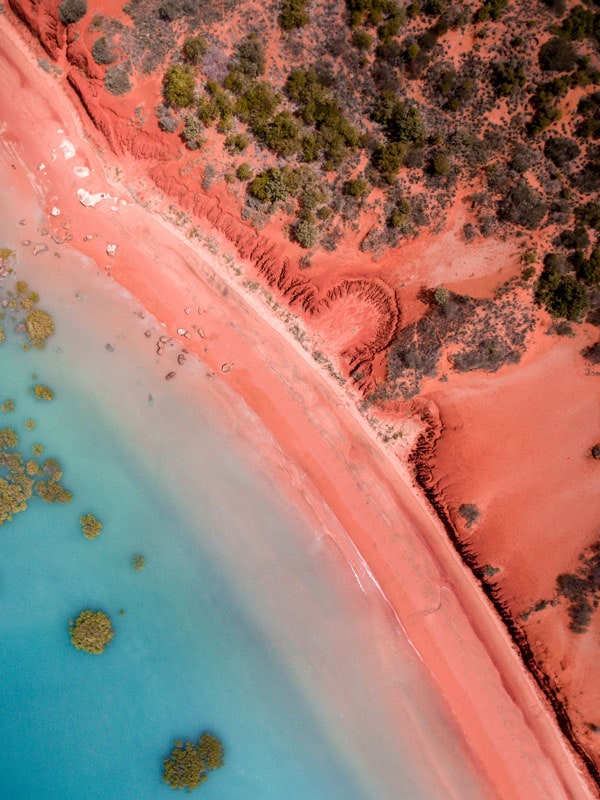
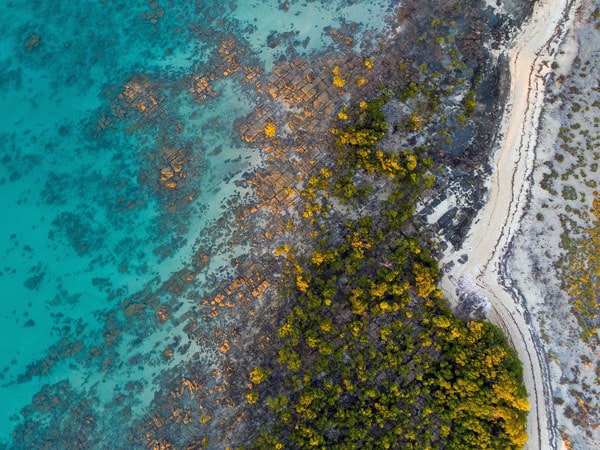
Hilary is flying me to Eco Beach to enjoy lunch via the Roebuck Bay coastline. “I just love the colours," she says, as we gently peel away from the Broome airport tarmac. Rising above Broome, the Crab Creek inlet is a swirl of white, turquoise, aquamarine and milky mint daubs.
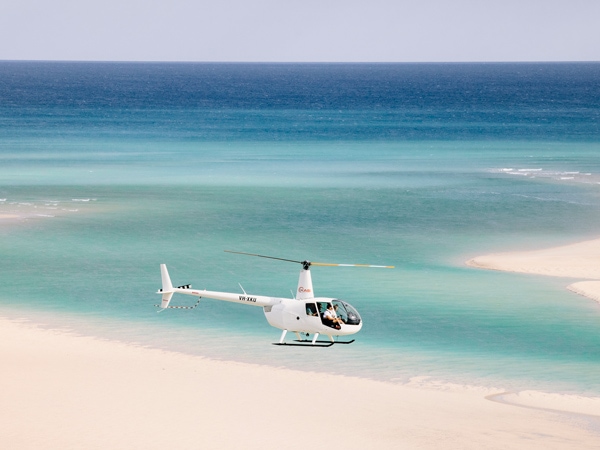
Hilary points out the small shorebirds picking through the mud and sand flats of the bay. The shorebirds are travellers themselves, arriving in Broome after a lengthy flight from Siberia.
We fly over rivers and rivulets emptying into the bay like paint swirled on a palette. How many shades of green, blue, turquoise, rust, red, yellow and white can there be?
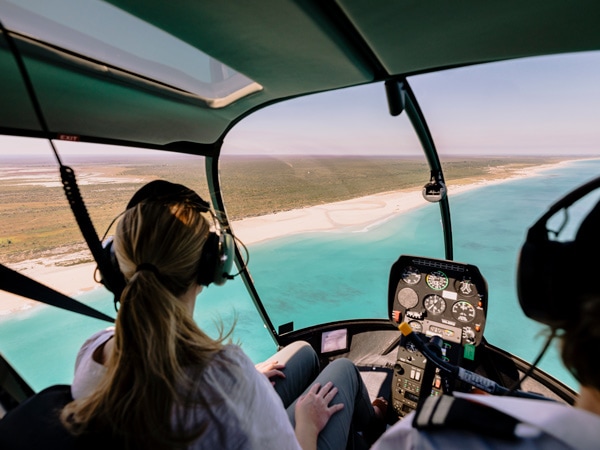
Lunch is served by the pool at Eco Beach Resort . Shaded hammocks are set into the beach for an idyllic afternoon. And the tide is coming back in on the flight back to Broome. The water is alive with action. We spot small reef sharks skimming the water pursuing bait fish. The stingrays are easier to spot; their sandy trail through the water ends on their black, diamond shape.
I spot the dirty green brown of a crocodile sunbaking just under the khaki green water’s surface at the mouth of a creek.
Hilary makes a quick turn to get another look and the croc silently sinks out of sight as we drift closer.
Stoking the fire
Back at Cable Beach Club, I am preparing for the Sunset Long Table Dinner, the final event of the Shinju Matsuri Festival designed to celebrate Broome’s rich multicultural heritage and pearling history. The resort was built by the visionary Lord Robert McAlpine who put tourism on the map in Broome.
To me, it is no coincidence that it took a foreigner to have the vision for Broome. I would not have appreciated Broome without having lived overseas 20 years ago. And I have to admire McAlpine’s vision. If you were to knock this place down and start again, you would end up building something very similar to what he created. It, like Broome, has stood the test of time.
When I arrived 20 years ago I had a rush of lust for Broome and Australia. The feeling was so powerful I launched a business that has consumed me ever since. I was hesitant to return. I didn’t want to be disappointed and have this place that I had venerated reduced, as it could have rendered a rethinking of the last two decades of toil.
I need not have worried. My passion prevails for this great continent we are lucky enough to call our country and home.
A Traveller’s Checklist
Getting there
Qantas flies from Melbourne or Sydney to Broome direct on a seasonal schedule or via Perth year-round.
Staying there
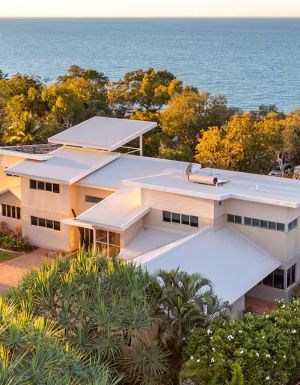
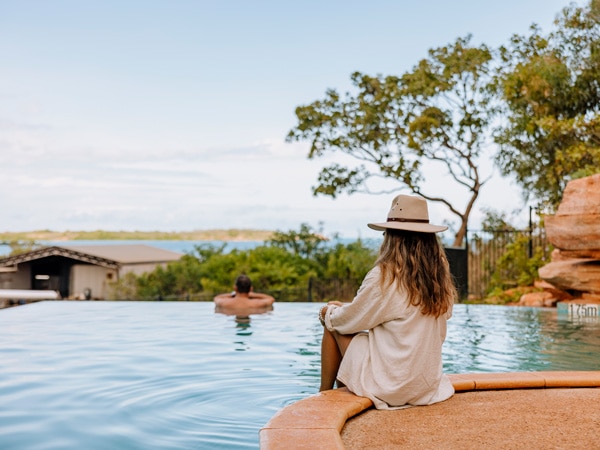
Cable Beach Club Resort & Spa in Broome has a variety of accommodation styles including studios and villas, which have a plunge pool. The resort has four restaurants, plus two pools with food and drink service and the legendary Sunset Bar.
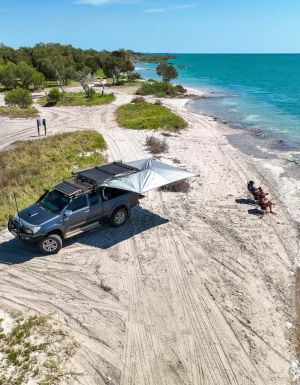
Cygnet Bay Pearl Farm in Cygnet Bay is two and half hours north of Broome on the Dampier Peninsula. It has luxury glamping safari-style tents plus campsites. The Homestead is open for breakfast, lunch and dinner. You can access a host of tours from the farm plus scenic flights over the Kimberley, including Horizontal Falls.
Eating there
Zookeepers by Spinifex Brewing Co. has a great food and cocktail menu of crowd favourites with a Broome twist. Zookeepers would be a local favourite in any town or city in Australia. The prawn toast is a must.
The annual Sunset Long Table Dinner on Cable Beach makes the most of the celebrated sunset in Australia with great food curated by a celebrity chef.