The top 6 snorkelling spots to interact with marine life in WA

hero media
WA is home to some of the most incredible marine life in the country and there’s no better way to experience it than by joining them underwater.

With over 12,000 kilometres of coastline, Western Australia is bursting with marine activity and snorkelling spots that are begging to be explored. It’s also believed to be home to more than 1600 shipwrecks.

Shipwreck Hunters Australia , the new six-part docuseries on Disney +, follows experienced divers and underwater filmmakers as they make world-first discoveries at long-lost shipwreck sites around Tryal Rocks, Ningaloo Reef, Houtman Abrolhos Islands and more.

The team behind Shipwreck Hunters, Ryan Chatfield and Nush Freedman have revealed their top six spots to snorkel and interact with marine life in Western Australia.

These snorkelling spots suit beginners and families all the way up to the more advanced and range from easily accessible to a little more remote and isolated. Here they are.

1. Fish Hook Bay, Rottnest Island

Best time to visit: December – May

Experience level: Intermediate to expert

Fish Hook Bay is one of the most protected bays on Rottnest Island. Nestled into the southern side of the West End, boats must carefully navigate between two huge chunks of the reef to reach the calm and tranquil waters of the bay.
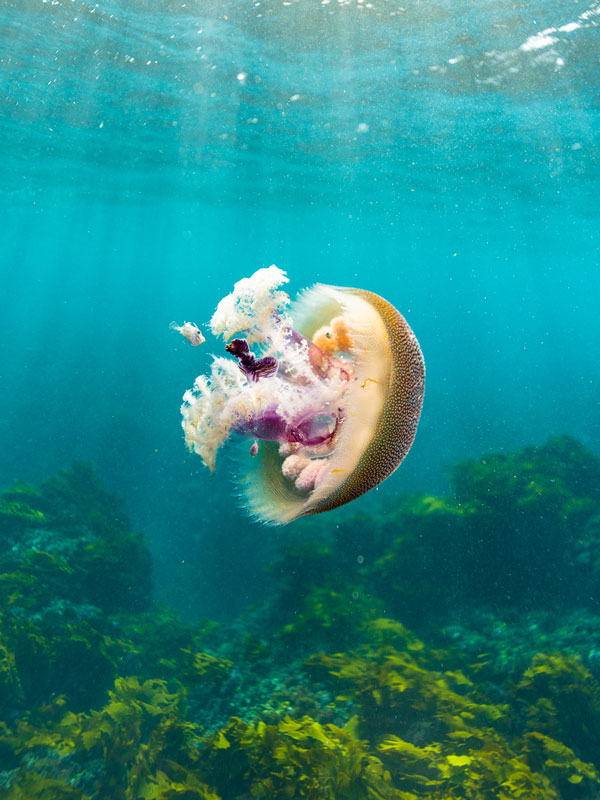
Jellyfish floating in the water at Rottnest Island, Western Australia
See the marine life at Fish Hook Bay. (Image: Ryan Chatfield, Terra Australis)

With an average depth of around two to five metres, the bay is home to an abundance of sea creatures and an ever-changing sea floor.

It’s a great location to do some exploration snorkelling, with a beautiful cave on the eastern side that greets you with stunning shafts of light that dance and shimmer on the sand floor.
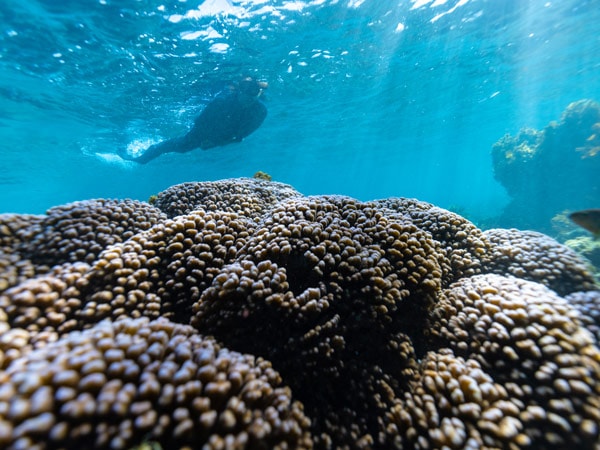
Coral and snorkeller at Rottnest Island, WA
Fish Hook Bay is a great location to do some exploration snorkelling. (Image: Ryan Chatfield, Terra Australis)

It’s common to spot large smooth, black, fiddler and eagle rays, buffalo bream, western blue devils, king wrasse, nudibranch, sea cucumbers and sea stars.

Chatfield rates this spot because it’s rough and rugged at the West End, and you never know what you are going to encounter down there. You can’t always access it due to the weather but when you score it, it’s as good as it gets!
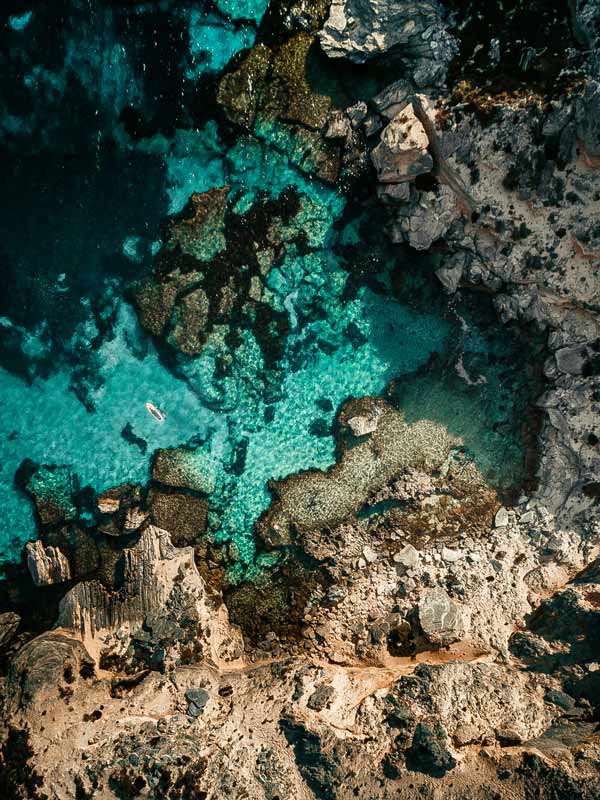
Aerial shot of Fish Hook Bay on Rottnest Island in WA
The average depth is around two to five metres. (Image: Ryan Chatfield, Terra Australis)

2. Coral Bay

Best time to visit: June – October

Experience level: Beginner to expert

Coral Bay on Australia’s Coral Coast needs no introduction. Snorkelling from Bills Bay is a beautiful place for beginners to intermediates to be treated to an underwater experience they will never forget.
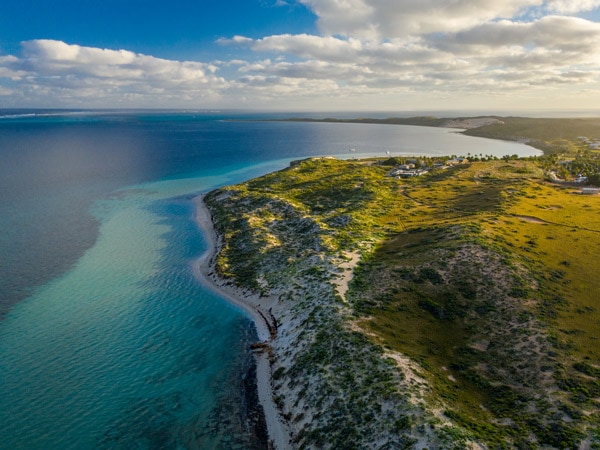
Drone shot of Coral Bay on the Coral Coast of Western Australia.
Coral Bay is iconic. (Image: Ryan Chatfield, Terra Australis)

Other great accessible locations are Five Fingers Reef and Oyster Bridge. As soon as you enter the warm waters of Coral Bay you can sense the pristine marine environment all around you. And when you leave the surface, you are immersed in another world.

Crystal clear waters teem with brightly coloured fish, too many to name and so many to see. They dart and dance between stunning hard and soft coral outcrops. Sea turtles cruise lazily through the waters, stopping every now and again to munch and crunch.
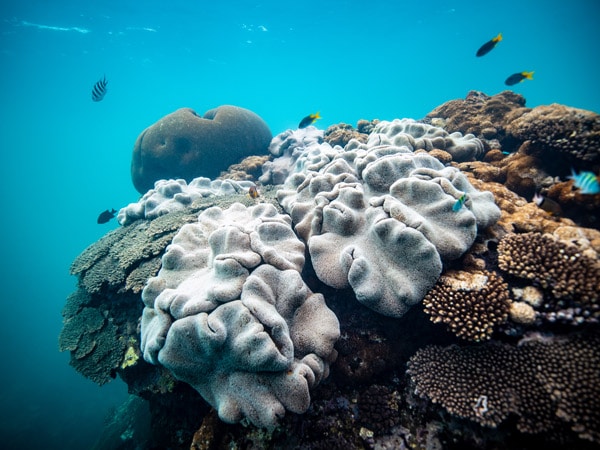
Fish and coral underwater at Coral Bay, a snorkelling spot in WA.
The crystal clear waters of Coral Bay make it a one-of-a-kind snorkelling experience. (Image: Ryan Chatfield, Terra Australis)

Chatfield has had beautiful encounters with manta rays, lemon sharks, leopard sharks, eagle rays, whale sharks, and you can even spot humpbacks.

“I always like to stop and stay still in Coral Bay when I’m in the water, just find a nice sandy patch and go to the bottom," he said.

“That’s when you really see the reef and all its creatures.

“Coral Bay is really an incredible location, but it is also very fragile. We encourage people to be conscious of body positioning when they’re snorkelling, to avoid damage to the coral and destruction of marine habitats."
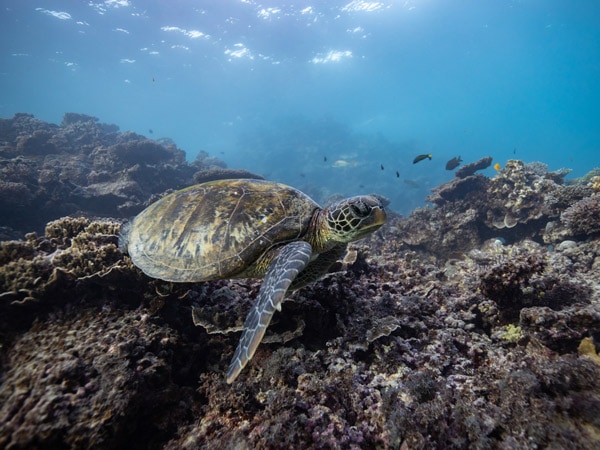
Turtle swimming above coral at Coral Bay in WA
You might spot a turtle at Coral Bay. (Image: Ryan Chatfield, Terra Australis)

3. Gnaraloo

Best time to visit: June – October

Experience level: Beginner to expert

Gnaraloo is a little more off the beaten track. It’s off-grid with no reception, so take everything you need for your time away.
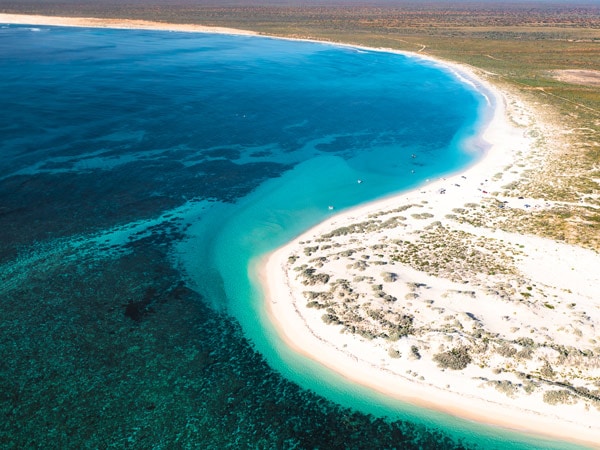
Drone shot of Gnaraloo, snorkelling spot in WA
Gnaraloo is off the beaten track. (Image: Ryan Chatfield, Terra Australis)

With the isolation comes the pristine marine ecosystems of the Coral Coast, though. Gnaraloo Bay is a beautiful shallow lagoon that lends itself to an easy-going drift dive.

If you walk 500 metres up the beach, put all your gear on and then swim 50 – 75 metres offshore you’ll find yourself gently pushed along on one of WA’s best snorkel spots.

Using your fins and hands as rudders you can steer yourself as you go, much like a self-guided tour of the coral gardens, you can zoom in for closer views of the huge stag horn coral outcrops.
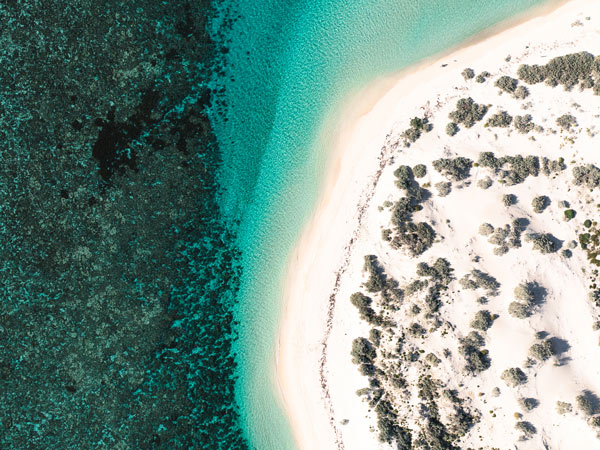
Aerial shot of Gnaraloo, snorkelling spot in WA
Gnaraloo Bay is a beautiful shallow lagoon. (Image: Ryan Chatfield, Terra Australis)

4. Lakeside, Exmouth

Best time to visit: March – October

Experience level: Beginner

Lakeside is located inside the Cape Range National Park in Exmouth on the Ningaloo Reef.

There are three sets of coral bommies surrounded by tropical fish over glistening white sand here and the depth ranges from two to five metres.

This spot is a little bit deeper than most of the other snorkelling sights in the Cape Range National Park so it’s perfect for those wanting to improve their snorkelling skills and get out into a bit deeper water.

Because of the extra depth, it’s a great place to find reef sharks and stingrays under the coral ledges or cruising on the sand between the coral bommies. And it’s also a popular spot to see turtles.
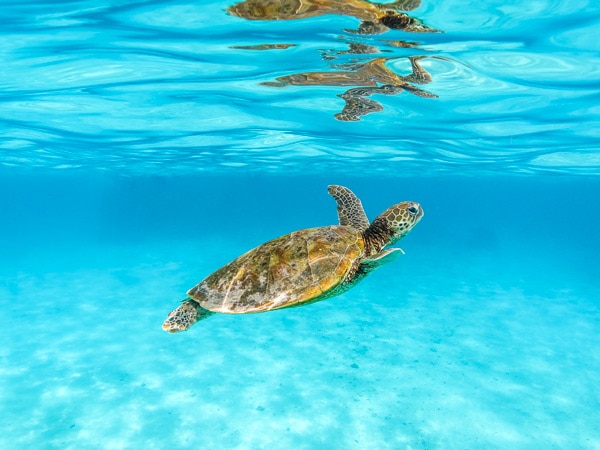
Turtle in crystal clear blue water at Lakeside in Exmouth WA
Have you ever swum with a turtle? (Image: Nush Freedman, Terra Australis)

5. Mettams Pool, North Beach

Best time to visit: November – May

Experience level: Beginner to advanced

This beautiful snorkelling site is perfect for both beginner and advanced snorkellers. You can expect to see cool water corals, sponges and lots of fish life as well as the occasional visits from port Jackson sharks, eagle rays, octopus, seals and stingrays.

If you are a beginner snorkeller you can stay inside the reef and snorkel in the shallows where it’s beautiful, calm and perfect for families with small kids.

If you are feeling more adventurous you can head out to the back of the reef and get lost in all the swim-throughs full of fish and little caves. There are incredible sea grasses moving in the swell and once you are out the back of the reef the water gets a bit deeper so it’s great for finding larger fish species such as buff bream which usually school in hundreds which is remarkable to swim through!

Mettams Pool has a special place in Freedman’s heart because it was a big part of her childhood growing up in the northern suburbs of Perth.

“I would recommend choosing a day with minimal swell as these conditions are better when venturing out to the back of the reef and usually the water is a lot clearer," she said.
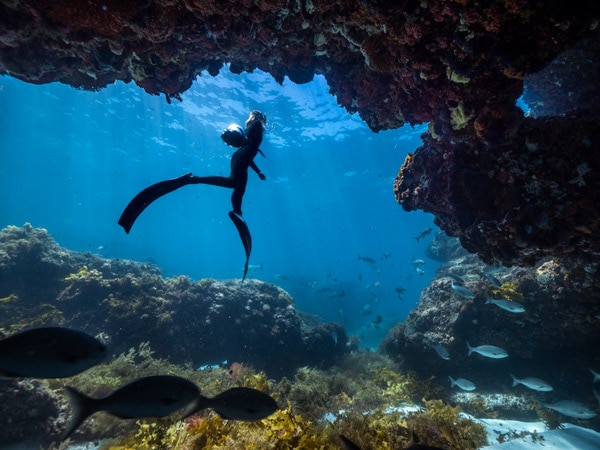
Scuba diver a Mettams Pool
Mettams Pool has options for all experience levels. (Image: Nush Freedman, Terra Australis)

6. Osprey Bay, Exmouth

Best time to visit: March – October

Experience level: Intermediate

Osprey Bay has got to be one of the most beautiful snorkelling sights on Ningaloo Reef.

This spot is also located inside the Cape Range National Park and is an underwater paradise.

Accessible from the shore, you will need a kayak or paddle board to get out to the snorkelling site as it is about 700 metres from the shore, so it’s only suitable for confident snorkellers.

The paddle over is beautiful as you travel over the Ningaloo Lagoon where you can often see dolphins cruising by or turtles popping their heads up for a breath.

Osprey Bay ranges between two to eight metres in depth and is home to some spectacular corals and tropical fish. If you’re lucky you might also see reef sharks, stingrays, and turtles cruising by.
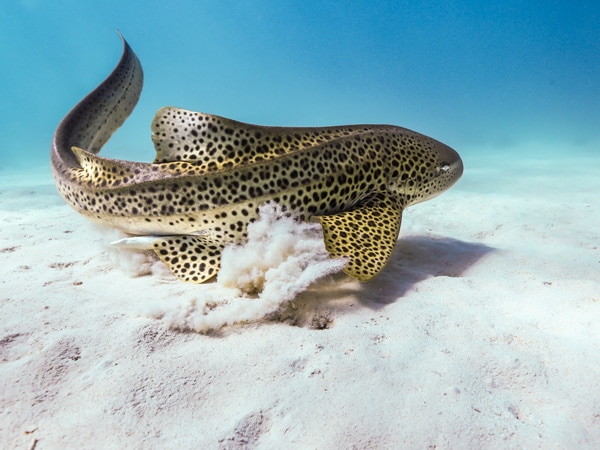
Leopard Shark in the sand on the ocean floor at Osprey Bay, Exmouth, WA.
Leopard sharks frequent Osprey Bay. (Image: Nush Freedman, Terra Australis)
Emily Murphy
Emily Murphy is Australian Traveller's Email & Social Editor, and in her time at the company she has been instrumental in shaping its social media and email presence, and crafting compelling narratives that inspire others to explore Australia's vast landscapes. Her previous role was a journalist at Prime Creative Media and before that she was freelancing in publishing, content creation and digital marketing. When she's not creating scroll-stopping travel content, Em is a devoted 'bun mum' and enjoys spending her spare time by the sea, reading, binge-watching a good TV show and exploring Sydney's vibrant dining scene. Next on her Aussie travel wish list? Tasmania and The Kimberley.
See all articles
hero media

6 reasons the best way to experience the Kimberley is by cruise

This remote corner of Australia is one of the world’s last frontiers. This is how to see it properly.

Vast, rugged and deeply spiritual, the Kimberley coast in Australia’s North West feels a world away from everyday Australia – and there are countless ways to explore it. But if you want to reach ancient rock art, hidden gorges and lonely waterfalls, it has to be by boat. Whether you’re aboard a nimble expedition vessel or a luxury yacht with all the trimmings, exploring by the water brings exclusive experiences, shows unique views and makes travel easier than any other mode. And that’s just the beginning of Australia’s North West cruises.

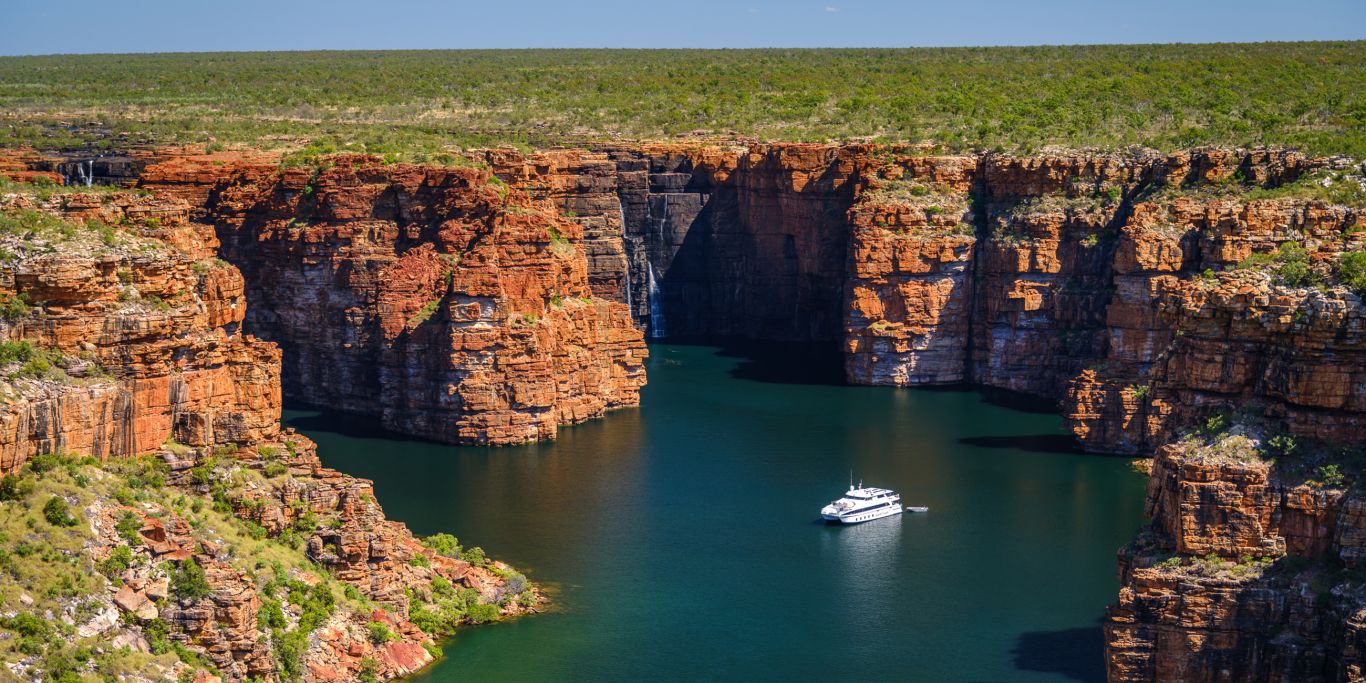
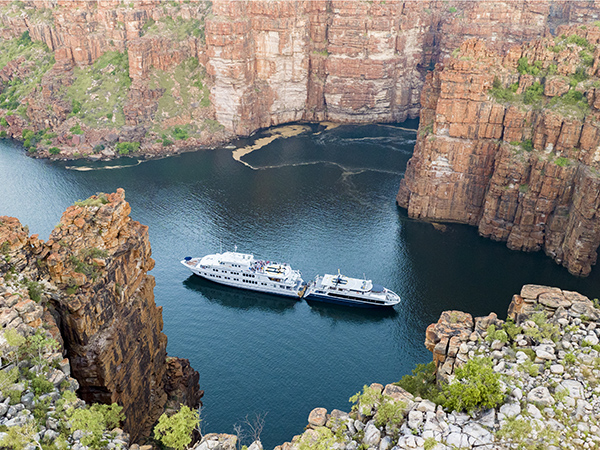
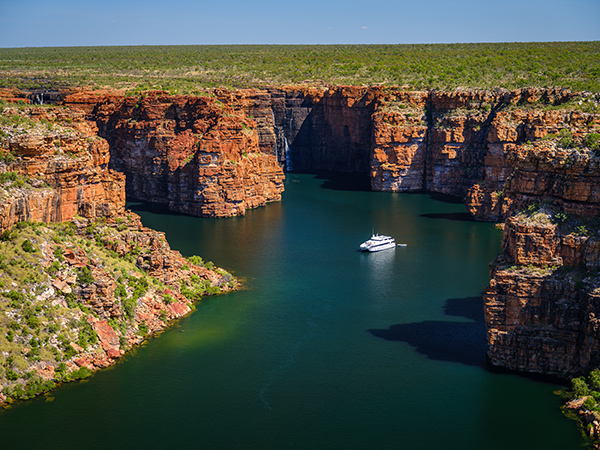
The True North Adventure Cruise in between sandstone cliffs.
Adventure starts where the road ends.

1. Discover Broome, and beyond

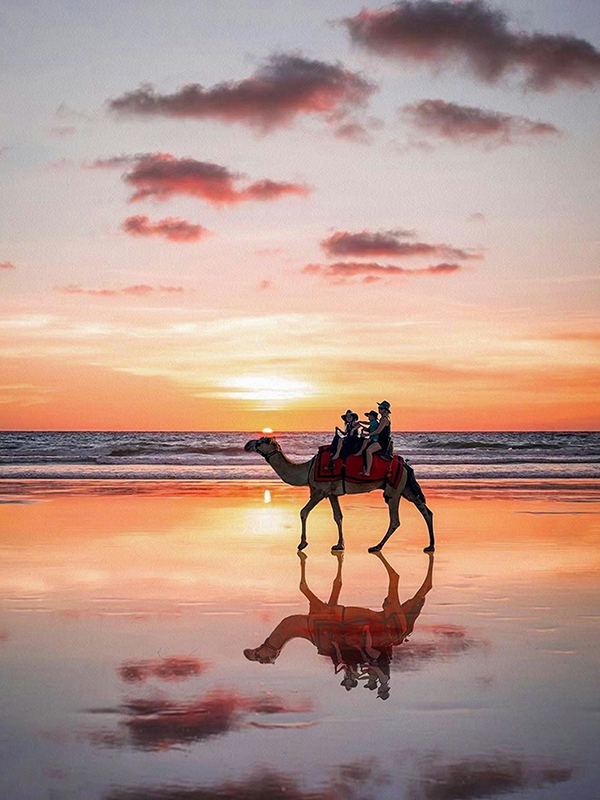
Explore your launchpad before you set sail: Broome. Here camels and their riders stride along the 22 kilometres of powdery Cable Beach at sunset. That’s just the start.

At Gantheaume Point, red pindan cliffs plunge into the turquoise sea, whose low tide uncovers fossilised dinosaur footprints. Broome’s pearling history runs deep. Japanese, Chinese, Malay and Aboriginal divers once worked these waters, and their legacy lives on in boutiques where South Sea pearls still shine.

If the moon’s right, you may catch the Staircase to the Moon over Roebuck Bay. Or simply kick back with a cold beverage and a film under the stars at Sun Pictures , screening since 1916.

Ride a camel along Cable Beach as the sun sinks into the Indian Ocean, casting golden light across the sand and sea.
Ride a camel along Cable Beach. (Image: Nick Dunn)

2. Unmatched access to The Kimberley

Once you’re onboard, expect a backstage pass to some of the most isolated places on Earth. No roads. No ports. No phone reception.

At Horizontal Falls/ Garaanngaddim, 10-metre tides surge through twin gorges like a natural waterpark ride that’ll make your palms sweat. Then there’s Montgomery Reef/ Yowjab: a giant living platform of coral and seagrass, where the sea pulls back to reveal waterfalls, sea turtles and ospreys.

Up north, King George Falls/ Oomari rage 80 metres down red cliffs. Zodiac boats often nudge in closer so you can feel the spray on your sun-warmed cheeks. You might even fly in to reach Mitchell Falls/ Punamii-unpuu, a four-tiered cascade where you can swim in freshwater pools above the drop.

Come spring, some itineraries veer west to Rowley Shoals: an atoll chain of white sand and reef walls. Then it’s up the winding Prince Regent River to King Cascade/ Maamboolbadda, tumbling over rock terraces, and into a Zodiac to view the Gwion Gwion rock art, whose slender, ochre-painted figures are older than the pyramids.

A cruise drifts beneath King George Falls, where sheer sandstone cliffs frame the thunderous plunge into turquoise waters.
Get closer to the Kimberley than ever before.

3. Taste the Kimberley with onboard hospitality

You might spend your days clambering over slippery rocks or charging past waterfalls. But when you’re back on the water, it’s a different story. Meals are chef-prepared and regionally inspired: grilled barramundi, pearl meat sashimi, mango tarts, and bush tomato chutney. One night it’s barefoot beach barbecues with your shipmates; the next, alfresco dining on the ship.

Small expedition ships each have their own personality, but many carry just 12 to 36 guests, making being out on the water a whole other experience. You might sink into a spa on the foredeck or sip coffee in a lounge while watching crocodiles cruise by. It’s choose-your-own-relaxation, Kimberley style.

4. Expert-led excursions through the Kimberley

These voyages are led by people who know the Kimberley like the back of their sunburnt hand. Attenborough-esque naturalists might gently tap your shoulder to point out rare birds or tell the story beneath a slab of rock. Historians can explain exactly how that rusted World War II relic came to rest here.

If your ship has a helipad, you might chopper straight to a waterfall-fed swimming hole. If not, you’ll still be hopping ashore for that wet landing at a secret creek.

Then come the evenings: songlines shared by Traditional Owners under the stars, or astronomy sessions that link what’s overhead with what’s underfoot and what’s within.

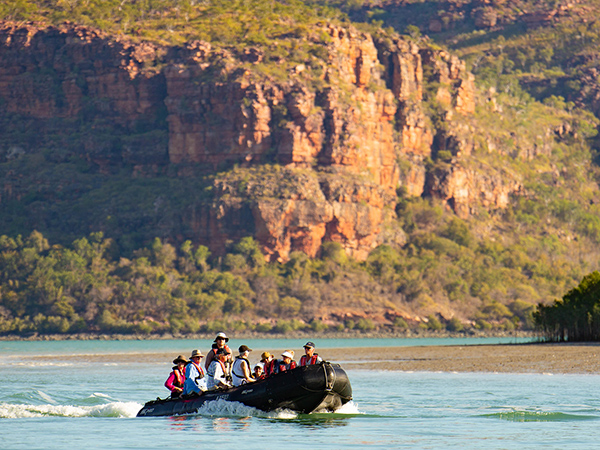
A small group glides through Kimberley’s rugged coastline by boat, passing ancient cliffs.
Explore with naturalists and historians by your side.

5. Relax in luxurious lodgings

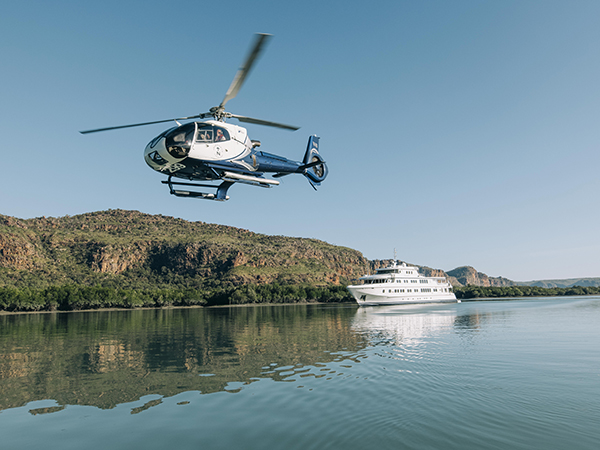
Just because you’re off-grid doesn’t mean you have to rough it. These Kimberley vessels are small in size, but mighty in luxury. True North’s ships come with their own helicopters and a no-sea-days policy, so you’re always in the thick of it. Try the luxurious offerings from Ocean Dream Charters for exploration in style. Kimberley Quest offers a fast boat for easy, off-ship adventures. On the larger end of the scale, Coral Expeditions has open-deck bars and curated wine cellars. And then there’s Ponant’s luxury yachts sleek and incredibly stylish French sailing yachts.

A helicopter soars above the sea, with a sleek cruise ship gliding in the distance.
See the Kimberley from sky to shore.

6. The adventure continues with pre- and post-cruise experiences

You’ve already come this far – so, why not go further? Broome makes it easy to ease in before you board, or wind down when your voyage ends, and there is no reason to stop there.

Head an hour and a half south to Eco Beach to stay off-grid and off the clock. Join a Yawuru guide for a mangrove walk or ocean forage. Dive even deeper into Broome’s pearling past at Willie Creek or Cygnet Bay, where divers and craftspeople still pull the seawater-slicked gems from the deep.

If you’re still craving adventure, it’s time to go further. Soar over the Buccaneer Archipelago, or detour inland with a 4WD trip along the Gibb River Road. Book a scenic flight over the Bungle Bungles. Or – because you never know when you’ll be back – do all three.

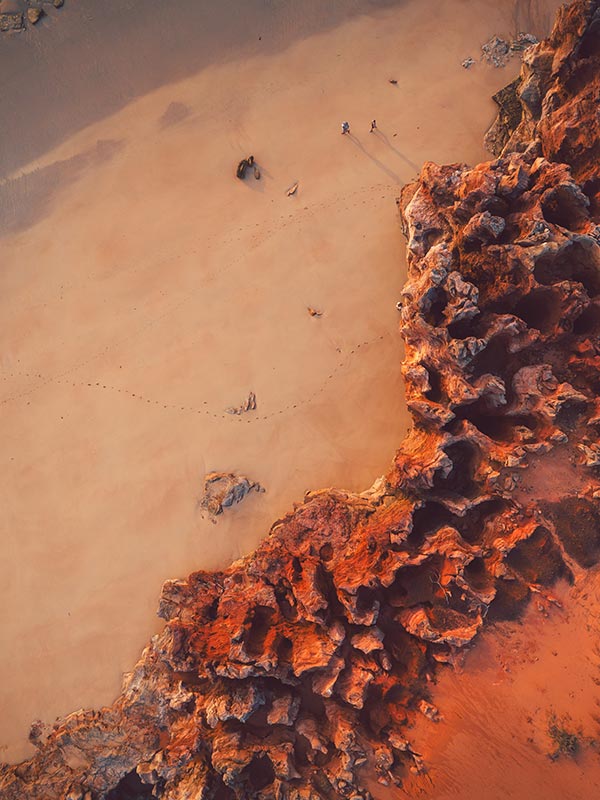
aerial of people walking on eco beach in the kimberley western australia
Stay off grid at Eco Beach. (Image: Tourism WA)

Find out more about your trip to Australia’s North West at australiasnorthwest.com .