The judges have spoken, and the flavours taking top honours are ones you’ll want to try.
Australia’s obsession with coffee has reached new heights with the country’s best brew officially crowned at the 2025 Sydney Royal Fine Food Show. After a blind tasting process that saw judges work their way through hundreds of entries, Brisbane’s Coffee Mentality has taken home the prestigious Champion Coffee title.
For a nation that prides itself on its caffeine culture, the result is as much a victory for local Brisbane coffee producers as it is for the daily coffee drinkers who demand nothing but the best.
Judges described the winning coffee as rich, complex and beautifully balanced, the kind of brew that lingers long after the last sip. Coffee Mentality’s Auditory blend stood out from a field of more than 1600 entries across 72 classes, a reminder that great coffee is as much about craftsmanship as it is about beans.
The Sydney Royal Fine Food Show is known for its rigorous standards and has become one of the most respected platforms for producers to prove their worth. To take out the top coffee prize is to declare yourself the leader of a nation that lives and breathes cafe culture.
Unlike international competitions, where beans can be sourced from anywhere, the Sydney Royal awards put a strong focus on Australian produce. All entries must contain at least 85 per cent Australian ingredients. Coffee Mentality’s win is therefore not just about flavour, but also about the rise of locally grown beans and the roasters who are finding new ways to showcase them.
Other winners worth celebrating
All entries must contain at least 85 per cent Australian ingredients. (Image: Fahmi Fakhrudin / Unsplash)
While coffee took the headline, it was just one part of a showcase that celebrated the diversity of Australian food and drink. Rice Culture was named Champion Drink for its Organic Black Koji Amazake, a fermented rice drink that reflects the growing popularity of craft non-alcoholic beverages.
Slowbreads Roseville impressed again with its Fig, Cranberry and Walnut Sourdough, taking home the Champion Sourdough title. The PieFather in Rosebery made headlines of its own by winning Champion Pie with the quirky but delicious MickTaco pie. Mandolé Orchard continued its dominance in the Champion Plant-Based Product category with its Honey Almond Butter, showing that nut spreads can be every bit as decadent as traditional dairy.
Meat lovers were also well represented. Stockyard Beef was declared Grand Champion Beef Exhibit for its Stockyard Black, while Millin’s Free Range Butcher won Champion Fresh Sausage with its beef Philly cheesesteak sausages. These winners highlight the breadth of Australia’s food scene, from boutique producers experimenting with new flavours to established names pushing boundaries in traditional categories.
So, while a humble cup of coffee might be the headline act, the bigger story is the creativity, dedication and innovation running through every part of Australia’s food industry. Whether you are chasing the perfect morning brew, hunting down sourdough with a twist or curious enough to try a pie inspired by tacos, the 2025 Sydney Royal Fine Food Show has made one thing clear. The best flavours of Australia are being created right now, and they are worth every sip and every bite.
Emily Murphy is Australian Traveller's Email & Social Editor, and in her time at the company she has been instrumental in shaping its social media and email presence, and crafting compelling narratives that inspire others to explore Australia's vast landscapes. Her previous role was a journalist at Prime Creative Media and before that she was freelancing in publishing, content creation and digital marketing. When she's not creating scroll-stopping travel content, Em is a devoted 'bun mum' and enjoys spending her spare time by the sea, reading, binge-watching a good TV show and exploring Sydney's vibrant dining scene. Next on her Aussie travel wish list? Tasmania and The Kimberley.
A change is as good as a holiday, but never more so than in the Bendigo region when it’s the seasons putting in the transformative work.
With its gold rush history, opulent architecture and booming food and wine industry, there’s no denying that the Bendigo region is beautiful to visit at any time of year. Visit between March and May, however, and you’ll find the Bendigo in autumn really comes alive. Foliage erupts in a canvas of golden colours and the cooling air makes immersing yourself in nature all the more enticing.
Need a few ideas to get you started? We’re so glad you asked.
1. Tackle the bike trails
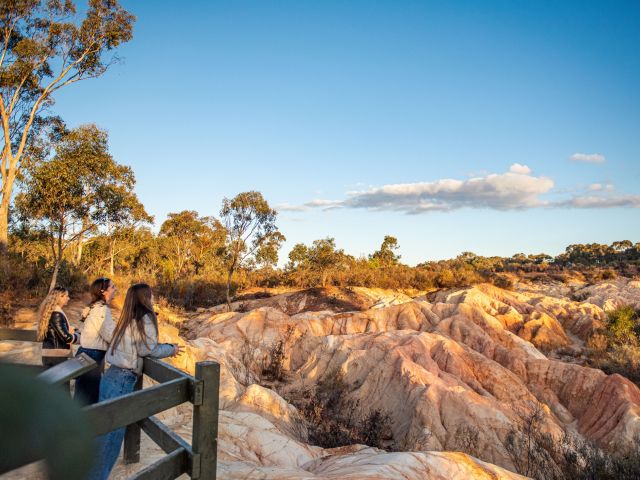
Pink Cliffs Reserve in Heathcote can be seen on the O’Keefe Rail Trail. (Image: Visit Victoria/Emily Godfrey)
Welcome to a region that punches well above its weight when it comes to cycling. This is where hammies are tested on multi-day rides, and first-timers fall in love with the sport on short (and ridiculously pretty) trails.
The 49-kilometre O’Keefe Rail Trail is the headline act, following the old railway line between Bendigo and Heathcote. Cross the Campaspe River at Axedale Recreation Reserve and pause at the Platypus Compass Sculpture and the First Nations mural marking the connection between Djaara and Taungurung Country, with Axedale acting as the perfect halfway stop to refuel at a pub or cafe.
Pedal a little further Heathcote’s Pink Cliffs Geological Reserve to be rewarded with views of sculpted pink clay cliffs and narrow gorges that are perfect for a photo stop. Searching for a different type of reward? The Heatchote Wine Region is full of inviting cellar doors.
There are plenty of other options in the Bendigo region, from the 210-kilometre Goldfields Track , to the Bendigo Creek Trail and Back Creek Trail – both ideal for riders of all abilities. The 3.7 kilometre Little Lake Boort loop is a great family-friendly option.
Prefer something more adventurous? Spring Gully Mountain Bike Park has been keeping BMX Bandits’ dreams alive for years.
2. Enjoy the crunch of autumn leaves
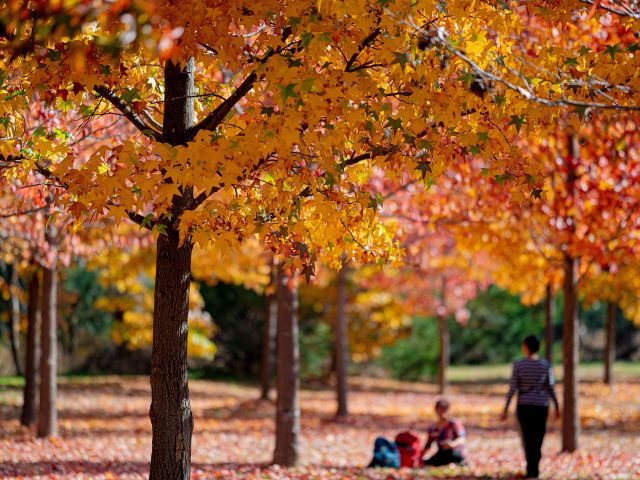
Pack a picnic and head to the Valley of Liquidambers.
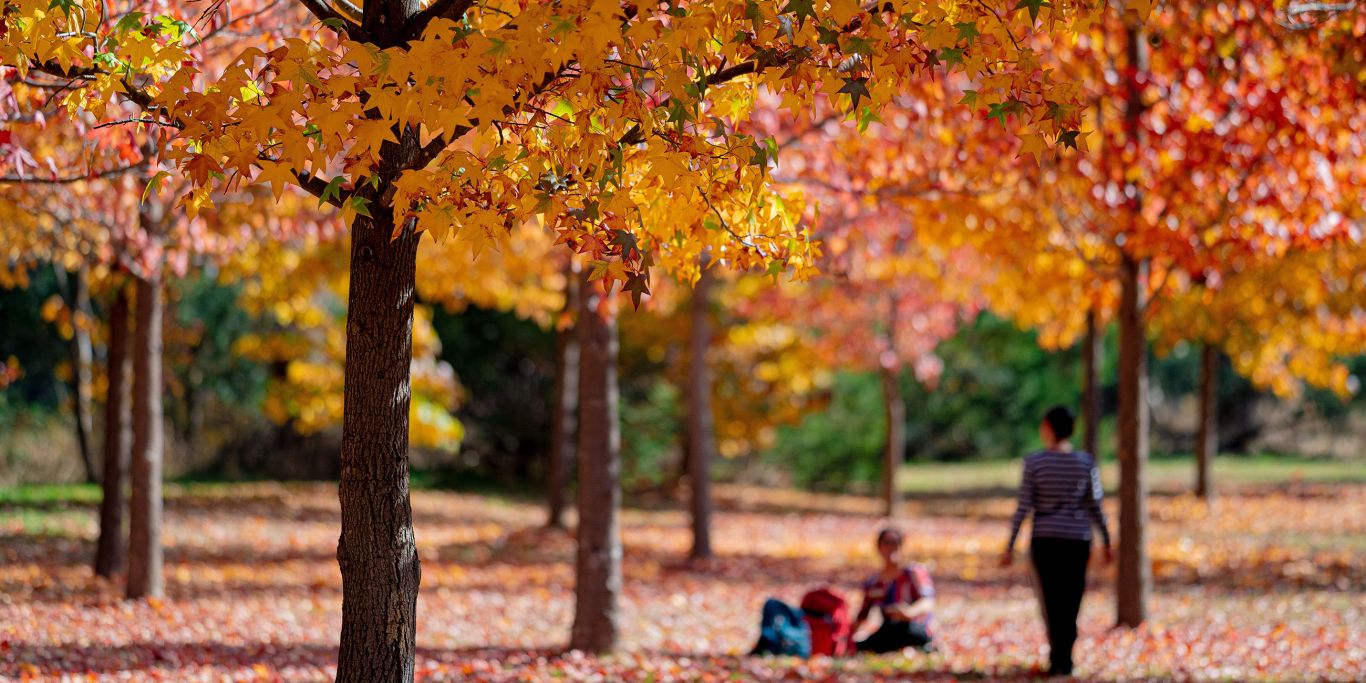
Blinding clusters of crimson, burnt orange and brilliant yellow; here, autumn leaves are crisp confetti of fire and gold. See the magic up close with a slew of parks seemingly dedicated to showcasing Mother Nature’s colour wheel, especially from mid April to early June.
Pack a picnic for an afternoon at Valley of Liquidambers in Heathcote, where Liquidamber trees transform into a wonderworld of magical foliage. Don’t miss taking a leisurely stroll across the swinging bridge back towards the main street.
Rosalind Park might be celebrated for its annual tulip display come springtime, but it’s hard to compete with the theatre of autumn. Here, many trees date back to the 1800s, and there’s no better place for a romantic stroll than along the elms, oak and Queensland Kauri that dominate this park.
Head straight to Lake Weeroona, where an ornamental lake begs for a leisurely lap around its edges, either on foot, or with pedal power.
3. Immerse yourself in First Nations culture
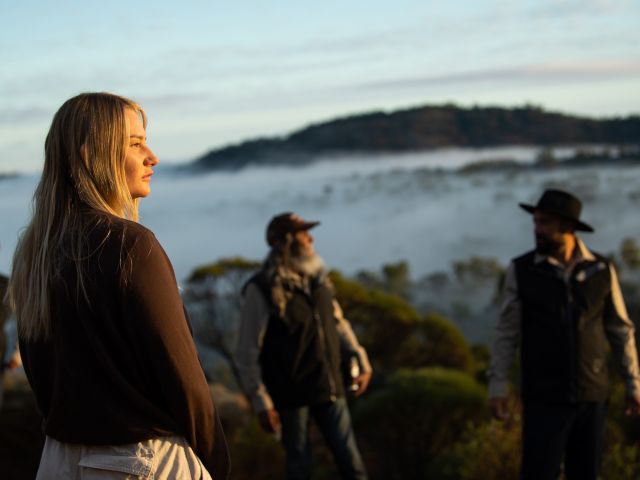
Explore Kooyoora State Park on a cultural tour.
Its ‘Mountain of Light’ (Guyura in the Dja Dja Wurrung language) title is impressive, but so too is Kooyoora State Park’s rugged landscape of granite outcrops, rocky ridgelines and wide-open skies.
While there’s nothing to suggest you couldn’t explore Kooyoora’s walking tracks on your own, the best way to understand the 40,000 years of history behind its natural wonders is to book a 2.5-hour Kooyoora Cultural Tour with Dumawul Tours .
Led by Djaara cultural guides, expect a traditional Welcome to Country smoking ceremony, before engaging storytelling rewinds the clock to reveal the deep cultural significance of the land, its flora, fauna and its continuing connection to Country.
Keen to stay a little longer? Consider staying overnight at the campground and committing to the park’s wealth of walking trails, such as the 5.3-kilometre hike from the camping ground to the lookout on the Long Rock Walking Track.
4. Splash in the region’s waterways
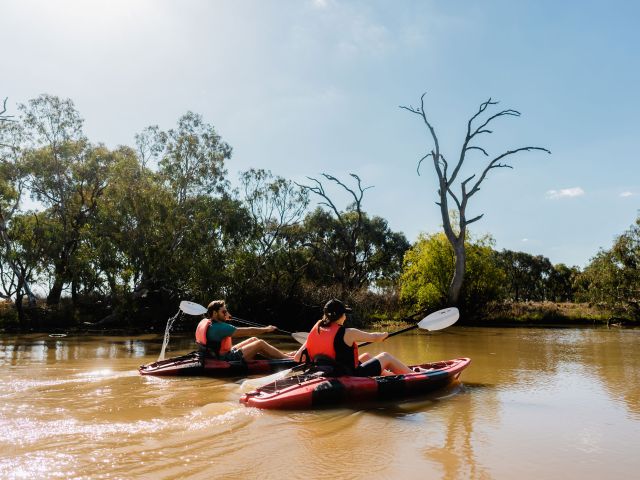
Paddle through Serpentine Creek Canoe Trail. (Image: Visit Vic)
Water babies rejoice: the Bendigo region offers a wealth of waterways to explore.
Flowing 392-kilometres from the Great Dividing Range to the Murray River, the best way to enjoy Loddon River is with a stop at Bridgewater. Here you can swim in the natural infinity pool or tackle the all-abilities, five-kilometre Serpentine Creek Canoe Trail before browsing the cute stores in town. Hungry? Grab a bite at Bridgewater Hotel .
Lake Eppalock is popular for water activities, but don’t miss a visit to Little Lake Boort and Big Lake Boort. Birders, in particular, will love the former, thanks to the large variety of bird species that nest in the boardwalk area surrounding the lake.
Meanwhile, Big Lake Boort is celebrated for its significant Indigenous history and over 400 scarred trees, and offers an opportunity to spot birds and go canoing.
Meanwhile, watersports and recreational activities at Crusoe Reservoir, located on the outskirts of Bendigo, are the order of the day. Take a walk to the picnic spots of No. 7 Park nearby, and maybe even camp there for the night.
5. View epic lookouts
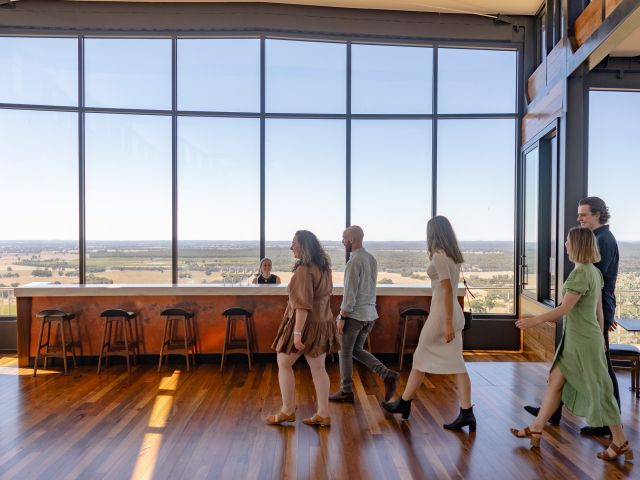
Spend time at Peregrine Ridge.
Sometimes a holiday requires a phenomenal spot on which to perch as you survey your temporary kingdom below. The Bendigo region, happily, doesn’t do anything by halves.
Located in Heathcote-Graytown National Park, Viewing Rock Lookout – a rocky outcrop offering spectacular views over Heathcote and surrounds – remains a popular choice. Take the hour-long Viewing Rock Circuit Walk and try your hand at gold prospecting nearby.
Prefer the romance of sunrise or sunset? Pyramid Hill, a stunning granite hill rising 187-metres above sea level, is the place to be (preferably with a coffee and a bagel)
Over in Terrick Terrick National Park, a walk to the summit delivers a full 360-degree panorama of woodlands, farms and open-sky plains. Pack lunch – and perhaps a tent – as picnic tables and camping are available.
Carve out time for Peregrine Ridge , a vineyard situated at the eastern side of Mt Camel Range with an elevation ranging from 250-290 metres. Be rewarded with delicious wine and a cellar door which offers floor-to-ceiling views.
6. Enjoy the Bendigo region’s parks and gardens
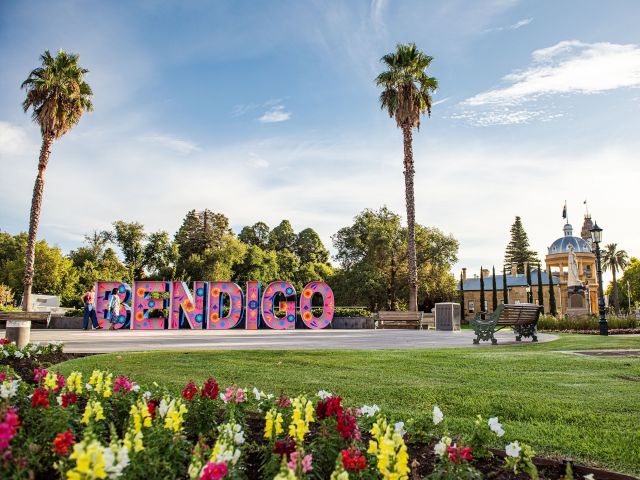
Stroll through Bendigo’s best gardens. (Image: Visit Vic)
Rosalind Park, located right in the centre of town, is considered Bendigo’s backyard and rightly so. Home to the Bendigo Easter Festival , it’s just as popular year-round for its sixty acres of rolling lawns, towering elms, fernery and winding paths – not to mention the playground which has plenty of little fans of its own. A short drive away, Bendigo Botanic Gardens – established in 1857 – offers a more tranquil space for deep-level nature immersion.
Those who favour something a little more formal, cottage-style Canterbury Park Gardens – famous for its dahlias in autumn – delivers. Stroll through its meticulously maintained ornamental gardens before checking out Lake Tom Thumb and Lake Neangar nearby.