10 prettiest coastal wonders around Australia

hero media
From the country’s prettiest ocean pools, set like gems into sandstone rock shelves, to the copper tones of the Kimberley on the frayed edges of WA, our coastline inspires endless awe.

This article is part of our 100 Australian Wonders series. Throughout the series, we explore our nation’s wonders across culture, nature, food, islands and many more. We hope it inspires your own exploration of Australia’s many wonders.

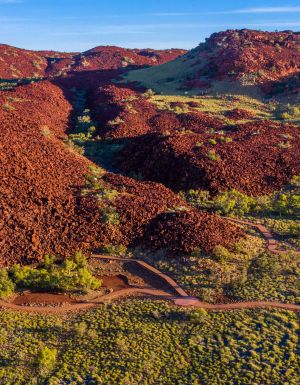
1. Kimberley Coast, WA

Travelling with: Fleur Bainger

A cruise taking in the Kimberley’s cinnamon-red cliffs, crocodile-dotted rivers and diamond-scatter of islands remains one of life’s great trips.

The combination of incomprehensible age, beauty and wonder on water is indeed a once-in-a-lifetime experience, especially when reaching name-drop destinations like Horizontal Falls, the rising-from-the-ocean Montgomery Reef and the 80-metre-plummet of King George Falls.

It’s not the only way to reach the Kimberley’s extremities, of course. With the Broome to Cape Leveque Road now fully sealed, remote coastal escapes can be accessed via 4WD and in some cases, 2WD.

Aboriginal-owned Mercedes Cove Exclusive Coastal Retreat , which maxes out at 18 guests, beckons with clifftop safari tents.

Cygnet Bay Pearl Farm’s new safari tent circle is hotel-standard and lures with Aboriginal-led tours of the tidal flats and otherwise-inaccessible islands.
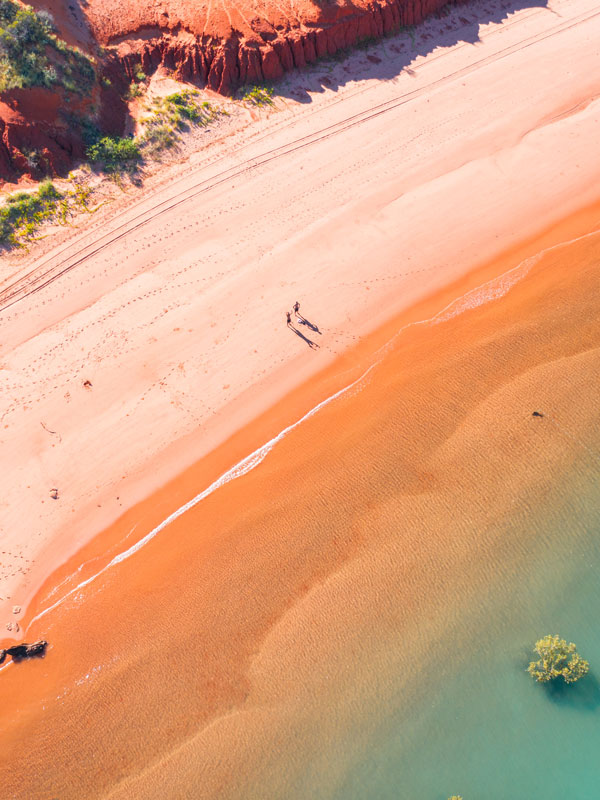
an aerial view of the Roebuck Bay coastline in Broome
The red sands of the Kimberley contrast with the cerulean seas at Broome’s Roebuck Bay. (Image: Tourism Western Australia/From Miles Away)

2. Bondi to Coogee Coastal Walk, NSW

Travelling with: Carla Grossetti

The Bondi to Coogee Coastal Walk spaghettis six kilometres along the cliffs, bays and beaches of Sydney’s eastern suburbs.

The path that follows the scalloped shoreline provides a spectacle that changes with the many moods of the sea and sky and is one that residents of the city are justifiably proud of. In fact, it’s considered one of Sydney’s greatest assets.
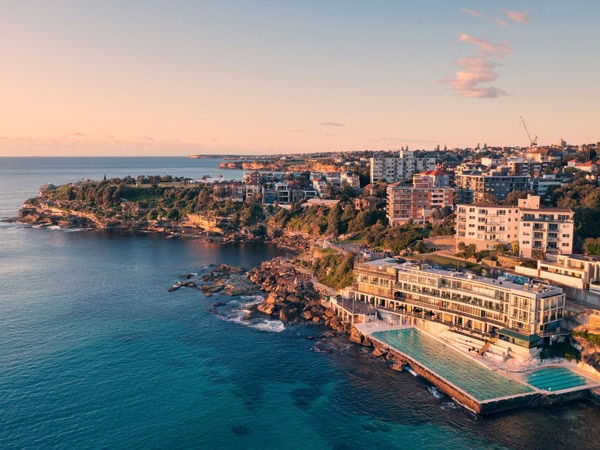
an aerial view of the Bondi Icebergs and surrounds
Take a plunge at Bondi Icebergs. (Image: Destination NSW/Daniel Tran)

Bondi was named after Boondi, the Aboriginal word meaning ‘the noise made by sea waves’. And it’s those crashing waves that continue to capture the imagination of locals and tourists who drift along the winding boulevard from Bondi beholding the bird’s-eye view.
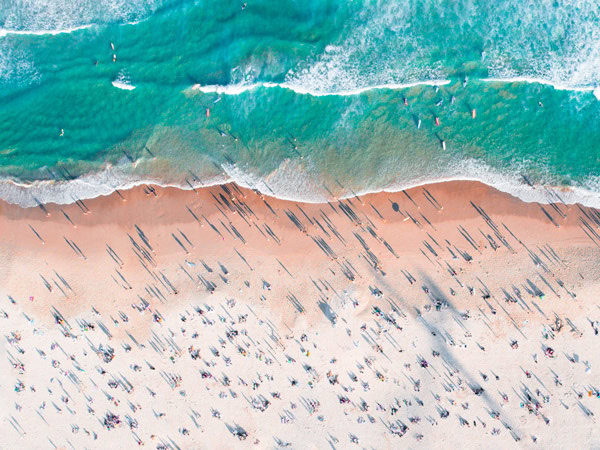
a bird's-eye view of the Bondi Beach in Sydney
Follow the path from Bondi to Coogee in Sydney. (Image: Destination NSW/Lawrence Furzey)

3. Australia’s waves

Travelling with: Celeste Mitchell

We all know Australia has a reputation for its pretty stellar surf breaks. Surf culture is ingrained in everything from our cafes to the local lingo, and breaks such as Bells, Snapper and Kalbarri offer more than just a place to catch a few sets. 
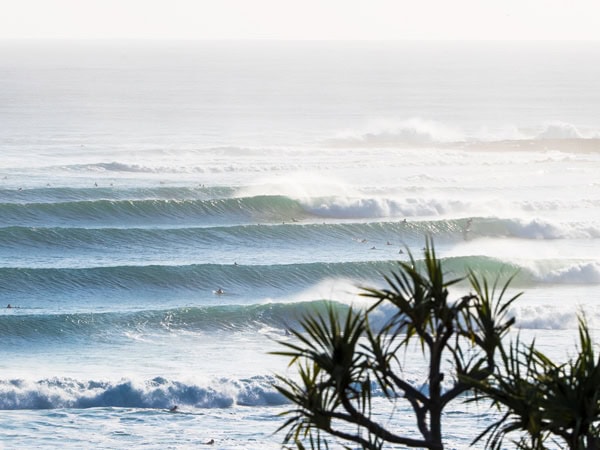
the surf waves at Coolangatta on the Gold Coast
Surf Snapper Rocks at Coolangatta on the Gold Coast. (Image: Tourism and Events Queensland/ Sean Scott)

Which is why, over the last 30 years, 21 National Surfing Reserves have been declared in Australia as places of ‘intrinsic environmental, heritage, sporting and cultural value to our nation’. It’s as much about protecting these sandy spots of worship as it is about the community around them. It’s also empowering for those who love and use our beaches to have a say in how they’re managed.

4. Seal Bay, Kangaroo Island, SA

Travelling with: Imogen Eveson

One of Australia’s most extraordinary wildlife encounters lies in wait on the wild southern coast of the country’s third largest island. A Kangaroo Island trip is incomplete without padding your way down through the sand dunes to Seal Bay, home to Australia’s third-largest colony of Australian sea lions.

Pups play in the sand and surf, bulls fight for supremacy and mothers rest with their young. Seal Bay has been a protected area since 1954 and the population of this endangered species numbers 1000 here.
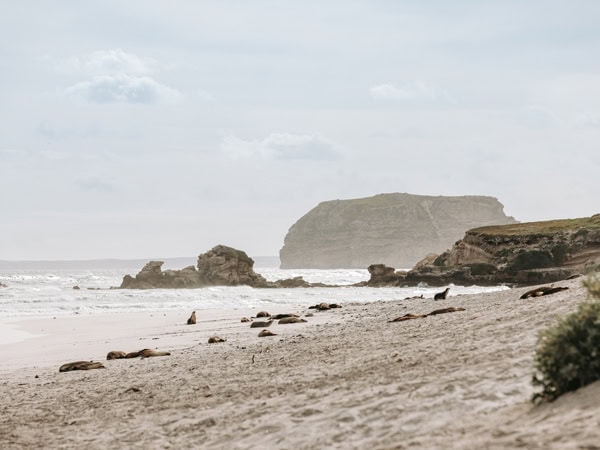
the rugged shoreline of Seal Bay, Kangaroo Island
The rugged shoreline of Seal Bay has been a protected area since 1954. (Image: Kangaroo Island Tourism Alliance)

Head to the visitor centre to follow a guide to the heart of the colony on the beach (from a safe and respectful distance) while learning about the unique breeding cycle of these magnificent wild creatures and the site’s ongoing research programs. You can also observe the action from the self-guided and wheelchair-accessible boardwalk that winds through the dunes.

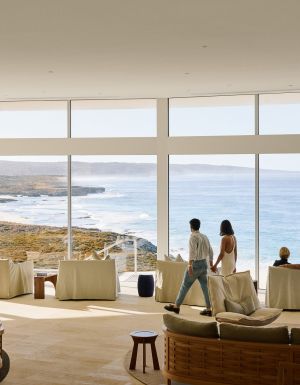
A visit to Seal Bay with a guide from Southern Ocean Lodge is also a highlight of a stay at the newly relaunched luxury accommodation that puts guests in the wild heart of this wild island.
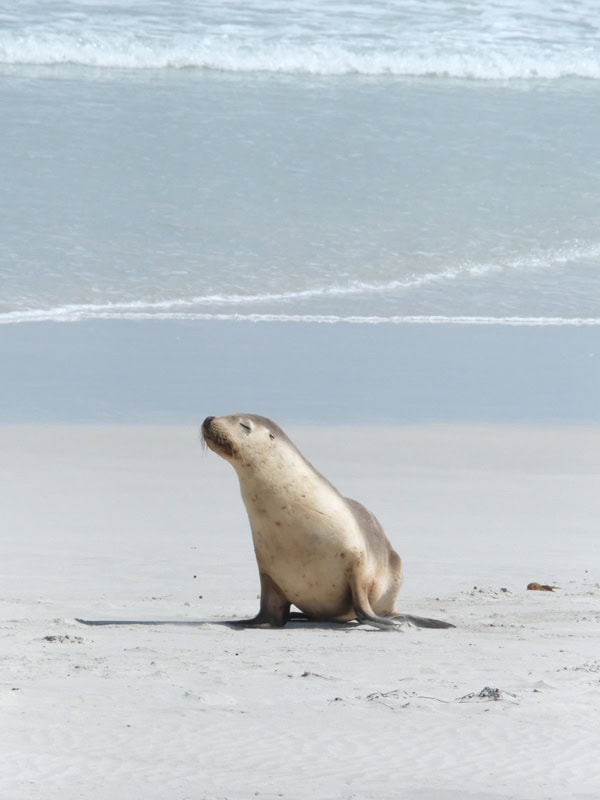
a sea lion at Seal Bay
See a resident sea lion at Seal Bay, Kangaroo Island. (Image: Imogen Eveson)

5. Ocean pools of NSW

Travelling with: Imogen Eveson

NSW’s coastline has its own architectural vernacular etched into surf-hammered rock all up and down its saw-toothed length.

Newcastle’s heritage-listed Bogey Hole is the state’s oldest ocean pool, originally built by convicts in 1819 for the personal use of Major James Morisset. Unemployment relief and funding for public works programs during the Depression resulted in a subsequent boom of ocean-pool-building in the 1920s and ’30s, as coast-dwellers embraced these safe spaces for saltwater swimming, with some 100 constructed since. 

Over time, these pools have become part of the landscape – each shape and size idiosyncratic to its location, from Yamba to Forster, Bondi, Wollongong, Bermagui and Eden.

A liminal space straddling the manmade and natural that speaks not only to a part of Australia’s history but reflects the social and cultural landscape of the country at leisure.
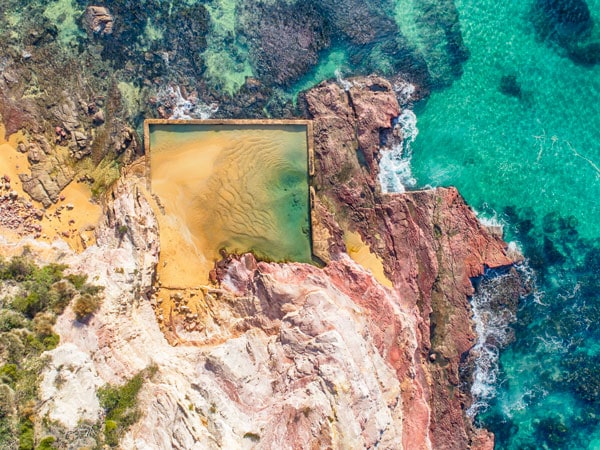
an aerial view of Aslings Beach Rock Pool in Eden
Take a refreshing dip at Aslings Beach Rock Pool in Eden. (Image: Destination NSW/ Dee Kramer)

6. Cod Hole Dive Site, Qld

Travelling with: Carla Grossetti

Potato cods are members of Australia’s ‘Great Eight’ shortlist, which includes iconic species of the southern Great Barrier Reef. Named after the large, round potato-shaped markings on their body, these giant spuds of the sea are actually members of the grouper family.

And the best place to see them is at the world-renowned Cod Hole Dive Site, some 96 kilometres north of Cairns. The Cod Hole is part of a string of long, narrow ribbon reefs that necklace the waters of the Coral Sea and is most accessible from Lizard Island in Tropical North Queensland.

Challenge yourself to enter the water at night, where the inky darkness ups the underwater thrills. Or join a five-night adventure with Mike Ball Dive Expeditions .
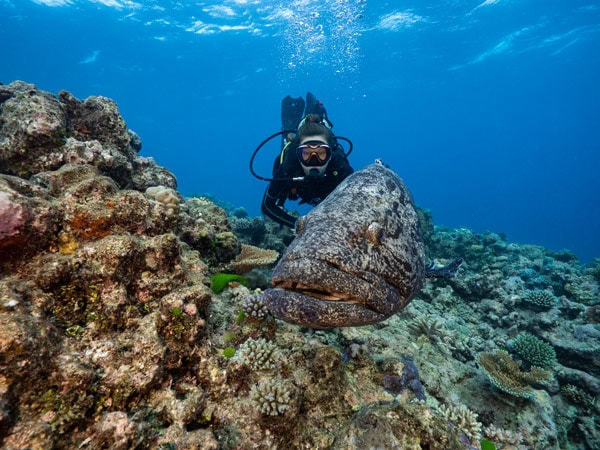
Mike Ball Dive Expeditions at the Cod Hole Dive Site
Dive beneath the surface to explore the world-renowned Cod Hole Dive Site. (Image: Tourism and Events Queensland/ Tom Park)

7. Cable Beach, WA

Travelling with: Fleur Bainger

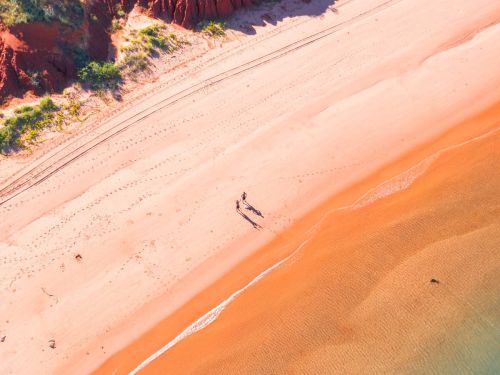
Broome’s 22-kilometre-long stretch of pale, blonde sand is synonymous with camel trains throwing shadows at day’s end.

But it’s so much more than that. Flat as a tack and lapped by water the hue of Chris Hemsworth’s eyes, Cable Beach harbours the imprints of dinosaur footprints in its rocks, hosts light-strung, long-table dinners in balmy air and grants citrus-hued sunsets that linger in the memory like a lost love. It represents escape, freedom and happiness; children delight in pearls of sand deposited by beach crabs darting between burrows, while adults relax in beach chairs with their 4WDs parked on the sand.

Above the dunes, Cable Beach Club Resort & Spa grants the closest access to the iconic beach – arrive early for seats at its Sunset Bar.

Further back, the newly opened, Aboriginal co-owned Spinifex Brewing Co. adds another lure, with its native produce-infused, low-alcohol craft brews, Indigenous botanical food forest and family-friendly vibes.
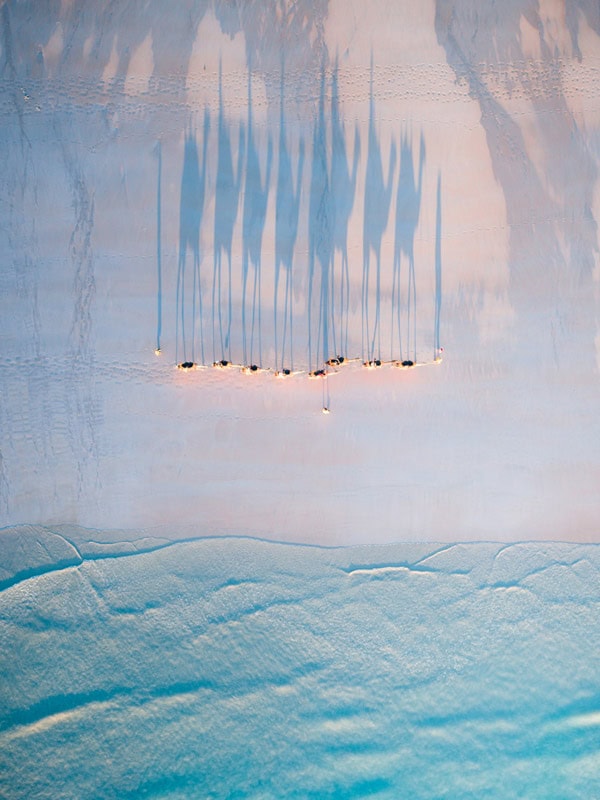
a drone shot of Cable Beach
Ride a camel on the pristine Cable Beach. (Image: Tourism Western Australia)

8. Esperance from the air, WA

Travelling with: Celeste Mitchell

There’s beauty in isolation. In the untouched, lurid blue coastline of Kepa Kurl/Esperance, where you can play I-spy with dozens of white-sand beaches just an hour after take-off with Fly Esperance .
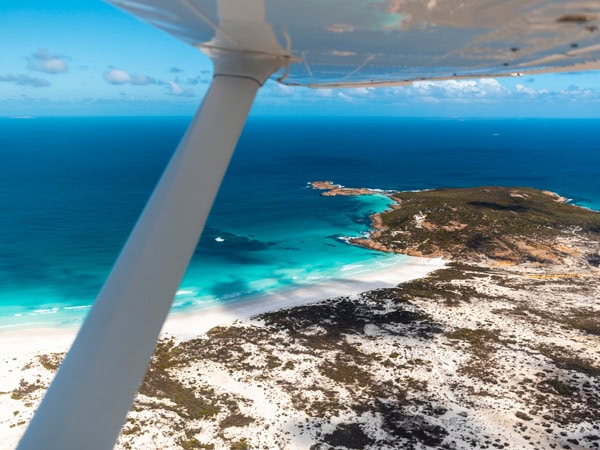
an aerial shot of Esperance with Fly Esperance
Experience Esperance from the air.

This coastal wonderland, almost an eight-hour drive from Perth, takes on an altogether more mesmerising form from the air as you fly over the peaks of Cape Le Grand National Park and the mostly uninhabited islands of the Recherche Archipelago.

Get acquainted with the emerald and sapphire swirls from above then drive along the sands to Lucky Bay. If you spot a kangaroo, you’ve got yourself the Esperance trifecta.
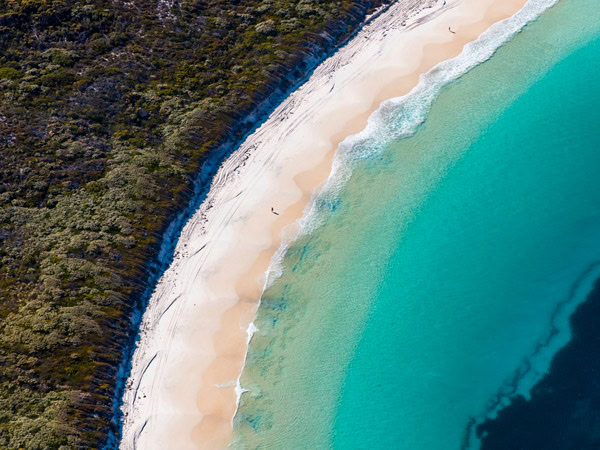
an aerial view of a beach in Esperance
Esperance’s emerald and sapphire swirls are stunning from above.

9. Orcas of Bremer Bay, WA

Travelling with: Carla Grossetti

Budding marine biologists can sign up for a marine expedition to Bremer Bay for a bucket-list encounter to see killer whales in the wild. Bremer Bay Canyon is 70 clicks offshore from the township of Bremer Bay and it’s where the largest pod of orcas in the southern hemisphere gathers each year.

While the prime time for spotting orcas in Bremer Bay is from late January through to April, it’s likely you’ll encounter other marine species such as sperm whales, giant squid, sharks and shoals of tuna, too.

Hit the water with Naturaliste Charters , part of the diverse Australian Wildlife Journeys portfolio.
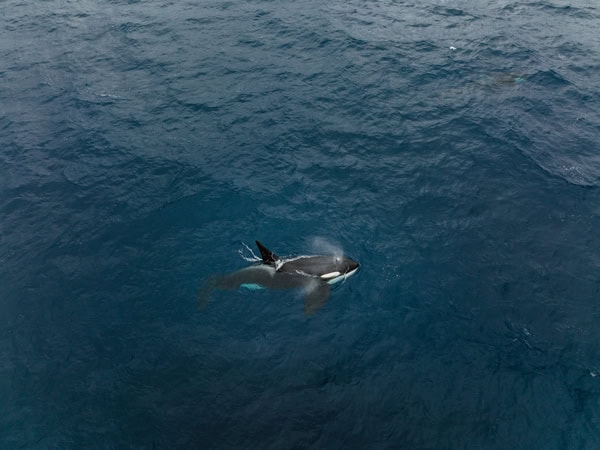
an orca spotted swimming in Bremer Bay
Spot orcas in Bremer Bay. (Image: Tourism Australia)

10. wukalina Walk, Tas

Travelling with: Megan Arkinstall

Learn about larapuna/Bay of Fires from the perspective of the palawa on the four-day palawa-owned-and-led wukalina Walk .

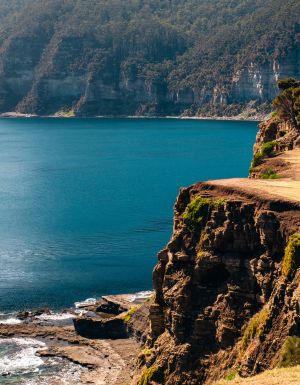
Amble through the living cultural landscape of lutruwita/Tasmania’s north-east coast, which unfolds as a triptych of colour comprising turquoise waters, white sand and boulders blanketed with orange lichen.
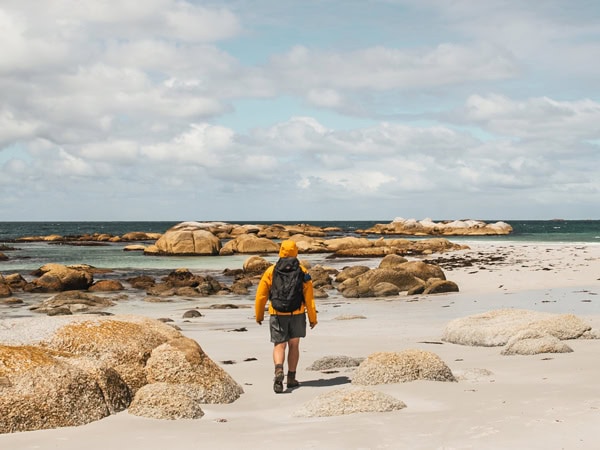
the palawa-owned-and-led wukalina Walk
Hike through the bushlands and beaches on the wukalina Walk. (Image: Tourism Tasmania/ Tayla Gentle)

Sample coastal bush tucker and learn about palawa cultural practices, sometimes from Elders who may join you.

Spend evenings cosied around a fire pit at krakani lumi (resting place) and kick back at a restored lighthouse keeper’s cottage on your final night.
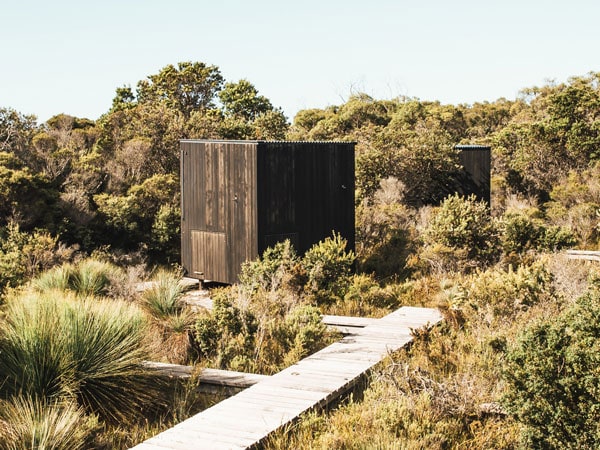
a restored lighthouse keeper’s cottage, wukalina Walk, Tas
Stay for the night in a restored lighthouse keeper’s cottage. (Image: Tourism Tasmania)
Keep reading our 100 Australian Wonders series; from road trips, outback and cultural wonders to foodie wonders and many more.

This scenic Victorian region is the perfect antidote to city life

Video credit: Visit Victoria/Tourism Australia

The Grampians just might be the ultimate antidote for the metropolis, writes one returning Aussie ready to disconnect from the modern world and reconnect to the Great outdoors.

There are no kangaroos back in Chicago: they’re all here in the Grampians/Gariwerd . In the heart of the Grampians National Park’s main gateway town, Halls Gap, pods of eastern greys are eating grass beside my parked rental car beneath the stars. Next morning, when I see the backyard of my rented villa on the edge of town for the first time, there are kangaroos feeding beside a slow-moving creek, lined with river red gums.

Five hundred metres up the road, 50 or so of them are eating by the side of the road in a paddock. I pull over to watch and spot three emus. Yellow-tailed black cockatoos fly overhead towards the tall green mountains just beyond town.

‘Kee-ow, keee-oww’… their calls fuse with the maniacal cackle of a kookaburra (or 10). Gawd, how I’ve missed the sound of them. Far above, a wedge-tailed eagle watches, and there you go: the ‘great birds of Australia’ trifecta, all half a kay from the town limits.

Exchanging city chaos for country calm

kangaroos near Halls Gap, Grampians National Park
The park is renowned for its significant diversity of native fauna species. (Image: Visit Victoria/Robert Blackburn)

I’ve come to the Grampians to disconnect, but the bush offers a connection of its own. This isn’t just any bush, mind you. The Grampians National Park is iconic for many reasons, mostly for its striking sandstone mountains – five ridges run north to south, with abrupt, orange slopes which tumble right into Halls Gap – and for the fact there’s 20,000 years of traditional rock art. Across these mountains there are more than 200 recorded sites to see, created by the Djab Wurrung, Jardwadjali and Gunditjmara peoples. It’s just like our outback… but three hours from Melbourne.

I’ve come here for a chance at renewal after the chaos of my life in America’s third-largest city, Chicago, where I live for now, at the whim of a relative’s cancer journey. Flying into Melbourne’s airport, it only takes an hour’s drive to feel far away from any concept of suburbia. When I arrive in Halls Gap two hours later, the restaurant I’m eating at clears out entirely by 7:45pm; Chicago already feels a lifetime ago.

The trails and treasures of the Grampians

sunrise at Grampians National Park /Gariwerd
Grampians National Park /Gariwerd covers almost 2000 square kilometres. (Image: Ben Savage)

Though the national park covers almost 2000 square kilometres, its best-known landmarks are remarkably easy to access. From my carpark here, among the cockatoos and kangaroos on the fringe of Halls Gap, it only takes 60 seconds’ driving time before I’m winding my way up a steep road through rainforest, deep into the mountains.

Then it’s five minutes more to a carpark that serves as a trailhead for a hike to one of the park’s best vantage points, The Pinnacles . I walk for an hour or so, reacquainting myself with the smells and the sounds of the Aussie bush, before I reach it: a sheer cliff’s edge lookout 500 metres up above Halls Gap.

walking through a cave, Hollow Mountain
Overlooking the vast Grampians landscape from Hollow Mountain. (Image: Robert Blackburn)

There are hikes and there are lookouts and waterfalls all across this part of the park near town. Some are a short stroll from a carpark; others involve long, arduous hikes through forest. The longest is the Grampians Peaks Trail , Victoria’s newest and longest iconic walk, which runs 160 kilometres – the entire length of Grampians National Park.

Local activities operator Absolute Outdoors shows me glimpses of the trail. The company’s owner, Adrian Manikas, says it’s the best walk he’s done in Australia. He says he’s worked in national parks across the world, but this was the one he wanted to bring his children up in.

“There’s something about the Grampians,” he says, as he leads me up a path to where there’s wooden platforms for tents, beside a hut looking straight out across western Victoria from a kilometre up in the sky (these are part of the guided hiking options for the trail). “There are things out here that you won’t see anywhere else in Australia.” Last summer, 80 per cent of the park was damaged by bushfire, but Manikas shows me its regrowth, and tells me of the manic effort put in by volunteers from town – with firefighters from all over Australia – to help save Halls Gap.

wildflowers in Grampians National Park
Spot wildflowers. (Image: Visit Victoria)

We drive back down to Halls Gap at dusk to abseil down a mountain under the stars, a few minutes’ walk off the main road into town. We have headlamps, but a full moon is enough to light my way down. It takes blind faith to walk backwards down a mountain into a black void, though the upside is I can’t see the extent of my descent.

Grampians National Park at sunset
Grampians National Park at sunset. (Image: Wine Australian)

The stargazing is ruined by the moon, of course, but you should see how its glow lights up the orange of the sandstone, like in a theme park. When I’m done, I stand on a rocky plateau drinking hot chocolate and listening to the Aussie animals who prefer nighttime. I can see the streets of Halls Gap off in the distance on this Friday night. The restaurants may stay open until 8pm tonight.

What else is on offer in The Grampians?

a boat travelling along the Wimmera River inDimboola
Travelling along the Wimmera River in Dimboola. (Image: Chris McConville)

You’ll find all sorts of adventures out here – from rock climbing to canoeing to hiking – but there’s more to the Grampians than a couple of thousand square kilometres of trees and mountains. Halls Gap may be known to most people, but what of Pomonal, and Dimboola, and Horsham? Here in the shadow of those big sandstone mountains there are towns and communities most of us don’t know to visit.

And who knew that the Grampians is home to Victoria’s most underrated wine region ? My disconnection this morning comes not in a forest, but in the tasting rooms and winery restaurants of the district. Like Pomonal Estate, barely 10 minutes’ drive east of Halls Gap, where UK-born chef Dean Sibthorp prepares a locally caught barramundi with lentil, pumpkin and finger lime in a restaurant beside the vines at the base of the Grampians. Husband-and-wife team Pep and Adam Atchison tell me stories as they pour their prize wines (shiraz is the hero in these parts).

dining at Pomonal Estate
Dine in a restaurant beside vines at Pomonal Estate. (Image: Tourism Australia)

Three minutes’ drive back down the road, long-time mates Hadyn Black and Darcy Naunton run an eclectic cellar door out of a corrugated iron shed, near downtown Pomonal. The Christmas before last, half the houses in Pomonal burnt down in a bushfire, but these locals are a resilient lot.

The fires also didn’t stop the construction of the first art centre in Australia dedicated to environmental art in a nature-based precinct a little further down the road (that’s Wama – the National Centre for Environmental Arts), which opened in July. And some of the world’s oldest and rarest grape vines have survived 160 years at Best’s Wines, outside the heritage town of Great Western. There’s plantings here from the year 1868, and there’s wines stored in century-old barrels within 150-year-old tunnels beneath the tasting room. On the other side of town, Seppelt Wines’ roots go back to 1865. They’re both only a 30-minute drive from Halls Gap.

Salingers of Great Western
Great Western is a charming heritage town. (Image: Griffin Simm)

There’s more to explore yet; I drive through tiny historic towns that barely make the map. Still part of the Grampians, they’re as pretty as the mountains behind them: full of late 19th-century/early 20th-century post offices, government offices and bank buildings, converted now to all manner of bric-a-brac stores and cafes.

The Imaginarium is one, in quirky Dimboola, where I sleep in the manager’s residence of an old National Australia Bank after a gourmet dinner at the local golf club, run by noted chef and teacher, Cat Clarke – a pioneer of modern Indigenous Australian cooking. Just south, I spend an entire afternoon at a winery, Norton Estate Wines, set on rolling calico-coloured hills that make me think of Tuscany, chit-chatting with owners Chris and Sam Spence.

Being here takes me back two decades, when I lived here for a time. It had all seemed as foreign as if I’d driven to another planet back then (from Sydney/Warrane), but there seemed something inherently and immediately good about this place, like I’d lived here before.

And it’s the Australian small-town familiarity of the Grampians that offers me connection back to my own country. Even in the better-known Halls Gap, Liz from Kerrie’s Creations knows I like my lattes with soy milk and one sugar. And while I never do get the name of the lady at the local Ampol station, I sure know a lot about her life.

Kookaburras on a tree
Kookaburras are one of some 230 bird species. (Image: Darren Donlen)

You can be a local here in a day; how good is that? In Chicago, I don’t even know who my neighbour is. Though each day at dusk – when the kangaroos gather outside my villa, and the kookaburras and the black cockatoos shout out loud before settling in to sleep – I prefer the quieter connection I get out there in the bush, beneath these orange mountains.

A traveller’s checklist

Staying there

Sleep beside the wildlife on the edge of Halls Gap at Serenity .

Playing there

abseiling down Hollow Mountain
Hollow Mountain is a popular abseiling site.

Go abseiling under the stars or join a guided hike with Absolute Outdoors . Visit Wama , Australia’s first environmental art centre. Check out Dimboola’s eccentric Imaginarium .

Eating there

steak, naan bread and beer at Paper Scissors Rock in Halls Gap
Paper Scissors Rock in Halls Gap serves a great steak on naan bread.

Eat world-class cuisine at Pomonal Estate . Dine and stay at much-revered icon Royal Mail Hotel in Dunkeld. The ‘steak on naan’ at Halls Gap brewhouse Paper Scissors Rock , can’t be beat.

Dunkeld Arboretum in Grampians National Park
The serene Dunkeld Arboretum.

For Halls Gap’s best breakfasts head to Livefast Cafe . Sip local wines at Great Western’s historic wineries, Best’s Wines , Seppelt Wines and Norton Estate Wines .

two glasses of beer at Paper Scissors Rock in Halls Gap
Sink a cold one at Paper Scissors Rock.