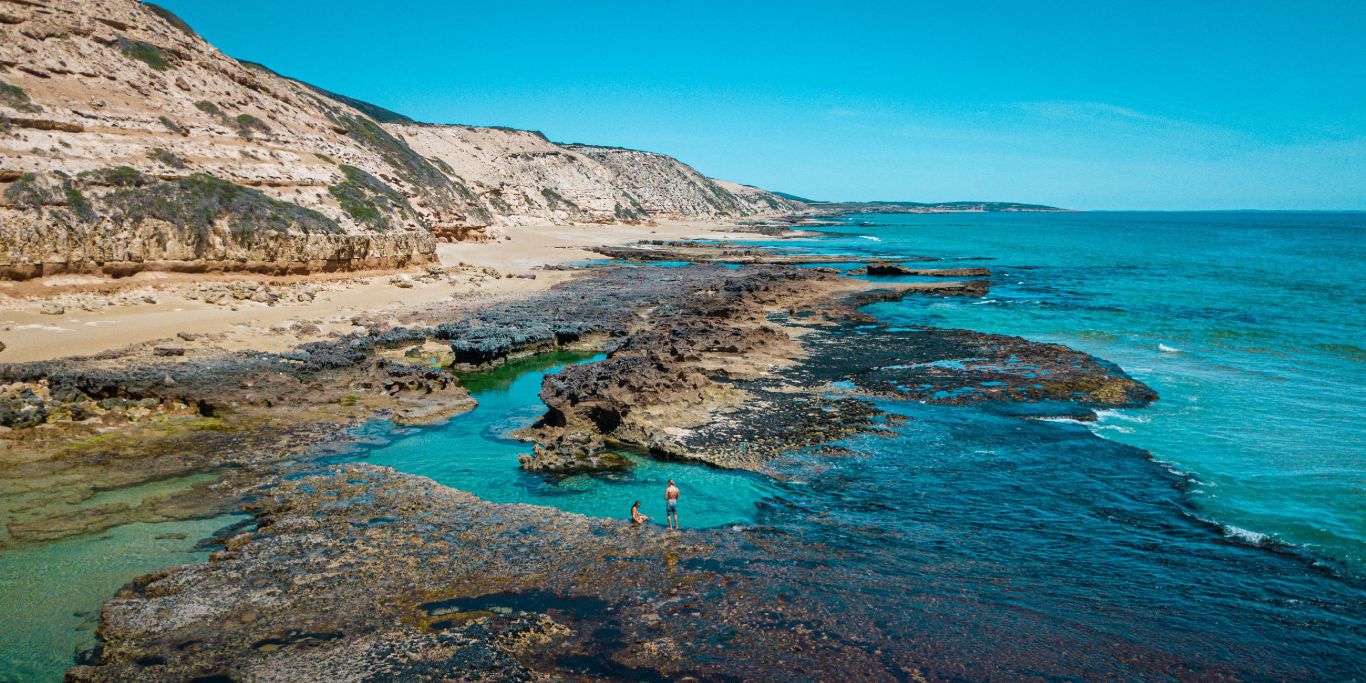

The wild, little-known shores most travellers never reach.
Australia has no shortage of famous beaches. But while most travellers flock to the headline acts, a new Lonely Planet book is quietly pointing towards shores that feel worlds away from the crowds.
Best Beaches Australia spans the full spectrum of the country’s coastline, from family-friendly swims and surf breaks to iconic white sand crescents. Tucked within its pages, however, are beaches chosen for a very different reason: their isolation, wild beauty and sheer remoteness.
Pulled from Lonely Planet’s broader beach picks, these are the shores that reward effort over convenience. The kind of places where getting there is half the story, and being alone is part of the appeal.
Here are seven of Australia’s most remote and unknown beaches highlighted through Best Beaches Australia.
Greenly Beach, Coulta, SA
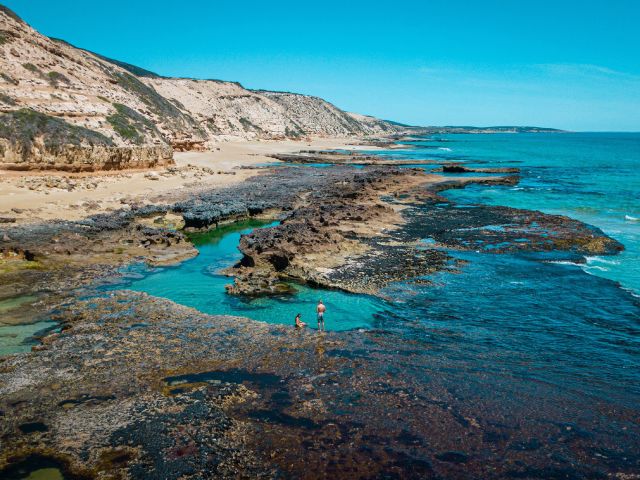
On the rugged Eyre Peninsula, Greenly Beach is the kind of place that feels untouched by time. Framed by towering limestone cliffs and windswept dunes, it is raw, powerful and completely unpolished.
One of the best natural swimming spots around Australia, access requires a four-wheel drive and a sense of adventure, which helps keep the crowds away. When conditions are right, surfers chase heavy swells here, but most visitors come simply to take in the drama of the landscape and the sense of total isolation.
Turquoise Bay, Ningaloo Coast, WA
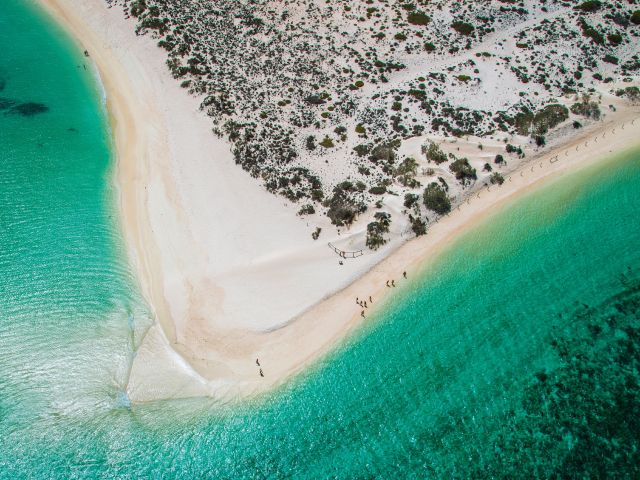
The name barely does it justice. Turquoise Bay is famous for its colour, but what truly sets it apart is how remote it feels despite its global reputation. It was the highest-ranked Australian beach on the 2025 World’s 50 Best Beaches list, coming 11th.
Sitting within Ningaloo Reef, this beach offers one of Australia’s best drift snorkelling experiences straight from the shore. Coral gardens, turtles and reef sharks are all part of the underwater scenery, with the vast outback stretching endlessly behind you.
Hellfire Bay, Cape Le Grand National Park, WA
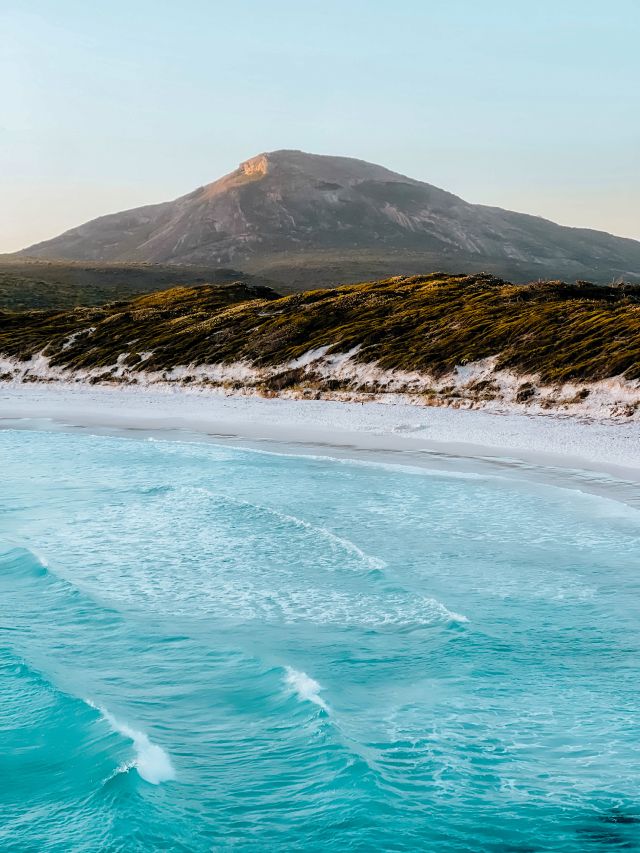
Cape Le Grand National Park is known for its postcard perfection, yet Hellfire Bay somehow remains under the radar. One of Australia’s prettiest white sand beaches, and protected from strong winds, its calm waters are framed by smooth granite headlands that glow pink at sunrise and sunset.
It is quieter than nearby Lucky Bay and just as beautiful, making it ideal for travellers who want the look without the crowds. Wildlife sightings are common and the sense of remoteness is constant.
Dolphin Beach, Yorke Peninsula, SA
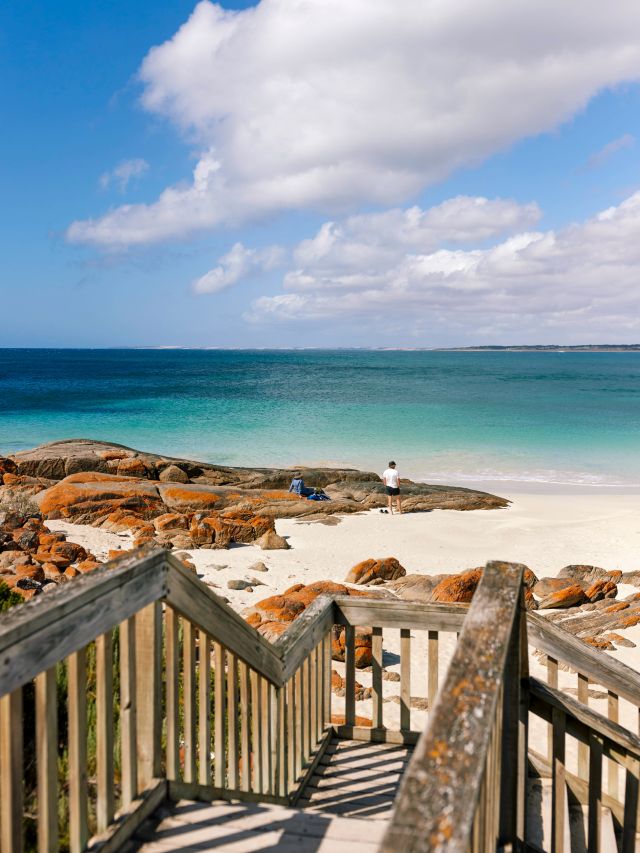
Yorke Peninsula’s Dhilba Guuranda-Innes National Park is packed with dramatic coastline, but Dolphin Beach stands out for its seclusion. Reaching it involves a hike, which filters out all but the most determined visitors.
What you get in return is a wild sweep of sand backed by cliffs and pounding surf. It is not a swimming beach, but it is unforgettable for coastal walks, photography and that rare feeling of having a national park beach entirely to yourself.
Nudey Beach, Fitzroy Island, Qld
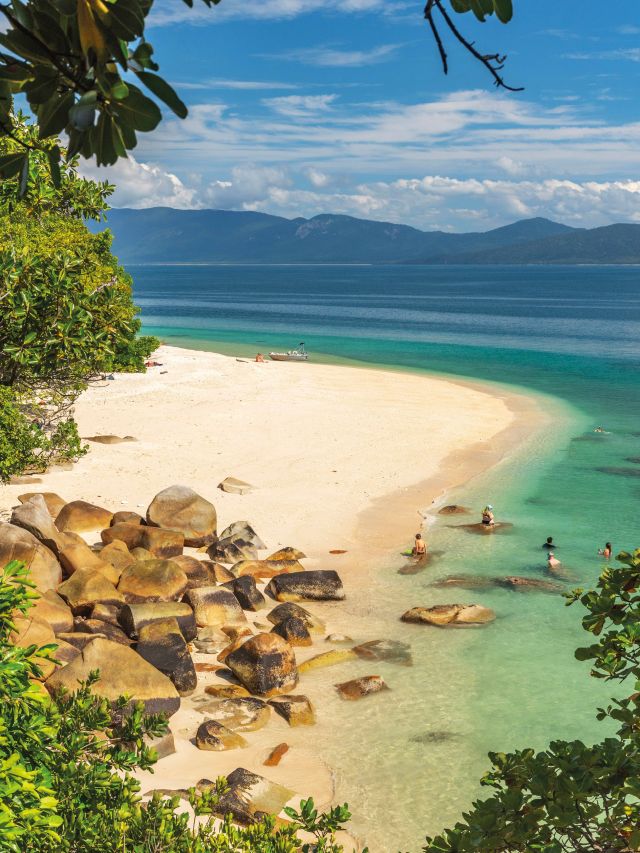
Despite the cheeky name, Nudey Beach is less about shock value and more about stunning tropical scenery. Located on Fitzroy Island off Cairns, this secret beach is accessible by ferry but feels a world away from the mainland.
Smooth boulders, clear water and fringing reef make it one of the most beautiful beaches in the tropics. Once you step away from the island’s main hub, the crowds thin quickly and the beach lives up to its reputation as a hidden gem.
Childers Cove, Great Ocean Road, Vic
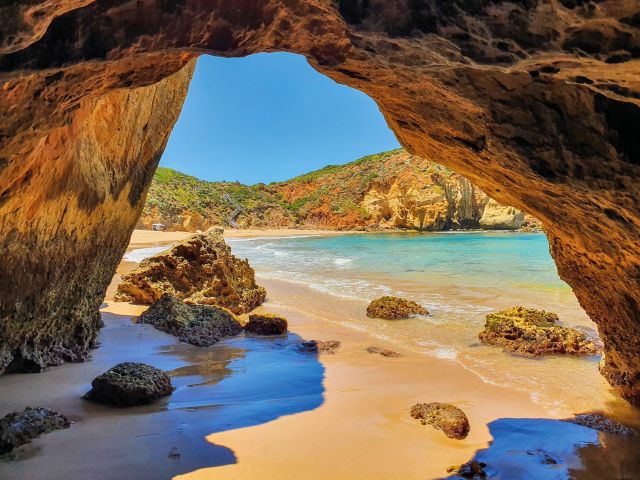
The Great Ocean Road is rarely described as remote, yet Childers Cove proves there are still secrets to be found. Tucked between the Twelve Apostles and Loch Ard Gorge, this secluded cove requires a steep walk down a narrow track.
At the bottom, you will find a sheltered crescent of sand framed by cliffs and sea stacks, often with no one else in sight. It is a reminder that even Australia’s most famous road trips still hold surprises for those willing to look beyond the main stops.
Landing Beach, Macquarie Island
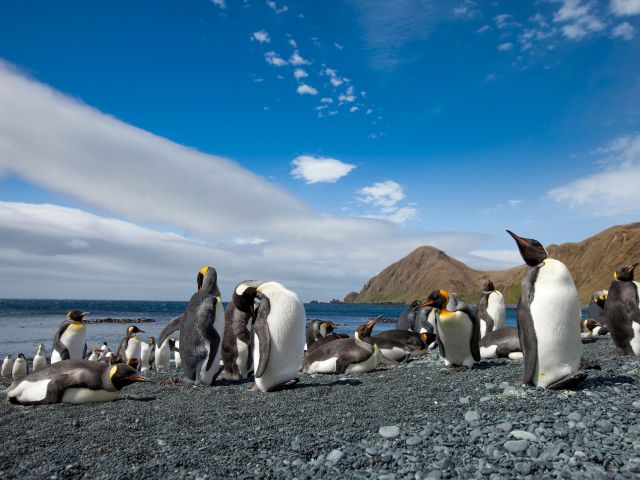
If remoteness had a definition, Landing Beach would be it. Located on subantarctic Macquarie Island, halfway between Tasmania and Antarctica, this beach is accessible only by expedition cruise.
There is no swimming here. Instead, visitors are met with black sand, roaring winds and vast colonies of king penguins, elephant seals and seabirds. It is raw, confronting and extraordinary, and easily one of the most isolated beaches Australia can claim. It has been governed as a part of Tasmania since 1880 and was inscribed as a UNESCO World Heritage site in 1997.