The news comes after lithium-ion batteries have caused a series of onboard fires.
The days of using power banks on flights will soon be behind us with Qantas and Virgin Australia set to implement a usage ban from this summer due to the risk of uncontrollable fires. It follows a host of airlines that have already enforced the rule, including Singapore Airlines, Emirates and Cathay Pacific.
What are the rules for power banks on planes?
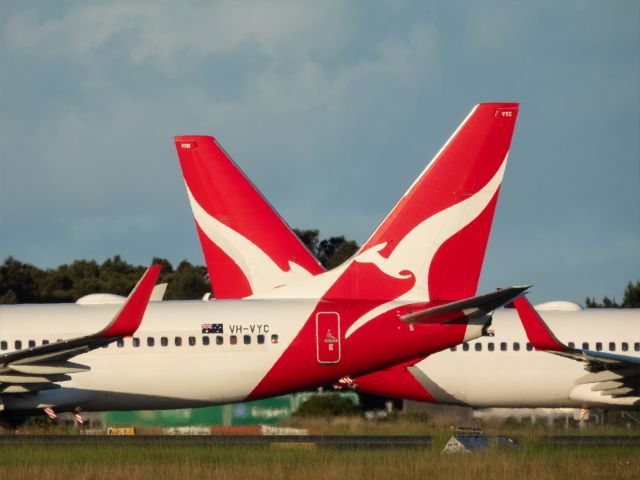
Qantas to ban the use of power banks on board its aircraft. (Image: Getty/SCM Jeans)
A portable power bank is a rechargeable battery pack carrying lithium-ion batteries.
From December 1 2025, power bank usage will be banned from Virgin Australia flights and from December 15 2025, they will be banned from Qantas and QantasLink flights.
Travellers will still be allowed to take power banks on planes, but the new rules stipulatee that they will need to be kept in sight and easily accessible – not in overhead bins or checked luggage – and cannot be used at any time on domestic and international flights.
Most aircraft are fitted with in-seat charging, but many airlines, including Qantas and Virgin Australia, still operate with aircraft that do not have USB-C ports. This means travellers will now need to bring a USB-A to USB-C cable or adapter to charge their handheld devices on the ports provided onboard.
Across both airlines, passengers are limited to carrying two power banks per person. Qantas enforces a maximum of 160 Wh per power bank, while Virgin Australia limits power banks to 100 Wh, with airline approval needing to be made to carry power banks with 100–160 Wh.
Why are these rules being enforced?
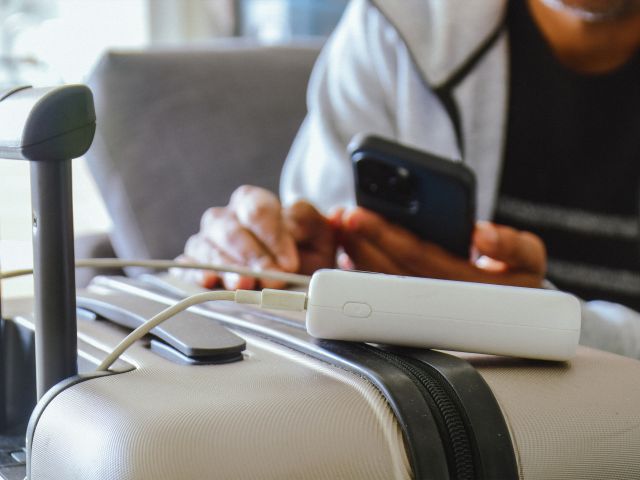
Power banks to be kept in sight and easily accessible. (Image: Getty/Debalina Ghosh)
Power banks are generally very safe to use but if they enter thermal runaway, whereby the battery cell short-circuits, and they overheat uncontrollably, it poses a serious fire risk.
The tightening of rules comes after a series of onboard fires occurred as a result of short-circuiting power banks. This past July in Australia, a fire was believed to have been started by a power bank in the overhead locker of a Virgin Australia aircraft flying from Sydney to Hobart. The crew successfully extinguished the fire, but one passenger was treated for smoke inhalation upon landing.
Keeping the batteries in sight – under the seat in front of you, in your seat pocket or on your seat/lap – allows the crew to be able to see smoke immediately and respond quickly and ensure passenger safety.
Want to see more stories from Australian Traveller in your Google search results?
Tick the box next to "Australian Traveller". That's it.
Rachael Thompson is a freelance travel journalist. With a background in design and travel media, Rachael is dedicated to curating content that is as much informational as it is beautiful. She began her career at Belle magazine, before taking up editorial roles at Homes to Love, Bed Threads and Australian Traveller/International Traveller. When she's not writing, editing or optimising content, Rachael enjoys exploring the city's newest restaurants, bars and hotels. Next on her Aussie travel wish list is Lord Howe Island.
Hard to reach and harder to forget, East Arnhem offers something rare in modern travel: the chance to slow down and experience Country on its own terms.
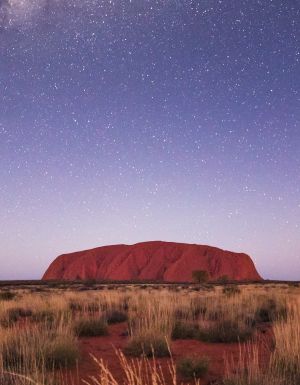
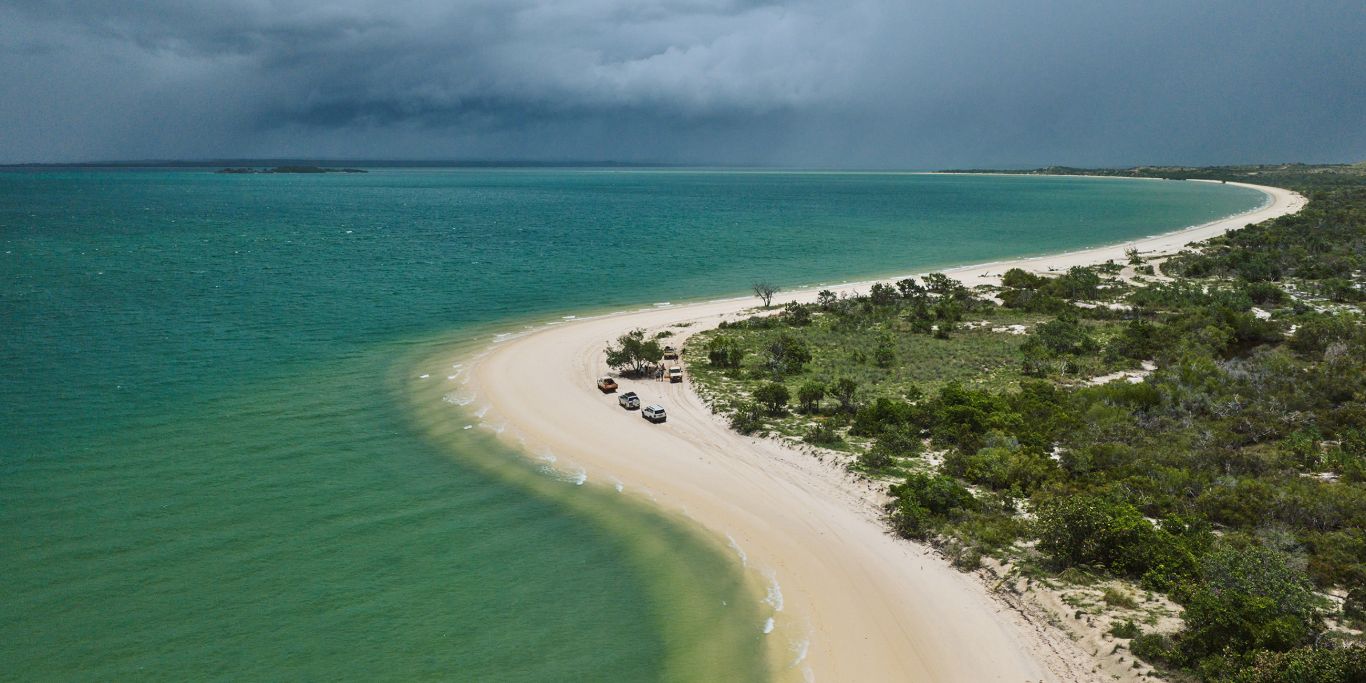
The sky feels bigger in East Arnhem. It stretches wide and uninterrupted above rouged earth, stringybark woodland and beaches so empty they seem to belong to another era. The coastline curves for kilometres without a footprint and the horizon runs on forever.
For comedian Lou Wall, the scale of the place was the first thing that hit them.
“The sheer openness,” they say. “The sky feels infinite and the land stretches out endlessly. It’s pretty breathtaking visually.”
But the physical landscape is only part of the story. The real reward isn’t only the scenery but the shift in perspective the journey brings. Visitors stop trying to tick off the destination and a real engagement takes over.
“It made me never want to travel again,” Wall jokes. “In that I never wanted to leave East Arnhem.”
Getting there
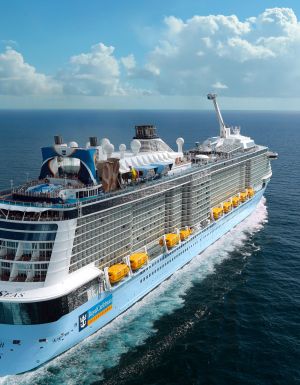
Sail along the remote coastline on an expedition cruise.
Reaching East Arnhem is part of the adventure. Travellers typically fly into Gove Airport near Nhulunbuy via Darwin or Cairns, or arrive by expedition cruise along the remote coastline. Others make the journey overland along rutted dirt roads that cut through East Arnhem’s small pockets of monsoon forest.
However you arrive, there’s a distinct feeling of crossing into somewhere different. Permits are required to visit the region, reflecting the fact that this is Yolŋu land where communities and traditional owners maintain deep cultural connections to Country.
The extra planning becomes part of the experience. By the time visitors arrive, they understand they’re entering a place not just of respect, but also patience and curiosity.
At one with nature
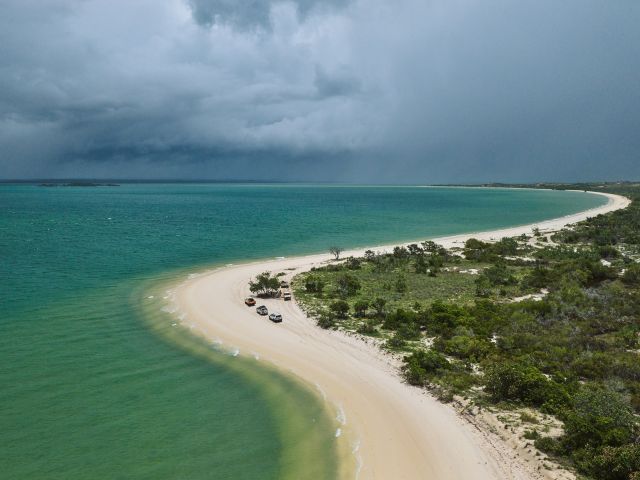
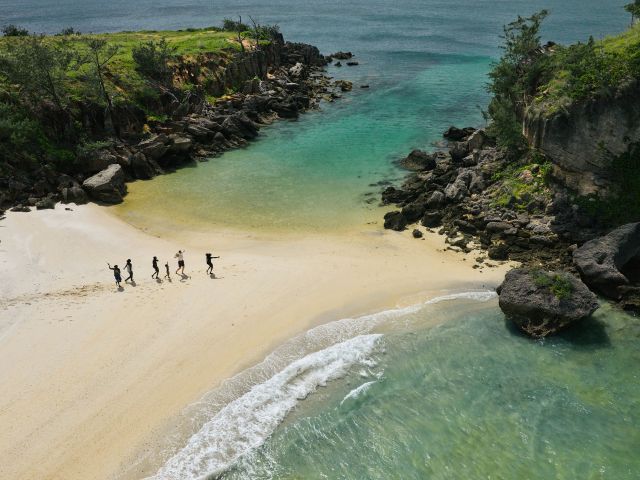
East Arnhem’slandscapes leave a strong imprint. For Wall, one place in particular still lingers in their memory: Ngalarrkpuy, also known as Lonely Beach, near Bawaka Homeland.
“I genuinely felt like I was living inside an Instagram filter,” they say. “One of the most stunning feats of nature I’ve ever seen. The water was so clear I swear I could see even the fish smiling.”
Across the region, natural experiences unfold at a slower pace. Fishing, beachcombing and island hopping reveal the rhythm of the coastline. The tides shape daily life and the vastness of the landscape makes even simple moments feel downright cinematic.
For visitors with limited time, Wall says the Bawaka Homeland experience is unmissable.
“I just left and I’m already planning when I can get back there.”
The sense of remoteness is part of the appeal. In a country where many beaches are crowded and well-trodden, East Arnhem’s coastline still feels wonderfully wild.
Immersing in local culture
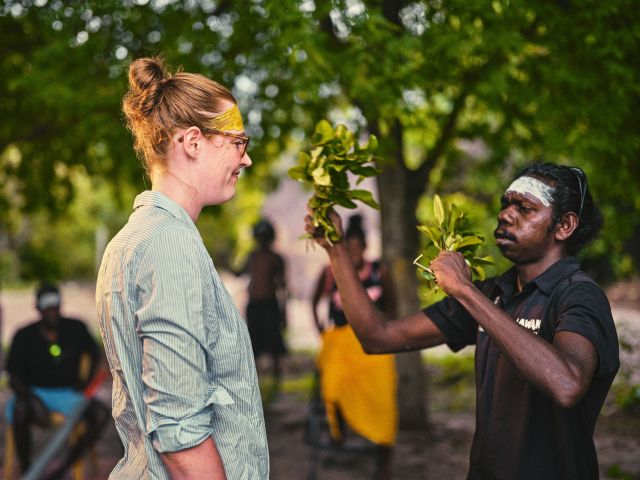
Experience authentic moments with the locals.
Culture is woven through every experience in East Arnhem. Visitors have the opportunity to spend time on Country with Yolŋu guides and knowledge holders who share stories and traditions that have been passed down for generations.
For Wall, one of the most powerful moments came during a conversation with a Yolŋu elder.
“I got to meet a traditional elder, Mayalil, in Nhulunbuy,” they say. “Listening to her talk about her home made the land feel alive in ways I couldn’t have imagined.”
The region is also home to internationally recognised Aboriginal art centres where artists shape works deeply connected to land and family knowledge.
Music carries the same cultural energy. East Arnhem has produced globally recognised artists such as King Stingray and Baker Boy, blending Yolŋu language, storytelling and contemporary sound.
Wall experienced this musical spirit first-hand.
“A jam session around the fire was it for me,” they say. “Letting the deep joy and history of their music wash over me…and meeting a few of the King Stingray musicians was unreal.”
These moments of human connection often become the most memorable part of a visit.
Spotting local wildlife
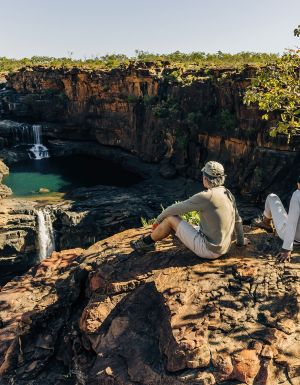
Step into a world where nature reigns.
The wildlife of East Arnhem adds another layer to the experience. The region is home to an extraordinary range of animals, from waterbirds and turtles to dugongs, dolphins and the formidable saltwater crocodile.
Wall admits they didn’t actually spot a croc during their visit.
“Devastatingly, I didn’t see one,” they laugh. “But with all the stories from the locals I definitely gained a healthy respect for caution.”
Some of the most memorable wildlife encounters can be surprisingly small., At Banubanu Beach Retreat on Bremer Island, Wall remembers walking along the beach one morning and watching it come alive.
“As you walk through the sand you see hundreds of crabs scurrying into their holes as you pass by,” they say. “Such a small thing, but it was completely magical.”
Moments like this reveal the quieter rhythms of East Arnhem, where even the smallest creatures seem to play a part in the landscape.
Visitors who make the journey soon learn the most important travel tip of all.
“Go in open-minded with a sense of curiosity,” Wall says. “Be prepared to ditch your plans. The land and the locals will guide you on an adventure no spreadsheets could ever compete with.”
And most importantly, they add, don’t rush.
“The land and people deserve your time and attention. You’ll be all the better for slowing down.”
For more information on visiting East Arnhem, head to eastarnhem.com.au.