Where to swim with whales around Australia

hero media
Here is our guide to the best places to swim with southern right whales, dwarf minke whales, humpbacks and orca whales around Australia.

Swimming with whales has become a popular activity in Australia as the majestic mammals make their way up and down the Australian coastline during their annual migration. Here are the best places to take the plunge and swim with whales around Australia.

Swim with whales off Jervis Bay
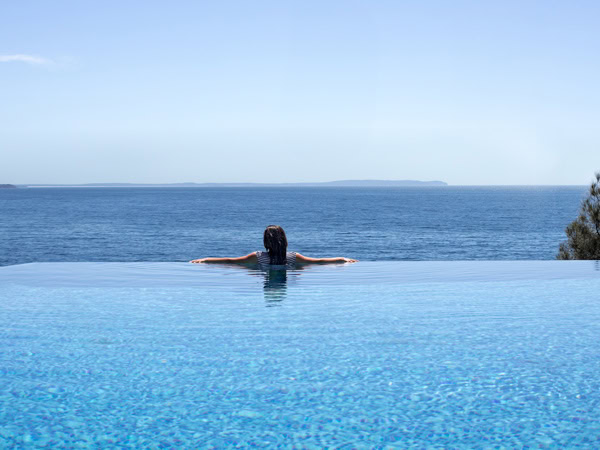
a woman relaxing by tthe edge of an infinity pool at Bannisters By the Sea
Spot whales from the infinity pool at Bannisters By the Sea.

You don’t have to swim with whales while on the NSW South Coast. You can clock them, cocktail in hand, by the pool bar when staying at Bannisters By the Sea .

But those feeling a tad more adventurous should book a Mollymook Migration package during their stay at the boutique South Coast property.

As part of the package, the Mollymook hotel has partnered with Woebegone Free Dive to offer a watery wonderland escape that includes a swim with whales. Dylan Boag and Lara Hindmarsh, of Woebegone Free Dive, are passionate about conservation, sustainability, ethical tourism and marine life.

Jervis Bay is halfway along the 5000-kilometre-long migration route and the whales often pull in for a pitstop to rest and play with newborn whales. It’s because of this that Jervis Bay is one of the best locations in Australia to see whales.
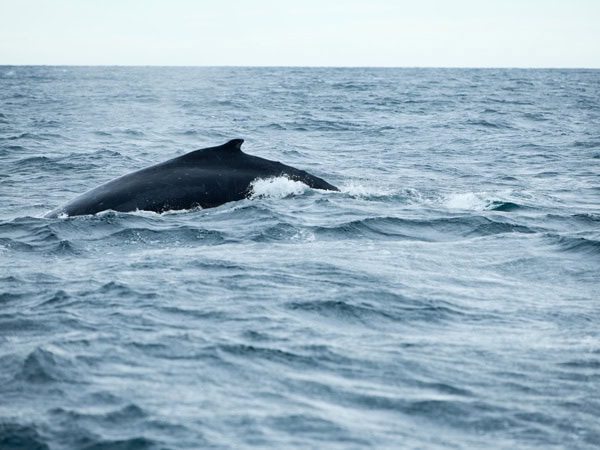
a whale spotted along Jervis Bay
Swim with whales near Jervis Bay. (Image: Destination NSW)

Best time to go: June to October
Eco credentials: Woebegone Free Dive takes its responsibilities with the environment seriously and tries to minimise its impact. The tour group operates a community clean-up event once a month and hosts a charity event for to raise funds for South Coast wildlife rescue Float 4 Wildlife. There’s a strict ‘no touch and no harassment’ policy during the tours. No single-use plastic items are onboard and lunch is plant-based.

Swim with whales in Shoalhaven
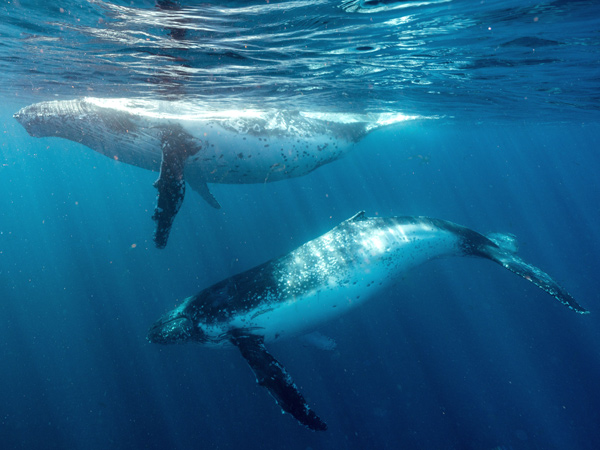
humpback whales migrating off the south coast of NSW
Humpback whales migrate off the Shoalhaven coast. (Image: Jordan Robins)

Between May and November, tens of thousands of humpback whales migrate from Antarctica through the stunning turquoise waters off the Shoalhaven coast. From winter through to spring, they travel to warmer northern waters to give birth and nurse their calves. Seeing them swim alongside their newborn calves is a truly unforgettable experience.

Join one of Dive Jervis Bay ’s small group tours and jump in the waters of Jervis Bay Marine Park, located on the Humpback Highway. This thrilling 4–6 hour adventure gets you up close to gentle giants and playful seals, while a local expert shares the history of whaling in Jervis Bay, current conservation efforts and fascinating facts about whales to enrich the experience.

If you want to combine whale watching and fishing, book a tour with Ulladulla Fishing Charters , which offers excellent whale watching opportunities from the pristine waters off Ulladulla.

Best time to go: May to November

Eco credentials: Dive Jervis Bay is Sea Shepherd approved and operates under strict NSW permits. They follow regulated, non-invasive whale interaction practices. Their tours are small-group and education-focused, with a strong emphasis on marine conservation and wildlife respect.

Swim with humpbacks off Hervey Bay
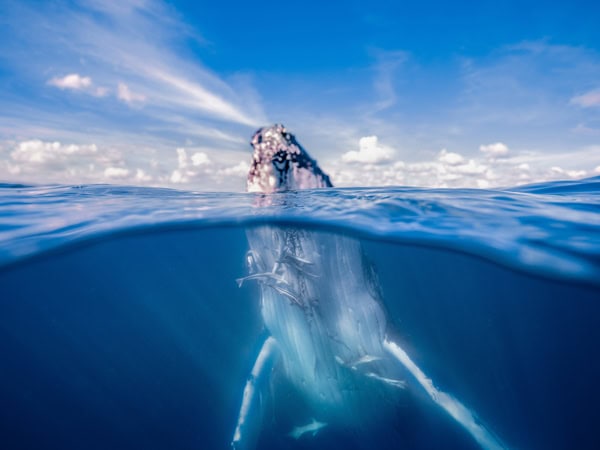
a humpback whale submerged underwater with its head poking out of the water at Hervey Bay
Hervey Bay is a haven for humpback whales. (Image: Tourism and Events Queensland)

The waterways around Hervey Bay are one of the best places to swim with whales in Australia. It wasn’t on a whim that the World Cetacean Alliance named Hervey Bay as the world’s first Whale Heritage Site at the World Whale Conference in 2019.

The Fraser Coast region jumps out as a haven for humpback whales because of its unique geography and ecology. In fact, it’s the only place on Earth that provides landfall between the feeding grounds and the breeding grounds with K’gari on one side and the Queensland coastline on the other.
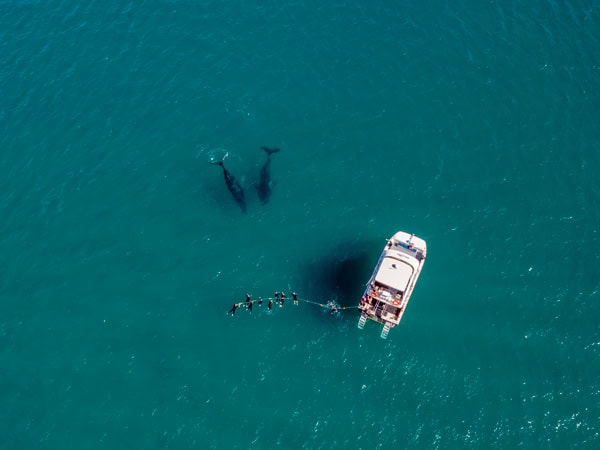
an aerial view of a boat during a whale-watching tour off the coast of Hervey Bay
Embark on a whale-watching tour off Hervey Bay. (Image: Tourism and Events Queensland)

Dive Hervey Bay operates the region’s only dedicated ‘swim with whales’ experience and is one of the best places in the world to see humpback whales.
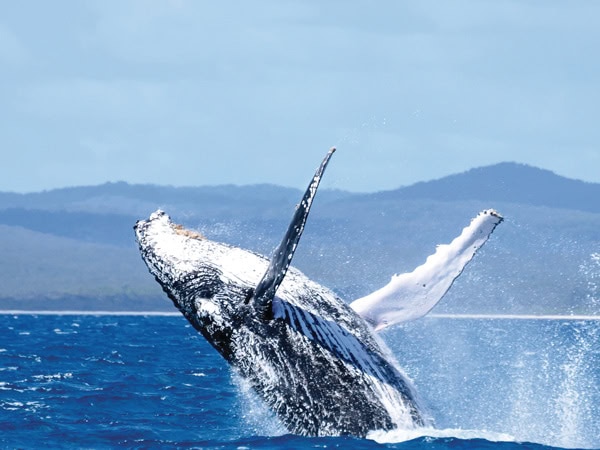
a humpback whale flipping above the water at Hervey Bay
See humpback whales up close. (Image: Tourism and Events Queensland)

Best time to go: Mid-July to late October.
Eco credentials: Guest numbers are strictly limited and the tour operator’s core philosophy is to interact with whales on their terms and to approach a whale at a 100-metre distance.

Swim with humpback whales off K’gari
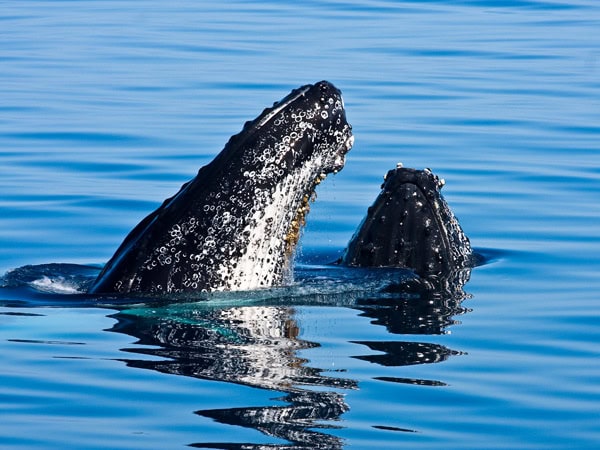
two humpback whales poking their head out of the water
Spy on K’gari’s majestic giants. (Image: Michael Dawes)

The world’s largest sand island draws visitors to its shores for a multitude of reasons.

Now, guests staying at the Kingfisher Bay Resort can board a tour from the jetty for a jaunt out to the sheltered waters of Platypus Bay for the chance to frolic in the water with humpback whales.

Hervey Bay Whale Watch  has partnered with Kingfisher Bay Resort to offer a package aimed at those who want to slide in the water with the whales .
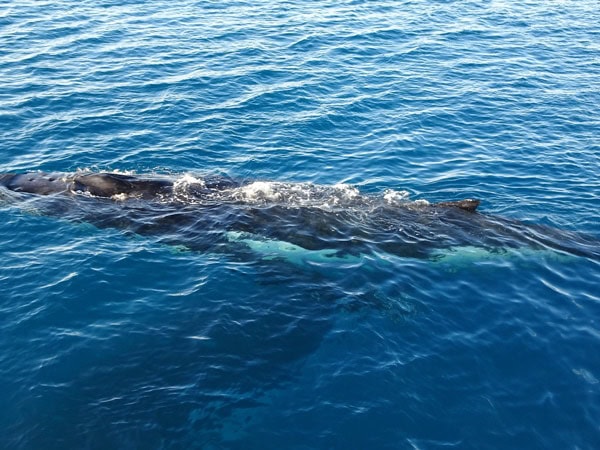
a humpback whale swimming underwater
Have the chance to frolic in the water with humpback whales. (Image: denisbin)

Best time to go: Between July and early September.
Eco credentials: The vessel used for the tours is purpose-built for whale watching, is wheelchair-friendly and has a cap on numbers. The whale swims are at the whim of the whales.

Swim with minke whales off Port Douglas
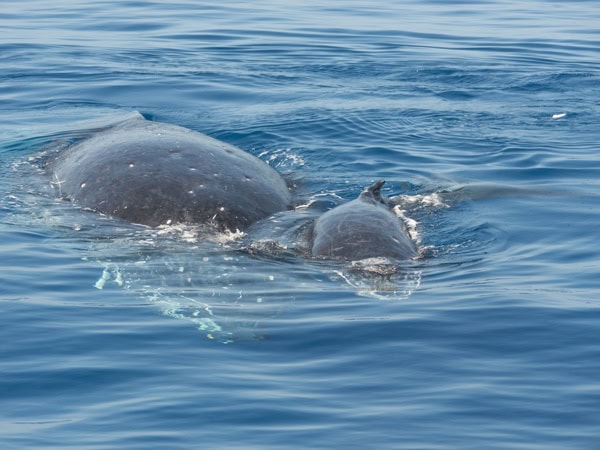
whales slightly submerged in the water at Port Douglas
The Ribbon Reef region off Port Douglas is the only place in Australia to swim with dwarf minke whales. (Image: Tourism Australia)

The Ribbon Reef region off Port Douglas is the only place in Australia to swim with dwarf minke whales. And according to scientist Dr Alastair Birtles it’s one of the longest wildlife interactions with whales on offer.

The Ribbon Reef region, some 240 kilometres north of Cairns, attracts up to 80 minke whales during the season and the whales come very close as they are ‘extraordinarily curious’ says Dr Birtles.

The tourism vessels licensed to conduct swims with the whales include Mike Ball Dive Expeditions , Silverseries , Pro Dive  and the Spirit of Freedom .

Best time to go: June and July.
Eco credentials: Chasing whales is outlawed. Interactions are decided by the whales. Tours allow visitors to contribute to ongoing research and conservation efforts to protect them.

Swim with humpback whales on the Sunshine Coast
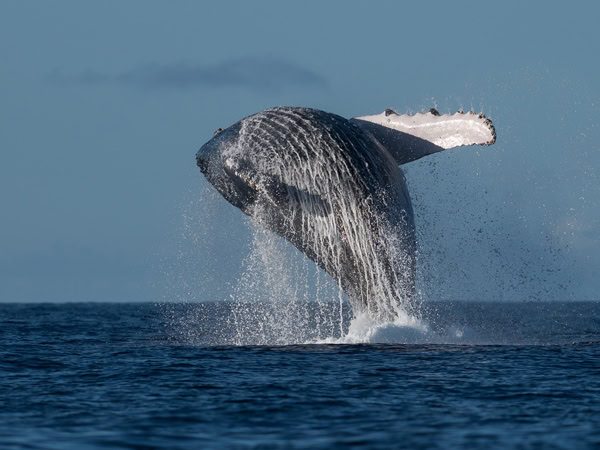
a whale jumping out of the water, Sunreef Mooloolaba
Spot these gentle giants from the Sunreef Mooloolaba boat.

Humpback whales are drawn to the nutrient-rich waters off Mooloolaba during their annual migration. And now, Sunreef Mooloolaba offers visitors to the Sunshine Coast the chance to swim with these majestic marine creatures .

Snorkellers are given the opportunity to hold a rope off the back of the Sunreef Mooloolaba boat to eyeball the whales as they swim along the Pacific (Ocean) highway.

If swimming with whales is not your thing, you can still enjoy spotting the whales throughout the season. The pioneering Swim with Whales experience celebrated its 10th anniversary in 2024.
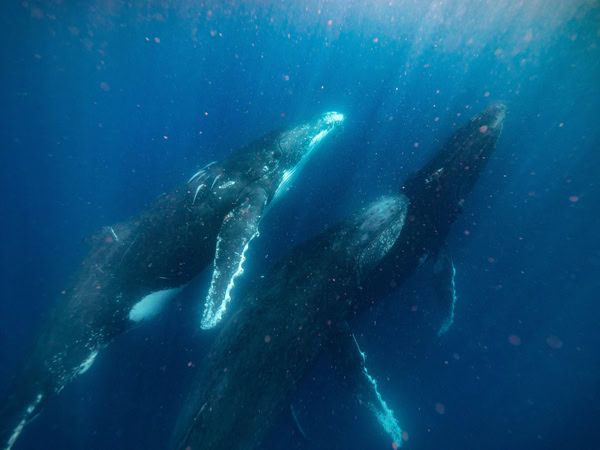
a whale swimming underwater at the Sunshine Coast
The humpback whale migration on the Sunshine Coast starts in early June. (Image: Tourism Australia)

Best time to go: From July to mid-October
Eco credentials: The boat operates under a strict code of conduct to protect both whales and swimmers in accordance with the Australian National Guidelines for whale and dolphin watching.

Swim with humpback whales (or whale sharks) on WA’s Coral Coast
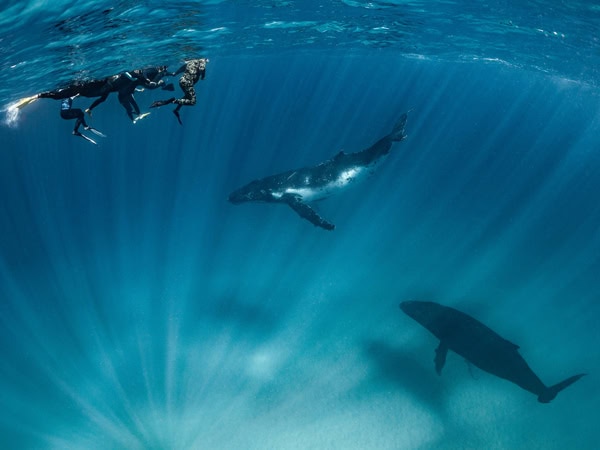
divers as seen above humpback whales underwater
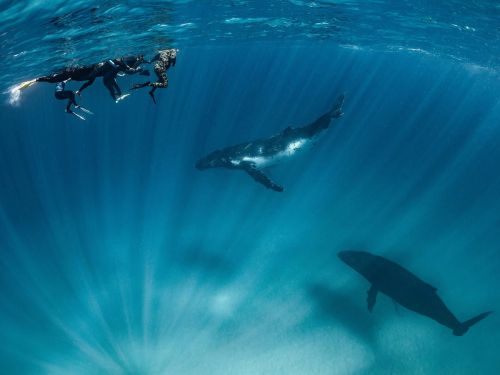
Swim with whales in Ningaloo. (Image: Brooke Pyke Photography and Live Ningaloo)

Ningaloo Marine Park is the only place in Western Australia where you can have an in-water interaction with humpbacks on a tour.

An estimated 40,000 humpback whales embark on the annual migration along the coastline each year which means there’s a 78 per cent in-water interaction success rate.

In addition to the in-water interaction tours, visitors can embark on a whale-watching tour off the coast from Exmouth and Coral Bay on the Coral Coast.

Best of all: humpback whale in-water interaction includes onboard education from dive instructors, many of whom are marine biologists or scientists.
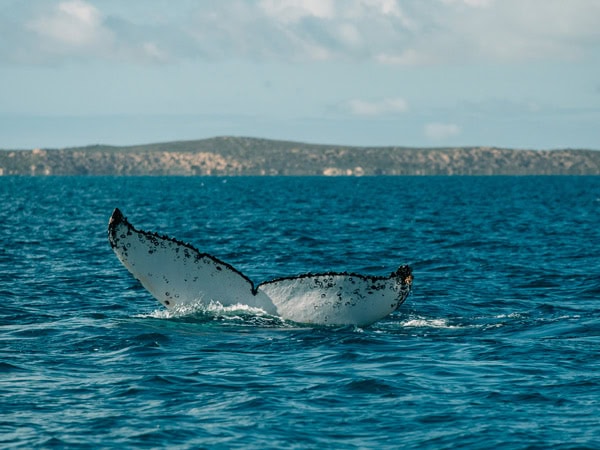
a tail of a humpback whale sticking out of the water in Ningaloo
Witness majestic whales. (Image: Tourism Western Australia)

While a whale shark is not a whale but a filter-feeding shark, it’s also possible to swim with these gentle giants off the WA coast.

Check out Ningaloo Whaleshark Swim , 3 Islands Shark Dive , Aussie Marine Adventures , Ningaloo Discovery , Ocean Eco Adventures , Coral Bay Ecotours , Live Ningaloo , Exmouth Dive and Whalesharks Ningaloo  and Ningaloo Blue Dive .
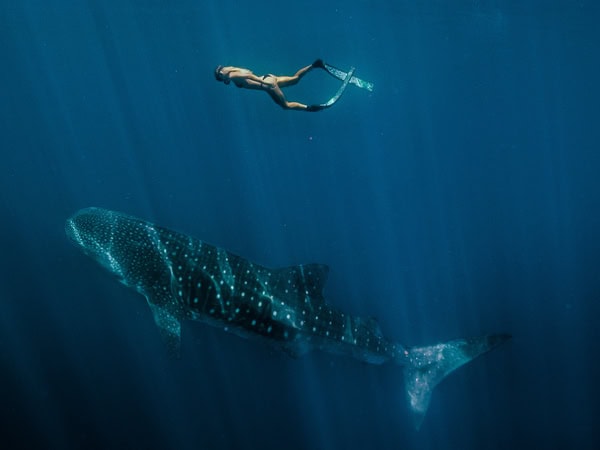
a freediver swimming with a whale shark underwater in Ningaloo
Go freediving with whale sharks in Ningaloo. (Image: Tourism Western Australia)

Best time to go: Between July and October
Eco credentials: The humpback whale and whale shark interaction guidelines have been modelled on the world’s best practice for whale shark swim tours to have minimal impact on the whales. Swimmers are not allowed near mothers and calves.

Carla Grossetti
Carla Grossetti avoided accruing a HECS debt by accepting a cadetship with News Corp. at the age of 18. After completing her cadetship at The Cairns Post Carla moved south to accept a position at The Canberra Times before heading off on a jaunt around Canada, the US, Mexico and Central America. During her career as a journalist, Carla has successfully combined her two loves – of writing and travel – and has more than two decades experience switch-footing between digital and print media. Carla’s CV also includes stints at delicious., The Sydney Morning Herald, and The Australian, where she specialises in food and travel. Carla also based herself in the UK where she worked at Conde Nast Traveller, and The Sunday Times’ Travel section before accepting a fulltime role as part of the pioneering digital team at The Guardian UK. Carla and has been freelancing for Australian Traveller for more than a decade, where she works as both a writer and a sub editor.
See all articles
hero media

8 Northern Territory secrets the locals don’t want you to know

    Lee MylneBy Lee Mylne
    Summer transforms the Northern Territory into a lush paradise of colour and life, as a visit during the ‘low-season’ reveals secrets the locals willingly share.

    Waterlilies bloom, floodplains are alive with birdlife, waterfalls are gushing, and everywhere the green is dazzling. Summer in the Top End and the Red Centre is a kaleidoscope of unexpected wonders that delight and surprise visitors. Of course, the locals know only too well that the Northern Territory low season is often the best time to see and experience this amazing part of Australia.

    Here are some of the reasons why savvy travellers – avoiding the crowds – are discovering a new dimension to the Territory. Remember that you’ll need a Parks Pass to visit national parks.

    1. Take a dip in the Florence Falls waterhole

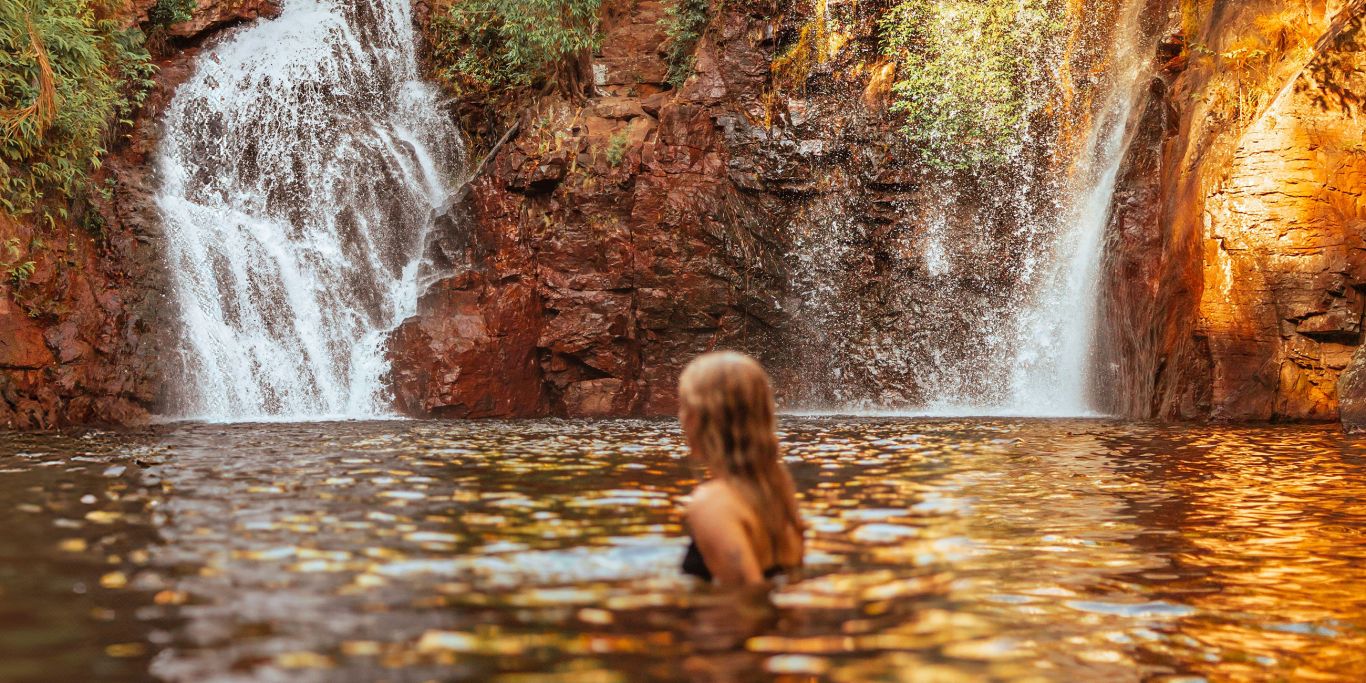
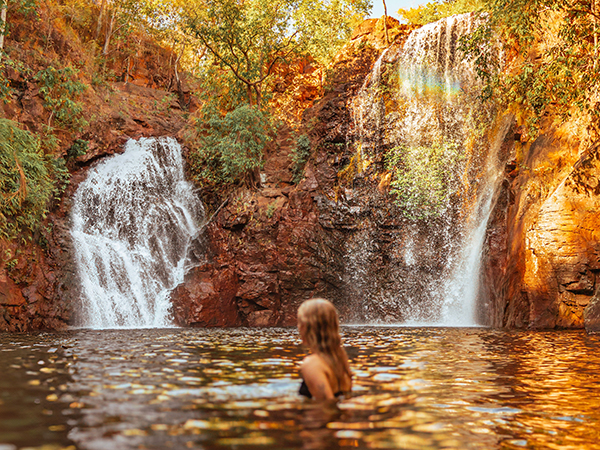
    Wander through savanna woodland and monsoon forest to discover the perfect place to cool off – the waterhole at the base of spectacular Florence Falls in the magnificent Litchfield National Park , just 90 minutes’ drive from Darwin. The falls flow year-round but are most spectacular during the summer. Camping is available nearby but bookings are essential and must be made online before you visit.

    Surrounded by lush forest, a woman cools off in Florence Falls, just one of many incredible things to do in the Northern Territory.
    Cool off beneath the cascading waters of Florence Falls. (Image: Joshua Griffin)

    2. Wind down at Buley Rock Hole

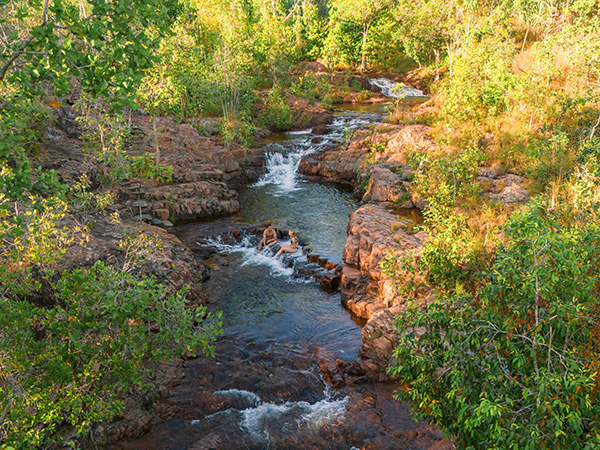
    Another popular local swimming spot in Litchfield National Park is Buley Rock Hole , open year-round. This is a great place to wind down after exploring everything the park has to offer, including towering termite mounds. Wade through the rock pools, soak up the scenic bush or just lie back and relax as the cool water rolls over you.

    Buley Rockhole, Litchfield National Park
    Let the cool water wash over you. (Image: Tourism Australia)

    3. Tour the Tiwi Islands

    The Tiwi Islands , a scenic 80km flight from Darwin across the narrow Clarence and Dundas Straits, reveal a different side to the Territory, with their own distinctive culture. Take a day tour with Tiwi by Design to visit Bathurst Island and learn about creation stories, the Mission days, World War II history and the islanders’ obsession with AFL!

    Take a ‘behind-the-scenes’ tour of Tiwi Design’s screen-printing workshop and pick up a great souvenir in the form of art. Choose from contemporary or traditional Tiwi designs and a wide range of work including carvings, paintings, pottery, printmaking, bark paintings and tunga (bark baskets).

    A creative moment shared inside Tiwi Design’s screen-printing space.
    Take a peek inside Tiwi Design’s screen-printing studio. (Image: Tourism NT)

    4. Dine in Darwin

    Foodies are spoilt for choice in multi-cultural Darwin. Try Sri Lankan flavours at Ella by Minoli, where Masterchef contestant Minoli De Silva creates delectable dishes, or head to Charlie’s of Darwin for gin-tasting, cocktails and more. Bowls of fragrant laksa, excellent coffee, fresh vegetables and authentic crafts are all part of a weekend visit to Darwin’s Parap Markets , Rapid Creek Markets and the Nightcliff Markets .

    Prefer to catch your own dinner? Book a Top End fishing charter to bag a barramundi – and from October register for the annual Million Dollar Fish competition. Hooking one of the tagged barra released each year in waterways across the Territory could win you up to $1 million.

    A bowl of Laksa.
    Eat your way through multicultural Darwin. (Image: Tourism NT)

    5. Up close with Uluṟu

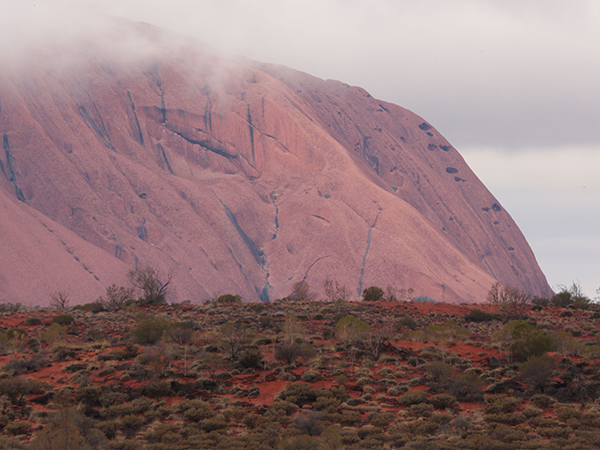
    The magnificent monolith Uluṟu is even more magical when the summer rains fall. When it rains on The Rock, the locals come out to watch – consider yourself lucky if that happens when you visit. Waterfalls cascading off the sides of Uluṟu is a sight that relatively few tourists see.

    There’s so much to do at Uluṟu, from guided walks to learn the stories of the Aṉangu people and the ancient landscape they live in to scenic flights for a bird’s-eye view or a leisurely walk around the base of Uluṟu. Book ahead to spend the evening wandering through the Field of Light installation by Bruce Munro.

    A closer look at Uluru and uncover its ancient stories, sacred sites, and striking natural beauty – one of the most iconic things to do in the Northern Territory.
    Discover the details that make Uluṟu truly sacred. (Image: Tourism NT)

    6. Drive the Red Centre Way

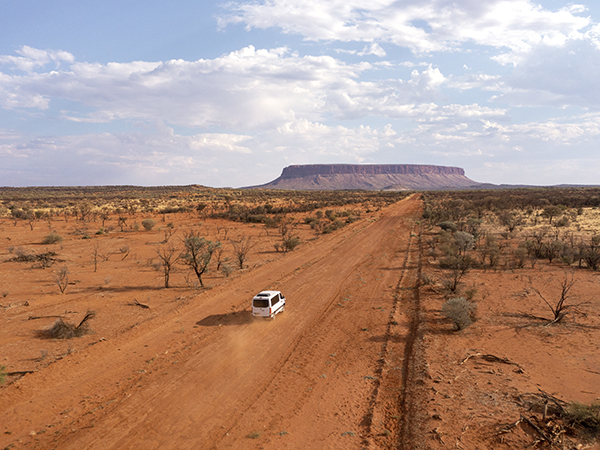
    From Alice Springs, take an epic road trip along the Red Centre Way, taking in Uluru and Watarrka National Park, home to the magnificent Kings Canyon. Allow at least a week to drive through the red heart of Australia by 4WD, a little longer on the sealed road by 2WD vehicle, travelling through ochre deserts, palm-lined valleys and dramatic gorges. Stop off at waterholes for a refreshing dip along the way.

    Kings Canyon offers hiking options for all levels of fitness, from the three-hour Rim Walk atop soaring sandstone walls to the gentler Kings Creek Walk. Either way, you’ll have breathtaking views.

    SEIT Outback Australia is a small group touring specialist offering exciting, adventurous, exclusive and specialised iconic, pioneering and cultural touring in the Red Centre of Australia, giving you the time to learn, absorb and relax in the heart of Australia.<br /><br />This innovative tour company focuses on providing clients with the ultimate interpretive touring experiences with a range of products and customised touring itineraries for small groups and bespoke private charters.<br /><br />The company bases its philosophies from the key words of Spirit, Emotion, Intellect and Task (SEIT).
    Drive through Australia’s heart. (Image: Outback Australia Tours)

    7. Take a walk at Kata Tjuṯa

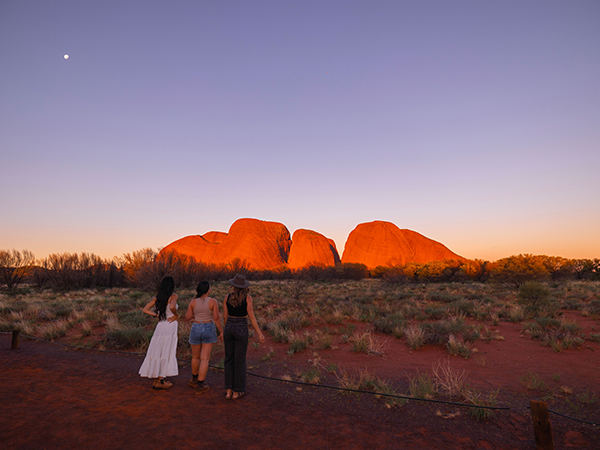
    Head out early to tackle the Valley of the Winds Walk at Kata Tjuṯa . This natural wonder, also known as The Olgas, is a labyrinth of soaring ochre domes that glow golden at sunrise and sunset (the walk may be closed during the middle of the day as temperatures rise).

    Walking trails range from easy to longer, more difficult tracks. At the Kata Tjuṯa dune viewing area, take in the panoramic view of the domes. The longest of the trails is the Valley of the Winds Walk, a 7.4km circuit that winds between the domes and through creek beds. It’s moderately difficult and steep in places, but offers stunning views – and occasional encounters with kangaroos.

    The Valley of the Winds Walk at Kata Tjuta is one of the most awe-inspiring things to do in the Northern Territory, especially at sunrise when the domes glow golden.
    Step into the golden light of Kata Tjuṯa. (Image: Tourism NT)

    8. Explore Tjoritja/West MacDonnell Ranges

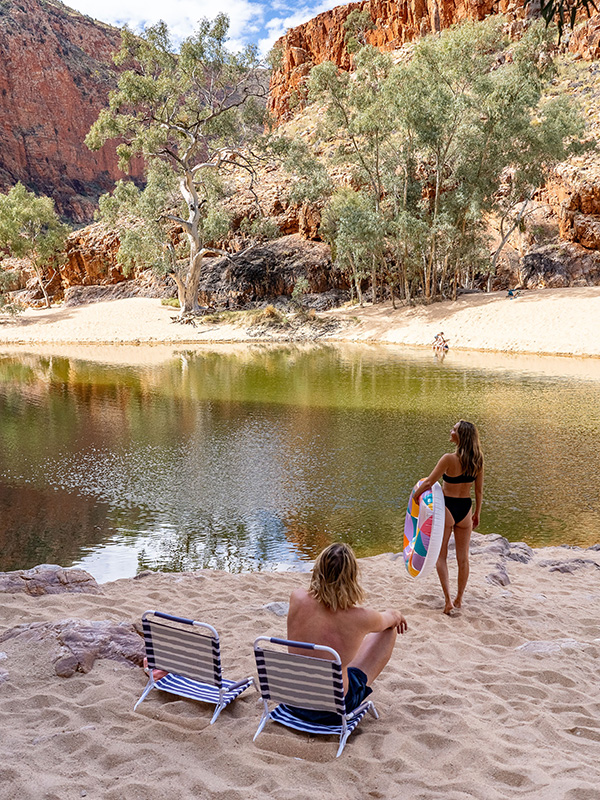
    Tjoritja/West MacDonnell National Park lies 135km west of Alice Springs, with many fascinating natural features to beguile visitors. The ‘West Macs’ formations include chasms, gorges and waterholes – take your swimsuit for a dip at Ormiston Gorge waterhole, open year-round. The Ormiston Pound Walk is a three to four-hour circuit that leaves from the visitor centre and loops back along the gorge via the main waterhole. Other places of interest in the park include Simpsons Gap , Standley Chasm , Ellery Creek Big Hole and Glen Helen .

    Soaking in the serenity of Ormiston Gorge, these two travellers enjoy one of the most scenic things to do in the Northern Territory.
    Take the plunge at Ormiston Gorge waterhole. (Image: Joshua Griffin Litchfield)

    Start planning the NT road trip of a lifetime at northernterritory.com