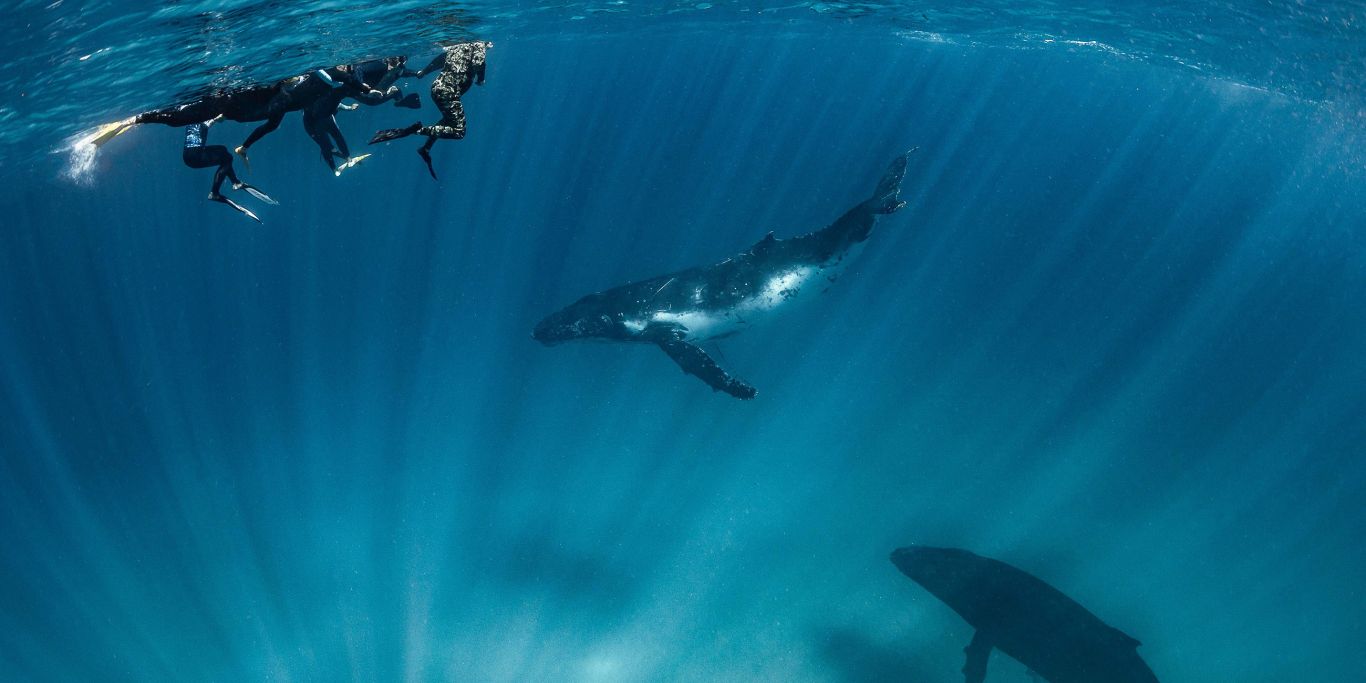

Here is our guide to the best places to swim with southern right whales, dwarf minke whales, humpbacks and orca whales around Australia.
Swimming with whales has become a popular activity in Australia as the majestic mammals make their way up and down the Australian coastline during their annual migration. Here are the best places to take the plunge and swim with whales around Australia.
Swim with whales off Jervis Bay
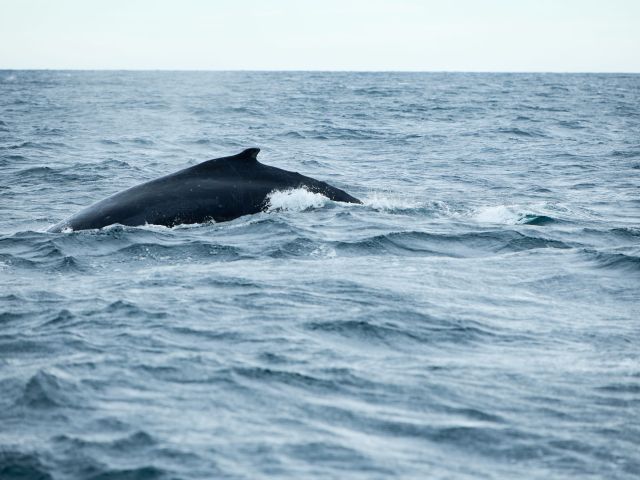
You don’t have to swim with whales while on the NSW South Coast. You can clock them, cocktail in hand, by the pool bar when staying at Bannisters By the Sea.
But those feeling a tad more adventurous should book a Mollymook Migration package during their stay at the boutique South Coast property.
As part of the package, the Mollymook hotel has partnered with Woebegone Free Dive to offer a watery wonderland escape that includes a swim with whales. Dylan Boag and Lara Hindmarsh, of Woebegone Free Dive, are passionate about conservation, sustainability, ethical tourism and marine life.
Jervis Bay is halfway along the 5000-kilometre-long migration route and the whales often pull in for a pitstop to rest and play with newborn whales. It’s because of this that Jervis Bay is one of the best locations in Australia to see whales.
Best time to go: June to October
Eco credentials: Woebegone Free Dive takes its responsibilities with the environment seriously and tries to minimise its impact. The tour group operates a community clean-up event once a month and hosts a charity event for to raise funds for South Coast wildlife rescue Float 4 Wildlife. There’s a strict ‘no touch and no harassment’ policy during the tours. No single-use plastic items are onboard and lunch is plant-based.
Swim with whales in Shoalhaven
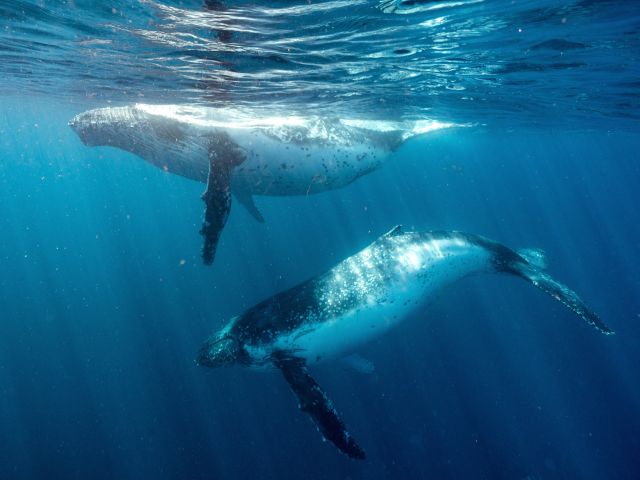
Between May and November, tens of thousands of humpback whales migrate from Antarctica through the stunning turquoise waters off the Shoalhaven coast. From winter through to spring, they travel to warmer northern waters to give birth and nurse their calves. Seeing them swim alongside their newborn calves is a truly unforgettable experience.
Join one of Dive Jervis Bay’s small group tours and jump in the waters of Jervis Bay Marine Park, located on the Humpback Highway. This thrilling 4–6 hour adventure gets you up close to gentle giants and playful seals, while a local expert shares the history of whaling in Jervis Bay, current conservation efforts and fascinating facts about whales to enrich the experience.
If you want to combine whale watching and fishing, book a tour with Ulladulla Fishing Charters, which offers excellent whale watching opportunities from the pristine waters off Ulladulla.
Best time to go: May to November
Eco credentials: Dive Jervis Bay is Sea Shepherd approved and operates under strict NSW permits. They follow regulated, non-invasive whale interaction practices. Their tours are small-group and education-focused, with a strong emphasis on marine conservation and wildlife respect.
Swim with humpbacks off Hervey Bay
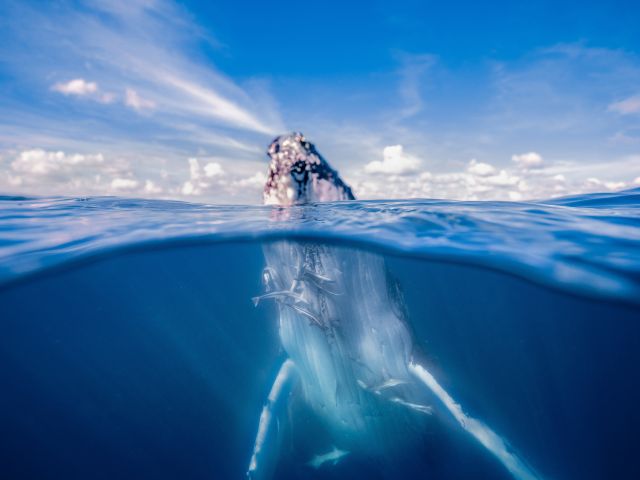
The waterways around Hervey Bay are one of the best places to swim with whales in Australia. It wasn’t on a whim that the World Cetacean Alliance named Hervey Bay as the world’s first Whale Heritage Site at the World Whale Conference in 2019.
The Fraser Coast region jumps out as a haven for humpback whales because of its unique geography and ecology. In fact, it’s the only place on Earth that provides landfall between the feeding grounds and the breeding grounds with K’gari on one side and the Queensland coastline on the other.
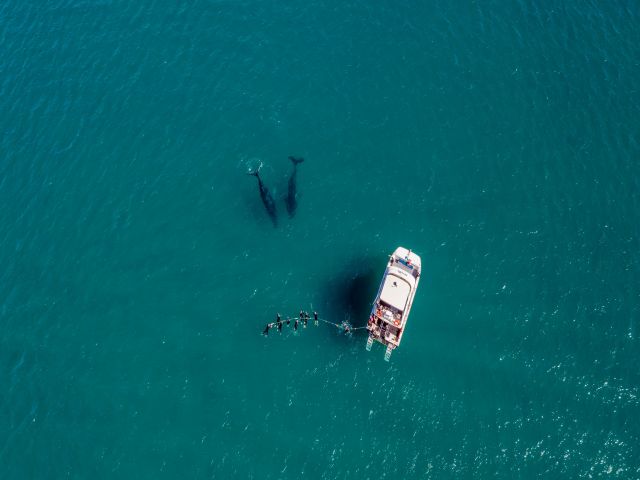
Dive Hervey Bay operates the region’s only dedicated ‘swim with whales’ experience and is one of the best places in the world to see humpback whales.
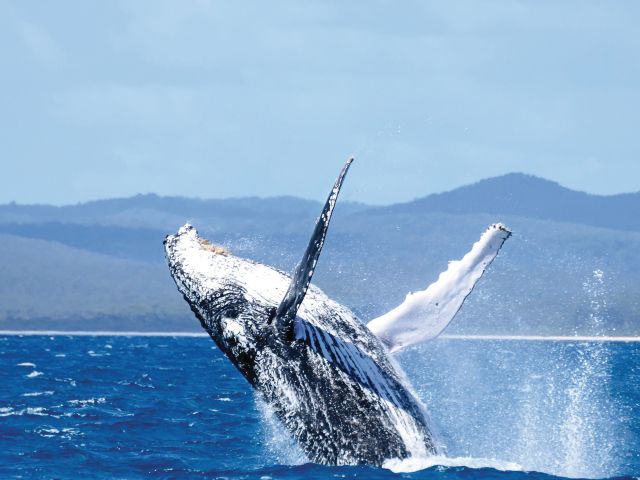
Best time to go: Mid-July to late October.
Eco credentials: Guest numbers are strictly limited and the tour operator’s core philosophy is to interact with whales on their terms and to approach a whale at a 100-metre distance.
Need tips, more detail or itinerary ideas tailored to you? Ask AT.
AI Prompt
Swim with humpback whales off K’gari
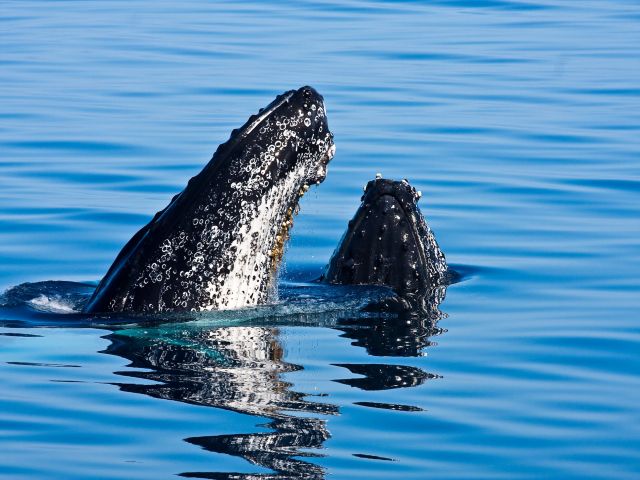
The world’s largest sand island draws visitors to its shores for a multitude of reasons.
Now, guests staying at the Kingfisher Bay Resort can board a tour from the jetty for a jaunt out to the sheltered waters of Platypus Bay for the chance to frolic in the water with humpback whales.
Hervey Bay Whale Watch has partnered with Kingfisher Bay Resort to offer a package aimed at those who want to slide in the water with the whales.
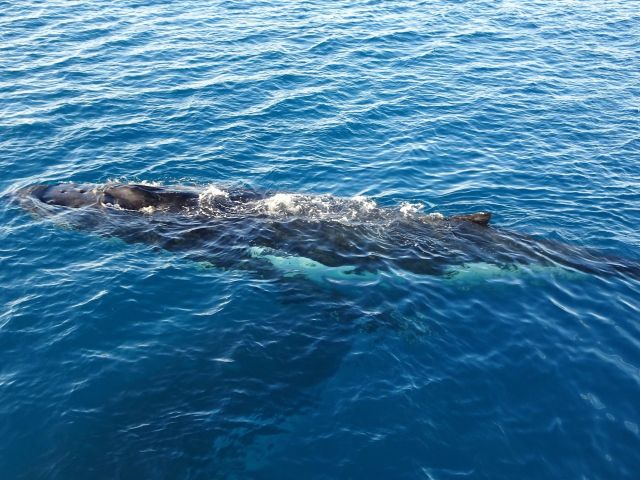
Best time to go: Between July and early September.
Eco credentials: The vessel used for the tours is purpose-built for whale watching, is wheelchair-friendly and has a cap on numbers. The whale swims are at the whim of the whales.
Swim with minke whales off Port Douglas
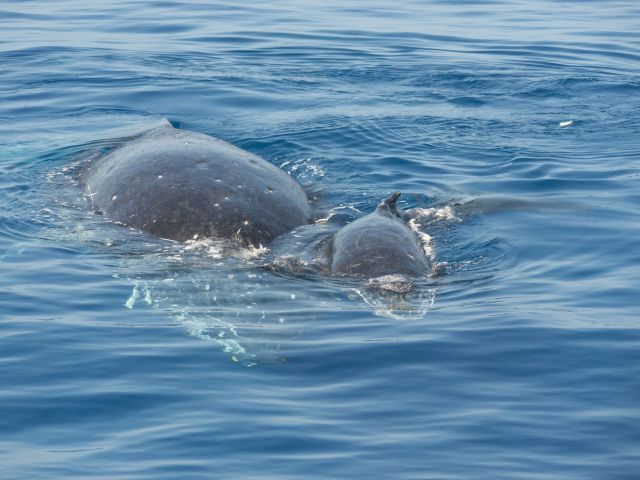
The Ribbon Reef region off Port Douglas is the only place in Australia to swim with dwarf minke whales. And according to scientist Dr Alastair Birtles it’s one of the longest wildlife interactions with whales on offer.
The Ribbon Reef region, some 240 kilometres north of Cairns, attracts up to 80 minke whales during the season and the whales come very close as they are ‘extraordinarily curious’ says Dr Birtles.
The tourism vessels licensed to conduct swims with the whales include Mike Ball Dive Expeditions, Silverseries, Pro Dive and the Spirit of Freedom.
Best time to go: June and July.
Eco credentials: Chasing whales is outlawed. Interactions are decided by the whales. Tours allow visitors to contribute to ongoing research and conservation efforts to protect them.
Swim with humpback whales on the Sunshine Coast
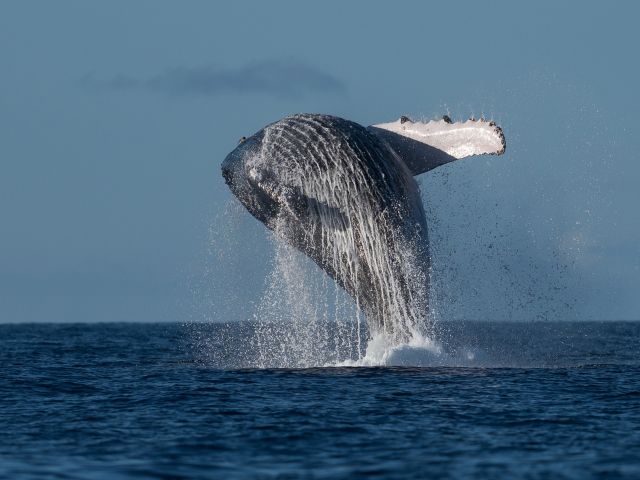
Humpback whales are drawn to the nutrient-rich waters off Mooloolaba during their annual migration. And now, Sunreef Mooloolaba offers visitors to the Sunshine Coast the chance to swim with these majestic marine creatures.
Snorkellers are given the opportunity to hold a rope off the back of the Sunreef Mooloolaba boat to eyeball the whales as they swim along the Pacific (Ocean) highway.
If swimming with whales is not your thing, you can still enjoy spotting the whales throughout the season. The pioneering Swim with Whales experience celebrated its 10th anniversary in 2024.
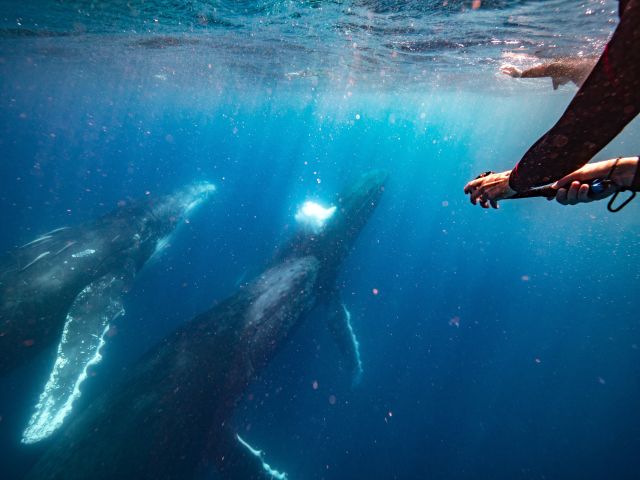
Best time to go: From July to mid-October
Eco credentials: The boat operates under a strict code of conduct to protect both whales and swimmers in accordance with the Australian National Guidelines for whale and dolphin watching.
Weekly travel news, experiences
insider tips, offers, and more.
Swim with humpback whales (or whale sharks) on WA’s Coral Coast
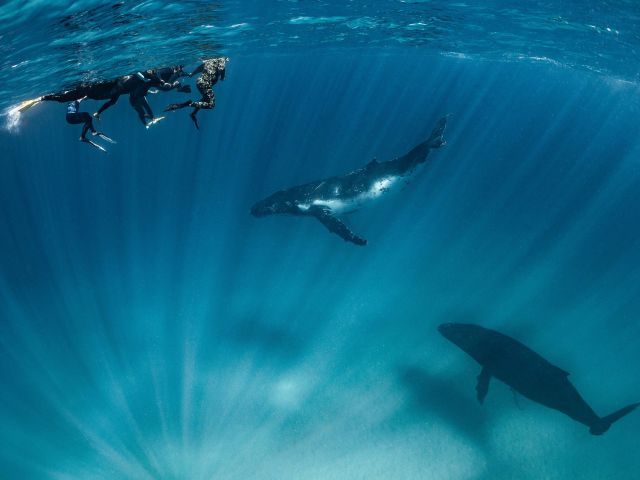
Ningaloo Marine Park is the only place in Western Australia where you can have an in-water interaction with humpbacks on a tour.
An estimated 40,000 humpback whales embark on the annual migration along the coastline each year which means there’s a 78 per cent in-water interaction success rate.
In addition to the in-water interaction tours, visitors can embark on a whale-watching tour off the coast from Exmouth and Coral Bay on the Coral Coast.
Best of all: humpback whale in-water interaction includes onboard education from dive instructors, many of whom are marine biologists or scientists.
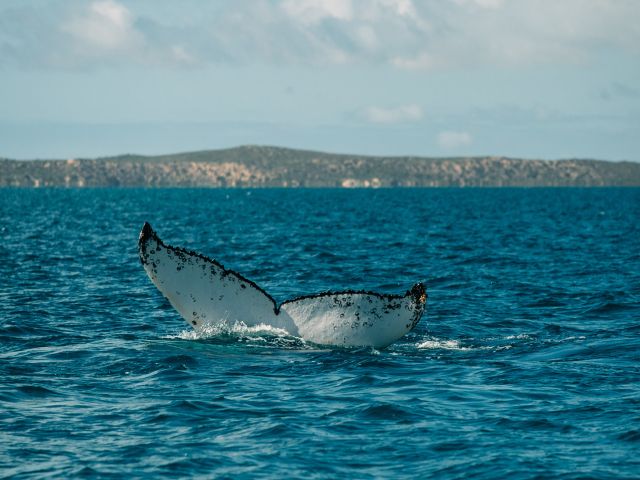
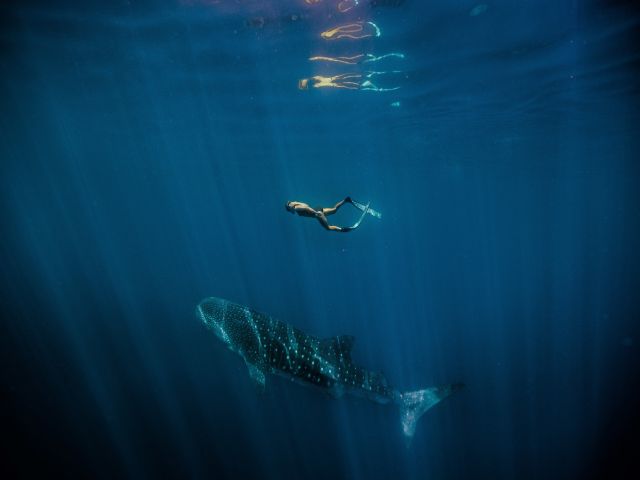
While a whale shark is not a whale but a filter-feeding shark, it’s also possible to swim with these gentle giants off the WA coast.
Check out Ningaloo Whaleshark Swim, 3 Islands Shark Dive, Aussie Marine Adventures, Ningaloo Discovery, Ocean Eco Adventures, Coral Bay Ecotours, Live Ningaloo, Exmouth Dive and Whalesharks Ningaloo and Ningaloo Blue Dive.
Best time to go: Between July and October
Eco credentials: The humpback whale and whale shark interaction guidelines have been modelled on the world’s best practice for whale shark swim tours to have minimal impact on the whales. Swimmers are not allowed near mothers and calves.
Want to see more stories from Australian Traveller in your Google search results?
- Click here to set Australian Traveller as a preferred source.
- Tick the box next to "Australian Traveller". That's it.