
One of the first things to know about that much-dreamed-of Jervis Bay camping trip is that it’s just two and a half hours south of Sydney.
From back-to-basics bush blocks to glamping luxury in front of a secluded beach, Jervis Bay camping puts the subject of sleeping under canvas back on the agenda. Here are the best Jervis Bay camping spots broken up into regions for your convenience.
In short
If you only stay at one campsite in Jervis Bay, make it Green Patch, in Booderee National Park. Enjoy a swim in the safe, scenic lagoon and peg out your tent on a private site surrounded by bush. There are drive-in and walk-in options along with fresh water, toilets, barbecue facilities and picnic areas.
Booderee National Park (Jervis Bay Territory)
Those staying overnight in Booderee National Park in Jervis Bay can choose between three different campsites, all of which offer great access to the ocean.
Green Patch Campground

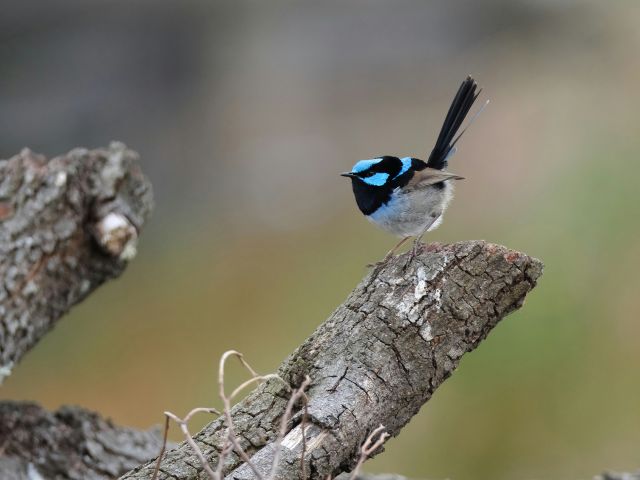
Green Patch Campground has a series of private sites near a quiet beach on the inside of Jervis Bay. I camped here with family one rainy weekend, and we took full advantage of the BBQ facilities and undercover picnic tables. Booderee National Park is jointly managed by the Wreck Bay Aboriginal Community and Parks Australia. You’ll need to book a month or more in advance as it’s one of the most popular campgrounds in Jervis Bay. There will be lots of native wildlife visiting your camp, so be sure to secure your food. A possum took off with our sourdough during the last visit!
Cost: $100 per night in peak season (up to five people), $70 shoulder, $35 off-peak
Location: Booderee National Park, Village Rd
Cave Beach Campground

There is great surf and exciting beachfront caves to check out near Cave Beach Campground. Cars are restricted from entering the camping area so regulars in the know bring wheelbarrows or carts to transport their gear 300 metres down the hill to the sites. You are 99.9 per cent guaranteed to see kangaroos and wallabies. Facilities include fresh water, toilets, cold showers and both gas and wood-fired barbecues (Note: firewood is often provided). Nature lovers will find plenty to explore nearby such as Bherwerre Beach, a great surf spot, or Ryans Swamp, home to waterbirds, frogs, snakes and turtles.
Cost: $80 per night in peak season (up to five people), $55 shoulder, $30 off-peak
Location: Cave Beach Rd, Jervis Bay Village
Bristol Point Campground
If you have a big group to camp with and don’t mind a walk-in site, Bristol Point Campground is a top option. Surrounded by old-growth forest, and just up the road from Green Patch Beach, you’ll find amenities with solar hot water and handy washing-up sinks. There are wood BBQs and free firewood. Surfers can find the famous ‘Aussie Pipe’, regarded as one of Australia’s best surf breaks, at nearby Summercloud Bay. And those keen for more tranquil waters will find dreamy, quiet beaches inside Jervis Bay just a short walk from the campground.
Cost: Large sites are $180 per night in peak season (up to 10 people), $140 shoulder, $70 off peak. Less for standard sites (up to five people).
Location: Jervis Bay Road, Jervis Bay Territory
Beecroft Peninsula
Visitors will find camping near to Jervis Bay Marine Park on the northern headland of Jervis Bay a joy as it’s teeming with marine life.
Honeymoon Bay Campground
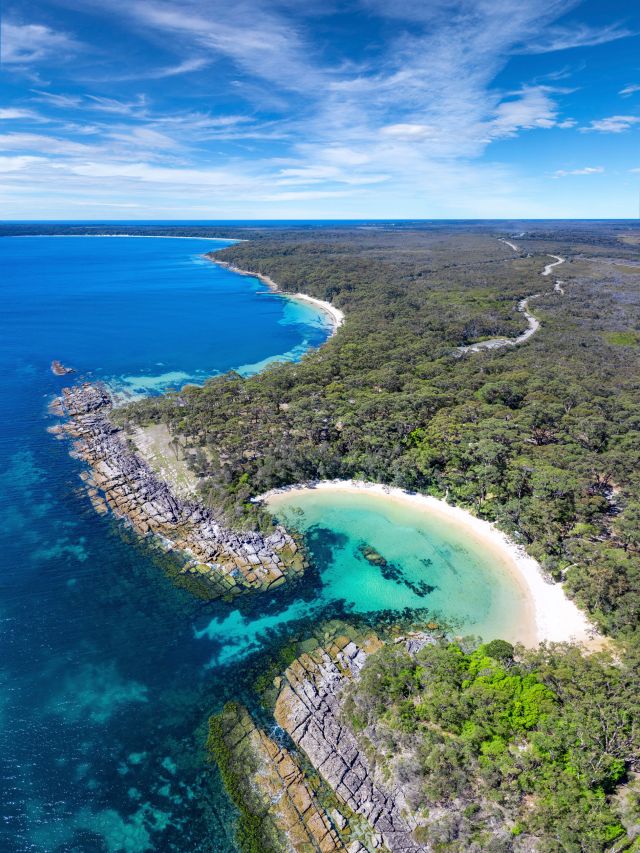
Without a doubt, Honeymoon Bay Campground is the ultimate school holiday bargain camping option at Jervis Bay. Positioned on Beecroft Peninsula, which is the northern headland of Jervis Bay, the campground is in a Defence-managed area known as Beecroft Weapons Range (Note: This area is often used for military activities). The campsite is available for school holidays only and there is a hotly contested online booking system with a ‘release date’ a fortnight prior to each holiday (except summer, which is released in September). For those lucky enough to secure a site, you get a beautiful setting, portaloos and bins. BYO water and gas cookers. Fires prohibited.
Cost: $15 per site per night for up to two adults. Additional $5 per person, per night. Children under 16 are free.
Location: Honeymoon Bay Rd, Beecroft Weapons Range, Jervis Bay
Need tips, more detail or itinerary ideas tailored to you? Ask AT.
AI Prompt
Huskisson/Woollamia (inside the bay)
There are also campgrounds closer to Huskisson, where you can balance your time ‘roughing it’ on the famous white-sand beaches with a sit-down pub meal at the Husky. Iconic.
Holiday Haven White Sands

Holiday Haven White Sands is one of the few campsites in the region where a one-kilometre coastal walk from your camp will deliver you to one of the best pubs around. Forget tinned baked beans. Think crunchy schnitzels and icy cold beers. Perched on the point with scenic bay views, your camp will be metres from legendary, white-sand beaches. It is ideal for swimming, paddleboarding and sunset walks. You could use the barbecues or head into Huskisson for a meal. Huskisson is also the launch spot for dolphin and whale-watching cruises.
Price: Around $80 per night for two adults; $100 for families of four. Cabins range from around $190 to $250 per night.
Location: 2 Beach St, Huskisson
Holiday Haven Huskisson Beach
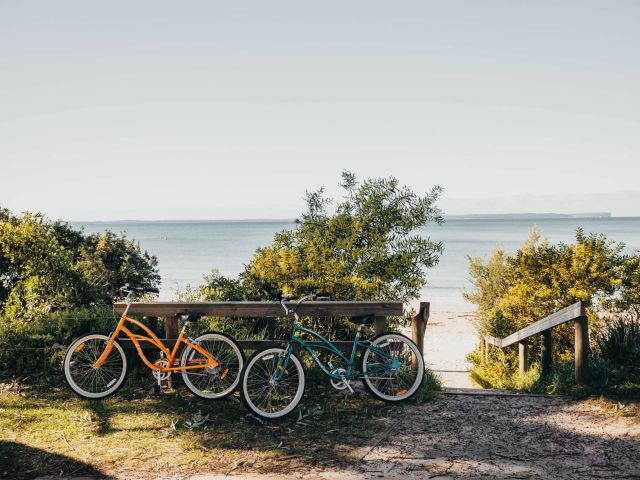
Families looking for some camping fun with some resort-style extras should check out Holiday Haven Huskisson Beach. Campsites have power and water. Parents can relax by the pool while the kids splash around or play on the playground equipment. Bring scooters, skateboards or bikes so they can zip along the safe paths within the site or zoom ahead as you stroll on into Huskisson to check out the Jervis Bay cafe scene. Adventurous families might want to take a kayak tour and then return to the camp to take advantage of the undercover barbecues and entertainment area.
Price: $80 per night for two adults, $100 with two kids.
Location: Beach St, Huskisson Beach
Jervis Bay Holiday Park
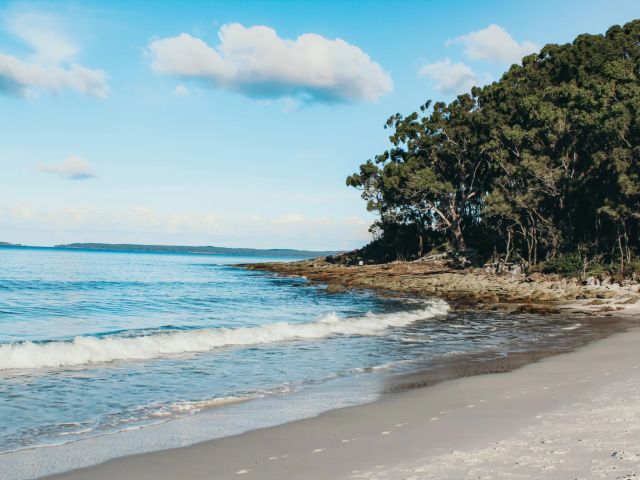
Tasman Holiday Parks is known for catering to everyone from campers to caravanners. And this Jervis Bay Holiday Park is in one of its most scenic locations, offering powered and unpowered sites on Currambene Creek. It also has glamping options if you want some more comfort and convenience. Coffee lovers can enjoy a barista-made brew onsite – just visit the vintage coffee van by the water. Also onsite at Tasman Holiday Parks – Jervis Bay is a pool, splash park and playground. There’s also a jetty which is a great place for fishing. The calm waters of Hyams Beach – world-famous for its sugar-white sands – are just a short walk away.
Price: Unpowered sites from around $50-$60 per night.
Location: 785 Woollamia Rd, Woollamia
Hidden Creek Campsite
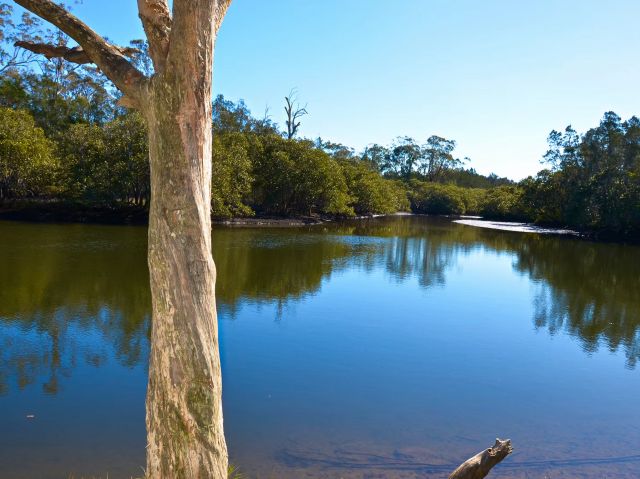
It’s become unusual to find a campsite where you can sit under the stars and stare at your own log fire, but you can at Hidden Creek Campsite. It is a lovely bush camping ground where you can really reconnect with nature, but still have all the convenience of Huskisson only a five-minute drive up the road. Located on Currambene Creek, there are fish to catch, possums and bandicoots to spot and lots of family fun to be had. Self-catering is easy with the handy communal kitchen and picnic shelters available.
Price: Offpeak $60 per night for 2 adults and peak season $90 per night for a powered site. Unpowered sites cost a little less.
Location: 55 Goodland Rd, Woollamia
Callala/Myola/Currarong (North Shore of Jervis Bay)
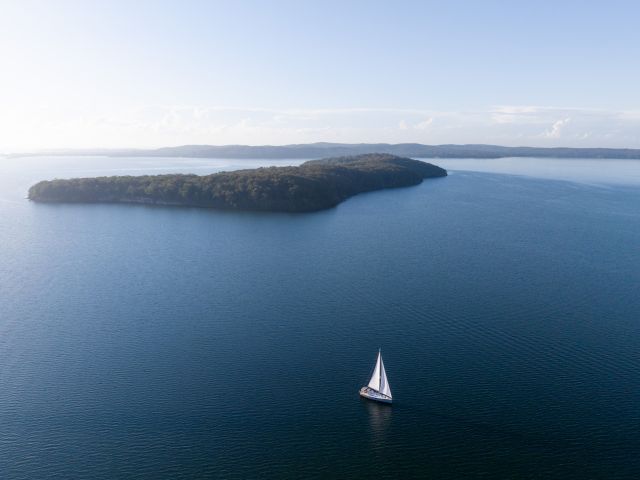
Callala Bay is a safe haven for swimming, sailing and easy access to Jervis Bay.
Weekly travel news, experiences
insider tips, offers, and more.
Tasman Holiday Parks – Myola

Bring your rackets. Tasman Holiday Parks – Myola comes complete with its own tennis court. Have a hit, then cool off in the pool. The Park is on the banks of Currambene Creek and Callala Beach is only five minutes’ walk away. For a bit of novelty fun, catch the Husky Ferry from Myola into Huskisson, stock up on provisions and then return for a BBQ near your camp. The campgrounds are adjacent to lovely bushland, so you have a good chance of spotting plenty of kangaroos and parrots.
Price: Powered sites start from $30 per night
Location: 123 Myola Rd, Myola
Holiday Haven Currarong
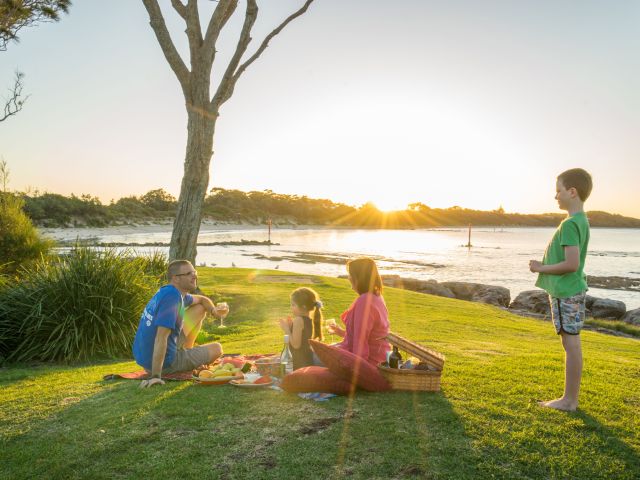
Holiday Haven Currarong is quite a large caravan park. But the unpowered campsites are right on Currarong Creek and have dress circle access to the beach. Also nearby are ‘en suite campsites’ where you have space for your tent adjacent to your own private shower, toilet and vanity. Currarong has a long wild beach that gets great surf on its day. There is a wonderful hike from the campground along the coast. Head past Abrahams Bosom, one of Australia’s prettiest beaches, to check out the S.S. Merimbula shipwreck. The Wreck Walk is one of the best things to do in Jervis Bay.
Price: UnPowered site from around $45 per night; Powered Site from $55 per night. En suite campsites: $85 per night for two adults and up to four kids, for en suite campsites.
Location: 8 Cambewarra Rd, Currarong
Glamping
Camping has had a makeover. And travellers who like a high-thread count while they’re sleeping under canvas couldn’t be happier. Here’s where to go glamping in Jervis Bay.
Paperbark Camp
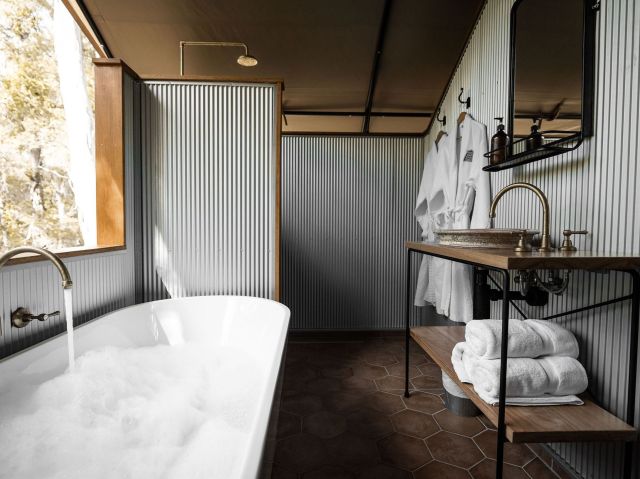
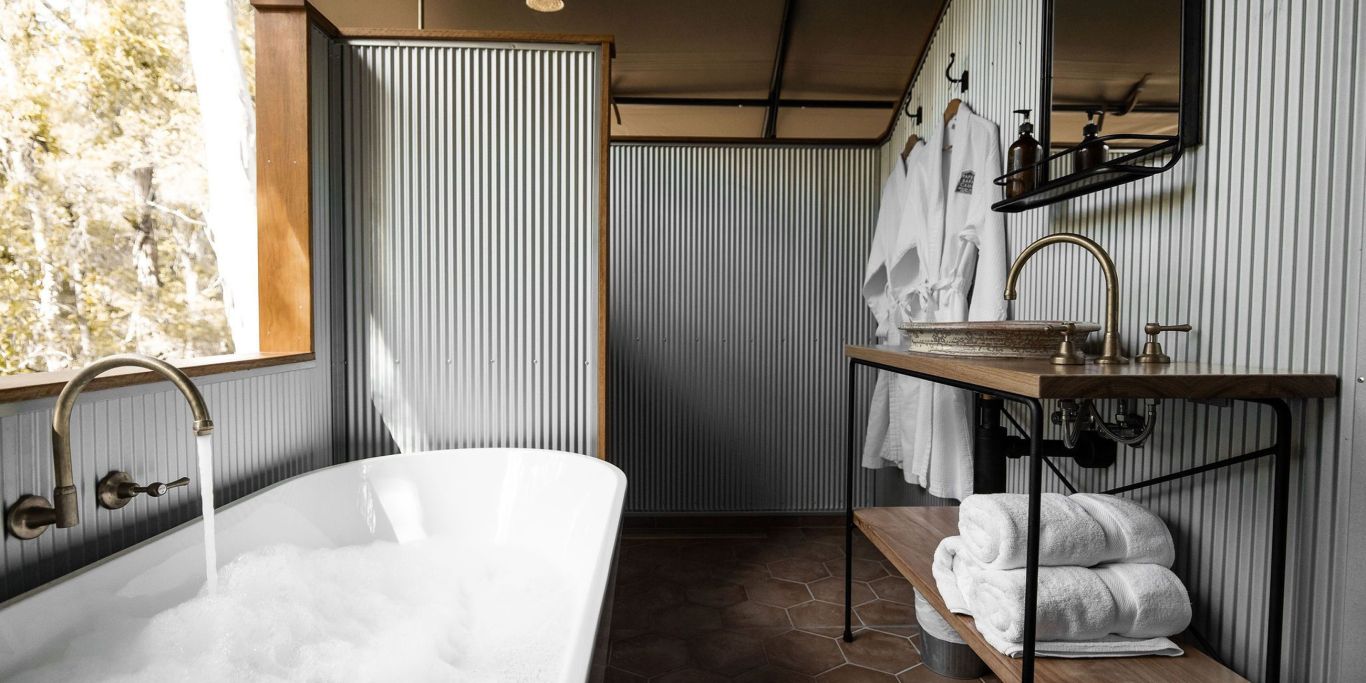
If you like the idea of camping but want a more luxurious experience, then the beautifully appointed canvas safari tents at Paperbark Camp in Woollamia might just be your special place. You still get the delightful bush surrounds, but you also get cocktails and a four-course fine dining menu at onsite restaurant, The Gunyah. It’s one of the best places to eat in Jervis Bay. There are also plenty of activities for guests wanting some exercise: explore walking trails through the bush, borrow a bike for a ride to Flamin’ Galah Brewing Co. or take a canoe downriver to Huskisson.
Price: From $560 a night for a deluxe safari tent when booking a two-night midweek stay. This package includes a full gourmet breakfast and access to canoes, SUP boards and complimentary wifi in The Gunyah.
Location: 571 Woollamia Rd, Woollamia
The Cove Jervis Bay
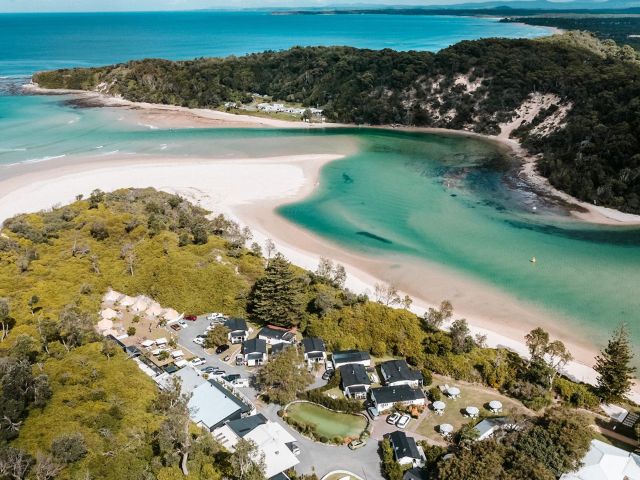
Your canvas tent will already be pitched and furnished for you when you arrive at The Cove Jervis Bay. Think soft linens on a king-size bed with cushions, deckchairs and luxe amenities. The glamping set-up also includes a communal kitchen with a commercial fridge to keep your beers crisp and cold. The kitchen also includes all the usual appliances and equipment you rely on in your home kitchen. The Cove is surrounded by water and bushland. Test out the complimentary kayaks and paddleboards on Sussex Inlet or go body surfing at Bherwerre Beach.
Price: $900 for a two-night minimum for two adults and two kids in a glamping tent.
Location: Ellmoos Rd via Booderee National Park, Jervis Bay
Discover the best things to do in Jervis Bay.
Want to see more stories from Australian Traveller in your Google search results?
- Click here to set Australian Traveller as a preferred source.
- Tick the box next to "Australian Traveller". That's it.