A look inside Darwin’s reimagined airport resort

hero media
Airport hotels these days aren’t forgettable like they used to be, with properties like the revitalised Darwin Airport Resort boasting luxurious amenities and artwork highlighting the Top End’s rich Aboriginal heritage.

From the Olympic-sized swimming pool lined with chic cabanas to the Indigenous training academy, Darwin Airport Resort offers so much more than a convenient crash pad en route to Dili or Denpasar. This tropical oasis, like many of the new airport hotels popping up around the globe, puts not only convenience, but hospitality and local culture at the forefront too.

History

Owned by one of Darwin’s largest private landowners, the Airport Development Group (ADG), the resort has been created out of the $30 million integration and facelift of the Novotel and Mercure airport hotels.

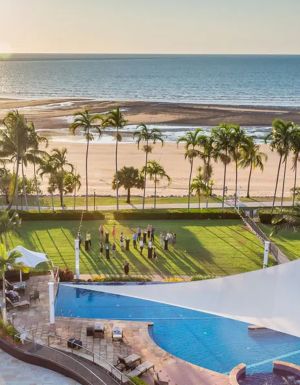
Starting with a vision by ADG in 2021, the massive project has resulted in one sprawling 423-room resort with a single reception area. The centrepiece is the huge new pool (think slick Bali resort), which at 61 metres in length and holding one million litres of water it is one of the largest hotel swimming pools in any Australian State or Territory capital city.
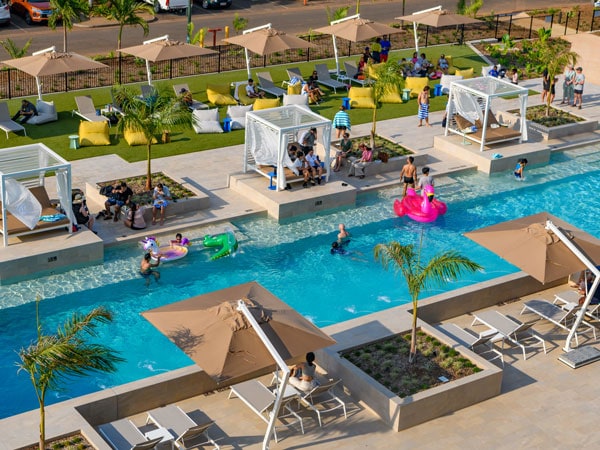
an aerial view of the pool at Darwin Airport Resort
You’ll find the new swimming pool at the centre of Darwin Airport Resort.

The location

Located on the traditional lands of the Larrakia people (the traditional owners of the Darwin region) the resort is smack bang on the doorstep of Darwin airport – just follow the directional signage for 300 metres or call the 24-hour shuttle service.

And don’t forget – at just 15-minutes’ drive from the Darwin CBD, the resort also offers visitors a luxury and spacious base for city-based sightseeing. It also serves as a convenient jumping off point for day drives to those Top End bucket list destinations, such as Litchfield National Park (100 kilometres south) and Kakadu National Park (150 kilometres southeast). It’s also very convenient for flights to the Tiwi Islands. 
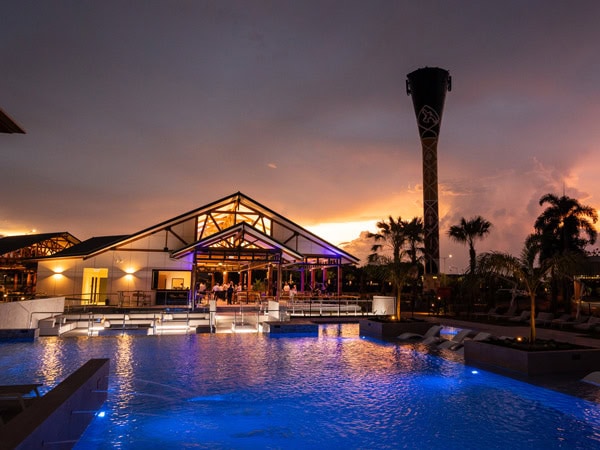
the view of the pool at night in Darwin Airport Resort
This tropical oasis sits right next to Darwin Airport.

First impressions

Local stories unfold from the moment I enter the grand open-air reception, where I spot Aboriginal art everywhere I look. I am awed by the 41-metre water tower, featuring an elaborate mural by Larrakia artist Tony Lee. Officially called Mamilima, the soaring mural tells three distinct local Dreaming stories, including the Rainbow Serpent and the creation of the stars.
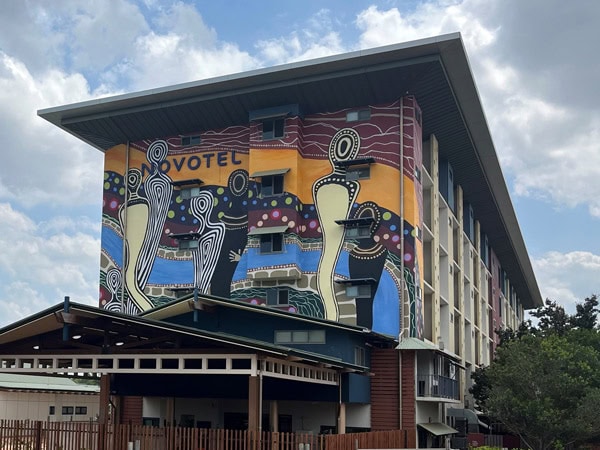
an Indigenous mural at the facade of Darwin Airport Resort
An Indigenous mural greets you by the entrance.

Next, I spot a beautiful mural on the hotel building by Joanne Nasir called Journey of Travellers, depicting travellers from the Dreamtime. Nasir writes in her description: “Like the Nygabaya we travel on our journeys where we meet others, make new friends, experience, share and encourage others to visit. Sometimes, there is a deeper feeling, and we are inspired to stay".
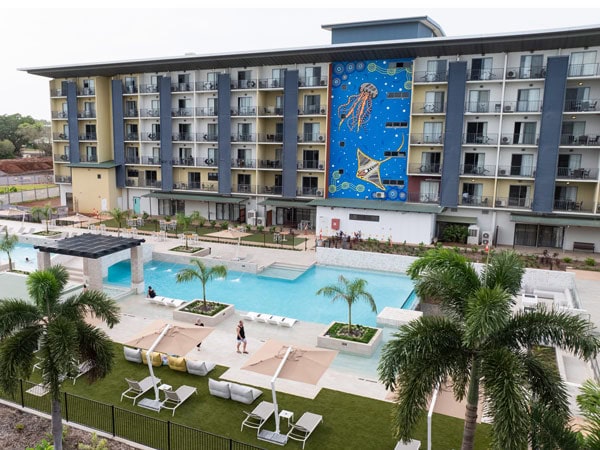
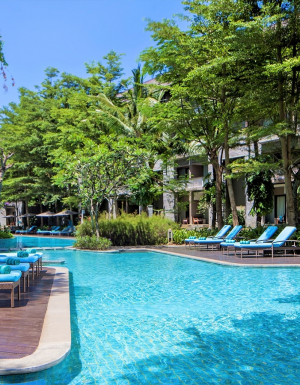
the new Mercure pool at Darwin Airport Resort
The murals decorate the facade of the hotel.

A strong focus on connection to Larrakia Country continues throughout, with each villa named after a leading Aboriginal Territorian, such as: Billiamook, one of the first Larrakia to interact with white people; Robert Shepherd, a member of the 11th Light Horse Regiment (who served in the First World War); and Dr Miriam-Rose Ungunmerr Baumann AM, who has been honoured for her many contributions to education and to the general community.

A priority of the hotel operation is to employ as many Indigenous staff as possible, and to achieve that goal ADG has set up an Indigenous Training Academy to deliver nationally recognised qualifications.

The Darwin Airport Resort will also launch the Gurambai Cultural Experience – a one-hour guided walk curated by Larrakia guides. Gurambai is the Larrakia name for the area known as Rapid Creek, just a short walk from the resort.
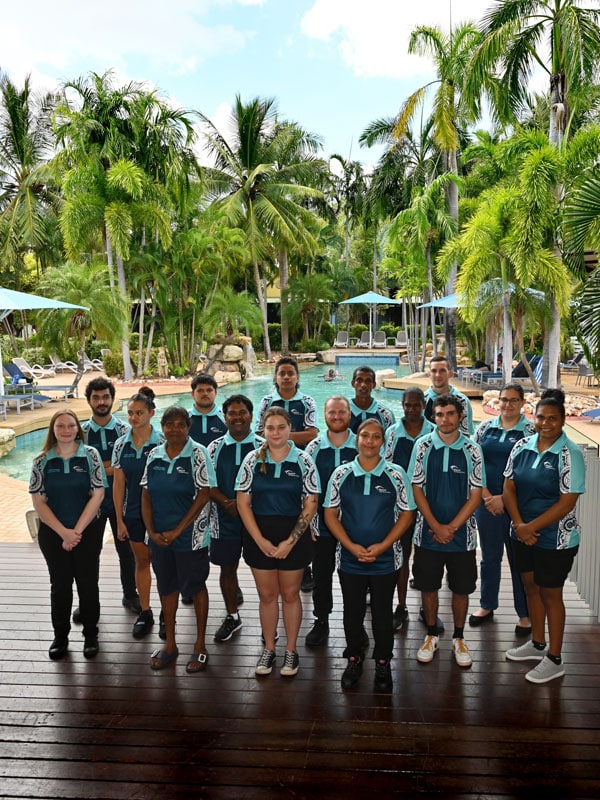
the Indigenous trainees at Darwin Airport Resort
Darwin Airport Resort hires as many Indigenous staff as possible.

Need tips, more detail or itinerary ideas tailored to you? Ask AT.

AI Prompt

The rooms

The resort’s 423 rooms come in 12 types, from standard to two-bedroom apartments and 14 luxury tropical villas with their own plunge pools – like the one I am lucky to occupy for the night.
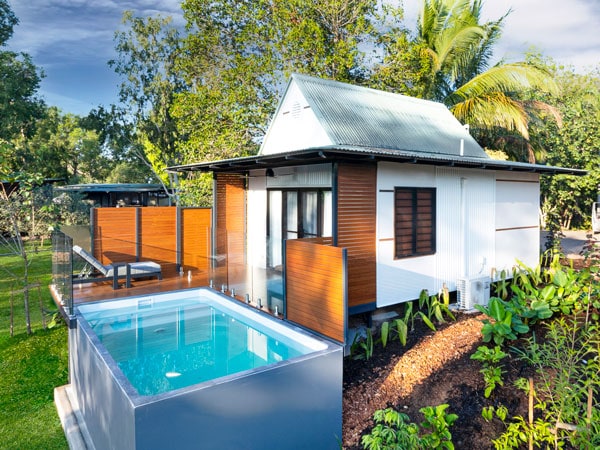
a luxury tropical villa with a plunge pool
Settle into one of the luxe tropical villas.

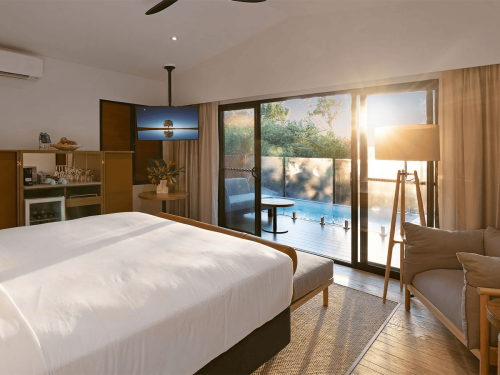
Up in my private pool villa surrounded by tropical bushland, it’s impossible not to relax amongst the Scandinavian-inspired furniture featuring muted tones creating a serene canvas.
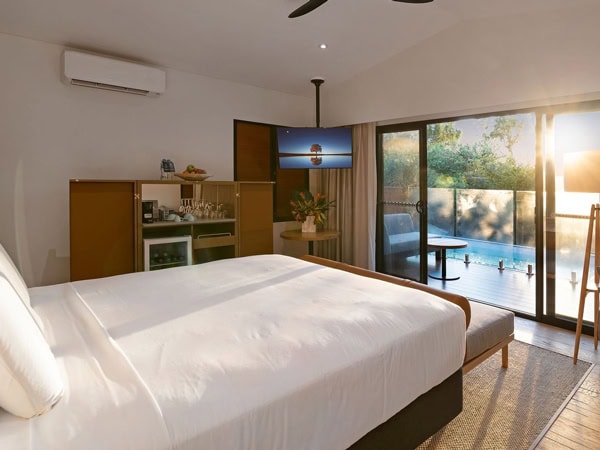
the pool villa interior at Darwin Airport Resort
Relax in your villa with your private pool waiting just outside.

Kicking back on the plush king-sized bed, captivated by the view of the plunge pool outside and visiting tropical birds, I pop the champagne and settle in for the afternoon.
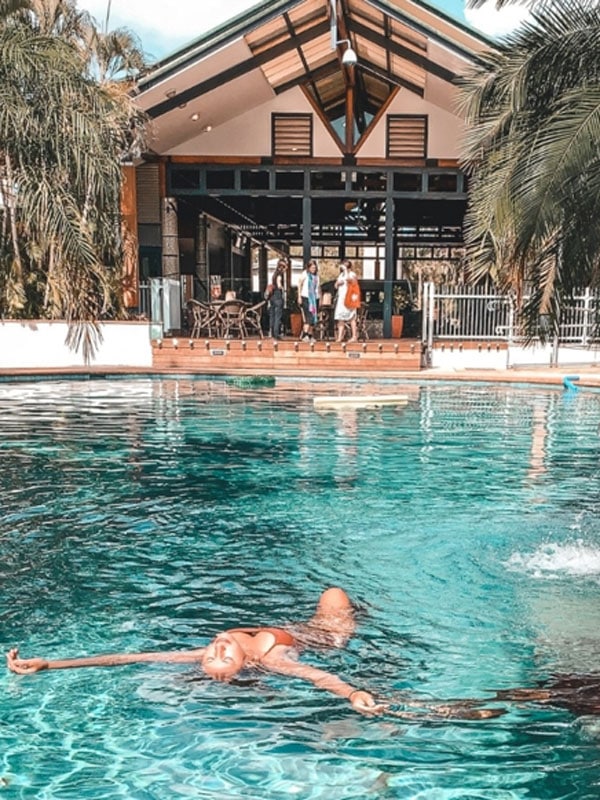
a woman floating by the pool at Darwin Airport Resort
Soak up the tropical oasis.

Food and beverage

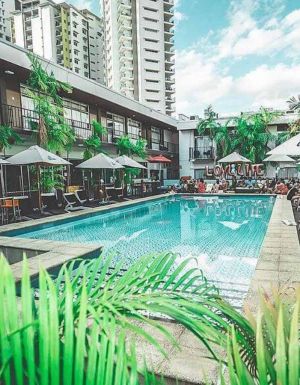
The new poolside dining option Splash Café joins the existing Cossies restaurant, which offers tropical cocktails, local barramundi and grills, salads, pizzas and burgers.
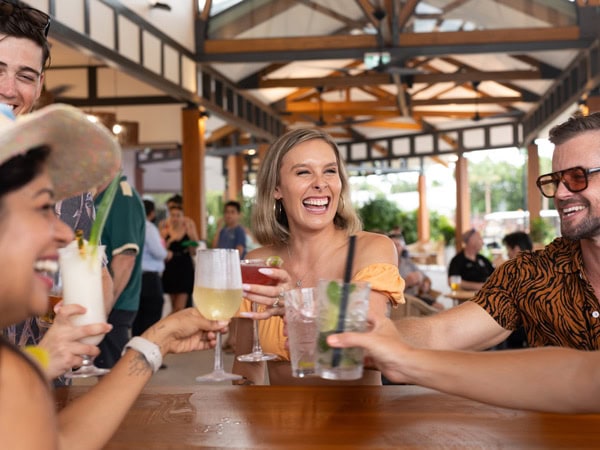
friends enjoying tropical cocktails at Darwin Airport Resort
Enjoy tropical cocktails by the pool.

During the day Splash Café serves up gourmet sandwiches, such as the bush tacker sandwich with lemon myrtle spiced grilled chicken and quandong mango chutney. Come nightfall the menu focuses on indulgent grazing boards and Australian seafood, including banana prawns and South Australian oysters.

Breakfast options are a la carte or the full buffet experience with barista-made coffee or if you’re in a rush there’s a grab-and-go breakfast assortment at Splash Cafe.
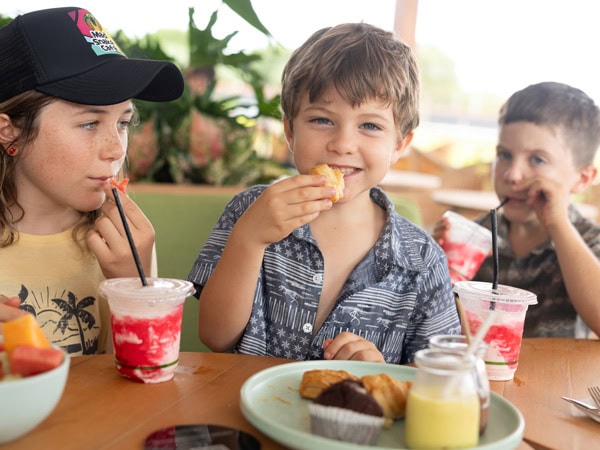
kids eating at Darwin Airport Resort
There’s also a kid-friendly menu for your children to enjoy.

Amenities available

The hub of the resort is the enormous new pool, where you can grab a cabana and chill out for the day. If you’re travelling with kids, next door there’s an aquatic play area with fountains, slides and other features where children can safely cool off in the tropical heat.
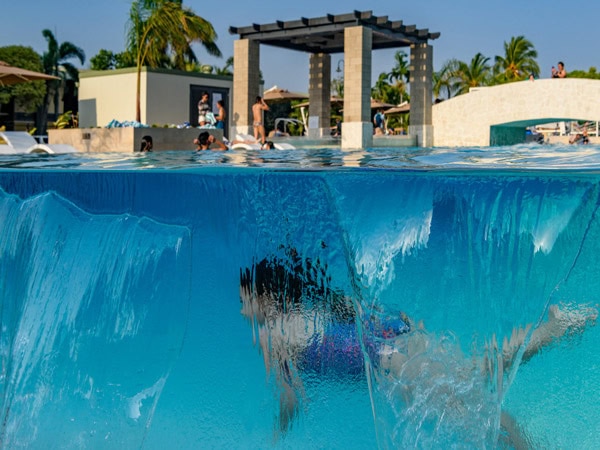
a woman swimming in the pool at Darwin Airport Resort
Cool off at one of the pools.

The laundry and barbeques are perfect for big families and travellers looking to save.
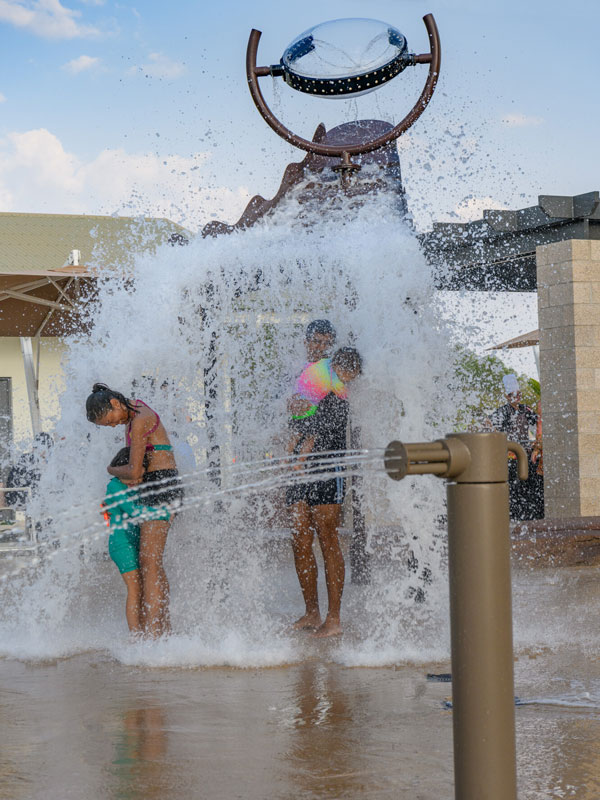
a family splashing around the fountain at the aquatic play area in Darwin Airport Resort
Go splashing around the aquatic play area.

Weekly travel news, experiences
insider tips, offers, and more.

Price of the room and packages

Guest rooms start from around $274 per night in a Deluxe Queen room including breakfast. Tropical Pool Villas, featuring a king bed, start from around $564 per night including breakfast.
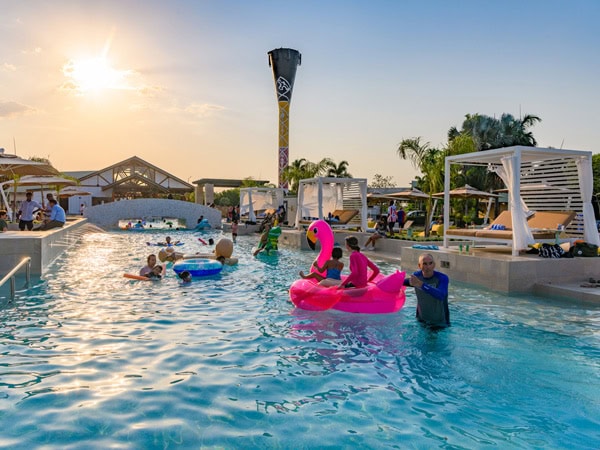
kids enjoying at the new pool in Darwin Airport Resort
Spend time with your kids in the pool.

The verdict

Darwin Airport Resort has elevated Darwin’s luxury hotel scene. Its strong emphasis on Indigenous art, culture and history reverberates throughout the property, highlighting the rich Larrakia culture that might be unknown to the first-time visitor to the Northern Territory.
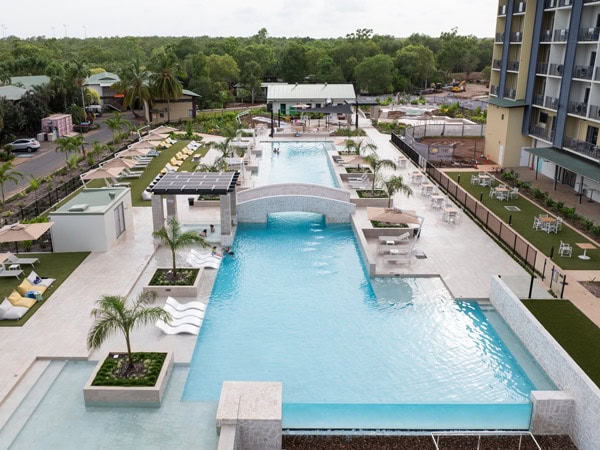
an aerial view of the Mercure pool at Darwin Airport Resort
The Olympic-sized swimming pool is not to be missed.

Score: 4/5

We rated: The friendly service, the mesmerising swimming pool and the strong sense of place.

We’d change: Speed up the refurbishment of all the rooms (scheduled to be complete by early 2025).

Address: 1 Sir Norman Brearly Drive, Darwin

Leah McLennan
Leah McLennan is a freelance writer based in Darwin. She was a journalist in Sydney for over a decade and counts her time as travel editor for Australian Associated Press as one of the highlights of her career. From exploring remote campsites in the Top End with her family, to seeking out new art galleries in faraway cities, she’ll grab an adventurous or arty travel experience within her reach.
View profile and articles
hero media

Discovering East Arnhem: Australia’s most unique and rewarding corner

    Joanne Millares Joanne Millares

    Hard to reach and harder to forget, East Arnhem offers something rare in modern travel: the chance to slow down and experience Country on its own terms.

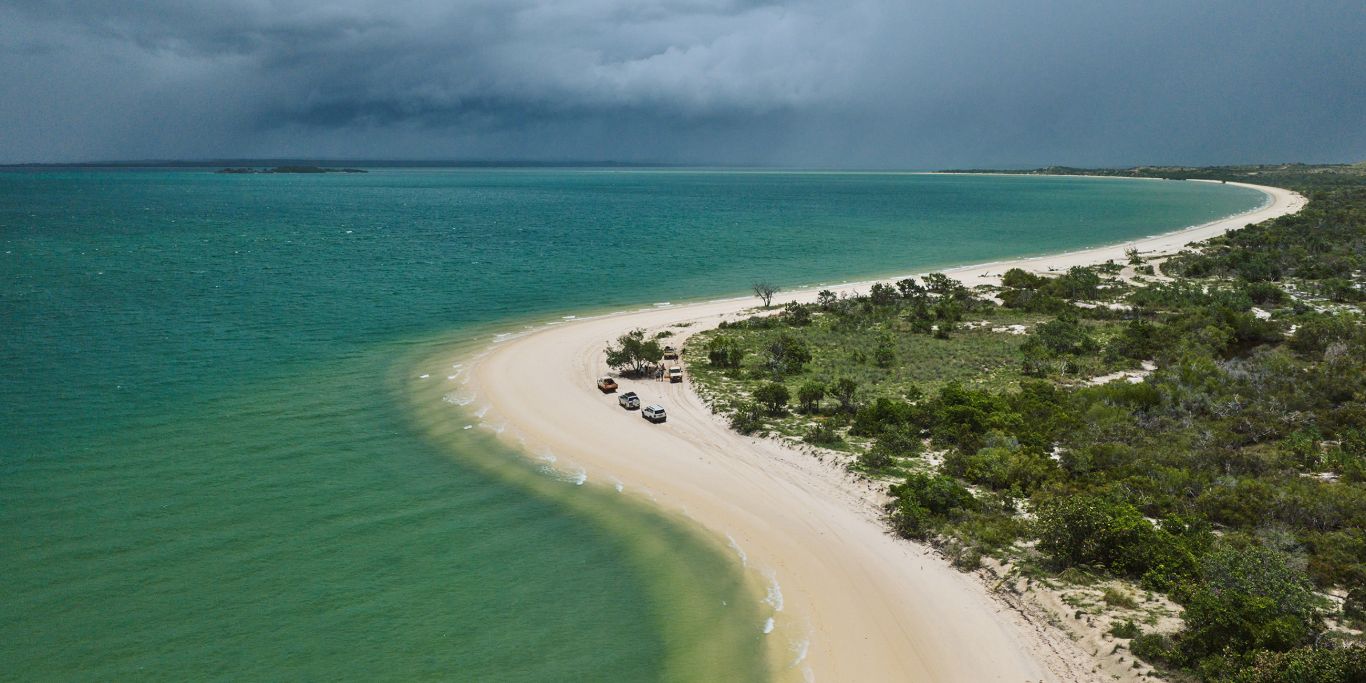
    The sky feels bigger in East Arnhem. It stretches wide and uninterrupted above rouged earth, stringybark woodland and beaches so empty they seem to belong to another era. The coastline curves for kilometres without a footprint and the horizon runs on forever.

    For comedian Lou Wall, the scale of the place was the first thing that hit them.

    “The sheer openness,” they say. “The sky feels infinite and the land stretches out endlessly. It’s pretty breathtaking visually.”

    But the physical landscape is only part of the story. The real reward isn’t only the scenery but the shift in perspective the journey brings. Visitors stop trying to tick off the destination and a real engagement takes over.

    “It made me never want to travel again,” Wall jokes. “In that I never wanted to leave East Arnhem.”

    Getting there

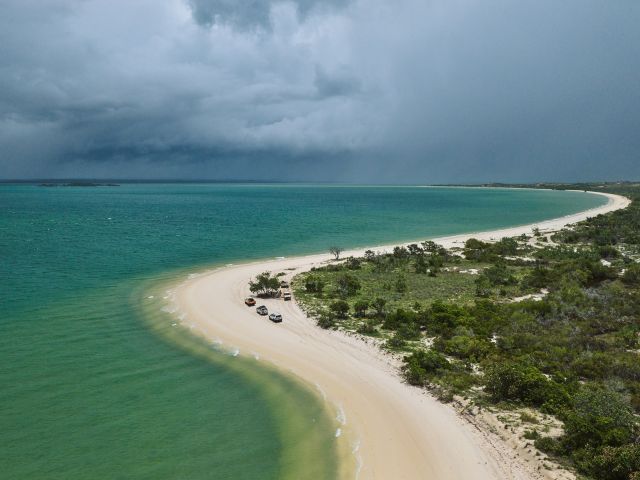
    Aerial shot of East Arnhem’s coastline as cars trace the curve of the shore.
    Sail along the remote coastline on an expedition cruise.

    Reaching East Arnhem is part of the adventure. Travellers typically fly into Gove Airport near Nhulunbuy via Darwin or Cairns, or arrive by expedition cruise along the remote coastline. Others make the journey overland along rutted dirt roads that cut through East Arnhem’s small pockets of monsoon forest.

    However you arrive, there’s a distinct feeling of crossing into somewhere different. Permits are required to visit the region, reflecting the fact that this is Yolŋu land where communities and traditional owners maintain deep cultural connections to Country.

    The extra planning becomes part of the experience. By the time visitors arrive, they understand they’re entering a place not just of respect, but also patience and curiosity.

    At one with nature

    East Arnhem’s  landscapes leave a strong imprint. For Wall, one place in particular still lingers in their memory: Ngalarrkpuy, also known as Lonely Beach, near Bawaka Homeland.

    “I genuinely felt like I was living inside an Instagram filter,” they say. “One of the most stunning feats of nature I’ve ever seen. The water was so clear I swear I could see even the fish smiling.”

    Across the region, natural experiences unfold at a slower pace. Fishing, beachcombing and island hopping reveal the rhythm of the coastline. The tides shape daily life and the vastness of the landscape makes even simple moments feel downright cinematic.

    For visitors with limited time, Wall says the Bawaka Homeland experience is unmissable.

    “I just left and I’m already planning when I can get back there.”

    The sense of remoteness is part of the appeal. In a country where many beaches are crowded and well-trodden, East Arnhem’s coastline still feels wonderfully wild.

    Immersing in local culture

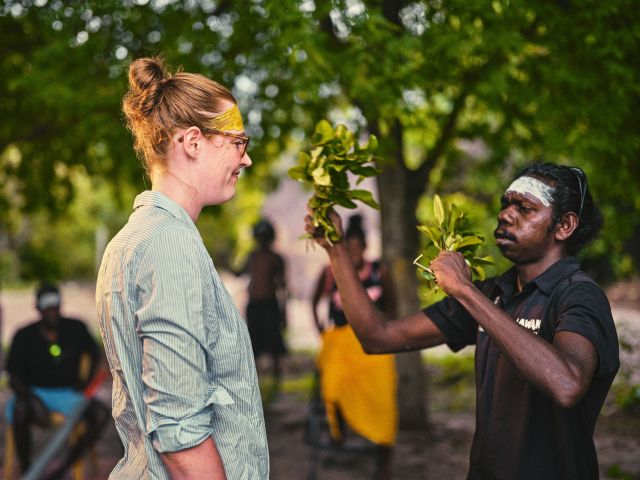
    A visitor spends a meaningful moment alongside Yolŋu guides, gaining insight into their deep cultural knowledge and connection to the land.
    Experience authentic moments with the locals.

    Culture is woven through every experience in East Arnhem. Visitors have the opportunity to spend time on Country with Yolŋu guides and knowledge holders who share stories and traditions that have been passed down for generations.

    For Wall, one of the most powerful moments came during a conversation with a Yolŋu elder.

    “I got to meet a traditional elder, Mayalil, in Nhulunbuy,” they say. “Listening to her talk about her home made the land feel alive in ways I couldn’t have imagined.”

    The region is also home to internationally recognised Aboriginal art centres where artists shape works deeply connected to land and family knowledge.

    Music carries the same cultural energy. East Arnhem has produced globally recognised artists such as King Stingray and Baker Boy, blending Yolŋu language, storytelling and contemporary sound.

    Wall experienced this musical spirit first-hand.

    “A jam session around the fire was it for me,” they say. “Letting the deep joy and history of their music wash over me…  and meeting a few of the King Stingray musicians was unreal.”

    These moments of human connection often become the most memorable part of a visit.

    Spotting local wildlife

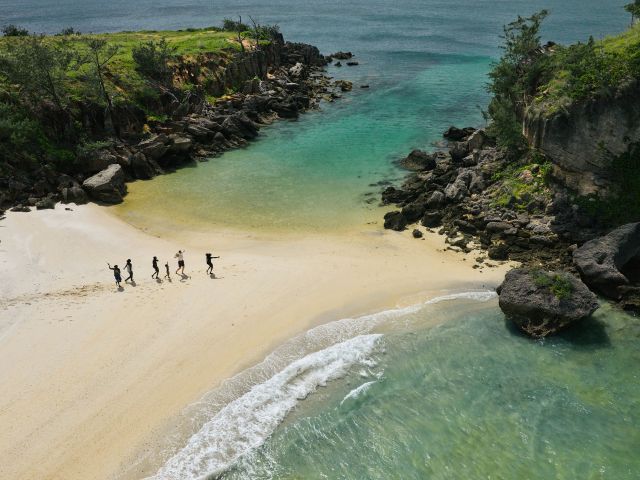
    An aerial view of the beach shows tiny figures lined up across the white sand, moving as if in a rhythmic dance.
    Step into a world where nature reigns.

    The wildlife of East Arnhem adds another layer to the experience. The region is home to an extraordinary range of animals, from waterbirds and turtles to dugongs, dolphins and the formidable saltwater crocodile.

    Wall admits they didn’t actually spot a croc during their visit.

    “Devastatingly, I didn’t see one,” they laugh. “But with all the stories from the locals I definitely gained a healthy respect for caution.”

    Some of the most memorable wildlife encounters can be surprisingly small., At Banubanu Beach Retreat on Bremer Island, Wall remembers walking along the beach one morning and watching it come alive.

    “As you walk through the sand you see hundreds of crabs scurrying into their holes as you pass by,” they say. “Such a small thing, but it was completely magical.”

    Moments like this reveal the quieter rhythms of East Arnhem, where even the smallest creatures seem to play a part in the landscape.

    Visitors who make the journey soon learn the most important travel tip of all.

    “Go in open-minded with a sense of curiosity,” Wall says. “Be prepared to ditch your plans. The land and the locals will guide you on an adventure no spreadsheets could ever compete with.”

    And most importantly, they add, don’t rush.

    “The land and people deserve your time and attention. You’ll be all the better for slowing down.”

    For more information on visiting East Arnhem, head to eastarnhem.com.au.