Darwin in the wet season – why the locals love it

hero media
Over the wet season Darwin delights adventurous souls and nature enthusiasts with its labyrinthine waterways, mangrove communities, biting barramundi and abundant mud crabs.

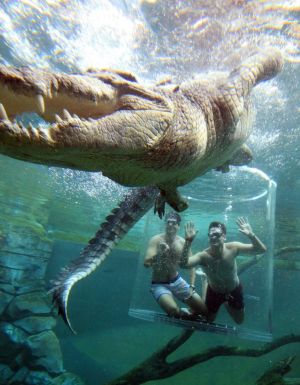
As a Darwin local, I find Northern Territory’s capital offers nature-based experiences over the rainy months like no other. But if the great outdoors is not your jam, Darwin over the wet continues to dish up its bucket list items – like swimming with crocodiles – and local favourites, such as grazing at the markets (rain or shine).

What is the wet season?

Darwin has two seasons – wet and dry. The wet season (Australia’s summer time) is characterised by high humidity, monsoonal rains and storms. Average temperatures range from 25 to 32 degrees Celsius.

When is the wet season in Darwin?

The rainy season occurs from November to April.

Top reasons to visit Darwin in the wet season

Rob Woods, guide and owner at Ethical Adventures tour group, sums up the top reasons to visit Darwin in the wet season: “Everything’s greener, the animals are happy, the plants are happy!"
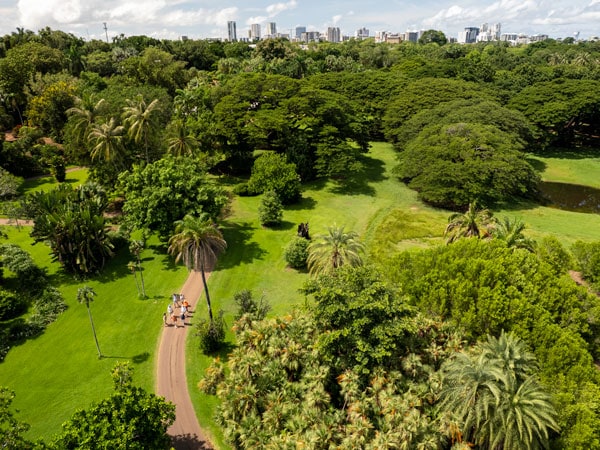
an aerial view of the Darwin Walking Tour - Botanic Gardens
Green is the colour of Darwin in the wet season. (Image: Tourism NT/Tourism Australia)

Nature lovers, rejoice. Over the wet season electrical storms create a dramatic brilliance and charge the night skies. Exotic trees, like the Poinciana, burst into colour, making it a perfect time to visit the Darwin Botanic Gardens. Saltwater crocodiles are active, with males travelling big distances to find a suitable mate. And meanwhile, at backyard dinner parties across Darwin, conversations are drowned out by the crawk-crawk-crawk of gorgeous green tree frogs.
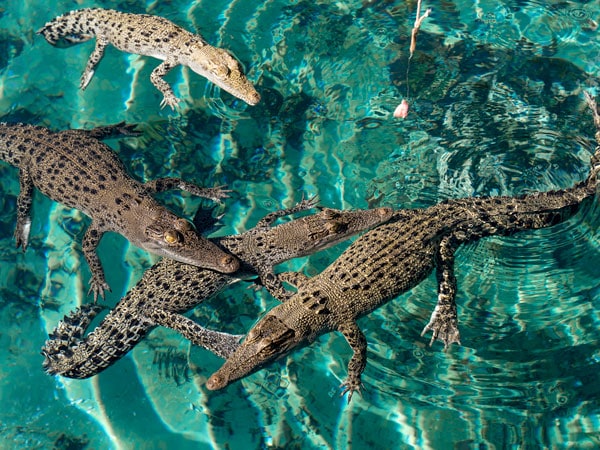
a top view of crocodiles in Darwin Crocosaurus Cove
The wet season in Darwin coincides with the crocodile breeding season. (Image: Tourism NT/Tourism Australia)

Traditional owners of the Darwin area, the Larrakia people (who recognise seven main seasons) call these months Balnba (season of the first rains) and Dalay (monsoon season).
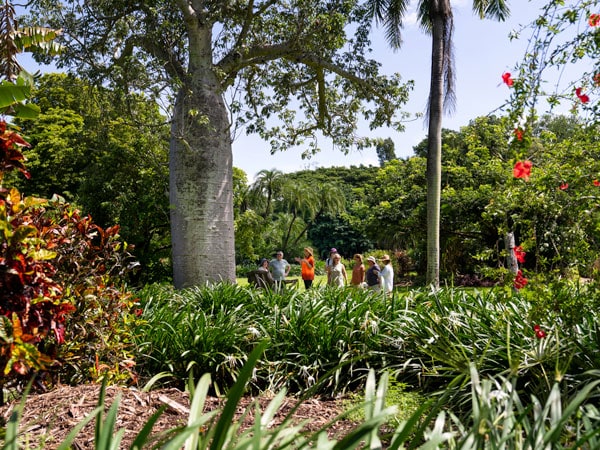
a Darwin Walking Tour in the Botanic Gardens
Explore the gardens on a walking tour. (Image: Tourism NT/Tourism Australia)

1. George Brown Darwin Botanic Gardens

Dripping with flowers, lush and green – the gardens are at their best in the wet season. Start at the tranquil lily pond, before exploring the orchid house, waterfall and the mangrove community.
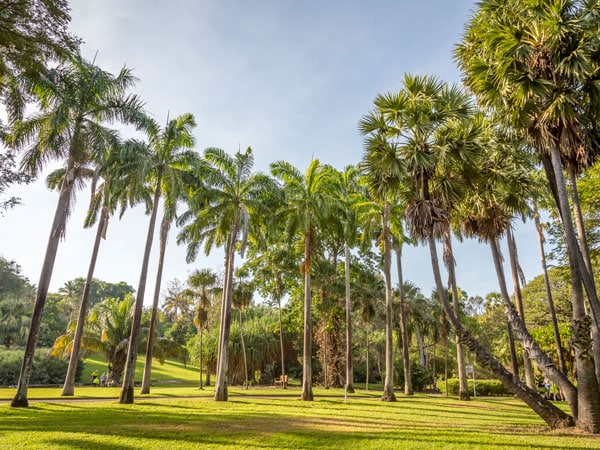
the George Brown Darwin Botanic Gardens
Stroll along the lush greenery in George Brown Darwin Botanic Gardens. (Image: Tourism NT/Nick Pincott)

For an escape from the rain, head to Eva’s Café in the heritage listed Wesleyan Church for some of Darwin’s best coffee and breakfast.
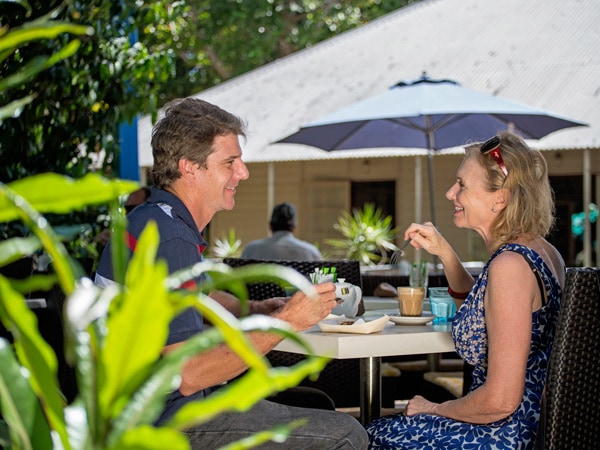
an old couple having breakfast at Eva’s Café, George Brown Darwin Botanic Gardens
Take a break at Eva’s Café. (Image: Tourism NT/Shaana McNaught)

Need tips, more detail or itinerary ideas tailored to you? Ask AT.

AI Prompt

2. WW2 Tunnels Darwin

Exploring the WWII oil storage tunnels with its 100 wartime photographs is a unique adventure when the rain is thundering outside. Incredibly, these tunnels near Darwin’s Waterfront Precinct were hardly known until 1992, when one was opened as a tourist attraction for the 50th anniversary of the bombing of Darwin. Still today, the tunnels leak from the vast underground water supply, which adds to the adventure.
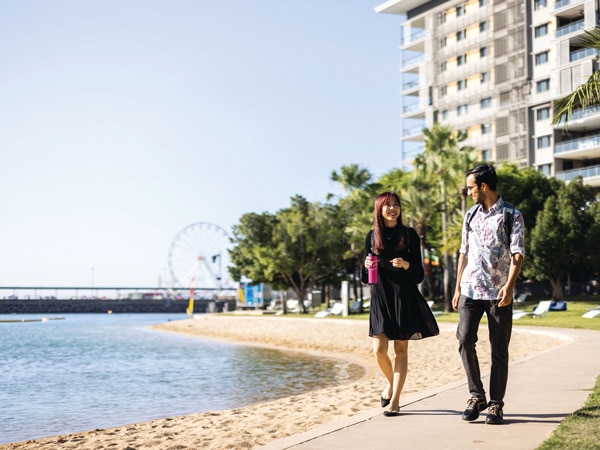
two students walking along the Darwin Waterfront Precinct
WW2 Tunnels Darwin are situated near the waterfront precinct. (Image: Tourism NT/Helen Orr)

3. Mud Crabs at Mindil Beach

Larrakia coastal walk takes you from Mindil Beach onto a boardwalk, through natural mangrove forest and up to Bullocky Point. In the wet season there’s plenty of crabs around, so make sure you pause on the boardwalk to look down at the creek.
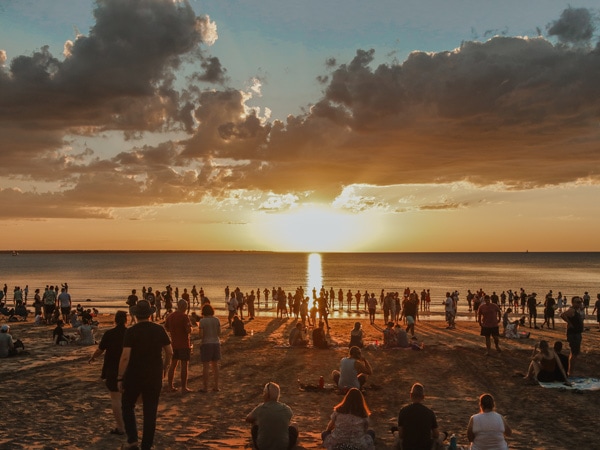
sunset on Mindil Beach
Chase the sunset on Mindil Beach. (Image: Mindil Beach Markets/Kevin Phan)

Keep your eye out for painted poles indicating the uses of various Larrakia coastal plants. From here, keep walking to the Museum and Art Gallery of the Northern Territory.
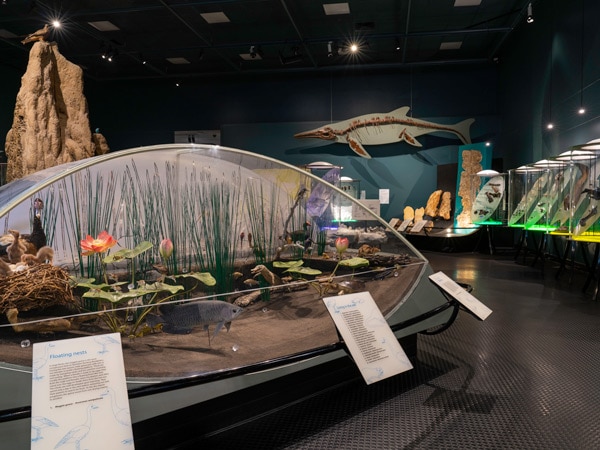
a look inside the Museum and Art Gallery NT
The Museum and Art Gallery of the Northern Territory (MAGNT) is home to scientific and cultural collections. (Image: Tourism NT/Tourism Australia)

4. Barra are biting – it’s the perfect time for fishing in Darwin

The build-up months (October to December) can produce the best fishing of all the seasons in the Top End. Increasing cloud cover and rainfall ignites the barra action, especially in the saltwater estuaries and the lower tidal river reaches. During the monsoonal rains (January to mid-March) barra can take a bit more hunting, but they are usually on the bite in the mangrove creeks and estuaries around Darwin Harbour.

Fishing over the wet season gives you the opportunity to win big. The Northern Territory Government’s Million Dollar Fish has tagged barra to catch worth $1 million (make sure you’re registered before you go fishing).
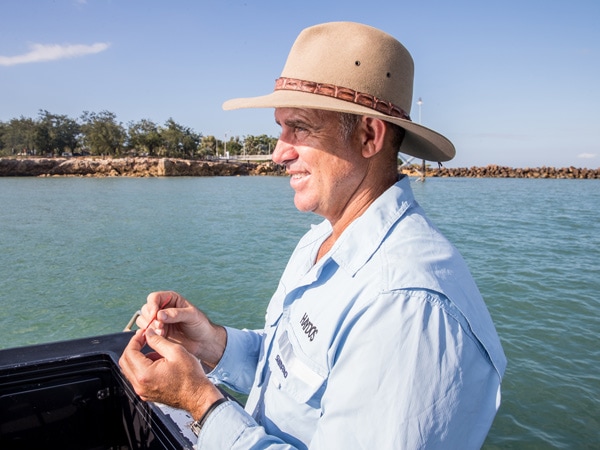
a man out fishing in Darwin Harbour
Try your luck and catch some fish in Darwin. (Image: Tourism NT/Helen Orr)

5. Mangoes at Darwin’s markets

It may be wet season but there are still markets to explore. Head to the Rapid Creek Markets on the weekend for tropical fruits and fresh juice; or check out Parap Village Markets to try one of Mary’s award-winning laksa soups.
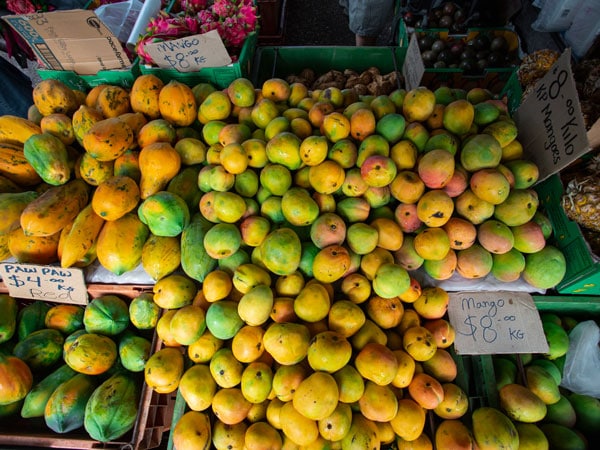
mangoes on display at Parap Village Markets
Pick fresh mangoes at Parap Village Markets. (Image: Tourism Australia/Nicholas Kavo)

Over at Nightcliff Markets, locals dine on warm Nutella crepes and fresh rice paper rolls. From late October onwards, mangoes are plentiful -but be warned, you might find the mango smoothies and mango sticky rice a bit addictive. 

Mary's Laksa in Parap Village Markets
Don’t miss out on Mary’s award-winning laksa soups. (Image: Tourism NT/Matt Cherubino)

Weekly travel news, experiences
insider tips, offers, and more.

6. Fly over the waterfalls 

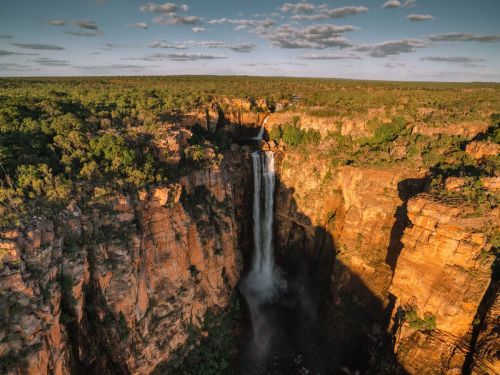
Heavy rains mean the waterfalls in Litchfield National Park and Kakadu are at their most impressive, particularly from November onwards. One of the best ways to see them and get an appreciation for their size and power is by stepping aboard a scenic flight.
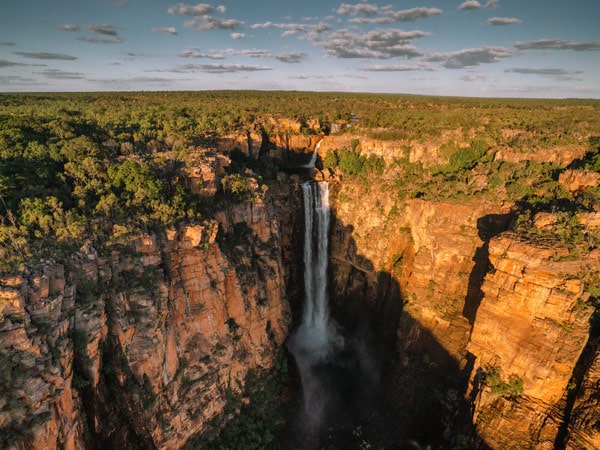
an aerial view of Jim Jim Falls
Jim Jim Falls looks spectacular from above. (Image: Tourism NT/@helloemilie)

For wet season guides check out Ethical Adventures’ Pure Litchfield tour or take a private tour with Venture North to Litchfield, Katherine and Kakadu.
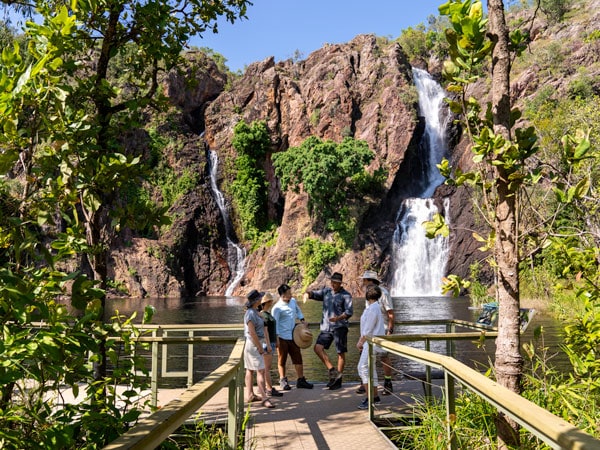
a group of people visiting a waterfall during Ethical Adventures' Litchfield National Park tour
Tour the majestic sights at Litchfield National Park with Ethical Adventures. (Image: Tourism NT/Shaana McNaught)

7. Flix in the Wet

For a perfect wet season night out head along to the Darwin Entertainment Centre to catch a show, such as Jessica Mauboy or The Teskey Brothers, or a movie as part of Flix in the Wet. You might want to dine next door at Hanuman, one of the best restaurants in Darwin before trotting off to one of Darwin’s top city hotels for a night cap.

food at Hanuman restaurant Darwin
Dine next door at Hanuman. (Image: Tourism NT)

8. Fogg Dam Conservation Reserve

One of the most accessible places to see the wetlands and wildlife over the wet season is at Fogg Dam, a 45-minute drive from Darwin. A haven for water pythons, freshwater turtles and birds, Fogg Dam is famous among naturalists for having one of the world’s highest biomass of predator (water pythons) to prey (dusky rats) ratio.

9. Wetland View Top Centre 

For a stunning panoramic view of the Adelaide River floodplain, head to Wetland Top View Centre, an hours’ drive from Darwin on the way to Kakadu. Run by Aboriginal-owned tourism venture Pudakul Aboriginal Cultural Tours, the two-level visitor centre building, constructed to represent the form of a dancing brolga, is complete with amenities, cafe, and interactive display with the top-level viewing deck providing an uninterrupted view of the wetlands.

Want to see more stories from Australian Traveller in your Google search results?

  1. Click here to set Australian Traveller as a preferred source.
  2. Tick the box next to "Australian Traveller". That's it.
Leah McLennan
Leah McLennan is a freelance writer based in Darwin. She was a journalist in Sydney for over a decade and counts her time as travel editor for Australian Associated Press as one of the highlights of her career. From exploring remote campsites in the Top End with her family, to seeking out new art galleries in faraway cities, she’ll grab an adventurous or arty travel experience within her reach.
View profile and articles
hero media

Discovering East Arnhem: Australia’s most unique and rewarding corner

    Joanne Millares Joanne Millares

    Hard to reach and harder to forget, East Arnhem offers something rare in modern travel: the chance to slow down and experience Country on its own terms.

    The sky feels bigger in East Arnhem. It stretches wide and uninterrupted above rouged earth, stringybark woodland and beaches so empty they seem to belong to another era. The coastline curves for kilometres without a footprint and the horizon runs on forever.

    For comedian Lou Wall, the scale of the place was the first thing that hit them.

    “The sheer openness,” they say. “The sky feels infinite and the land stretches out endlessly. It’s pretty breathtaking visually.”

    But the physical landscape is only part of the story. The real reward isn’t only the scenery but the shift in perspective the journey brings. Visitors stop trying to tick off the destination and a real engagement takes over.

    “It made me never want to travel again,” Wall jokes. “In that I never wanted to leave East Arnhem.”

    Getting there

    Aerial shot of East Arnhem’s coastline as cars trace the curve of the shore.
    Sail along the remote coastline on an expedition cruise.

    Reaching East Arnhem is part of the adventure. Travellers typically fly into Gove Airport near Nhulunbuy via Darwin or Cairns, or arrive by expedition cruise along the remote coastline. Others make the journey overland along rutted dirt roads that cut through East Arnhem’s small pockets of monsoon forest.

    However you arrive, there’s a distinct feeling of crossing into somewhere different. Permits are required to visit the region, reflecting the fact that this is Yolŋu land where communities and traditional owners maintain deep cultural connections to Country.

    The extra planning becomes part of the experience. By the time visitors arrive, they understand they’re entering a place not just of respect, but also patience and curiosity.

    At one with nature

    East Arnhem’s  landscapes leave a strong imprint. For Wall, one place in particular still lingers in their memory: Ngalarrkpuy, also known as Lonely Beach, near Bawaka Homeland.

    “I genuinely felt like I was living inside an Instagram filter,” they say. “One of the most stunning feats of nature I’ve ever seen. The water was so clear I swear I could see even the fish smiling.”

    Across the region, natural experiences unfold at a slower pace. Fishing, beachcombing and island hopping reveal the rhythm of the coastline. The tides shape daily life and the vastness of the landscape makes even simple moments feel downright cinematic.

    For visitors with limited time, Wall says the Bawaka Homeland experience is unmissable.

    “I just left and I’m already planning when I can get back there.”

    The sense of remoteness is part of the appeal. In a country where many beaches are crowded and well-trodden, East Arnhem’s coastline still feels wonderfully wild.

    Immersing in local culture

    A visitor spends a meaningful moment alongside Yolŋu guides, gaining insight into their deep cultural knowledge and connection to the land.
    Experience authentic moments with the locals.

    Culture is woven through every experience in East Arnhem. Visitors have the opportunity to spend time on Country with Yolŋu guides and knowledge holders who share stories and traditions that have been passed down for generations.

    For Wall, one of the most powerful moments came during a conversation with a Yolŋu elder.

    “I got to meet a traditional elder, Mayalil, in Nhulunbuy,” they say. “Listening to her talk about her home made the land feel alive in ways I couldn’t have imagined.”

    The region is also home to internationally recognised Aboriginal art centres where artists shape works deeply connected to land and family knowledge.

    Music carries the same cultural energy. East Arnhem has produced globally recognised artists such as King Stingray and Baker Boy, blending Yolŋu language, storytelling and contemporary sound.

    Wall experienced this musical spirit first-hand.

    “A jam session around the fire was it for me,” they say. “Letting the deep joy and history of their music wash over me…  and meeting a few of the King Stingray musicians was unreal.”

    These moments of human connection often become the most memorable part of a visit.

    Spotting local wildlife

    An aerial view of the beach shows tiny figures lined up across the white sand, moving as if in a rhythmic dance.
    Step into a world where nature reigns.

    The wildlife of East Arnhem adds another layer to the experience. The region is home to an extraordinary range of animals, from waterbirds and turtles to dugongs, dolphins and the formidable saltwater crocodile.

    Wall admits they didn’t actually spot a croc during their visit.

    “Devastatingly, I didn’t see one,” they laugh. “But with all the stories from the locals I definitely gained a healthy respect for caution.”

    Some of the most memorable wildlife encounters can be surprisingly small., At Banubanu Beach Retreat on Bremer Island, Wall remembers walking along the beach one morning and watching it come alive.

    “As you walk through the sand you see hundreds of crabs scurrying into their holes as you pass by,” they say. “Such a small thing, but it was completely magical.”

    Moments like this reveal the quieter rhythms of East Arnhem, where even the smallest creatures seem to play a part in the landscape.

    Visitors who make the journey soon learn the most important travel tip of all.

    “Go in open-minded with a sense of curiosity,” Wall says. “Be prepared to ditch your plans. The land and the locals will guide you on an adventure no spreadsheets could ever compete with.”

    And most importantly, they add, don’t rush.

    “The land and people deserve your time and attention. You’ll be all the better for slowing down.”

    For more information on visiting East Arnhem, head to eastarnhem.com.au.