The ultimate Darwin to Broome road trip: a 10-day itinerary

hero media
This is the western half of the Savannah Way, if you are considering doing it all, then you will also need our itinerary and guide to the eastern half, Cairns to Darwin.

Starting in the country’s tropical Top End, this epic 2,000-kilometre Darwin to Broome road trip cuts through the vast wilderness of The Kimberley along the legendary Gibb River Road and ends in a pearling town where the desert meets the sea.

Here is your 10-day Darwin to Broome road trip itinerary covering the where, what and how.

Day one: Darwin to Nitmiluk National Park

After leaving the tropical city of Darwin, head south for three hours along the Stuart Highway towards Katherine, through the historic townships of Adelaide River and Pine Creek. Before hitting “K-Town", as it’s affectionally known, stop in for a dip at the pandanus-fringed Leliyn (Edith Falls) on Nitmiluk National Park’s west side.

Refreshed, drive another hour down the track to Katherine and onto Nitmiluk National Park, which has powered sites, cabins, and permanent tents.

Must-see

1. Litchfield National Park

The key attraction between Darwin and Pine Creek is Litchfield National Park, where you can swim in waterfalls such as Florence Falls, Tolmer Falls and Wangi Falls.

2. Pine Creek

Stop in this awesome little town for a dose of history, unusual buildings and memories of the old railway and telegraph line.

3. Edith Falls (Leliyn)

Dust yourself off from the drive before you reach Katherine with a swim at gorgeous Leliyn in Nitmiluk National Park , 60 kilometres north of K-Town.

Accommodation tip: Cicada Lodge

Day two: Nitmiluk National Park

Spend the day exploring Nitmiluk National Park, home to 13 dramatic gorges that rise up from Katherine River. Join a scenic cruise, swim at rock pools and waterfalls, hire a canoe to paddle the gorges, take a helicopter flight to see the landscape from above, or join a local Indigenous guide for a presentation on Jawoyn culture.

Make the drive one hour south of Katherine before the day’s out to the tiny town of Mataranka. Renowned for its sandy-bottom thermal pool, Mataranka was made famous by the novel We of the Never Never, which is about the nearby Elsey Station.

Must-see

1. Top Didj

Learn about fire-starting with sticks, spear throwing and painting with Aboriginal artist Manuel Pamkal, who shares his cultural insight on his tours at Top Didj.

2. Canoe at Nitmiluk Gorge

Hire a canoe from the visitors’ centre in Nitmiluk National Park and cruise at your own pace – you should reach the third gorge in a day.

Accommodation tip: Mataranka Homestead

Day three: Katherine to Lake Argyle

The drive into Western Australia will take most of the day via the Victoria Highway so get an early start and make sure you’re well-prepared for the drive with plenty of petrol and water. Stop at Timber Creek  (two hours before the NT-WA border) for lunch and stretch your legs on the town’s two-kilometre Heritage Trail.
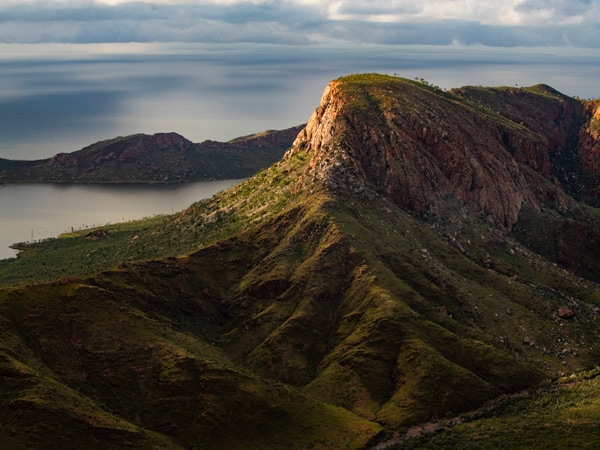
mountain views surrounding Lake Argyle in East Kimberley
Take a scenic drive via the Victoria Highway to Lake Argyle. (Image: Tourism Western Australia)

Strict quarantine laws mean you can’t carry any fresh food with you over the border, so stop at Kununurra, the first major town in Western Australia, to stock up on any supplies.
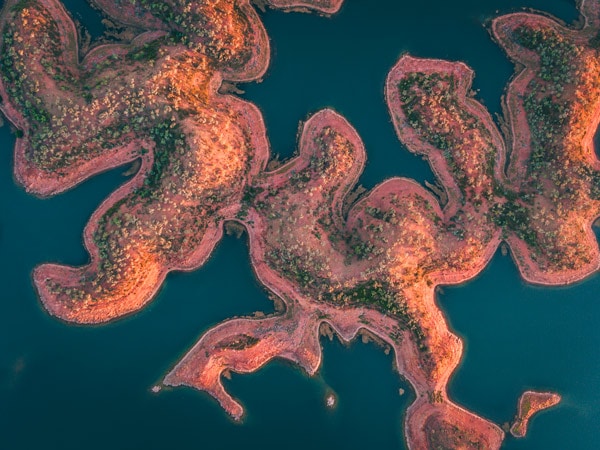
an aerial view of Lake Argyle in East Kimberley
Lake Argyle is the largest man-made lake in the southern hemisphere. (Image: Tourism Western Australia/@saltywings)

Farewell the Northern Territory and head across the border, making a beeline for Lake Argyle, 75 kilometres south of Kununurra.

It’s not often you get the phrases ‘caravan park’ and ‘world-class pool’ in one sentence, but Discovery Parks – Lake Argyle hits the mark with its infinity pool. With views across Lake Argyle, this paradise is one of the Kimberley’s most Instagrammed.
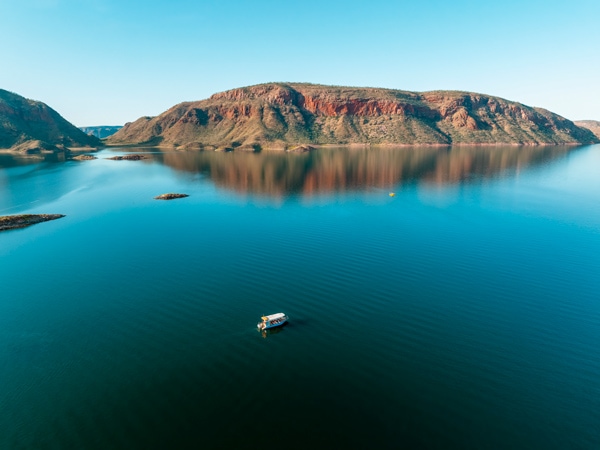
a scenic view of Lake Argyle in East Kimberley
No wonder Lake Argyle is Kimberley’s most photographed spot. (Image: Tourism Australia)

Must-see

1. Keep River National Park

Just before the NT – WA border, you’ll find Keep River National Park , home to ancient Aboriginal rock art and Bungle Bungle-like sandstone structures.

2. Argyle Homestead Museum

Step back in time at the fascinating Argyle Homestead Museum , where you can walk through the 1890s home of the famous Durack family.

Accommodation tip: Discovery Parks – Lake Argyle

Day four: Purnululu National Park

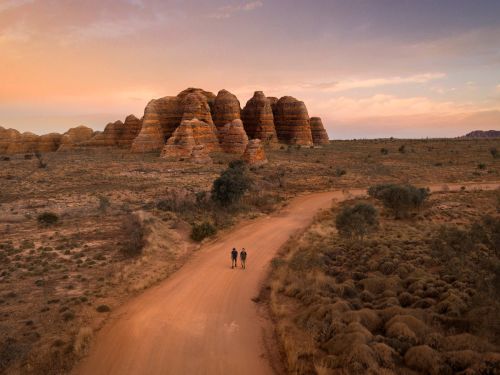
Continue on to Purnululu National Park, home to the fascinating Bungle Bungle Range, a maze of orange and black-striped sandstone domes.
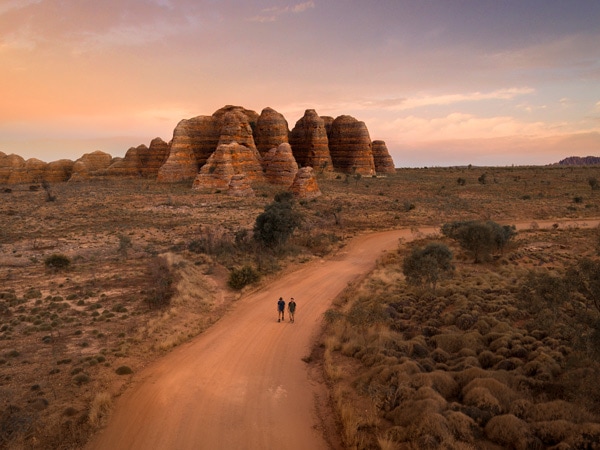
two people walking toward The Bungle Bungle Range, Purnululu National Park
See enormous striped rock formations at The Bungle Bungle Range, Purnululu National Park. (Image: Tourism Western Australia)

Hike through the Bungle Bungles, marvel at the acoustics of Cathedral Gorge and wander through the narrow red walls of Echidna Chasm.
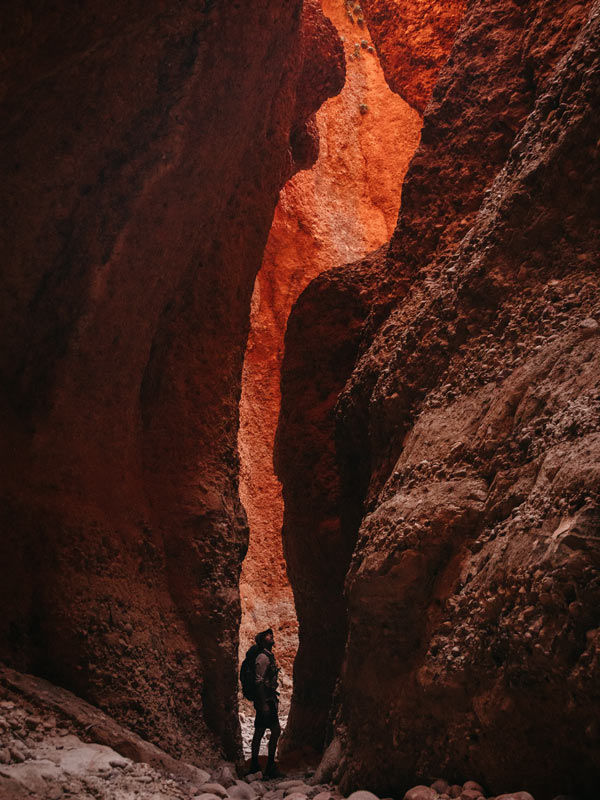
a person standing between the red walls at Echidna Chasm
Enter the narrow passageway through the red walls of Echidna Chasm. (Image: Tourism Western Australia)

Must-see

1. Fly over Purnululu National Park

Take to the skies on a scenic flight  and pass over the domes and Piccaninny Gorge, where the ochre escarpment abruptly ends, plunging hundreds of metres down to a lush green floor.
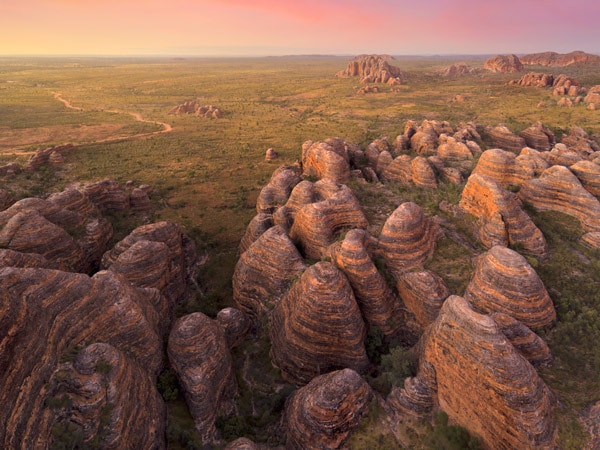
an aerial view of orange and black-striped sandstone domes in The Bungle Bungle Range
The Bungle Bungle Range is dotted with giant rocky domes. (Image: Tourism Western Australia)

Accommodation tip: Bungle Bungle Caravan Park

Day five and six: El Questro Station

Head north to El Questro Station this morning, a 283,000-hectare property that was a former cattle station in the heart of the Kimberley, located on the legendary Gibb River Rd.
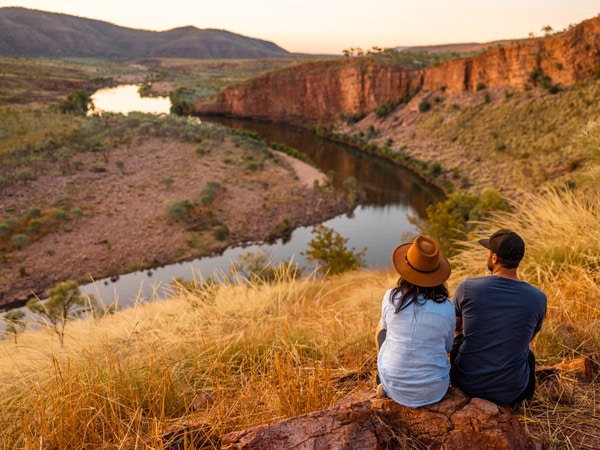
a couple on top of a grassy land at El Questro Wilderness Park, Kimberley
Admire scenic sights atop El Questro Wilderness Park. (Image: Tourism Western Australia)

El Questro Station, 11 kilometres from Kununurra, is synonymous with just about every Aussie adventurer’s bucket list.
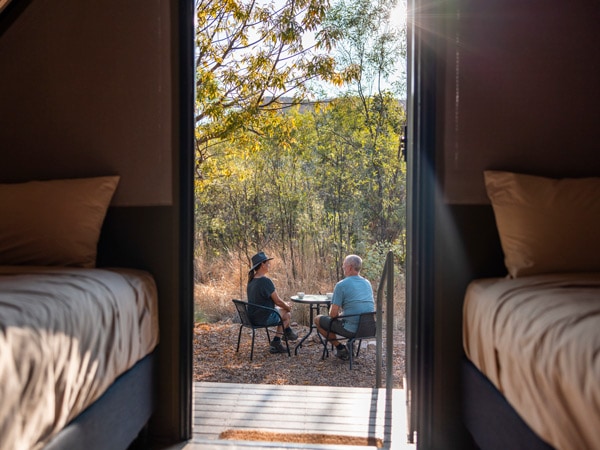
a couple sipping their morning coffee outside their tent at El Questro Wilderness Park, East Kimberley
Camp on the grounds of El Questro Wilderness Park. (Image: Tourism Western Australia)

This vast cattle station turned tourism venture, is peppered with boabs, spinifex plains, river as wild as the crocodiles that inhabit them, and gorges so perfectly shaded with palms you’d think a landscaper has been at work.
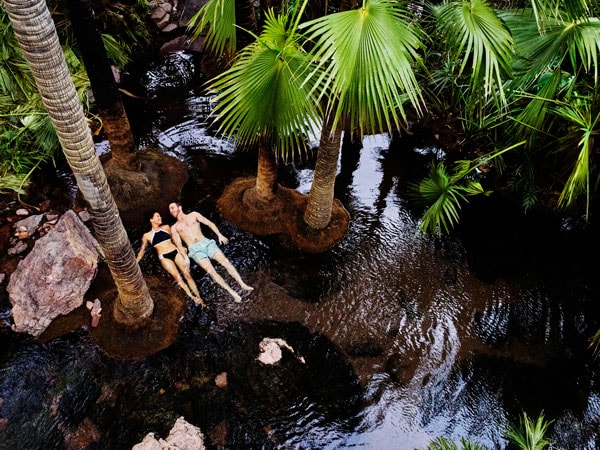
a couple enjoying a dip in Zebedee Springs, El Questro Wilderness Park
Soak in serenity at Zebedee Springs. (Image: Tourism Western Australia)

Join a cruise to Chamberlain Gorge, relax in the thermal pools of Zebedee Springs, take a trek to Emma Gorge or even take a dip in remote waterholes only accessible by helicopter.
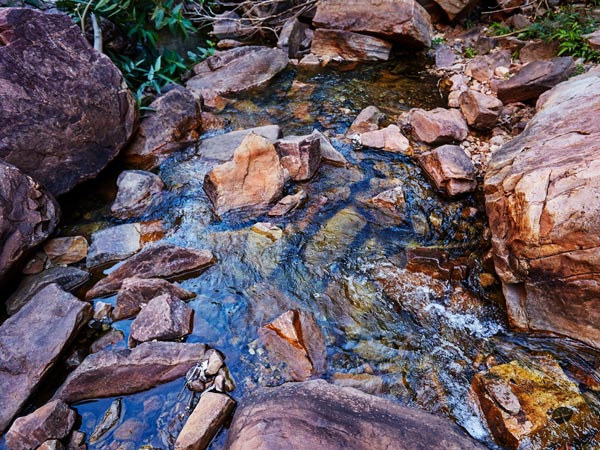
a river flowing through the Emma Gorge hike trail
Journey through the Emma Gorge hike trail. (Image: Tourism Western Australia)

Must-see

1. Horse trek at El Questro

Take a two-hour ride from El Questro Station  to get even more off the beaten track and experience otherwise inaccessible areas on horseback.

2. Swim at Emma Gorge

Take the challenging walk to Emma Gorge – one of the best known and spectacular gorges of the Kimberley.
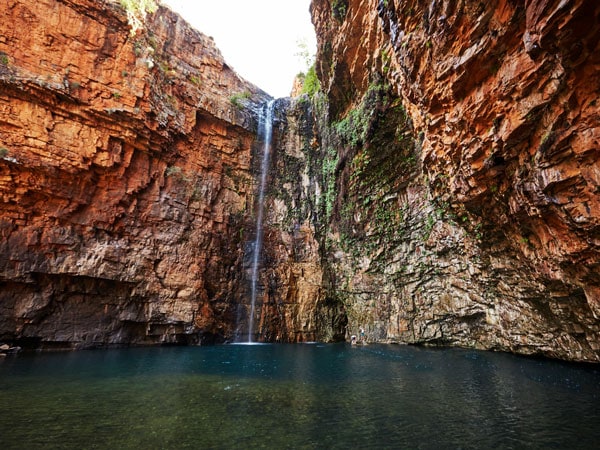
the spectacular Emma Gorge with a swimming hole in El Questro Wilderness Park, Kimberley
Dip in the swimming hole of Emma Gorge. (Image: Tourism Western Australia)

Accommodation tip: El Questro Homestead

Day seven: Ellenbrae Station

Top up on petrol and supplies before leaving El Questro and head west along the Gibb River Road, stopping at the Cockburn Ranges Lookout for a spectacular view of the 600-metre-high sandstone escarpment.
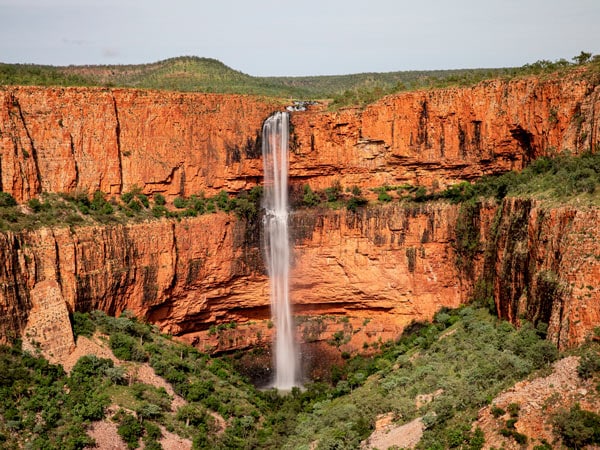
an aerial view of an unnamed waterfall which runs into the King River, Cockburn Range
A scenic waterfall runs into the King River at Cockburn Ranges Lookout. (Image: Tourism Western Australia)

Stop in at Ellenbrae Station , a 400-hectare station for a dip in the swimming holes or to try one of their famous scones. Continue west along the rugged Gibb River Road towards Mount Barnett Roadhouse, the entrance point for Manning Gorge and a great spot for supplies and petrol.
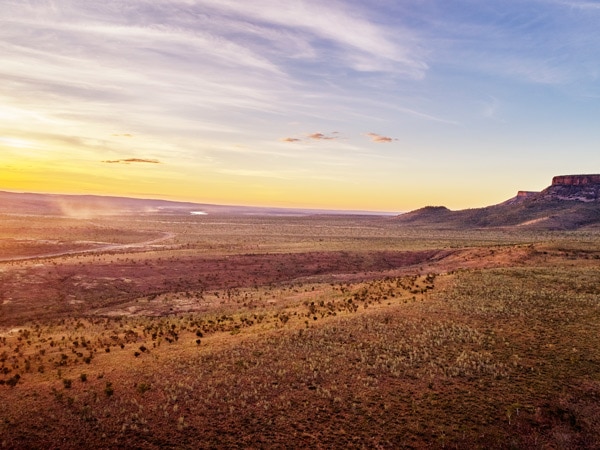
the Cockburn Ranges along Gibb River Road
Meander across the vast rugged landscape at Cockburn Ranges along Gibb River Road. (Image: Tourism Western Australia)

Must-see

1. Cockburn Ranges Lookout

Walk the 1.8-kilometre loop from the front gate at Home Valley Station  on Balanggarra country to catch the great views of the Cockburn Ranges  and the meteorite crater.
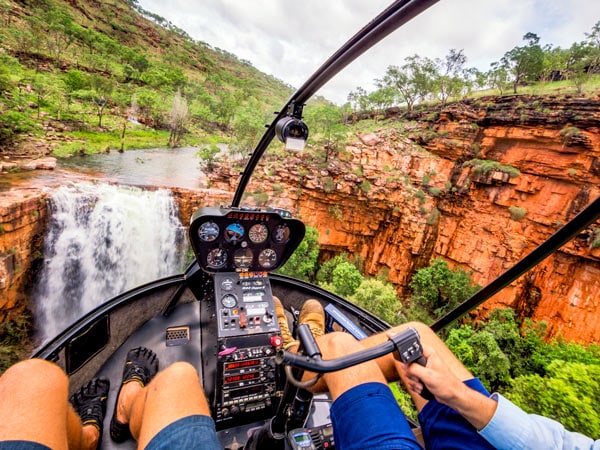
a scenic helicopter ride above Cockburn Ranges Lookout
Hover above the Cockburn Ranges Lookout on a helicopter ride. (Image: Tourism Western Australia)

2. Ellenbrae baths

Wash away the Gibb River Road dust and soak in a tub at Ellenbrae Station , which you can hire for one-hour sessions. You can also add a grazing platter to the experience.
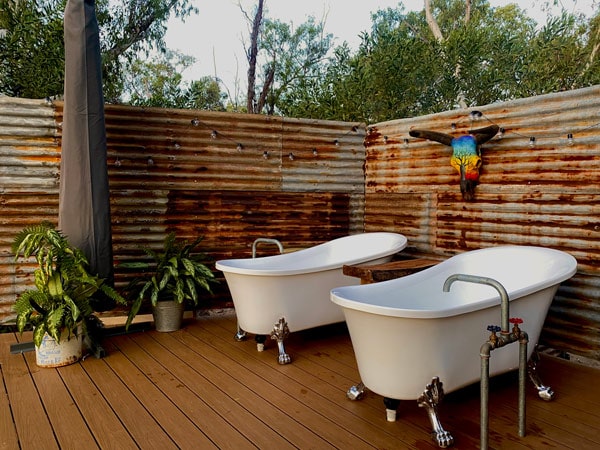
two bathtubs at Ellenbrae Station
Take a rejuvenating dip in one of the tubs.

Accommodation tip: Ellenbrae Station

Day eight: Manning Gorge

On the grounds of Mt Barnett Station, take the three-kilometre trail from the campsite to the top of Manning Gorge . The trail includes a swim across the Manning River (or you can take the rope-guide with floats to ferry your belongings) and has views out to the ranges and savannah woodland. The gorge has several waterfall-fed pools, which are perfect for swimming and rock hopping.

Must-see

1. Adcock Gorge

From Mt Barnett Roadhouse it’s 34 kilometres to Adcock Gorge, a picturesque swimming spot on Mt House station.

Accommodation tip: Manning Gorge

Day nine: Bandilngan (Windjana Gorge) National Park

Rise early and fuel up for the drive to Windjana Gorge, where you’ll stay the night at the large campground. Spend the afternoon exploring the 3.5-kilometre gorge, which was once the bottom of a tropical sea. Fossilised remnants are visible in its limestone walls. At its centre, the Lennard River is home to a huge concentration of freshwater crocodiles, so stay safe and don’t go in the water.
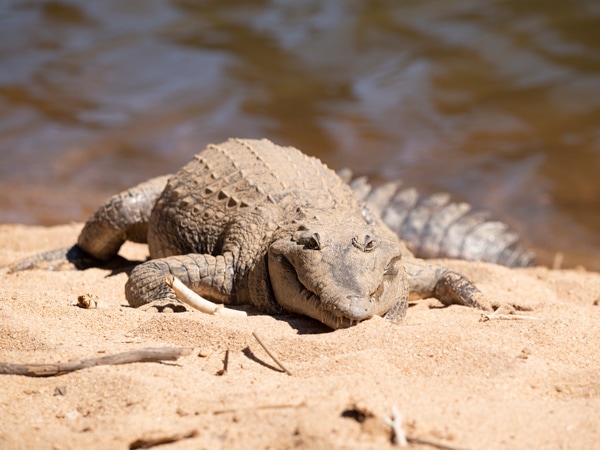
a freshwater crocodile at Windjana Gorge National Park
Spot freshwater crocodiles at Windjana Gorge National Park. (Image: Tourism Western Australia)

Must-see

1. Gorge Walk Trail

Take plenty of water and set off on the Gorge Walk Trail, which winds through Windjana Gorge  for 3.5 kilometres each way.

2. Time Walk Trail

Discover the marine life forms fossilized within the limestone of the walls of Windjana Gorge.
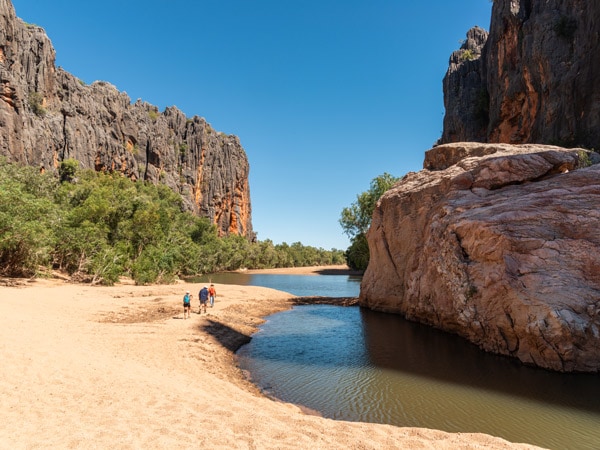
people on a walking trail along Windjana Gorge National Park
Go on a winding walk trail across Windjana Gorge National Park. (Image: Tourism Western Australia)

Accommodation tip: Windjana Gorge Campground

Day 10: Broome via Derby

You’re on the final stretch! The Gibb River Road ends in the small town of Derby today, located on the edge of King Sound, its streets lined with boab trees.
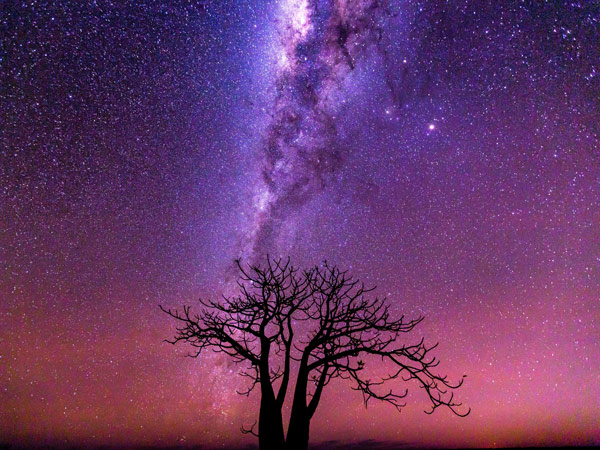
a Boab tree near Derby at night
Boab trees glow differently at night on the streets of Derby. (Image: Tourism Western Australia/@aeroture_au)

For those wanting to see the famous Horizontal Falls, stay overnight in Derby and join a day tour to this natural wonder. If you want to stay longer at the Horizontal Falls, book a night on the vessel Jetwave Pearl, which offers luxury rooms for a maximum of 20 guests.

After a break in Derby, continue along the Great Northern Highway to Broome. This small multicultural pearling town is where the desert meets the sea and your final destination on this epic outback road trip.

Must-see

1. Mowanjum Arts

In the Mowanjum community art centre near Derby , visitors can view and purchase artworks by custodians of Wandjina law and iconography from the Worrorra, Ngarinyin and Wunumbal tribes.
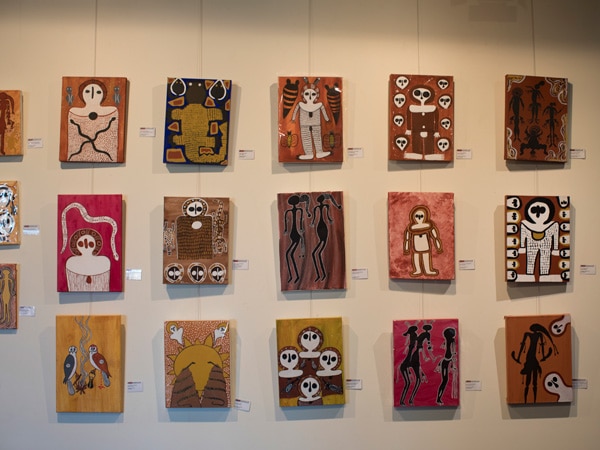
artworks by custodians of Wandjina law at Mowanjum Art and Cultural Centre
See artworks by custodians of Wandjina law at Mowanjum Art and Cultural Centre. (Image: Tourism Western Australia)

2. Boab Prison Tree

One of the finest examples of a Kimberley boab tree is the Boab Prison Tree  found just 6km south of Derby.  

Accommodation tip: Birdwood Downs Station

Important information

Distances on this Darwin to Broome road trip are approximate. The best time to travel is in the dry season, from May to September. Check seasonal information before travelling.

Many sections of this Darwin to Broome road trip are suitable for 4WDs only – don’t attempt it in a 2WD.

Be sure to fuel up your car regularly as petrol stations are few and far between, particularly on the Gibb River Road. Carry a couple of jerry cans with you just in case.

Always carry ample water; around five litres per traveller is recommended.

While you should have phone reception in most major towns, other areas of this road trip will have sketchy connections. A satellite phone is recommended.

Consider hiring a campervan if you’d prefer to be more flexible with your itinerary.

For more information read our survival guide on driving in the outback and this story on driving in the NT.

Original article written by Megan Arkinstall, updates by Leah McLennan.

Leah McLennan
Leah McLennan is a freelance writer based in Darwin. She was a journalist in Sydney for over a decade and counts her time as travel editor for Australian Associated Press as one of the highlights of her career. From exploring remote campsites in the Top End with her family, to seeking out new art galleries in faraway cities, she’ll grab an adventurous or arty travel experience within her reach.
See all articles
hero media

8 Northern Territory secrets the locals don’t want you to know

Summer transforms the Northern Territory into a lush paradise of colour and life, as a visit during the ‘low-season’ reveals secrets the locals willingly share.

Waterlilies bloom, floodplains are alive with birdlife, waterfalls are gushing, and everywhere the green is dazzling. Summer in the Top End and the Red Centre is a kaleidoscope of unexpected wonders that delight and surprise visitors. Of course, the locals know only too well that the Northern Territory low season is often the best time to see and experience this amazing part of Australia.

Here are some of the reasons why savvy travellers – avoiding the crowds – are discovering a new dimension to the Territory. Remember that you’ll need a Parks Pass to visit national parks.

1. Take a dip in the Florence Falls waterhole

Wander through savanna woodland and monsoon forest to discover the perfect place to cool off – the waterhole at the base of spectacular Florence Falls in the magnificent Litchfield National Park , just 90 minutes’ drive from Darwin. The falls flow year-round but are most spectacular during the summer. Camping is available nearby but bookings are essential and must be made online before you visit.

Surrounded by lush forest, a woman cools off in Florence Falls, just one of many incredible things to do in the Northern Territory.
Cool off beneath the cascading waters of Florence Falls. (Image: Joshua Griffin)

2. Wind down at Buley Rock Hole

Another popular local swimming spot in Litchfield National Park is Buley Rock Hole , open year-round. This is a great place to wind down after exploring everything the park has to offer, including towering termite mounds. Wade through the rock pools, soak up the scenic bush or just lie back and relax as the cool water rolls over you.

Buley Rockhole, Litchfield National Park
Let the cool water wash over you. (Image: Tourism Australia)

3. Tour the Tiwi Islands

The Tiwi Islands , a scenic 80km flight from Darwin across the narrow Clarence and Dundas Straits, reveal a different side to the Territory, with their own distinctive culture. Take a day tour with Tiwi by Design to visit Bathurst Island and learn about creation stories, the Mission days, World War II history and the islanders’ obsession with AFL!

Take a ‘behind-the-scenes’ tour of Tiwi Design’s screen-printing workshop and pick up a great souvenir in the form of art. Choose from contemporary or traditional Tiwi designs and a wide range of work including carvings, paintings, pottery, printmaking, bark paintings and tunga (bark baskets).

A creative moment shared inside Tiwi Design’s screen-printing space.
Take a peek inside Tiwi Design’s screen-printing studio. (Image: Tourism NT)

4. Dine in Darwin

Foodies are spoilt for choice in multi-cultural Darwin. Try Sri Lankan flavours at Ella by Minoli, where Masterchef contestant Minoli De Silva creates delectable dishes, or head to Charlie’s of Darwin for gin-tasting, cocktails and more. Bowls of fragrant laksa, excellent coffee, fresh vegetables and authentic crafts are all part of a weekend visit to Darwin’s Parap Markets , Rapid Creek Markets and the Nightcliff Markets .

Prefer to catch your own dinner? Book a Top End fishing charter to bag a barramundi – and from October register for the annual Million Dollar Fish competition. Hooking one of the tagged barra released each year in waterways across the Territory could win you up to $1 million.

A bowl of Laksa.
Eat your way through multicultural Darwin. (Image: Tourism NT)

5. Up close with Uluṟu

The magnificent monolith Uluṟu is even more magical when the summer rains fall. When it rains on The Rock, the locals come out to watch – consider yourself lucky if that happens when you visit. Waterfalls cascading off the sides of Uluṟu is a sight that relatively few tourists see.

There’s so much to do at Uluṟu, from guided walks to learn the stories of the Aṉangu people and the ancient landscape they live in to scenic flights for a bird’s-eye view or a leisurely walk around the base of Uluṟu. Book ahead to spend the evening wandering through the Field of Light installation by Bruce Munro.

A closer look at Uluru and uncover its ancient stories, sacred sites, and striking natural beauty – one of the most iconic things to do in the Northern Territory.
Discover the details that make Uluṟu truly sacred. (Image: Tourism NT)

6. Drive the Red Centre Way

From Alice Springs, take an epic road trip along the Red Centre Way, taking in Uluru and Watarrka National Park, home to the magnificent Kings Canyon. Allow at least a week to drive through the red heart of Australia by 4WD, a little longer on the sealed road by 2WD vehicle, travelling through ochre deserts, palm-lined valleys and dramatic gorges. Stop off at waterholes for a refreshing dip along the way.

Kings Canyon offers hiking options for all levels of fitness, from the three-hour Rim Walk atop soaring sandstone walls to the gentler Kings Creek Walk. Either way, you’ll have breathtaking views.

SEIT Outback Australia is a small group touring specialist offering exciting, adventurous, exclusive and specialised iconic, pioneering and cultural touring in the Red Centre of Australia, giving you the time to learn, absorb and relax in the heart of Australia.<br /><br />This innovative tour company focuses on providing clients with the ultimate interpretive touring experiences with a range of products and customised touring itineraries for small groups and bespoke private charters.<br /><br />The company bases its philosophies from the key words of Spirit, Emotion, Intellect and Task (SEIT).
Drive through Australia’s heart. (Image: Outback Australia Tours)

7. Take a walk at Kata Tjuṯa

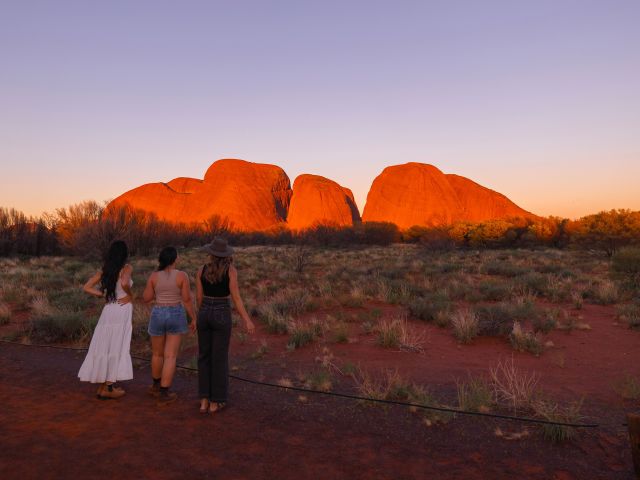
Head out early to tackle the Valley of the Winds Walk at Kata Tjuṯa . This natural wonder, also known as The Olgas, is a labyrinth of soaring ochre domes that glow golden at sunrise and sunset (the walk may be closed during the middle of the day as temperatures rise).

Walking trails range from easy to longer, more difficult tracks. At the Kata Tjuṯa dune viewing area, take in the panoramic view of the domes. The longest of the trails is the Valley of the Winds Walk, a 7.4km circuit that winds between the domes and through creek beds. It’s moderately difficult and steep in places, but offers stunning views – and occasional encounters with kangaroos.

The Valley of the Winds Walk at Kata Tjuta is one of the most awe-inspiring things to do in the Northern Territory, especially at sunrise when the domes glow golden.
Step into the golden light of Kata Tjuṯa. (Image: Tourism NT)

8. Explore Tjoritja/West MacDonnell Ranges

Tjoritja/West MacDonnell National Park lies 135km west of Alice Springs, with many fascinating natural features to beguile visitors. The ‘West Macs’ formations include chasms, gorges and waterholes – take your swimsuit for a dip at Ormiston Gorge waterhole, open year-round. The Ormiston Pound Walk is a three to four-hour circuit that leaves from the visitor centre and loops back along the gorge via the main waterhole. Other places of interest in the park include Simpsons Gap , Standley Chasm , Ellery Creek Big Hole and Glen Helen .

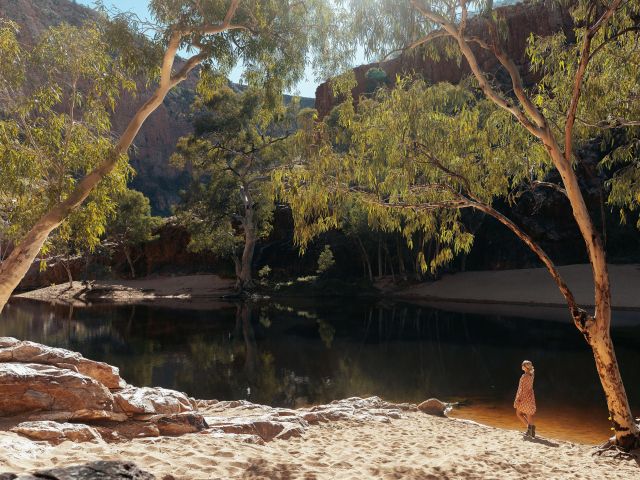
Soaking in the serenity of Ormiston Gorge, these two travellers enjoy one of the most scenic things to do in the Northern Territory.
Take the plunge at Ormiston Gorge waterhole. (Image: Joshua Griffin Litchfield)

Start planning the NT road trip of a lifetime at northernterritory.com