
hero media

Hepburn Bathhouse reopens with new mineral baths and experiences

Slow the flow of modern-day life in Australia’s magical spa country with a stay at the new Hepburn Bathhouse.

Sunlight spills across a large wooden table lined with a curious collection of essences, extracts, and pastel-hued powders in glass jars, each with a handwritten label. I pause at each of the small brown bottles, drawing their pipettes to compare the heady scents. Meanwhile, a spa therapist assuming the role of fragrance sommelier explains the formula for a perfectly scented soak: an uplifting citrus top note, a relaxing floral middle note, and a grounding, rich and heavy base note. I squeeze drops of bergamot, lavender, and a dash of frankincense into my bowl, stirring them with a scattering of rose petals, some pink Himalayan rock salt, and a sprinkle of ashwagandha in a small pot with a wooden spoon: it’s all a little bit meditative, ASMR and aesthetically pleasing.

Dip into magic. Hepburn Bathhouse has reopened bigger and better – think private mineral baths, custom apothecary soaks and rooms that range from pink-tiled bliss to slate-minimal zen.

Custom ‘apothecary’ experience

Each guest who opts for a private ‘Alchemist Mineral Bath’ at Hepburn Bathhouse & Spa is invited to make their own custom concoction. As my bath is drawn, I laze in the adjacent sunken timber lounge, sipping on an organic, herbal house-made tea that features some of the very same botanicals as the essential oils on the table (calendula, licorice root and spearmint, to name a few). Snug in slippers and a white waffle robe, I unfurl one of the curled blankets across my lap as melodic spa music echoes, and succumb to the serenity that permeates the spa’s every corner.

Gallery Image
Guests can now customise their own Apothecary concoction when booking a private bathing experience. (Image: Supplied)
A woman bathes in the new Hepburn Bathhouse and Spa private bathing room with marble tiled walls
The marble private bathing room is one of five new designs. (Image: Supplied)
A woman waits for her private bathing experience at Hepburn Bathhouse & Spa
The new Apothecary experience is for guests who opt for the private bathing rooms. (Image: Supplied)
slate-coloured tiles feature in the new private bathing rooms at Hepburn Bathhouse & Spa
Another version of the new private bathing rooms. (Image: Supplied)
Pink-coloured tiles feature in the new Private Bathing rooms at Hepburn Bathhouse & Spa
Pink subway tiles create a soothing space to bathe. (Image: Supplied)

Private mineral baths updated

This hands-on ‘apothecary’ experience is one of the newest additions to Australia’s oldest spa (est. 1895), which reopened in August 2025 after a multimillion-dollar facelift. The entire space has undergone a refresh, from new tiling and lighting to refurbished changing rooms. But chief among the updates are the private mineral baths themselves, five of which were overhauled by contestants from the 21st season of The Block, each offering a wholly different vibe. One is vibrant and uplifting, plastered with pink subway tiles; another is awash with slate and captures a meditative minimalism; while a third is a riot of patterns, decked in veined marble, chevron-tiled floors, and an embossed copper-look ceiling.

A woman bathes in the new Hepburn Bathhouse and Spa private bathing room with slate tiled walls
A soothing soak in the mineral waters of Hepburn Bathhouse & Spa. (Image: Supplied)

The therapeutic powers of mineral bathing

A 45-minute soak in a private bath might feel like an eternity of solitude in an age defined by overscheduling, digital addiction, restlessness and hustle culture, yet the time slips by surprisingly quickly and proves unexpectedly restorative. There’s a sudden rosy glow on my long anaemic-looking cheeks, a softness to my skin, and, just maybe, a slower pace to my thoughts. The therapeutic powers of mineral bathing have, of course, been lauded for centuries: even the ancient Greeks and Egyptians extolled the virtues of mineral bathing for its relaxation properties and supposed ability to treat ailments. The warm, spring-fed waters here at Hepburn Bathhouse are rich in magnesium, calcium, silica and sulphur, helping to ease muscle tension and support skin health. But there’s a mindfulness element too.

Communal bathing at Hepburn Bathhouse & Spa
The benefits of bathing have long been praised. (Image: Supplied)

In the main bathhouse, couples, friends, and mums and daughters all take to the waters, chatting, relaxing and generally enjoying each other’s company. Across history and cultures, bathhouses have acted as social hubs and anchors for local communities, and it feels profoundly refreshing to see people carve out time together, not a screen in sight; almost as if stepping into a time warp. Solo bathers find serenity here, too. Some resting their cheek on the pool’s edge and closing their eyes as their bodies float, others gazing straight out through the floor-to-ceiling windows to gorge on the abundant greenery beyond, and the occasional swamp wallaby.

From bathing to dining

With only a small cafe onsite, those coming to (rightly) make a weekend of it must venture beyond the bathhouse for dinner. Lucky then that noteworthy cafes and restaurants are in strong supply in Australia’s Spa Capital, with Lake House Restaurant , Bar Merenda and The Surly Goat among the region’s frontrunners. Few local restaurants promise a dining experience as mindful and holistically considered as Kadota , however.

A kaiseki-style restaurant, Kadota invites diners to slow down and savour each elaborately plated morsel by honouring seasonality and exalting the provenance of every ingredient, all with typical Japanese modesty. Come winter, that might mean a pair of small, sweet mousse-like ‘pies’ made of slippery jack mushrooms, white chocolate and pine nuts, and moulded to resemble pumpkins that sit atop a dried oak leaf. Or a fermented kohlrabi and chive sauce that’s poured by teapot, tableside, onto local brassicas — the dish brightened by a cluster of cured salmon roe pearls and butterflies fashioned from daikon. Equal thought and care has been showered upon the dining room, which is a talking point in itself: light shades crafted by a local artist to mimic a lotus root; a feature wall of Daylesford pinewood, blackened using the traditional Japanese wood preservation method of yaki-matsu; hand-scribed scrolls made by co-owner Risa Kadota’s grandfather; and lemon balm stalks strung up along the wall to air-dry for tea.

Like Hepburn Bathhouse, Kadota possesses a special kind of alchemy that’s greater than the sum of its parts, affording guests a deeper connection with the present. Somehow, even the drive from Melbourne to Hepburn feels like part of the experience, as if the spa’s founders dreamed it up that way. The city’s grit, grey and congestion gradually recedes in the rearview mirror, giving way to bucolic scenes and quiet roads: woolly sheep grazing on golden fields, gently rolling hills, winding roads flanked by forest, horses in paddocks, and family-run farmgate stalls. The drive itself becomes part of the ritual, nudging visitors into a more mindful state before they’ve even dipped their toes in the town’s magical waters.

Weekly travel news, experiences
insider tips, offers, and more.

Chloe Cann
Chloe Cann is an award-winning freelance travel and food writer, born in England, based in Melbourne and Roman by adoption. Since honing her skills at City St George's, University of London with a master's degree in journalism, she's been writing almost exclusively about travel for more than a decade, and has worked in-house at newspapers and travel magazines in London, Phnom Penh, Sydney and Melbourne. Through a mixture of work and pleasure, she's been fortunate enough to visit 80 countries to date, though there are many more that she is itching to reach. While the strength of a region's food scene tends to dictate the location of her next trip, she can be equally swayed by the promise of interesting landscapes and offbeat experiences. And with a small person now in tow, travel looks a little different these days, but it remains at the front of her mind.
See all articles
hero media

The Macedon Ranges is Victoria’s best-kept food and wine secret

Located just an hour north-west of Melbourne, the largely undiscovered Macedon Ranges quietly pours some of Australia’s finest cool-climate wines and serves up some of Victoria’s best food.

Mention the Macedon Ranges and most people will think of day spas and mineral springs around Daylesford, cosy weekends away in the countryside or the famous Hanging Rock (of enigmatic picnic fame). Or they won’t have heard of the Macedon Ranges at all.

But this cool-climate destination has been inconspicuously building a profile as a high-quality food and wine region and is beginning to draw serious attention from oenophiles and epicureans alike.

The rise of Macedon Ranges wine

liquid gold barrels at Kyneton Ridge Estate Winery
Barrels of liquid gold at Kyneton Ridge Estate Winery. (Image: Chloe Smith Photography)

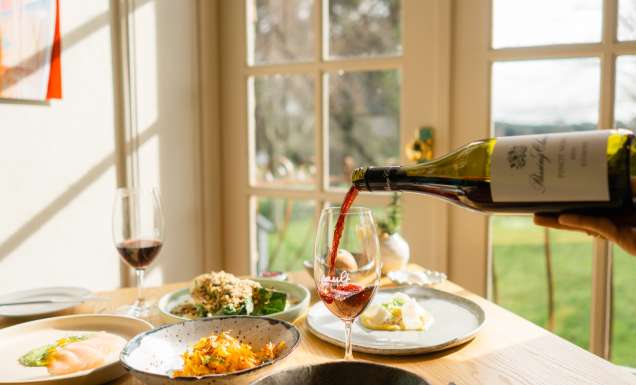
With elevations ranging from 300 to 800 metres, Macedon Ranges vineyards are among the highest in the country. This altitude, combined with significant day/night temperature swings, makes for a slow ripening season, in turn nurturing wines that embody elegance and structure. Think crisp chardonnays, subtle yet complex pinot noirs and delicate sparkling wines, along with niche varietals, such as gamay and nebbiolo.

Despite the region’s natural advantages – which vary from estate to estate, as each site embodies unique terroir depending on its position in relation to the Great Dividing Range, soil make-up and altitude – the Macedon Ranges has remained something of an insider’s secret. Unlike Victoria’s Yarra Valley or Mornington Peninsula, you won’t find large tour buses here and there’s no mass marketing drawing crowds.

Many of the 40-odd wineries are family-run operations with modest yields, meaning the wineries maintain a personal touch (if you visit a cellar door, you’ll likely chat to the owner or winemaker themselves) and a tight sales circle that often doesn’t go far beyond said cellar door. And that’s part of the charm.

Though wines from the Macedon Ranges are just starting to gain more widespread recognition in Australia, the first vines were planted in the 1860s, with a handful of operators then setting up business in the 1970s and ’80s. The industry surged again in the 1990s and early 2000s with the entry of wineries, such as Mount Towrong, which has an Italian slant in both its wine and food offering, and Curly Flat , now one of the largest estates.

Meet the new generation of local winemakers

the Clydesdale barn at Paramoor.
The Clydesdale barn at Paramoor. (Image: Chloe Smith Photography)

Then, within the last 15 years, a new crop of vignerons like Andrew Wood at Kyneton Ridge Estate , whose vineyard in 2024 was the first in the Macedon Ranges to be certified by Sustainable Winegrowing Australia; Geoff Plahn and Samantha Reid at Paramoor , who have an impressive cellar door with a roaring fire and studded leather couches in an old Clydesdale barn; and Ollie Rapson and Renata Morello at Lyons Will , who rapidly expanded a small vineyard to focus on top-shelf riesling, gamay, pinot noir and chardonnay, have taken ownership of local estates.

Going back to the early days, Llew Knight’s family was one of the pioneers of the 1970s, replacing sheep with vines at Granite Hills when the wool industry dwindled. Knight is proud of the fact that all their wines are made with grapes from their estate, including a light, peppery shiraz (some Macedon wineries purchase fruit from nearby warmer areas, such as Heathcote, particularly to make shiraz) and a European-style grüner veltliner. And, as many other wineries in the region do, he relies on natural acid for balance, rather than an additive, which is often required in warmer regions. “It’s all about understanding and respecting your climate to get the best out of your wines,” he says.

farm animals atKyneton Ridge Estate
Curious residents at Kyneton Ridge Estate. (Image: Chloe Smith Photography)

Throughout the Macedon Ranges, there’s a growing focus on sustainability and natural and low-intervention wines, with producers, such as Brian Martin at Hunter Gatherer making waves in regenerative viticulture. Martin previously worked in senior roles at Australia’s largest sparkling winemaking facility, and now applies that expertise and his own nous to natural, hands‑off, wild-fermented wines, including pét‑nat, riesling and pinot noir. “Wild fermentation brings more complexity,” he says. “Instead of introducing one species of yeast, you can have thousands and they add different characteristics to the wine.”

the vineyard at Kyneton Ridge Estate Winery
The estate’s vineyard, where cool-climate grapes are grown. (Image: Chloe Smith Photography)

Most producers also focus on nurturing their grapes in-field and prune and pick by hand, thus avoiding the introduction of impurities and the need to meddle too much in the winery. “The better the quality of the fruit, the less you have to interfere with the natural winemaking process,” says Wood.

Given the small yields, there’s also little room for error, meaning producers place immense focus on quality. “You’re never going to compete in the middle [in a small region] – you’ve got to aim for the top,” says Curly Flat owner Jeni Kolkka. “Big wineries try to do things as fast as possible, but we’re in no rush,” adds Troy Walsh, owner and winemaker at Attwoods . “We don’t use commercial yeasts; everything is hand-harvested and everything is bottled here, so we bottle only when we’re ready, not when a big truck arrives.” That’s why, when you do see a Macedon Ranges product on a restaurant wine list, it’s usually towards the pointy end.

Come for the wine, stay for the food

pouring sauce onto a dish at Lake HouseDaylesford
Dining at Lake House Daylesford is a treat. (Image: Chloe Smith Photography)

If wine is the quiet achiever of the Macedon Ranges, then food is its not-so-secret weapon. In fact, the area has more hatted restaurants than any other region in Victoria. A pioneer of the area’s gourmet food movement is region cheerleader Alla Wolf-Tasker, culinary icon and founder of Daylesford’s Lake House.

For more than three decades, Wolf-Tasker has championed local producers and helped define what regional fine dining can look like in Australia. Her influence is palpable, not just in the two-hatted Lake House kitchen, but in the broader ethos of the region’s dining scene, as a wave of high-quality restaurants have followed her lead to become true destination diners.

the Midnight Starling restaurant in Kyneton Ridge Estate Winery
The hatted Midnight Starling restaurant is located in Kyneton. (Image: Chloe Smith Photography)

It’s easy to eat well, whether at other hatted restaurants, such as Midnight Starling in the quaint town of Kyneton, or at the wineries themselves, like Le Bouchon at Attwoods, where Walsh is inspired by his time working in France in both his food offering and winemaking.

The beauty of dining and wine touring in the Macedon Ranges is that it feels intimate and unhurried. You’re likely to meet the winemaker, hear about the trials of the latest vintage firsthand, and taste wines that never make it to city shelves. And that’s worth getting out of the city for – even if it is just an hour down the road.

dishes on the menu at Midnight Starling
Delicate dishes on the menu at Midnight Starling. (Image: Chloe Smith Photography)

A traveller’s checklist

Staying there

the accommodation at Cleveland Estate, Macedon Ranges
Stay at the Cleveland Estate. (Image: Chloe Smith Photography)

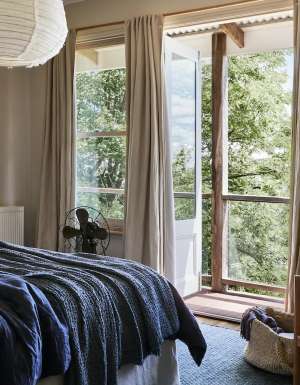
Soak up vineyard views from Cleveland Estate near Lancefield , embrace retro charm at Kyneton Springs Motel or indulge in lakeside luxury at the Lake House .

Eating there

Enjoy a four-course menu at the one-hatted Surly Goat in Hepburn Springs, Japanese-inspired fare at Kuzu in Woodend or unpretentious fine dining at Mount Monument , which also has a sculpture park.

Drinking there

wine tasting at PassingClouds Winery, Macedon Ranges
A tasting at Passing Clouds Winery. (Image: Chloe Smith Photography)

Settle in for a tasting at Boomtown in Castlemaine, sample local drops at the cosy Woodend Cellar & Bar or wine-hop around the many cellar doors, such as Passing Clouds .

the Boomtown Winery and Cellar Bar signage
Boomtown Winery and Cellar Bar. (Image: Chloe Smith Photography)

Playing there

a scenic river in Castlemaine
Idyllic scenes at Castlemaine. (Image: Chloe Smith Photography)

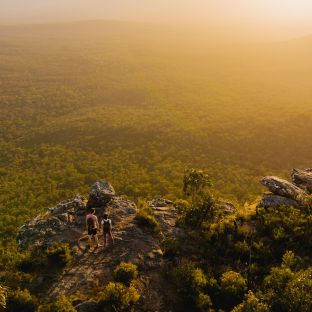
Wander through the seasonal splendour of Forest Glade Gardens , hike to the summit of Hanging Rock, or stroll around the tranquil Sanatorium Lake.

purple flowers hanging from a tree
Purple flowers hanging from a tree. (Image: Chloe Smith Photography)