A guide to Phillip Island’s best walks

hero media
Explore shipwrecks, come face-to-face with Highland cattle, and drink in panoramic views on these six Phillip Island walks.

Surrounded by a blustery, rugged coastline, and encompassing a patchwork of verdant, rolling farmland, where cattle and sheep graze, Phillip Island is a rambler’s delight. Whether you’re after a short scenic walk with the kids, or a lengthier hike with friends, these six walks should stand you in good stead.


Don’t miss: Top things to do on Phillip Island

Churchill Island Walks

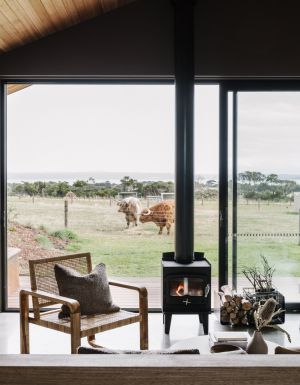
Connected to Phillip Island via a bridge, this small, little-known island is home to a working farm that’s among the oldest in Victoria, and a restored homestead and cottages that date back to the 1860s, all of which are open to the public and popular with families. The most famous local residents here are arguably the farm’s shaggy Highland cattle.


The isle is home to three different walks: the Churchill Island loop, which takes around two hours to complete; the easier North Point loop, which takes just one hour to complete; and the Wadjil’garook Wetland, which is really more of a brief stroll, but includes insights into Aboriginal culture, and offers an opportunity to see wetland birds.


Toast to a walk well done with a flat white at the island’s cafe, which has a rather tempting yet wholesome breakfast and brunch menu too, brimful of locally sourced produce. Bear in mind that the farm grounds are managed by not-for-profit Phillip Island Nature Parks , and ticketed (adults are priced from $13.50, and children aged between four and 15-years-old are priced from $6.75), but entrance to the walks alone is free.
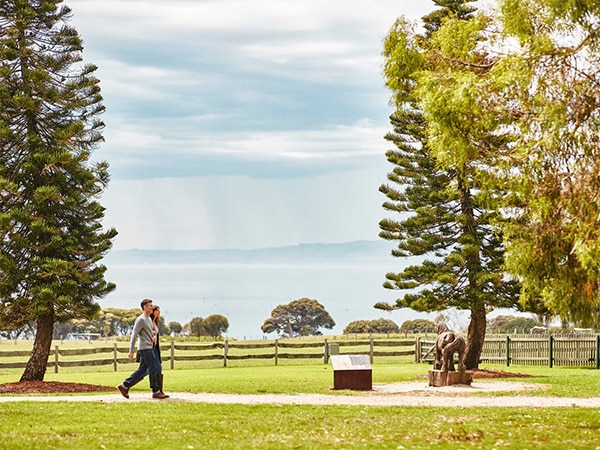
walkers on Churchill Island
Walk among the history of Churchill Island.

Pyramid Rock to Berrys Beach

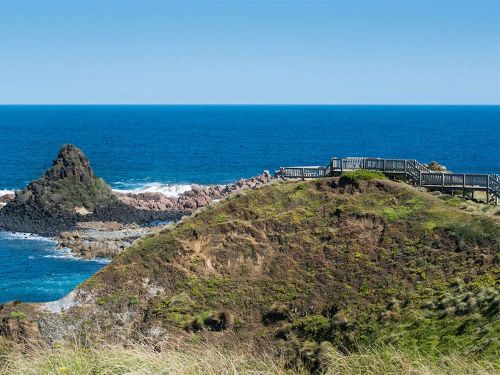
A meandering clifftop track that affords walkers beautiful coastal views, this walk from Pyramid Rock to Berrys Beach takes around two hours return, though you may want to factor in more time to savour the views from the lookout points, snap a photo or two for Instagram, and spot creatures of the deep… Between May and October migratory killer whales, southern right whales and humpback whales are known to cruise through these very waters, as they head from Antarctica towards Queensland’s warmer climes for calving.


Along the five-kilometre walk you’ll marvel at the black basalt columns of Pyramid Rock, trace the green and gold of the coastline’s scrubland and swathes of tussock grass, and finally, you’ll wind up at the sweeping, secluded Berrys Beach.
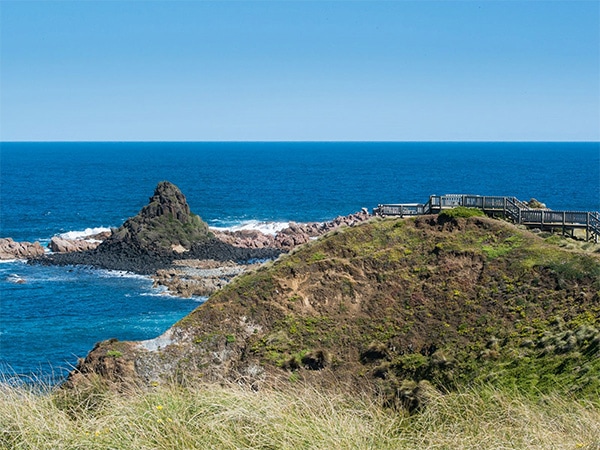
Views of Phillip Island's Pyramid rock
Pyramid rock affords walkers beautiful coastal views.

Swan Lake Walk

A short and mostly flat, kid-, pram- and wheelchair-friendly walk that skirts freshwater Swan Lake in the island’s west, this short trail is partly comprised of boardwalks and takes in two bird hides near the lake’s edge. Walkers will wander through bushland, past tea trees, banksia and native grasses, and may spot black swans, swamp harriers, cormorants, purple swamp hens and more on their journey. It’s a 1.3-kilometre walk that takes just 20 minutes from start to finish.
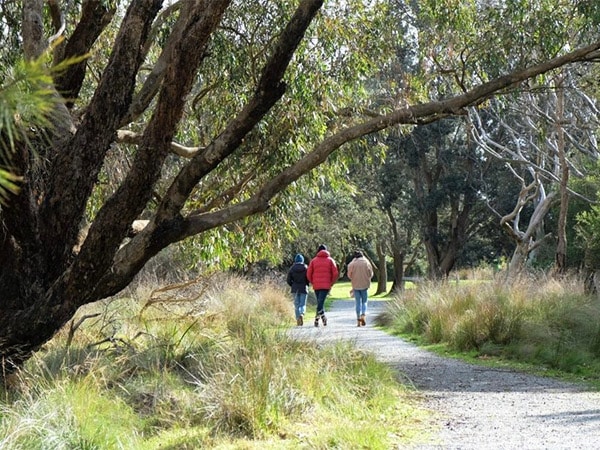
Journey through freshwater Swan Lake in the island’s west.

Scenic Estate Conservation Reserve Walks

This birdlife-rich 28-hectare site provides a habitat for six species of threatened birds, and also overlooks a World Heritage-listed Ramsar wetland. Stroll among endangered grasslands and vegetation, while soaking up the bay views that stretch to Churchill Island, Rhyll and beyond. In among the natural bushland setting you’ll also find two scenically situated picnic shelters, perfect for enjoying a lazy lunch al fresco – just don’t forget to pack provisions.


There are 1.5 kilometres of walking tracks to explore, so you can pace your walk accordingly, whether you’re in the mood for a brief outing or an extended ramble in the fresh air.
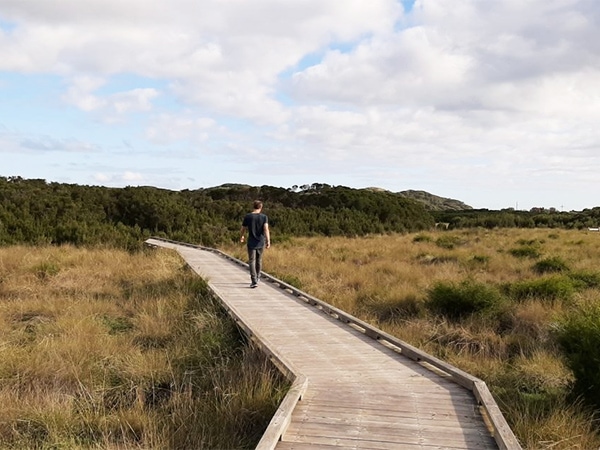
Scenic Estate Conservation Reserve Walk.
Boardwalk beauty at Scenic Estate Conservation Reserve Walk.

Don’t miss: A guide to Phillip Island’s best beaches

Cape Woolamai Walks

Venture up to the heady heights of Cape Woolamai, the highest point on Phillip Island, and gorge on panoramic views. Part of the Cape Woolamai State Faunal Reserve, which plays host to short-tailed shearwater (aka muttonbird) rookeries, you can choose your own adventure from the three walking tracks, all of which start from the reserve’s carpark. The Cape Woolamai Beacon Walk (follow the black markers) takes around 3.5 hours return; The Old Granite Quarry Walk (follow the blue markers) is six kilometres long and takes a total of three hours to complete; and the shorter Pinnacles Walk (follow the green markers) takes around two hours return. On both the Cape Woolamai Beacon Walk, and the Pinnacles Walk you’ll gaze down upon a cluster of spindly sea stacks that rise up out of the frothy surf, a local landmark known as The Pinnacles.
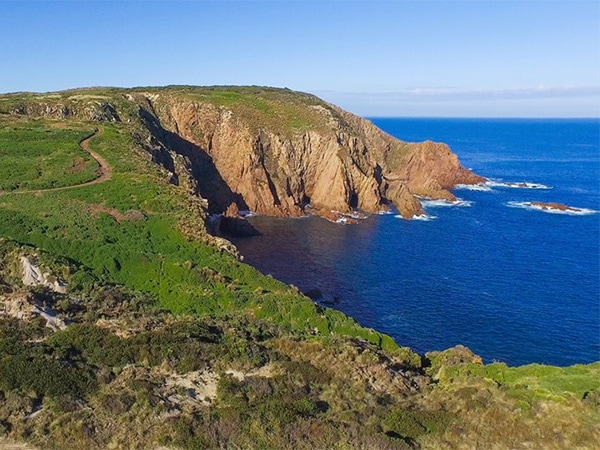
 Cape Woolamai in Phillip Island
Venture up to the heady heights of Cape Woolamai.

Kitty Miller Bay Walk

 Combine a spot of rockpooling and shell collecting with a visit to the rusted remains of an old shipwreck on this one-hour-long walk. First you’ll amble down a wooden stairway that leads to the shores of snug little Kitty Miller Bay, then follow the curve of the beach to your left, before finally landing at the site of the SS Speke, which ran aground on Phillip Island back in 1906. Ensure your visit coincides with the low tide, otherwise access will be limited.
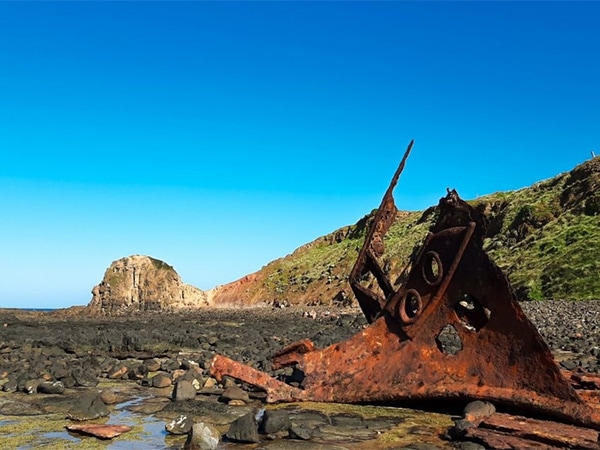
SS Speke shipwreck
SS Speke ran aground on Phillip Island back in 1906.
Chloe Cann
Chloe Cann is an award-winning freelance travel and food writer, born in England, based in Melbourne and Roman by adoption. Since honing her skills at City St George's, University of London with a master's degree in journalism, she's been writing almost exclusively about travel for more than a decade, and has worked in-house at newspapers and travel magazines in London, Phnom Penh, Sydney and Melbourne. Through a mixture of work and pleasure, she's been fortunate enough to visit 80 countries to date, though there are many more that she is itching to reach. While the strength of a region's food scene tends to dictate the location of her next trip, she can be equally swayed by the promise of interesting landscapes and offbeat experiences. And with a small person now in tow, travel looks a little different these days, but it remains at the front of her mind.
See all articles
hero media

Unforgettable First Peoples tours and experiences in Victoria

From ancient aquaculture systems to sacred rock art shelters, Victoria’s First Peoples cultural experiences offer a powerful connection to one of the world’s oldest living cultures – where every site, story and smoking ceremony invites a deeper understanding of the land beneath your feet. 

Victoria’s sweeping landscapes hold stories far older than any road map can trace – stories etched into stone, sung through generations and woven into every bend of river and rise of hill. From the lava flows of Budj Bim to the ancient middens of Moyjil/Point Ritchie and the volcanic crater of Tower Hill, the state is home to some of the most significant First Peoples cultural sites in Australia. These places, along with other immersive experiences, offer not only a window into a 60,000-year legacy, but a profound way of understanding Country itself. As more travellers seek connection over checklists, guided tours by Traditional Owners offer respectful, unforgettable insights into a living culture that continues to shape the land and the people who walk it. 

Budj Bim cultural landscape  

Budj Bim Cultural Landscape
Budj Bim Cultural Landscape is on Gunditjmara Country. (Image: Visit Victoria)

Venture beyond the surf and sand of the Great Ocean Road to discover a deeper story etched into the volcanic landscape. At Budj Bim , ancient aquaculture channels built by the Gunditjmara people to trap, store and harvest kooyang (short-finned eel) reveal one of the world’s oldest living cultures. While you’re in the area, head over to the state-of-the-art Tae Rak Aquaculture Centre, where you can observe the eels in a special tank, wander the shores of Tae Rak (Lake Condah), and enjoy a bite at the Bush Tucker Cafe. Also nearby is Tower Hill, a dormant volcano reborn as a wildlife reserve, offering trails through bushland teeming with emus and koalas. 

eel tank
The kooyang (eel) tank at Tae Rak. (Image: Visit Victoria)

Dumawul Kooyoora Walking Tour 

Dumawul walkingtour
Guests are guided through Kooyoora State Park on the Dumawul walking tour. (Image: Visit Victoria)

Step into a timeless landscape with Dumawul’s guided tour through Kooyoora State Park, around an hour’s drive west of Bendigo in north-central Victoria. Led by Djaara guides, this immersive half-day journey breathes life into Country, weaving together stories, bush tucker and ancient rock art. Known to the Dja Dja Wurrung people as Guyura – the ‘mountain of light’ – this dramatic granite range is rich with cultural and spiritual significance.  The adventure begins with a meet-up at the Bridgewater Hotel on the banks of the Loddon River, before guests are welcomed onto Country with a traditional Smoking Ceremony – a powerful ritual that honours ancestors and cleanses those who walk the land. From there, it’s a gentle wander through rugged outcrops and open bushland, with sweeping vistas unfolding at every turn. Along the way, guides share their knowledge of how the Dja Dja Wurrung peoples have cared for and adapted with this land for generations, offering a rare and moving window into an ancient way of life that continues to thrive today.  

Kooyoora walking tour
Knowledge of the Dja Dja Wurrung is shared on the trail. (Image: Visit Victoria)

Kingfisher Cruises  

Kingfisher Cruises
Cruising the Murray with Kingfisher Cruises. (Image: Visit Victoria)

Glide quietly through the Barmah-Millewa forest – the nation’s largest river red gum ecosystem – on a scenic journey along the Murray River and into the Barmah Lakes with Kingfisher Cruises . Led by passionate guides who share stories of the cultural significance of this ancient landscape, these cruises reveal the stories, totems and traditional knowledge of the Yorta Yorta people. As you navigate narrow waterways and spot native birds, you’ll gain a richer understanding of how First Peoples have lived in harmony with this floodplain for tens of thousands of years. It’s a gentle, immersive experience that leaves a lasting impression – one where every bend in the river carries echoes of culture, connection and Country.  

wawa biik 

 Taungurung leaders
Exploring Nagambie with Taungurung leaders. (Image: Visit Victoria)

Translating to ‘hello, Country’ in the language of the First Nations People and Custodians of the rivers and mountains of Taungurung Country in Central Victoria, wawa biik guides a range of authentic and deeply immersive experiences. Leaving from either Nagambie or Euroa, the tours are woven with ancient stories of the Taungurung, telling how a sustained connection and responsibility ensures the continued health of biik – benefitting the people, animals and plants that live in and around the Goulburn River. During the wawa Nagambie experience, guests participate in a Welcome Smoking Ceremony, and enjoy lunch and conversation with two Taungurung leaders as they cruise through the wetlands of tabilk-tabilk (place of many waterholes). The 4.5-hour tour begins at Tahbilk Winery, which is set in the wetlands of Nagambie on Taungurung Country and collaborates with Taungurung Elders to share knowledge of biik. 

Bataluk Cultural Trail  

Bataluk Trail
Cape Conran on the Bataluk Trail. (Image: Visit Victoria)

The Bataluk Cultural Trail winds through East Gippsland like a thread stitching past to present, tracing the deep connection between the Gunaikurnai people and their land. Starting at the Knob Reserve in Stratford, visitors walk among scarred trees and ancient stone tools once used for survival and ceremony. At the Den of Nargun near Mitchell River, the earth holds stories of women’s sacred spaces, cloaked in myth and legend. Further along, Legend Rock at Metung tells of greed and consequence, its surface etched with ancient lore. At Cape Conran, shell middens lie scattered like breadcrumbs of history – 10,000 years of gatherings, stories and saltwater songs still echoing in the wind.  

Healesville Sanctuary  

echidna at Healesville Sanctuary
Get up close with a resident echidna at Healesville Sanctuary. (Image: Visit Victoria)

Set on the historic grounds of Coranderrk Aboriginal Station, Healesville Sanctuary honours the Wurundjeri people of the Kulin Nation through immersive storytelling and connection to Country. Along Wurundjeri Walk, visitors are invited to reflect on the land’s rich First Peoples history, with native plants revealing their traditional uses. Wurundjeri Elder and educator Murrundindi shares culture in-person with the Wominjeka Aboriginal Cultural Experience every Sunday, and most days during Victorian school holidays. Murrundindi’s smoking ceremonies, storytelling and bush tucker knowledge reveal the sacred relationship between people, animals and the environment. Bird-lovers can’t miss the incredible Spirits of the Sky show featuring native birds daily at 12pm and 3pm. 

The Grampians 

Rock art at Bunjil Shelter in The Grampians
Rock art at Bunjil Shelter in The Grampians. (Image: Visit Victoria)

Known as Gariwerd to Traditional Owners, the Grampians is a place of immense cultural and spiritual significance. This rugged landscape holds more than 80 per cent of Victoria’s known First Peoples rock art, offering a powerful window into the region’s deep heritage. Visitors can respectfully explore five remarkable rock art sites: Billimina and Ngamadjidj in the Wartook Valley, Manja Shelter near Hamilton, Gulgurn Manja shelter near Laharum, and the Bunjil Shelter near Stawell, where the creator spirit is depicted. Each site tells a unique story of connection to Country, shared through ancient handprints, dancing figures and Dreaming narratives etched into stone.