hero media

This little-known heritage rail journey takes you past charming towns, artworks on silos and lakes

Board the heritage Grainlander and step back in time for a rail journey discovering silo art, Lake Tyrrell and Victoria’s Mallee region.

One of the best ways to experience Australia is on board a train, and the heritage Grainlader showcases both the beauty of the sprawling Victorian plains and the towering artworks along the Mallee Silo Art Trail.

Below, I take you on a journey to discover what it’s like to spend two nights aboard this iconic locomotive.

What is the Grainlander?
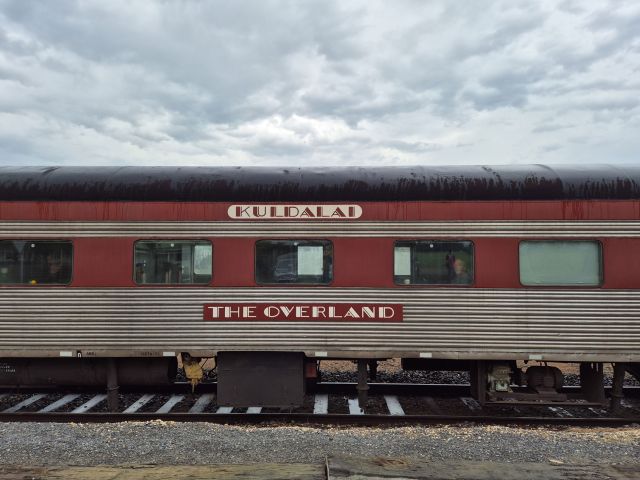
Exterior of Overland Sleeper carriage on The Grainlander
The vintage sleeper train takes patrons on a journey through regional Victoria. (Image: Joanne Karcz)

The Grainlander is a heritage overnight sleeper train in Victoria operated by Slow Rail Journeys, the public tour arm of Seven-O-Seven Operations. It travels through the state’s regional areas, highlights include the Mallee Silo Art Trail (guided off-train tours of the large-scale murals are part of the journey).

Vice President of the volunteer-run not-for-profit organisation, Matt Lucas, says their mission is to “share and restore rail heritage and to promote and increase touring in regional Victoria."

The journey
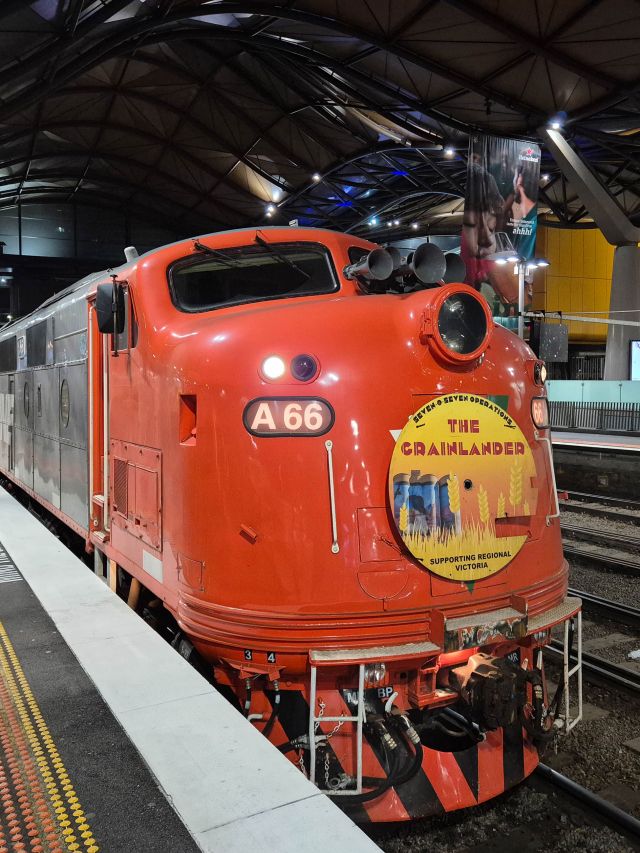
The Grainlander departs Melbourne from Southern Cross Station
The Grainlander departs Melbourne. (Image: Joanne Karcz)

Travelling from Melbourne to Sea Lake, we rumble through Melbourne’s western suburbs and Bacchus Marsh to Ballarat. We pass through towns I’ve never heard of: Wycheproof, Nullawil and Buckrabanyule.

The quick stops are not conducive to alighting from the train, but there’s time for that on the return journey when I alight at Wycheproof for a brisk walk down the main road to see the tracks tracing parallel lines through the town centre. In Maryborough, I stretch my legs and explore the imposing red brick station.

From Ballarat, we trace a path via Geelong to Melbourne along a line that carried miners and freight to the goldfields in the 1800s, thus providing train enthusiasts with a unique experience.

The guest who is on a mission to ride every railway track in Victoria, is thrilled.

Need tips, more detail or itinerary ideas tailored to you? Ask AT.
AI Prompt

Life on board

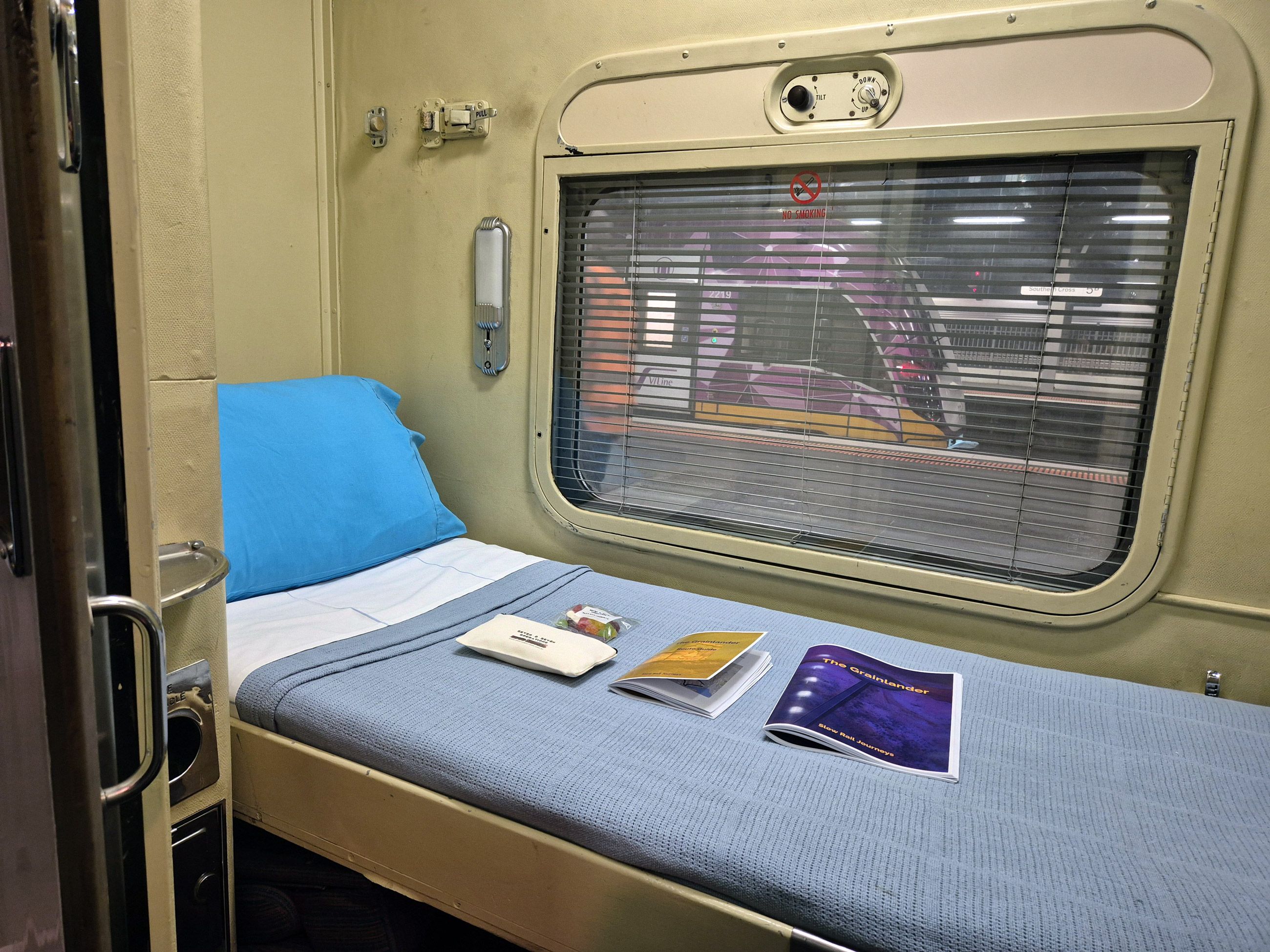
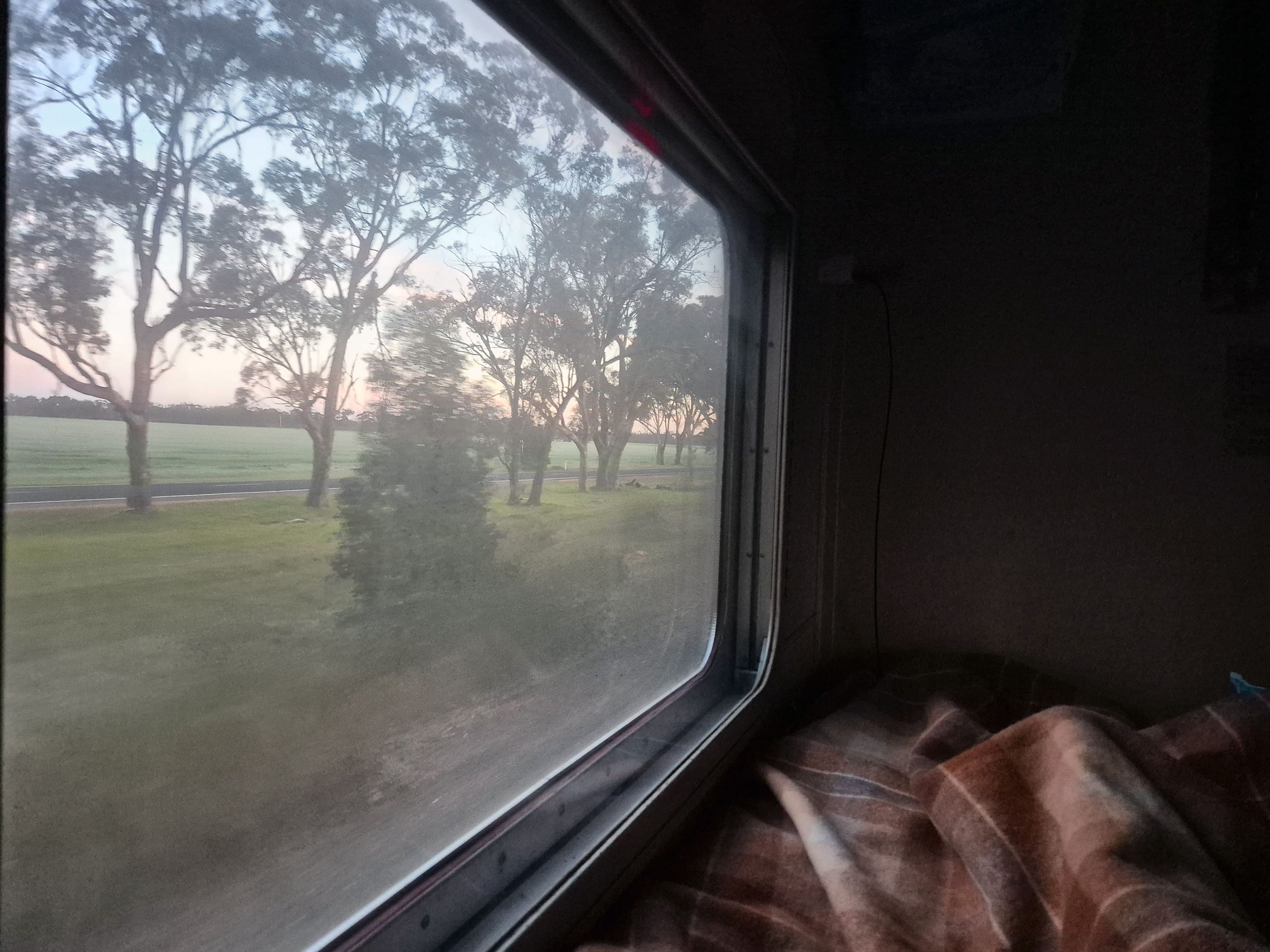
Window view from bed of Single Premium Cabin onboard the Grainlander
The writer's view from the bed of her Single Premium Cabin. (Image: Joanne Karcz)
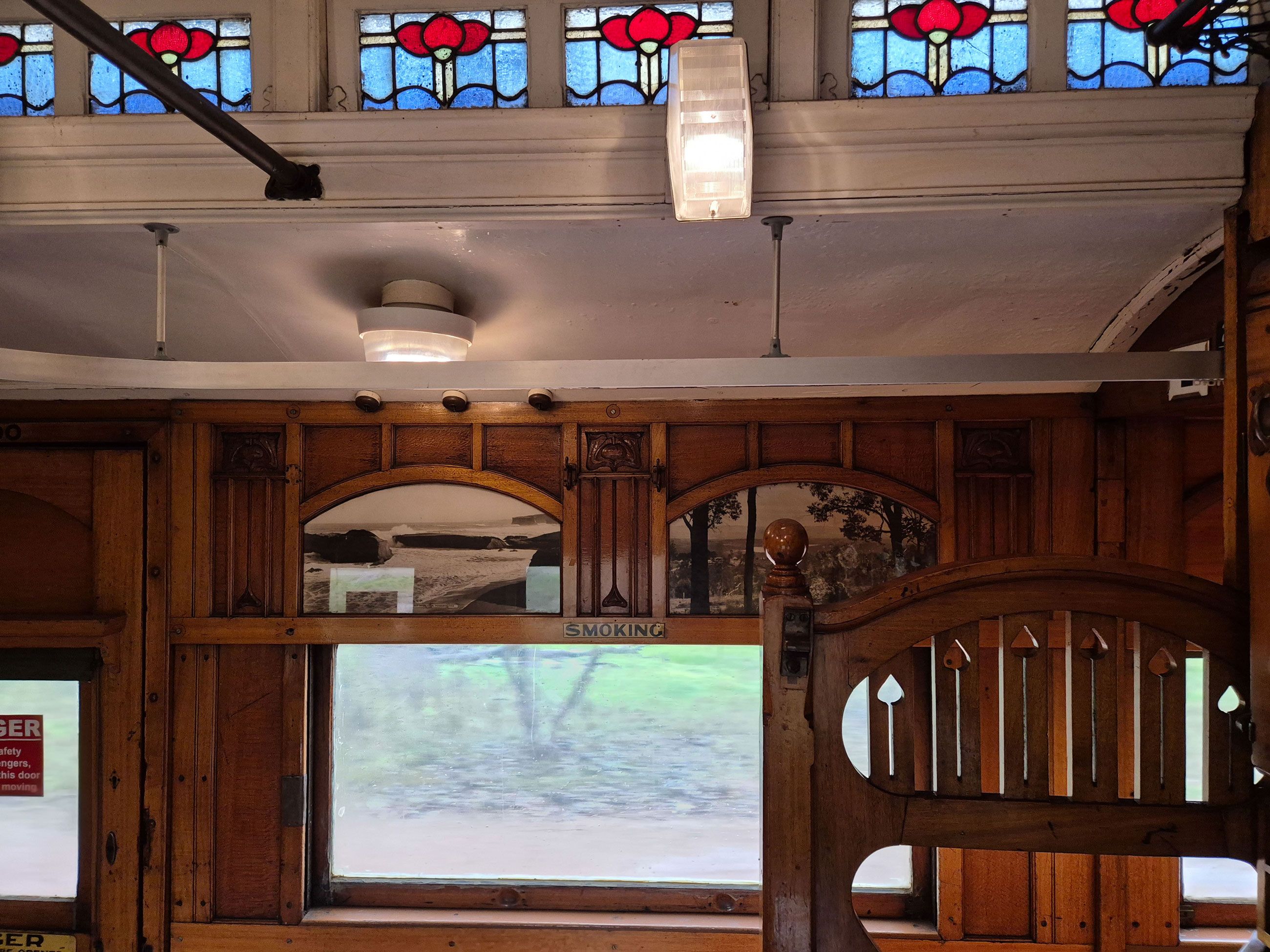
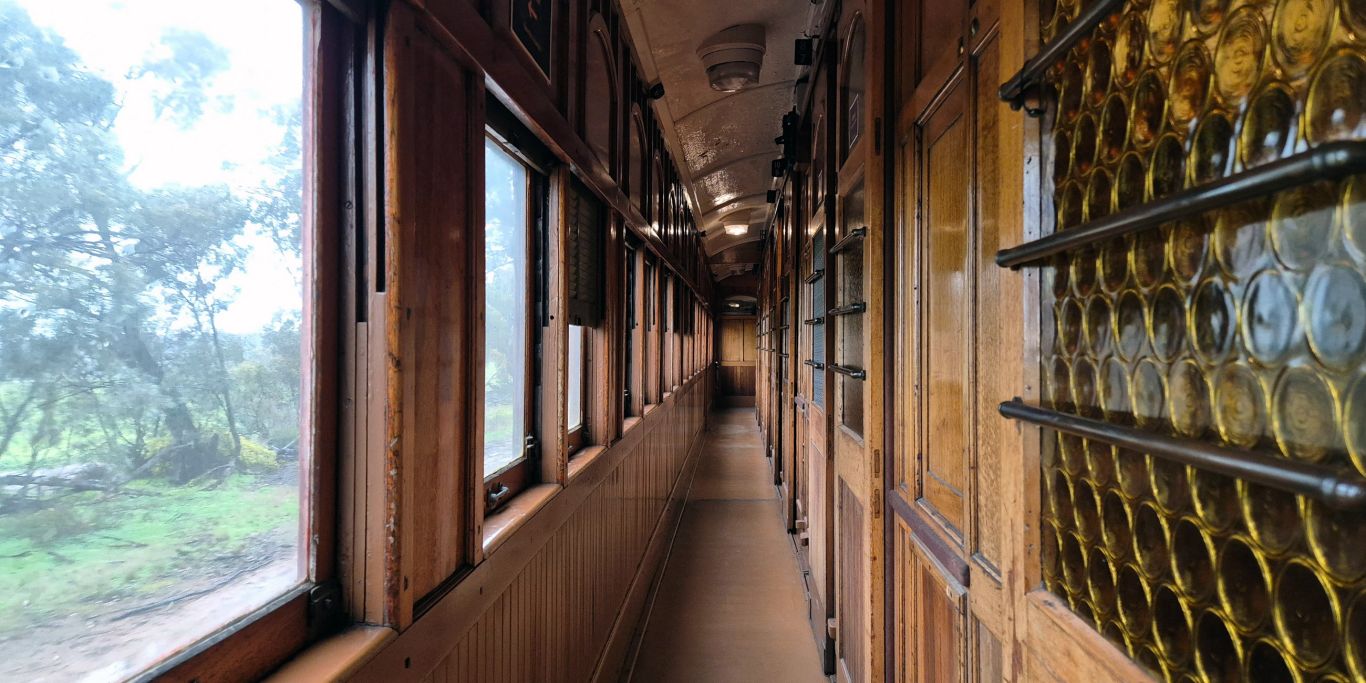
Details inside the wooden heritage car on the Grainlander
Details inside the wooden heritage car. (Image: Joanne Karcz)
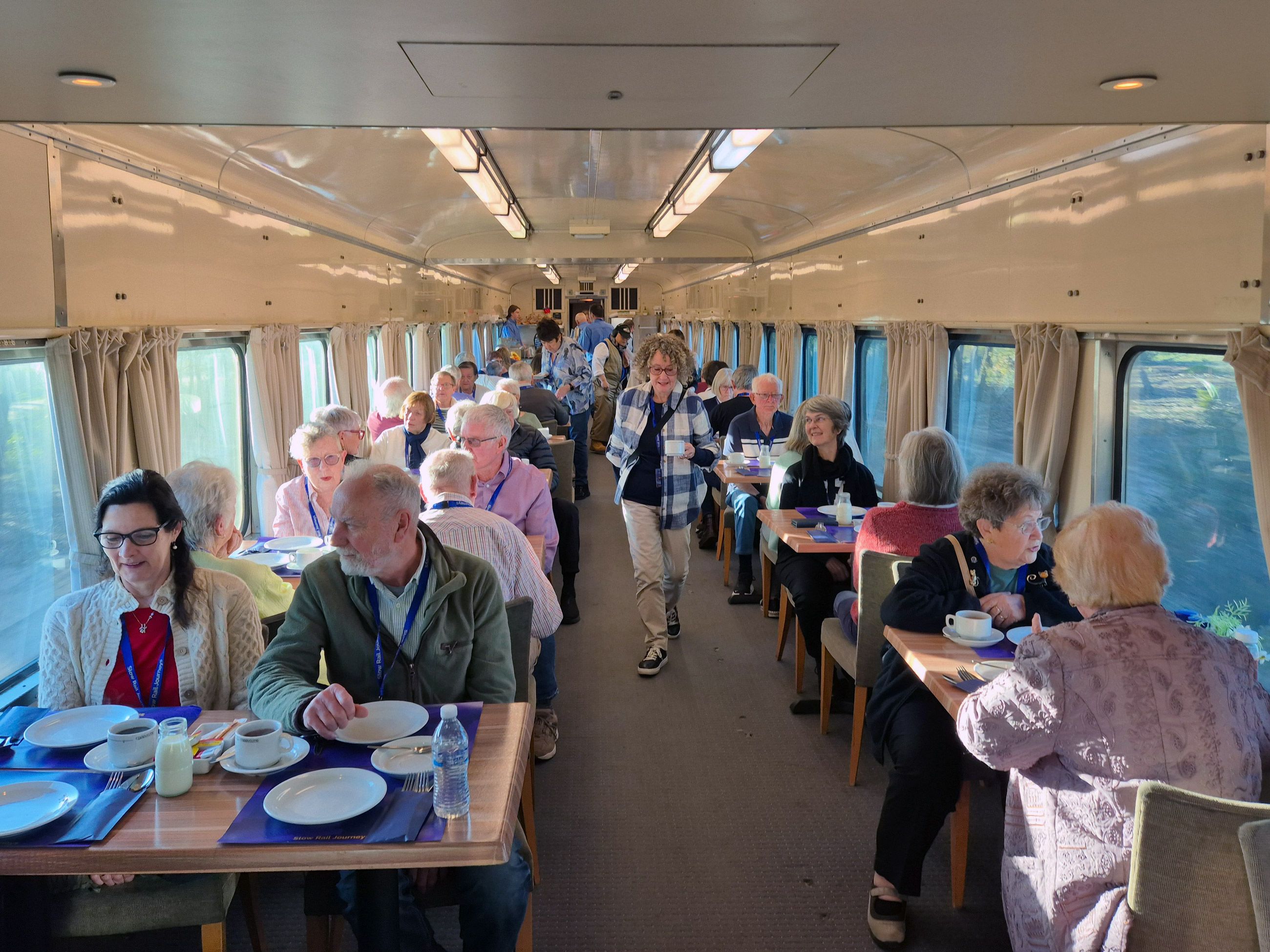
Guests onboard the Grainlander enjoy the Dining Car
The Dining Car is buzzing. (Image: Joanne Karcz)
Single Premium Cabins the Grainlander
Single Premium Cabins have the essentials for a comfortable journey. (Image: Joanne Karcz)

There’s plenty of giggling as guests in the 1962 Southern Aurora Car inspect our cosy single cabins. I open latches, turn a little handle to wind up the venetian blinds and delight at the art deco bed lamp. The drop-down toilet is sealed. That’s fine by me. I’d rather use the facility at the end of the carriage.

Melbourne’s city lights flash past my window. Although it’s after 10pm, I’m not ready to curl into my tightly made-up bed – which folds up during the day.

Wobbling along the narrow passage to the Club Lounge, I steady myself with my hands. The woman ahead of me says she “feels like a pinball ricocheting off the walls."

A group of women have settled in, their wine glasses resting on the marbled green coffee table, its boomerang shape echoing that of the curved brown faux leather couches. They invite me to join them. Already my nerves as a solo traveller have evaporated.

Waking early, I sit in bed sipping tea and watch the passing parade of silhouetted trees as the sky lightens.

Gradually the scene comes to life. Early sunlight brightens a field of yellow canola. Sheep gather under a tree, squawking black crows take off and kangaroos bound across green fields. In Wycheproof, a family standing outside their white picket fence wave, their arms forming big arcs.

Some guests remain in their cabins, reading or perhaps reminiscing about travelling in these very carriages as children. The 1923 heritage wooden sleeper is like stepping back in time with leadlight features, carved detail in the wooden panelling and even a “SMOKING" sign. As in the premium twin cabins, the seats fold into bunk beds at night.

Being a social animal, I prefer to chat with other guests in the club or seating lounge.

We eat well. Hearty breakfasts and Sunday lunch are served in the dining car. In keeping with the organisation’s mission to support local businesses, a bakery in Wycheproof prepares Saturday’s picnic lunch and dinner is in the Royal Hotel Sea Lake, run by a co-operative of local farmers and investors.

Weekly travel news, experiences
insider tips, offers, and more.

Exploring the Mallee and the Silo Art Trail

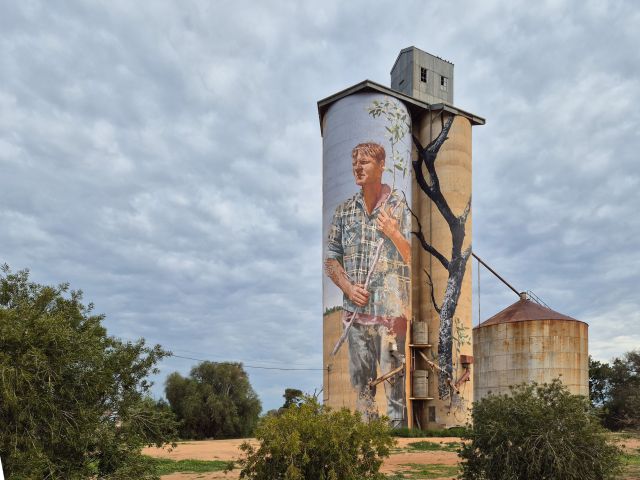
Patchewollock Silo Art by Fintan Magee
Patchewollock Silo Art by Fintan Magee. (Image: Joanne Karcz)

Stepping off the train at Nulliwal, we view our first silo art. Jimmy, a black and tan kelpie, looks down from the silo wall. As a special treat, we meet Jimmy himself. Retired from farmwork, he revels in our attention.

The train pulls into Sea Lake where a colourful mural depicts a young girl on a swing watching the sky change colour as the sun sets. It’s Saturday. Few shops are open, but I still manage to buy a box of Lake Tyrrell Salt. A fellow traveller discovers a Mother Goose teapot for her collector daughter.

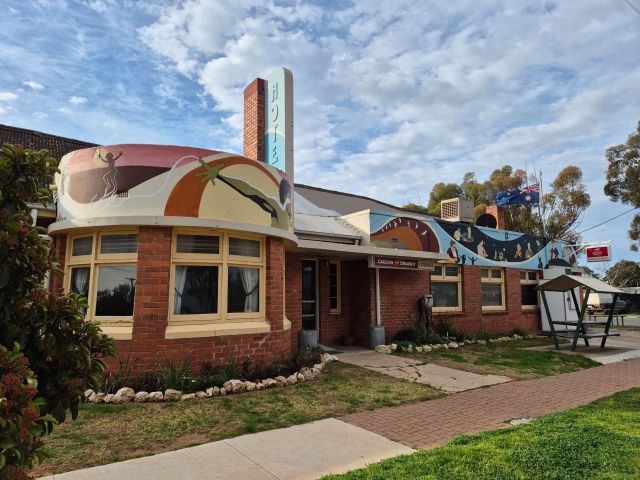
Hotel in Patchewollock
Patchewollock is one of many charming towns to explore on the journey. (Image: Joanne Karcz)

We travel by bus to see silo art in the small communities of Lascelles, Roseberry and Patchewollock. The towering works depict local people and represent the resilience, strength and tenacity of those living in the Mallee.

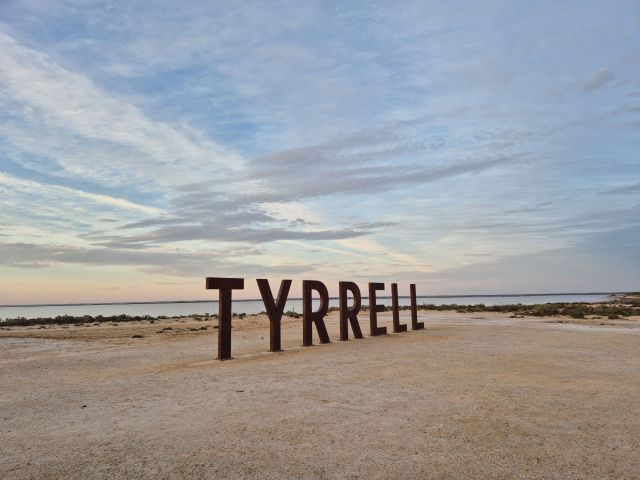
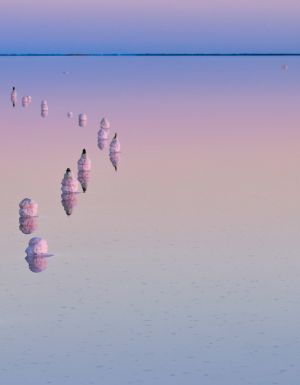
As the sun sets, the sky at Lake Tyrrell, Victoria’s largest salt lake, itself becomes an artwork. Pastel blues and pinks change to orange and grey as a golden beam spreads across the lake.

Sunset at Lake Tyrrell
Stop for sunset at Lake Tyrrell. (Image: Joanne Karcz)

Details

From $1,045 per person, fares include all meals and tours. The two-night Slow Rail Journey operates most months except in the hot summer months.

Guests include rail enthusiasts, couples, solo travellers and mother/daughter duos. The Grainlander is not accessible for wheelchair users. People with mobility issues may have difficulty stepping on board and walking through the train.

Want to see more stories from Australian Traveller in your Google search results?

  1. Click here to set Australian Traveller as a preferred source.
  2. Tick the box next to "Australian Traveller". That's it.
hero media

Mornington Peninsula’s storied past: war, shipwrecks and a runaway convict 

    Kellie Floyd Kellie Floyd
    The Mornington Peninsula is a coastline of contrasts, where convict and military history meets shipwrecks, wild seas and adventures above and below the surface.

    The Mornington Peninsula can be the kind of place where salt-tangled hair feels like a badge of honour – proof you’ve been somewhere wild, raw and real. Peel back the layers and you’ll discover stories that anchor this region to something other than its famed food and wine.

    This land is the traditional Sea Country of the Bunurong/Boon Wurrung people. Long before grapevines were planted and artisanal goods were crafted, the Bunurong Traditional Owners lived in deep connection with the land and sea. Today, places such as Mushroom Reef Marine Sanctuary echo that tradition, with families exploring its rockpools in search of colourful sea stars and crabs at low tide and learning how these fragile ecosystems have been cared for across countless generations.

    a group of people visiting the Port Nepean National Park
    Take in the rugged coastal landscape at Port Nepean National Park. (Image: Tourism Australia)

    A visit to Point Nepean National Park feels like stepping back through time. The fort, built in 1882, protected the narrow entrance to Port Phillip Bay until the end of the Second World War. It was here that the first Allied shot of the First World War was fired – at a German cargo ship trying to escape just hours after war was declared. Nearby, the old Quarantine Station, one of Australia’s first permanent quarantine facilities, established in 1852, still stands. Walking through the hospital and disinfecting complex evokes stories of those who arrived from faraway shores.

    Not far from here is a story of survival that inspired the Aussie phrase ‘you’ve got Buckley’s chance’. In 1803, escaped convict William Buckley vanished into the bush near what’s now Sorrento. Everyone thought he had no hope of surviving, but he reappeared 32 years later, having lived with local Aboriginal people.

    Even the waters here hold history. The infamous stretch known as The Rip, just three kilometres wide at the entrance of Port Phillip Bay, is among the most treacherous waterways. Countless ships were lost here in the 19th and early 20th centuries, and in 1967, Australia’s own Prime Minister Harold Holt disappeared while swimming off the coast, never to be found.

    a seal swimming in Port Phillip Bay
    A seal swimming in Port Phillip Bay. (Image: Tourism Australia/Two Palms/Harry Pope)

    But for all its danger, the sea here also holds extraordinary beauty. Dolphins are often seen near Sorrento’s cliffs, while below the surface, seagrass meadows and rocky reefs teem with life. Marine tours offer a viewing to this underwater wonderland, while back on terra firma, walking trails lead along beaches, through coastal scrub, and over rock pools.

    And if you think you’ll forget about the Mornington Peninsula once you’ve left? You’ve got Buckley’s chance.

    A traveller’s checklist

    Staying there

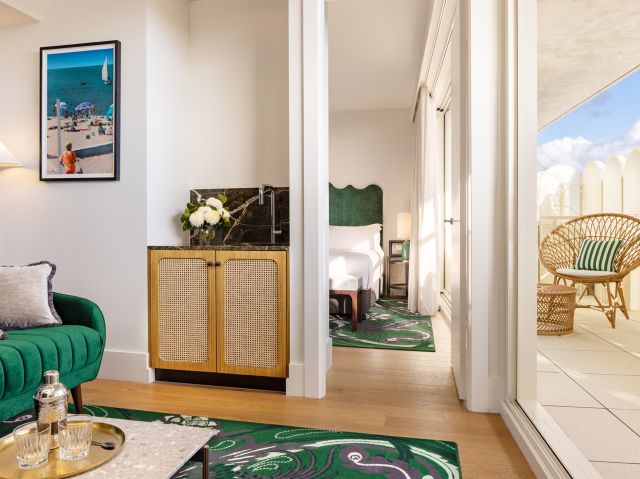
    the suite interior at InterContinental Sorrento
    Luxury interiors at the historic InterContinental Sorrento. (Image: Greg Elms)

    Point Nepean Discovery Tents is immersive glamping beside the historic Quarantine Station. Or upgrade to luxury at the 1875-built InterContinental Sorrento.

    Playing there

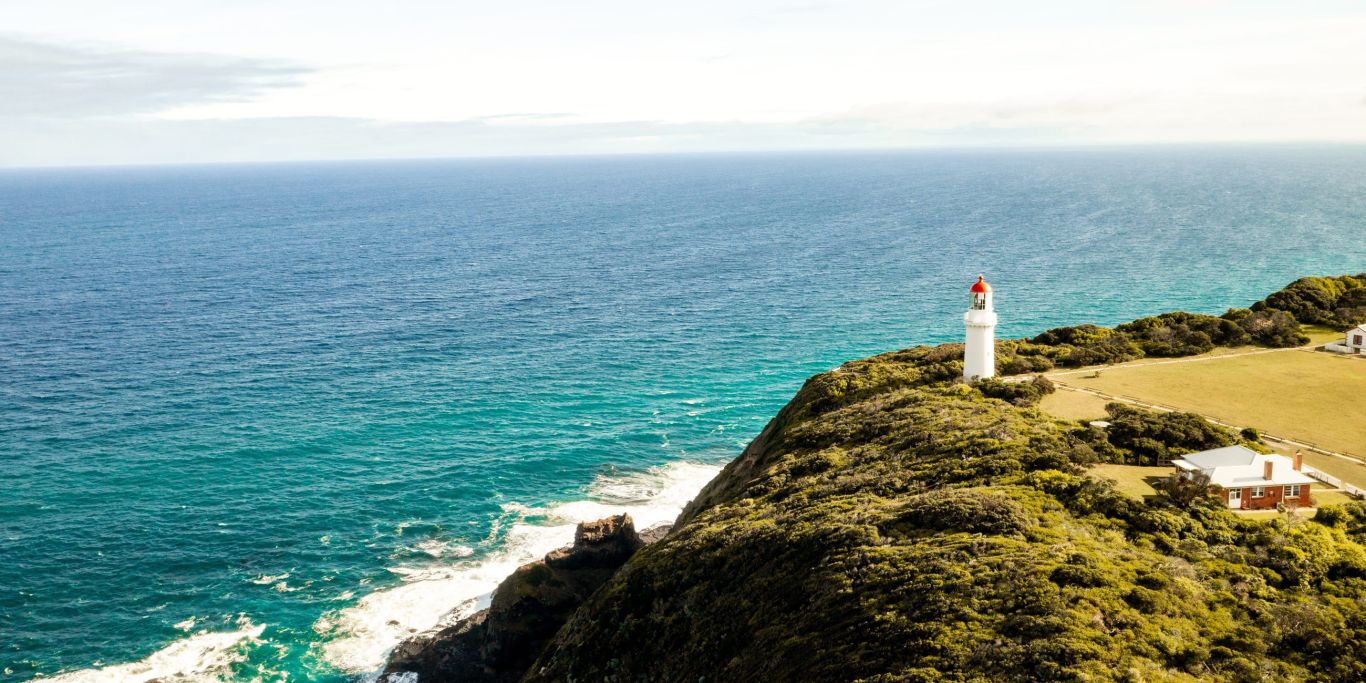
    an aerial view of Cape Schanck Lighthouse
    Make your way to the Cape Schanck Lighthouse. (Image: Tourism Australia/Two Palms/Harry Pope)

    Bayplay Adventure Tours offer eco-adventures from snorkelling with sea dragons to kayaking with dolphins and cycling Point Nepean. Cape Schanck Lighthouse is fascinating to explore on a guided tour, which takes you into the lighthouse and keeper’s cottage.

    Eating there

    Portsea Hotel is a beautifully restored 1876 Tudor-style pub right on the beach, serving seasonal local fare.