While many awards are decided by an expert panel of judges, the Halliday Wine Companion also hands the power to the people. Its annual People’s Choice Award is determined entirely by everyday wine lovers – and this year, they’ve spoken loud and clear.
Who took home the People’s Choice Award this year?
The Halliday Wine Companion presents a range of awards each year to vineyards and cellar doors across Australia. Wines from each category are blind-tasted and decided by a team of industry professionals, including wine experts, writers and critics – all led by Halliday’s editor-in-chief, Campbell Mattinson.
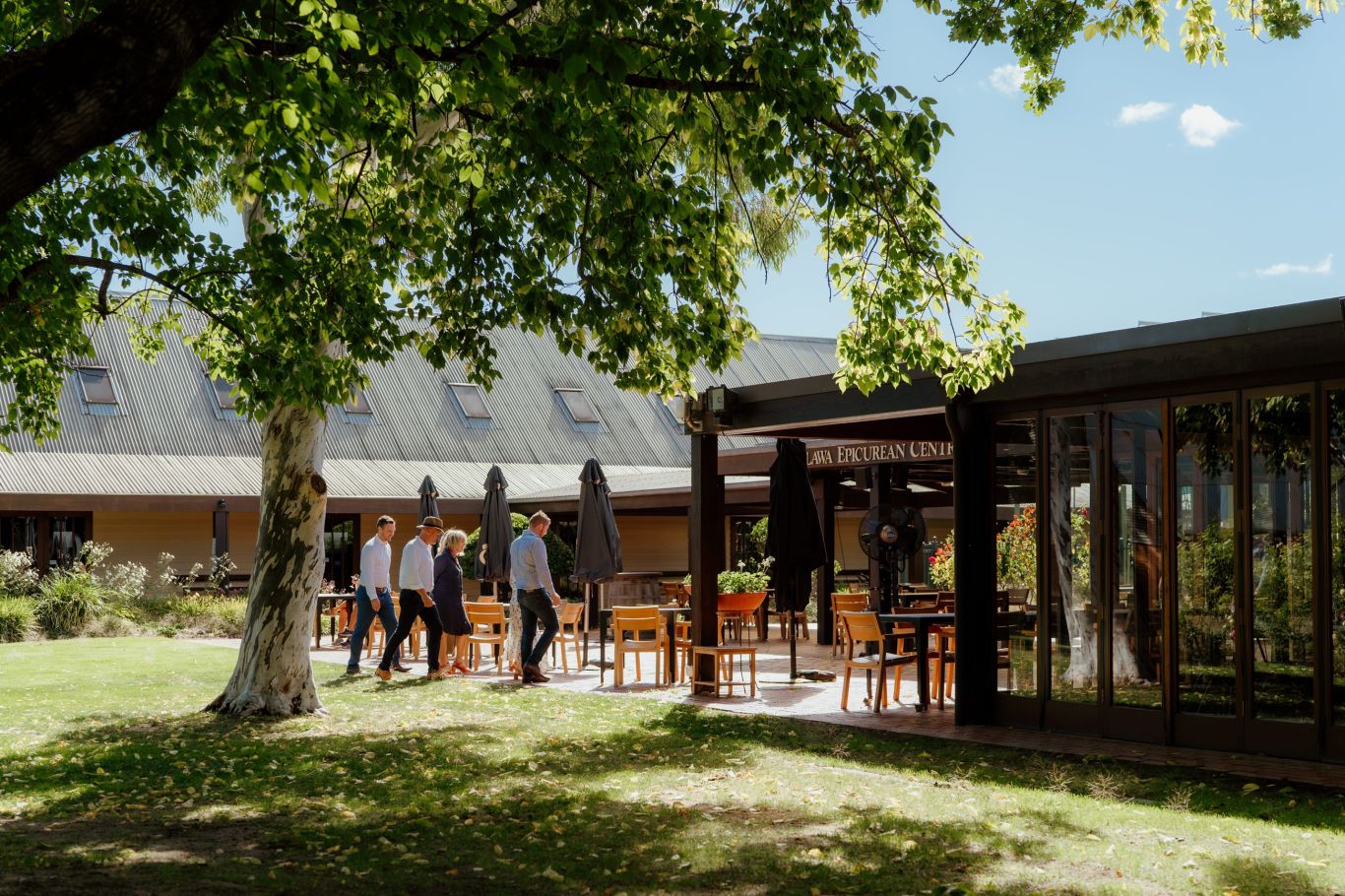
And the winner is… Brown Brothers in Milawa! (Image: Visit Victoria)
But for the People’s Choice Award, this panel is switched out for the everyday Aussie. From seasoned oenophiles to weekend wine lovers, everyone gets a say. And this year, the people have chosen… Brown Brothers ! Nestled in the town of Milawa – which recently gained attention thanks to the new Pedal to Produce trail – the family-run winery has been hand-crafting wines since 1889.
Its flagship cellar door lies at the heart of King Valley, one of Australia’s best-kept wine regions, and is renowned for its premium experiences. Guests can enjoy everything from guided tastings and long lunches to wine workshops and behind-the-scenes tours. Keen to splurge? You can even opt for helicopter flights and hot air balloon rides over the picturesque vineyard.
The Victorian vineyard is known for its incredible wine experiences. (Image: Visit Victoria)
You’ll also be treated to stunning views of the Victorian countryside, whether you’re in the cellar door, restaurant or private Prosecco lounge. Add in its extensive range of divine wines and it’s no wonder Brown Brothers took out the People’s Choice Award this year.
Other crowd-favourite wineries
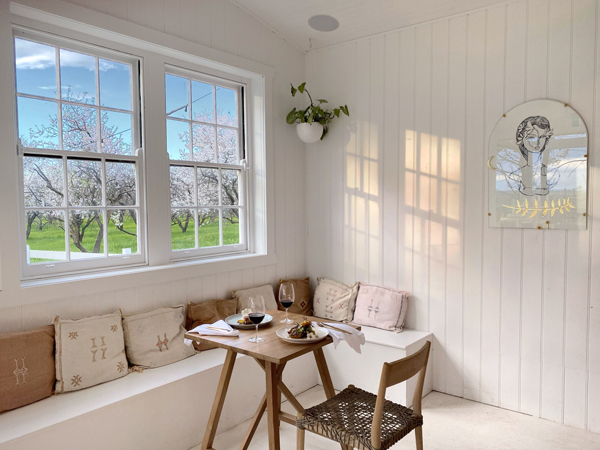
While Brown Brothers topped the list this year, South Australia made its mark too, with five wineries in the top 10. Coming in second place was Down the Rabbit Hole , a cosy cellar door sitting among some of McLaren Vale’s top vineyards. Like its name suggests, the winery aims to inspire imagination and adventure among its guests – from its organic tipples to the Italian food served at its onsite restaurant, Fiore.
McLaren Vale’s Down the Rabbit Hole took out second place. (Image: Elise Cook)
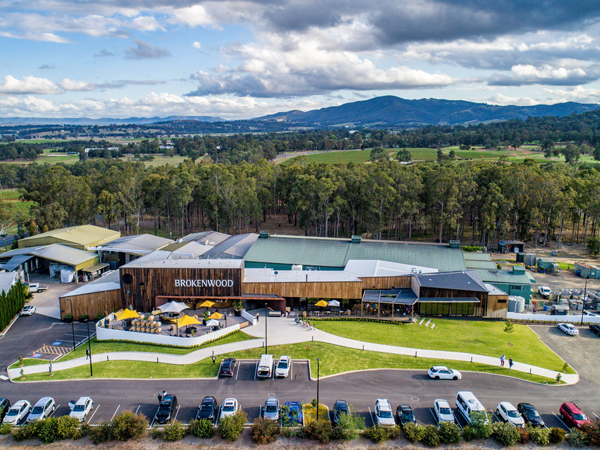
Third place was claimed by Brokenwood in NSW’s Hunter Valley. This award-winning vineyard is one of the region’s most popular thanks to its homegrown wines and gourmet restaurant that champions local, seasonal produce. Fourth and fifth place went to two more SA wineries: Laughing Jack and Elderton – both in the Barossa Valley.
Coming in third place is Hunter Valley stalwart, Brokenwood. (Image: Destination NSW)
The top 10 is rounded out by:
6th: Howard Park, Margaret River, WA
7th: Château Tanunda, Barossa Valley, SA
8th: Thicker Than Water, McLaren Vale, SA
9th: Best’s Wines, Great Western, Vic
10th: Cofield Wines, Rutherglen, Vic
Taylah Darnell is Australian Traveller's Writer & Producer. She has been passionate about writing since she learnt to read, spending many hours either lost in the pages of books or attempting to write her own. This life-long love of words inspired her to study a Bachelor of Communication majoring in Creative Writing at the University of Technology Sydney, where she completed two editorial internships. She began her full-time career in publishing at Ocean Media before scoring her dream job with Australian Traveller. Now as Writer & Producer, Taylah passionately works across both digital platforms and print titles. When she's not wielding a red pen over magazine proofs, you can find Taylah among the aisles of a second-hand bookshop, following a good nature trail or cheering on her EPL team at 3am. While she's keen to visit places like Norway and New Zealand, her favourite place to explore will forever be her homeland.
There’s no better place to unwind than the Yarra Valley and Dandenong Ranges – a leafy and idyllic region shrouded in mist, fern-filled gullies and a peaceful atmosphere.
Wrapped in the crisp mountain air, ancient ferns and ethereally verdant landscapes of the Yarra Valley and Dandenong Ranges , you’d be forgiven for thinking you’re in another world (or at least another part of the planet).
But this gorgeous pocket is under an hour from Melbourne, a mix of top-notch food and wine, boutique stays and forested scenery that make for an easy weekend away or even a midweek escape. In fact, visiting during the week can offer a deeply relaxing experience, with fewer crowds and more space to linger.
If you’re keen to unwind, here’s how to spend your time in this idyllic neck of the woods.
Where to eat
Treat your taste buds to Yarra Valley Dairy. (Image: Visit Victoria)
From farm gates to cosy eateries, the Yarra Valley and Dandenong Ranges house a plethora of places to feast. Start your day with a leisurely brunch and coffee at Ripe . This local hangout combines warm hospitality and hearty cafe fare against a backdrop of the hills’ iconic tree-fern canopies. It’s also nestled in the heart of Sassafras, the quaint village that best captures the Dandenong Ranges’ old-world charm.
Next, take yourself on a gastronomic adventure. Visit Yarra Valley Dairy , a regional favourite doing handmade cheeses, or Cherry Hill Orchards , where in summer you can pick your own cherries and enjoy them in the farm’s picturesque grounds. Treat yourself to a tasting at one of the Yarra Valley’s renowned wineries to finish – Rochford , Re’em and De Bortoli are standout picks for a sample of the region’s signature drops.
By night, book a table at either Citrine in the mountain town of Olinda or restaurant 1309 at Balgownie Estate in the Yarra Valley. Both do elevated seasonal fare paired with excellent drinks.
And if you’re simply in the mood for a tipple, you’re spoiled for choice. The Alpine Hotel in riverside Warburton is a historic and character-filled spot pouring pints and locally made drinks, while Four Pillars is a must for gin lovers. The distillery’s award-winning spirits are famed nationwide, but here you can try them right from the source.
Things to do outdoors
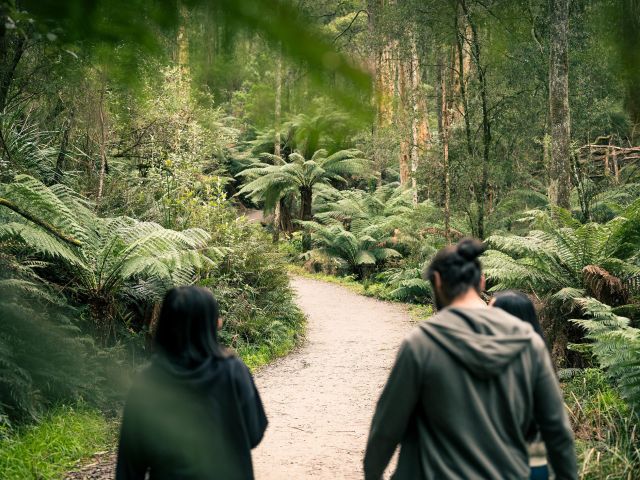
Wander the Dandenong Ranges National Park.
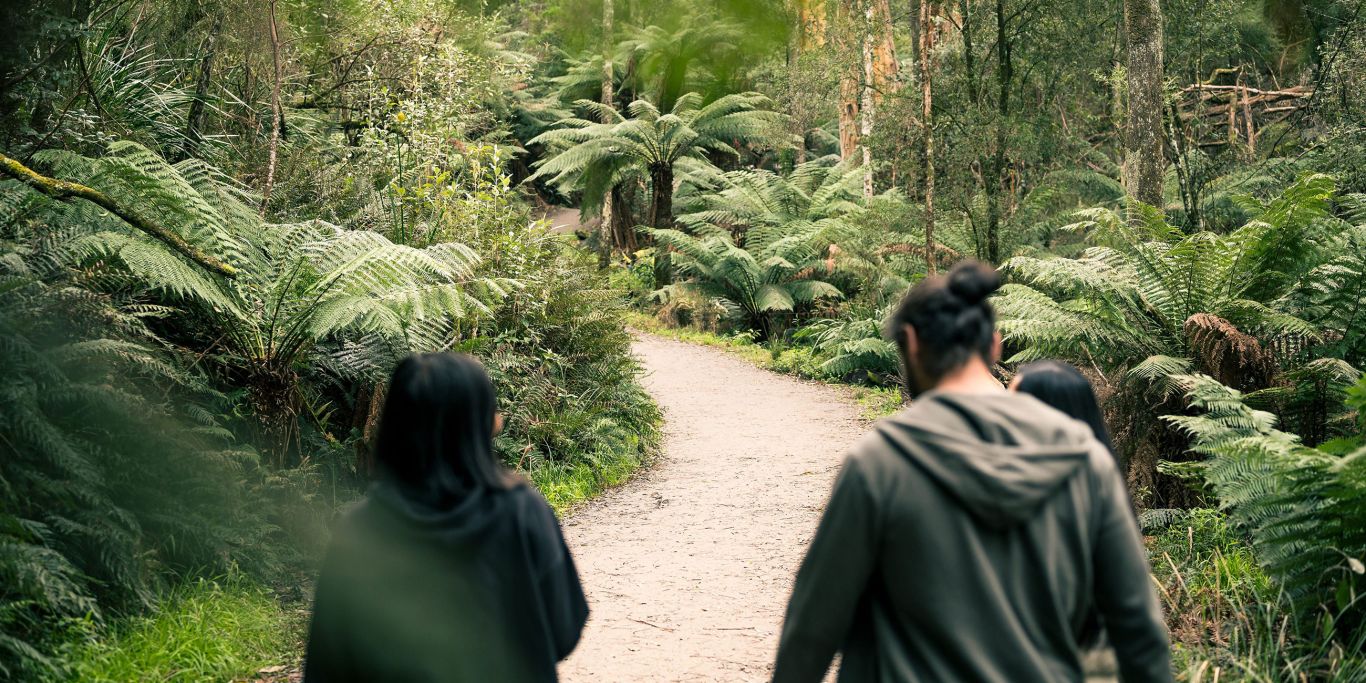
A motley patchwork of misty rainforest, rugged bushscapes and beautifully tended gardens, the Yarra Valley and Dandenong Ranges are some of Melbourne’s most scenic pockets. No visit to the region would be complete without a wander through its lush surrounds, either by bike or on foot.
The Ngurrak Barring trail stretches 39 kilometres through the Dandenong Ranges, connecting the towns and fern-filled forests that make the hills so unique. Along the way, be immersed in thought-provoking art installations and cultural stories, sharing a different perspective of this ancient landscape.
While in the area, wander through Cloudehill Garden & Nursery and the Dandenong Ranges Botanic Gardens , situated in Olinda. The cooler climate, rich volcanic soil and consistent rainfall offer both gardens ideal conditions for vivid and vibrant flora.
Over in the Yarra Valley, the 40-kilometre Lilydale to Warburton Rail Trail is a flat and family-friendly path perfect for leisurely bike rides and longer walks. It takes you through vine-lined scenery and towns like Seville and Wandin. Biking enthusiasts should head to the Warburton Mountain Bike Destination, a network of 160 kilometres of trails that traverse through untamed terrain.
For a more laidback outing, Alowyn Gardens encompasses seven acres of themed gardens perfect for a meandering stroll. The nearly 100-metre-long wisteria archway that connects different garden zones is a highlight – especially in October, when the lilac blossoms are in spectacular bloom.
The arts and culture scene
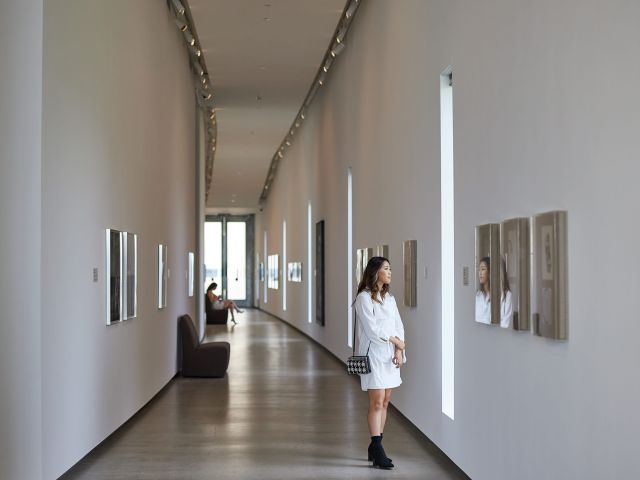
Take in the displays at TarraWarra Museum of Art. (Image: Visit Victoria)
Yarra Valley and the Dandenong Ranges are havens for arts and culture thanks to their inspiring landscapes and thriving creative community. Naturally, a slower escape should include a visit to some of the region’s best studios and galleries.
The TarraWarra Museum of Art in Healesville showcases modern and contemporary Australian art, with both a permanent collection and a rotating display of thoughtful exhibitions. The building and grounds are well worth exploring: a striking architectural landmark amid landscaped lawns and open-air sculptures overlooking the Yarra Valley.
Delve into the area’s rich history at the Yarra Ranges Regional Museum , a treasure trove of more than 13,000 unique pieces. See everything from Indigenous artefacts to archival photographs and historical objects that tell the region’s story.
On your way back to the city, stop by the leafy enclave of Eltham to discover Montsalvat . This five-acre artistic playground is Australia’s oldest continuous art community, combining galleries, Gothic-style buildings and expansive heritage gardens.
Stay at a local retreat
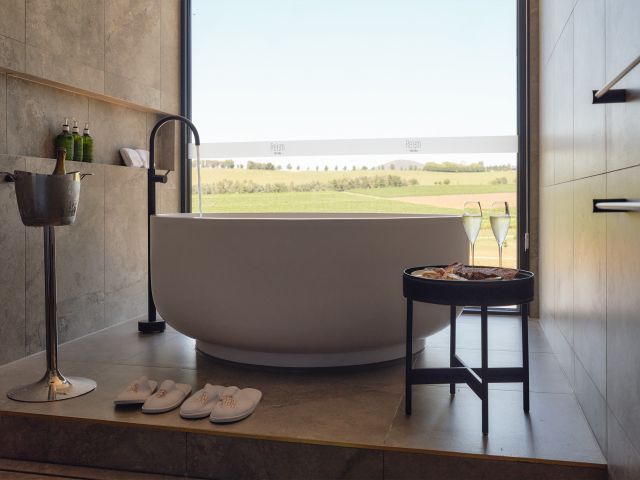
Re’em is an ideal pick for an indulgent stay.
No matter your style, and no matter your budget, you’ll find a suitable spot in the region to rest your head. If the weather is warm and the sky is clear, set up a tent at BIG4 Yarra Valley Park Lane Holiday Park or Pine Hill Cabin & Caravan Park. The former has secluded camping spots surrounded by tranquil bushland and local wildlife, along with glamping pods and cabins. The latter has powered and unpowered sites suitable for all kinds of campers, and is pet-friendly if you’re travelling with your four-legged friend.
Or, book yourself into the RACV Healesville Country Club & Resort – a sprawling retreat complete with stylish rooms and luxe amenities that invite you to unwind. Relax at the day spa, tee off at the 18-hole golf course, or recharge with a round of tennis or a few laps in the pool.
And if you’re after something truly indulgent, Re’em is an ideal pick. A boutique collection of just 16, the luxuriously appointed rooms feature plush linens, high-end amenities and oversized baths with panoramic views across the estate. A gourmet breakfast showcasing gorgeous local produce is also included.