Your new late-night obsession has arrived on Melbourne’s Bourke Street.
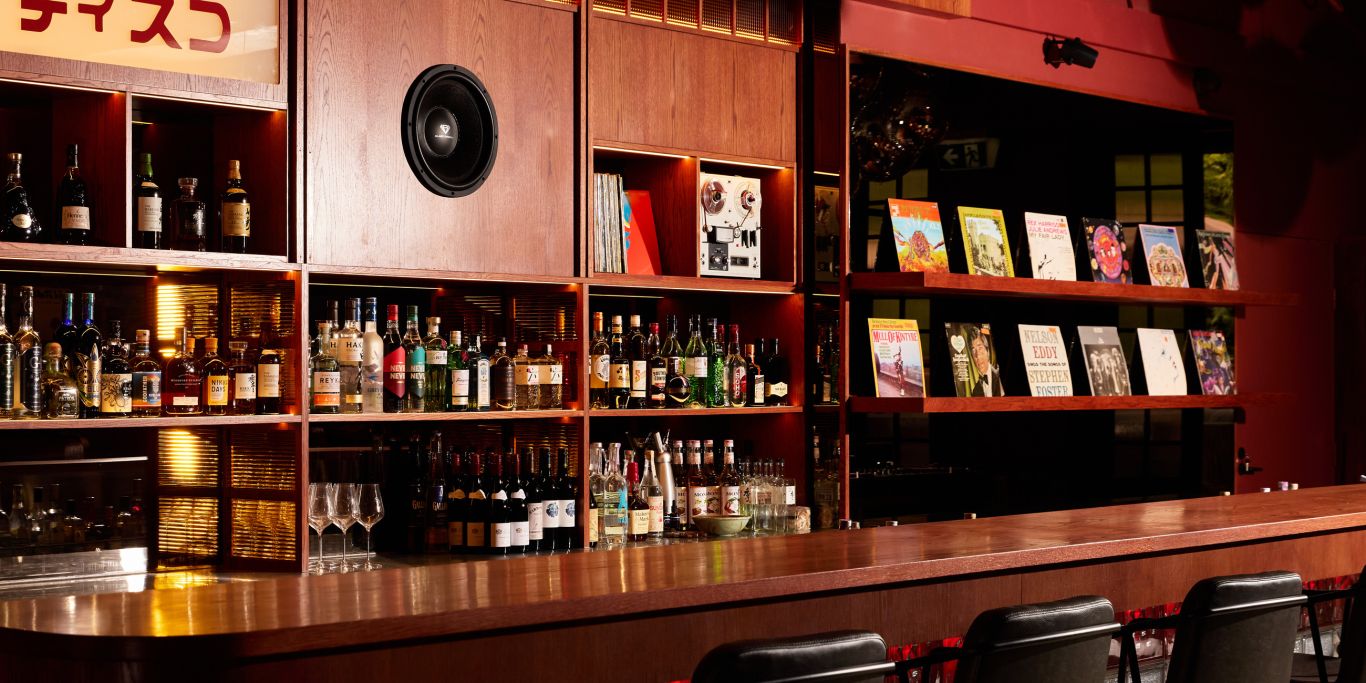
Vinyl listening bars are having a moment. With their retro-cool appeal and low-lit ambience, it’s easy to see why a cache of the Japanese-inspired haunts are sprouting up across the country. Never one to ignore a trend, MAMAS Dining Group has debuted Disuko – restaurant, rooftop and record bar – on Melbourne’s Bourke Street.
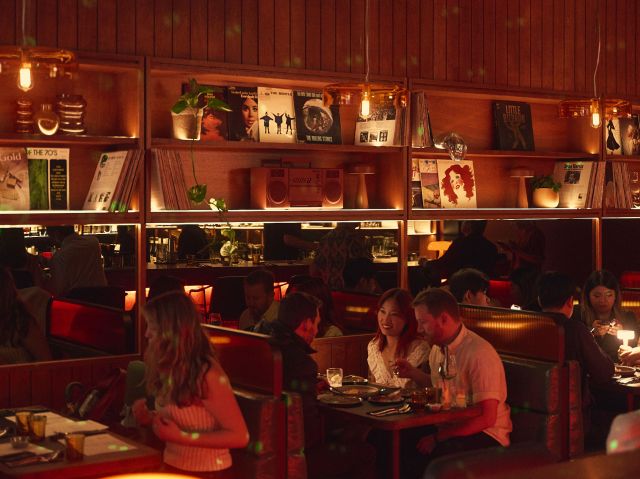
Translated from the Japanese word for ‘disco’, Disuko delivers a dose of 1980s Tokyo disco culture with izakaya dining and vinyl tunes. It’s a sensation-swirling space that deals in cosy nooks, amber-lit lounges and hanging glow balls, making it an enviable hangout for specialty sakes and late-night bites.
Disuko is a multifaceted dining, drinks and disco venue.
The multifaceted venue opened last week, taking over the former Bourke Street institution Madame Brussels. It marks Melbourne-founded MAMAS Dining Group’s seventh restaurant, with their other venues including Hochi Mama 3000, Kiss & Tell and Suzie Q.
Disuko offers several dining and drink concepts: the Izakaya Lounge (main dining room), a vinyl cocktail bar, an eight-seat omakase counter and rooftop terrace, along with a private dining room.
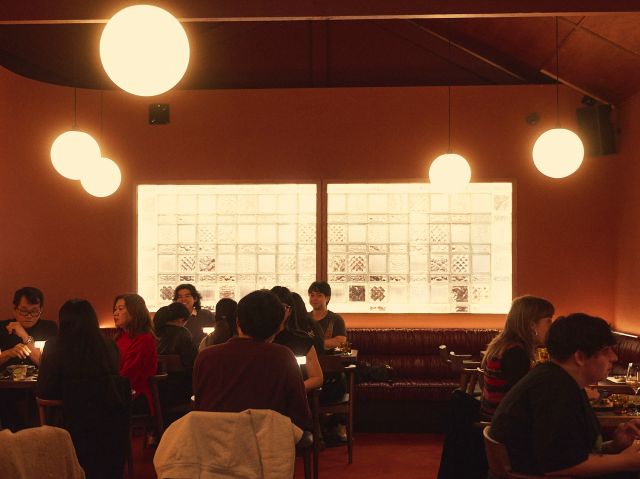
Inside the 76-seat Izakaya Lounge, guests can savour bites from the hibachi grill and delicate nigiri in forest green booths. Interiors are a sultry mash-up of cherry ruched leather, back-lit glass and eclectic wall decor that give the space a warm retro feel.
Enjoy izakaya-inspired dishes in the main dining area.
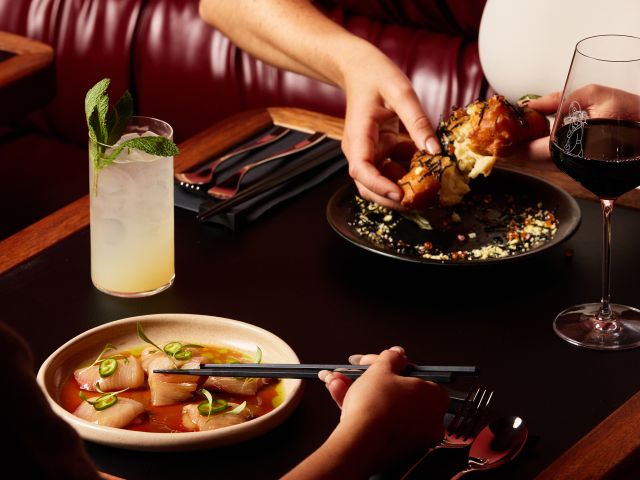
Food is treated as more than the supporting act. Leading the dining concepts are MAMAS Dining Group’s creative culinary director, Michael Stolley, and Hung Hoa, an esteemed ex-Nobu name who’s now whipping up a smattering of Japanese flavours as Disuko’s head chef. The two have spearheaded a menu of izakaya-inspired dishes available a la carte or via the ‘Disuko Setto’, where guests choose five share items for $65 per person. Try the wagyu tataki topped with crispy potato, kingfish dressed in citrus-yuzu soy, jalapeño and coriander oil, or the shoyu-yaki chicken – which is brined in sake for 24 hours, then flamed over the hibachi and brushed with chicken fat.
Those keen on a more intimate setting can slink into the Omakase Bar. With just eight seats, the counter offers a 12-course sushi and sashimi experience where guests watch their meals being prepared right in front of them. Seasonality and Japanese craftsmanship are at the forefront.
The heartbeat of Disuko is found at the Vinyl Bar. Here, mixologists shake craft cocktails and artists spin funky tunes, recalling the tempo of Tokyo’s nightlife. From smooth disco to hip hop and Japanese soul, bespoke boomboxes panelled with a traditional Japanese woodwork technique set the vibe.
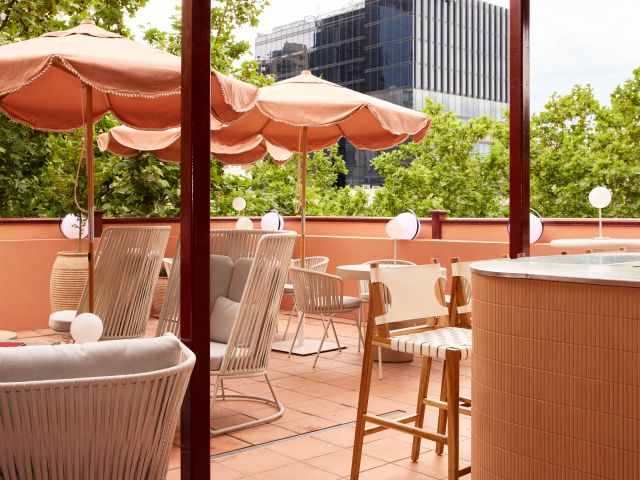
Linger on the Terracotta Rooftop for breezy cocktails and weekend vibes.
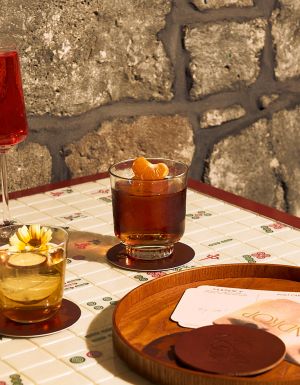
There’s more fun to be had on the Terracotta Rooftop. Lean into the rhythm of the weekend on warm nights while sipping spritzes and snacking on spicy edame, all backdropped by a skyline glow. This relaxed space is walk-in only.
Above, Disuko’s 30-seat private dining room, ‘The Tokyo Sky Mezzanine,’ is ideal for functions of all kinds, from milestone birthdays to family gatherings.
Disuko isn’t the quietest bar in Melbourne. But if you want to feel glamourous, uninhibited and fully plugged into the city’s current, this lively venue – lights humming, cocktails flowing – is waiting with open doors.
The details
Slink into moody booths reminiscent of Tokyo’s low-lit lounges.
Location: Level 3/59-63 Bourke St, Melbourne 3000
Opening hours: from 12pm to late, seven days a week
Prices: Share plates $14-$42 or ‘Disuko Setto’ $65 per person, cocktails $21-$24
Capacity: 76 in the main dining room, 44 on the rooftop terrace, 30 in the private dining room and eight in the omakase bar
Eleanor Edström is Australian Traveller’s Associate Editor. Previously a staff writer at Signature Luxury Travel & Style and Vacations & Travel magazines, she's a curious wordsmith with a penchant for conservation, adventure, the arts and design. She discovered her knack for storytelling much earlier, however – penning mermaid sagas in glitter ink at age seven. Proof that her spelling has since improved, she holds an honours degree in English and philosophy, and a French diploma from the University of Sydney. Off duty, you’ll find her pirouetting between Pilates and ballet classes, or testing her friends’ patience with increasingly obscure vocabulary.
Winding down in the Yarra Valley, where ‘work from home’ becomes ‘work from wine country’.
Steam from my morning coffee curls gently into the cool valley air, mist-veiled vineyards stretch out in neat rows below me. Magpies warble from trees, and the morning’s quiet carries the soft bleating of lambs from a nearby paddock. Midweek in the Yarra Valley has its own rhythm. It’s slower, quieter, with more empty tables at cafes and cellar doors, and walking trails I can claim all to myself. It’s as if the entire region takes a deep breath once the weekend crowd leaves.
You’ll find walking trails are less crowded during the week. (Image: Visit Victoria)
I haven’t come here for a holiday, but to do a little work somewhere other than my home office, where I spend too much time hunched over my desk. Deadlines still loom, meetings still happen, but with flexible work evolving from ‘work from home’ to ‘work from anywhere’, I’m swapping the view of my front yard to the vineyards.
A quiet afternoon at Yarra Valley Dairy
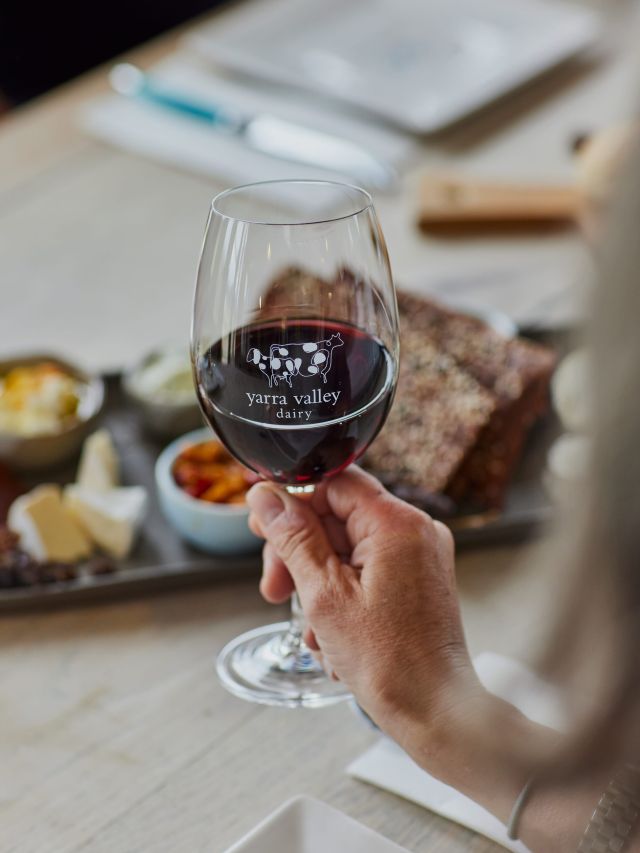
Wine time at Yarra Valley Dairy, where you can enjoy a toastie or bagel in the cafe. (Image: Visit Victoria)
With the Yarra Valley just over an hour from the CBD, many Melburnians could drive here in their lunch break. I arrive late in the afternoon and am delighted to discover the Yarra Valley Dairy still open. On weekends, I’ve seen queues spilling out the door, but today there’s only one other couple inside. There’s no need to rush to secure a table; instead I browse the little store, shelves stacked with chutneys, spices, artisan biscuits and gorgeous crockery that would look right at home in my kitchen. It’s hard not to buy the lot.
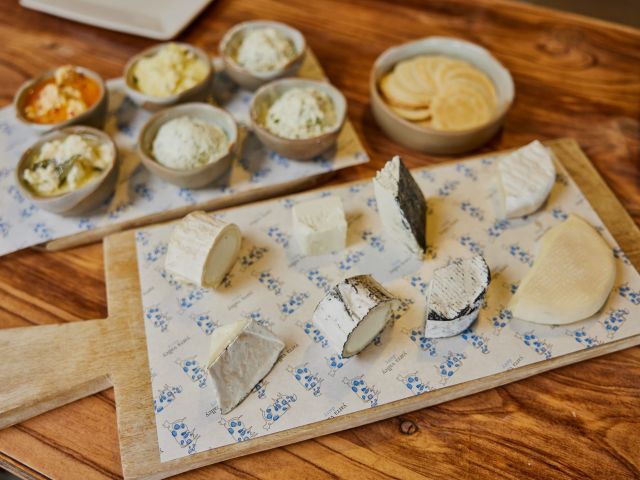
A cheese tasting plate at Yarra Valley Dairy.
I order a coffee and a small cheese platter, though the dairy has a full menu, and choose a wooden table with bentwood chairs by a wide window. The space feels part farm shed, part cosy café: corrugated iron ceiling, walls painted in muted tones and rustic furniture.
Outside, cows meander toward milking sheds. If pressed for time, there’s the option of quick cheese tastings – four samples for five dollars in five minutes – but today, I’m in no rush. I sip slowly, watching a grey sky settle over the paddock. Less than an hour ago I was hunched over my home-office desk, and now my racing mind has slowed to match the valley’s pace.
Checking in for vineyard views at Balgownie Estate
Restaurant 1309 at Balgownie Estate has views across the vines.
As my car rolls to a stop at Balgownie Estate , I’m quietly excited, and curious to see if my plan to work and play comes off. I’ve chosen a suite with a spacious living area and a separate bedroom so I can keep work away from a good night’s sleep. I could have booked a cosy cottage, complete with open fireplace, a comfy couch and a kettle for endless cups of tea, but as I am still here to get some work done, I opt for a place that takes care of everything. Dinner is served in Restaurant 1309, as is breakfast.
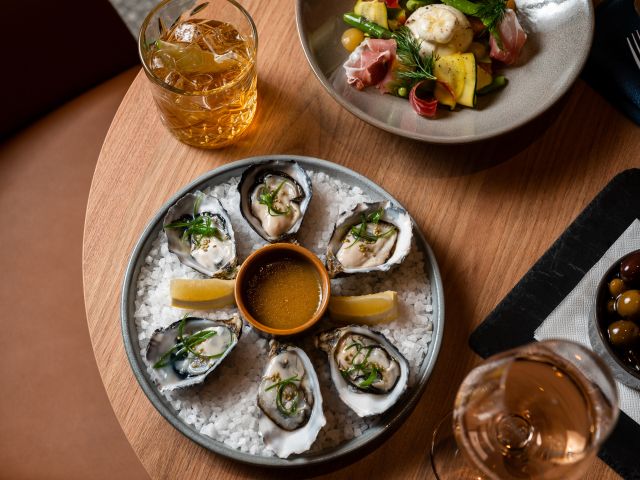
Oysters pair perfectly with a crisp white at Restaurant 1309.
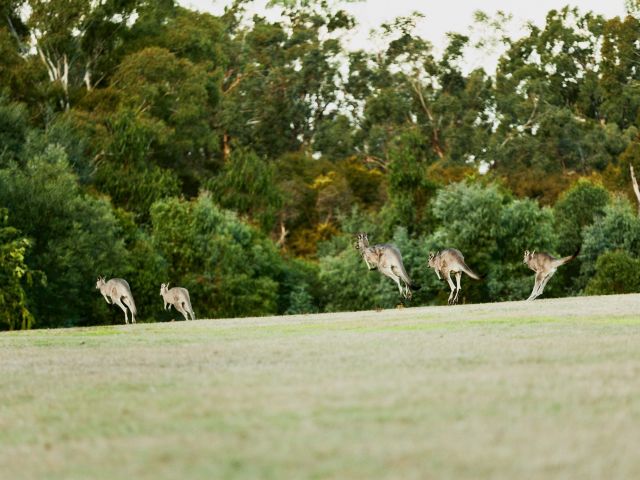
On my first evening, instead of the usual walk about my neighbourhood, I stroll through the estate at an unhurried pace. There’s no need to rush – someone else is preparing my dinner after all. The walking trails offer beautiful sunsets, and it seems mobs of kangaroos enjoy the view, too. Many appear, grazing lazily on the hillside.
I wake to the call of birds and, after breakfast, with the mist still lingering over the vineyards, I watch two hot-air balloons silently drift above clouds. Perched on a hill, Balgownie Estate sits above the mist, leaving the valley below veiled white.
Spotting the locals on an evening walk. (Image: Visit Victoria)
Exploring the Yarra Valley on two wheels
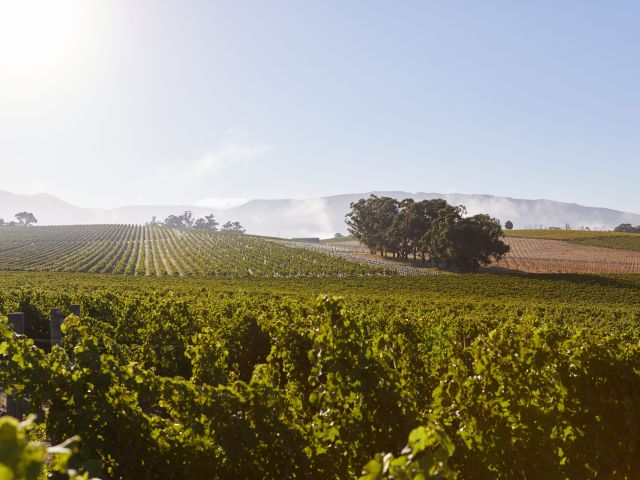
Swap your home office for a view of the vineyards. (Image: Visit Victoria/Cormac Hanrahan)
Perhaps because the Yarra Valley is relatively close to where I live, I’ve never considered exploring the area any way other than by car or on foot. And with a fear of heights, a hot-air balloon is firmly off the table. But when I discover I can hop on two wheels from the estate and cycle into Yarra Glen, I quickly realise it’s the perfect way to step away from my laptop and experience a different side of the region.
COG Bike offers pedal-assist e-bikes, and while the bike trail and paths into town aren’t particularly hilly, having an extra bit of ‘oomph’ means I can soak up the surroundings. Those lambs I heard calling early in the morning? I now find them at the paddock fence, sniffing my hands, perhaps hoping for food. Cows idle nearby, and at a fork in the bike path I turn left toward town.
It’s still morning, and the perfect time for a coffee break at The Vallie Store. If it were the afternoon, I’d likely turn right, in the direction of four wineries with cellar doors. The ride is about 15 kilometres return, but don’t let that put you off. Staying off the highway, the route takes you along quiet backroads where you catch glimpses of local life – farmers on tractors, weathered sheds, rows of vines and the kind of peaceful countryside you don’t see from the main road.
A detour to the Dandenong Ranges
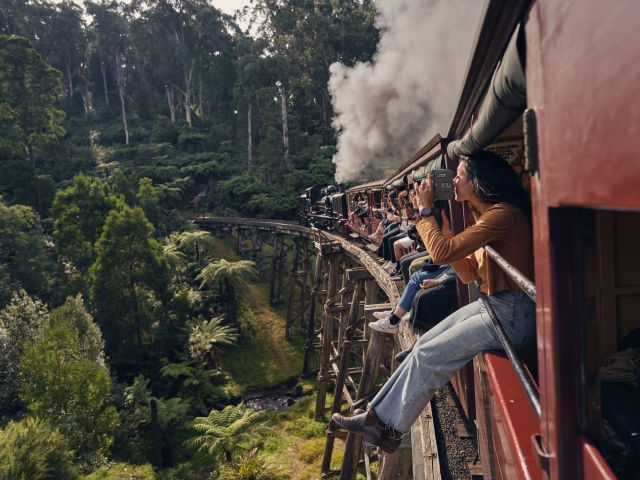
The iconic Puffing Billy runs every day except Christmas Day.
The beauty of basing myself in the Yarra Valley is how close everything feels. In barely half an hour I’m in the Dandenong Ranges, swapping vineyards for towering mountain ash and fern-filled gullies. The small villages of Olinda and Sassafras burst with cosy teahouses, antique stores and boutiques selling clothing and handmade body care items.
I’m drawn to RJ Hamer Arboretum – Latin for ‘a place for trees’. Having grown up among tall trees, I’ve always taken comfort in their presence, so this visit feels like a return of sorts. A stroll along the trails offers a choice: wide open views across patchwork paddocks below, or shaded paths that lead you deeper into the quiet hush of the peaceful forest.
The following day, I settle into a quiet corner on the balcony of Paradise Valley Hotel in Clematis and soon hear Puffing Billy’s whistle and steady chuff as the steam train climbs towards town. Puffing Billy is one of Australia’s most beloved steam trains, running through the Dandenong Ranges on a narrow-gauge track. It’s famous for its open carriages where passengers can sit with their legs hanging over the sides as the train chugs through the forest. This is the perfect spot to wave to those on the train.
After my midweek break, I find my inbox still full and my to-do list not in the least shrunken, just shifted from one task to another. But I return to my home office feeling lighter, clearer and with a smug satisfaction I’d stolen back a little time for myself. A midweek wind-down made all the difference.
A traveller’s checklist
Staying there
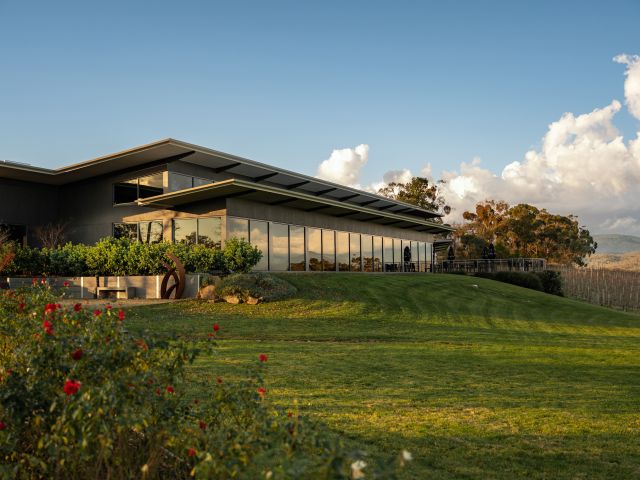
Balgownie Estate offers everything from cellar door tastings to spa treatments and fine dining – all without leaving the property.
Playing there
Visit the TarraWarra Museum of Art. (Image: Visit Victoria)
Wander through Alowyn Gardens, including a stunning wisteria tunnel, then explore the collection of contemporary artworks at TarraWarra Museum of Art . Cycle the Yarra Valley with COG Bike to visit local wineries and cellar doors.