You’ve probably heard of Uluṟu’s Field of Light. Enter Trail of Light: a new installation set to captivate visitors to Mildura on the banks of the Murray River.
Bruce Munro is a renowned installation and light artist, whose work appears in some of the most iconic landscapes worldwide. His most well-known work is undoubtedly Field of Light in Uluṟu, which draws thousands of visitors to wander through the otherworldly lightscape after sunset. Now, Mildura in Victoria joins the list of Munro’s installation sites, with a brand-new work set to captivate visitors and create a coveted after-dark attraction from 4 April. With tickets on sale now, we’re taking a look at what visitors can expect from the latest major installation lighting up the Murray River.
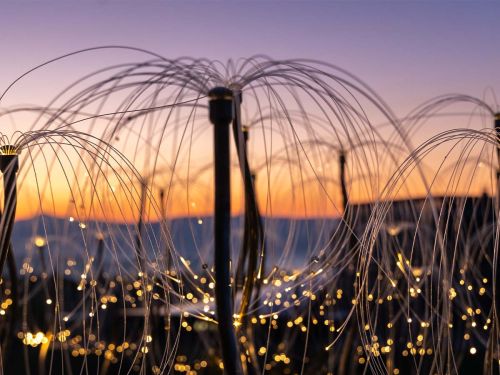
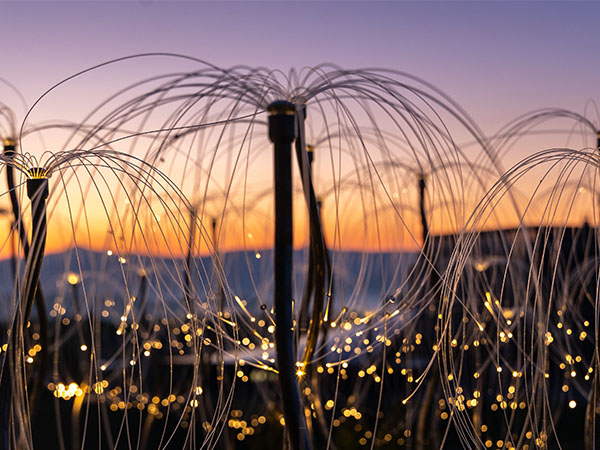
The banks of the Murray River are the backdrop to Trail of Lights. (Image: Serena Munro)
Trail of Lights
The new large-scale installation, Trail of Lights, will open on 4 April, injecting light and colour along the banks of the Murray River.
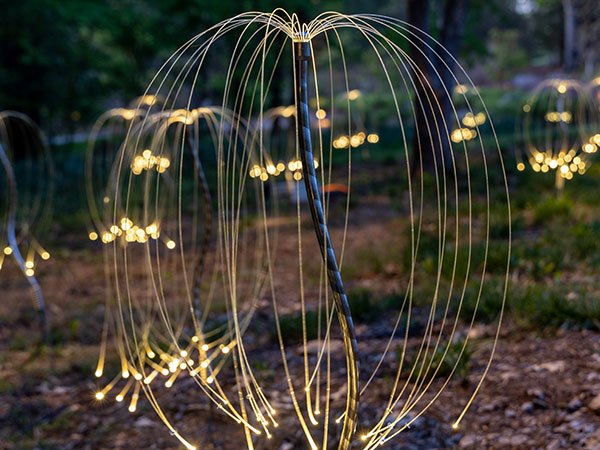
Bruce Munro's Trail of Lights in Mildura – composed of 12,500 gently glowing ‘fireflies’ – invites visitors to slow down and immerse themselves in nature.
Located just 1.7 kilometres away from Mildura’s CBD on Lock Island, the work will consist of 12,500 firefly lights that complement the natural beauty of the river.
Trail of Lights will consist of 12,500 lights along the Murray River. (Image: Serena Munro)
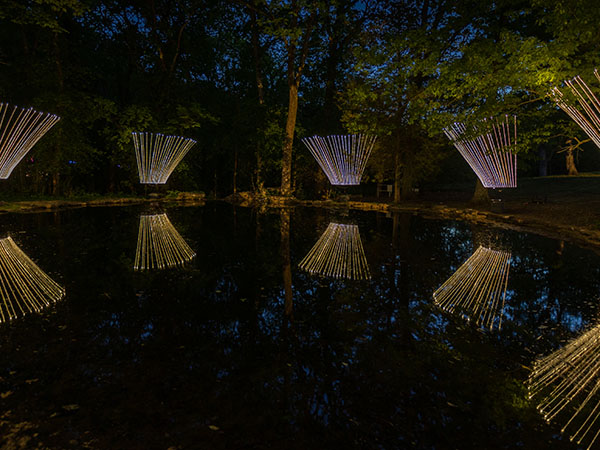
In addition, Gone Fishing, an installation of 22 light sculptures made from fishing rods suspended over the water, will complete the whimsical dreamscape on Lock Island.
Gone Fishing is a contemplative light sculpture made out of fishing rods. (Image: Serena Munro)
“Trail of Lights is about creating a moment of stillness and contemplation in an extraordinary natural setting," says Bruce Munro. “The Murray River provides the perfect canvas for light and landscape to interact in a way that is both evocative and deeply personal."
The installation will illuminate Lock Island for two years, enriching Mildura’s art and culture offerings, adding to its allure as a destination for food, wine, and natural beauty.
Want to see more stories from Australian Traveller in your Google search results?
Tick the box next to "Australian Traveller". That's it.
Elizabeth Whitehead is a writer obsessed with all things culture; doesn't matter if it's pop culture or cultures of the world. She graduated with a degree in History from the University of Sydney (after dropping out from Maths). Her bylines span AFAR, Lonely Planet, ELLE, Harper's BAZAAR and Refinery 29. Her work for Australian Traveller was shortlisted for single article of the year at the Mumbrella Publishing Awards 2024. She is very lucky in thrifting, very unlucky in UNO.
The Mornington Peninsula might be synonymous with summer, but winter offers equally compelling reasons to visit.
Come winter, the Mornington Peninsula transforms into a relaxing and rejuvenating escape. Think misty trails and dramatic ocean views along the rugged coastline, drinking and dining by crackling firesides, fewer crowds and a more small-town feel – the perfect ingredients for a slow and restorative weekend.
If you want a truly local winter experience, here’s where you need to go.
1. Sample spirits at local distilleries
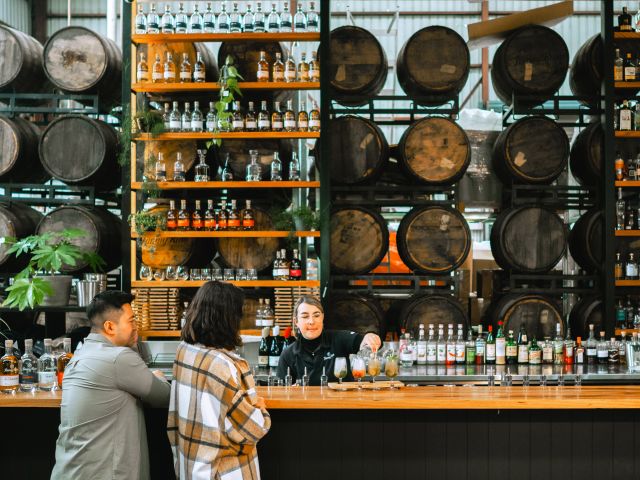
Sample small-batch rums and cane spirits at JimmyRum. (Image: Visit Victoria)
No matter your tipple, you’re bound to find a Peninsula distillery to suit. Chief’s Son is beloved by locals and visitors alike for its award-winning range of single malt whiskies. Make sure to try the Black Forge – a heady combination of whisky and coffee.
JimmyRum is the Mornington Peninsula’s first and only craft rum distillery. Enjoy a tasting to sample small-batch rums and cane spirits, or book a table to feast on generous share plates and creative cocktails.
Bass & Flinders is another must-visit, and something of a local icon. It was the Peninsula’s first distillery and remains a favourite for craft gins, brandies and fruity liqueurs. Pick up a bottle (or two) to take home and toast your winter getaway.
2. Warm up in the hot springs
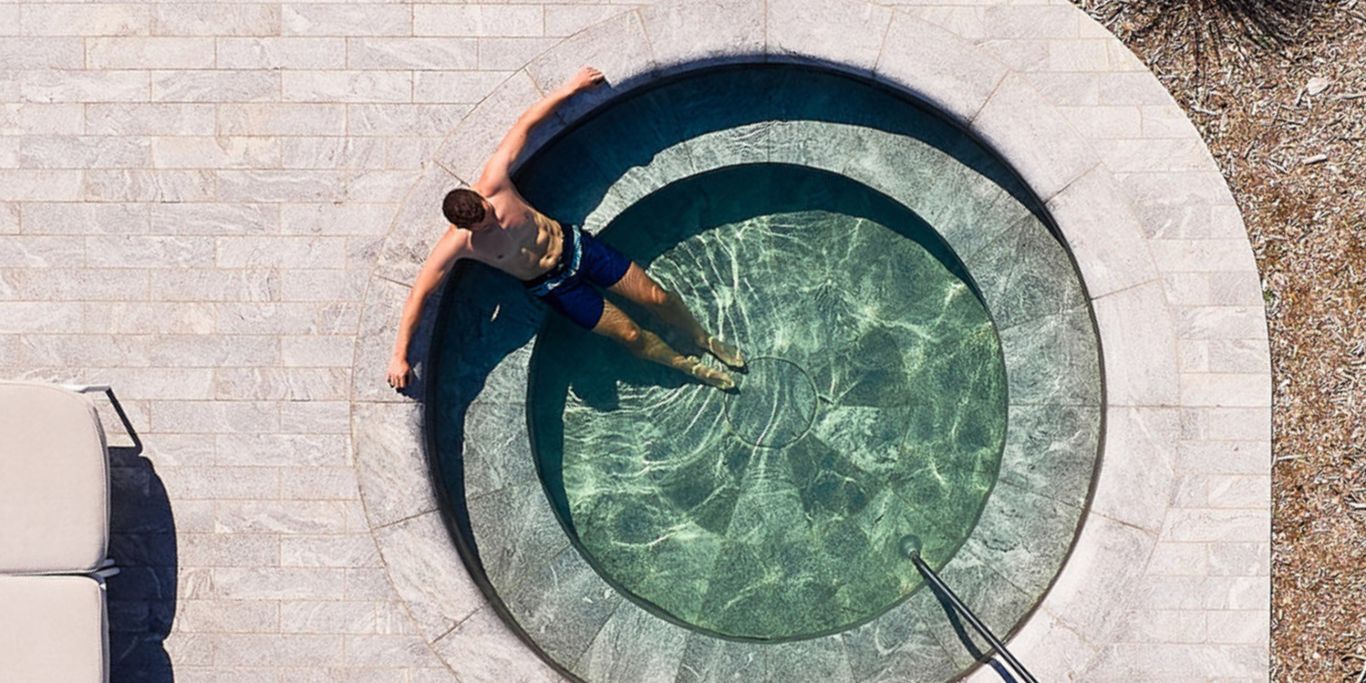
Dive into Alba Thermal Springs & Spa.
Locals know winter is the best time to visit the famous hot springs. With the air cool and crisp and the springs reaching temperatures up to 43 degrees, the experience is akin to a warm embrace.
If you’re travelling with kids or want something more laid-back, Peninsula Hot Springs is your best bet. Spanning 42 acres and with an organic vibe, the complex has hillside pools, saunas, bath houses and family-friendly spaces perfect for all ages.
Alba Thermal Springs & Spa is slightly more luxe, with 25 thermal pools amid architectural surrounds. The on-site restaurant, Thyme, is a highlight, featuring seasonal lunch dishes, high teas and picnics, and a beautifully designed interior.
3. Coastal walks feel more dramatic
Take in gorgeous seaside scenery on Millionaire’s Walk. (Image: Visit Victoria)
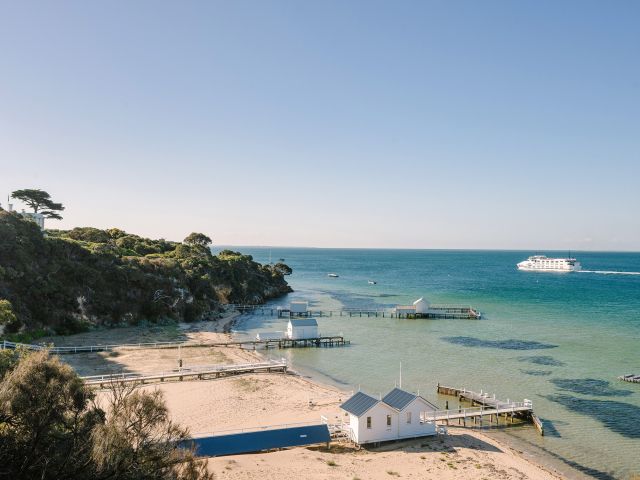
The Peninsula is situated between Port Phillip Bay and the wide expanse of the Southern Ocean, giving it front-row access to stunning sea vistas. In winter, and especially on rainy days, the outlook is incredibly dramatic, with waves crashing against the clifftops and a steely hue. The trails hugging the ocean are also much quieter and mostly filled with locals.
Make sure to drop by Cape Schanck Lighthouse on your coastal walk – the lighthouse was built in 1859, making it one of Victoria’s oldest. Climb the stone stairs all the way to the top and take in panoramic, windswept views.
Millionaire’s Walk in Sorrento is another local favourite. This easy 1.5-kilometre coastal trail takes you past gorgeous seaside scenery and some of the grand homes the town is famous for.
4. Sip on world-class pinot noir
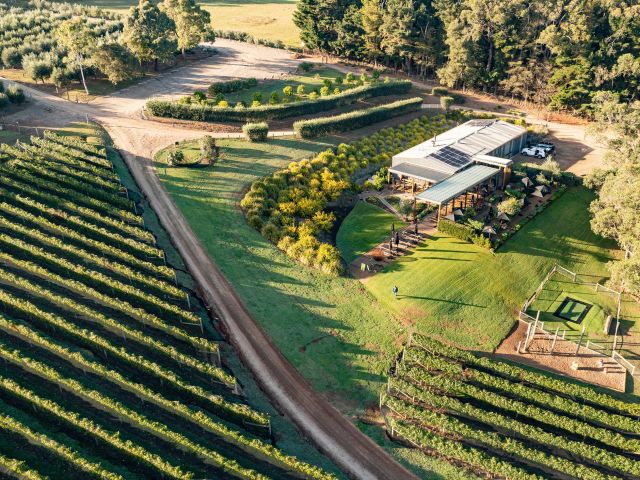
Stop by Red Hill’s cellar doors, like Green Olive. (Image: Visit Victoria)
If you’re a fan of the light-bodied and elegant red, your winter escape should include a stop at one of the Peninsula’s many cellar doors.
The hinterlands around the township of Red Hill are particularly renowned for pinot noir (and chardonnay) thanks to their cool maritime climate and red clay soils. There are more than 50 boutique cellar doors to choose from, where you can sample a selection or do as the locals do: take a bottle back to your accommodation to savour by the fireside.
5. See misty rolling hills from above
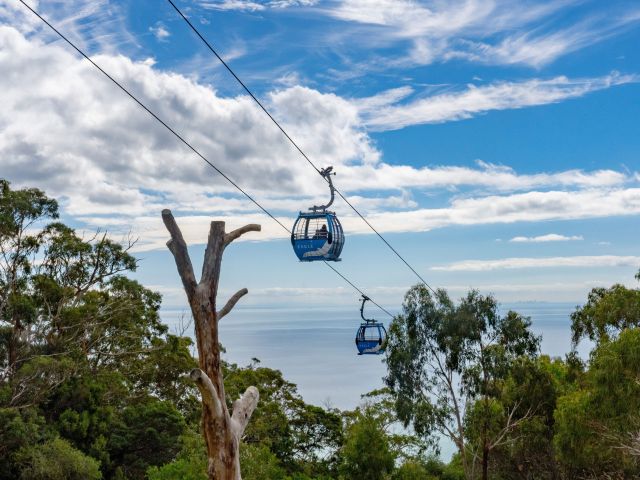
Get a bird’s-eye view on Arthurs Seat Eagle. (Image: Visit Victoria)
Peninsula winters bring with them a thick mist and fog, which make for atmospheric and dreamlike scenery. Shroud yourself in the clouds with a gondola ride at Arthurs Seat Eagle. The summit is 305 metres high, giving you a genuine bird’s-eye view of the entire Peninsula region and Port Phillip Bay in their moody and misty glory.
6. Dine beside a roaring fire
Enjoy food and wine beside a roaring fireplace at Rare Hare Wine & Food Store. (Image: Visit Victoria)
The Peninsula is an essential part of Melbourne’s “food bowl”, with 70 per cent of the region a designated Green Wedge zone. It’s little surprise, then, that there are so many opportunities to try its fresh produce. Visit farm gates like Torello Farm, Hawkes Farm and Tully’s Corner to sample the region’s winter harvest: apples, root vegetables, mushrooms and truffles.
Nothing beats a fireside feast in winter, and several local dining venues offer exactly that. Lancemore Lindenderry Red Hill is a two-hatted restaurant with a roaring fire, Crittenden Estate does seasonal dishes and estate wines amid a cosy indoor space, and Rare Hare Wine & Food Store has a double-sided fireplace that anchors the warm and welcoming dining room.
If the sun is out, enjoy a picnic amid the sprawling grounds of Montalto Winery. You’ll kick off with a tasting before heading outdoors to a covered picnic table, where you’ll feast on starters, mains, desserts and more wine.
7. Go whale watching at Cape Schanck
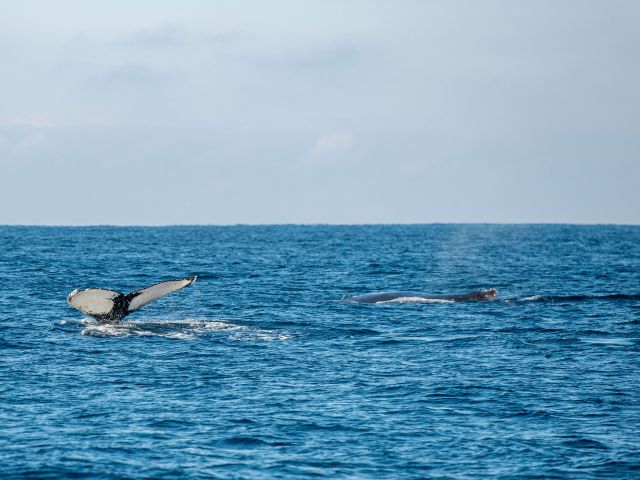
Look for whales between May and October. (Image: Visit Victoria)
Beyond the spectacular lighthouse views, Cape Schanck is also an excellent place to watch whales migrating through the Bass Strait. Between May and October each year, particularly during June and July, Southern Right and Humpback whales make their way past the area, and can sometimes be spotted just 150 metres from the shoreline. Many locals watch for free from the cape’s boardwalks and viewing platforms, but you can also book a boat tour.
8. Explore Point Nepean National Park
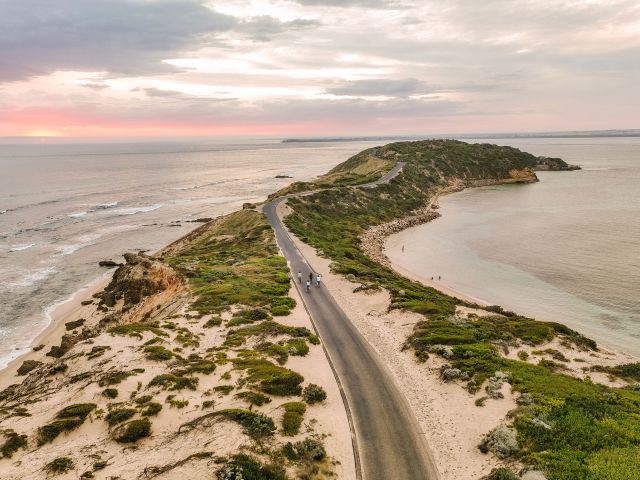
Follow over 80 walking and cycling tracks. (Image: Visit Victoria)
Point Nepean National Park is on the Mornington Peninsula’s tip, just outside Portsea. Set right beside the clifftops, it’s wild, windswept and defined by its rugged terrain.
Locals love the national park for its more than 80 walking and cycling tracks, and you’ll often spot them getting a winter workout in. But if you’ve never been here, make sure to discover its rich history.
It forms part of an Indigenous cultural landscape on the lands of the Bunurong People, and holds significance as a site for early settlement and military operations. Numerous historical buildings – including the heritage-listed Quarantine Station – still stand today.