A guide to Phillip Island’s best walks

hero media
Explore shipwrecks, come face-to-face with Highland cattle, and drink in panoramic views on these six Phillip Island walks.

Surrounded by a blustery, rugged coastline, and encompassing a patchwork of verdant, rolling farmland, where cattle and sheep graze, Phillip Island is a rambler’s delight. Whether you’re after a short scenic walk with the kids, or a lengthier hike with friends, these six walks should stand you in good stead.


Don’t miss: Top things to do on Phillip Island

Churchill Island Walks

Connected to Phillip Island via a bridge, this small, little-known island is home to a working farm that’s among the oldest in Victoria, and a restored homestead and cottages that date back to the 1860s, all of which are open to the public and popular with families. The most famous local residents here are arguably the farm’s shaggy Highland cattle.


The isle is home to three different walks: the Churchill Island loop, which takes around two hours to complete; the easier North Point loop, which takes just one hour to complete; and the Wadjil’garook Wetland, which is really more of a brief stroll, but includes insights into Aboriginal culture, and offers an opportunity to see wetland birds.


Toast to a walk well done with a flat white at the island’s cafe, which has a rather tempting yet wholesome breakfast and brunch menu too, brimful of locally sourced produce. Bear in mind that the farm grounds are managed by not-for-profit Phillip Island Nature Parks, and ticketed (adults are priced from $13.50, and children aged between four and 15-years-old are priced from $6.75), but entrance to the walks alone is free.
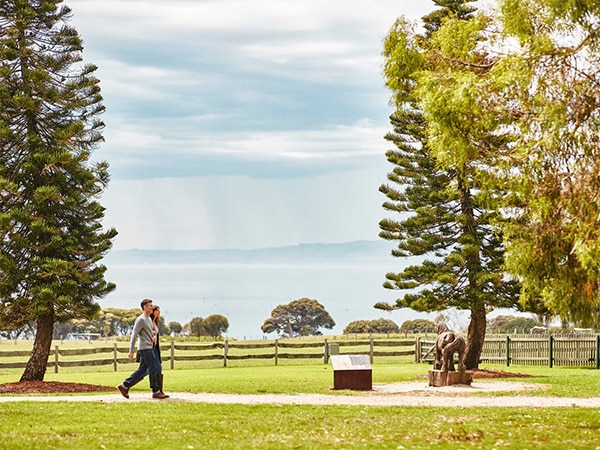
walkers on Churchill Island
Walk among the history of Churchill Island.

Need tips, more detail or itinerary ideas tailored to you? Ask AT.

AI Prompt

Pyramid Rock to Berrys Beach

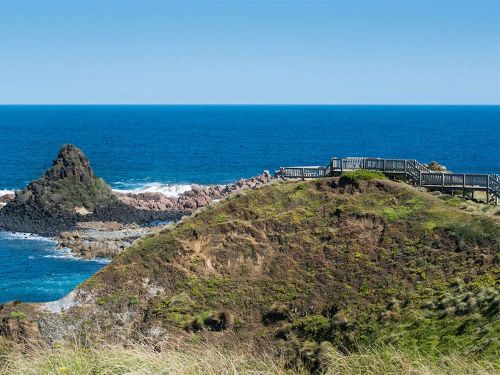
A meandering clifftop track that affords walkers beautiful coastal views, this walk from Pyramid Rock to Berrys Beach takes around two hours return, though you may want to factor in more time to savour the views from the lookout points, snap a photo or two for Instagram, and spot creatures of the deep… Between May and October migratory killer whales, southern right whales and humpback whales are known to cruise through these very waters, as they head from Antarctica towards Queensland’s warmer climes for calving.


Along the five-kilometre walk you’ll marvel at the black basalt columns of Pyramid Rock, trace the green and gold of the coastline’s scrubland and swathes of tussock grass, and finally, you’ll wind up at the sweeping, secluded Berrys Beach.
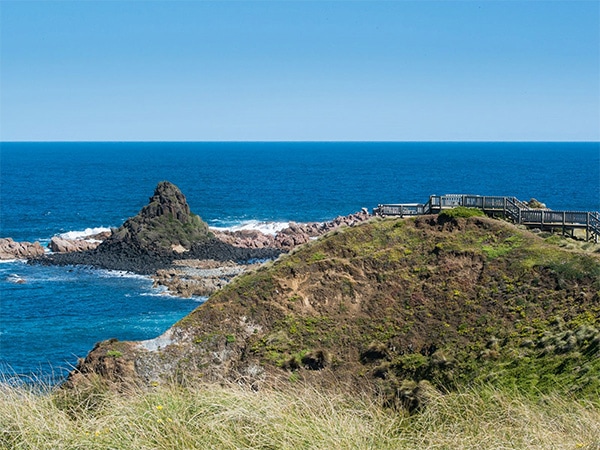
Views of Phillip Island's Pyramid rock
Pyramid rock affords walkers beautiful coastal views.

Swan Lake Walk

A short and mostly flat, kid-, pram- and wheelchair-friendly walk that skirts freshwater Swan Lake in the island’s west, this short trail is partly comprised of boardwalks and takes in two bird hides near the lake’s edge. Walkers will wander through bushland, past tea trees, banksia and native grasses, and may spot black swans, swamp harriers, cormorants, purple swamp hens and more on their journey. It’s a 1.3-kilometre walk that takes just 20 minutes from start to finish.
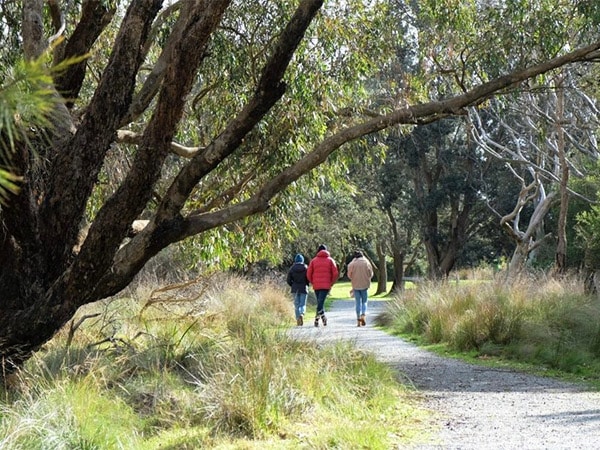
Journey through freshwater Swan Lake in the island’s west.

Scenic Estate Conservation Reserve Walks

This birdlife-rich 28-hectare site provides a habitat for six species of threatened birds, and also overlooks a World Heritage-listed Ramsar wetland. Stroll among endangered grasslands and vegetation, while soaking up the bay views that stretch to Churchill Island, Rhyll and beyond. In among the natural bushland setting you’ll also find two scenically situated picnic shelters, perfect for enjoying a lazy lunch al fresco – just don’t forget to pack provisions.


There are 1.5 kilometres of walking tracks to explore, so you can pace your walk accordingly, whether you’re in the mood for a brief outing or an extended ramble in the fresh air.
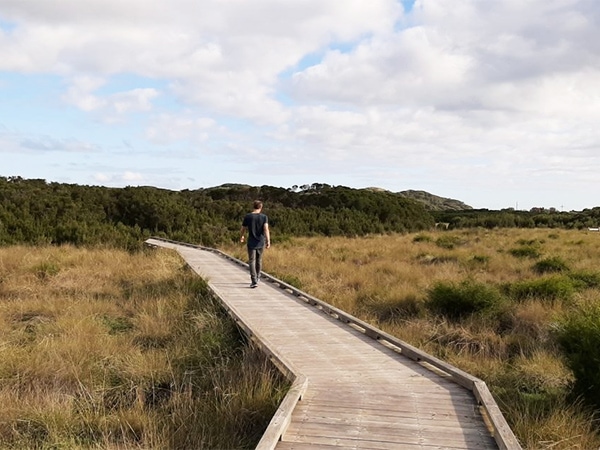
Scenic Estate Conservation Reserve Walk.
Boardwalk beauty at Scenic Estate Conservation Reserve Walk.

Don’t miss: A guide to Phillip Island’s best beaches

Weekly travel news, experiences
insider tips, offers, and more.

Cape Woolamai Walks

Venture up to the heady heights of Cape Woolamai, the highest point on Phillip Island, and gorge on panoramic views. Part of the Cape Woolamai State Faunal Reserve, which plays host to short-tailed shearwater (aka muttonbird) rookeries, you can choose your own adventure from the three walking tracks, all of which start from the reserve’s carpark. The Cape Woolamai Beacon Walk (follow the black markers) takes around 3.5 hours return; The Old Granite Quarry Walk (follow the blue markers) is six kilometres long and takes a total of three hours to complete; and the shorter Pinnacles Walk (follow the green markers) takes around two hours return. On both the Cape Woolamai Beacon Walk, and the Pinnacles Walk you’ll gaze down upon a cluster of spindly sea stacks that rise up out of the frothy surf, a local landmark known as The Pinnacles.
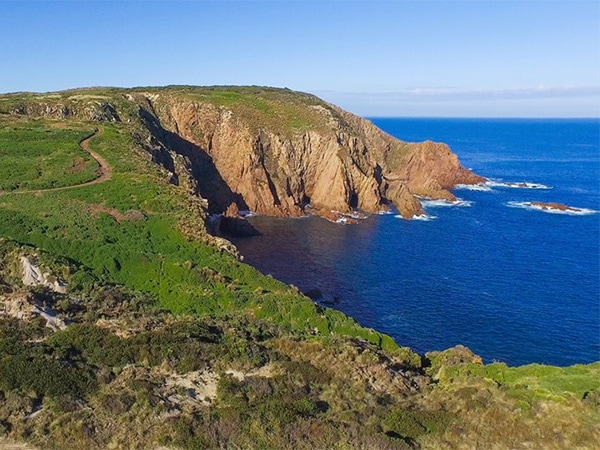
 Cape Woolamai in Phillip Island
Venture up to the heady heights of Cape Woolamai.

Kitty Miller Bay Walk

 Combine a spot of rockpooling and shell collecting with a visit to the rusted remains of an old shipwreck on this one-hour-long walk. First you’ll amble down a wooden stairway that leads to the shores of snug little Kitty Miller Bay, then follow the curve of the beach to your left, before finally landing at the site of the SS Speke, which ran aground on Phillip Island back in 1906. Ensure your visit coincides with the low tide, otherwise access will be limited.
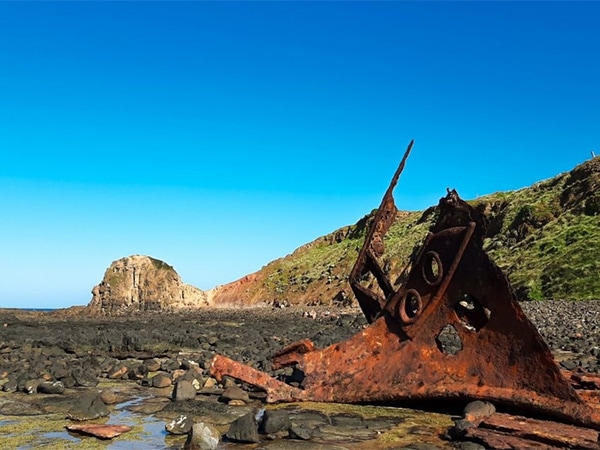
SS Speke shipwreck
SS Speke ran aground on Phillip Island back in 1906.
Chloe Cann
Chloe Cann is an award-winning freelance travel and food writer, born in England, based in Melbourne and Roman by adoption. Since honing her skills at City St George's, University of London with a master's degree in journalism, she's been writing almost exclusively about travel for more than a decade, and has worked in-house at newspapers and travel magazines in London, Phnom Penh, Sydney and Melbourne. Through a mixture of work and pleasure, she's been fortunate enough to visit 80 countries to date, though there are many more that she is itching to reach. While the strength of a region's food scene tends to dictate the location of her next trip, she can be equally swayed by the promise of interesting landscapes and offbeat experiences. And with a small person now in tow, travel looks a little different these days, but it remains at the front of her mind.
View profile and articles
hero media

The iconic Victorian beach where true Aussie surf culture was born

    Craig Tansley Craig Tansley
    Torquay’s Bells Beach is considered one of the best surf beaches in the world.

    It’d be easy to think Australian surf culture was born around the right-hand point breaks of the Gold Coast and Byron Bay. These regions seem the epitome of how the world views Aussie surfers – bronzed (or burnt), languishing in warm water and sunshine. The reality is a lot different.

    The rise of surf culture along Victoria’s coastline

    surfers at Bells Beach in Australia
    Surfers stand on the shore at Bells Beach, where the country’s biggest surfing competition is held each year. (Image: Getty/Filed Image)

    True Aussie surf culture was born on the chilly waves of Victoria’s winters, when huge swells from the Great Southern Ocean hit cliff-lined beaches along the Great Ocean Road. These beaches were the ultimate proving ground – surfers from all over Australia arrived in panel vans and VWs to do battle with the biggest waves they could find.

    huge swells from the Great Southern Ocean at Bells Beach
    Surfers take advantage of the huge swells from the Great Southern Ocean at Bells Beach. (Image: Tourism Australia/Cameron Murray)

    There are surf breaks all along this very picturesque coast – but those around Torquay were most revered. The ultimate test of a surfer’s ability – and durability – however, was Bells Beach: Australia’s answer to Hawai‘i’s Pipeline. Just beyond, the breaks at Jan Juc and Winkipop beckoned.

    an aerial view of surfers at Bells Beach
    Hit the waves along the picturesque coast. (Image: Tourism Australia)

    Torquay became surfing’s Silicon Valley: HQ for the entire Australian surf culture revolution. Four young locals worked out of their backyards in Torquay to create two of the world’s biggest surf labels – Rip Curl and Quiksilver, which soon became the region’s biggest employers.

    surfers out at Bells Beach
    Surfers out at Bells Beach, Victoria’s most famous beach. (Image: Tourism Australia/Cameron Murray)

    Rip Curl started sponsoring the Bells Beach Pro in 1973 – and have done ever since. It’s been going since 1962 – making it the world’s longest continually run surfing contest. Held every Easter, it’s part of the world surfing tour. Spectators line its 30-metre-high cliffs to watch the world’s best take on enormous waves – it’s the ultimate coliseum for the sport and has inspired generations of Aussie surfers to join the list of heroes whose names are on its iconic bell.

    Follow the waves through Victoria’s surfing heartland

    Australian National Surfing Museum, Torquay
    The Australian National Surfing Museum in Torquay. (Image: Tourism Australia)

    Just behind Torquay’s main drag, you can see all that history on display at the world’s best surf museum – the Australian National Surfing Museum. Here you can take your time absorbing the 100-year-or-so history of Australian surfing and check out the 150-strong surfboard collection.

    surfboards on display at Australian National Surfing Museum
    The museum holds surfing memorabilia, including a room dedicated to the history of boards. (Image: Tourism Australia)

    But classic Aussie surf culture can be observed in everyday life all over the Great Ocean Road and Torquay. Surfing dictates life here; no work is done until the big swells have come and gone. Just being here provides a window into 60-odd years of rebellion against convention; for no-one likes nine-to-five living on the Great Ocean Road.

    surfing memorabilia at Australian National Surfing Museum
    The varied displays celebrate the Bells Beach competition, surfing legends and Aussie surf culture. (Image: Tourism Australia)

    There’s less panel vans and VW Beetles these days, but surf culture still rules life. Surfers run this coast; you’re better off keeping out of their way when they’re running down past you to face the biggest swells – then hear them swap stories at cafes, restaurants and bars all around you.

    surfing at Bells Beach
    The beach near Torquay is Australia’s answer to Hawai‘i’s Pipeline. (Image: Visit Victoria/William Watt)