When it rains, it shines: 12 places that are extraordinary in the rain

hero media
Are you over the rain? At these other-worldly Australian locations water transforms the entire landscape – with phenomenal results.

It’s hard at times to think of anything positive when it’s drizzling outside. But as one of the world’s driest continents, a bit of rain casts a real-life magic spell over our deserts, swamps and cities.

It’s time to gaze upon these drenched destinations.

1. Uluru, NT

Conjure up in your mind’s eye the sandstone monolith that has become emblematic of Australia. Can you see it glowing red, surrounded by the dust of the Red Centre? It’s not always like this.

Once or twice a year, Uluṟu is transformed by heavy downpours. You’ll see waterfalls and rivulets cascade down channels of sandstone leaving you awestruck.

the Uluru Waterfalls cascading down the purple rocks
See the breathtaking waterfalls cascading down Uluṟu. (Image: Voyages Indigenous Tourism Australia)

2. Kati Thanda-Lake Eyre, SA

A trip to Australia’s largest salt lake should be on everyone’s travel to-see list – and the best way to appreciate it is from above.
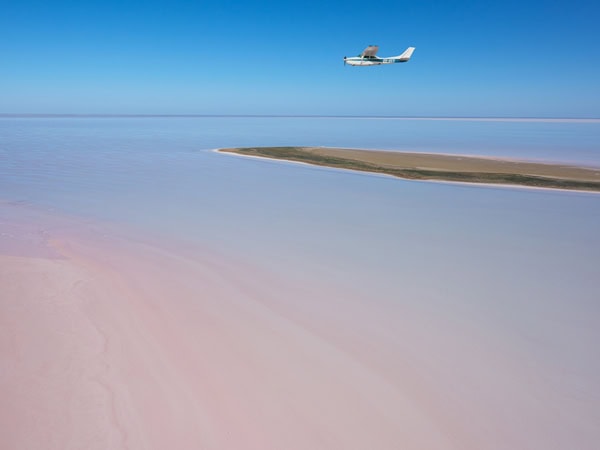
a plane flying over Kati Thanda-Lake Eyre, SA
Admire Kati Thanda-Lake Eyre from above. (Image: South Australian Tourism Commission)

When Kati Thanda is dry (which is most of the time), stripes of moon-like shades of grey and sandy orange are at the country’s lowest point below sea level.
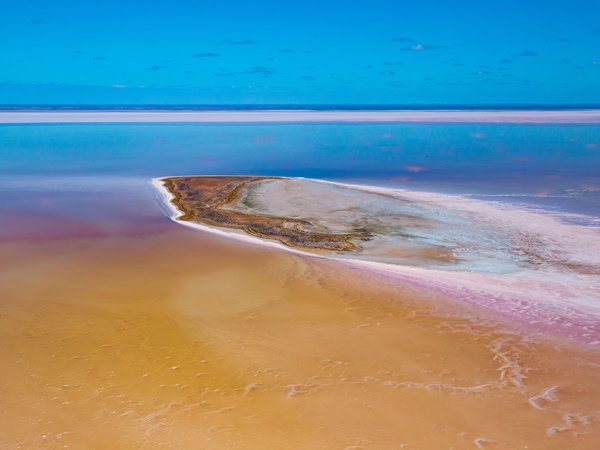
an aerial view of Kati Thanda-Lake Eyre, SA
Kati Thanda-Lake Eyre is Australia’s largest salt lake. (Image: South Australian Tourism Commission)

But come here after outback rain? A surge of water causes the expanse to turn pink, and it teems with breeding migratory birds.
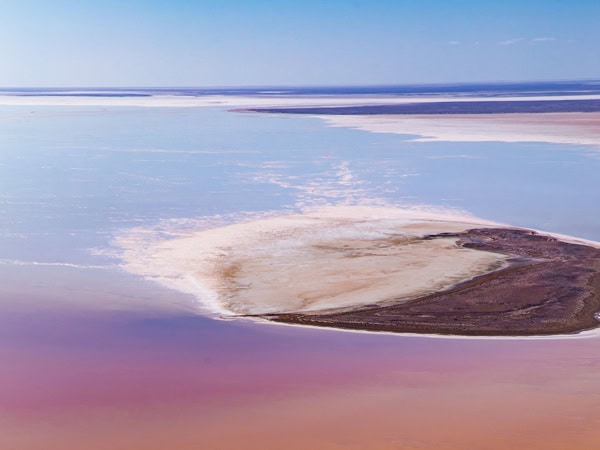
a bird's-eye view of Kati Thanda-Lake Eyre, SA
Rain transforms Kati Thanda-Lake Eyre. (Image: South Australian Tourism Commission)

3. Darwin, NT

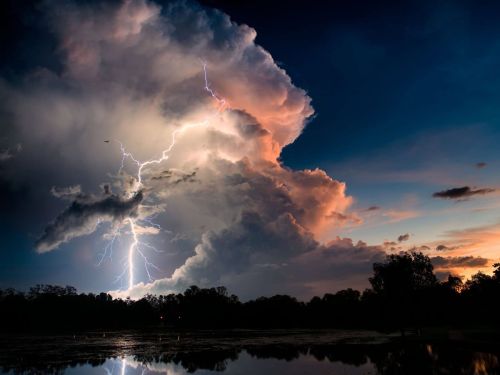
Sure, the Top End is more popular in the winter dry season. But in monsoon season? It becomes truly electrifying.
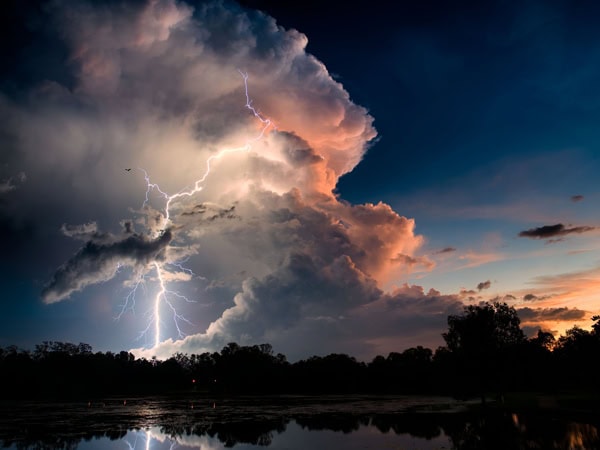
thunderstorm in Darwin
Monsoon season in Darwin is truly electrifying. (Image: Tourism NT/Paul Thomsen)

Starting by sitting on a Darwin balcony with a cold drink, soon your skin will pimple as the humidity drops. Ominous rumbles turn into outright roars and lines of white-purple crack across the sky. It’s a truly humbling experience.
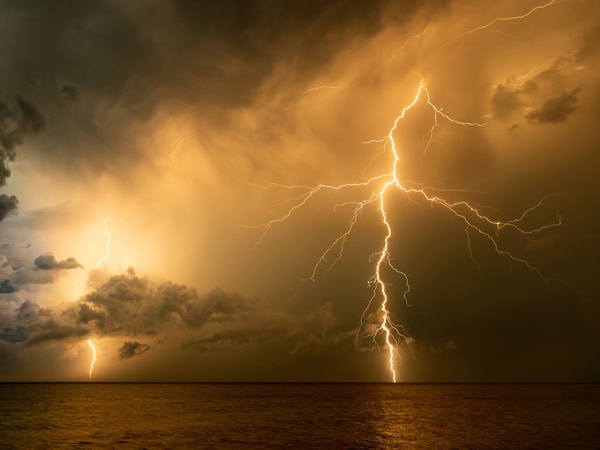
thunderstorm in Darwin
Darwin has a different kind of glow during the wet season. (Image: Tourism NT/Paul Thomsen)

4. Daintree Rainforest, Qld

The rainy Tropical North Queensland summer gets a bad rap. It’s true that the reef isn’t as clear, humidity hits hard when the sun is at its peak, and some walking tracks are bound to be inaccessible due to rain.

But these rainstorms contribute to what makes the Daintree so unique in the world. The emerald green leaves of the rainforest drip with vital moisture, waterfalls come to life and the happy hum of its wild residents intensifies.
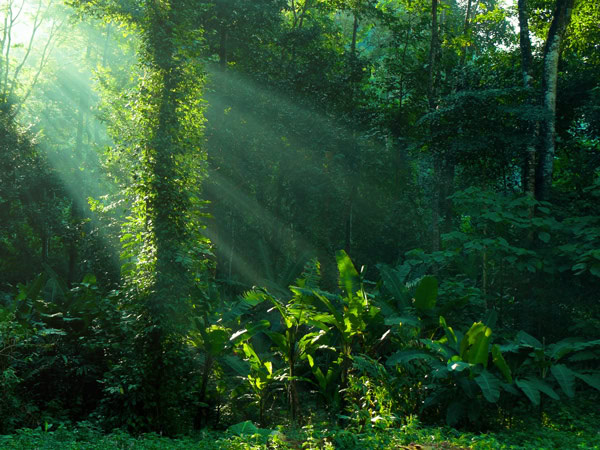
rainforest and sunbeam morning
The Daintree Rainforest gets greener when it rains. (Image: kritdarat Atsadayuttmetee via Getty Images)

5. Tasmanian temperate rainforests

Over 3000 kilometres south you will find a very different type of rainforest. The remote, temperate rainforests of Western Tasmania are alive with ancient Gondwanan flora, Huon pines, climbing tree ferns, the beloved platypus, Tasmanian devils and pademelons.
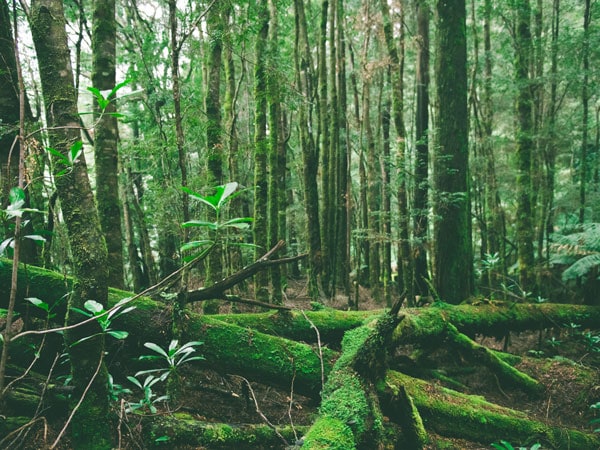
the Huon pines in Western Tasmania Rainforest, Tas 
The temperate rainforest of Western Tasmania is dotted with Huon pines. (Image: Stu Gibson)

No wonder hikers from all over the world come here to trek in this cool, damp wonderland.
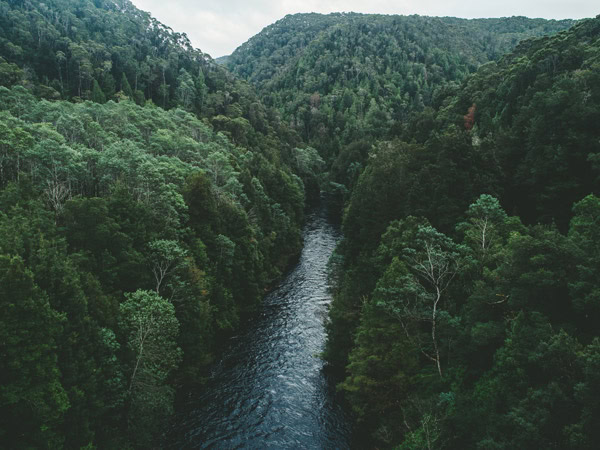
King River in Tasmania
Get lost in the Tassie wilderness. (Image: Flow Mountain Bike)

6. Lorne waterfalls, Vic

On one hand, it’s extremely annoying that when the sun is out in summer, the Great Ocean Road becomes a nightmarish melee of cars and campervans (hello stress-induced mental breakdowns).
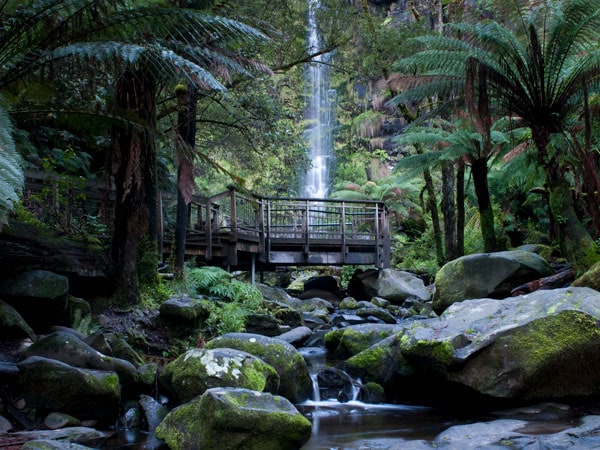
the Sheoak Falls in Lorne
Stop by Sheoak Falls in Lorne to break from your Great Ocean Road drive. (Image: Parks Victoria)

On the other hand, it’s a good excuse to come here for a winter trip instead and see the raging waterfalls of Lorne. The autumn and winter rains make the already impressive falls even more so. And with the thinned-out crowds, you might even spot a koala in the nearby eucalyptus trees.
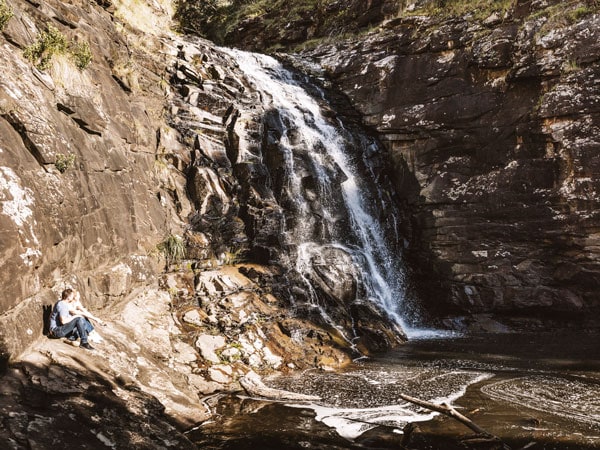
a man sitting on the rocky edge of Lorne Waterfalls, Vic
See the raging waterfalls of Lorne. (Image: Visit Victoria)

7. Glow Worm Tunnel, Wollemi National Park, NSW

You can see these unearthly, bioluminescent larvae at any time of the year. But there is something special about passing from rain to the cool darkness of the old railway tunnel in Wollemi National Park in the Blue Mountains.

Smaller foot traffic to the Glow Worm Tunnel walking track in wet weather means you can hear the drips falling into the puddles on the floor, with the unearthly blue glow providing your very own light show.
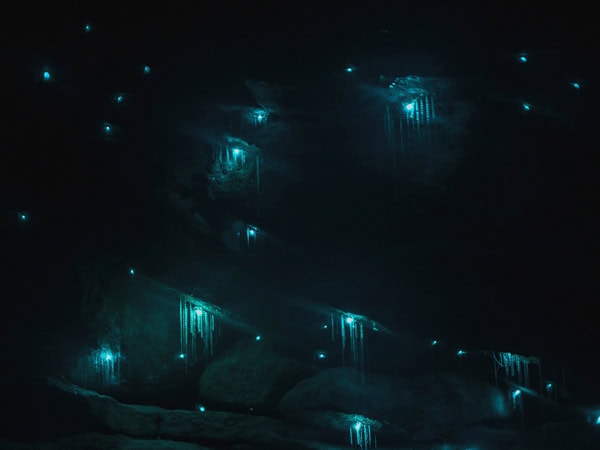
the Glow Worm Tunnel, Wollemi National Park, NSW 
Glow worms glisten with a mystical blue glow. (Image: Destination NSW)

8. Coalseam Conservation Park, WA

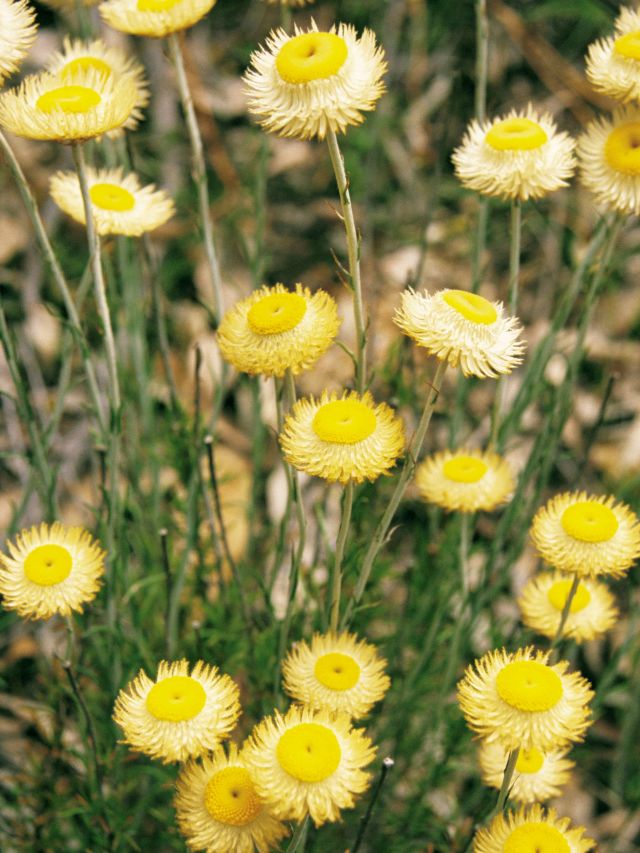
In the summer, Western Australia’s first mined coal deposit is hot and quiet. When the winter rains pass though? It bursts into life with colourful spring flowers.
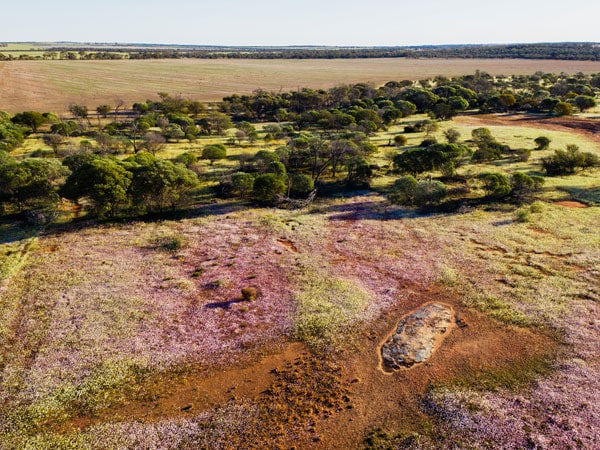
the Coalseam Conservation Park in WA
Coalseam Conservation Park bursts to life with the rain. (Image: Tourism Western Australia)

People travel to this part of the Wheatbelt region for a tranquil day: wandering through the yellows and pinks of the everlastings, grevilleas and banksias, snapping photos as they go.
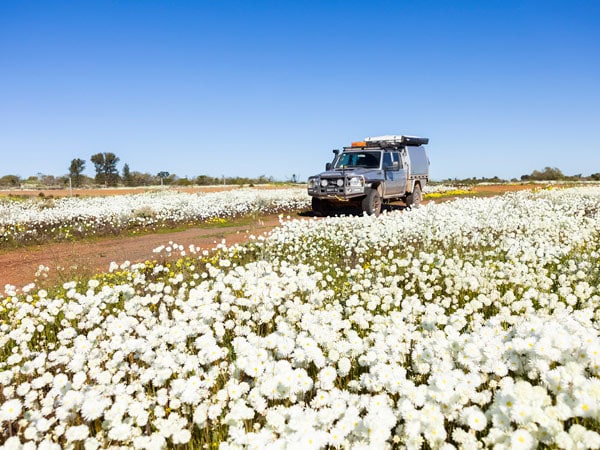
a 4WD driving along the wildflowers in Coalseam Conservation Park
Drive along the white wildflowers in Coalseam Conservation Park. (Image: Tourism Western Australia)

9. Gurruwiling (Arafura Swamp), NT

Have you heard of the Gurruwiling (Arafura Swamp) in Arnhem Land? It is a remote water system, and the largest freshwater ecosystem and paperbark swamp in Australia.

Gurruwiling is also the home to the Yolŋu and Bi peoples, who work hard to mitigate the impact of climate change through their land management. If you want to see its ethereal beauty but can’t access it in person, the swamp played the starring role in the 2006 film, ‘Ten Canoes’.
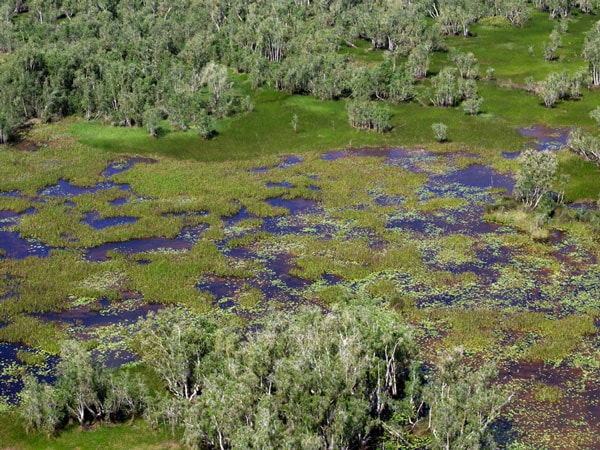
the Arafura Swamp in Arnhem Land
Gurruwiling, also known as the Arafura Swamp, is a pristine wetland in Arnhem Land.

10. Bungle Bungles, WA

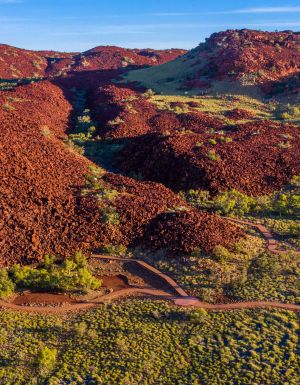
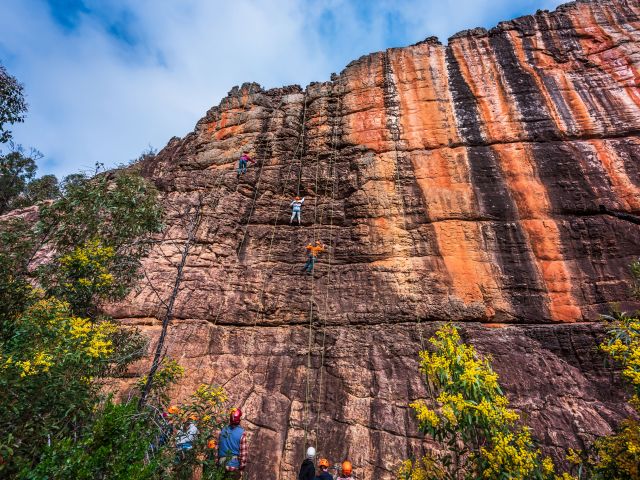
Fly to Purnululu National Park in the East Kimberley and it’s impossible to miss the hive-like rock hills of the Bungle Bungles.
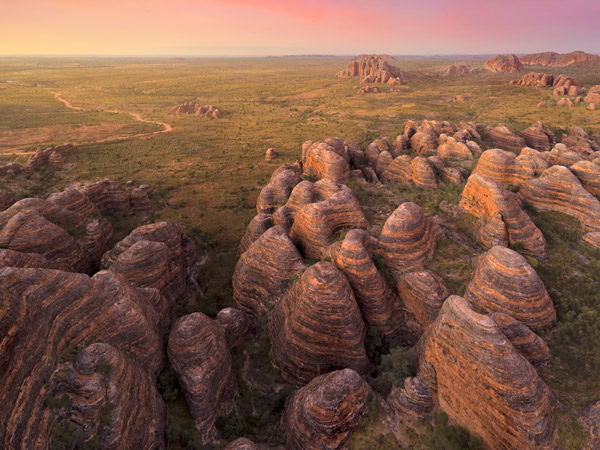
the Bungle Bungles ancient sandstone formations within Purnululu National Park
Walk among ancient sandstone formations within Purnululu National Park. (Image: Tourism Western Australia)

Exploring the cluster of red-orange and plum-dark striped stacks is heightened by the rainfall. We’re talking pools between the rocks, and springtime blooms of acacia flowers and grevilleas.
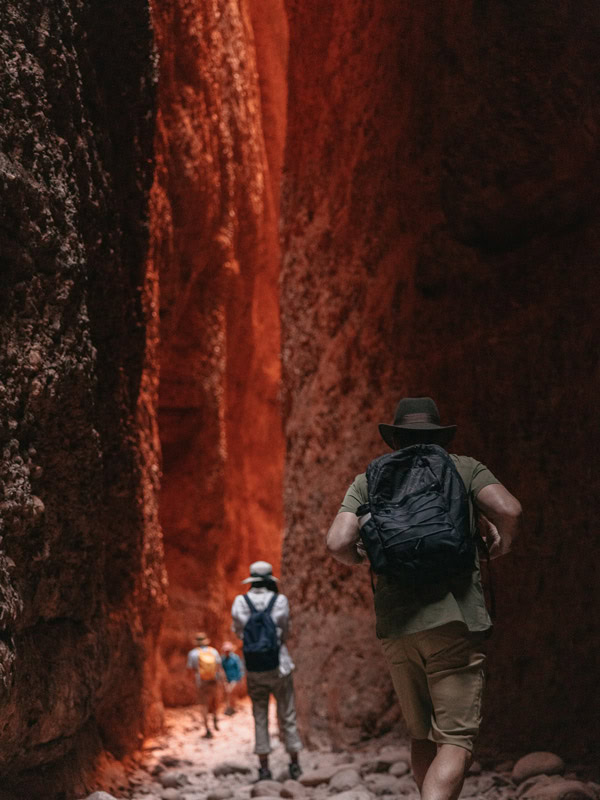
hikers navigating the Bungle Bungles, WA
Exploring the cluster of red-orange and plum-dark striped stacks is heightened by the rainfall. (Image: Tourism Western Australia)

11. Wentworth Falls, NSW

The downside of it raining when you go to see Wentworth Falls is that you might need to eat lunch in the car in the picnic area. But brave the weather and step outside (we promise it’s worth it).
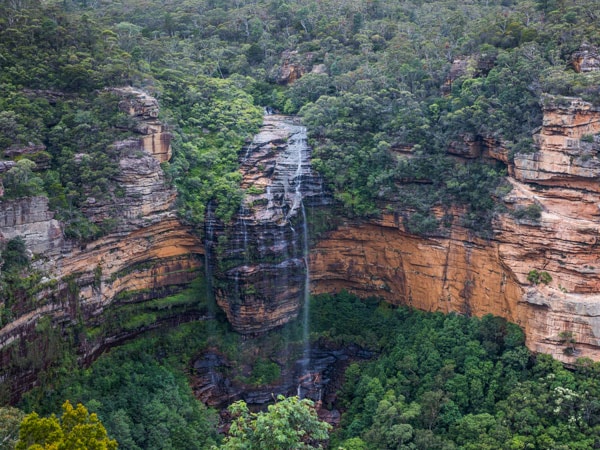
an aerial view of the Wentworth Falls, NSW 
The short hike to Wentworth Falls is incredibly worth it. (Image: Destination NSW)

Make it to the nearby lookout and look across the misty Jamison’s Valley. It’s there you will see the jaw-dropping site of a pounding Wentworth Falls, courtesy of the rain-swollen creeks of the Blue Mountains.
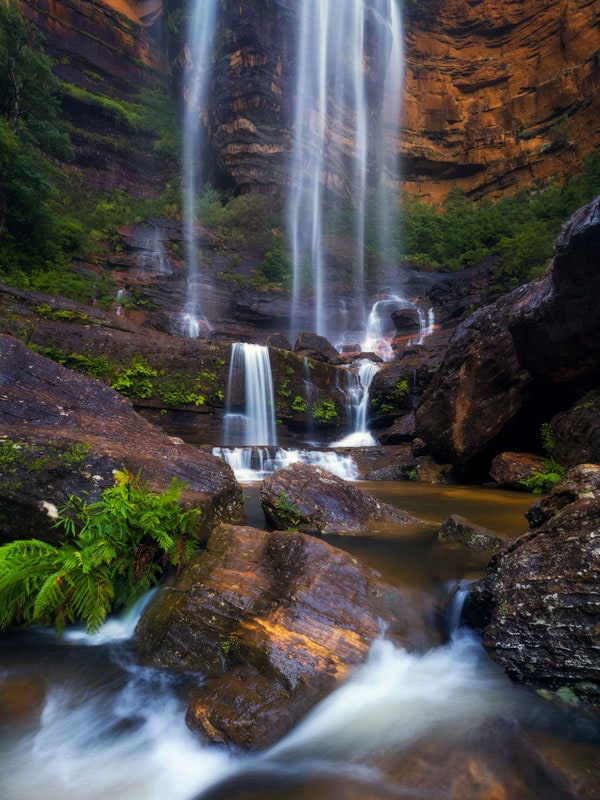
the three-tiered Wentworth Falls, NSW 
Be enchanted by the sight of the three-tiered Wentworth Falls. (Image: Destination NSW)

12. Barmah-Millewa Forest, Vic

Close to the Murray River, the Barmah-Millewa Forest is a seriously underrated destination for the average traveller.
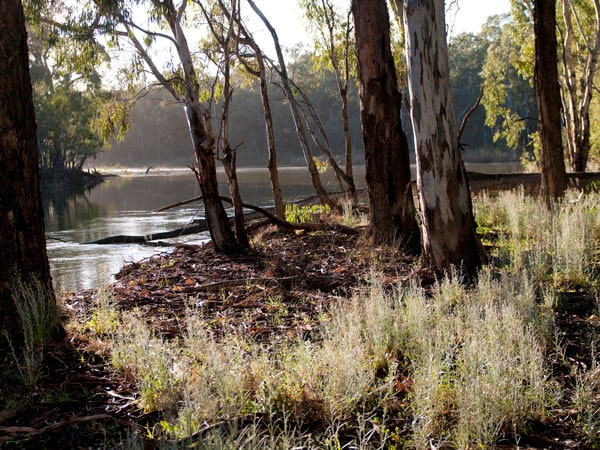
the Barmah-Millewa Forest near Murray River
Barmah-Millewa Forest is on Yorta Yorta land. (Image: Parks Victoria)

The traditional lands of the Yorta Yorta have river red gum floodplains, freshwater marshes, and birdlife as diverse as waterbirds, galahs, cockatoos and cockatiels. Floods that occur from winter into spring contribute to its title as wetlands of international significance.
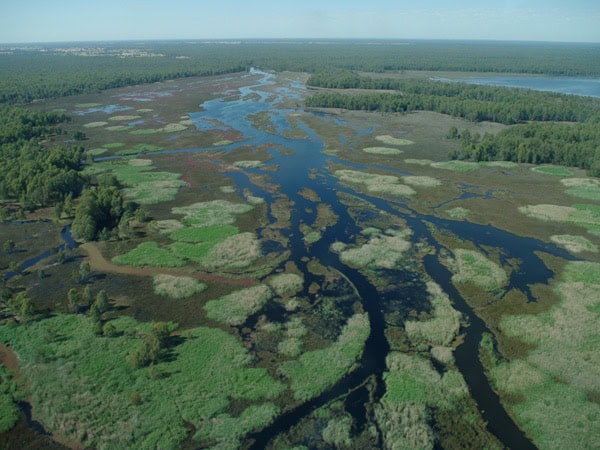
an aerial view of Barmah-Millewa Forest, Vic
The wetlands have provided a constant source of nutrition for the Yorta Yorta People. (Image: Parks Victoria)
Kate Bettes
Kate Bettes is a freelance travel writer. Whether having a picnic in Vietnamese jungle with new friends, or partying in the back of a limousine in Hollywood, Kate’s experiences have left her with the sneaking suspicion that the best travel memories happen when you least expect. It’s this feeling - and how to get it - that she loves to write about.
See all articles
hero media

The Macedon Ranges is Victoria’s best-kept food and wine secret

Located just an hour north-west of Melbourne, the largely undiscovered Macedon Ranges quietly pours some of Australia’s finest cool-climate wines and serves up some of Victoria’s best food.

Mention the Macedon Ranges and most people will think of day spas and mineral springs around Daylesford, cosy weekends away in the countryside or the famous Hanging Rock (of enigmatic picnic fame). Or they won’t have heard of the Macedon Ranges at all.

But this cool-climate destination has been inconspicuously building a profile as a high-quality food and wine region and is beginning to draw serious attention from oenophiles and epicureans alike.

The rise of Macedon Ranges wine

liquid gold barrels at Kyneton Ridge Estate Winery
Barrels of liquid gold at Kyneton Ridge Estate Winery. (Image: Chloe Smith Photography)

With elevations ranging from 300 to 800 metres, Macedon Ranges vineyards are among the highest in the country. This altitude, combined with significant day/night temperature swings, makes for a slow ripening season, in turn nurturing wines that embody elegance and structure. Think crisp chardonnays, subtle yet complex pinot noirs and delicate sparkling wines, along with niche varietals, such as gamay and nebbiolo.

Despite the region’s natural advantages – which vary from estate to estate, as each site embodies unique terroir depending on its position in relation to the Great Dividing Range, soil make-up and altitude – the Macedon Ranges has remained something of an insider’s secret. Unlike Victoria’s Yarra Valley or Mornington Peninsula, you won’t find large tour buses here and there’s no mass marketing drawing crowds.

Many of the 40-odd wineries are family-run operations with modest yields, meaning the wineries maintain a personal touch (if you visit a cellar door, you’ll likely chat to the owner or winemaker themselves) and a tight sales circle that often doesn’t go far beyond said cellar door. And that’s part of the charm.

Though wines from the Macedon Ranges are just starting to gain more widespread recognition in Australia, the first vines were planted in the 1860s, with a handful of operators then setting up business in the 1970s and ’80s. The industry surged again in the 1990s and early 2000s with the entry of wineries, such as Mount Towrong, which has an Italian slant in both its wine and food offering, and Curly Flat , now one of the largest estates.

Meet the new generation of local winemakers

the Clydesdale barn at Paramoor.
The Clydesdale barn at Paramoor. (Image: Chloe Smith Photography)

Then, within the last 15 years, a new crop of vignerons like Andrew Wood at Kyneton Ridge Estate , whose vineyard in 2024 was the first in the Macedon Ranges to be certified by Sustainable Winegrowing Australia; Geoff Plahn and Samantha Reid at Paramoor , who have an impressive cellar door with a roaring fire and studded leather couches in an old Clydesdale barn; and Ollie Rapson and Renata Morello at Lyons Will , who rapidly expanded a small vineyard to focus on top-shelf riesling, gamay, pinot noir and chardonnay, have taken ownership of local estates.

Going back to the early days, Llew Knight’s family was one of the pioneers of the 1970s, replacing sheep with vines at Granite Hills when the wool industry dwindled. Knight is proud of the fact that all their wines are made with grapes from their estate, including a light, peppery shiraz (some Macedon wineries purchase fruit from nearby warmer areas, such as Heathcote, particularly to make shiraz) and a European-style grüner veltliner. And, as many other wineries in the region do, he relies on natural acid for balance, rather than an additive, which is often required in warmer regions. “It’s all about understanding and respecting your climate to get the best out of your wines,” he says.

farm animals atKyneton Ridge Estate
Curious residents at Kyneton Ridge Estate. (Image: Chloe Smith Photography)

Throughout the Macedon Ranges, there’s a growing focus on sustainability and natural and low-intervention wines, with producers, such as Brian Martin at Hunter Gatherer making waves in regenerative viticulture. Martin previously worked in senior roles at Australia’s largest sparkling winemaking facility, and now applies that expertise and his own nous to natural, hands‑off, wild-fermented wines, including pét‑nat, riesling and pinot noir. “Wild fermentation brings more complexity,” he says. “Instead of introducing one species of yeast, you can have thousands and they add different characteristics to the wine.”

the vineyard at Kyneton Ridge Estate Winery
The estate’s vineyard, where cool-climate grapes are grown. (Image: Chloe Smith Photography)

Most producers also focus on nurturing their grapes in-field and prune and pick by hand, thus avoiding the introduction of impurities and the need to meddle too much in the winery. “The better the quality of the fruit, the less you have to interfere with the natural winemaking process,” says Wood.

Given the small yields, there’s also little room for error, meaning producers place immense focus on quality. “You’re never going to compete in the middle [in a small region] – you’ve got to aim for the top,” says Curly Flat owner Jeni Kolkka. “Big wineries try to do things as fast as possible, but we’re in no rush,” adds Troy Walsh, owner and winemaker at Attwoods . “We don’t use commercial yeasts; everything is hand-harvested and everything is bottled here, so we bottle only when we’re ready, not when a big truck arrives.” That’s why, when you do see a Macedon Ranges product on a restaurant wine list, it’s usually towards the pointy end.

Come for the wine, stay for the food

pouring sauce onto a dish at Lake HouseDaylesford
Dining at Lake House Daylesford is a treat. (Image: Chloe Smith Photography)

If wine is the quiet achiever of the Macedon Ranges, then food is its not-so-secret weapon. In fact, the area has more hatted restaurants than any other region in Victoria. A pioneer of the area’s gourmet food movement is region cheerleader Alla Wolf-Tasker, culinary icon and founder of Daylesford’s Lake House.

For more than three decades, Wolf-Tasker has championed local producers and helped define what regional fine dining can look like in Australia. Her influence is palpable, not just in the two-hatted Lake House kitchen, but in the broader ethos of the region’s dining scene, as a wave of high-quality restaurants have followed her lead to become true destination diners.

the Midnight Starling restaurant in Kyneton Ridge Estate Winery
The hatted Midnight Starling restaurant is located in Kyneton. (Image: Chloe Smith Photography)

It’s easy to eat well, whether at other hatted restaurants, such as Midnight Starling in the quaint town of Kyneton, or at the wineries themselves, like Le Bouchon at Attwoods, where Walsh is inspired by his time working in France in both his food offering and winemaking.

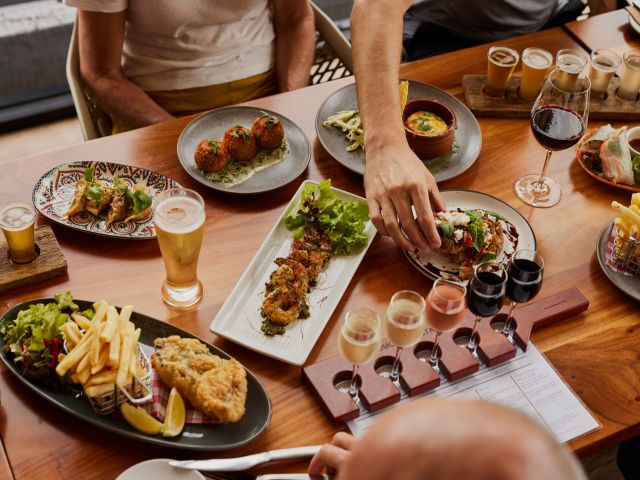
The beauty of dining and wine touring in the Macedon Ranges is that it feels intimate and unhurried. You’re likely to meet the winemaker, hear about the trials of the latest vintage firsthand, and taste wines that never make it to city shelves. And that’s worth getting out of the city for – even if it is just an hour down the road.

dishes on the menu at Midnight Starling
Delicate dishes on the menu at Midnight Starling. (Image: Chloe Smith Photography)

A traveller’s checklist

Staying there

the accommodation at Cleveland Estate, Macedon Ranges
Stay at the Cleveland Estate. (Image: Chloe Smith Photography)

Soak up vineyard views from Cleveland Estate near Lancefield , embrace retro charm at Kyneton Springs Motel or indulge in lakeside luxury at the Lake House .

Eating there

Enjoy a four-course menu at the one-hatted Surly Goat in Hepburn Springs, Japanese-inspired fare at Kuzu in Woodend or unpretentious fine dining at Mount Monument , which also has a sculpture park.

Drinking there

wine tasting at PassingClouds Winery, Macedon Ranges
A tasting at Passing Clouds Winery. (Image: Chloe Smith Photography)

Settle in for a tasting at Boomtown in Castlemaine, sample local drops at the cosy Woodend Cellar & Bar or wine-hop around the many cellar doors, such as Passing Clouds .

the Boomtown Winery and Cellar Bar signage
Boomtown Winery and Cellar Bar. (Image: Chloe Smith Photography)

Playing there

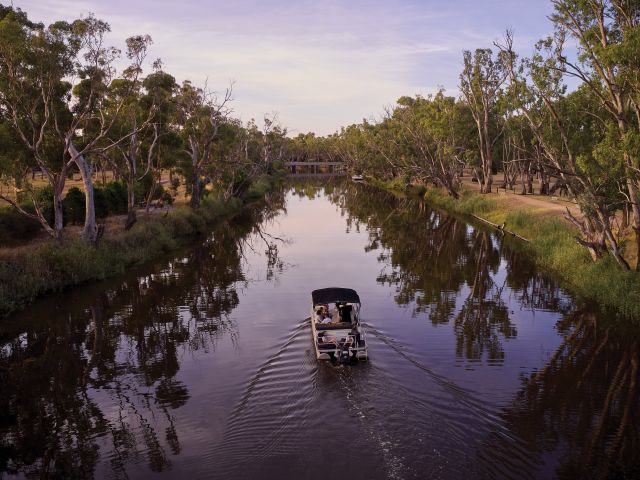
a scenic river in Castlemaine
Idyllic scenes at Castlemaine. (Image: Chloe Smith Photography)

Wander through the seasonal splendour of Forest Glade Gardens , hike to the summit of Hanging Rock, or stroll around the tranquil Sanatorium Lake.

purple flowers hanging from a tree
Purple flowers hanging from a tree. (Image: Chloe Smith Photography)