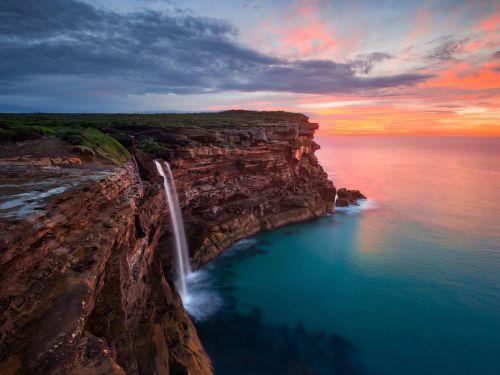
Refreshing rock pools, cascading streams of crystal-clear water and splashes of green foliage combine to make the idyllic natural getaway.
There’s certainly no short supply of waterfalls in Australia. Whether the region’ is typically bone dry or flushed with rainfall, nature’s showers find a way to flow down cliff sides and gentle slopes regardless of the season.
With an abundance of beautiful oases scattered across the country, the only thing stopping you from a weekend of walks and waterfalls is the overwhelming choice, so we’ve sourced the must-visit locations to help you decide.
Ranging from easily accessible to slightly more challenging, don’t miss these waterfalls when you find yourself in the area – even if it requires a lengthy road trip in a well-equipped 4WD. It’ll be worthwhile when you’re nestled on a warm sandbank with a well-packed picnic.
1. Horizontal Falls, WA
There’s a reason globetrotters flock to Horizontal Falls: this natural phenomenon can’t be replicated anywhere else in Australia, let alone the world.
Located in the Kimberley region, turquoise water gushes through the McClarty Range to create the famous Horizontal Falls.
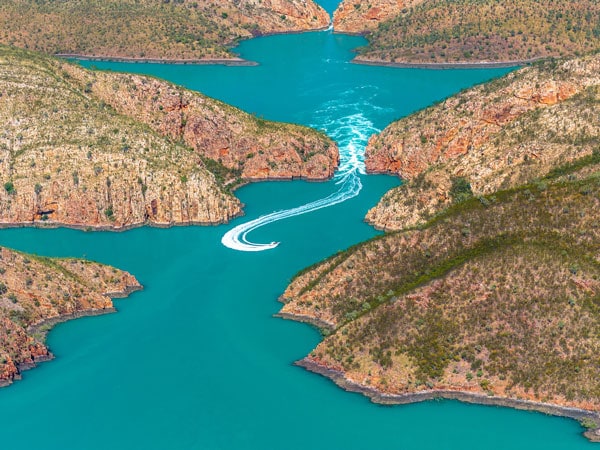
If a natural wonder is on the radar of Sir David Attenborough, it’s all but guaranteed to be a must-visit. Keep in mind that the waterfall itself can only be seen via plane or boat , so there’s no 4WD on the cards for this particular trip.
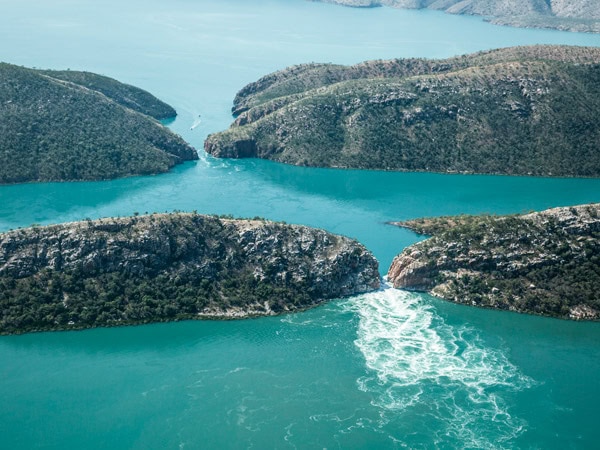
Accessibility: Difficult.
Where: Approximately one hour by plane from Broome or Derby.
2. Bridal Veil Falls, Tas
It would be a missed opportunity to arrive at Bridal Veil Falls and not propose to your loved one; the name alone sets the ideal scene.
Not to be mistaken with the Bridal Veil Falls found in both New South Wales and Victoria, Tasmania’s own waterfall is arguably the most true to its name.
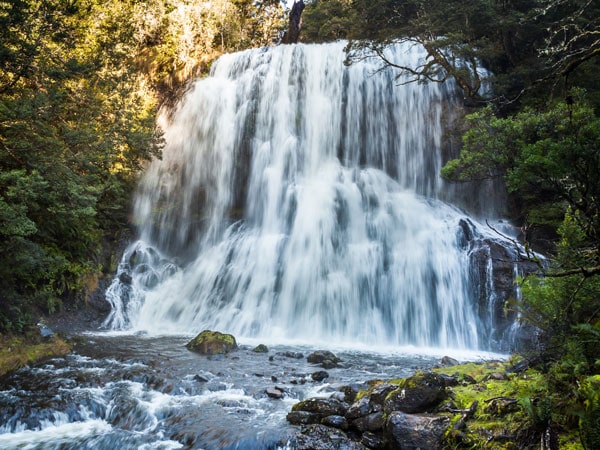
Vaguely reminiscent of a sheer headdress worn during a classic (if not somewhat outdated) marriage ceremony, this Moina-adjacent waterfall will undoubtedly spark feelings of romance and, at the very least, a tinge of awe.
Avoid a disappointing trip by checking when Bridal Veil Falls is open as it can shut down during the cooler seasons.
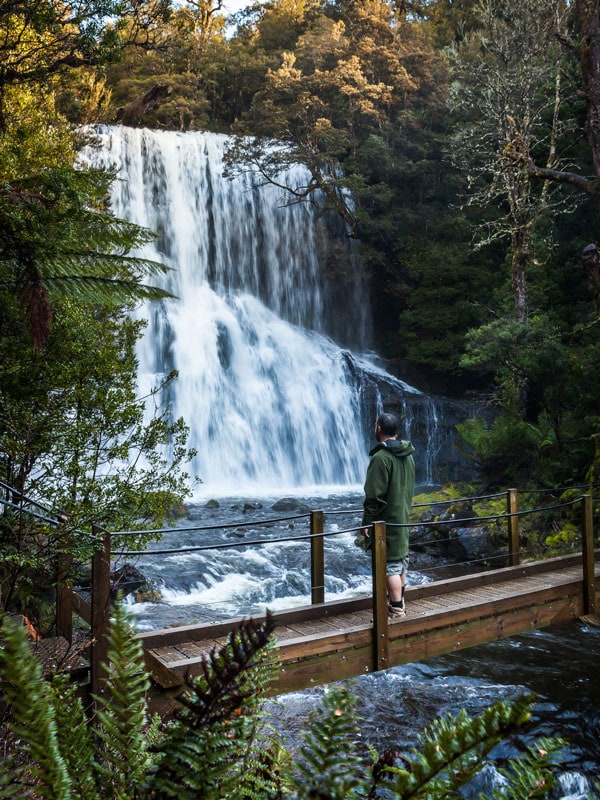
Accessibility: Moderate to difficult.
Where: Approximately one hour from Devonport or 1.5 hours from Queenstown.
3. Serenity Falls, Qld
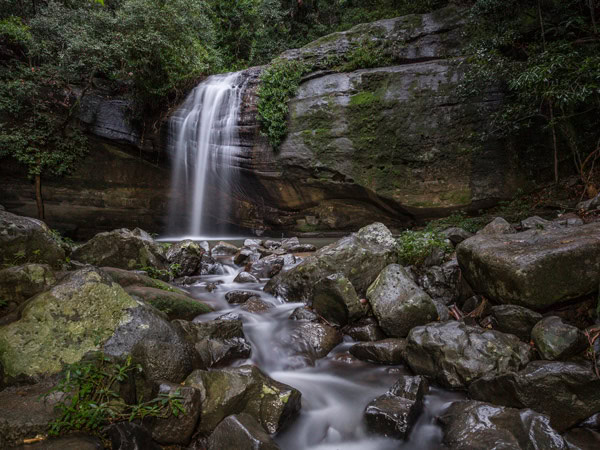
Serenity Falls (also known as Buderim Falls) might not be the largest waterfall in Queensland but what it lacks in size, it makes up for in atmosphere.
Located a pebble’s throw away from the tiny town of Buderim on the Sunshine Coast, a short journey along a boardwalk will lead you to this isolated hideaway, laden with glossy boulders and moss-lined walls.
To avoid a muddy fare, plan your trip during a month that hasn’t experienced a bout of tropical Queensland downpours.
Accessibility: Easy.
Where: Approximately 10 minutes from the Sunshine Coast.
4. Trentham Falls, Vic
Ask any Melburnian to recommend a waterfall and they’ll instinctually reference Trentham Falls – it’s all but a rite of passage to get partially soaked by its impressive waterfall after a lengthy lunch at the nearby picnic tables.
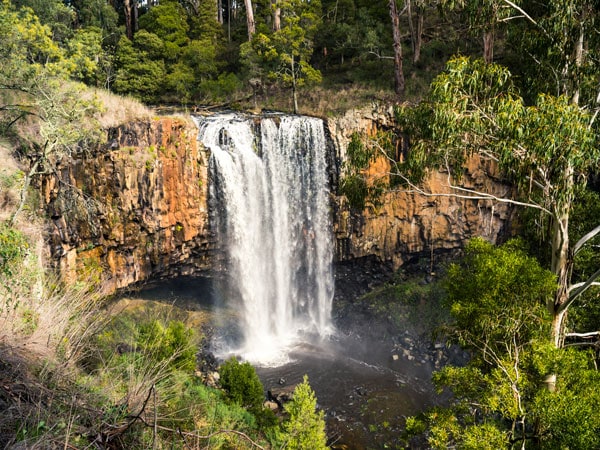
A little over an hour’s drive from Melbourne’s CBD, the two paths from the car park can be approached with glacial speed. However, the option with steps does have a spot of steep inclines, so sensible shoes will go a long way.
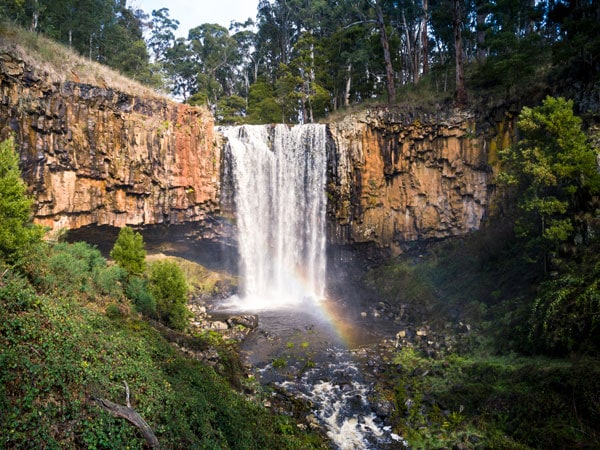
Once you’re near the base, the sheer size of Trentham Falls is nothing short of phenomenal. There’s no swimming permitted at Trentham but the view will be more than enough to quench your thirst for exploration.
Accessibility: Easy to moderate.
Where: Approximately one hour from Melbourne CBD.
5. Belair Waterfall, SA
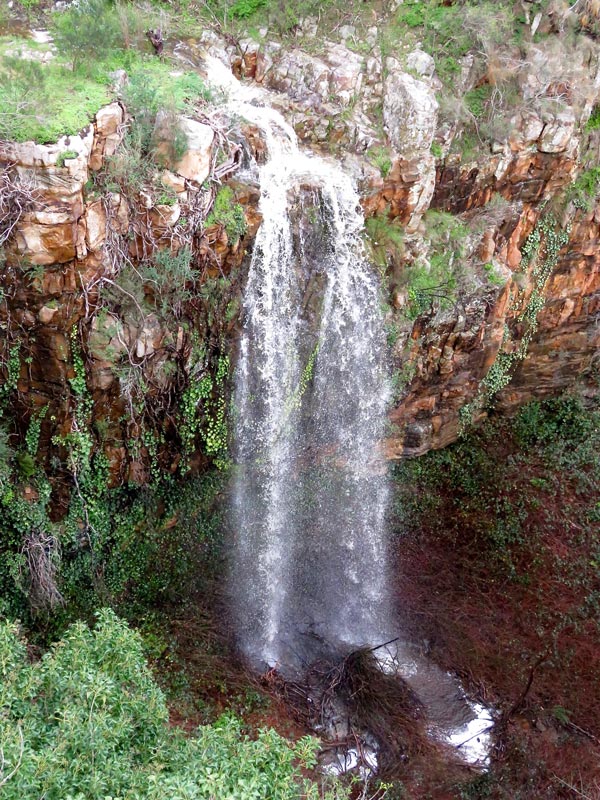
Situated in Belair National Park , this waterfall-riddled destination is guaranteed fun for the whole family.
This is primarily due to the nearby Adventure Playground reminiscent of peak 90s nostalgia. Built entirely out of wood, let the kids run amok with a family member while the waterfall chasers in the group head down the six-kilometre trail.
The Belair Waterfall might be out of action in the drier seasons, so aim to explore the area throughout winter or autumn for good measure.
Accessibility: Moderate.
Where: Approximately 20 minutes from Adelaide.
6. Curracurrong Falls, NSW
A trip to Curracurrong Falls at any time of the year will reap great rewards. The heavy free-flowing waterfall looks like a mere drizzle from afar, but the closer you get, the more gobsmacking it becomes.
The part-hike, part-sightseeing adventure can take over an hour one-way from the starting point, and its proximity to the blue waters of Wattamolla Beach offers an additional body of water to include in the itinerary.
As you’ll be in the heart of Royal National Park for this expedition, pack a pair of binoculars along with some bathers to soak it all in, both literally and figuratively.
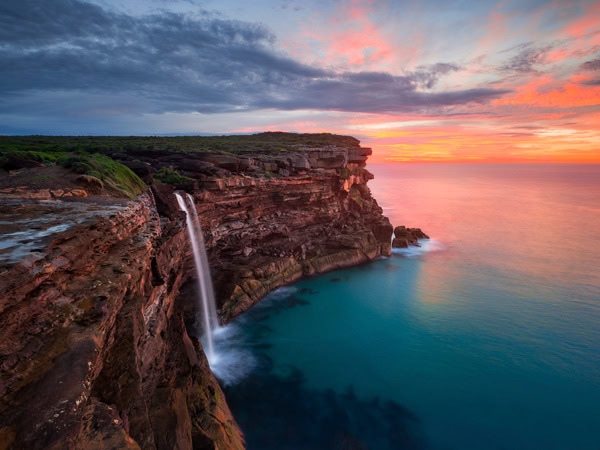
Accessibility: Moderate.
Where: Approximately one hour from Sydney CBD.
7. Mackenzie Falls, Vic
Mackenzie Falls would make for a perfect screensaver; it’s positively stunning.
Make the journey to Grampians National Park (an essential destination with or without Mackenzie Falls) and brace your knees for a slightly uneven two-kilometre walk to this glorious, oversized water feature.
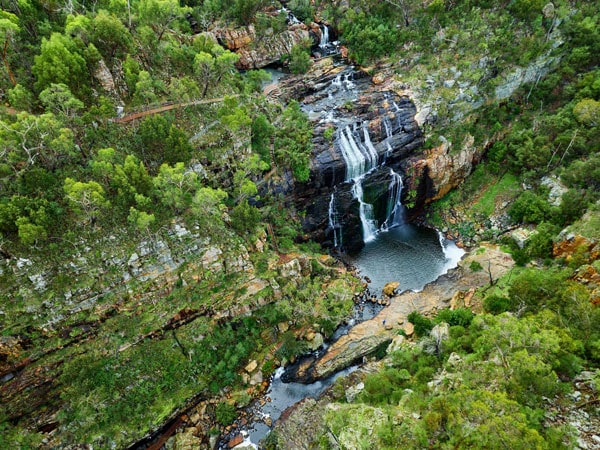
After receiving a thorough misting, carve out more time in the day to explore the rest of the Grampians beyond the exemplary waterfall. For the organised travellers, pack an esky with an array of meats and veg to throw on the barbecue at Zumsteins Historic Area, or persevere along the path until you get to the Mackenzie Falls Lookout for a bird’s eye view of the ever-impressive waterfall.
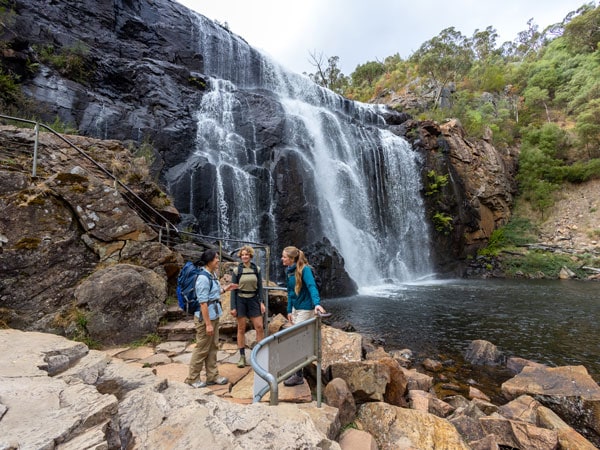
Accessibility: Easy to moderate.
Where: Approximately three-and-a-half hours from Melbourne CBD.
8. Fitzroy Falls, NSW
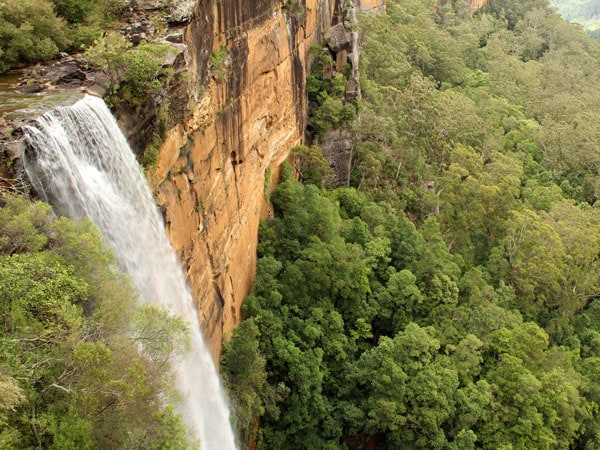
For striking views, a condensed retelling of history and an endless supply of bird-watching opportunities, Fitzroy Falls is the place to be.
Navigate the short boardwalk through Morton National Park to Fitzroy Falls lookout to grasp the scope of the waterfall, which plunges more than 80 metres below as a seemingly infinite backdrop of trees and gullies complete the picture.
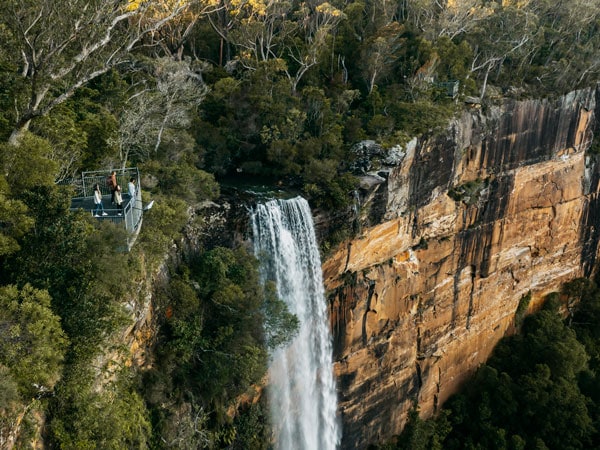
The nearby Fitzroy Falls Visitor Centre hosts Aboriginal Cultural walks during trading hours that help to truly appreciate the beauty and significance of Morton National Park, and by extension, Fitzroy Falls.
Accessibility: Easy.
Where: Approximately two hours from either Sydney or Canberra.
9. Florence Falls, NT
While Tasmania holds the top title for the most waterfalls (with over 200 known sites), the Northern Territory’s offerings are on another level.
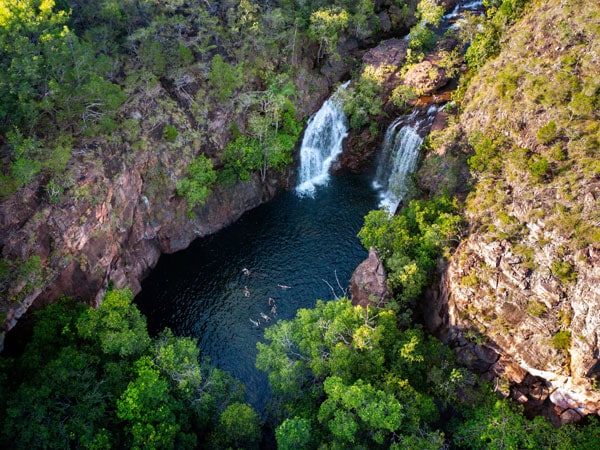
Litchfield National Park alone is home to no fewer than seven glorious waterfalls, with Florence Falls being a crowd favourite.
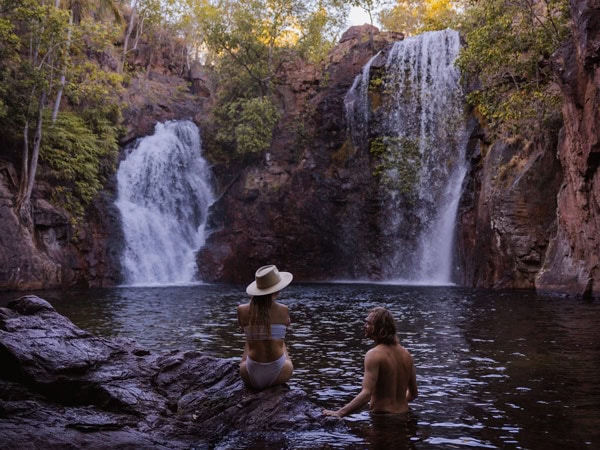
The option to swim under the continuous cascade proves to be a standout feature, as is the nearby campground equipped with basic amenities to keep campers happy for the duration of their stay.
Accessibility: Moderate.
Where: Approximately two hours from Darwin.
10. Natural Bridge, Qld
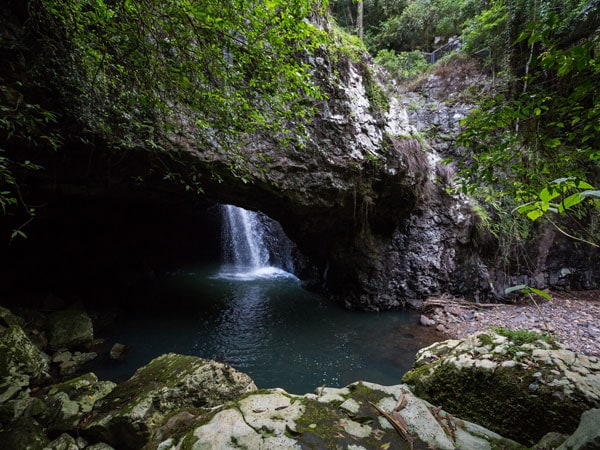
For a wholly unique waterfall experience, slink through the caves of Natural Bridge to find a large opening with water falling down from the heavens above.
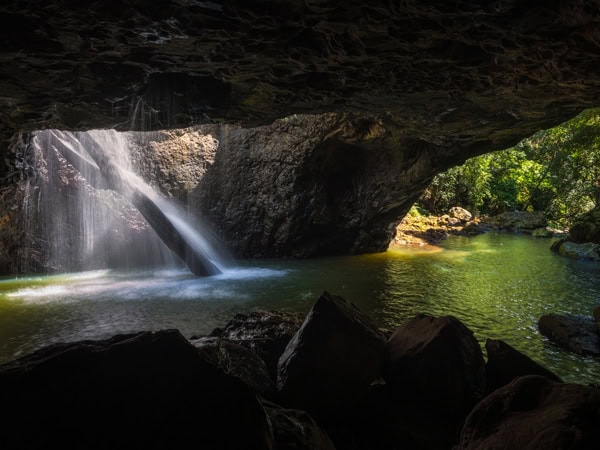
Follow a short, effortless path through the World Heritage-listed Gondwana Rainforest to reach this mystical space full of natural light and deep, dark crevices.
Swimming might seem tempting in the warm Gold Coast sun but it’s strictly prohibited, so it’s best to bring plenty of water, a spritz fan and some fresh fruit to fend off the humidity.
Accessibility: Easy.
Where: Less than an hour’s drive from the Gold Coast.
11. Nelson Falls, Tas
For a quintessential Tasmanian experience, head to Franklin-Gordon Wild Rivers National Park.
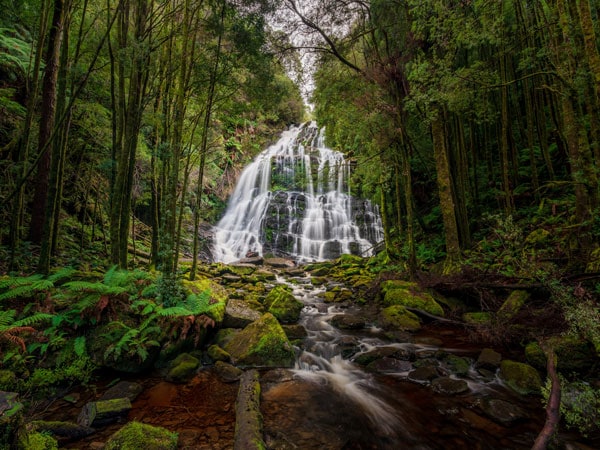
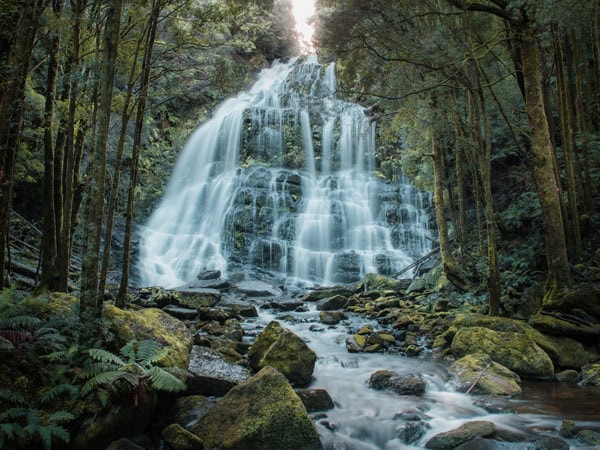
Unreasonably large, ancient trees line the path to the curtain of fresh water that is Nelson Falls , just one of Tasmania’s many locations that have remained preserved for centuries.
Witness Nelson Falls in all its glory during the wetter seasons and encourage your less active friends to come along, too, as there’s comparatively little energy required to reach this flourishing sanctuary.
Accessibility: Easy.
Where: Roughly 30 minutes from Queenstown.
12. Tjaynera Falls, NT
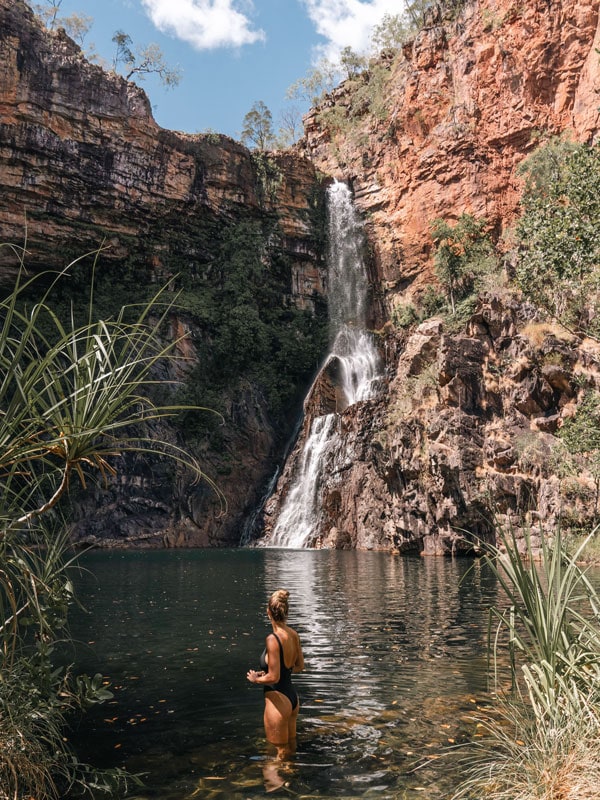
Due to its relatively isolated nature, don’t expect to see many other people gandering at Tjaynera Falls (Sandy Creek).
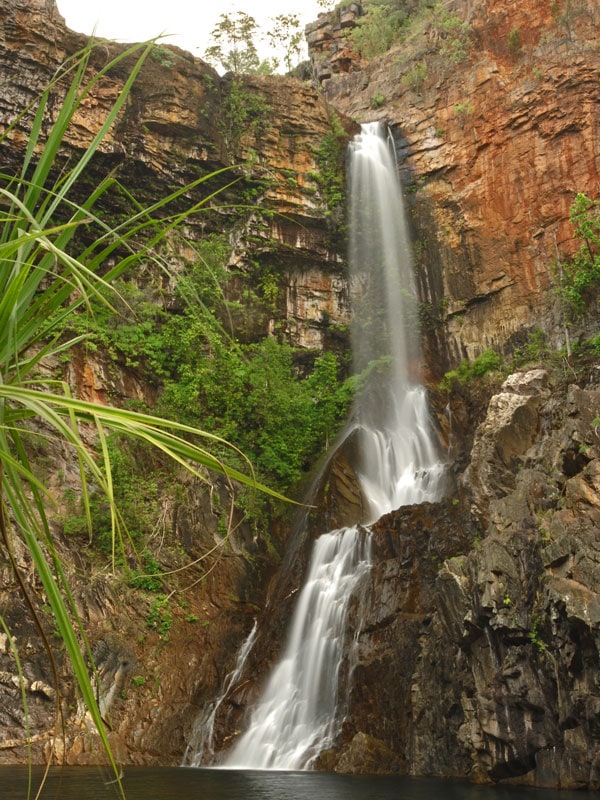
Only accessible by 4WD, Tjaynera Falls is the dream destination for those who want to experience the sights in solitude, or simply for those who prefer a challenge.
Once you’re in the vicinity of the falls, it’s a wonder to behold. As is the case with numerous waterfalls in the Northern Territory, swimming is allowed, so don’t waste the waterfall on a rainy day.
Accessibility: Difficult.
Where: Approximately two hours from Darwin.
13. Hamersley Gorge, WA
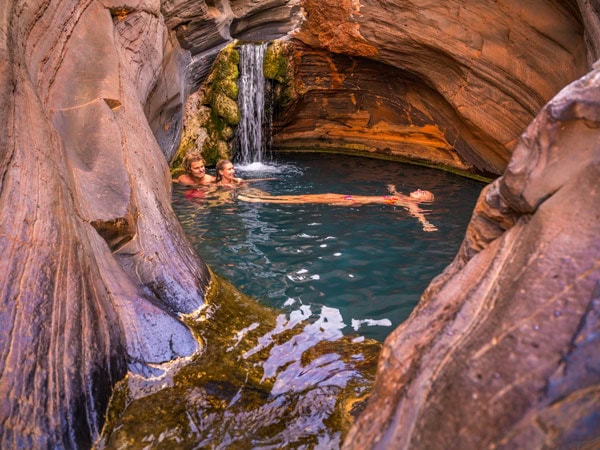
With a gorge, waterfall and swimming hole wrapped up into one destination, there’s no better place to tick multiple activities off your bucket list than Hamersley Gorge.
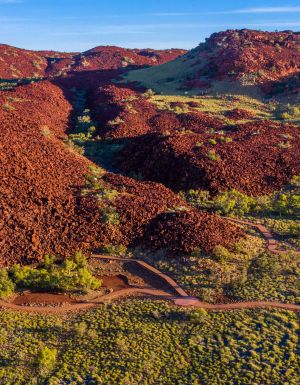
Calm rock pools dot the orange-tinted surface, transforming into a natural hot tub during the warmer months.
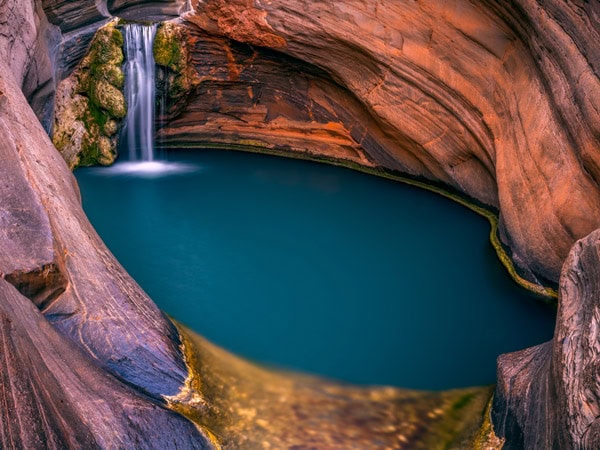
For the main attraction, navigate a sturdy path until you find a vibrant blue body of water with a gentle waterfall keeping it topped up.
Spend an entire day exploring the different crevices but be sure to bring plenty of fluids along for the ride.
Accessibility: Easy to moderate.
Where: Approximately one hour from Tom Price.
14. Three Falls, SA
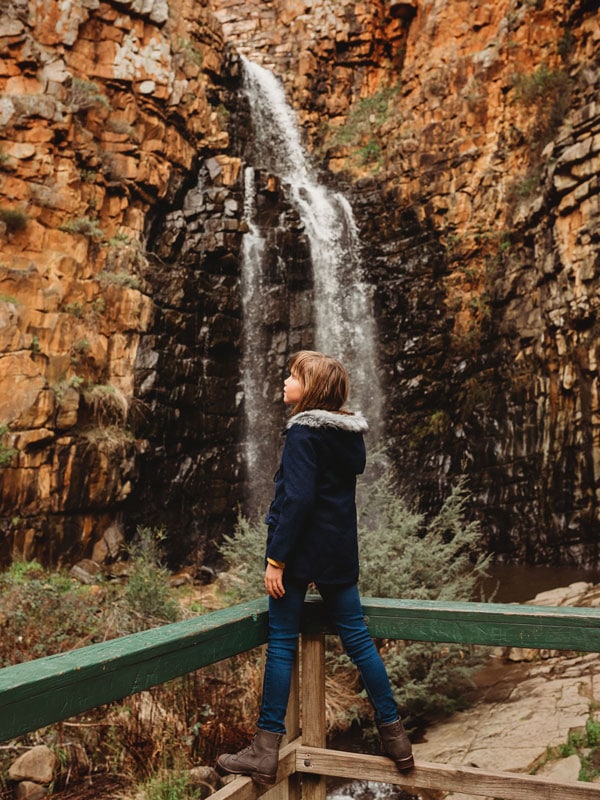
What’s better than seeing a waterfall in person? Seeing three in the span of four hours.
Embark on a lengthy hike through Morialta Conservation Park , navigating rocky terrain and winding trails to tick off the aptly named First, Second and Third Falls.
While the hike itself is far from unachievable, various steep sections could give the calf muscles a hefty workout. With plenty of freshwater creeks scattered throughout the hike, there are ample opportunities to cool down and take a beat to recover.
Accessibility: Moderate to difficult.
Where: Approximately 40 minutes from Adelaide.