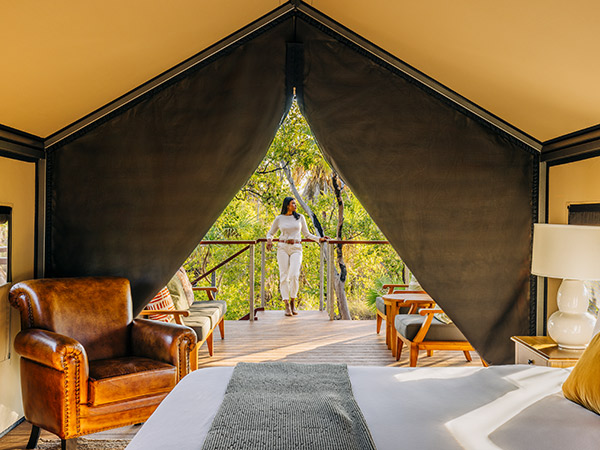
Glamping – or ‘glamorous camping’ – means a trip to the great outdoors without the hassle or fuss: arriving at your campground to find your tent set up for you, bedding supplied and some lovely homely touches added to make your stay more comfortable. Plus, toilets that aren’t too far away!
And there’s no shortage of luxury glamping spots around Australia that elevate the experience to the level of a five-star hotel stay: we’re talking lodgings or abodes with silk-lined roofing, a proper hotel-style bed and amenities closer to that of the Hilton than a campsite. Yes, we’re talking fully functioning en suites. Hooray!
Whatever level of luxury you’re pitching at, check out some of the best glamping spots in the country…
QUEENSLAND
Sanctuary by Sirromet
Luxury level: 8/10
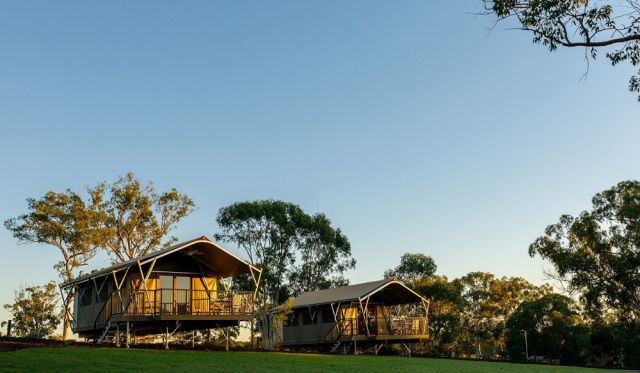
In the heart of South East Queensland, settled around a natural lagoon, the new Sanctuary by Sirromet brings true eco-luxe camping to this remote area. All surrounded by bushland, the tented pavilions give you the feeling of sitting in a tree house, while offering all the amenities needed – including free wi-fi and air conditioning. Located on the grounds of Sirromet winery, you can also go behind the scenes of a working winery or join in on one of the tastings.
Sirromet is also part of the Unique Winery Experiences of Australia.
Price: from $380 per night for two people.
Habitat Noosa
Luxury level: 6.5/10
Only 25 minutes north of Noosa, Habitat Noosa offers a wide range of glamping and camping options. Whether you choose a 30-metre-square paperbark glamping tent with queen-size bed and full en suite, or a comfortable wilderness tent already set up for you, or simply the perfect camping spot under a tree, the fully renovated and refurbished eco camp impresses with its new facilities and premium comfort for every guest to enjoy. And because the area is known for its large population of eastern grey kangaroos, you might find yourself making new friends of the marsupial persuasion.
Price: wilderness tents available from $33 per person per night (quad share). Paperbark tents available from $290 per night for two people.
Castaways on Moreton Island
Luxury level: 8.5/10
A queen-size bed, private en suite and verandah, environed by giant Melaleuca trees and the beach in plain sight – who would have thought camping could ever be like this? Castaways in Bulwer on Moreton Island lets you experience the outdoors without the usual camping hassles. The tents are fully furnished, linen and towels are provided and the communal camp kitchen has all the utensils you need. A unique island camping experience.
Price: from $100 per night, two nights minimum.
NEW SOUTH WALES
Cockatoo Island
Luxury level: 6/10
Cockatoo Island is the ideal solution for those who aren’t looking for luxury in their escape from the everyday, but for an unforgettable, hassle-free camping trip. The little island in the middle of Sydney Harbour invites you to go back in time and retrace colonial and maritime history, or take in the island’s top attractions – it often hosts events, such as the Biennale of Sydney, within its impressive heritage and industrial buildings. After exploring Cockatoo, you can end the day by camping in one of the tents on the waterfront. All you’ll have to do is bring your food and cooking utensils to make the most of your magic sleepover.
Prices: from $150 per night for two people (Monday to Thursday) or $175 per night (Friday to Sunday)
Paperbark Camp
Luxury level: 8/10
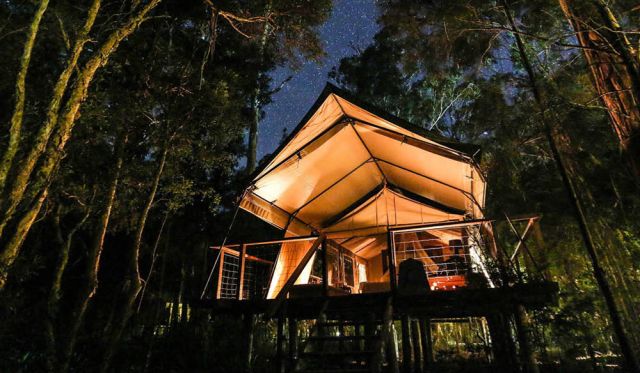
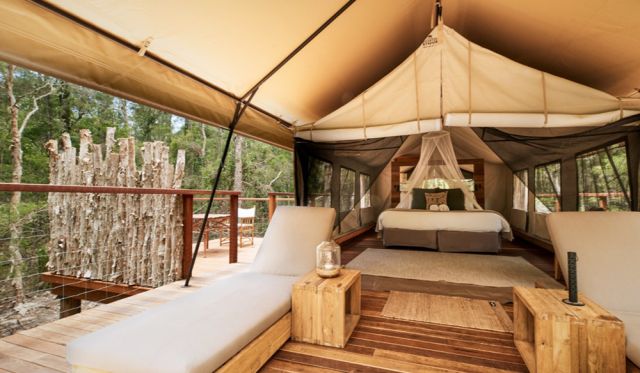
Nestled in the bush in the spectacular Jervis Bay area and just a two-hour drive south of Sydney, Paperbark Camp is the place to enjoy some quiet, lazy days surrounded by nature, with pristine beaches and national parks just around the corner. The canvas safari-style tents are built above ground amid the eucalypts and paperbarks, and offer luxurious accommodation amenities, such as a wraparound decking and an open-air private en suite. Also onsite is a gorgeous restaurant and communal lounge, the Gunyah.
Price: from $495 per night including dinner, bed and breakfast for two people.
VICTORIA
Happy Glamper
Luxury level: 6.5/10
Happy Glamper gives you the opportunity to experience a fuss-free camping trip, anywhere you want, all across the Mornington Peninsula. No tent to pitch, no sleeping bag to untangle, no heavy equipment to carry. All you have to do is choose your location/spot and Happy Glamper will set up your night’s lodging before you arrive. You can choose from either bell tents or Lotus Belle tents and with your package you’ll receive a heater in winter, all linen and bedding, towels, chairs, an LED lantern, computer games, books and magazines, a combination lock and fairy lights – if you book a powered site. In terms of where to relieve yourself, each spot you choose is located on a local foreshore campground, and Happy Glampers are welcome to use the ground’s amenities.
Prices: from $360 for two people for two nights. One night stays are also available mid-week.
SOUTH AUSTRALIA
Ikara Safari Camp, Wilpena Pound Resort
Luxury level: 9/10
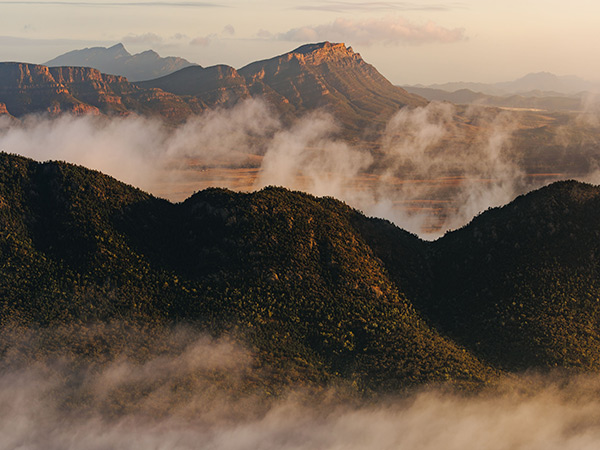
The Ikara Safari Camp ’s luxury tents offer exactly what you would expect from its safari-style premise, with a full-size king beds, en suite bathrooms, air conditioning, private decks and your own fire pits for a little bit of marshmallow roasting. All in the heart of one of Australia’s most underrated destinations, the Flinders Ranges.
Price: from $320 for two people per night.
Kangaluna Camp, Gawler Rangers Safaris, Wudinna
Luxury level: 8.5/10
Choose a permanent luxury tent among the mallee woodlands, or stay in the glorious ‘Swagon’ – a re-engineered wagon topped with swag-style tent and transparent ceiling – cue endless stargazing, especially if you acquire the help of the site’s eight-inch computer controlled telescope.
Price: two nights from $1825 with tours included.
WESTERN AUSTRALIA
Kooljaman, Cape Leveque
Luxury level: 6/10
Probably our pick of the Kimberley glamping spots, no one we know has ever regretted staying at Kooljaman. Owned and run by the local Indigenous community, the Bardi Jawi, the whole experience is so infused with local culture that it leaves all guests truly transformed. Right on the beach at Cape Leveque, 210 kilometres and about six hours’ drive north of Broome, the glamping accommodation comes in two different levels: basic glamping, which is comfortable camping with single beds or more safari-style luxury tents.
Prices: bookings are all on a package basis, from $1390 for two in a mini safari tent, for a three-night stay including all meals.
Discovery Rottnest Island
Luxury level: 7.5/10
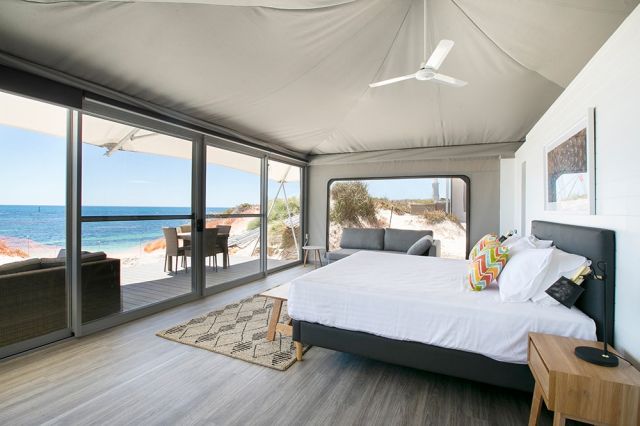
The first of its kind on Rottnest Island, the eco-resort has been designed to deliver a low environmental impact glamping experience. The 83 eco-tents are nestled behind the iconic Pinky Beach with sweeping views of The Basin and the city skyline visible in the distance. You can choose from affordable family tents right through to five-star glamping accommodation.
Each eco-tent has its own en-suite bathroom, pillow-topped bed and furnished private decks, while many others come complete with kitchenettes. Splash out on a deluxe tent and you’ll get opulent beachfront views and a walk-in wardrobe. Guests also have access to the resort pool, pool bar and Pinky’s Beach Club.
Prices: Starting from $183 per night for a standard tent for two, and ranging up to the Deluxe tent for two from $387 per night.
APT Wilderness Lodges, the Kimberley
Luxury level: 8/10
The crew from one of Australia’s largest cruise and tour companies, APT, were so successful in the Kimberley tour market that they created their own glamping camps to cater to their guests. The three camps are Bungle Bungle Wilderness Lodge, Bell Gorge and Mitchell Falls, and all offer a touch of luxury in the amazing remote outback. The Bungle Bungle Wilderness Lodge includes open-air dining, three course dinner and buffet breakfast, as well as a fully equipped bar and lounge to relax in after a long day of exploring.
Prices: From $443 per night for two people, from $590 per night for two people with breakfast and dinner included.
Karijini Eco Retreat
Luxury level: 8.5/10
Hidden in the heart of Karijini National Park, the Karijini Eco Retreat offers a broad choice of accommodations, ranging from campsites to deluxe eco tents and dorm-style cabins. The retreat is located at Joffre Gorge and embraces a greener style of accommodation. It’s 100 per cent owned by the local Gumala Aboriginal Corporation, which acts according to the interests of the Aboriginal people of the region. Lunch boxes and snacks are provided daily and an Australian restaurant on the campground offers traditional meals.
Price: prices start at $315 per night for two people in the Deluxe Eco with Ensuite including continental breakfast.
Sal Salis, Ningaloo
Luxury level: 8.5/10
Surrounded by the dunes of the Cape Range National Park, the Sal Salis Ningaloo Reef makes the ultimate place to combine a bush-and-beach camping adventure with luxury accommodation. Each of the safari-style tents offers all the amenities you would expect for an eco-luxe camping trip – including the marvellous panorama of the bushland and the ocean beyond. As the camp sets its priorities on sustainability, it abides by strict tenets of minimal impact. Therefore, it uses solar-generated power, contains composting toilets and provides native herb soaps. Your stay also includes chef-prepared meals and drinks from a select open bar, as well as snacks.
Price: starting from $1500 per night for two people, including national park entrance fee as well as guided wilderness activities. Minimum stay two nights.
NORTHERN TERRITORY
Longitude 131°
Luxury level: 9.5/10
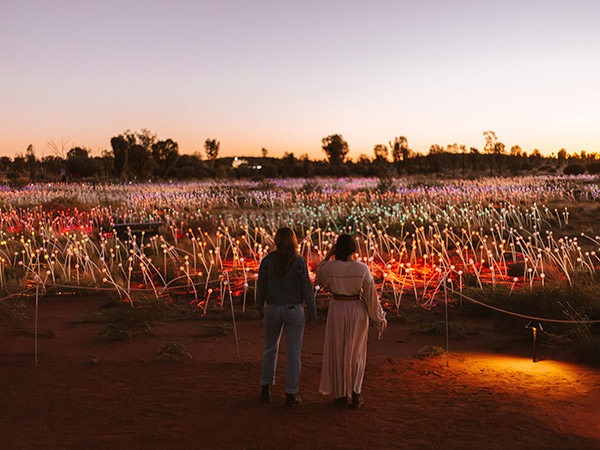
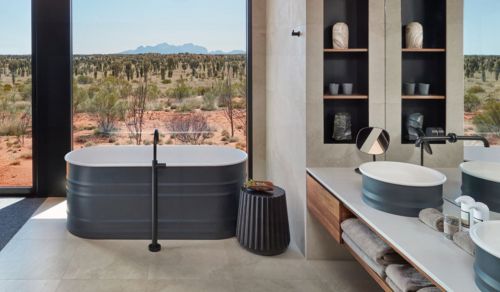
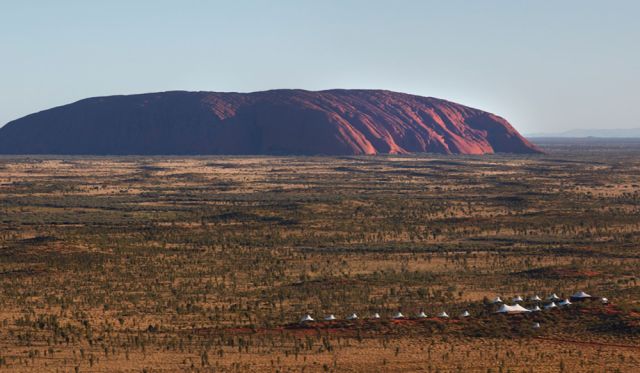
The Northern Territory’s Longitude 131° brings glamping to a whole new level. Completely renovated and overhauled, this wildlife oasis is hidden among dunes with a spectacular view of Uluru. The floor-to-ceiling windows allow you to feel at one with the desert of the Red Centre while enjoying exclusive tranquillity and luxury. Offering all the amenities of a five-star hotel, you can decide whether to spend your time resting on your balcony with a luxury swag and the warmth of a fireplace, receiving a relaxing treatment at the spa, dining at the Dune House restaurant, or watching the sun go down from the dune-top bar with as much French champagne as you can handle. A prime spot for discovering the NT’s outback, and the spiritual heart of Australia, this magical basecamp is a place like no other.
Price: from $1500 per person per night for a twin share in a luxury tent. Minimum stay two nights.
Banubanu Beach Retreat
Luxury level: 7.5/10
Located at the north-east coves of Bremer Island, the Banubanu Beach Resort offers premium comfort to a maximum of 10 guests at a time. The Deluxe Beachfront Eco Tents are situated directly at the beach and equipped with king-size bed, en suite bathroom, pedestal fan and private deck. For those who prefer rainforest vibes, the retreat has beach house cabins among the monsoonal vine thicket, also with private bathrooms.
Price: from $350 per person including breakfast, lunch, dinner and soft beverages. Minimum stay two nights.
Wildman Wilderness Lodge
Luxury level: 7/10
The Wildman Wilderness Lodge in the Mary River Wetlands is the ultimate spot to embrace the wilds of the Top End. While the romantic ‘Habitat’ comes with air conditioning and premium furnishing, the safari tents offer a more basic, but still stylish option. The lodge is situated on the edge of Kakadu National Park and provides a wide range of tours and activities. Also, packages including day tours to the park are available.
Price: from $615 for two people per night.
TASMANIA
The Truffle Lodge
Luxury level: 8.5/10
One of Australia’s first truffle orchards decided to expand its horizons and is now offering boutique glamping on its farm. Just a 45 minute-drive from Hobart, its owners set up five luxury tents directly on the edge of Derwent River, each one with a private deck facing the water.
The tents and en suites are fully equipped and offer all the amenities a hotel room would. Each tent is connected – via a boardwalk – to the lodge, where you can enjoy breakfast, dinner, and drinks or just relax in one of the fireside lounges.
Price: from $599 for two people per night, with a river view.
Huon Bush Retreats
Luxury level: 6.5/10
Huon Bush Retreats is a great choice for all those who want to experience an original camping trip – with a hint of luxury and without the usual hassles of camping. Among cabins and campgrounds, the retreat has set up a selection of teepees, all placed within the natural bushland of the Huon Valley.
Each tent contains a pull-out bed, a cosy wood-fired heater and a music device. As they are all nestled in the woods without any major clearings having been made, you’ll be completely surrounded by nature and its residents while sitting on your little covered deck. Sanitary facilities and a camp kitchen supplying essentials are just around the corner, as well as an outdoor bath for two. This glamping opportunity combines nature, comfort and an affordable price point.
Price: from $95 per night for two people in the Deluxe Teepee.
Wingtons Glamping
Luxury level: 8.5/10
Spending a night at Wingtons Glamping is like going back in time to the 1930s – with today’s advantages. At Clarence Point, Tamar Valley, in the heart of Tasmania’s premier wine region, Wingtons erected three canvas bell safari tents. Furnished with vintage pieces and decorations including steamer trunks and Persian-style carpets, you’ll also find modern conveniences such as wi-fi and Bose bluetooth speakers. Furthermore, each tent contains its own private bathroom teepee with hot water and flushing toilets, and an outdoor kitchen with barbecue.
Price: from $220 per night for two people.