The best under-the-radar towns to visit in Australia this year

 By
hero media
Are you tired of trying to plan a holiday only to find everywhere is booked out? Here are the up-and-coming destinations to get to now – before your dates are gone for good.

With travelling the world still off limits, Australians are embracing the many joys of travelling their own country. But with state borders opening and closing, and many accommodation offerings booked out a year in advance, it can also be a process that is full of frustration.

Which is why the Australian Traveller team have come up with our list of up-and-coming destinations in each state to help you get ahead of the crowds. You can also read our exclusive list of  Australia’s 100 best towns, for further travel inspiration.

NSW

Boomerang Beach

Boomerang Beach (and neighbouring Blueys) is so off-the-radar that we have barely written about it ourselves. Framed by Booti Booti National Park and the kinds of deserted, white-sand beaches Australia is known for, Boomerang is what Byron Bay locals wish their township was like.


It’s the stuff nostalgic family beach holidays are made of – swimming, barbecues, bushwalking, fishing, surfing and devouring salty fish ‘n’ chips as the sun goes down.
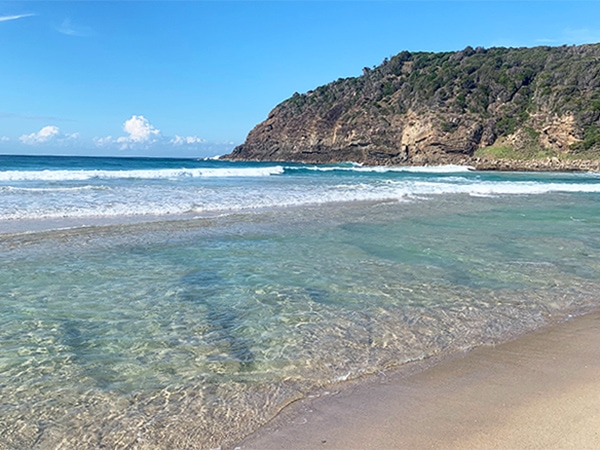
Swim in the crystal clear waters of Boomerang Beach.

Tumut

Located in the foothills of the NSW Snowy Mountains, every season in Tumut offers something different.

Summer brings cool, clean and fast-moving waters perfect for trout fishing; Kosciuszko National Park brings the autumnal colours Tumut is famous for; skiing enthusiasts arrive in winter, as the Snowys are covered in a blanket of snow; and wildflowers burst into life on the edges of the Tumut River as spring emerges. Fun fact: In 1908, Tumut was one of the nine towns shortlisted to become Australia’s capital. Take a trip there and it will all make sense.
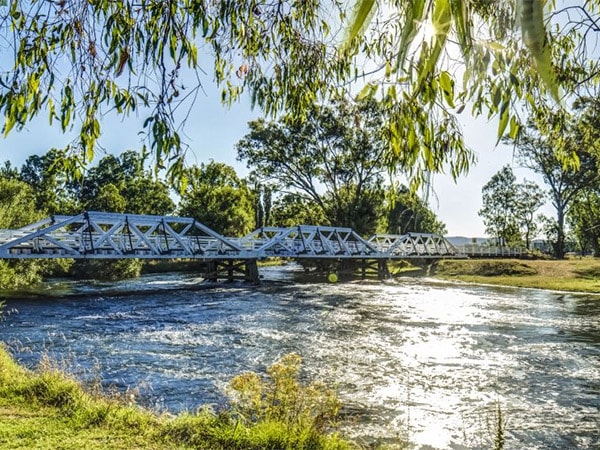
Tumut NSW
Experience the changing seasons in Tumut.

Griffith

NSW’s own little Italy is worth a trip for the cannoli alone. Sixty per cent of the Griffith’s residents have Italian heritage, and visitors reap the benefits by way of the world-class wineries, fresh produce and nation-building heritage. Speaking of wineries, some of the most renowned in the country were established in Griffith.

Take a tour though McWilliam’s, De Bortoli , Dee Vine Estate and Yellow Tail while you’re in town.
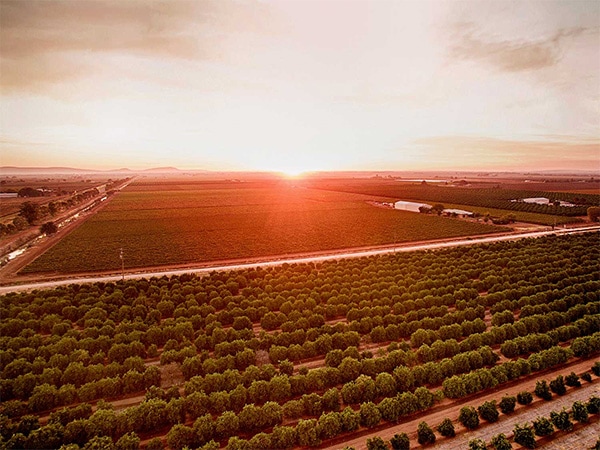
Wineries griffith nsw
Enjoy the gourmet delights of Griffith.

VIC

Mallacoota

It’s been a hell of a year for the coastal fishing town of Mallacoota. Surrounded by 87,500 hectares of natural forest courtesy of Croajingolong National Park, this population 900 town was devastated by bushfires in the summer of 2019/20.

The sepia skies made international headlines, blasting a heart-rending image of the devastation of the fires to the country and world. Thankfully, the regeneration of Mallacoota is well and truly underway and they are welcoming back visitors once more.

The town’s remoteness is the major drawcard for city folk looking for a quiet holiday experience, while its northern climate takes advantage of the state’s warmest winter temperatures and fresh ocean breezes, making it a year-round destination.

Read more about Mallacoota’s renaissance here.
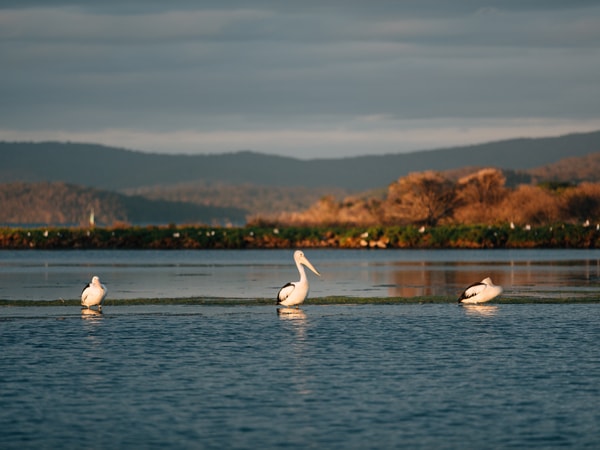
Pelicans on the lake in Mallacoota
Pelicans drift nonchalantly on the lake in Mallacoota. (Image: Andrew Northover)

Echuca

Step back in time to the historic town of Echuca, sitting proudly on the banks of the Murray River. Echuca is known far and wide as the paddle steamer capital of Australia, and its port – which was built in 1980 – was lovingly restored to its former glory. Today it serves as a local hangout, packed with steamer rides along the Murray, museums, replicas and buildings.

Don’t forget to stop at the Star Bar , once an illegal underground drinking hole, complete with the escape tunnel once used to dodge police.
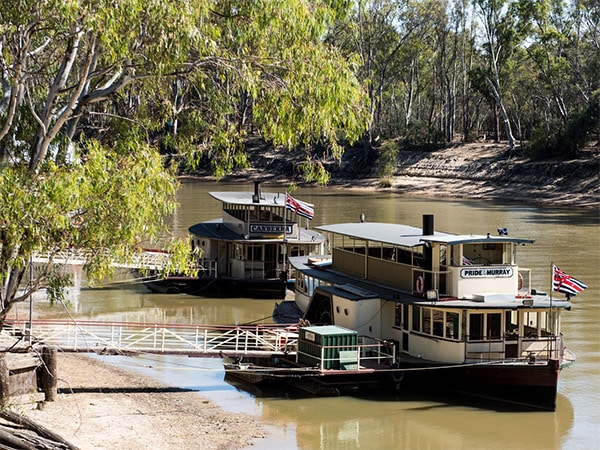
Echuca Murray River Victoria
Echuca’s most famous residents.

Clunes

Clunes is home to so many bookshops that it has been declared an International Book Town – one of only 22 worldwide. This pretty little goldfields hub is just north of Ballarat, and hosts the beloved Booktown Festival  each May. They also host Booktown on Sundays featuring free author talks. On any given day, visitors can stroll through the well-read community, taking in some of the state’s best-preserved 19th century buildings, cafes, houses, restaurants and of course, bookshops.
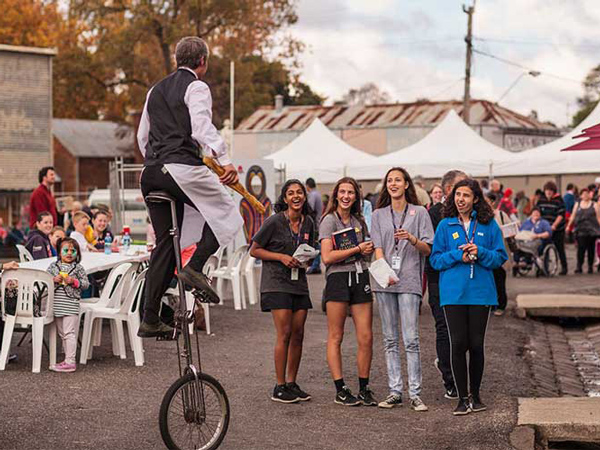
Clunes Booktown Festival, Victoria
The experience of Booktown is incredibly unique.

WA

Northam

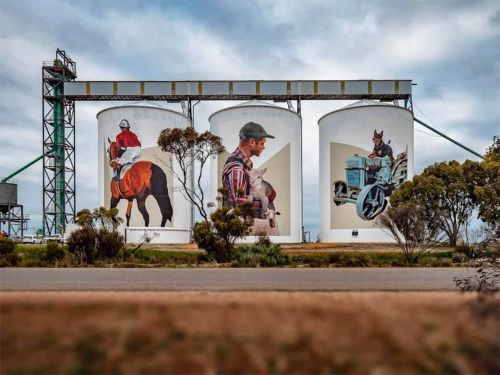
In the heart of the Western Australian wheatbelt region, towns like Northam have been reaping the benefits of radical creatives who’s skills have transformed grain silos into art galleries, and small towns into destinations. In 2015, as part of Perth collective FORM’s festival of art and ideas, international artists Hense (USA) and Phlegm (UK) created Australia’s first ever silo mural.

Eight grain silos in the town of Northam were transformed into towering art installations brought to life with colour and awe-inspiring detail. Take a trip to see the countryside and get a culture fix at the same time. Find out more about WA’s self-guided silo art trail here.
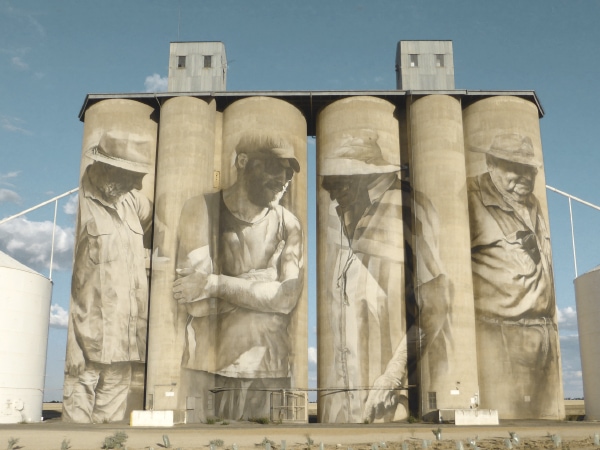
Guido van Helten’s incredible silo art is attracting visitors.

Eagle Bay

There isn’t much going on in Eagle Bay – which is the entire beauty of it. Taking a trip here means slowing down and relaxing in this gobsmacking beautiful slice of paradise. It’s the place where Perth’s rich and famous have their holiday homes. Shallow waters equate to great snorkelling and fishing spots.

The bay forms a crescent, broken only by the interesting punctuations of nearby Sugarloaf and Castle Rocks. It’s like stepping onto an exquisite tropical island. While there isn’t much need to leave Eagle Bay, it’s also considered a tranquil base to explore the rest of the Margaret River area.
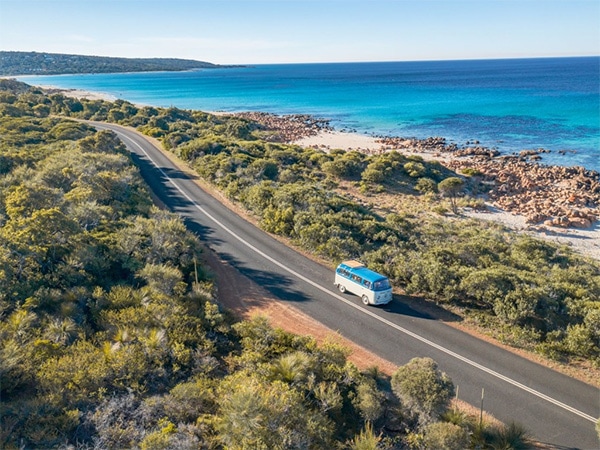
Eagle Bay Western Australia
Take a trip to Eagle Bay.

Derby

Drive straight through the Kimberley in WA’s rugged northwest all the way from Wyndham along the legendary Gibb River Road and the first town you’ll come to is Derby.

Derby once served the local pastoralists who settled in the area. Isolation and harsh conditions made it exclusively home to sheep stations until a jetty was built to service the thousands who flocked to WA during the gold rush and pearling boom.

These days, Derby serves as a great historical landmark. The original jetty also still stands, boasting a great spot for a stunning over-water sunset.  The Centenary of Federation Pavillion details the history and geography of the area and features a brilliant 28m2 mosaic tile floor depicting facets of life in the district, as well as the creation stories of the Kimberley.
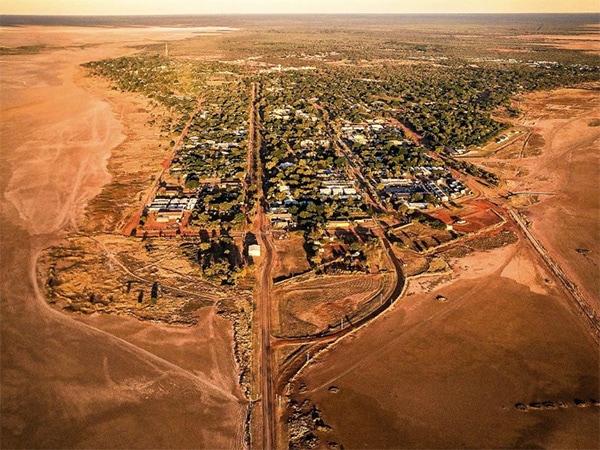
Derby Western Australia
Derby is one of Western Australia’s most remote towns.

SA

William Creek

With a population of three permanent resid­­ents and two workers, William Creek is officially the smallest town in South Australia. Despite that, it’s situated smack bang in the middle of the world’s largest working cattle property, Anna Creek Station, which is almost half the size of Tassie.

William Creek can be accessed by the town’s only airstrip, while scenic flights are run during “winter" or any other times when there’s water in nearby Lake Eyre. At 1000 kilometres (14hrs) northwest of Adelaide, it really is in the middle of nowhere.
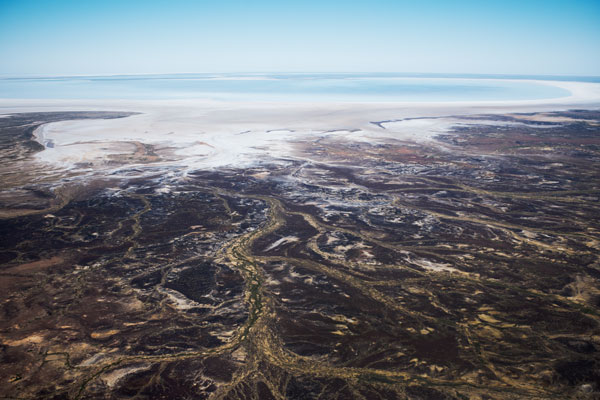
Kati Thanda-Lake Eyre William Creek south australian outback scenic flights
Fly from William creek and trace the tributaries towards Lake Eyre. (Image: Jonathan Cami)

Parachilna

You’ll find a little more than a few guesthouses, a train station and a pub in Parachilna; a tiny town on the edge of the Flinders Ranges in Outback SA.

There might not be much reason to go here, were it not for the iconic Prairie Hotel serving up some unusual pub grub and its proximity to Flinders Ranges. There are no parma’s in sight; instead, order up a Feral Mixed Grill of camel, wallaby, roo and goat on mashed potatoes and gravy.

If that doesn’t take your fancy, there’s always emu and damper, as well as the more commonly consumed rabbit, beef and lamb. Food is served in the restaurant, but many enjoy sitting on the balcony with a cold beer.
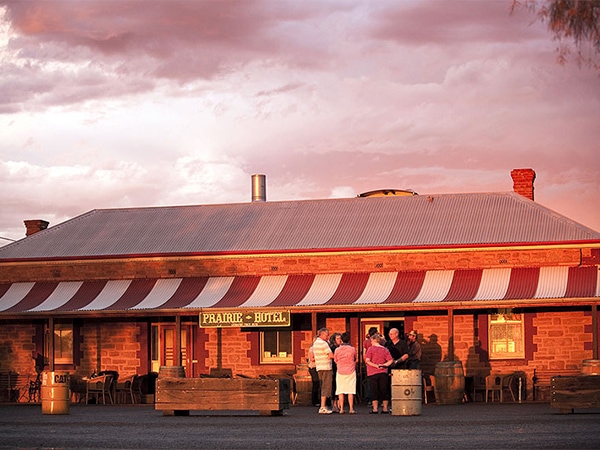
The Prairie Hotel
The Prairie Hotel benefits from its proximity to Flinders Ranges.

TAS

Bridport

Emerging from the northeastern edge of Tasmania’s Tamar Valley wine region, overlooking the waters of Anderson Bay, is the sleepy seaport town of Bridport. Known best for sea and river fishing, the best catches in the area are scallops, lobsters and rainbow trout.

Red rocks border the shores of Bridport’s main beach, with a photographic highlight being the eerie site of an old dilapidated pier that’s been half eaten by the waters over the years. Bridport also gives access to one of the top golf courses in the country, Barnbougle Dunes.
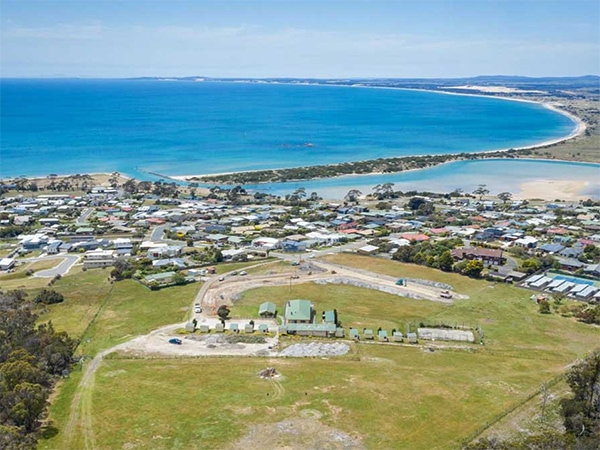
Bridport Tasamnia
The sleepy seaport town of Bridport.

Richmond

Rolling hills, Georgian-style buildings and cobblestone streets – it’s a mental image you would usually associate with a quaint English village. Set your sights much closer to home by the banks of the Coal River to find Richmond – southern Tasmania’s postcard-perfect hangout.

Its most famous resident is the Richmond Bridge. Built by convicts in 1823, the bridge is the oldest still in use in Australia and a historic masterpiece to marvel at from every angle.
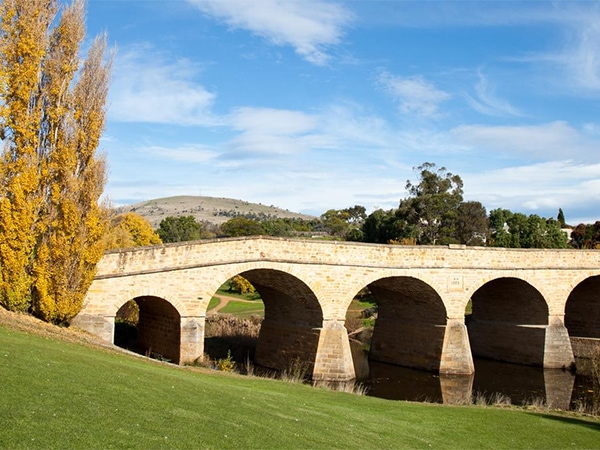
The Richmond Bridge Tasmania
Take a drive over Richmond’s most famous resident.

Stanley

Stanley is the gem of the underrated northwestern coast of Tasmania. This quaint fishing village enjoys the simple life of crayfish, crabs and sunshine.

Settled in 1826 by employees of the Van Diemen’s Land Company, Stanley is chock full of heritage buildings and cutesy cottages that have tiny doors built for those fortunate to have lived here in the 19th Century. No bustling tourist attractions, restaurants or pubs. Life is alarmingly uncomplicated here.
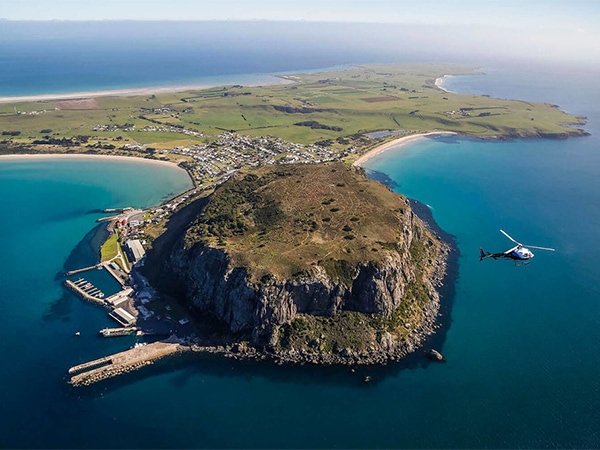
Stanley Tasmania
Discover the secrets of Stanley Tasmania.

NT

Nguiu Settlement

The Tiwi people have lived on Bathurst and Melville Islands for more than 10,000 years. Their separation from the mainland has fostered a unique culture, music and artwork. There are no didgeridoos or boomerangs here; instead, they make music with clapping sticks and are producing an entirely different style of art than we’ve come to expect from the Aboriginal art movement.
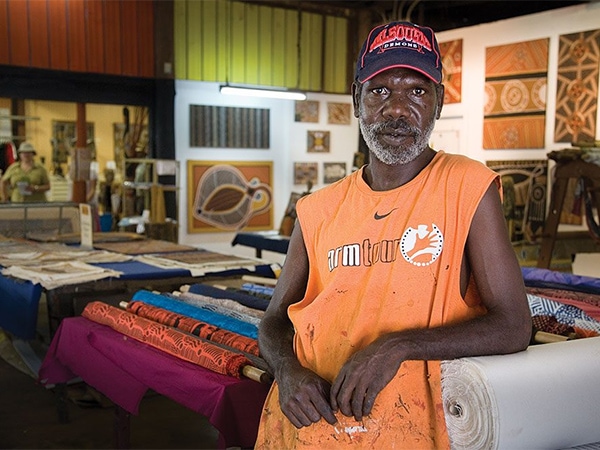
Nguiu Settlement
Nguiu Settlement produces a unique style of Aboriginal art.

Adelaide River

The stunning Adelaide River twists its way south from the Van Diemen Gulf at Djukbinj National Park, all the way to the Adelaide River settlement on the Stuart Highway south of Darwin. The scenic town, population of just 190, lies on the riverbanks and has a rich and fascinating history.

Initially settled by workers on The Overland Telegraph Line, the town became known as a convenient stopover for miners after gold was discovered nearby in 1892. Adelaide River was also a major military headquarters during WWII and a popular weekend retreat for important military personnel from the NT capital. Its cemetery, a must-see for any Australian, holds many of those killed during the WWII bombing of Darwin.
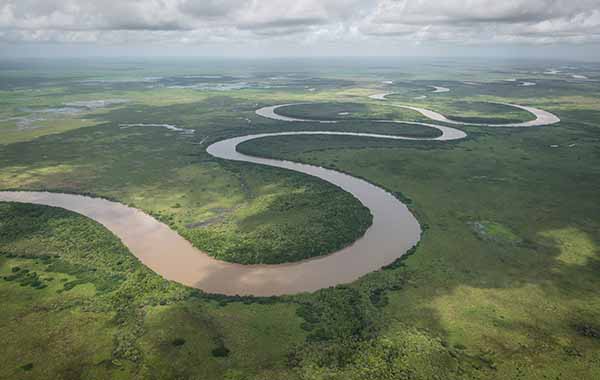
Adelaide River, Northern Territory.

Mataranka

Mataranka is a place that will open your eyes to life in the outback. It was first made famous by the epic We of the Never Never, conjuring up an idea of an impossibly distant place. The celebrated thermal springs are surrounded by the rich forests of Elsey National Park. Several bountiful bushwalks impress even the most experienced trail walker, however it’s accessibility makes it great for beginners and kids.
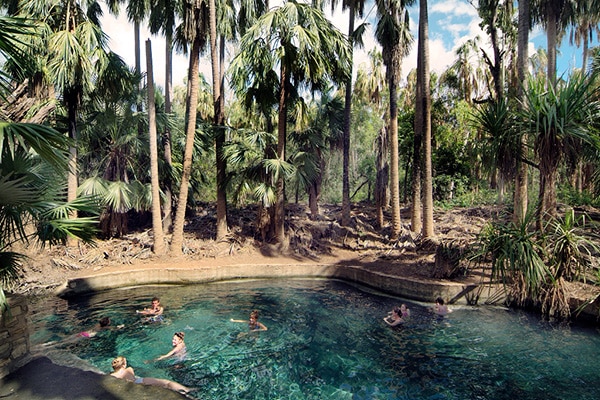
Mataranka Thermal Pool
Mataranka Thermal Pool is popular attraction in the busy winter season.

QLD

1770

Environmentalists could only dream of a place as magical as this.

Located on the Queensland coast between Bundaberg and Gladstone, Seventeen Seventy sits perched north of Agnes Water along Captain Cook Drive, the state’s northernmost surfing beach. Part of a (for now) largely untouched natural region, it’s a stepping off point to the Great Barrier Reef and is surrounded by four national parks.

Dine in one of the town’s two restaurants or pick up supplies at the general store. But be warned; there’s not much else in town.
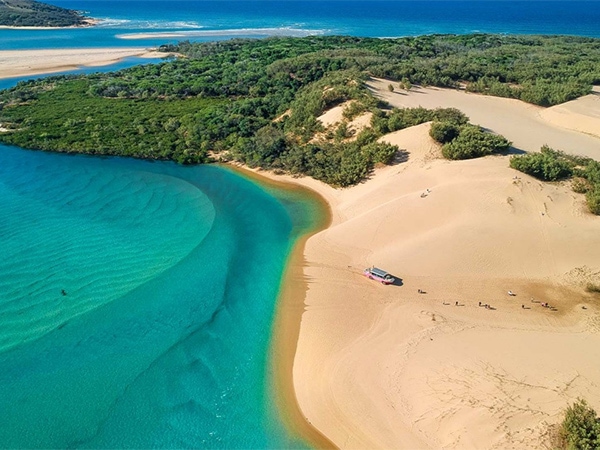
1770 Queensland
Aerial view of the remote 1770 Inlet.

Tamborine Mountain

A cool escape from the hot and frenetic Gold Coast, Tamborine Mountain is a set of three towns: Mt Tamborine, North Tamborine and Eagle Heights. It’s a quaint little oasis perched 560 metres above sea level on the top of the ranges – from here it can look down its nose on its rowdy neighbour, the Gold Coast.
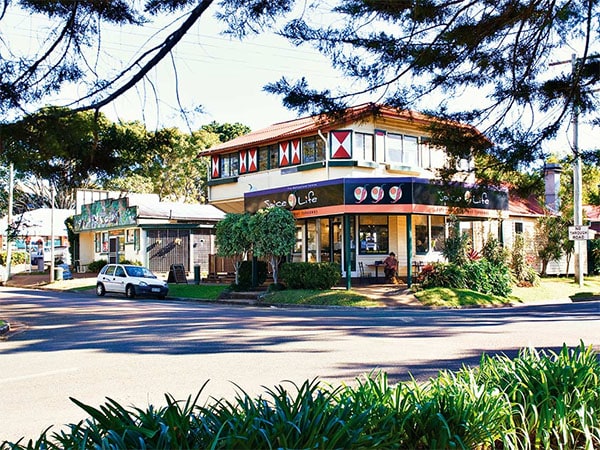
Tamborine Mountain Queensland town
Tamborine Mountain is a serene place to escape the summer mayhem.

Birdsville

Perched only a couple of hundred dusty kilometres from the junction of three states (Queensland, Northern Territory and South Australia) and the vastness of the heartless Simpson Desert lies Birdsville, one of the most isolated towns in Australia.

Step into the famous (and photogenic) Birdsville Hotel and reward yourself with a cold beverage and a bite to eat and marvel at the memorabilia. Unless you’re in town for the Birdsville Races: an Australian outback bucket list item of mythical proportions.
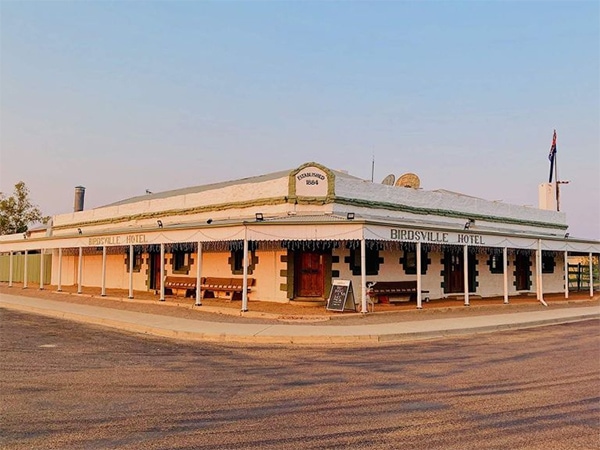
Birdsville Hotel
You haven’t truly “done" Queensland until you’ve had a beer at the iconic Birdsville Hotel.


READ MORE: Still want more towns to add to your list? Read which Australian towns have been crowned the friendliest.

hero media

Inside Geelong’s glow-up from factory town to creative capital

Abandoned mills and forgotten paper plants are finding second lives – and helping redefine a city long underestimated. 

Just 15 years ago, Federal Mills was a very different place. Once among the most significant industrial sites in Victoria, the historic woollen mill was one of a dozen that operated in Geelong at the industry’s peak in the mid-20th century, helping the city earn its title as ‘wool centre of the world’. But by the 1960s global competition and the rise of synthetic fabrics led to the slow decline of the industry, and Federal Mills finally shuttered its doors in 2001. Within a few years, the abandoned North Geelong grounds had become makeshift pastoral land, with cows and goats grazing among the overgrown grass between the empty red-brick warehouses. It was a forgotten pocket of the city, all but two klicks from the bustle of the CBD.  

Geelong cellar door wine bar
Geelong has shed its industrial identity to become an innovative urban hub with reimagined heritage spaces. (Image: Ash Hughes)

Federal Mills: from forgotten factory to creative precinct 

Today, the century-old complex stands reborn. The distinctive sawtooth-roof buildings have been sensitively restored. An old silo is splashed with a bright floral mural, landscapers have transformed the grounds, and the precinct is once again alive with activity. More than 1000 people work across 50-plus businesses here. It’s so busy, in fact, that on a sunny Thursday morning in the thick of winter, it’s hard to find a car park. The high ceilings, open-plan design, and large multi-paned windows – revolutionary features for factories of their time – have again become a drawcard.  

Paddock Bakery andPatisserie
Paddock Bakery and Patisserie is housed within the historic wool factory. (Image: Gallant Lee)

At Paddock , one of the precinct’s newer tenants, weaving looms and dye vats have been replaced by a wood-fired brick oven and heavy-duty mixers. Open since April 2024, the bakery looks right at home here; the building’s industrial shell is softened by ivy climbing its steel frames, and sunlight streams through the tall windows. Outside, among the white cedar trees, families at picnic benches linger over dippy eggs and bagels, while white-collar workers pass in and out, single-origin coffee and crème brûlée doughnuts in hand. 

Geelong: Australia’s only UNESCO City of Design 

Paddock Bakery
Paddock Bakery can be found at Federal Mills. (Image: Gallant Lee)

“A lot of people are now seeing the merit of investing in Geelong,” says Paul Traynor, the head of Hamilton Hospitality Group, which redeveloped Federal Mills. A city once shunned as Sleepy Hollow, and spurned for its industrial, working-class roots and ‘rust belt’ image, Geelong has long since reclaimed its ‘Pivot City’ title, having reinvented itself as an affordable, lifestyle-driven satellite city, and a post-COVID migration hotspot.  

And the numbers stand testament to the change. In March 2025, and for the first time in its history, Greater Geelong became Australia’s most popular regional town for internal migration, overtaking Queensland’s Sunshine Coast. Current forecasts suggest Geelong will continue to outpace many other Australian cities and towns, with jobs growing at double the rate of the population.

Tourism is booming, too. The 2023-24 financial year was Geelong and The Bellarine region’s busiest on record, with 6.4 million visitors making it one of the fastest-growing destinations in the country. It’s not hard to see why: beyond the city’s prime positioning at the doorstep of the Great Ocean Road, Geelong’s tenacity and cultural ambition stands out.  

As Australia’s only UNESCO City of Design, Geelong is swiftly shaking off its industrial past to become a model for urban renewal, innovation, sustainability and creative communities. The signs are everywhere, from the revitalisation of the city’s waterfront, and the landmark design of the Geelong Library and Heritage Centre and Geelong Arts Centre, to the growing network of local designers, architects and artists, and the burgeoning roster of festivals and events. That’s not even mentioning the adaptive reuse of storied old industrial buildings – from Federal Mills, to Little Creatures’ brewery ‘village’ housed within a 1920s textile mill – or the city’s flourishing food and wine scene.  

The rise of a food and wine destination  

boiler house
Restaurant 1915 is housed within a restored former boiler house. (Image: Harry Pope/Two Palms)

Traynor credits now-closed local restaurant Igni, which opened in 2016, as the turning point for Geelong’s hospo industry. “[Aaron Turner, Igni’s chef-patron] was probably the first guy, with all due respect, to raise the bar food-wise for Geelong,” he says. “People now treat it really seriously, and there’s clearly a market for it.” While Igni is gone, Turner now helms a string of other notable Geelong venues, including The Hot Chicken Project and Tacos y Liquor, all within the buzzy, street art-speckled laneways of the CBD’s Little Malop Street Precinct. Many others have also popped up in Igni’s wake, including Federal Mills’ own restaurant, 1915 Housed within the cavernous boiler house, 1915’s interior is dramatic: soaring, vaulted ceilings with timber beams, exposed brick, a huge arched window. The share plates echo the space’s bold character, playing with contrast and texture, with dishes such as a compressed watermelon tataki, the sweet, juicy squares tempered by salty strands of fried leeks, and charred, smoky snow peas dusted with saganaki on a nutty bed of romesco. 

Woolstore
The Woolstore is a new restaurant and bar housed within a century-old warehouse. (Image: Amy Carlon)

 The Woolstore , one of The Hamilton Group’s most recent hospo projects, opened in February. It occupies a century-old riverside warehouse and exudes a more sultry, fine dining ambience. Much like Federal Mills, the blueprint was to preserve the original brickwork, tallowwood flooring and nods to the building’s former life. That same careful consideration extends to the well-versed, affable waitstaff as well as the kitchen. Head chef Eli Grubb is turning out an eclectic mix of ambitious and indulgent mod Oz dishes that deliver: strikingly tender skewers of chicken tsukune, infused with hints of smoke from the parrilla grill, and glazed with a moreish, sweet gochujang ‘jam’; nduja arancini fragrant with hints of aniseed and the earthy lick of sunny saffron aioli; and golden squares of potato pavé, adorned with tiny turrets of crème fraîche, crisp-fried saltbush leaves, and Avruga caviar, to name but a few stand-out dishes.  

Woolstore menu
Woolstore’s menu is designed for sharing.

Breathing new life into historic spaces  

On the city’s fringe, hidden down a winding side road with little fanfare, lies a long-dormant site that’s being gently revived. Built from locally quarried bluestone and brick, and dating back to the 1870s, the complex of original tin-roofed mill buildings is lush with greenery and backs onto the Barwon River and Buckley Falls; the audible rush of water provides a soothing soundtrack. Fyansford Paper Mill is one of few complexes of its time to survive intact. It feels steeped in history and spellbindingly rustic.  

“We were looking for an old industrial place that had some charm and romance to it,” explains Sam Vogel, the owner, director and winemaker at Provenance Wines which moved here in 2018. When he first viewed the building with his former co-owner, it was in such a state of disrepair that the tradie tenant occupying the space had built a shed within it to escape the leaking roof and freezing winter temperatures. “To say it was run down would be an understatement,” he notes. “There was ivy growing through the place; the windows were all smashed. It was a classic Grand Designs project.” 

Provenance Wines
Provenance Wines moved to Fyansford Paper Mill in 2018. (Image: Cameron Murray Photography)

The team has since invested more than a million dollars into their new home. Where paper processing machinery once sat, wine barrels are now stacked. Vaulted cathedral ceilings are strung with festoon lights, and hidden in plain sight lies a shadowy mural by local street artist de rigueur Rone – one of only three permanent works by the artist.

While the award-winning, cool-climate pinot noir, riesling and chardonnay naturally remain a key draw at Provenance, the winery’s restaurant is a destination in itself. Impressed already by whipsmart service, I devour one of the most cleverly curated and faultlessly executed degustations I’ve had in some time. It’s all prepared in a kitchen that is proudly zero-waste, and committed to providing seasonal, ethical and locally sourced meat and produce under head chef Nate McIver. Think free-range venison served rare with a syrupy red wine jus and a half-moon of neon-orange kosho, shokupan with a deeply savoury duck fat jus (a modern Japanese take on bread and drippings), and a golden potato cake adorned with a colourful confetti of dehydrated nasturtiums and tomato powder, and planted atop a sea urchin emulsion.  

handcrafted pieces
Bell’s handcrafted functional pieces on display.

The complex is home to a coterie of independent businesses, including a gallery, a jeweller, and its latest tenant, ceramicist Elizabeth Bell, drawn here by the building’s “soul”. “There’s so much potential for these buildings to have new life breathed into them,” says Bell, whose studio is housed within the old pump room. “Even people in Geelong don’t know we’re here,” she says. “It’s definitely a destination, but I like that. It has a really calming atmosphere.”  

A Melbourne transplant, Bell now feels at home in Geelong, which offers something Melbourne didn’t. “If this business was in Melbourne I don’t think it would’ve been as successful,” she notes. “It’s very collaborative in Geelong, and I don’t think you get that as much in Melbourne; you’re a bit more in it for yourself. Here it’s about community over competition.”  

Elizabeth Bell
Ceramicist Elizabeth Bell has a store in Fyansford Paper Mill.