The essential guide to visiting the Flinders Ranges

hero media
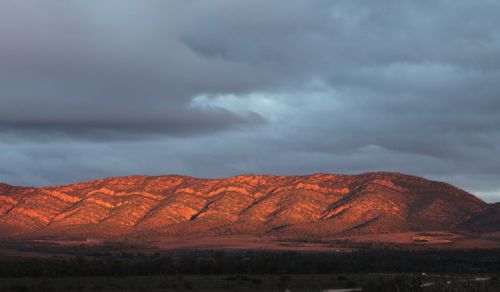
There are great rafts of information published about the Flinders Rangers. Here’s our distilled guide to the essential Flinders Rangers experiences, accommodation and dining options.

Top Five Reasons to Visit the Flinders Ranges

1. It’s the most accessible Outback in Australia, with excellent infrastructure and loads to see and do.


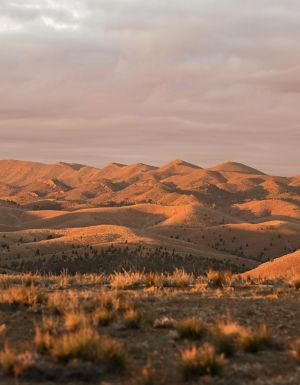
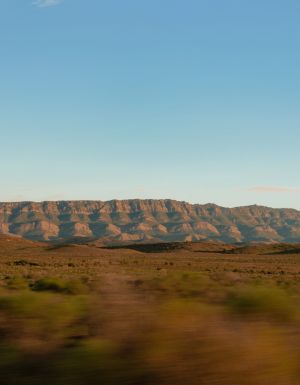
2. The ancient rocky landscapes are geographical marvels. Wilpena Pound from the air, the gorges and further north forms of uranium in some rocks are some amazing sights.


3. The best 4WD driving in the country, from easy to extremely challenging, half-day to multi-day journeys.


4. The walking is some of the most pleasurable outback walking in the country. There’s loads of wildlife. The Heysen trail starts here.


5. It’s historically rich. The Manhattan Project scientists were all over the northern Flinders Ranges during the war. Famous explorer Douglas Mawson saw glacial rocks in the Flinders that led him to his more renowned Antarctica expeditions.

Top Five Experiences in the Flinders

1. The Ridge Top Tour, Arkaroola, Northern Flinders Rangers

An outrageously rocky one-way 4WD track has been cut through the Northern Flinders. Piling into the back of a specially designed open top 4WD for the 4.5 hour journey is about more than just appreciating awesome scenery. Guides unearth the amazing geology, flora and fauna in the area. The history of the pioneering characters like Mawson and some of his students (like R S Sprigg who developed the tour) is an insight into one of the many unappreciated eras in Australian history. The highlight is arriving at the fall-off-the-cliff Sillar’s Lookout. Just make sure you’ve been to the bathroom before you leave because climbing to the top is a rough ride and a full bladder is the LAST thing you want.
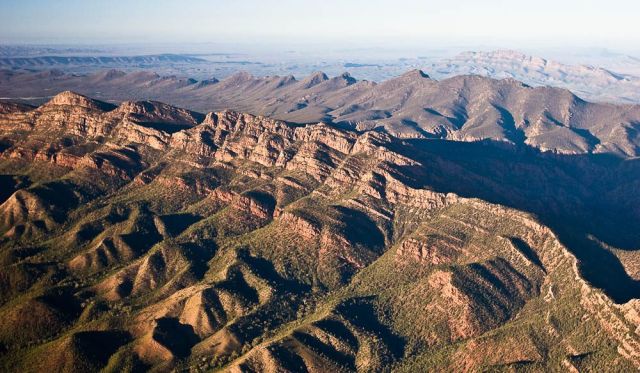
2. Wilpena Pound Scenic Flight

See the Pound at its best with a morning flight around the edges of the bowl-shaped crater – not formed by a volcano or meteor but the earth’s shifting crust.
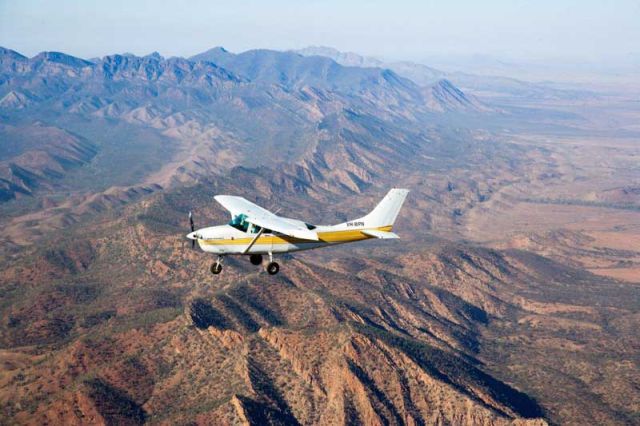
Bird's eye view, flying over Wipena Pound, Flinders Ranges
Bird’s eye view, flying over Wipena Pound, Flinders Ranges.

3. Sunset on the Chase

Another fierce 4WD (lucky someone else is driving) up to the top of the Chase Ranges to look back at Wilpena Pound and the Elders Ranges as the sunsets. In AT’s opinion, it’s better than the rock sunset. Catered by Rawnsley Park’s Woolshed Restaurant, this two-hour trip is best done with special someone.

4. Arkaba Walking Tours

It’s comfortable walking when you have your own guide and a swag waiting at the end of the day. Wine and dinner is done, all you need to do is carry water and lunch. The guides take you to secret treasures of the ranges, catering each walk to your desired comfort level.

5. Discover an Ancient Land

The full-day tour from Rawnsley Park takes you to the spectacular Brachina and Bunyeroo Gorges. Keep an eye out for Yellow Footed Rock Wallabies, Emus and Euros while learning more about the history and geology of the place.
Best Places To Stay

Rawnsley Park Eco Villas

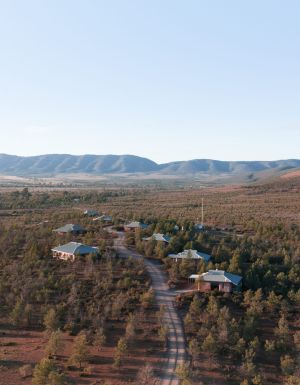
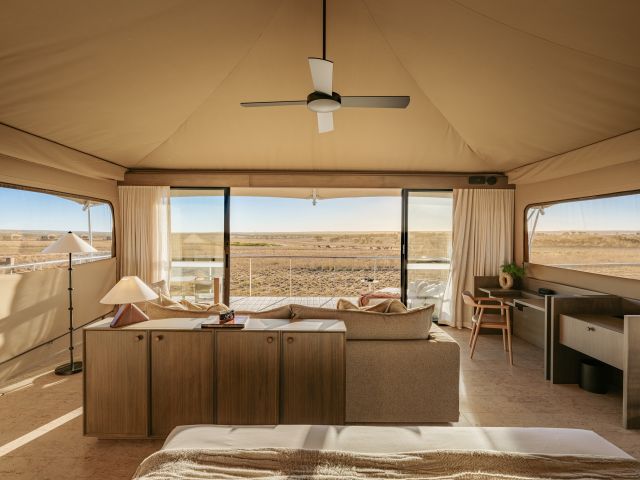
The Eco Villas on Rawnsley are the best value accommodation in the Flinders and are indulgent without being excessive. The huge spaces are great for relaxing after a tough day touring, set up with all the amenities you could want. Sit in the big bed and look up at night to see though the skylights to the stars – just magic. Beautifully designed and crafted, the villas are excellently positioned to take in the sunrise on the Elder ranges.

Wilpena Pound Resort

Recently updated, the old Chalet is now a resort. The Brachina Rooms are our pick but they’re also the closest to the resort reception and restaurant. Try and grab one away from the main entry for a little more privacy. The resort is comfortable but not plush and is the perfect base for exploring the area. From here you can strike out into the pound, take a flight or explore the historic old homesteads.

Arkaba Station

Well, this is living the high life. With just five rooms and a maximum number of 10 guests, this is intimate, exclusive and luxury in the Flinders. The ethos of the station is to make guests feel like a rich uncle has thrown them the keys to a manor and said help yourself. And you do. With a chef on hand for all meals, two hosts and two guides for walking, it’s not hard to enjoy yourself. The 1851 homestead has been beautifully restored and each room has its own quirks. Whether you want a cosy dinner under the stars or a guide-led activity, the ranges are your oyster.

Prairie Hotel, Parachilna

More known for its food than furnishings, the hotel has very comfortable and well-appointed rooms for travellers. The only downside is that they are on the plains fringing the ranges.
From $145 per double

Camping

There are loads of Camping grounds throughout the rangers. The most well maintained are at Wilpena Resort, Rawnsley Park and Arkaroola. Arkaroola also has cottage and lodge accommodation options.

Where to Eat

Woolshed Restaurant

The restaurant in the middle of the outback caters to all tastes and budgets and is a thriving regional hub for all travellers.

Prairie Hotel

World renowned for the Feral Mixed Grill where a camel sausage, emu pattie, goat chop and kangaroo fillet are all dished up on the very foreign mash potato. And for dessert, the quandong pie is a must. The restaurant has carved out a deserved reputation for serving up one of the great outback meals.

Characters

The Sprigg Family

The Sprigg Family (RJ started the private Arkarolla Wilderness Are in 1967) have a huge historical connection to the land and were pioneers of tourism in the area. Unfortunately, RJ passed away in 1994. His children, Margaret and Doug continue the tradition of preserving a spectacular wilderness and can be found at the homestead on most days. They have great yarns to tell.

The Smith Family

Tony and Julie Smith are fifth-generation Flinders Ranges Pastoralists. Passionate farmers, Tony and Julie have moved their business into the tourism sector. Typical farmer, Tony is quietly spoken but a fantastic operator. He and Julie are legends in the area and if you get the opportunity make sure you buy Tony a beer and ask him about the golden fox of the Flinders Ranges.

The Rasheeds

Like the Spriggs, the Rasheeds are synonymous with the area. Original settlers of the Wilpena Chalet, the twin sons of founder Keith and Dean ran separate entities in the area. Both have sold out of their interests but remain in the area. Keith is still involved in the Air Wilpena operation and is well-known for the pink headband on his Akubra and a pink jeep.

From coast to bush: these are Gippsland’s best hikes

Video credit: Tourism Australia

From coast to mountains, hiking in Gippsland offers a stunning array of landscapes, with trails that take you deep into the region’s heritage.

I step out onto the sand and it cries out underfoot. Kweek! I take another step and there’s another little yelp. Screet! Picking up the pace, the sounds follow me like my shadow, all the way down to the water. It’s obvious how this spot got its name – Squeaky Beach – from the rounded grains of quartz that make the distinctive sounds under pressure.

For many, Wilsons Promontory National Park is the gateway to Gippsland , and the best way to explore it is by walking its network of hiking trails, from coastal gems such as Squeaky Beach through to the bushland, among the wildlife. But it’s still just a taste of what you’ll find on foot in the region.

Venture a bit further into Gippsland and you’ll discover the lakes, the rainforest, and the alpine peaks, each changing with the season and offering summer strolls or winter walks. Just like that squeaky sand, each step along these trails has something to tell you: perhaps a story about an ancient spirit or a pioneering search for fortune.

The best coastal hikes in Gippsland

sunset at Wilsons Promontory National Park
Wilsons Promontory National Park is a sprawling wilderness with many coastal bushland trails. (Image: Mark Watson)

Wilsons Promontory National Park (or ‘The Prom’, as you’ll end up calling it) is an easy three-hour drive from Melbourne, but you might ditch the car when you arrive, with much of the park’s 50,000 hectares accessible only by foot. From the inky water of Tidal River (dyed dark purple by abundant tea trees), I like the easy walks along the coast, among lichen-laden granite boulders, to golden beaches and bays.

a couple on Mount Oberon
Panoramic views from the summit of Mount Oberon. (Image: Everyday Nicky)

The trail to the panoramic views at the summit of Mount Oberon is a bit harder, up steep timber and granite steps, but it’s a popular 6.8-kilometre return. The more remote hikes are found through the open banksia and stringybark woodland of the park’s north, or along the multi-day Southern Circuit , which ranges from about 35 to 52 kilometres, with sunrises and sunsets, kangaroos and cockatoos, and maybe even whales.

a golden sand beach at Wilsons Promontory National Park
Walk ‘The Prom’s’ golden sand beaches. (Image: Tourism Australia/Time Out Australia)

You might also see whales on the George Bass Coastal Walk , even closer to Melbourne on the western edge of Gippsland. This dramatic seven-kilometre trail along the clifftops takes in sweeping views of the wild ocean, occasionally dipping down from grassy green hills to coastal gullies and a secluded beach. It also now links into the Bass Coast Rail Trail for an extra 14 kilometres.

the George Bass Coastal Walk
George Bass Coastal Walk trails for seven kilometres along clifftops. (Image: Visit Victoria/Time Out Australia)

Over at the eastern edge of Gippsland, in Croajingolong National Park, you can wander along the lakeshores beneath koalas and around goannas (I keep my distance since one chased me here!). For those who are even more adventurous, the park is also the starting point for the 100-kilometre Wilderness Coast Walk , usually done over seven days.

the Croajingolong National Park, Gippsland
Wander along the lakeshores in Croajingolong National Park. (Image: Tourism Australia)

The best bush hikes in Gippsland

the Baw Baw National Park
The alpine heath of Baw Baw National Park. (Image: Everyday Nicky)

Deep in the Long Tunnel Extended Gold Mine at Walhalla, mining guide Richard tells me how this small town in the mountains east of Melbourne boomed when prospectors found gold here in 1862. These days, you’ll find most of the town’s treasure – its heritage – above ground, with the Walhalla Tramline Walk a wonderful way to explore it.

Just seven kilometres long, the walk takes you through decades of Gold Rush history, following the original rail trail from lush bushland to the mining sites, and through the charming village of just 20 residents with its wooden cottages and old shopfronts adorned with turn-of-the-century advertising posters. Blazing a trail where trailblazers once opened up the region, this is also the starting point for the 650-kilometre Australian Alps Walking Track.

Nearby, Baw Baw National Park has walks through gnarled snow gums and alpine heaths that show off the colourful wildflowers in summer and the pristine carpet of white in winter. Several trails are perfect for snowshoes, including a 45-minute route from St Gwinear up to vast views across the Latrobe Valley.

Further up into the mountains, the Toorongo and Amphitheatre Falls Loop Walk is an easy 2.2-kilometre path that serenades you with the sound of flowing water as you pass mossy rocks and tree ferns en route to two sets of waterfalls cascading over boulders in the remote wilderness.

The best cultural hikes in Gippsland

the Mitchell River National Park, Gippsland
Hike the Mitchell River National Park. (Image: Parks Victoria/Grace Lewis)

Across a pool in a natural sandstone amphitheatre, deep within a cave behind a waterfall, it’s said the Nargun has its lair. A fierce creature, half human and half stone, that abducts children and can’t be harmed by boomerangs or spears, the story of the Nargun has been told around the campfires of the local Gunaikurnai people for generations.

As a culturally significant place for women, hikers are asked not to go into the Den of Nargun, but a 3.4-kilometre loop walk leads you through a rainforest gully to the entrance where you can feel the powerful atmosphere here in Mitchell River National Park , along Victoria’s largest remaining wild and free-flowing waterway.

the bee-eaters at Mitchell River National Park
Bee-eaters at Mitchell River National Park. (Image: Parks Victoria/Grace Lewis)

The Den of Nargun is part of the Bataluk Cultural Trail , a series of important traditional Gunaikurnai sites through central Gippsland. Another location is Victoria’s largest cave system, Buchan Caves Reserve, with trails to important archaeological sites of human artefacts up to 18,000 years old. The FJ Wilson Interpreted Walk includes the naturally sculpted white limestone steps of the 400-metre-long Federal Cave, while the Granite Pools Walk goes among tall timber and moss-covered gullies.

the ancient rainforest of Tarra-Bulga National Park
The ancient rainforest of Tarra-Bulga National Park. (Image: Josie Withers)

Also important to the Gunaikurnai people is Tarra-Bulga National Park , known for its ancient myrtle beeches and enormous mountain ash trees. Just 40 minutes return, the Tarra Valley Rainforest Walk offers a taste of this verdant landscape, while the Grand Strzelecki Track takes you deep into the lost world of forest giants on an epic 100-kilometre trail rich with tradition.

A traveller’s checklist

Staying there

the WildernessRetreats in The Prom
Wilderness Retreats in The Prom. (Image: Christian Pearson)

Wilderness Retreats in Wilsons Promontory offers glamping-style tents with luxurious queen beds. Star Hotel is a reconstruction of a Gold Rush-era hotel from 1863 in the heart of heritage Walhalla. Caves House is a historic three-bedroom house with views over the Buchan River.

Eating there

the Carrajung Estate, Gippsland
Enjoy a post-hike lunch at Carrajung Estate. (Image: Everyday Nicky)

Kilcunda General Store serves great coffee and meals of local produce at the George Bass Coastal Walk. Alpine Trout Farm is located near Toorongo Falls in Noojee. Fish for your own lunch and barbecue it with the provided cookware.

Carrajung Estate is a short drive from Tarra-Bulga National Park. The winery’s restaurant offers a seasonal menu of regional ingredients and you can stay at The Lodge.

a seafood feast at Carrajung Estate, Gippsland
The table is set for a seafood feast at the estate.

Video credit: Tourism Australia