From station stays dealing in wide-open spaces and hearty hospitality to luxury lodges, iconic hotels and underground motels, opt for an oasis in the outback.
Here are 9 breathtaking outback stays that made it into positions 39 to 48 of our coveted list of 100 unique stays. Head here to read the full list and start planning your next escape.
39. Broken Hill Outback Church Stay, NSW
Could this 109-year-old stone structure be the most wonderfully surprising stay in a place already full of surprises? Broken Hill is a quintessential outback town suffused with silver, lead and zinc-mining history and layered with a dynamic art scene and movie mythology set against a sprawling desert landscape. And the fact that its most luxurious accommodation is a Romanesque-style church adds another layer of intrigue again. This heritage-listed building has undergone a sympathetic restoration on the outside and a pick-your-jaw-off- the-floor transformation on the inside. Is that an antique altar fashioned into an island in the gourmet marble kitchen? Yes it is. Original pressed-metal ceilings soaring almost seven metres in height, and a dining table grandly set under the twinkle of a crystal chandelier? Indeed.
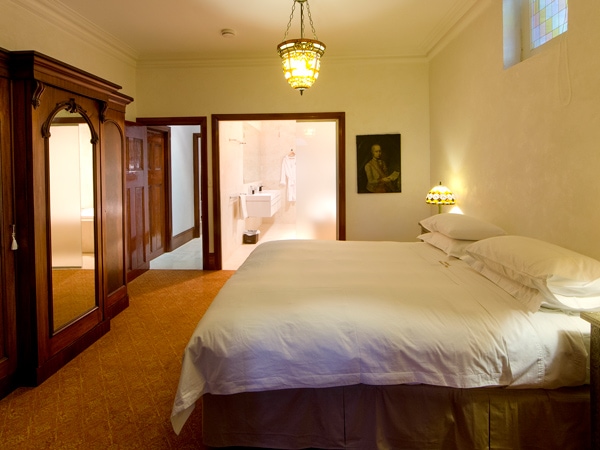
Broken Hill Outback Church Stay combines an eclectic mix of antique furnishings with all mod cons to create a totally unique proposition. Its three master suites each come with king-sized beds wrapped in quality linens and their own en suites – lined floor to ceiling in limestone tiles no less. A further 200 square metres of polished limestone floors add to the distinctive atmosphere. Groups of 12 guests can be accommodated across this space, including on the mezzanine level – propped up by antique timber columns – and in further accommodation in the associated Presbytery and Cottage, as well as those travelling solo, in couples or in smaller groups (pay for the suite you need with exclusive access to this incredible property). All this, plus you’re just a minute’s walk from more Broken Hill history by way of Bells Milk Bar , Australia’s oldest continuously running milk bar.
40. Prairie Hotel, Parachilna, SA
The biggest mistake you can make when visiting arguably Australia’s most elegant, quirky and second-most recognisable outback pub (behind the Birdsville Hotel), is to treat it as just a pit stop on a Flinders Ranges road trip. Since the 1990s, Prairie Hotel has cleverly cultivated a reputation for its playful yet surprisingly refined Feral Feast (including a mixed grill and antipasto platter featuring kangaroo, camel and emu) and use of bush foods. The wine and beer offerings are astonishing, given the hotel is 500 kilometres north of Adelaide, and there’s a new brewhouse opening in 2022. So make a weekend of it by booking into one of the Prairie’s cosy, modern Outback Lodge options. The Executive Lodge’s double spa is just another pleasant surprise in this outback oasis. – Steve Madgwick

41. Trilby Station, Louth, NSW
The funny thing about ‘authentic’ accommodation back stories is the louder you have to shout them, the less genuine they probably are. The Murray family, owners of 130,000 hectare Trilby Station in north-west NSW, don’t have the time nor need to scream their sixth-generation farming credentials from the rooftops. It would be a pointless exercise in any case, given the closest neighbours are 15 kilometres away. Trilby was a true out-before-dawn, home-after-dusk sheep farm long before it diversified into becoming one of Australia’s first station stays. “We only take a day off if it rains, and only because you can’t drive anywhere," says Liz Murray. “Even then, you’re usually in the workshop or doing something."
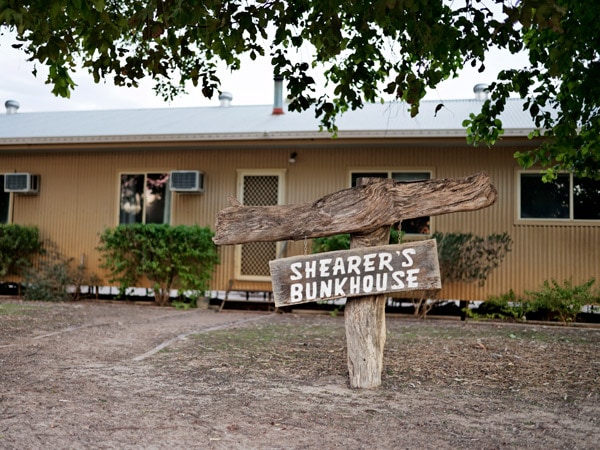
Four decades ago, then-newlyweds Liz and Gary moved onto this shimmering, mesmerisingly flat mega-property; its outback credentials unquestionable. Trilby literally passes the Ogilvien ‘Back O’ Bourke test’ – it’s 125 unsealed kilometres south-west across the black-soil plains from the town. The station has only relatively recently been gifted an “actual" address (10,965 Toorale Road), but Liz suggests you don’t type it into your GPS. Digital navigation has led a few guests “up the garden path". From the Bourke-side (heading along the 950-kilometre Darling River Run), the weensy village of Louth is the nearest settlement. Trilby’s stilted mailbox is a storytelling landmark in itself; its corrugated-metal roof tilts dashingly, as if tipping its hat hello and directing you up the main-road-like driveway.
It’s been a receptacle of good and bad news since the 404,685-hectare Dunlop Station was carved up among the Murray family in the 1950s (thus creating Trilby). Peeling paint still reveals the 1976 flood-level – “the highest in white man’s history". Liz takes charge of “anything inside the levy banks" while Gary and two of their four children, Tom and Will, look after “the rest". This includes mustering 14,500 merino sheep – by plane (Gary’s ‘sky Toyota’) and motorbike – around a space a little less than twice the size of Singapore. Farming a patch of semi-arid outback where “you expect more dry times than good seasons" has made the Murrays paragons of bush pragmatism.
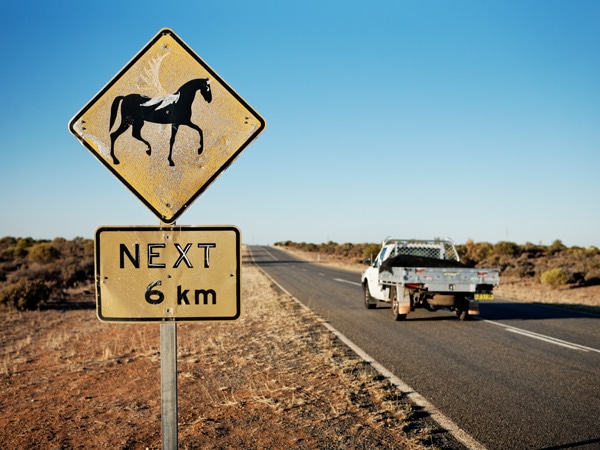
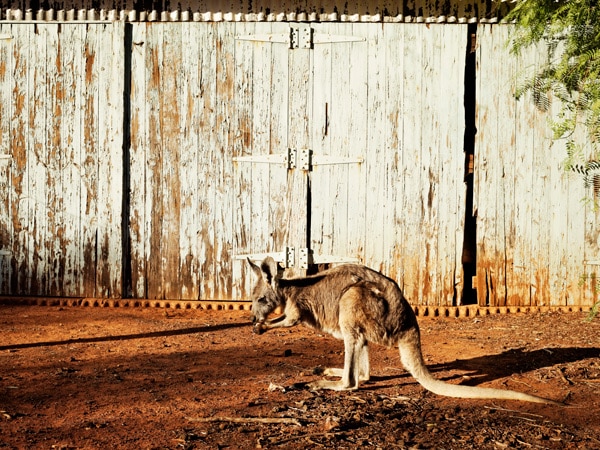
With cyclical drought a reality, they supplement their main income by rounding up trips of drought-resistant wild goats that roam the wide-open spaces. Some seasons they get more for a big billy goat than they do for a prized lamb. “When the kids were little, every time we needed to pay school fees, a power bill, or I wanted a hiking holiday [her big passion], we went and chased goats," says Liz. While Trilby is certainly not a City-Slickers-style hands-on dude ranch, there are plenty of opportunities to witness the action, especially around shearing time (May).
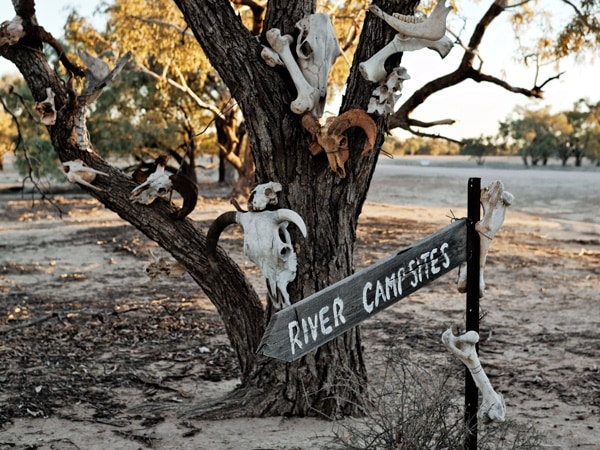
The self-drive ‘mud-map’ tours, however, are the most glorious way to get lost, while not getting lost, in Trilby’s immense space. Ninety kilometres of trails thread through a landscape that is equally bewitching bone-dry or fiesta-ed in wildflowers. The land has been worked since paddle-steamer days so something always beckons you over for a gander; be it a sun-bleached animal skull staring up from the cracked earth or an old Holden carcass confusing your calendar. Out here, Trilby’s big sky soon becomes your mood.
In exactly the “middle of nowhere" you’ll bump into Gary’s parents’ 1950s “honeymoon house", petrified in time from when it was abandoned. Eerily quiet except for the sinister banging of screen doors, it has horror-film set written all over it. Nearby, a vintage double-decker bus rusts silently, a sad sight once you learn about its formerly adventuresome existence. For all Trilby’s uninterrupted horizons, most human and wildlife activity contracts to within cooee of the Darling. When the river flows, so do the recreation possibilities, from canoeing and birdwatching to yabbying and fishing.
The farm-stay options are set among river gums and coolabah trees, relatively clustered around the Murrays’ homestead and its treasure-filled “rust-gardens". Grey-nomad and family-friendly campsites spread out along the riverbank. Refurbs of the Overseer’s Cottage and Jillaroo’s Cottage deliberately shied away from “modernising" the former workers’ quarters. These self-contained cottages feel more house than hotel: sprinkled with local curiosities, black-and-white-framed history and a sturdy fridge your grandparents would have given their right arms for. No more or less than you would expect in the Murrays’ homestead.
The cute new kid on Trilby’s accommodation block is corrugated one-bedder Mitch’s Hut. The generous north-facing verandah, complete with Weber and fire pit, is a sensational sunset perch. Liz’s home-cooked cuisine is a treat several generations in the making. Think full-cream, no-compromise country classics such as slow-cooked lamb shanks, stockyard chicken pie – just like Nanna made it – and dense sticky-date pudding for afters. Trilby’s farmyard breakfasts and two/ three-course dinner packages aren’t cheap, but fairly priced, given their quality and day-in-the-fields-sized portions plus the fact that the local shop is, well, there isn’t one. Officially it’s BYO, but a bottle of medium-priced wine can always be rustled up.
On a station of such big numbers, you wonder how Liz manages to cater, on top of everything else. “They used to ask me if I milked cows for my fresh milk," she says. “I said, jokingly, does it look like I’ve got time to milk a @*&%$#* cow [bursts into laughter]?" And that’s the flavour of authenticity you get at Trilby. Real people. Real hospitality. Real connection to life on the land. Which is why such a mind-bendingly large space can feel like such a small personal one.
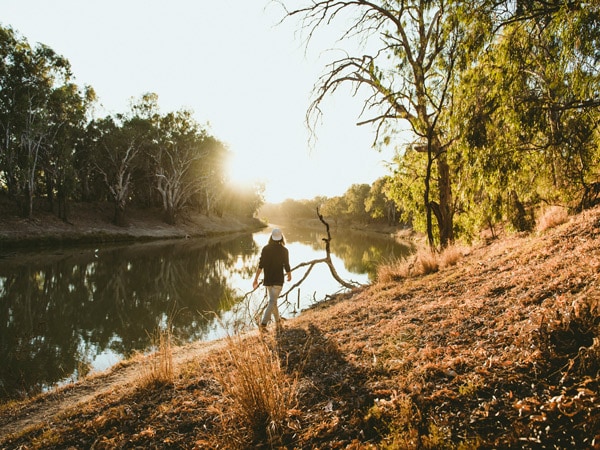
Hot properties
Corynnia Station: The accommodation on this merino and cropping property at Carrathool via Hay is charmingly decked out with vintage furniture and chintz.
Eldee Station: This eco- credentialled working sheep and cattle farm is 25 kilometres from Broken Hill; book the comfy Grae Suite.
Carinya Station: The camping on this Lightning Ridge property is no frills, but the insights into the workings on an outback farm are authentic and plentiful.
Callubri Station: Constructed from upcycled shipping containers, the Sky Suites on this 11,300-hectare working sheep property in the NSW Central West add a touch of modern luxury to the station experience, including a mineral plunge pool.
– Steve Madgwick
42. Desert Gardens Hotel, Uluru, NT
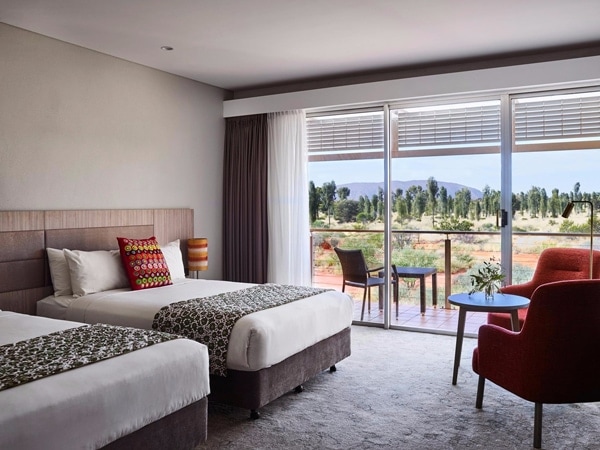
Set within an oasis of native gardens, Desert Gardens Hotel’s 218 guestrooms offer welcome retreat after a full day of adventuring in Uluru-Kata Tjuta National Park. You’ll want to book one of the Deluxe Rock View Rooms: the only rooms in Ayers Rock Resort with privileged views of Uluru itself that mean you can wake up to the kind of sunrise spectacle – the sacred site glowing red, and sky blazing all shades – that people put on their bucket lists. Although you can’t go wrong with a shady poolside option either, which will soon see you in cool repose under a gum-tree canopy. But the best bit about a stay here?
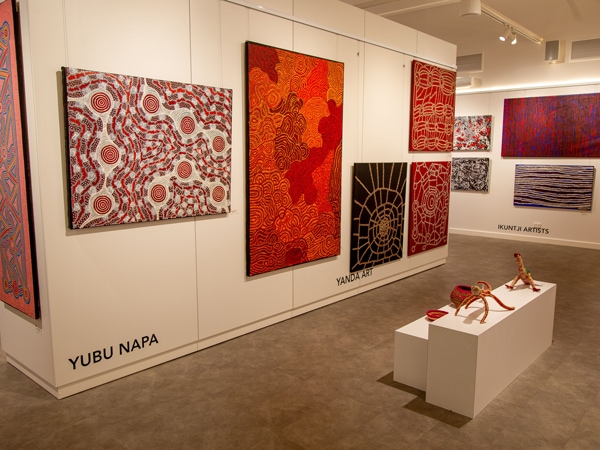
The fact that it’s right next door to the brand-new Gallery of Central Australia , opened by Voyages Indigenous Tourism Australia to celebrate and showcase regional Indigenous artists. Here, you can admire more than 80 artworks supporting existing and emerging artists exclusively from the Central Australia region exhibited along with specially curated items like punu (traditional Anangu wood carving) and pieces designed and handmade by local communities.
Other Uluru stays
Desert Gardens Hotel forms part of Voyages Ayers Rock Resort, alongside other accommodation options like luxurious Sails in the Desert , with its brasserie-style Ilkari Restaurant , and the surprisingly edgy Lost Camel Hotel , a contemporary and fun boutique-style option. Located 20 kilometres from Uluru, Ayers Rock Campground , meanwhile, lets you get as close to nature as possible with its campsites under native desert oaks while the showstopper of the bunch, undoubtedly, is Longitude 131° – Australia’s ultimate luxury camp.
43. Bullo River Station, via Timber Creek, NT
Promising days filled with dust, sweat and exhilaration is not a standard marketing hook, but in the case of Bullo River Station it is an irresistible insight into the authentic adventure that awaits. The 202,000-hectare working cattle station and homestead, in the midst of the Northern Territory’s sun-scorched landscape, offers a generous opportunity to experience life on the land, witnessing – and even assisting – as hosts Julian and Alexandra Burt maintain their 4000-strong Brahman-cross herd.
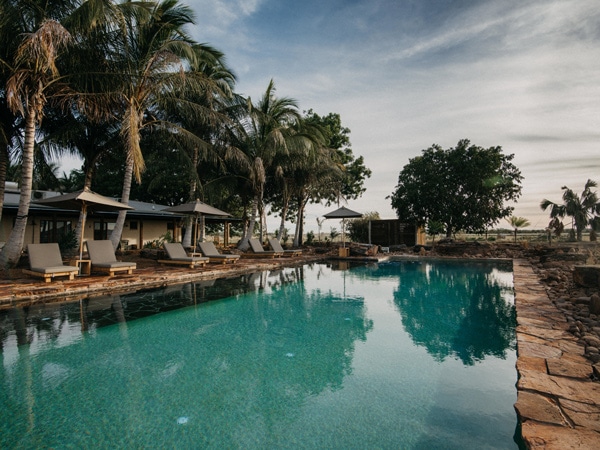
Daytime station activities here include everything from heading out on bore checks to cattle-yard work to watching cattle mustering (in season), or you can choose more sedate pastimes like fishing the Bullo River (it’s catch and release in order to protect fish stocks) or striking out on a guided tour (via all-terrain vehicle or helicopter) to Aboriginal rock art sites secreted around the property, executed by the local Miriuwung and Gajerrong people. And once the sun cools and dips towards the endless horizon, the station’s iconic homestead, sitting on a surprisingly green oasis of grass, eucalypts and boab trees, is where rest and respite is found, with cold drinks in hand and hearty communal dinners enjoyed by the campfire.
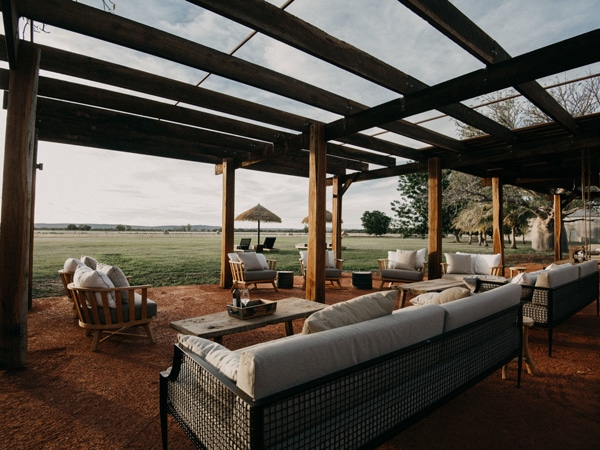
The homestead and its adjacent rooms are a charming and welcoming study in rustic country/outback chic, with lots of tactile wood, leather and linen throughout. Breakfast is usually taken on the homestead’s wide verandah, before it’s time to head out into the limitless expanse of Bullo River Station to be exhilarated all over again.
44. White Cliffs Underground Motel, NSW
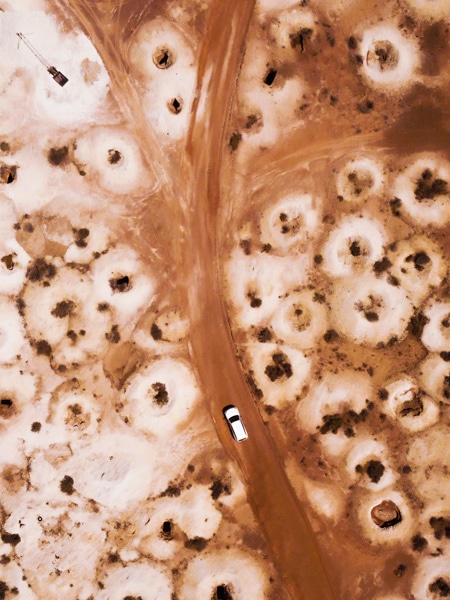
Sweet relief. That’s the only way to describe the feeling one gets walking through the doors of this quirky property built underground to escape the scorching outback heat. Outside in White Cliffs, a commercial opal field some 255 kilometres north-east of Broken Hill, we’ve spent our afternoon fossicking in 45°C+ heat, but inside this rabbit warren of 30 womb-like rooms – each one a pleasant 22°C – we embrace the cooler side of outback life. Cue beers in the outdoor pool, movies under the stars and in house meals in the dining room. The best part? Falling asleep content in the knowledge we’ll probably never experience anything quite like this again. – Dilvin Yasa
45. Davidson’s Arnhemland Safari Lodge, West Arnhem Land, NT
You’ll need a Cessna to get here… it’ll land you on a dusty dirt airstrip just behind the lodge. The roads are near impassable in the dry season, and totally shut off in the wet. Davidson’s Arnhemland Safari Lodge at Mt Borradaile is the only accommodation on a 700-square-kilometre patch of Arnhem Land where the area’s Amurdak people have lived for at least 65,000 years (and today own and manage this registered Aboriginal sacred site). Stay in cabins amid the bush, right next to billabongs full of giant saltwater crocs, and paintings etched on caves and escarpments that are some of the oldest art on Earth. – Craig Tansley
46. Wallaroo Outback Retreat, Carnarvon Ranges, Qld
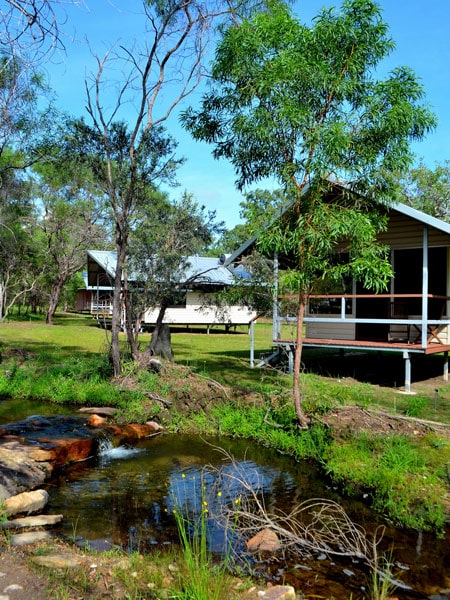
My hatred of camping knows no limits, but I would return to this ‘glampsite’ on a 30,000-hectare cattle station in the Queensland outback time and again. First, there’s the spectacular Carnarvon Ranges setting featuring more than 500 species of flora and endless cocky marsupials, just an hour from Carnarvon Gorge. And then there’s the actual Wallaroo offering itself: 10 luxury safari-style tents with Posturepedic beds, bathrooms with hot showers, a timber lodge featuring a full working kitchen, camp oven dinners around the fire and Boobook eco tours that take in local Indigenous art sites. I arrived dreading the camping experience, but I enjoyed my time here so much that I’ve been dreaming of returning ever since. – Dilvin Yasa
47. Berkeley River Lodge, Kimberley Coast, WA
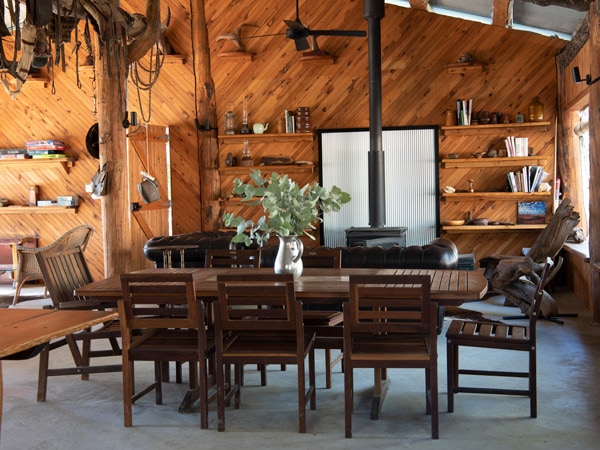
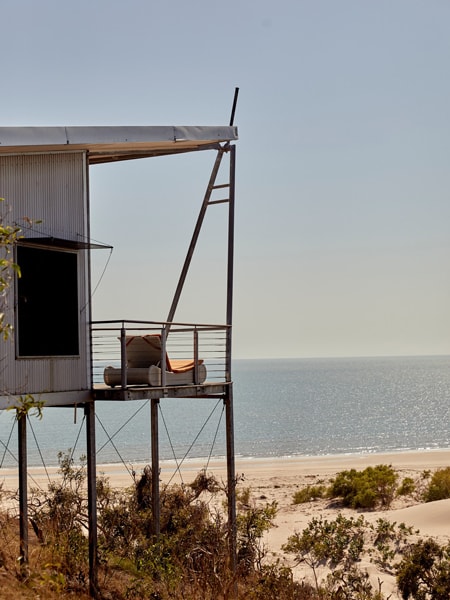
I found taking a light plane transfer across the Kimberley’s raw, uninhabited wilderness was an excellent way to prepare for the isolated grandeur of Berkeley River Lodge. Fanning out on dune peaks, each cyclone-proof villa gazes across ocean, glimpsing flaming-red cliffs in the distance. I forfeited dips in the 25-metre pool (brought in by a tide-navigating ocean barge) for adventures upriver; boat trips along towering block stacks sprouting tufts of green and paddles in freshwater rockpools made for memorable outings. Fancy food, bulbous outdoor baths and deliciously secluded beach walks prove the effort to get to this glam outpost is generously rewarded. – Fleur Bainger
48. Birdsville Hotel, Qld
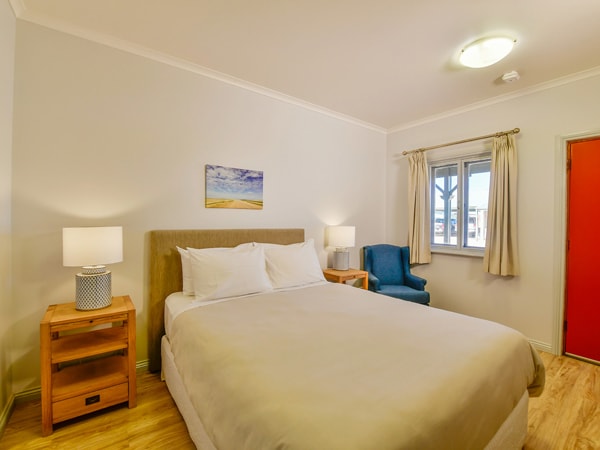
You’ve stayed in this room a hundred times in your travels across regional Australia. It’s comfortable and it’s clean, the TV works, it’s there in the corner facing the bed, and there’s the kettle for your cuppa. Simple, yes, but then no five-star hotel anywhere in the country offers the genuine experience that staying at the Birdsville Hotel does. Because the pub next door, a single-storeyed sandstone building built in 1884, is as iconic as any desert pub on Earth.
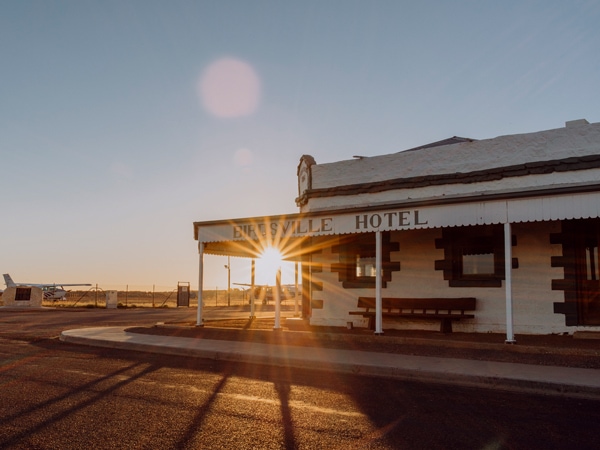
I fly in by propeller plane – the airport (let’s just call it a runway, shall we?) is 100 metres away, across one of the only roads in this tiny outback settlement. Birdsville is 1600 kilometres west of Brisbane, just above the South Australian border, and right beside one of the world’s harshest environments, the Simpson Desert (drive 38 kilometres and you can have sunset drinks in its biggest sand dune, Big Red/ Nappanerica). Burke and Wills passed through here, and we know what happened to them.
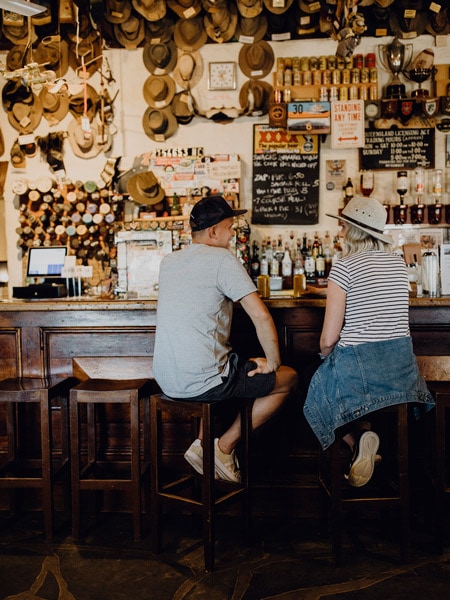
The Birdsville Hotel’s the oasis in this desert. It’s like Cheers in here, everybody knows your name as soon as you drink or eat in it. The town’s barely 115 people, but all of them seem to be in the pub. And all 137 years of history seeps out of this place – there’s the cowboy hats on the walls of local patrons who’ve passed onto greener pastures (‘In recognition of those who have done the hard yards in Birdsville and since passed away’, the sign says), there’s the melancholic moan of bush poets scrawled on its walls and a sign warning baseball caps worn backwards incur a $2 fine – THIS IS AUSTRALIA, it reads… in caps, and italics. Meals are wholesome – steaks as big as your face – but you know you’re not here for the cuisine either. You’re here because you know no matter how far and wide you go, nowhere in Australia’s like the Birdsville Hotel.
History of an Aussie icon
Sitting on the traditional land of the Wangkangurra-Yarluyandi people, the heritage-listed Birdsville Hotel was erected in 1884 by publican William Blair. After his death in 1898, the hotel passed to the Queensland Trustee before being acquired by the Hayden family in 1912, the Gaffney family in 1918 and the Dixon family in 1947. Dick Smith famously purchased the property in 1979, but the day after the contract was signed the hotel burnt down. It was then acquired by David Brooks, a descendant of the Gaffney family, and his friend Kym Fort who ran it until the current owners, Courtney and Talia Ellis, bought it in 2019. The late ’70s fire wasn’t the only drama the hotel has endured (or the only fire; the first was in 1964): the outback outpost was damaged by cyclones in 1905 and again in 1964. – Craig Tansley
Read all 100 unique stays around Australia here.