The data is in, and the most loved drives this winter are…
Winter is fast approaching in Australia, but for road trippers, the cooler season is no reason to stay parked. In fact, it’s the perfect time to hit the open road, with misty mornings, star-filled nights and epic scenery in every direction. But which routes are worth the drive when the temps drop?
A new report by the car insurance experts at ROLLiN’ has crunched the numbers to reveal the most loved winter road trips in Australia. By analysing 22 of the country’s most iconic routes across key data points – including search volume, social media buzz, Google reviews and distance – they’ve ranked the ultimate cold-weather drives that travellers can’t get enough of.
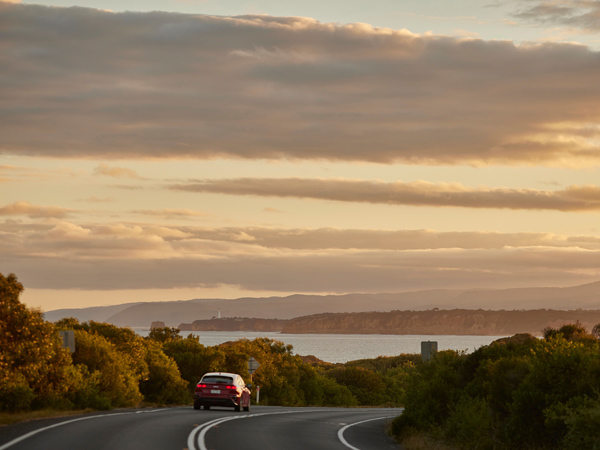
The Great Ocean Road is the most popular winter road trip.
And topping the list? No surprises here: the Great Ocean Road reigns supreme. This Victorian icon racks up 196,600 winter monthly searches, which accounts for nearly 20 per cent of all searches on the route. Its fame extends well beyond Google, with over 33 million TikTok posts and 1.8 million Instagram posts capturing its winding clifftops, seaside towns and the iconic Twelve Apostles. Whether it’s misty mornings or golden hour glow, the Great Ocean Road is a year-round crowd-pleaser – but winter, it seems, is peak time for those in the know.
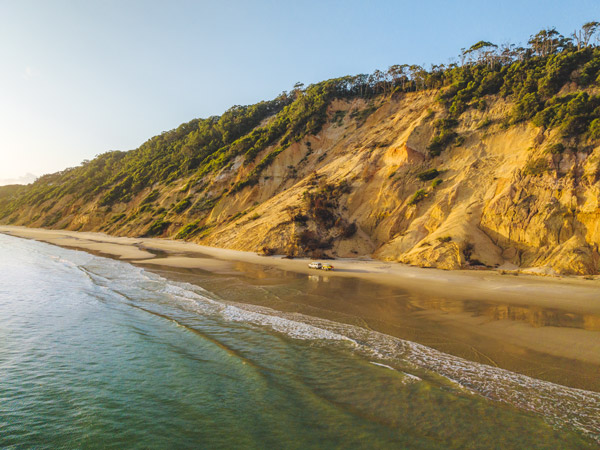
Drive along the beach on the Great Beach Drive. (Image: Tourism and Events Queensland)
In second place is Queensland’s Great Beach Drive – a unique stretch where you can literally drive along the sand. 26 per cent of all interest in this route spikes in the cooler months, proving the novelty of cruising the coastline, dodging the tides and soaking up some sunshine is an all-season thrill. The route also boasts over 622,000 Instagram posts and a strong 4.74-star Google rating.
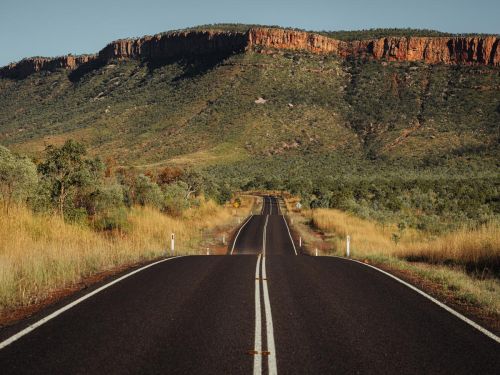
Head to the outback on Gibb River Road. (Image: Tourism Western Australia)
Rounding out the top three is Western Australia’s Gibb River Road. It racks up a solid 95,400 winter searches, and with 38 per cent of all interest landing in the cooler season, it’s clear the dry, dust-free conditions of winter make this remote red-dirt adventure a bucket-list favourite. Add in a 4.77-star Google rating, and you’ve got a road trip that’s as rugged as it is rewarding.
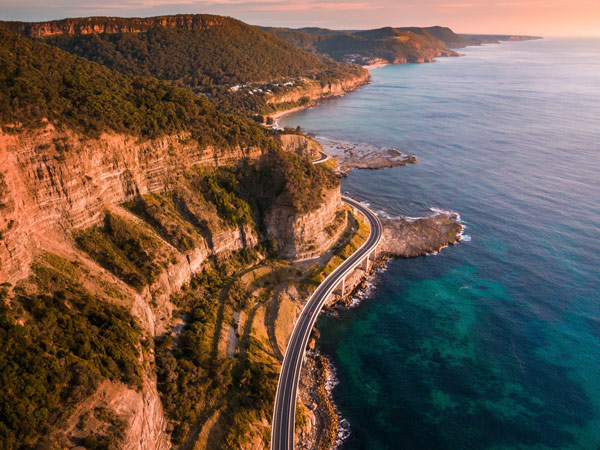
Drive along the Sea Cliff Bridge on the Grand Pacific Drive. (Image: Destination NSW)
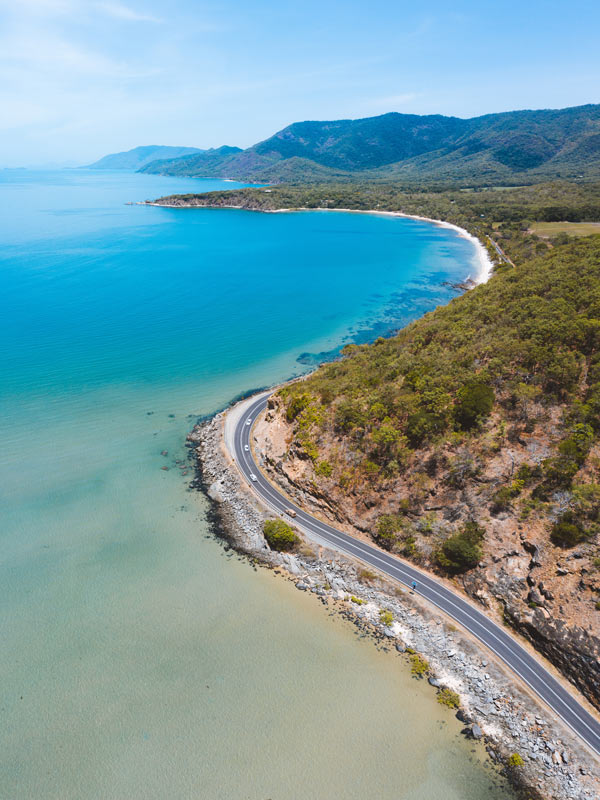
Take the scenic route on the Great Barrier Reef Drive. (Image: Tourism and Events Queensland)
Tasmania’s Western Wilds also deserves a shoutout – while it didn’t crack the top 10 for winter road trips, it holds the crown for the highest-rated road trip in Australia, with an impressive 4.80-star average.
What does it all mean? That winter road tripping in Australia is alive and well. Whether you’re chasing rugged coastlines, remote outback adventures or misty rainforest vibes, there’s a road trip calling your name. And with fewer crowds, crisper air and the chance to spot wildlife like migrating whales or desert wildflowers, winter could just be the best time to pack the car and hit the road.
Emily Murphy is Australian Traveller's Email & Social Editor, and in her time at the company she has been instrumental in shaping its social media and email presence, and crafting compelling narratives that inspire others to explore Australia's vast landscapes. Her previous role was a journalist at Prime Creative Media and before that she was freelancing in publishing, content creation and digital marketing. When she's not creating scroll-stopping travel content, Em is a devoted 'bun mum' and enjoys spending her spare time by the sea, reading, binge-watching a good TV show and exploring Sydney's vibrant dining scene. Next on her Aussie travel wish list? Tasmania and The Kimberley.
The Grampians just might be the ultimate antidote for the metropolis, writes one returning Aussie ready to disconnect from the modern world and reconnect to the Great outdoors.
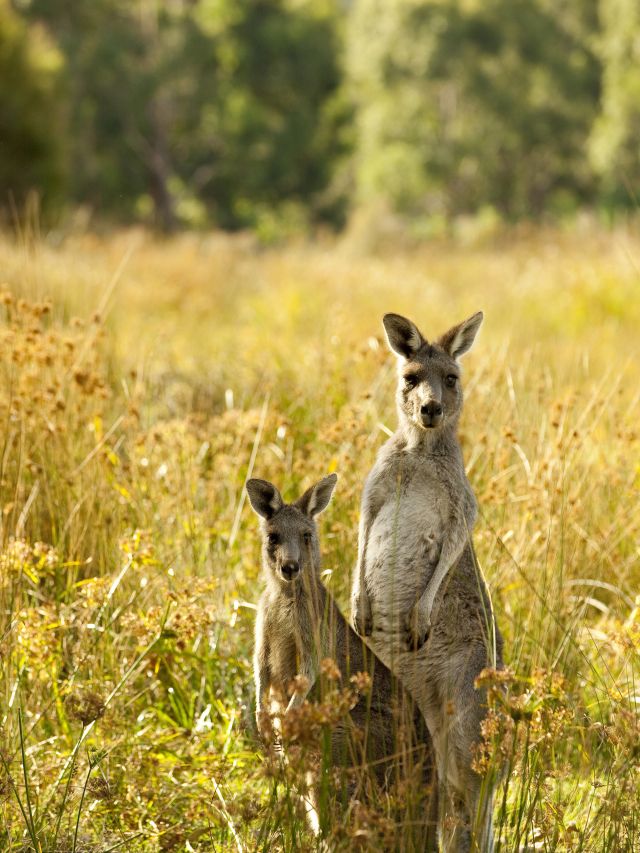
There are no kangaroos back in Chicago: they’re all here in the Grampians/Gariwerd . In the heart of the Grampians National Park’s main gateway town, Halls Gap, pods of eastern greys are eating grass beside my parked rental car beneath the stars. Next morning, when I see the backyard of my rented villa on the edge of town for the first time, there are kangaroos feeding beside a slow-moving creek, lined with river red gums.
Five hundred metres up the road, 50 or so of them are eating by the side of the road in a paddock. I pull over to watch and spot three emus. Yellow-tailed black cockatoos fly overhead towards the tall green mountains just beyond town.
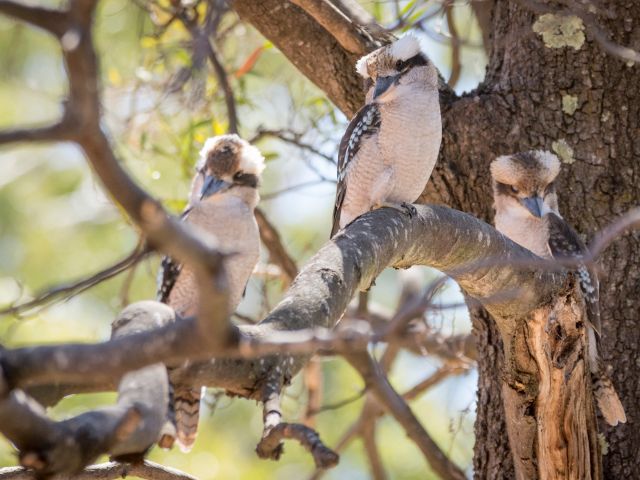
‘Kee-ow, keee-oww’… their calls fuse with the maniacal cackle of a kookaburra (or 10). Gawd, how I’ve missed the sound of them. Far above, a wedge-tailed eagle watches, and there you go: the ‘great birds of Australia’ trifecta, all half a kay from the town limits.
Exchanging city chaos for country calm
The park is renowned for its significant diversity of native fauna species. (Image: Visit Victoria/Robert Blackburn)
I’ve come to the Grampians to disconnect, but the bush offers a connection of its own. This isn’t just any bush, mind you. The Grampians National Park is iconic for many reasons, mostly for its striking sandstone mountains – five ridges run north to south, with abrupt, orange slopes which tumble right into Halls Gap – and for the fact there’s 20,000 years of traditional rock art. Across these mountains there are more than 200 recorded sites to see, created by the Djab Wurrung, Jardwadjali and Gunditjmara peoples. It’s just like our outback… but three hours from Melbourne.
I’ve come here for a chance at renewal after the chaos of my life in America’s third-largest city, Chicago, where I live for now, at the whim of a relative’s cancer journey. Flying into Melbourne’s airport, it only takes an hour’s drive to feel far away from any concept of suburbia. When I arrive in Halls Gap two hours later, the restaurant I’m eating at clears out entirely by 7:45pm; Chicago already feels a lifetime ago.
The trails and treasures of the Grampians
Grampians National Park /Gariwerd covers almost 2000 square kilometres. (Image: Ben Savage)
Though the national park covers almost 2000 square kilometres, its best-known landmarks are remarkably easy to access. From my carpark here, among the cockatoos and kangaroos on the fringe of Halls Gap, it only takes 60 seconds’ driving time before I’m winding my way up a steep road through rainforest, deep into the mountains.
Then it’s five minutes more to a carpark that serves as a trailhead for a hike to one of the park’s best vantage points, The Pinnacles . I walk for an hour or so, reacquainting myself with the smells and the sounds of the Aussie bush, before I reach it: a sheer cliff’s edge lookout 500 metres up above Halls Gap.
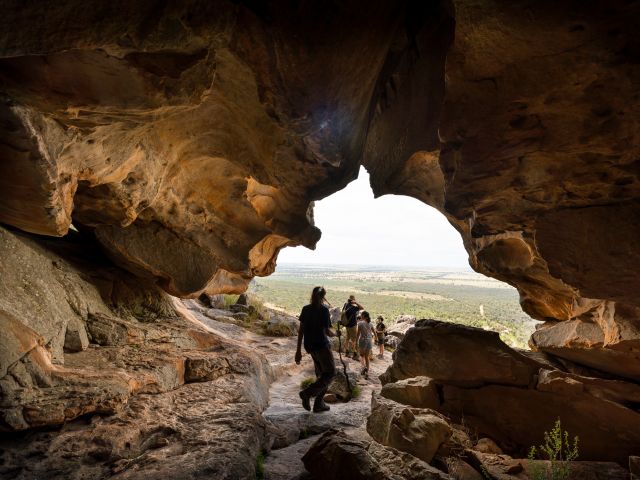
Overlooking the vast Grampians landscape from Hollow Mountain. (Image: Robert Blackburn)
There are hikes and there are lookouts and waterfalls all across this part of the park near town. Some are a short stroll from a carpark; others involve long, arduous hikes through forest. The longest is the Grampians Peaks Trail , Victoria’s newest and longest iconic walk, which runs 160 kilometres – the entire length of Grampians National Park.
Local activities operator Absolute Outdoors shows me glimpses of the trail. The company’s owner, Adrian Manikas, says it’s the best walk he’s done in Australia. He says he’s worked in national parks across the world, but this was the one he wanted to bring his children up in.
“There’s something about the Grampians,” he says, as he leads me up a path to where there’s wooden platforms for tents, beside a hut looking straight out across western Victoria from a kilometre up in the sky (these are part of the guided hiking options for the trail). “There are things out here that you won’t see anywhere else in Australia.” Last summer, 80 per cent of the park was damaged by bushfire, but Manikas shows me its regrowth, and tells me of the manic effort put in by volunteers from town – with firefighters from all over Australia – to help save Halls Gap.
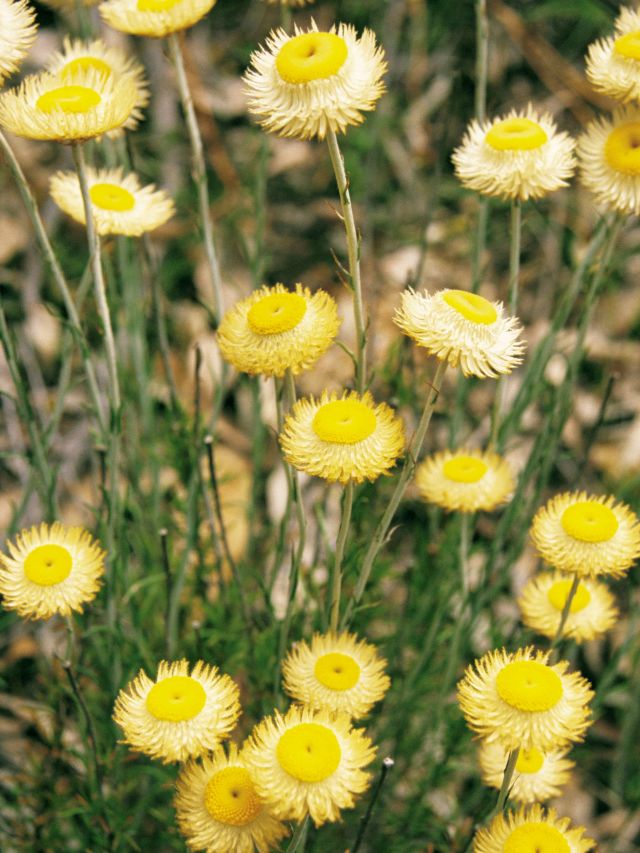
Spot wildflowers. (Image: Visit Victoria)
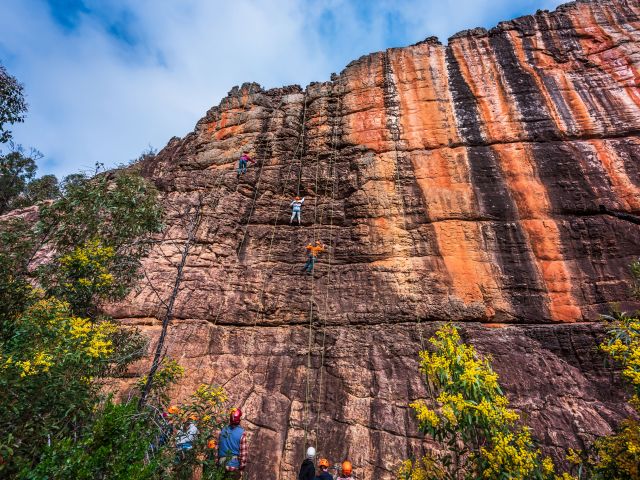
We drive back down to Halls Gap at dusk to abseil down a mountain under the stars, a few minutes’ walk off the main road into town. We have headlamps, but a full moon is enough to light my way down. It takes blind faith to walk backwards down a mountain into a black void, though the upside is I can’t see the extent of my descent.
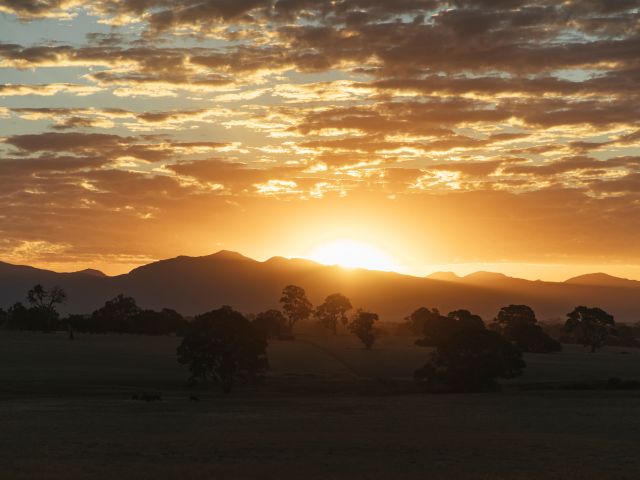
Grampians National Park at sunset. (Image: Wine Australian)
The stargazing is ruined by the moon, of course, but you should see how its glow lights up the orange of the sandstone, like in a theme park. When I’m done, I stand on a rocky plateau drinking hot chocolate and listening to the Aussie animals who prefer nighttime. I can see the streets of Halls Gap off in the distance on this Friday night. The restaurants may stay open until 8pm tonight.
What else is on offer in The Grampians?
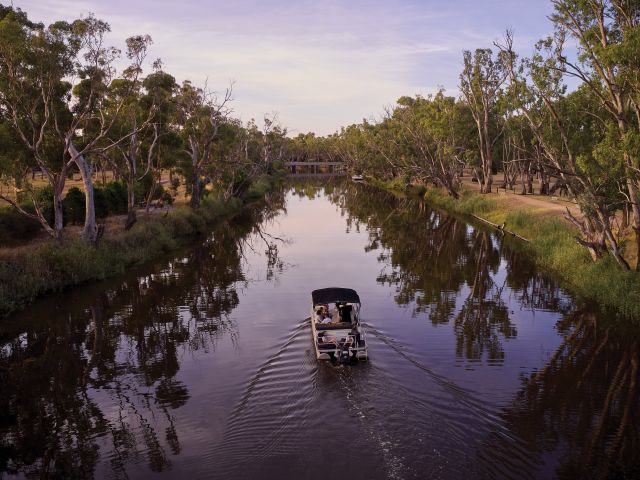
Travelling along the Wimmera River in Dimboola. (Image: Chris McConville)
You’ll find all sorts of adventures out here – from rock climbing to canoeing to hiking – but there’s more to the Grampians than a couple of thousand square kilometres of trees and mountains. Halls Gap may be known to most people, but what of Pomonal, and Dimboola, and Horsham? Here in the shadow of those big sandstone mountains there are towns and communities most of us don’t know to visit.
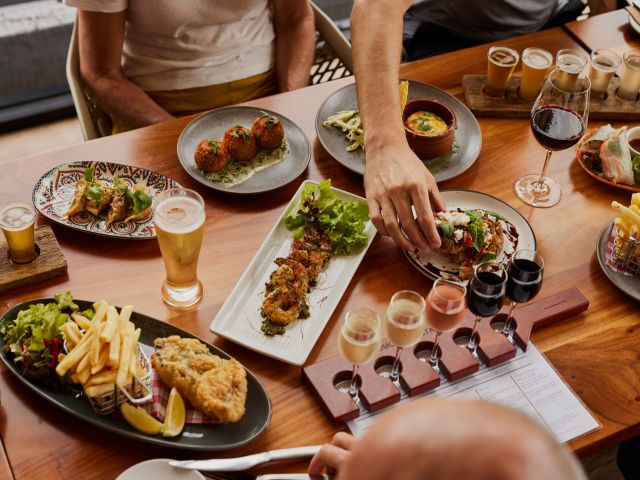
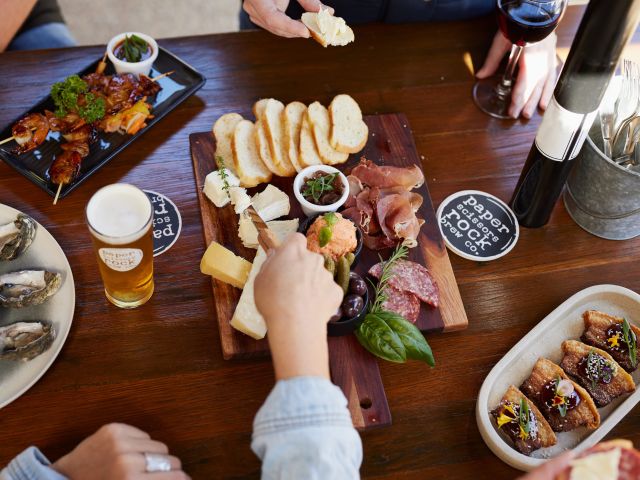
And who knew that the Grampians is home to Victoria’s most underrated wine region ? My disconnection this morning comes not in a forest, but in the tasting rooms and winery restaurants of the district. Like Pomonal Estate, barely 10 minutes’ drive east of Halls Gap, where UK-born chef Dean Sibthorp prepares a locally caught barramundi with lentil, pumpkin and finger lime in a restaurant beside the vines at the base of the Grampians. Husband-and-wife team Pep and Adam Atchison tell me stories as they pour their prize wines (shiraz is the hero in these parts).
Dine in a restaurant beside vines at Pomonal Estate. (Image: Tourism Australia)
Three minutes’ drive back down the road, long-time mates Hadyn Black and Darcy Naunton run an eclectic cellar door out of a corrugated iron shed, near downtown Pomonal. The Christmas before last, half the houses in Pomonal burnt down in a bushfire, but these locals are a resilient lot.
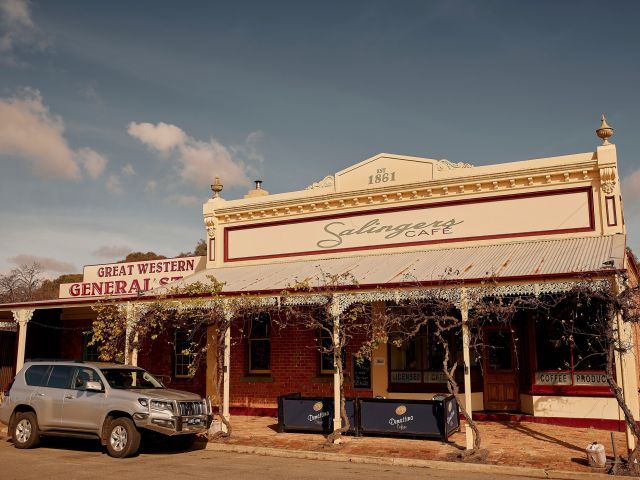
The fires also didn’t stop the construction of the first art centre in Australia dedicated to environmental art in a nature-based precinct a little further down the road (that’s Wama – the National Centre for Environmental Arts), which opened in July. And some of the world’s oldest and rarest grape vines have survived 160 years at Best’s Wines, outside the heritage town of Great Western. There’s plantings here from the year 1868, and there’s wines stored in century-old barrels within 150-year-old tunnels beneath the tasting room. On the other side of town, Seppelt Wines’ roots go back to 1865. They’re both only a 30-minute drive from Halls Gap.
Great Western is a charming heritage town. (Image: Griffin Simm)
There’s more to explore yet; I drive through tiny historic towns that barely make the map. Still part of the Grampians, they’re as pretty as the mountains behind them: full of late 19th-century/early 20th-century post offices, government offices and bank buildings, converted now to all manner of bric-a-brac stores and cafes.
The Imaginarium is one, in quirky Dimboola, where I sleep in the manager’s residence of an old National Australia Bank after a gourmet dinner at the local golf club, run by noted chef and teacher, Cat Clarke – a pioneer of modern Indigenous Australian cooking. Just south, I spend an entire afternoon at a winery, Norton Estate Wines, set on rolling calico-coloured hills that make me think of Tuscany, chit-chatting with owners Chris and Sam Spence.
Being here takes me back two decades, when I lived here for a time. It had all seemed as foreign as if I’d driven to another planet back then (from Sydney/Warrane), but there seemed something inherently and immediately good about this place, like I’d lived here before.
And it’s the Australian small-town familiarity of the Grampians that offers me connection back to my own country. Even in the better-known Halls Gap, Liz from Kerrie’s Creations knows I like my lattes with soy milk and one sugar. And while I never do get the name of the lady at the local Ampol station, I sure know a lot about her life.
Kookaburras are one of some 230 bird species. (Image: Darren Donlen)
You can be a local here in a day; how good is that? In Chicago, I don’t even know who my neighbour is. Though each day at dusk – when the kangaroos gather outside my villa, and the kookaburras and the black cockatoos shout out loud before settling in to sleep – I prefer the quieter connection I get out there in the bush, beneath these orange mountains.
A traveller’s checklist
Staying there
Sleep beside the wildlife on the edge of Halls Gap at Serenity .