Australia could soon have its first Dark Sky Island

hero media
At Lord Howe’s inaugural Dark Sky Festival, we learn how this island paradise is on track to be certified not only as an International Dark Sky Place, but Australia’s first Dark Sky Island.

Lord Howe Island could become the country’s first official Dark Sky Island, according to a renowned advocate for the preservation of dark skies. Marnie Ogg, along with her astronomer husband Fred Watson, was responsible for getting NSW’s Warrumbungles designated Australia’s first International Dark Sky Park in 2016.
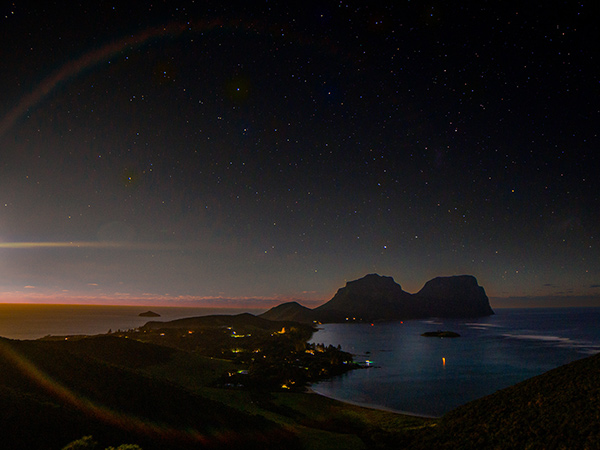
astrotourism in Lord Howe island
Astrotourism is a fast-growing travel trend. (Image: Gavin Heatherington-Tait)

Ogg, director of astro tourism company Dark Sky Traveller and the Australasian Dark Sky Alliance, spoke on a panel to a gathering of astronomy enthusiasts, nature lovers and holidaymakers at the Lord Howe Island Brewery in April 2025. The science talk formed part of Lord Howe Island’s inaugural Dark Sky Festival . 

“It would just be a beautiful badge not only for tourism but for conservation," she said.  

What is a Dark Sky Island, and why is it important?
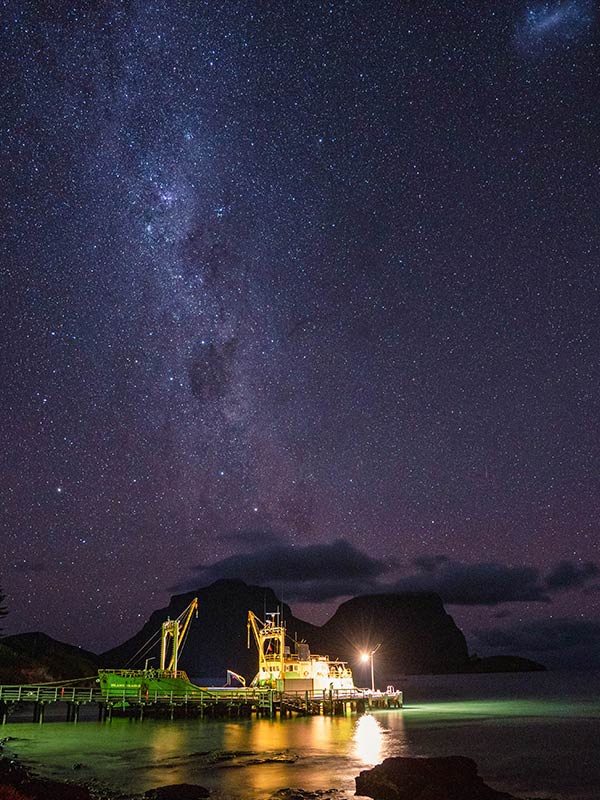
Dark Sky Island
A Dark Sky Island has little to no pollution obscuring the starry skies. (Image: Eliot Drezet)

A Dark Sky Island is part of the International Dark Sky Places (IDSP) program that certifies communities, parks and protected areas around the world that preserve and protect their dark skies through responsible lighting and public education.  

Since Flagstaff, Arizona, was declared the first International Dark Sky Place in 2001, the program has expanded to include over 160,000 square kilometres of protected land and night skies around the world.  

The benefits of preserving our dark skies are manifold, as societies are becoming increasingly aware of the damaging effects of light pollution and how it affects not only our ability to observe stars but also ecosystems, wildlife and our own human health.  

If Lord Howe becomes a Dark Sky Island, it will join a global roster of Dark Sky Islands, including Sark in the Channel Islands , which was first designated in 2011.  

“Sark is like Lord Howe, in a way, except that they don’t have cars at all – they just have tractors and bikes," said Ogg. “They have a thriving community of people who go there because they can see beautiful dark skies at night and go back in time to really experience life in a night environment." 

Are there Dark Sky Places in Australia already?
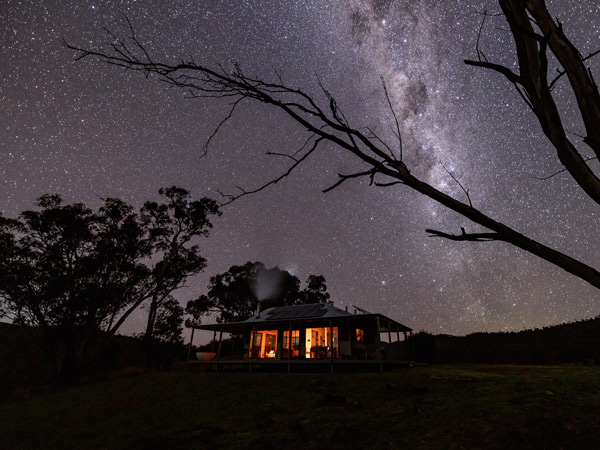
Kestrel Nest Eco Hut dark sky approved lodge
The off-grid Kestrel Nest is Australia’s first international DarkSky-approved lodge. (Image: Grant Hardwick)

Australia is already home to seven official Dark Sky Places, including Warrumbungle Dark Sky Park (designated 2016); The Jump-Up Dark-Sky Sanctuary in outback Queensland (2019); the River Murray Dark Sky Reserve in South Australia (2019); and Arkaroola Wilderness Sanctuary in SA’s Flinders Ranges (2023).  

In 2024, the coastal town of Carrickalinga on the Fleurieu Peninsula in SA became Australia’s first Dark Sky Community, and Sydney’s Palm Beach Headland became our first Urban Night Sky Place . In April 2025, Kestrel Nest EcoHut became the country’s first DarkSky-approved lodging. Located on Highland Farm and Woodland in NSW’s Eastern Riverina region, this off-grid property is committed to protecting and enhancing the natural environment it’s part of.  

What will becoming an International Dark Sky Place mean for Lord Howe Island?
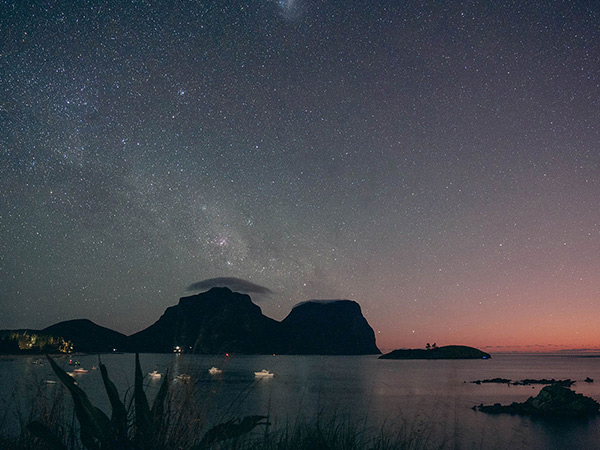
Lord Howe island
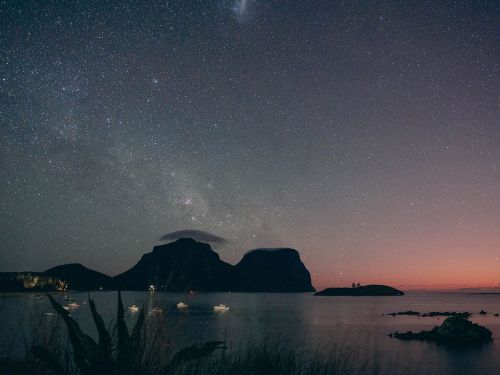
Lord Howe is a haven for stargazers. (Image: Eliot Drezet)

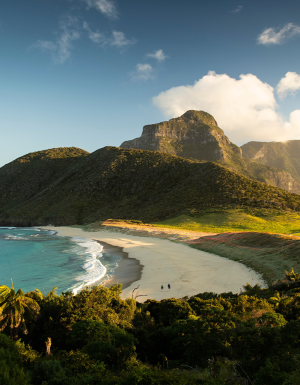
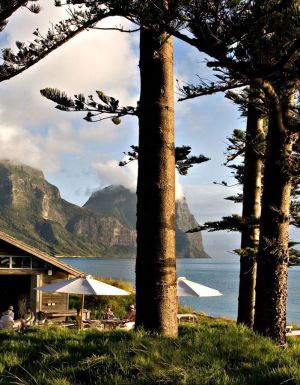
Lord Howe’s fabulously starry skies already make the UNESCO World Heritage-listed island one of Australia’s premier stargazing destinations.  

A designation as a Dark Sky Island would cement its reputation, attracting further mindful tourists to a place that famously limits its visitor numbers to 400 at any one time to preserve the fragile ecosystem and pristine landscape. 

“Astronomy-based tourism brings a traveller who is very conservation-minded," said Ogg. “They help and support the community."  

It would also extend the tourism season, spreading the economic benefits throughout the year and giving travellers to the island more options when planning. “Where you might not be doing swims and dives and trips up Mt Gower [in winter], you could be sitting under a night sky." 

And while there is no official timeline right now for when Lord Howe might become an official Dark Sky Island, Ogg says it already meets much of the criteria, and the road map to designation will be a fairly straightforward one.  

“The biggest benefit with Lord Howe is that there is a lot that doesn’t need to be undone," she said. When we talk about a lot of Dark Sky Places, they might have to retrofit streetlights, pull out lights from buildings or talk to residents about how they use light. That could take years. But it won’t here. Lord Howe is so far along the track."

Central to an application – which costs US$250 (A$380) to lodge with non-profit organisation DarkSky International – is the creation of four events a year, Ogg explained, which could be anything from a letterbox drop to raise awareness of dark skies (covering anything from the impacts on animals and people to cost savings and good lighting principles) to a major event in the calendar like Lord Howe Island’s new Dark Sky Festival.  

When is the next Dark Sky Festival on Lord Howe Island?
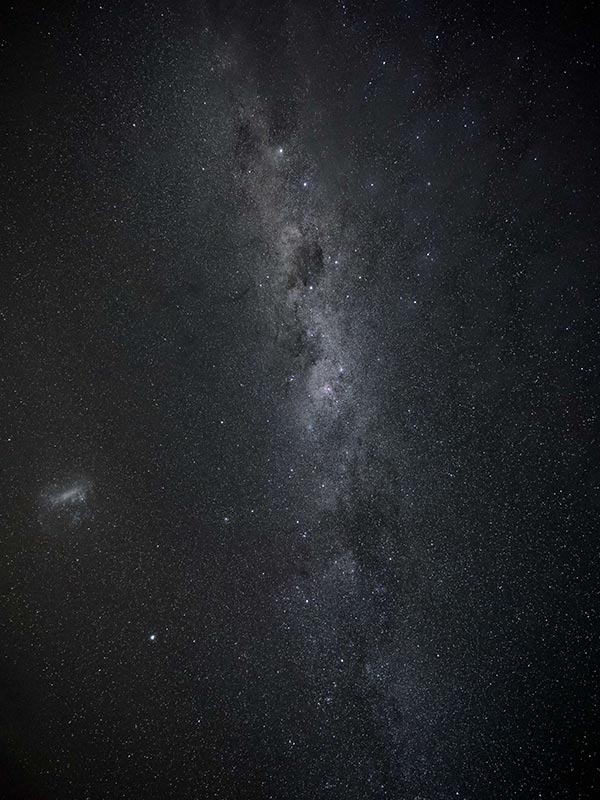
milky way
Being in the light of stars is an artful enjoyment and encourages stress relief.

The next Dark Sky Festival on Lord Howe Island will run between 16 and 23 May 2026.  

Organiser Danielle Nicolson was inspired to launch the festival after winning gold at the 2024 Australian Tourism Awards for Excellence in Food Tourism with her business, Love Lord Howe. “While there, I met organisers of festivals in other remote regions and was moved by their passion and the impact these events had on their communities," she explains. “The idea for a ‘Dark Sky Festival’ quickly emerged as it strongly aligns with our Island’s conservation values." 

“Next year, we’re planning even more immersive activities and experiences," Nicolson continues. “The goal is not only celebrating and educating people about the importance of night sky conservation but also supporting local businesses by boosting tourism during the quieter season." 

Flight, accommodation and event ticket packages are available through Oxley Travel .

Imogen Eveson
Imogen Eveson is Australian Traveller’s Print Editor. She was named Editor of the Year at the 2024 Mumbrella Publish Awards and in 2023, was awarded the Cruise Line Industry Association (CLIA) Australia’s Media Award. Before joining Australian Traveller Media as sub-editor in 2017, Imogen wrote for publications including Broadsheet, Russh and SilverKris. She launched her career in London, where she graduated with a BA Hons degree in fashion communication from world-renowned arts and design college Central Saint Martins. She is the author/designer of The Wapping Project on Paper, published by Black Dog Publishing in 2014. Growing up in Glastonbury, home to the largest music and performing arts festival in the world, instilled in Imogen a passion for cultural cross-pollination that finds perfect expression today in shaping Australia’s leading travel titles. Imogen regularly appears as a guest on radio travel segments, including ABC National Nightlife, and is invited to attend global travel expos such as IMM, ILTM, Further East and We Are Africa.
See all articles
hero media

8 ways to discover a new side of Port Stephens

Aussies might think they know what Port Stephens is all about – but it’s time to take another look.

You might’ve driven through this NSW coast town. Maybe even stopped for fish and chips or a quick dip. But spend a long weekend in the new Port Stephens , and you’ll seriously regret not doing it sooner. We’re talking treks across beaches, reef dives and up-close time with rescued koalas.

All in all? It only takes a day before you see Port Stephens in a whole new light, and not much longer until it’s locked in as your favourite family destination.

1. Stockton Sand Dunes

Port Stephens incredible Stockton Sand Dunes are the largest moving sand mass in the Southern Hemisphere. They shift like an endless magic trick across the Worimi Conservation Lands , a 4200-hectare coastal co-managed by the Traditional Owners.

Tear over them in a 4WD. Rev through valleys soft as melting ice cream on a quad. Carve down 30-metre slopes on a sandboard. However you choose to cross them, you’re guaranteed a seriously wild ride.

Four rugged 4WDs kick up trails of golden dust as they charge across the sweeping desert landscape.
Chase thrills across shifting sands. (Image: Destination NSW)

2. Scale Tomaree Head Summit Walk

A short climb through bushland opens up to the coastal drama of Tomaree Head . Spot Zenith, Wreck and Box Beaches. See the Fingal Island lighthouse and offshore rookeries where Australia’s rarest seabird, the Gould’s petrel, nests.

History buffs can’t miss the WWII gun emplacements. And if you’re hiking between May and November, bring binoculars. Travelling whales might just be breaching below.

Friends enjoying a scenic walk along the Tomaree Head Summit Walk in Tomaree National Park, Port Stephens.
Climb Tomaree Head for jaw-dropping coastal views. (Image: Destination NSW)

3. Watch out for whales

You’ve seen the spouts of migrating humpbacks and southern right whales from shore. Set sail from Nelson Bay to see them up close. Cruise straight into the action, with tail-slaps, barrel rolls and all.

And they’ve got competition from the local show-offs. Port Stephens bottlenose dolphins leap and play. Some tours even spot pudgy fur seals, spending lazy days soaking up the sun on Cabbage Tree Island.

A whale’s tail on the sea’s surface.
Watch for ocean tails. (Image: Destination NSW)

4. Port Stephens Koala Sanctuary

Pop into the Port Stephens Koala Sanctuary  to learn about the rescued koalas who climb, nap, snack and heal in this natural patch of bushland. Wander the immersive Sanctuary Story Walk to discover more about their habits, then head to the SKYwalk – a treetop platform constructed for spotting these eucalyptus-loving locals. Peek into the hospital’s viewing window, where sick or injured koalas may be resting in their recovery enclosures.

Not enough time around these adorable marsupials? Stay overnight in silk-lined glamping tents.

Koala sleeping in a tree at Port Stephens Koala Sanctuary, One Mile
See koalas in their natural habitat. (Image: Destination NSW)

5. Diving Port Stephens

Port Stephens has some of NSW’s best dive spots. At Fly Point, float through sponge gardens and coral castles thick with nudibranchs (AKA sea slugs). Halifax Park has blue gropers and crimson-banded wrasse, while Shoal Bay’s seagrass meadows hide pipefish, cuttlefish and octopus.

Accessible only by boat, Broughton Island is home to a vast array of marine (and bird) life. Snorkel with blue devilfish and stingrays at sites like The Looking Glass and North Rock. More experienced divers can head out with one of the many PADI-certified operators.

At nearby Cabbage Tree Island, expect to see shaggy-faced wobbegongs cruising along.

A couple suited up and ready to dive into adventure.
Suit up and dive into Port Stephens’ vibrant marine life. (Image: Destination NSW)

6. Irukandji Shark and Ray Encounters

Not quite ready to dive in? Irukandji Shark and Ray Encounters is the perfect way to spot local marine life without getting too deep. But there’s no obnoxious glass tank tapping here. Instead, this interactive aquarium allows guests to wade into natural-style lagoons that mimic the real thing.

Gently pat Port Jackson and bamboo sharks, hand-feed rays, and feel their sandpapery skin with your fingertips. It is all under expert guidance. If you want to go deeper, pop on a wetsuit and swim alongside tawny nurse sharks, white-tipped reef sharks and zebra sharks in the lagoon.

Family enjoying an animal feeding experience at Irukandji Shark and Ray Encounters, Anna Bay.
Meet the ocean’s friendliest faces at Irukandji. (Image: Destination NSW)

7. Fish the estuaries

Fishing fanatics will fall for Port Stephens hook, line and sinker. Here, one of the largest estuary systems in the whole state sees tidal rivers and mangrove ecosystems. Waterfronts are thick with oysters, and residential fish that might include anything from bream, whiting and flathead, to blue swimmer crabs, kingfish and longtail tuna.

If you prefer to choose your own adventure and fish offshore, you can hire a boat from one of the marinas and set your own course.

three men fishing on a boat in port stephens
Join a tour or chart your own fishing trip. (Image: Destination NSW)

8. Taste new Port Stephens flavours

With plenty of activity to fill your days, refuelling on delectable cuisine becomes equally important. And Port Stephens answers the call.

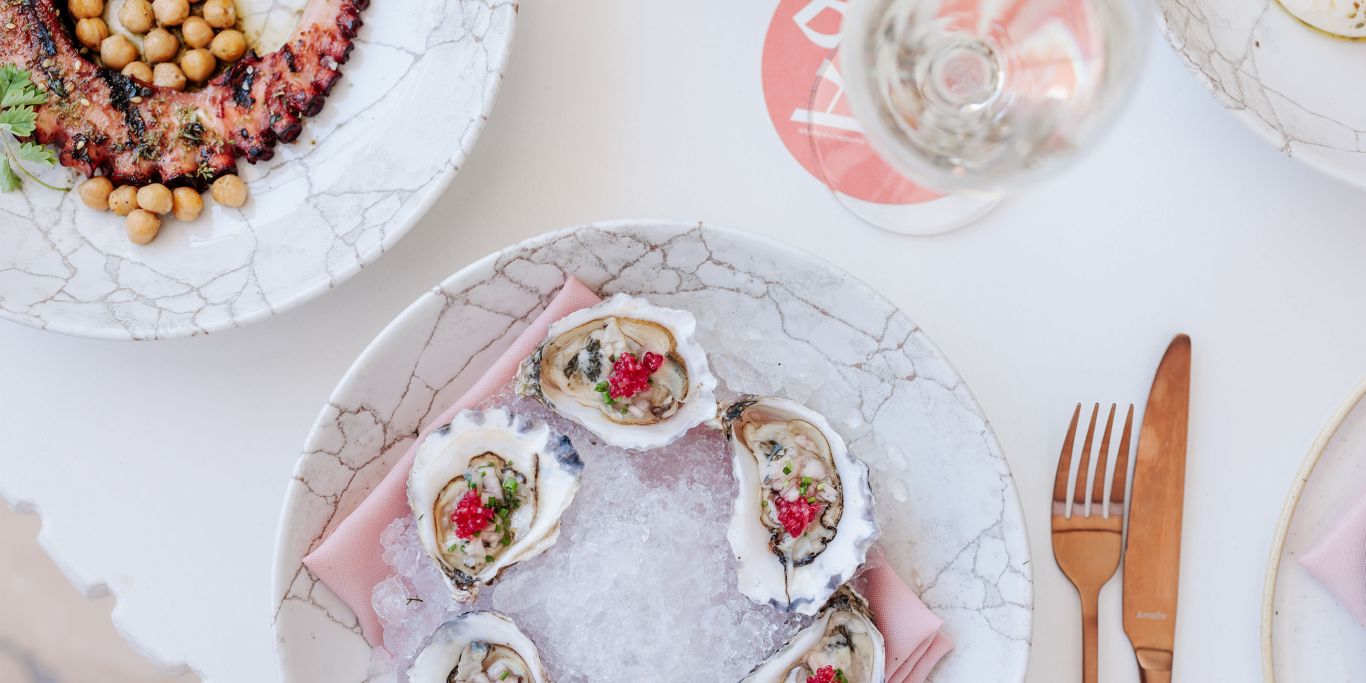
Pop into Holbert’s Oyster Farm for fresh-farmed Port Stephens rock oysters and Pacific oysters, Australian king and tiger prawns, as well as a variety of tasty sauces to try them with.

Take a group to Atmos for an authentic Greek experience over large shared dishes and Greek-inspired cocktails. Or feast on sea-to-plate, modern Australian dishes at the pet-friendly Restaurant 2317.

A plate of fresh oysters.
Slurp your way through the region’s best oysters. (Image: Destination NSW)

Start planning your Port Stephens getaway at portstephens.org.au .