hero media

This stargazing lodge is Australia’s only DarkSky-approved stay

You’ve never seen the stars like this – or slept this well.

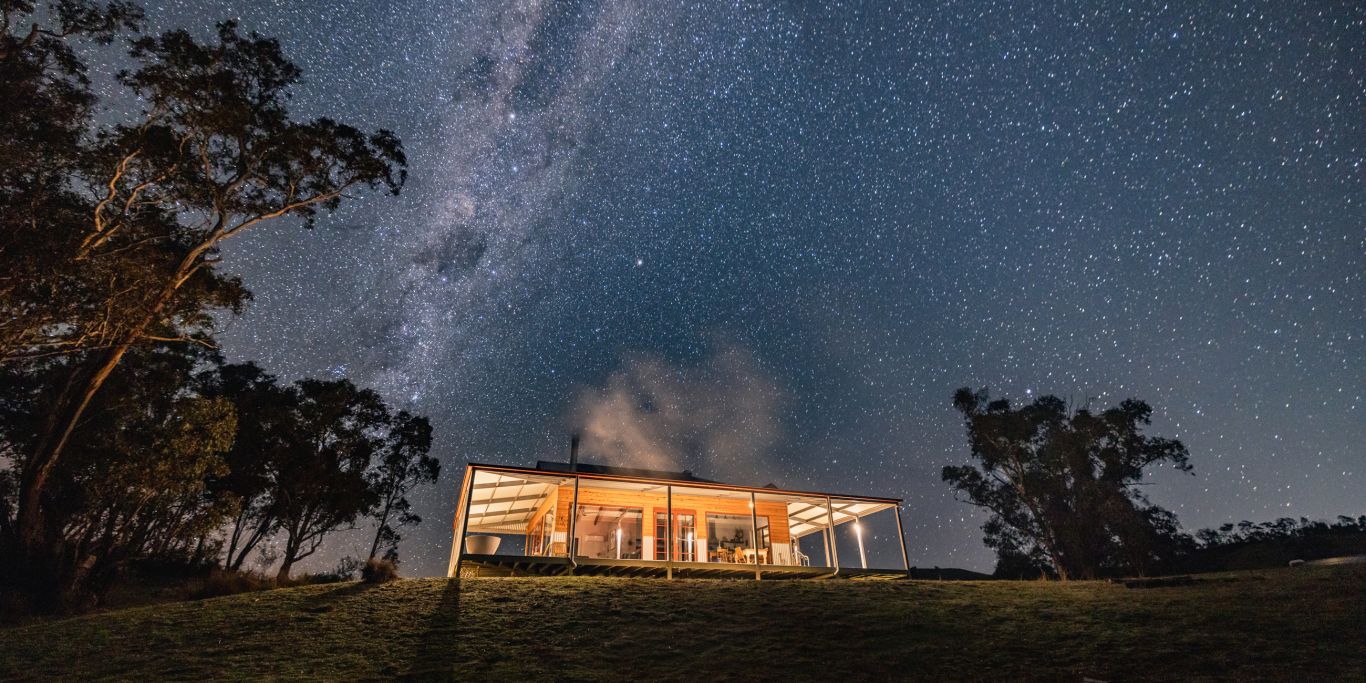
In a groundbreaking achievement for astrotourism, Kestrel Nest EcoHut, nestled within Highfield Farm and Woodland in New South Wales’ Riverina region, has been officially certified as Australia’s first International DarkSky Approved Lodge. This places it among just a handful of DarkSky-certified lodgings worldwide – there are only nine across the globe – and the only one in the southern hemisphere.

The prestigious certification from DarkSky International recognises accommodations that minimise light pollution and actively protect the natural night-time environment. For Kestrel Nest EcoHut, it’s yet another milestone in a long-standing commitment to sustainability and nature-led experiences.

“We’re excited to champion the importance of dark skies, both for human connection to the wonders of the universe, but also its role in protecting and enhancing the environment for wildlife," co-owner Louise Freckelton tells Australian Traveller.

“Light pollution is one of the easiest [types of] pollution to reverse. It’s a very simple way everyone can make a significant contribution to the environment."
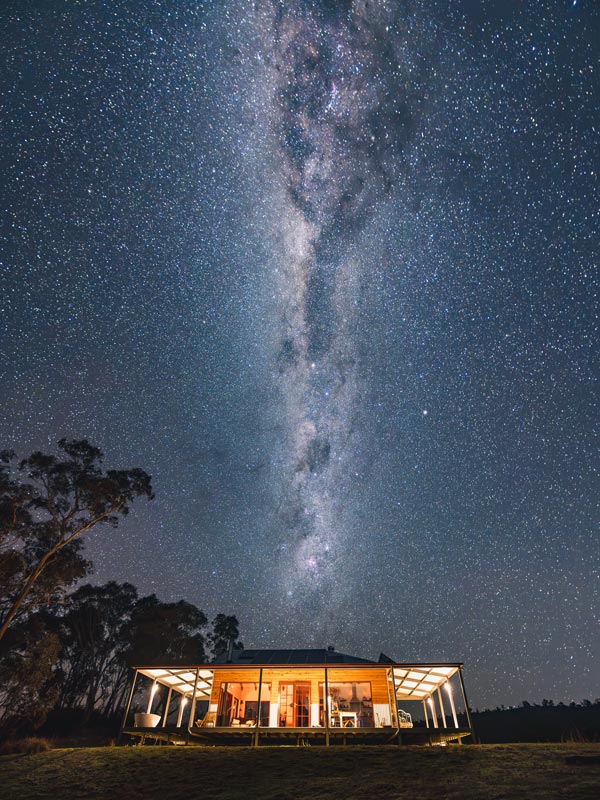
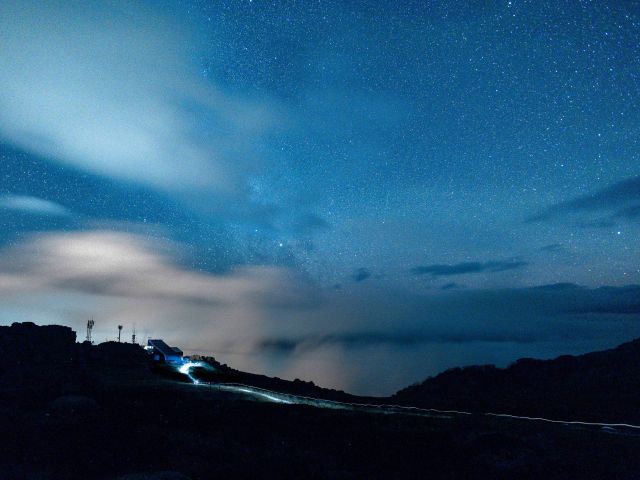
Kestrel Nest EcoHut at night with Milky Way above
Kestrel Nest EcoHut is in NSW’s Riverina region. (Image: Grant Hardwick)

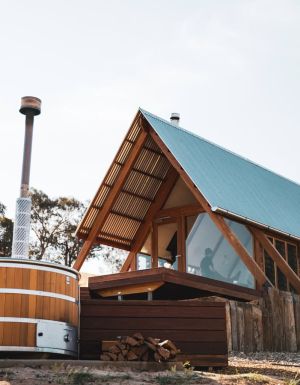
Situated amidst the rolling hills of Mount Adrah, Kestrel Nest EcoHut offers guests an unparalleled opportunity to disconnect from the digital world and reconnect with nature.

The off-grid, solar-powered retreat is designed with sustainability at its core, featuring recycled and locally sourced materials, double-glazed panoramic windows, and an outdoor bath that invites guests to “starbathe" under the pristine night sky. Guests can also stargaze from a hammock perfectly positioned beneath the Milky Way or hire binoculars for an even closer look.

Achieving the DarkSky Approved Lodging certification involved carefully redesigning outdoor lighting across the property, ensuring it aligned with the five principles of responsible outdoor lighting. The result? A space that not only protects nocturnal wildlife but also offers guests an unfiltered celestial show.

“The absence of light pollution allows for an unforgettable and essentially free, awe-inspiring experience," says Freckelton.

“In a world filled with constant stimulation and distraction, a truly dark sky offers a rare and invaluable opportunity to be in the moment. In this way, stargazing is more than just amusement; it becomes a wellness experience."
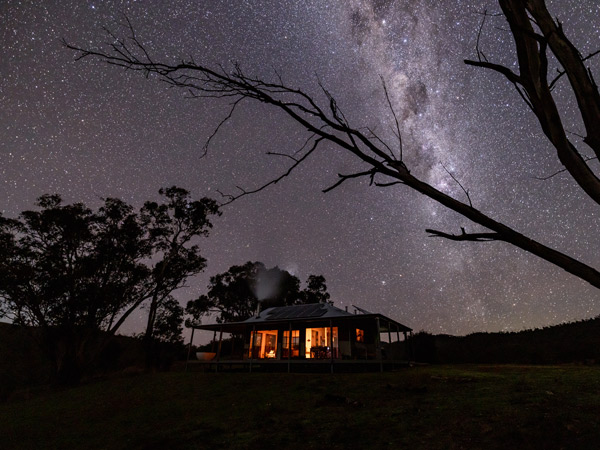
Kestrel Nest EcoHut at night with Milky Way above
There’s no better way to stargaze. (Image: Grant Hardwick)

One of Freckelton’s most memorable moments? Watching the Lyrids Meteor Shower from bed inside the EcoHut.

“The ceiling-to-floor windows allowed for a cosy and spectacular view with tens of meteors streaming across the sky," she says.

“Way better than any human-generated firework or laser display. An extraordinary display of [mother] nature doing her thing."

Looking ahead, Kestrel Nest EcoHut will focus on making the night sky more accessible. Guests are encouraged to download a stargazing app before their stay and can consult the in-hut celestial calendar to find out what will be visible during their visit, from full moon rises to planetary alignments and meteor showers.

“We aim to facilitate people’s understanding and experience," Freckelton says. “Many city dwellers have no idea, even as something as regular as the phases of the moon. For many, just experiencing the rise of a full moon over a rural landscape is breathtaking."
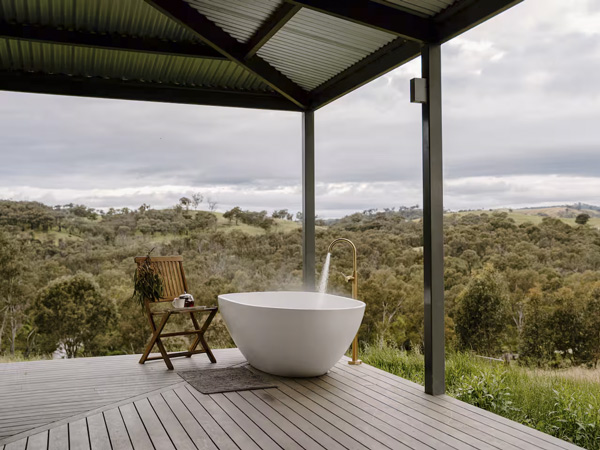
Kestrel Nest EcoHut outdoor bath
The outdoor bath invites guests to “starbathe" under the night sky. (Image: Stephanie Hunter)

Plans are also underway for the EcoHut to be included in a proposed inland dark sky travel route and to offer cultural stargazing experiences in collaboration with local Wiradjuri knowledge holders.

“The night sky (Sky Country) is one way to link the Dark Sky experience with First Nations peoples’ stories of the universe," says Freckelton.

“The epic tale of the Seven Sisters and the importance of understanding the Dark Emu for food gathering are just two of the easily seen interpretations we can help to highlight. We’re in discussion with local knowledge holders about providing an experience where this ancient knowledge and storytelling can be developed into a guest experience."

Freckelton and co-owner David Bray are no strangers to conservation. Two-thirds of their 390-hectare property is protected under a conservation covenant, and they were Highly Commended in the Ecotourism category at the 2024 Qantas Australian Tourism Awards in the Ecotourism category. Their DarkSky certification now joins an existing Ecotourism Australia Eco Certification, helping cement their mission to offer meaningful, regenerative stays.

For those seeking a serene escape that harmoniously blends luxury, sustainability and celestial wonder, Kestrel Nest EcoHut stands as a beacon of responsible tourism and environmental stewardship.
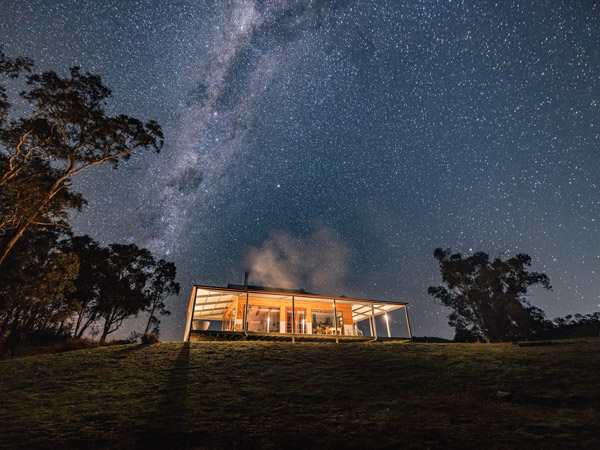
Kestrel Nest EcoHut at night with Milky Way above
There are only a handful of DarkSky-certified lodgings worldwide. (Image: Grant Hardwick)

Need more? Explore the best places to see the Milky Way around Australia.

Need tips, more detail or itinerary ideas tailored to you? Ask AT.

AI Prompt

Want to see more stories from Australian Traveller in your Google search results?

  1. Click here to set Australian Traveller as a preferred source.
  2. Tick the box next to "Australian Traveller". That's it.
Emily Murphy
Emily Murphy is Australian Traveller's Email & Social Editor, and in her time at the company she has been instrumental in shaping its social media and email presence, and crafting compelling narratives that inspire others to explore Australia's vast landscapes. Her previous role was a journalist at Prime Creative Media and before that she was freelancing in publishing, content creation and digital marketing. When she's not creating scroll-stopping travel content, Em is a devoted 'bun mum' and enjoys spending her spare time by the sea, reading, binge-watching a good TV show and exploring Sydney's vibrant dining scene. Next on her Aussie travel wish list? Tasmania and The Kimberley.
View profile and articles
hero media

Slowing down in Moree: a guide to the Artesian Spa Capital of Australia

(Credit: Destination NSW)

    Kassia Byrnes Kassia Byrnes
    The Artesian Spa Capital of Australia offers the perfect destination to escape the grind and reset.

    The world moves more slowly in Moree, and that’s how it should be. Here, country charm and heritage buildings fill the town’s wide streets. While the surrounding farmland mixes with lush riverways to create a fascinating landscape.

    But the biggest pull? Moree is known as the Artesian Spa Capital of Australia. It’s truly a place to slow down and disconnect, all an easy train ride from Sydney.

    Soak in Moree’s artesian water

    kids at Moree Artesian Aquatic Centre
    Dive in to Moree’s artesian waters.

    Moree is not your typical wellness retreat, replacing pretence with casual and easy. Blessed to be sitting above the Great Artesian Basin, it feeds the town (and surrounding villages) with hot, mineral-rich water. Loaded with minerals like calcium, magnesium, potassium and sulphur, this water is believed to help with skin health, joint function and tissue repair.

    And the town’s crown jewel, Moree Artesian Aquatic Centre, has reopened after extensive upgrades. This state-of-the-art aquatic centre offers accessible facilities with multiple artesian baths of varying temperatures between 38 and 41°C.

    Feel like exploring a little further? About an hour’s drive from Moree, the village of Boomi also offers public access to this same artesian water. Pop into Boomi Artesian Pool to make the most of a 25-metre cold pool, a wading pool and a hot artesian spa pool.

    Just an hour west of Boomi, you’ll also find Mungindi Hot Artesian Pool, another relaxing place to rejuvenate for the afternoon in the mineral-rich water.

    Moree’s best stays

    woman swimming ta Moree Artesian Aquatic Centre
    Stay right by Moree Artesian Aquatic Centre.

    There are several motels within walking distance of the aquatic centre, so you linger longer in its therapeutic waters. A day pass not enough? Really soak in the benefits of Moree at three local stays with their own artesian baths.

    Gwydir Thermal Pools Resort boasts five artesian pools for motel and caravan park guests, ranging in soothing temperatures from 34 to 39 degrees. And that includes a 25-metre lap pool.

    The Phoenix, Artesian Spa Resort & Accommodation features outdoor artesian thermal pools and six indoor artesian spas, all 34 to 42°C, plus regular pools for guests staying in their accommodations.

    While the Artesian Spa Motel matches 46 comfortable budget rooms set across five acres of landscaped grounds, with direct access (for guests) to its own natural artesian hot thermal pool.

    Moree’s location at the crossroads of the Newell and Gwydir Highways makes it the ideal resting place for those road tripping through country NSW. With plenty of accommodation options, including farm stays, quaint bed and breakfasts and affordable motels.

    Delving into nature around Moree

    aerial of moree
    Find plenty of natural beauty in and around Moree. (Credit: Destination NSW)

    Beyond the baths, find calm in Moree’s nature. Soak up the impressive Gwydir River from the peaceful Tareelaroi Weir Recreation Area. Popular with locals, this scenic spot is perfect for fishing, kayaking and picnics. Delve into local history at the Terry Hie Hie Picnic Area – a significant Gamilaroi cultural site. The picnic area is still used today as a ceremonial gathering ground, with educational signage sharing the history of the Gamilaroi People and the mission which used to reside here in the early 20th Century. Follow the Yana-y Warruwi Walking Track to explore the area’s box pine forest.

    Combine nature and culture at the Jellicoe Park Open Spaces Aboriginal Art Trail along the scenic Mehi River Walk. Find artworks from local Indigenous artists across a range of different mediums, like carved logs, engraved and painted sandstone and scar tree paintings.

    A taste of Moree

    meal at Moree Country Club
    Sit down for a tasty meal after a game of golf. (Credit: Destination NSW)

    Taste the best of local cafes as you wander past the Art Deco architecture of Moree’s tree-lined main streets. Join the locals each morning at Brooker Trading Co as they line up for their morning java. Stay for classic breakfast dishes like eggs benedict and Dutch pancakes, or arrive later in the day for a hearty lunch menu. Inside a gorgeous Art Deco building, 61 Balo is another tasty breakfast option, with pet-friendly service. The recently renovated Cafe Omega is another popular stop for fresh, hearty meals – the chicken burger is a particular crowd pleaser – all served with a smile.

    Get inspired as you wander the CBD’s Mural Trail, stopping at some of Moree’s six art galleries along the way. Bank Art Museum is a must-see, housed in the town’s heritage bank building and home to a collection of First Nations art, plus a changing calendar of touring exhibitions.

    Bank Art Museum Moree
    Step inside the gorgeous Bank Art Museum Moree. (Credit: Destination NSW)

    Get active with a round on the beautiful riverside course at Moree Golf Club (and refuel afterwards at the delicious onsite restaurant) or a game of bowls at Moree Services Club’s state-of-the-art facility. Visit on the last weekend of September to join (or watch) Run the Plains, Moree’s annual two-day running festival.

    Known as ‘white gold’ country, Moree is Australia’s most productive agricultural region. Visit from April to September to join a cotton farm tour and get to know one of Moree’s major exports.

    However long you choose to stay, there’s plenty to soak in around Moree.

    Start planning the ultimate escape at visitmoreeplains.com.au.