The ultimate guide to camping in the Flinders Ranges

hero media
Fresh air, starry nights and a roaring campfire: here’s everything you need to enjoy the perfect outback camping experience.

The broad horizons, endless vistas and wide-open roads of the Flinders Ranges mean you’ll never feel crowded in this corner of the country. But if you really want to settle into the pace of outback life, there’s no better way than spreading out a tent (or swag) and spending a few nights under the stars.

There are caravan parks with plenty of services dotted all along the ranges from Rawnsley Park to Arkaroola, but you’ll also find stylish glamping tents and remote bush sites among the best Flinders Ranges camping options.

1. Ikara-Flinders Ranges National Park camping
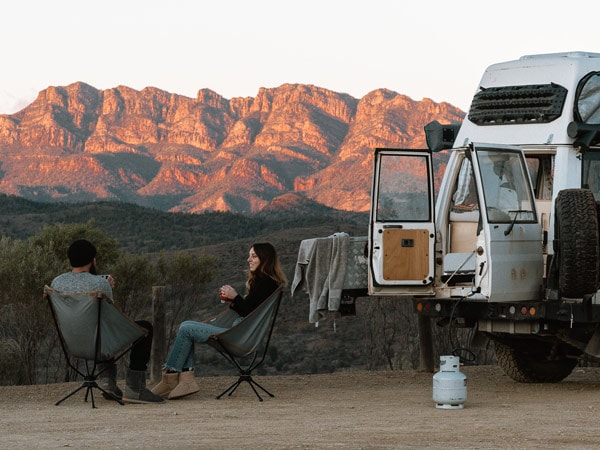
Bunyeroo Valley Lookout
Ikara-Flinders Ranges National Park is full of jaw-dropping spots to sit and take in the views. (Image: As We Wander)

You could spend a lifetime exploring every nook and cranny in the 95,000-hectare Ikara-Flinders Ranges National Park , but it’s worth slowing down every now to observe how the angle of the sunlight dramatically alters the colour of the rocks throughout the day. The 10 campgrounds spread throughout the park are ideal for campers keen to spot some of the local wildlife and take things at a more relaxed pace.

Among the pick of the bunch are Acraman, which is located in a saddle that fills with wildflowers each spring, and Trezona, which provides access to the geological wonders and rock wallaby colonies of Brachina Gorge.

The hike-in Wilcolo Campground is a beautiful spot to spend a few days, while Dingley Dell has limited shade but is just a short walk from the Perawurtina cultural site that is known for its many Adnyamathanha rock carvings.

Cost: Camping from $25 per night
Facilities: Long drop toilets, fire pits
4WD required: It varies – check individual site listings

2. Ikara (Wilpena Pound) camping
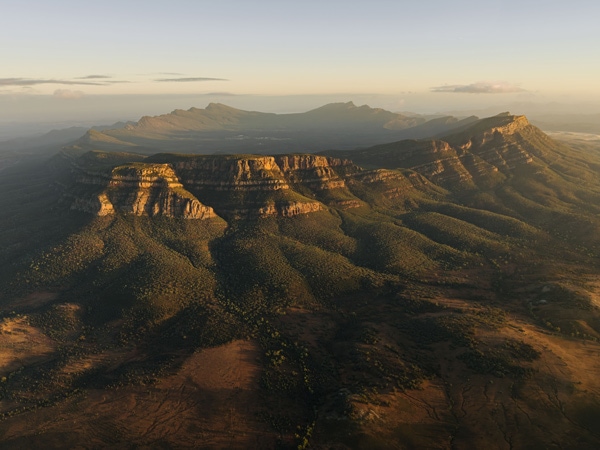
an aerial view of the Wilpena Pound
Ikara (Wilpena Pound) is stunning from above. (Image: Emile Ristevski)

With 40 powered sites and 300 unpowered sites scattered beneath groves of majestic river red gums, you’ll have your work cut out choosing the very best spot at Wilpena Pound Caravan Park .

Fortunately, all of them have excellent views of Ikara (Wilpena Pound), and their proximity to the entrance means that you can see the Flinders Ranges’ crown jewel in its best light on a morning or afternoon walk without having to worry about driving home in the dark. Wilpena Pound Resort also offers a range of cultural and scenic tours.

Cost: Powered sites from $50 per night, camping from $31
Facilities: Camp kitchen, amenity blocks, swimming pool, general store, wifi in communal areas
4WD required: No

3. Parachilna Gorge camping
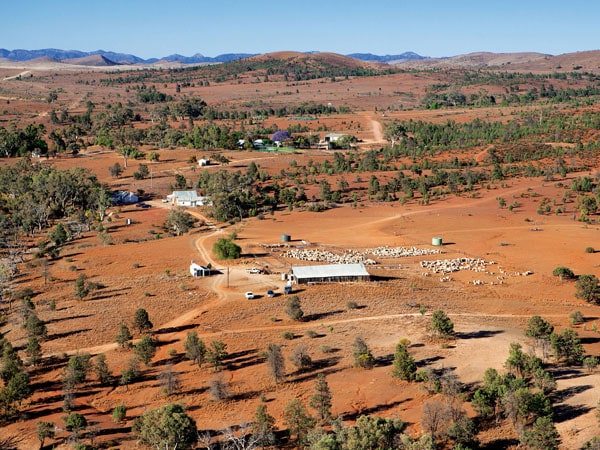
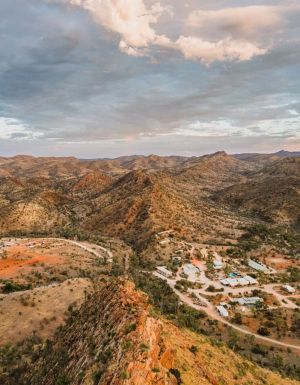
an aerial view of Angorichina Station
The nearby Angorichina Station is nestled within the hills. (Image: Angorichina Station)

Located just to the north of Ikara-Flinders Ranges National Park, this broad gorge scythes through the ranges from east to west. An unsealed road winding between sheer cliffs and around rocky peaks is one of the most accessible scenic drives in the region, and dozens of unmarked sites are spread out beside the road over several kilometres.

Emus, kangaroos, wallabies and an abundance of birdlife combine to make this among the most pleasant campsites in the region, though most of the gorge floor is subject to flooding and it is unsuitable for camping after rain.

There is no phone reception in Parachilna Gorge and campers need to bring their own water, food and firewood; the nearest store (and toilets) can be found at Angorichina Tourist Village, which also has powered and unpowered sites. If you’re looking for Blinman Pools camping, these are the two closest options.

Cost: By donation
Facilities: None
4WD required: No, but a high-clearance vehicle is highly recommended

4. Blinman camping
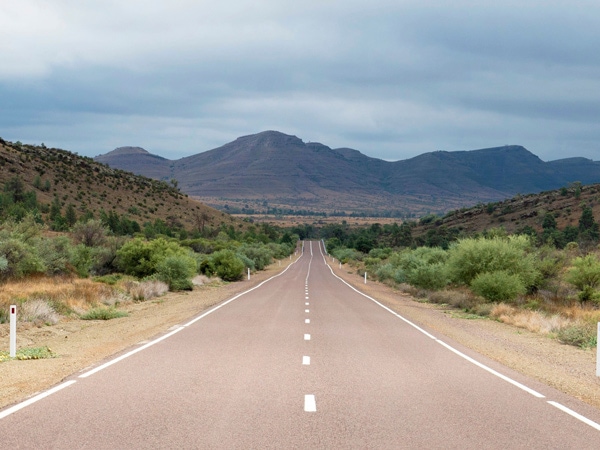
an empty road in Blinman
Soak up the surrounding landscape in Blinman. (Image: South Australian Tourism Commission)

There is no Blinman Caravan Park, so the closest option is ONYA Eco-Camping Park , three kilometres to the south. The self-sufficient campsites here are much quieter than most caravan parks, and the spacious sites are intentionally spread out so that visitors have plenty of room to take in the surrounding landscape.

An emphasis on protecting the natural landscape means there are no pets allowed, but the friendly owners run a range of activities, including children’s programs during the school holidays, as well as providing access to a community library stocked with books, DVDs and board games.

Cost: $20 per vehicle
Facilities: Shop, community library
4WD required: No

5. Arkaroola camping
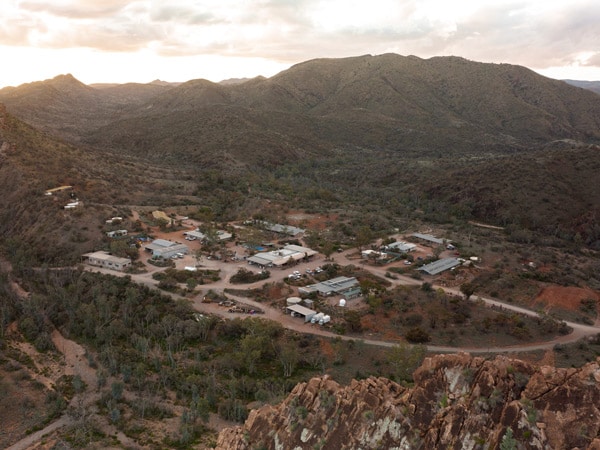
an aerial view of the Arkaroola Wilderness Sanctuary
Spread across Arkaroola Wilderness Sanctuary are the 300 hectares of bush campsites. (Image: Tourism Australia; South Australian Tourism Commission)

The tortuous bends, buckles and folds in the deep red rocks around Arkaroola Caravan Park  mean that every one of the 50 powered sites is blessed with an iconic outback view, as are the 300 hectares of bush campsites spread along the banks of a dry creekbed.

It’s not unusual to see kangaroos and emus wandering between the tents, and the abundance of walks, drives and tours in the region could keep you busy for a week. Because this is a remote, self-sufficient property, there are no dump facilities and campers should bring as much drinking water as possible.

Self-sufficient campers can also use a range of campsites in nearby Vulkathunha-Gammon Ranges National Park .

Cost: Powered sites from $25 per night, camping from $16
Facilities: Camp kitchen, amenity blocks, swimming pool, general store, restaurant, communal fireplace, wifi in communal areas
4WD required: No

6. Flinders Ranges glamping
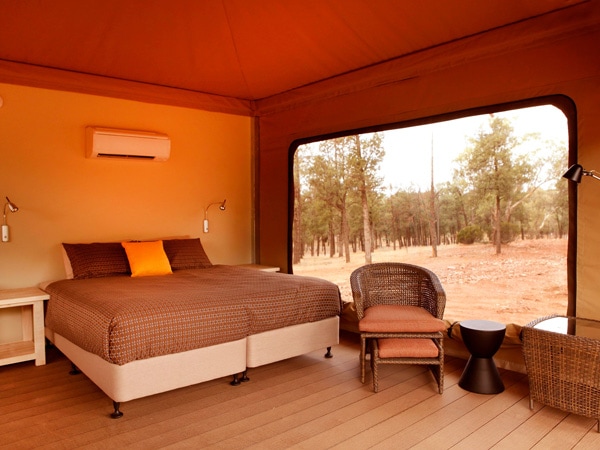
the bed inside the Ikara Safari tent
The safari-style tents make for a cosy abode close to nature. (Image: Anthology Travel)

If you want to feel close to nature but still need a few creature comforts, check into one of the 15 Ikara Safari Tents  near the Wilpena Pound Campground and you can enjoy the best of both worlds.

Put the kettle on and fend off the chill of cool outback nights as you sit around the fire pit and gaze up at the Milky Way, safe in the knowledge that a good night’s sleep awaits in a roomy suite with an ensuite and reverse cycle air-conditioning. The king beds can be split into two singles, while the supersized family tents can fit up to four guests.

On a station just outside Hawker, Flinders Bush Retreats  has a single glamping tent with a small kitchenette, composting toilet and wool blankets to keep you warm at night, plus a welcome bottle of sparkling to make the stars shine extra bright.

7. Rawnsley Park camping
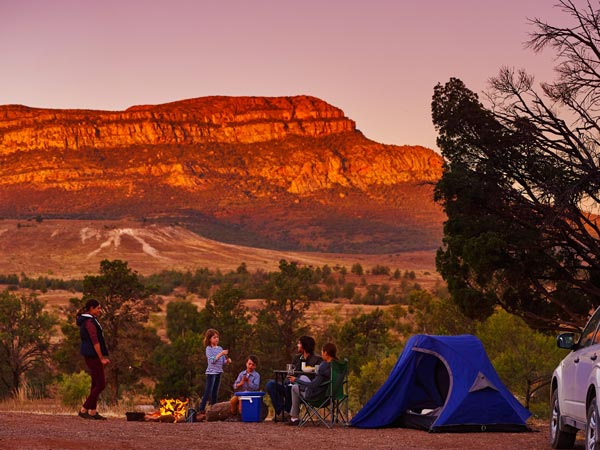
Camping Rawnsley Park Station
Camping at Rawnsley Park Station is an awe-inspiring experience. (Image: South Australia Tourism Commission)

Located directly beneath the imposing ramparts of Ikara (Wilpena Pound), Rawnsley Park Caravan Park  puts you in the heart of the action and makes an excellent base from which to explore the central Flinders Ranges.

More than 50 powered and unpowered sites are scattered among the native pines and river red gums surrounding the main facilities, while the more secluded bush camping sites allow you to escape the crowds and take in magnificent sunsets and sunrises in solitude.

Cost: Powered sites from $43 per night, camping from $30
Facilities: Camp kitchen, amenity blocks, swimming pool, shop, restaurant, paid pet-minding service
4WD required: No

Things to know before camping in the Flinders Ranges

When planning a Flinders Ranges camping trip, it’s important to remember that this is a remote region and many areas do not have mobile phone service. Inform someone of your plans and expected return date before setting out, and always carry several days’ worth of extra food and water.
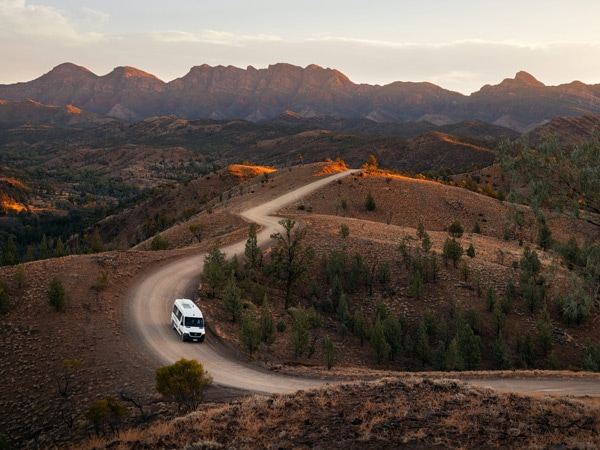
driving through Razorback Lookout, Flinders Ranges
Be prepared for all scenarios while camping in the Flinders Ranges. (Image: Thomas Quan)

Many gorges are prone to flash flooding, and dirt roads can be impassable after rains, so always keep an eye on the weather.

There is a total fire ban between 16 October and 15 April, and the season may be extended if conditions necessitate it.

Pets are not permitted in Ikara-Flinders Ranges or Vulkathunha-Gammon Ranges National Park.

For more inspiration and itinerary tips, read our travel guide to the Flinders Ranges.

Alexis Buxton-Collins
Alexis Buxton-Collins spent his twenties working as a music journalist and beer taster before somehow landing an even dreamier job as a freelance travel writer. Now he travels the world from his base in Adelaide and contributes to publications including Qantas, Escape, The Guardian and Lonely Planet. Alexis has never seen a hill he didn't want to climb and specialises in outdoor adventures (he won the 2022 ASTW award for best nature/wildlife story for a feature on Kangaroo Island). When he's not scouring South Australia for the newest wineries and hikes, he's looking for excuses to get back to spots like Karijini and Ningaloo.
See all articles
hero media

7 features of a quintessential Aussie road trip

No one does road trips like Australians. Make your journey perfect.

The humble road trip is a way of life in Australia, and it’s not the same here as it is anywhere else. Sure, you could fly, but then you’re missing out on the bonding time and priceless memories that get made along the way (good or bad, you’ll be sharing them for years to come). Not to mention, some of Australia’s most worthwhile and untouched places can only be accessed by road .

But how to ensure your road trip is quintessentially perfect? Why use this checklist, of course.

1. Start with the perfect vehicle

A woman sitting while reading inside Star RV Motorhomes spacious Polaris 6.
Relax with stunning views in a spacious motorhome. (Image: Demi Gavin)

I can tell you from experience, nothing will push even the most tight-knit group to devolve into chaos and fighting faster than a vehicle that isn’t up to the task of a proper road trip. Enter the premium options of Star RV Motorhomes.

They have a range of sizes to suit any group, from solo travellers and couples to families. And they’re designed to be easy to drive.

Take the Polaris 6 , for example. This light-filled sanctuary of comfort has plenty of space for bigger groups. Three double beds, a shower and toilet, and an extendable awning (with room to move between them all) make it perfect for exploring Australia.

Couples might prefer the Polaris 2 with a fully self-contained bathroom, kitchen and a bed for two that transforms into comfortable seating during the day. Both models are pet-friendly.

2. Pack the tastiest snacks

A couple having a picnic beside Star RV Motorhomes.
Make use of the spacious storage in your Star RV.

Road trip snacks are an Australian art. Some, you’ll need to pick up along the way. We’re talking the iconic Chico Roll, choccie milk and maybe a sneaky potato scallop (or several).

Others, you can pack ahead of time to save on time and, usually, money. Thankfully, Star RV Motorhomes all come with plenty of storage space, so your snacks can last as long as your road trip. Think fresh fruit and other supplies to cook lunch and dinner along the way. Plenty of lollies and maybe even some soft drinks and Red Bulls for the road.

Not to mention, many Star RV motorhomes have a kitchen onboard, complete with a full-size kitchen, so you won’t need to lug an esky around.

3. Bring your pet for the ride

A child and its pet inside Star RV Motorhomes.
Travel Australia with your four-legged co-pilot. (Image: Erin Bacchi)

Man’s best friend is essential for a truly Aussie road trip. Pet-friendly Star RV Motorhomes not only mean your dog (or cat, if they enjoy the open road more than mine do) can experience Australia with you, but that you save a small fortune on pet sitters or dog hotels.

4. Prepare the perfect soundtrack

Two people having coffee with a view.
Chase the journey and the destination.

No ifs, ands or buts, the perfect soundtrack can make or break a road trip. It’s really up to you, but we recommend plenty of Australian classics. Cold Chisel never hits quite the same as when you’re listening to it with only gumtrees and kangaroos for company.

Of course, this means you’ll also need a good sound system to listen to your carefully curated tunes on. Star RV motorhome sound systems allow you to connect your device and play your own music. Goodbye, spotty radio reception.

5. A spacious tent and camping gear

A woman sitting inside Star RV Motorhomes with a view of the lake in the background.
Enjoy soft linens and space to stretch. (Image: Cariund Hannes)

If there’s one thing that a road trip can guarantee, it’s a campsite or several. So you’d better source a good sturdy tent, sleeping back, and a camping mattress that probably won’t help much – but it’s better than the ground.

Or, just hire a motorhome so your vehicle is also your bed, and comfort is a priority (goodbye foam camp mattresses) with linens provided. And you’ll have room to unpack and move around. Heaven.

6. Plan your toilet breaks

Typically, an Aussie road trip means pulling over at a good bushy area or finding a horrific pit toilet on the side of the road – the smell of which will stay with you forevermore. If you’re planning to camp, better pack that handy shovel and find a good, bug-free place to dig your own loo hole.

To avoid that hassle (and smell), forgo the shovel and hire a motorhome with an onboard toilet. When the toilet comes with you, there are no emergency roadside stops. Plus, it’s a whole lot fresher.

7. Pick the ultimate destination

Aerial view of the Polaris 6 cruising along a coastal road with sweeping beach views.
Hit the road, Aussie-style. (Image: Matt Finch)

Of course, the journey is half the fun. But the other half is an incredible destination. With accommodation and transportation sorted out with one motorhome, you have the flexibility to choose a gorgeous view for the night (or several).

There are endless views to choose from, like the rugged cliff faces of Queensland’s Carnarvon Gorge National Park. Carnarvon Gorge camping area (near the visitor area) and the Big Bend walkers’ camp both have bushy surrounds and a trail to the gorge itself.

Or Lake Argyle, Western Australia‘s largest man-made freshwater reservoir. Find the only dedicated camping and caravan park at Lake Argyle Resort.

Meanwhile, Mount Buffalo National Park in Victoria is prolific for its wildlife. Wander through snow gum forests and keep an eye out for wombats, Australian kestrels and more. There are several camp options here.

Start planning your Australian road trip adventure (and get 15 per cent off on any Star RV motorhome rental in Australia) at starrv.com/au .