hero media

The only Aussie destination on Lonely Planet’s Top Places Hotlist 2026

If there could only be one, this under-the-radar region deserves it.

Lonely Planet ’s annual Top Places Hotlist has just dropped, officially naming the 25 destinations set to dominate every traveller’s bucket list in the year ahead. The 2026 global round-up includes a variety of countries and continents, but only one Aussie location made the cut – and it’s a worthy winner.

Which Aussie destination made the list?

So, who snagged Australia’s golden ticket onto the global stage? It may not be where you’d expect – unless you’ve been there yourself. In which case, it makes perfect sense.

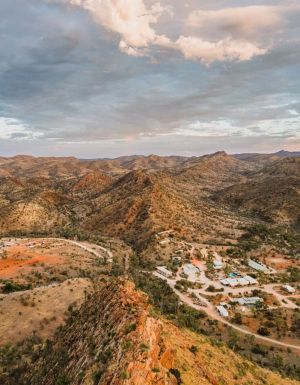
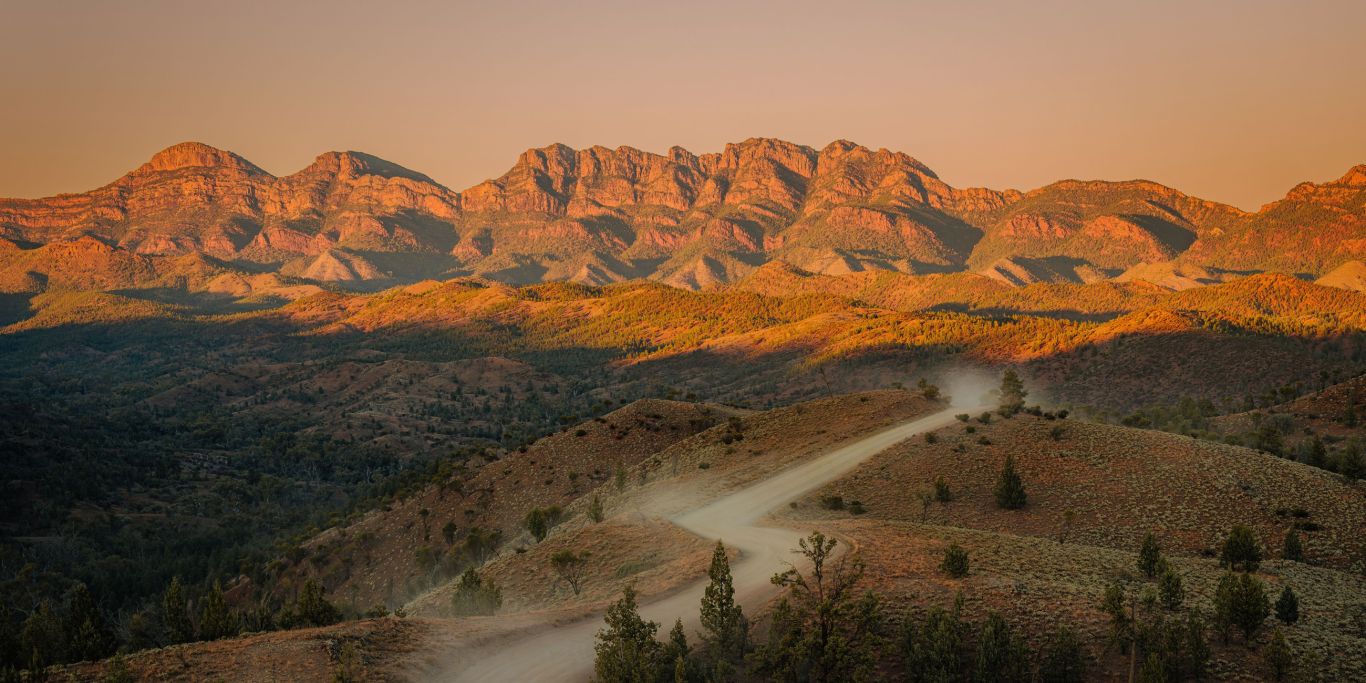
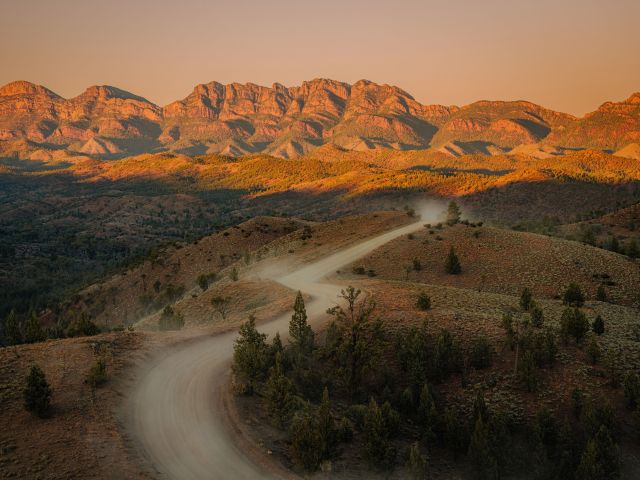
Tucked away in the heart of South Australia, Ikara-Flinders Ranges was named on the Top Places Hotlist for 2026. Not only that, it made the top five, coming in fourth place after Botswana, Peru and Jeju Island in South Korea.
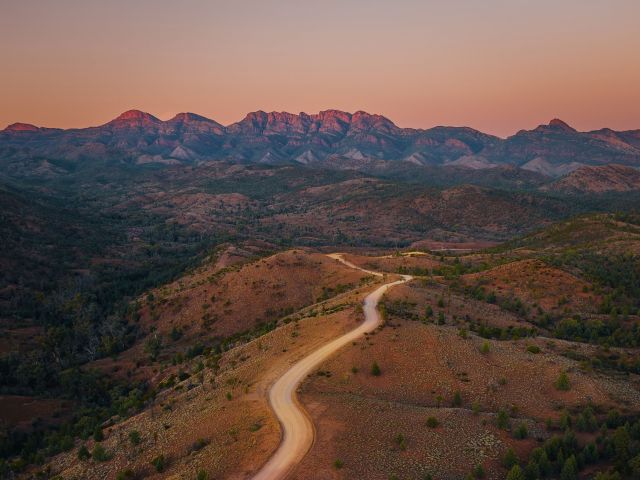
Ikara-Flinders Ranges, South Australia
Ikara-Flinders Ranges stole fifth place on Lonely Planet’s hotlist. (Image: Emile Ristevski)

“I’m ecstatic to see the epic Ikara-Flinders Ranges and wider South Australian outback on our prestigious list. It’s one of the world’s most breathtaking environments, perfectly primed for the world to discover in 2026," says Chris Zeiher, Lonely Planet’s senior director of trade sales and marketing.

The ancient landscape has long flown under the radar, often overshadowed by other Aussie outback icons like Uluru-Kata Tjuta and Watarrka national parks. But its beauty is just as astounding, its history just as rich and its cultural significance just as deep – all shaped by a geological landscape entirely its own.

How to experience Ikara–Flinders Ranges

Around a five-hour drive from Adelaide, Ikara-Flinders Ranges National Park spans 934 square kilometres across the South Australian outback. While its terrain is vast and remote, it’s a place of natural wonder and ancient culture.
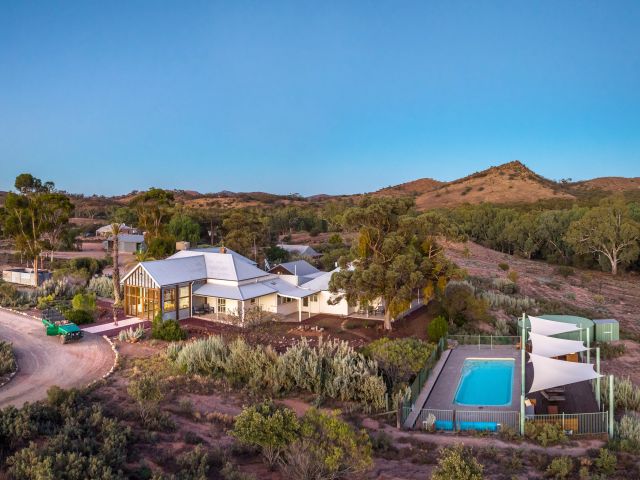
Arkaba Homestead, South Australia
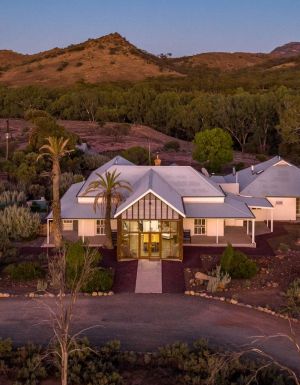
Arkaba Homestead is a Luxury Lodge of Australia (Image: Isaac Forman)

One of the best ways to experience the Ikara-Flinders Ranges is the three-day Arkaba Walk, one of the Great Walks of Australia. Guests will be led by an experienced guide, learning about the region’s wildlife, conservation efforts and cultural heritage. Along the way, you’ll sleep in bush camps and enjoy chef-prepared meals before spending the final night at Arkaba Homestead – a Luxury Lodge of Australia .

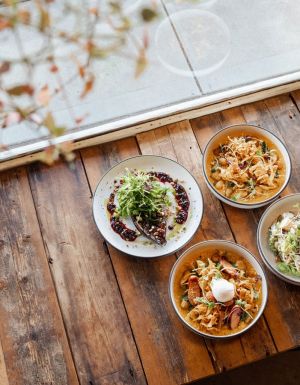
Another great option is a stay at Discovery Resorts – Wilpena Pound , the only accommodation within the national park itself. The site includes 15 glamping tents, 60 resort-style rooms and a large campground, as well as plenty of dining options, a general store and a swimming pool.

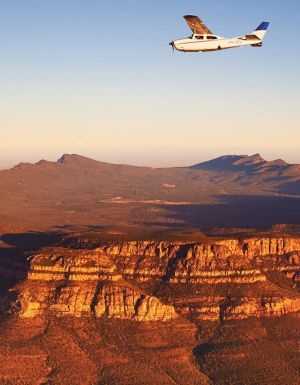
The best part? As its name suggests, the resort is located near Wilpena Pound, a grand natural amphitheatre that has to be seen to be believed. Join a hike led by a local Adnyamathanha guide to explore the region on foot or take a scenic helicopter ride over the 800-million-year-old crater.
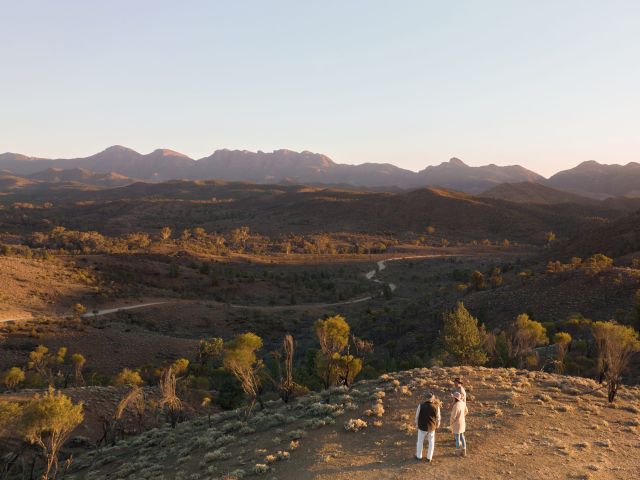
Ikara-Flinders Ranges, South Australia
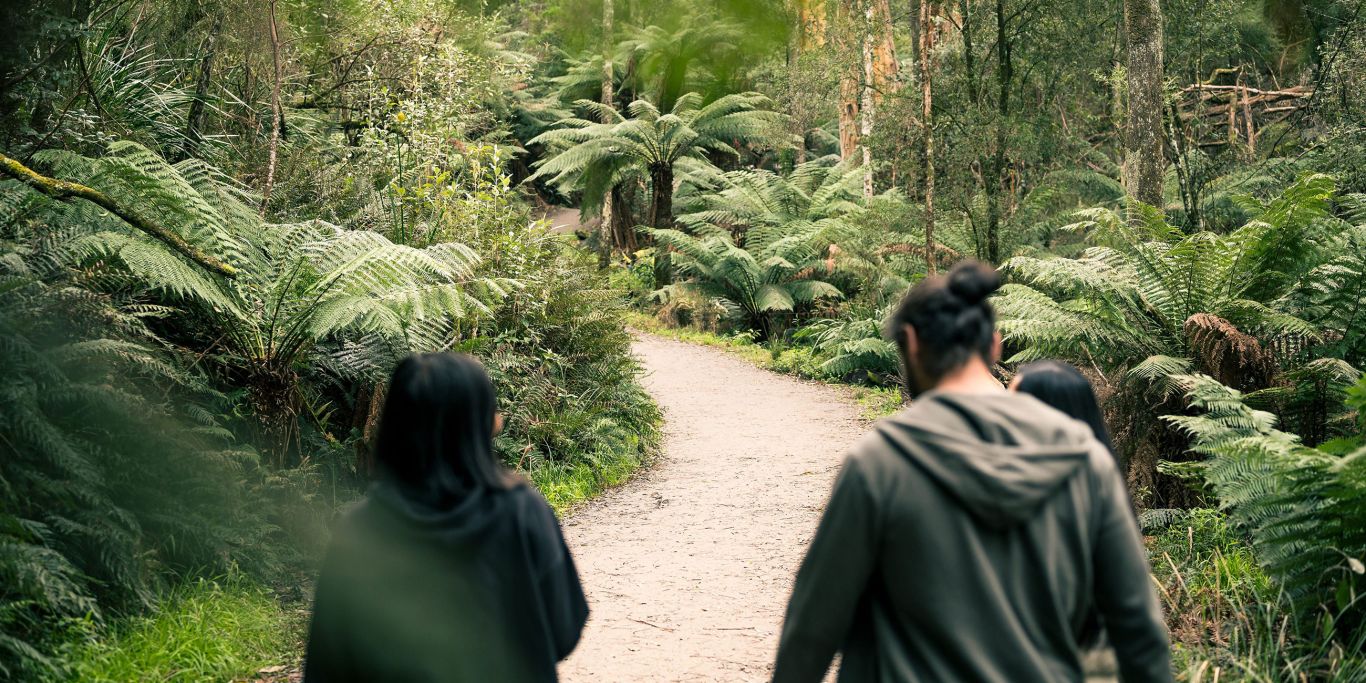
Explore the region on a guided hike. (Image: Tourism Australia/South Australia Tourism Commission)

If you’re just visiting for the day, there are four walks and 14 hikes with­in the park, all self-guided. The one-kilometre Living with Land Walk is a great option for beginners, taking just two hours to complete. Looking for something a little more in-depth? Try the eight-kilometre Trezona Hike, which is a four-hour return trip.

For those chasing a real challenge, tackle the Heysen Trail , a 1200-kilometre trek from Ikara-Flinders Ranges to the Fleurieu Peninsula.

What to remember when visiting

Long before it became a national park, the Ikara-Flinders Ranges was – and remains – home to the Adnya­math­anha people, the land’s Traditional Owners. Their connection to Country stretches back tens of thousands of years, with ancient rock paint­ings, engrav­ings and middens still present across the landscape.
Ikara-Flinders Ranges, South Australia
The Adnya­math­anha people are the land’s Traditional Owners. (Image: Emile Ristevski)

Today, the park is co-man­aged by a board of Adnya­math­anha and Depart­ment for Envi­ron­ment and Water representatives to ensure its history is preserved and its future conserved. Traditional Owners still care for Country here, and the state government manage water and energy resources, as well as maintains natural and built heritage.

While the entire park holds deep cultural significance, certain sites are considered especially sacred. In these areas, access may be restricted or special protocols may be in place to protect them. Visitors are asked to respect the wishes of Traditional Owners and to treat the land with care and reverence.

Lonely Planet’s best experiences list

But wait – there’s more! Alongside its Top Places Hotlist, Lonely Planet also released its Top Experiences Hotlist for 2026 – and it features not one, but two Aussie mentions.

The list, which highlights 25 must-have experiences for travellers in the upcoming year, includes Victoria’s Bathing Trail in 10th place and Melbourne’s foodie scene in 17th place – worthy additions indeed.

Taylah Darnell
Taylah Darnell is Australian Traveller's Writer & Producer. She has been passionate about writing since she learnt to read, spending many hours either lost in the pages of books or attempting to write her own. This life-long love of words inspired her to study a Bachelor of Communication majoring in Creative Writing at the University of Technology Sydney, where she completed two editorial internships. She began her full-time career in publishing at Ocean Media before scoring her dream job with Australian Traveller. Now as Writer & Producer, Taylah passionately works across both digital platforms and print titles. When she's not wielding a red pen over magazine proofs, you can find Taylah among the aisles of a second-hand bookshop, following a good nature trail or cheering on her EPL team at 3am. While she's keen to visit places like Norway and New Zealand, her favourite place to explore will forever be her homeland.
See all articles

This luxe trawler tour is redefining Victoria’s seafood experience

Victoria’s ‘mussel capital’ is the source of exceptional shellfish used by top chefs far and wide. Step aboard a beautifully refurbished trawler to see how these plump and juicy bivalves are sustainably cultivated.

A curtain is slowly winched from the placid, teal waters just off Portarlington , like a floating garland beside our boat. The ropes heave with blue mussels, the star attraction of our tour. But as we reach to pluck our own, it’s quickly clear they’re not alone; a mass of weird and wonderful creatures has colonised the ropes, turning them into a living tapestry. ‘Fairy’ oysters, jelly-like sea squirts, and tiny, wriggling skeleton shrimp all inhabit this underwater ecosystem.

We prize our bivalve bounty from the ropes, and minutes later the mussels arrive split on a platter. The plump orange morsels are served raw, ready to be spritzed with wedges of lemon and a lick of chilli as we gaze out over the bay. They’re briny, tender and faintly sweet. “This wasn’t originally part of the tour,” explains Connie Trathen, who doubles as the boat’s cook, deckhand and guide. “But a chef [who came onboard] wanted to taste the mussels raw first, and it’s now become one of the key features.”

A humble trawler turned Hamptons-style dreamboat

inspecting bivalve bounty from the ropes
Inspecting the bounty. (Image: Visit Victoria/Hannyn Shiggins)

It’s a crisp, calm winter’s day, and the sun is pouring down upon Valerie, a restored Huon pine workhorse that was first launched in January 1980. In a previous life she trawled the turbulent Bass Strait. These days she takes jaunts into Port Phillip Bay under the helm of Lance Wiffen, a fourth-generation Bellarine farmer, and the owner of Portarlington Mussel Tours . While Lance has been involved in the fishing industry for 30-plus years, the company’s tour boat only debuted in 2023.

holding Portarlington mussels
See how these plump and juicy bivalves are sustainably cultivated.

It took more than three years to transform the former shark trawler into a dreamy, Hamptons-esque vessel, with little expense spared. Think muted green suede banquettes, white-washed walls, Breton-striped bench cushions, hardwood tables, bouquets of homegrown dahlias, and woollen blankets sourced from Waverley Mills, Australia’s oldest working textile mill. It’s intimate, too, welcoming 12 guests at most. And yet there’s nothing pretentious about the experience – just warm, down-to-earth Aussie hospitality.

As we cruise out, we crack open a bottle of local bubbles and nibble on the most beautifully curated cheese platter, adorned with seashells and grey saltbush picked from the water’s edge that very morning. Australasian gannets soar overhead, and I’m told it’s not uncommon for guests to spot the odd seal, pod of dolphins, or even the occasional little penguin.

The sustainable secret behind Victoria’s best mussels

blue mussels off Portarlington
Blue mussels sourced just off Portarlington.

Connie and Lance both extol the virtues of mussels. They’re delicious. A lean source of protein and packed with omega-3 fatty acids, vitamin B12, iron, selenium, and zinc. They’re cooked in a flash (Connie steams our fresh harvest with cider and onion jam). And they’re also widely regarded as one of the most sustainable foods in the world.

Portarlington mussels with lemon and chilli
Mussels served with lemon and chilli.

“Aquaculture is [often] seen as destructive, so a lot of our guests are really surprised about how environmentally friendly and sustainable our industry is,” Lance says. “[Our mussels] would filter 1.4 billion litres of water a day,” he adds, explaining how mussels remove excess nitrogen and phosphorus from the water. “And through biomineralisation, we lock carbon into mussel shells.”

a hand holding a Portarlington mussel
Mussels are a sustainable food.

Despite their glowing list of accolades, these molluscs have long been seen as the oysters’ poorer cousins. “It was a really slow start,” explains Lance, who says that in the early days of his career, “you could not sell mussels in Victoria”.

But word has slowly caught on. Chefs as globally acclaimed as Attica’s Ben Shewry and even René Redzepi of Noma, Denmark, have travelled to these very waters just to try the shellfish at the source, sharing only the highest praise, and using Lance’s mussels in their restaurants.

guests sampling Portarlington mussels onboard
Sampling the goods onboard. (Image: Visit Victoria/Hannyn Shiggins)

According to Lance there’s one obvious reason why the cool depths of Portarlington outshine other locations for mussel farming. “The water quality is second to none,” he says, noting how other regions are frequently rocked by harvest closures due to poor water quality. “We grow, without a doubt, some of the best shellfish in the world.” And with Lance’s bold claims backed up by some of the industry’s greatest names, perhaps it won’t be much longer until more Aussies uncover the appeal of Portarlington’s mussels.