Located 2600 km north-west of Perth and closer to Asia than to mainland Australia, Christmas Island is unlike anywhere you’ve ever visited before.
Christmas Island, unfairly, is no stranger to bad headlines. So if the only thing you know about this tropical island in the middle of the Indian Ocean is what you’ve read in the news, read on to find out why – between its luxury eco-retreat, unique wildlife encounters and secret swimming spots – it might just be Australia’s best-kept secret, and one of the most unforgettable places you’ll ever visit.
1. It’s a tropical jungle paradise
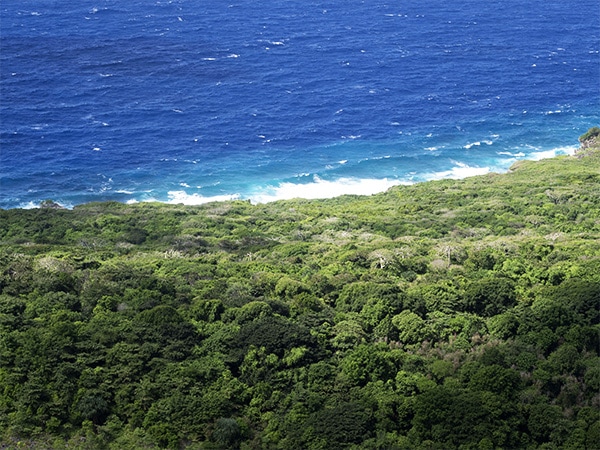
With a tropical climate that enjoys balmy temperatures in the mid-20s year-round and a landscape characterised by lush jungle and an emerald-green coastline, Christmas Island is a true island paradise. It’s home to a dazzling array of rare and unusual birds and a crazy numbers of crabs, not to mention secret swimming spots and jungle waterfalls – and 63 per cent of its footprint is designated national park.
Tropical reefs teeming with life lie beyond the shoreline; with water temperatures bobbing around a clement 28°C, they make for some of the best diving and snorkelling spots you’ll find anywhere.
2. It’s home to one of Australia’s most remote and exclusive eco-lodges
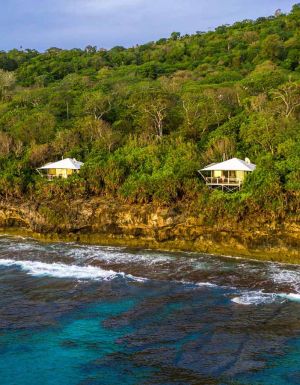
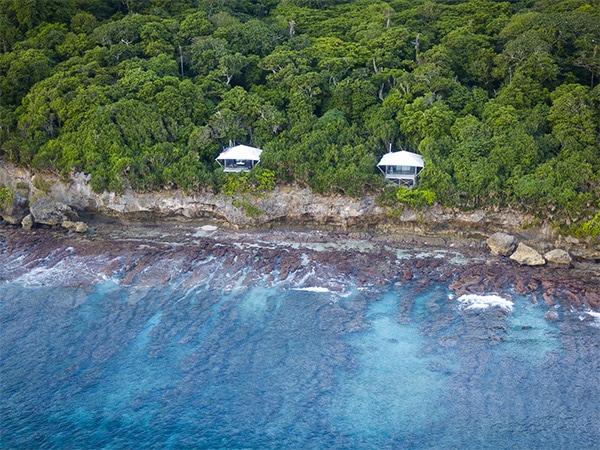
Swell Lodge is Christmas Island’s first luxury eco-retreat, set deep within the jungle of Christmas Island National Park on the edge of a cliff-side that drops away into the Indian Ocean. Its two solar-powered eco chalets are completely secluded from each other and thoughtfully designed in suitably natural and oceanic tones.
The pièce de résistance in each eco-chalet is an expansive private deck that provides your very own audience with the Indian Ocean – with its mighty swell and mesmerising sunsets.
Hire a car to explore the nature trails, waterfalls, hidden beaches and swimming holes around the island, as well as the magical wetland area known as the Dales (a popular crab hangout).
You can find more Christmas Island accommodation here.
3. It’s closer to Asia than mainland Australia
A trip to Christmas Island lets you feel like you’re leaving the country without having to think about visa requirements or plug adaptors: a speck in the Indian Ocean 2600 kilometres north-west of Perth, this Australian territory is closer to Asia than to mainland Australia; its nearest neighbour is Java, just 360 kilometres away. A direct flight from the WA capital takes just under four hours (and departs from the international terminal – all part of the adventure).
Virgin Australia runs flights twice a week from Perth.
4. It has some of Australia’s best – and most hidden – beaches
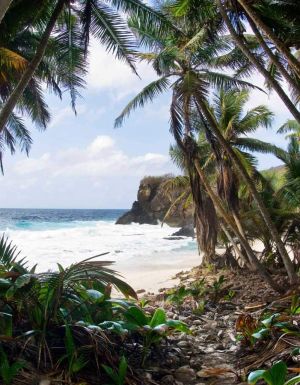
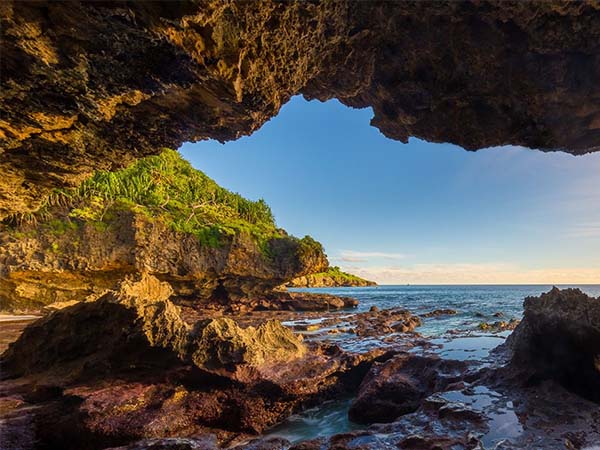
Secluded, fringed by coconut palms and only accessible via a forest boardwalk, Dolly Beach on Christmas Island’s east coast was voted seventh best beach in Australia by Tourism Australia beach ambassador Brad Farmer in 2017. And it’s just one of many similarly hidden gems on the island.
While its 80-kilometre coastline is dominated by an almost continuous sea cliff, it gives way to some shallow bays and a series of small and impossibly pretty sand and coral shingle beaches. There’s even one so petite, Merrial Beach (only accessible at low tide), that it comfortably accommodates a couple of people at a time; local ‘law’ dictates that if you already see a car parked at the trail’s entrance, drive on.
5. There are secret swimming spots to discover
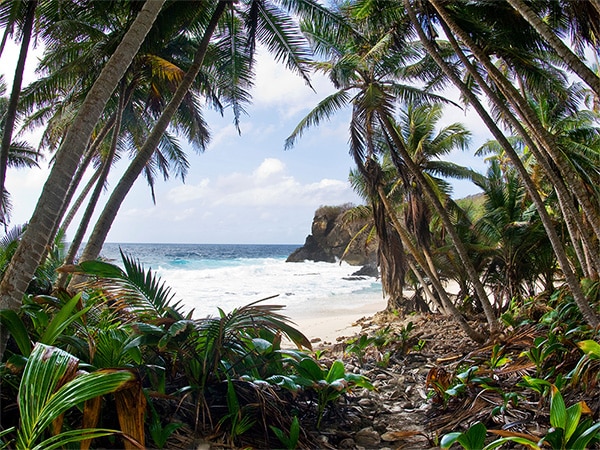
One of the joys of a trip to Christmas Island is getting to experience its myriad secret swimming holes, from a grotto associated with Chinese legend to Hughs Dale Waterfall (which makes not so much for a swimming spot as it does a rainforest shower spot).
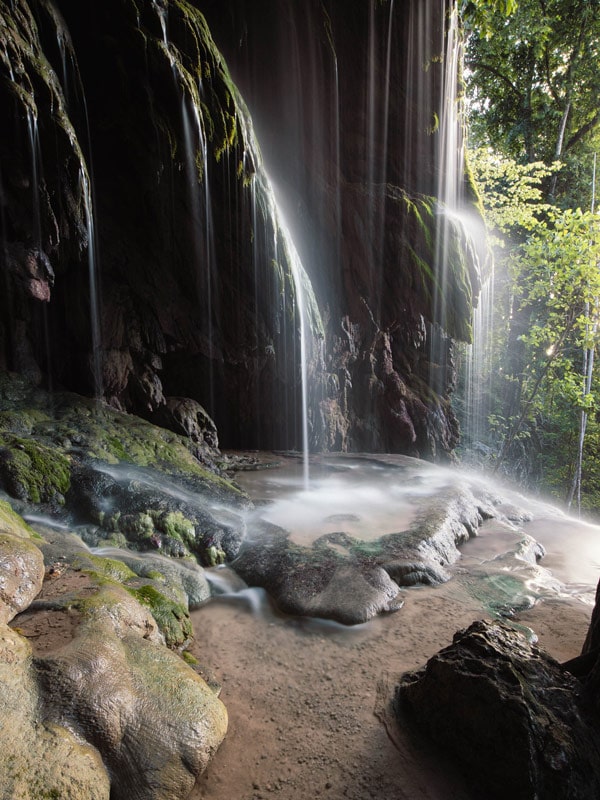
Take the mostly easy 1.5-kilometre walk through the rainforest along a boardwalk to get to the Hughs Dale Waterfall. This waterfall is set within the Dales, a unique wetland ecosystem that is fed from streams that bubble up from underground caves that flow into the ocean and have resulted in pooling water that has hewn a series of gorges into the landscape over time.
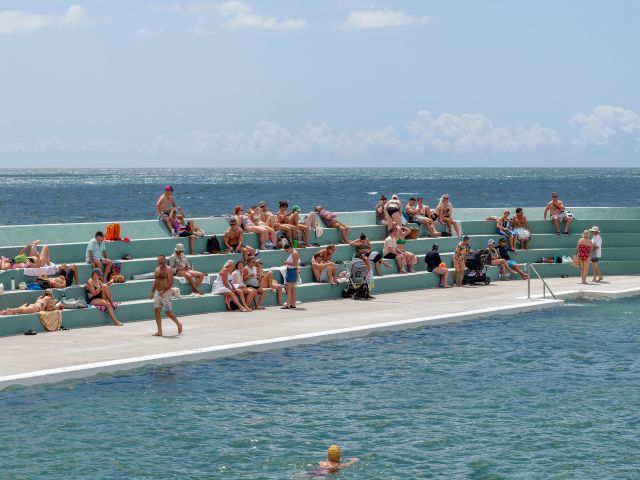
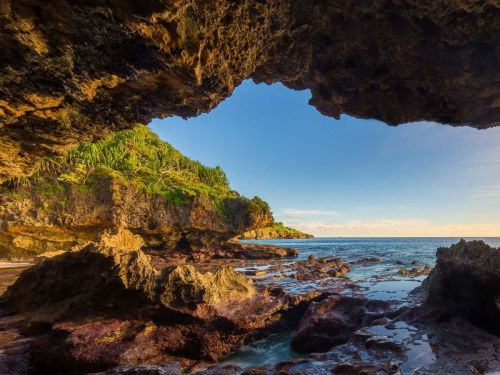
The Grotto, a sandy-floored hidden pool drenched with streaks of sunlight flowing in from the entrance of the cave, is equally magical and just a 10-minute drive from the Settlement. Then there are the island’s many beaches to explore; put Lily Beach at the top of your list, it is surrounded by cliffs on both sides and the at low tide the ocean recedes to reveal a collection of pretty rock pools to explore.
6. Christmas Island has some of the world’s best snorkelling and diving
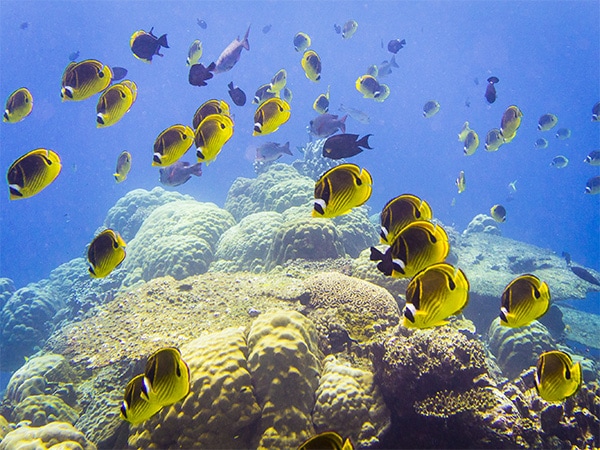
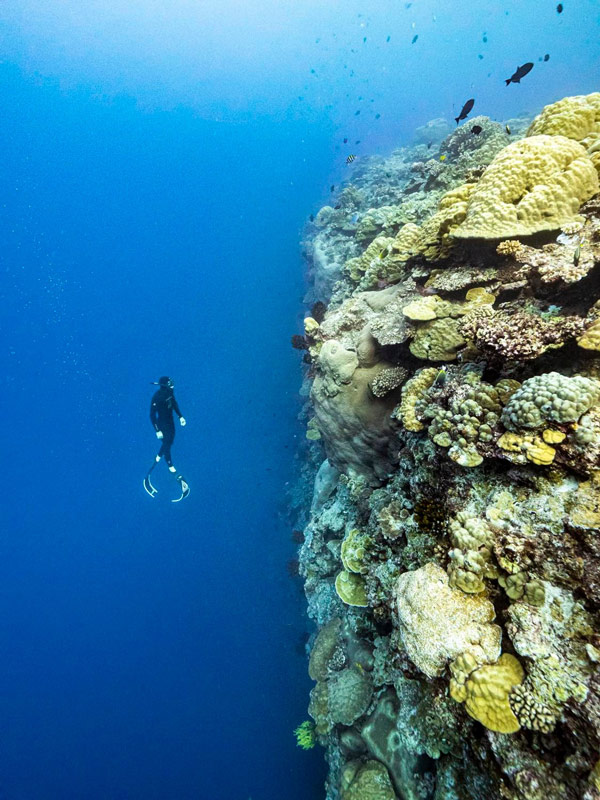
Ringed by tropical reef, Christmas Island erupts dramatically from the edge of the Java Trench, the Indian Ocean’s deepest point – and with practically no coastal shelf, this means the water plummets to a depth of about 500 metres not far offshore, which means you don’t have to sail (or swim) very far to find some spectacular diving walls. All this combines to make for some of the best snorkelling and diving conditions in the world.
Take a day trip out with Christmas Island Wet ‘n’ Dry Adventures to explore untouched corals and shipwrecks and meet all manner of tropical fish including surgeon fish, wrasse, butterfly fish and giant trevally. You might even spot dolphins, sea turtles, and, between November and April, the majestic whale shark.
7. You can see crabs all year round. Lots of ’em.
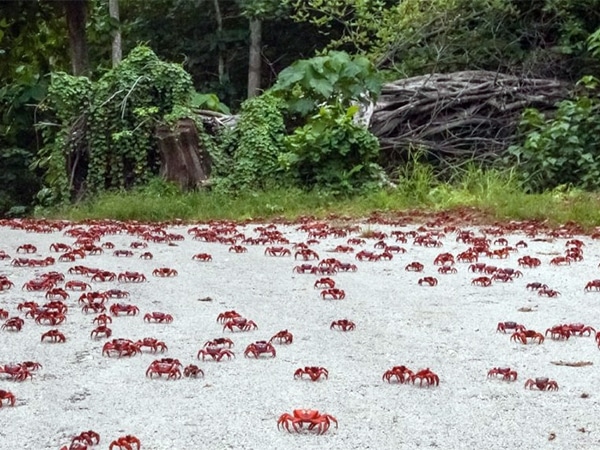
You might have heard of the annual red crab migration that takes place on Christmas Island and was made famous by Sir David Attenborough; the naturalist has described witnessing this phenomenon while shooting a documentary in 1990 as one of his greatest TV moments.
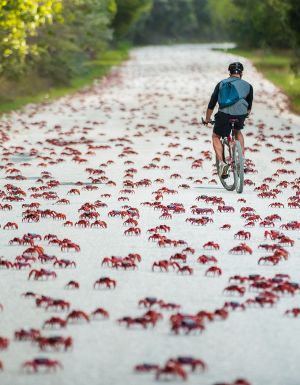
An estimated 40 to 50 million bright red land crabs live in shady spots all over the island and every year, with the first rainfall of the wet season, they start their merry march across the island to the ocean to breed – swarming across roads, streams, rocks and beaches and turning them all into blankets of red. The migration (which can happen anytime between October and January) is the island’s biggest tourist attraction but if your visit doesn’t coincide, rest assured you’ll still see crabs. Lots of ’em.
In fact, their proliferation contributes to a sense of ‘island time’ – the time it takes you to drive anywhere is dependent on how many crabs you must carefully navigate around and gently sweep off the road (your Swell Lodge hosts will show you how). In fact, you get so used to this idiosyncratic island ritual that it makes going to home to crab-free roads a rather strange sensation at first.
8. But it’s not all about the red crabs
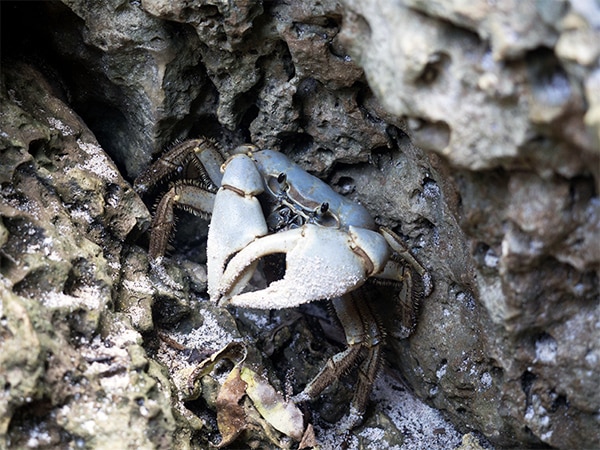
The red crab is just one of 14 species of land crab that lives on Christmas Island. There’s also the endemic Christmas Island blue crab – with its beautiful sky-blue hues – and the coconut crab, the largest land-living arthropod in the world that’s also known as the robber crab on account of its thieving tendencies. Christmas Island hosts the largest and best-protected population of these magnificent creatures in the world.
9. It’s a birdwatcher’s paradise
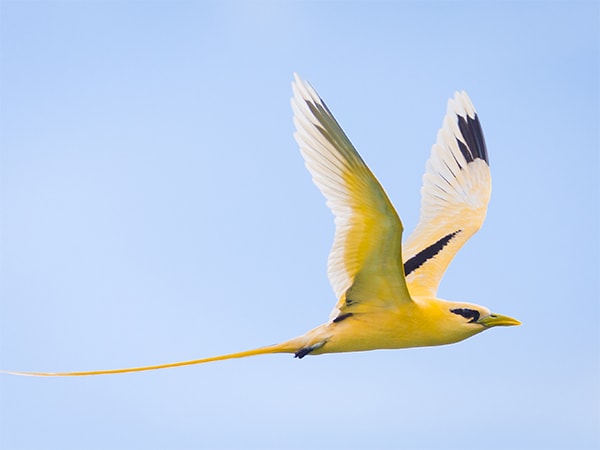
People flock (pun intended) from around the world to catch sight of Christmas Island frigatebird patrolling the sky, the rarest of its kind in the world, and the Abbott’s booby, a species of the seabird that only breeds here on the island. There are hundreds of bird species here, with seven of the 13 land birds endemic to the island. Watch out for the elegant golden bosun, the melodious Christmas Island thrush and the elusive Christmas Island hawk owl.
One place you’re all but guaranteed a sighting of an Abbott’s booby, or one of the island’s other feathered friends, is during feeding time at the volunteer-run bird rehabilitation centre at the Parks Australia headquarters.
10. And a natural scientist’s dream, too
With so many endemic species, Christmas Island is considered the Galápagos of the Indian Ocean; you’ll meet plenty of PhD students out here researching its weird and wonderful fauna. Their efforts are focused on the Pink House, a research station in the middle of the rainforest that includes a reptile house and Lizard Lounge, which is open to tourists every Wednesday.
Here, Parks Australia is busy breeding the blue-tail lizard, which is extinct in the wild, and other endemic reptiles
11. Christmas Island is a melting pot of cultures
The island is home to a multicultural community that harmoniously blends Buddhist, Christian, Taoist and Muslim residents. The foundation of this melting pot was laid in the late 19th century, when Britain annexed Christmas Island to claim its valuable phosphate deposits and migrant workers, including Chinese, Malays and Sikhs, arrived from overseas to staff the mine and its operations.
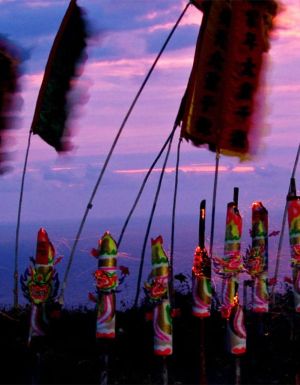
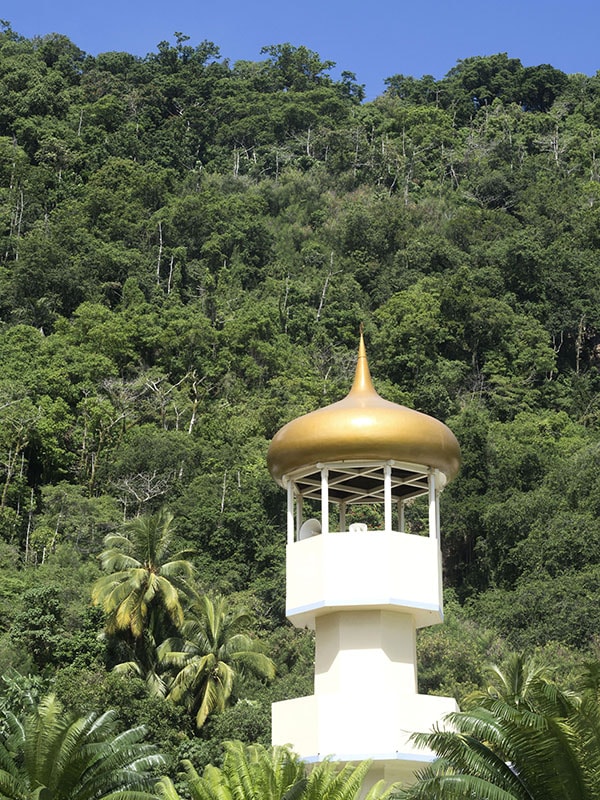
The island became an Australian territory in 1958 and today its 2000-strong population, focused largely on the settlement at Flying Fish Cove, is a mixture of Chinese and Malay Australians as well as people from mainland Australia. Watch out for the Taoist temples and shrines that overlook the ocean, and the gleaming mosque in Kampong, the island’s traditionally Malay neighbourhood.
12. It’s got one of the world’s most unique golf courses
This one’s for those who like their nine-hole golf course with a view. Australia’s northernmost golf course is located among palm trees and tropical rainforest with a sweeping view of the Indian Ocean. Just watch out for robber crabs trying to pinch your golf ball. Established in 1955, the golf course hosts the Christmas Island Golf Open every year in May.
13. There’s even an open-air cinema
Cap off your unique island experience by watching a movie in the balmy open-air of Christmas Island Outdoor Cinema. Established in the ’80s, this community-based organisation is run by volunteers and screens new-release and cult-classic movies at 7.30pm every Saturday. Tickets are just $5 a pop for adults and $2 for children (up to 17 years), and there’s a kiosk, too, selling choc tops, popcorn and other snacks.
14. You can stopover in the Cocos Keeling Islands
Get two holidays for one when you visit Christmas Island by stopping over in the Cocos Keeling Islands – another external Australian territory in the Indian Ocean, about halfway between Perth and Sri Lanka.
Of the two return flights between Perth and Christmas Island a week, one leg of each goes via the Cocos Keeling Islands. This atoll of 27 islands, of which only two are inhabited (with a tiny community of about 600 Cocos Malay people), is a perfect complement to a stay on Christmas Island. Both fall into tropical paradise territory: whereas Christmas Island is all wild jungle and dramatic sea cliffs, the Cocos (Keeling) Islands are all long stretches of white-sand beaches fringed by lazily swaying palm trees.
15. Christmas Island is a freediver’s dream
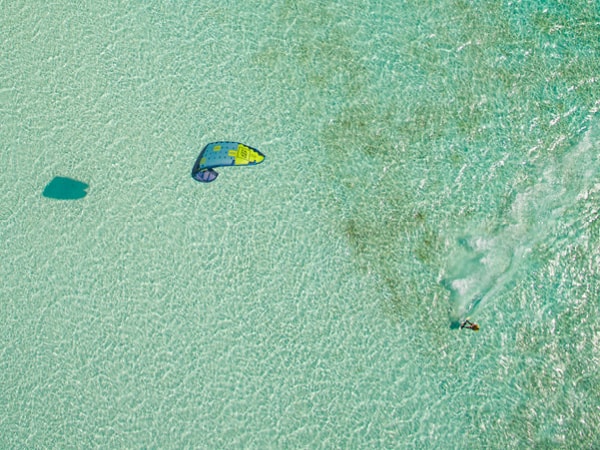
A dreamy destination for both the professional freedivers and for those wanting to learn the skills to dive beneath the surface on one breath. Australian freediving champion and AIDA/Molchanovs instructor David Mulheron, has a passion for teaching others to freedive. Christmas Island is blessed with crystal clear water, incredible marine life and freedivers are blessed with the luxury of the reef dropping off only a short swim from shore. You won’t believe what you can see in just one breath.
Whether you are a complete newbie or are fine-tuning your skills, you will learn techniques in a short period of time that will leave you feeling confident and in awe of what your body is capable of. Our tip would be to schedule your freediving course for the first two days of your trip, that way you can continue to improve your skills every day for the rest of your visit to this remote slice of paradise.
Read our guide to Christmas Island for more about this unique Indian Ocean destination.