Pearls of the sky: Western Australia’s top stargazing

hero media
Western Australia is on track to become the world’s top destination for stargazing – from its regional towns, remote islands and even its capital city.

The Milky Way sparkles above Western Australia on a clear and moonless night. Mirroring the pearls found underwater around the state’s isolated islands, millions of stars twinkle across the inky-black sky.

Peering up at this glittery galaxy from aboard a cray-fishing boat, we can see it all. The Southern Cross shines brightest, along with planets that are visible to the naked eye.

Astro Cruise

Donna Vanzetti, director of Star Tracks Astro Tours , has been invited on the inaugural Astro Cruise with Eco Abrolhos  to lead stargazing sessions at sea and on land. Using a green laser pointer, she highlights Indigenous constellations formed by the dark spaces between stars, such as the Emu in the Sky and the Hopping Kangaroo.

“Our First Nations people have used the night sky for more than 60,000 years. They used it as a calendar, for navigation, and as a storyboard for Dreamtime," Vanzetti says.

“The constellations that we grew up with [in Australia] were drawn up by people in the northern hemisphere, so everything is upside down for us. But the Aboriginal constellations are up the right way."
stargazing tours with Astrotourism Western Australia
Explore Indigenous constellations in the WA sky. (Image: Louise Goldsbury)Explore Indigenous constellations in the WA sky. (Image: Louise Goldsbury)

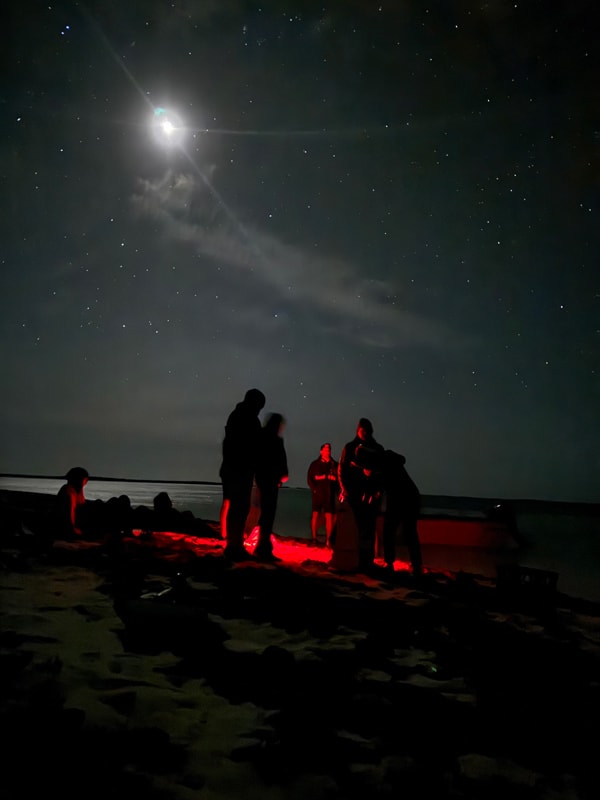
Vanzetti has come equipped with a powerful telescope to show us the rings of Saturn, the ‘gas giant’ of Jupiter, and the dark side of tonight’s quarter moon. Moving to the more static vantage point of a deserted beach, we take turns on the eyepiece to admire the view.

The Abrolhos is the best place in the world for stargazing, Vanzetti says, because there is no light or air pollution. “As we are off the mainland, in the ocean, this provides us with pristine, world-class skies. We have some lovely islands to land on with the telescope as well as stargazing on a beach in the middle of nowhere, which is a great adventure."
stargazing tours with Astrotourism Western Australia
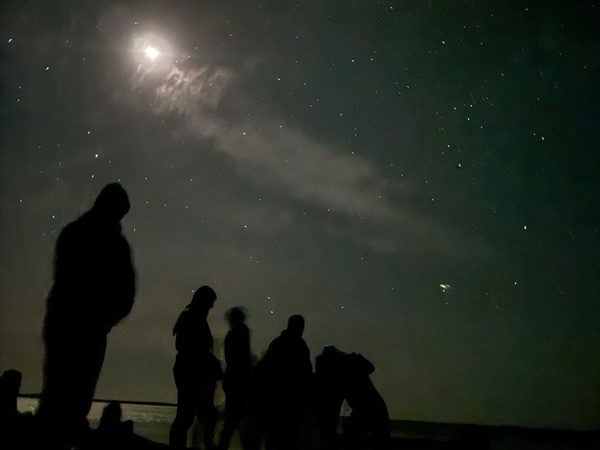
Spend five days under the stars. (Image: Louise Goldsbury)

For many passengers, the region’s main drawcards are its exceptional fishing and snorkelling. But the evenings bring other treasures that outshine expectations.

“Once you have had star patterns pointed out to you, or you see a star that is actually a planet, the night sky comes alive. Just knowing a little more about what is overhead really opens people’s minds to the universe above," says Vanzetti.

The 32-passenger Eco Abrolhos offers its next Astro Cruise on 8-12 February 2024, during a New Moon phase. Guests reach the islands by small plane from Geraldton (included in fares) and sail back over five days. Pricing starts at $3265 per person twin-share or $3685 for a solo cabin including all meals and activities.
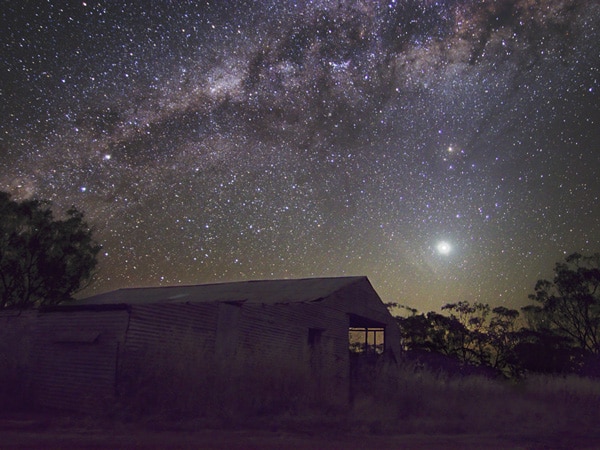
the shimmering Milky Way in the Old Shearing Shed Avoca Farm near Narembeen
The Milky Way never gets old. (Image: Astrotourism WA)

WA’s dark skies

In a world that is glowing brighter with artificial light – increasing by two to 10 per cent every year – WA is working to keep its night sky as dark as possible. Viewing the magnificence of the Milky Way is an ongoing preservation project, led by Astrotourism Western Australia  founder Carol Redford.
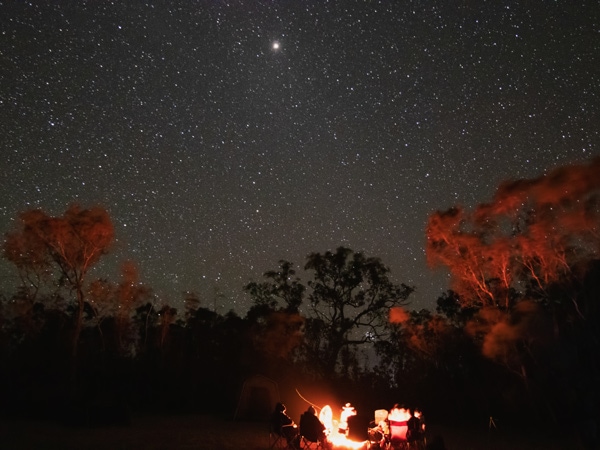
camping under the stars, Astrotourism Western Australia
Camp under the stars in Western Australia. (Image: Astrotourism WA)

The organisation has designated many regional communities as Astrotourism Towns with efforts to change the local street lighting and offer dedicated observation sites and astrophotography hotspots. Sites along the Coral Coast include Lake Thetis in Nambung National Park, near Cervantes; Macpherson Homestead, Carnamah; Three Springs Golf Club; Yandanooka Hall campsite, Mingenew; Little Lagoon, Shark Bay; and the Bibbawarra Bore, Carnarvon.
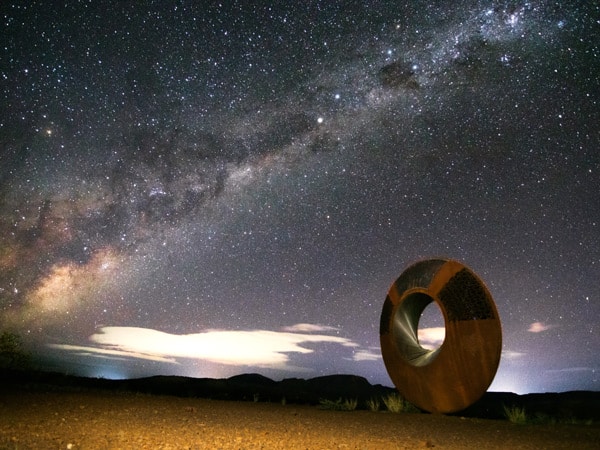
the Resilience art sculpture under the Milky Way
Western Australia is on track to become the world’s top destination for stargazing. (Image: Astrotourism WA)

Perth is perfectly positioned as the world’s most isolated capital city on a continent. Following the steps in these locations, Redford hopes to darken the sky above Perth by implementing the same steps as used in the regional Astrotourism Towns.

“Back in the 1960s, when American astronaut John Glenn was orbiting Earth for the first time, he asked the people of Perth and Rockingham to turn on their lights so he could see them from space," she recalls.

“We became known as the City of Light. But I have a dream that one day Perth can reinvent itself as the City of Starlight. If we used Dark Sky-friendlier street lights and pointed light downwards, I think we could see the Milky Way above the Swan River in Perth, which would be an amazing achievement."

Astrotourism Western Australia is a stellar resource of stargazing trails and itineraries, tours and attractions in regional towns, and a calendar of events and experiences.
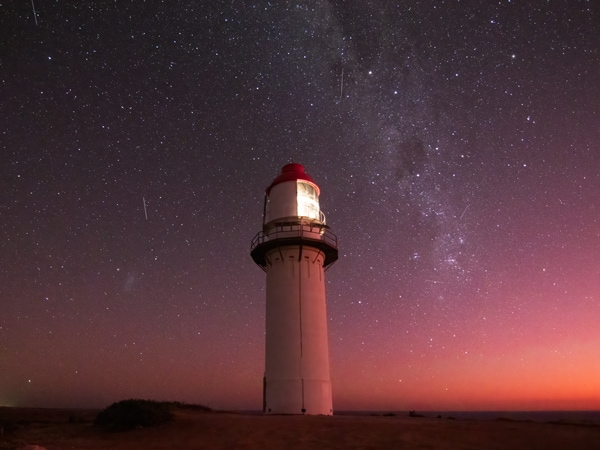
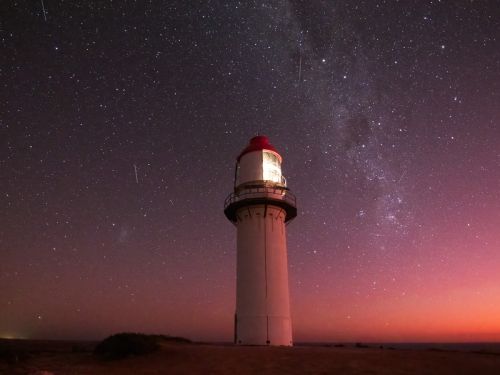
the Quobba Lighthouse under the stars, north of Carnarvon
The Quobba Lighthouse is a majestic sight. (Image: Astrotourism WA)

Other stargazing hotspots around Australia

Queensland: See planets and constellations through powerful telescopes and listen to Indigenous stories around a firepit in outback Charleville.

NT: Sounds of Silence  or Tali Wiru  at UluṟuUnder a Desert Moon  at Kings Canyon, or Earth Sanctuary ’s astronomy tours near Alice Springs.
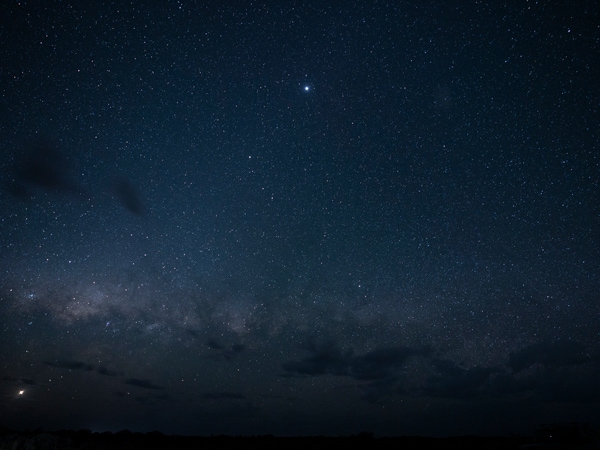
a sky full of stars in Uluru
Book a stargazing trip with Uluṟu Astro Tours. (Image: Tourism NT/Tourism Australia)

NSW: Coonabarabran is the gateway to Siding Spring , home to Australia’s largest optical telescopes, Milroy Observatory , and Warrumbungle National Park , the southern hemisphere’s first Dark Sky Park.  
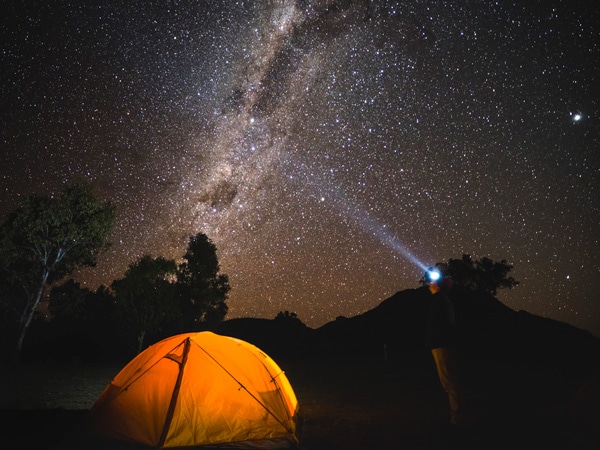
the night sky filled with bright stars over the dark sky park in the Warrumbungles
Set up your tent at Warrumbungle National Park under the sky full of stars. (Image: Destination NSW)

SA: River Murray International Dark Sky Reserve  hosts a Dark Sky Night Tour . You can also enjoy dinner followed by a telescope viewing at Juggle House  

ACT: Canberra Space Centre  is the largest antenna complex in the Southern Hemisphere.  

Tasmania: The best displays of the Southern Lights (Aurora Australis) take place in winter. Viewpoints include Hobart’s Mt Wellington and Mt Nelson, but the further south the better.
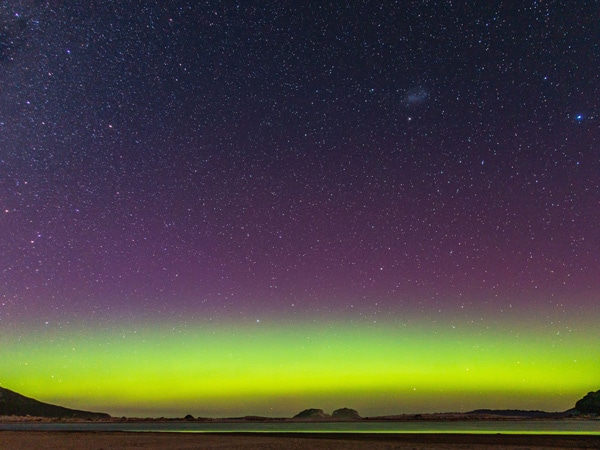
Aurora Australis, South Coast Track
Witness the spectacular Aurora Australis in Tasmania. (Image: Matty Eaton)
Louise Goldsbury
Twice named Best Travel Writer at the National Travel Industry Awards, Louise is an occasionally Sydney-based writer, who spends most of the year on luxury cruises. When on land, she embarks on road trips to review hotels, spa resorts and wine regions around Australia.
See all articles
hero media

6 reasons the best way to experience the Kimberley is by cruise

This remote corner of Australia is one of the world’s last frontiers. This is how to see it properly.

Vast, rugged and deeply spiritual, the Kimberley coast in Australia’s North West feels a world away from everyday Australia – and there are countless ways to explore it. But if you want to reach ancient rock art, hidden gorges and lonely waterfalls, it has to be by boat. Whether you’re aboard a nimble expedition vessel or a luxury yacht with all the trimmings, exploring by the water brings exclusive experiences, shows unique views and makes travel easier than any other mode. And that’s just the beginning of Australia’s North West cruises.

The True North Adventure Cruise in between sandstone cliffs.
Adventure starts where the road ends.

1. Discover Broome, and beyond

Explore your launchpad before you set sail: Broome. Here camels and their riders stride along the 22 kilometres of powdery Cable Beach at sunset. That’s just the start.

At Gantheaume Point, red pindan cliffs plunge into the turquoise sea, whose low tide uncovers fossilised dinosaur footprints. Broome’s pearling history runs deep. Japanese, Chinese, Malay and Aboriginal divers once worked these waters, and their legacy lives on in boutiques where South Sea pearls still shine.

If the moon’s right, you may catch the Staircase to the Moon over Roebuck Bay. Or simply kick back with a cold beverage and a film under the stars at Sun Pictures , screening since 1916.

Ride a camel along Cable Beach as the sun sinks into the Indian Ocean, casting golden light across the sand and sea.
Ride a camel along Cable Beach. (Image: Nick Dunn)

2. Unmatched access to The Kimberley

Once you’re onboard, expect a backstage pass to some of the most isolated places on Earth. No roads. No ports. No phone reception.

At Horizontal Falls/ Garaanngaddim, 10-metre tides surge through twin gorges like a natural waterpark ride that’ll make your palms sweat. Then there’s Montgomery Reef/ Yowjab: a giant living platform of coral and seagrass, where the sea pulls back to reveal waterfalls, sea turtles and ospreys.

Up north, King George Falls/ Oomari rage 80 metres down red cliffs. Zodiac boats often nudge in closer so you can feel the spray on your sun-warmed cheeks. You might even fly in to reach Mitchell Falls/ Punamii-unpuu, a four-tiered cascade where you can swim in freshwater pools above the drop.

Come spring, some itineraries veer west to Rowley Shoals: an atoll chain of white sand and reef walls. Then it’s up the winding Prince Regent River to King Cascade/ Maamboolbadda, tumbling over rock terraces, and into a Zodiac to view the Gwion Gwion rock art, whose slender, ochre-painted figures are older than the pyramids.

A cruise drifts beneath King George Falls, where sheer sandstone cliffs frame the thunderous plunge into turquoise waters.
Get closer to the Kimberley than ever before.

3. Taste the Kimberley with onboard hospitality

You might spend your days clambering over slippery rocks or charging past waterfalls. But when you’re back on the water, it’s a different story. Meals are chef-prepared and regionally inspired: grilled barramundi, pearl meat sashimi, mango tarts, and bush tomato chutney. One night it’s barefoot beach barbecues with your shipmates; the next, alfresco dining on the ship.

Small expedition ships each have their own personality, but many carry just 12 to 36 guests, making being out on the water a whole other experience. You might sink into a spa on the foredeck or sip coffee in a lounge while watching crocodiles cruise by. It’s choose-your-own-relaxation, Kimberley style.

4. Expert-led excursions through the Kimberley

These voyages are led by people who know the Kimberley like the back of their sunburnt hand. Attenborough-esque naturalists might gently tap your shoulder to point out rare birds or tell the story beneath a slab of rock. Historians can explain exactly how that rusted World War II relic came to rest here.

If your ship has a helipad, you might chopper straight to a waterfall-fed swimming hole. If not, you’ll still be hopping ashore for that wet landing at a secret creek.

Then come the evenings: songlines shared by Traditional Owners under the stars, or astronomy sessions that link what’s overhead with what’s underfoot and what’s within.

A small group glides through Kimberley’s rugged coastline by boat, passing ancient cliffs.
Explore with naturalists and historians by your side.

5. Relax in luxurious lodgings

Just because you’re off-grid doesn’t mean you have to rough it. These Kimberley vessels are small in size, but mighty in luxury. True North’s ships come with their own helicopters and a no-sea-days policy, so you’re always in the thick of it. Try the luxurious offerings from Ocean Dream Charters for exploration in style. Kimberley Quest offers a fast boat for easy, off-ship adventures. On the larger end of the scale, Coral Expeditions has open-deck bars and curated wine cellars. And then there’s Ponant’s luxury yachts sleek and incredibly stylish French sailing yachts.

A helicopter soars above the sea, with a sleek cruise ship gliding in the distance.
See the Kimberley from sky to shore.

6. The adventure continues with pre- and post-cruise experiences

You’ve already come this far – so, why not go further? Broome makes it easy to ease in before you board, or wind down when your voyage ends, and there is no reason to stop there.

Head an hour and a half south to Eco Beach to stay off-grid and off the clock. Join a Yawuru guide for a mangrove walk or ocean forage. Dive even deeper into Broome’s pearling past at Willie Creek or Cygnet Bay, where divers and craftspeople still pull the seawater-slicked gems from the deep.

If you’re still craving adventure, it’s time to go further. Soar over the Buccaneer Archipelago, or detour inland with a 4WD trip along the Gibb River Road. Book a scenic flight over the Bungle Bungles. Or – because you never know when you’ll be back – do all three.

aerial of people walking on eco beach in the kimberley western australia
Stay off grid at Eco Beach. (Image: Tourism WA)

Find out more about your trip to Australia’s North West at australiasnorthwest.com .