22 secret beaches to visit in Australia

hero media
Escape the crowds this summer at these 22 secret beaches in Australia.

You can’t get more fun than surf, sand and sun. With more than 25,000 kilometres of coastline on offer, there’s no shortage of places to enjoy Australia at its best. But some beaches are wilder than others, plenty are inaccessible, and at this time of year a fair few are too darn overpopulated.

Here’s our exclusive list of Australia’s best secret beaches by state – just don’t tell anyone, will you?

1. Garie Beach, NSW

Where is it?

It’s in a remote coastal valley in the Royal National Park , 40 kilometres south of Sydney. Best access is via the Princes Highway, south of Loftus, or via McKell Avenue at Waterfall.

the shores at Garie Beach, NSW
Garie Beach is a great spot for hiking. (Image: Nick Cubbin/DPE)

Why you’ll love it

Garie is supposedly an Aboriginal word for sleepy, and on most days, especially during the week, it lives up to its name. It’s a great spot for hiking and is terrific for a surf. Come winter, the whales are out to play up and down this part of the coast, making Garie a perfect place from which to spot them. Don’t forget the binoculars!
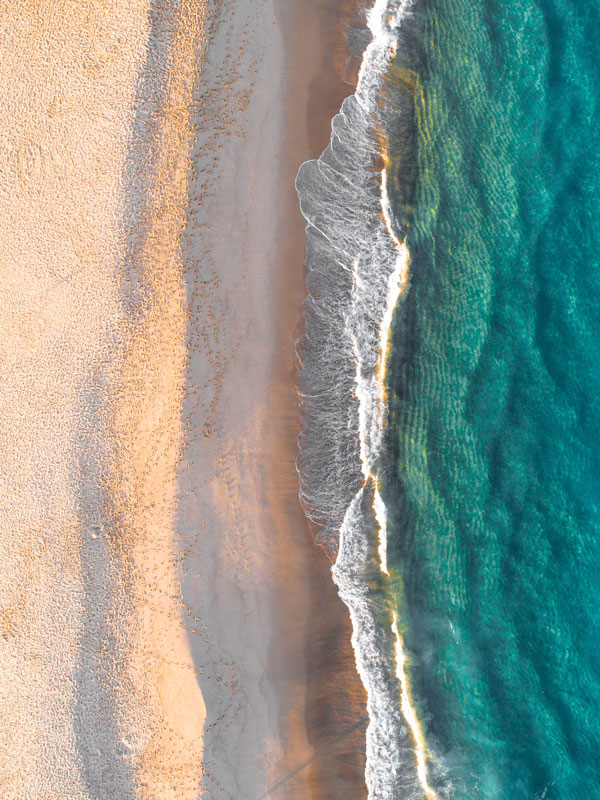
a drone shot of the shore at Garie Beach, NSW
Wriggle your toes in the salty sand at Garie Beach. (Image: Adam Krowtiz)

2. Maitland Bay, NSW

Where is it?

Secluded, calm and great for families, Maitland Bay Beach is in Bouddi National Park , 20 kilometres southeast of Gosford. It’s a 20-minute walk from the Maitland Bay information centre on Maitland Bay Drive, downhill through a eucalypt forest.
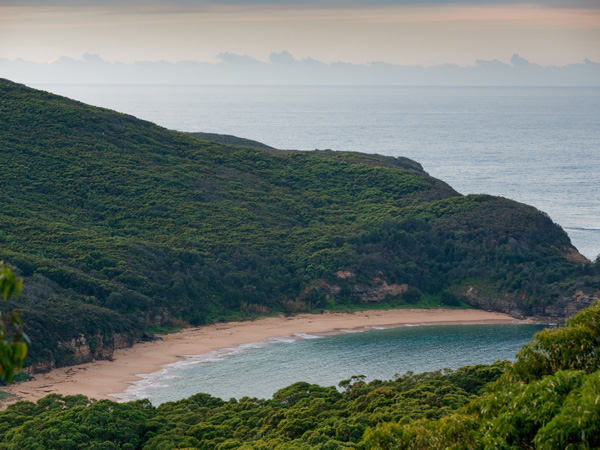
a secluded cove at Maitland Bay, NSW
Maitland Bay is nestled within a eucalypt forest. (Image: Nick Cubbin/DPE)

Chill out on the sand and enjoy a picnic – but conserve a bit of energy because it’s a steep slog on the way back up (If it took you 20 minutes on the way in, allow about 40 to get back out.)
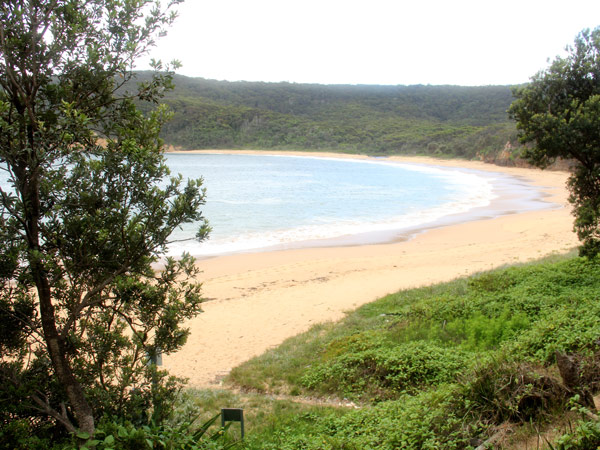
a scenic view of Maitland Bay, NSW
Lay your picnic blanket on the sand at Maitland Bay. (Image: John Yurasek/DPE)

Alternatively, if you’re feeling fit, you can head on to Putty Beach via Gerrin Point lookout and arrive back at your car along the Bulimah Spur Track. The circuit is six kilometres long and will take about two hours and 15 minutes to walk if you don’t stop to take in the beautiful scenery. The nearest campgrounds are also at Putty Beach .

a beautiful scenery at Maitland Bay, NSW
Nature meets serenity at Maitland Bay. (Image: Destination NSW)

Why you’ll love it

The bushwalking here is half the fun. Be sure to take pause at Maitland Bay beach, however, because it truly is a sensational spot. At low tide, you can see the wreck of the paddle steamer Maitland, which ran onto the rocks in 1898. Also great for snorkelling!

3. Resolute Beach, NSW

Where is it?

Located in the Ku-ring-gai Chase National Park , the remote Resolute Beach is a 45-minute drive north of the Sydney CBD.

Why you’ll love it

Combine your love of adventure with your desire to get away from it all at Resolute Beach. Accessible via the steep Resolute Track (starting at the Resolute Picnic Area), while you might arrive at this secret beach panting, you’ll soon be happy you’ve made the effort.

The small beach is lined with dense bushland, with views over the emerald water of Palm Beach, and the Pittwater and Barrenjoey Headland.

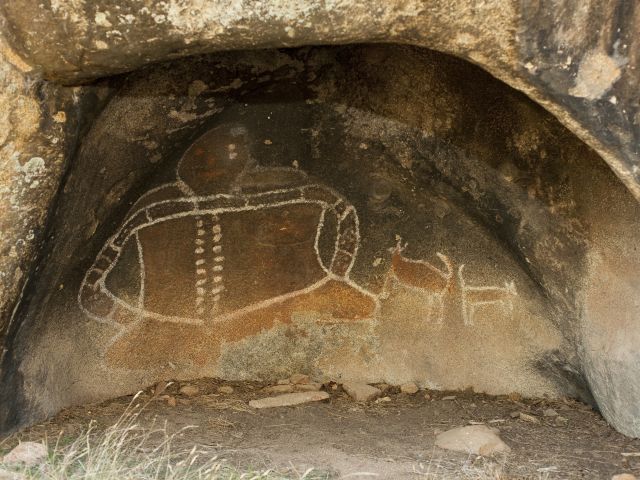
On your way here, make sure to put time aside to stop at the Red Hands Cave with its red ochre Aboriginal stencil art.

a man enjoying his morning walk along Resolute Beach, Ku-ring-gai Chase National Park
Enjoy some alone time at Resolute Beach, Ku-ring-gai Chase National Park. (Image: Destination NSW)

4. Dreamtime Beach, NSW

Where is it?

Just south of Tweed Heads in northern NSW, near Fingal Head. Follow the walking track that leads through the Fingal Headland Reserve from the end of the Lighthouse Parade or walk north from the Surf Lifesaving Club at Kingscliff.
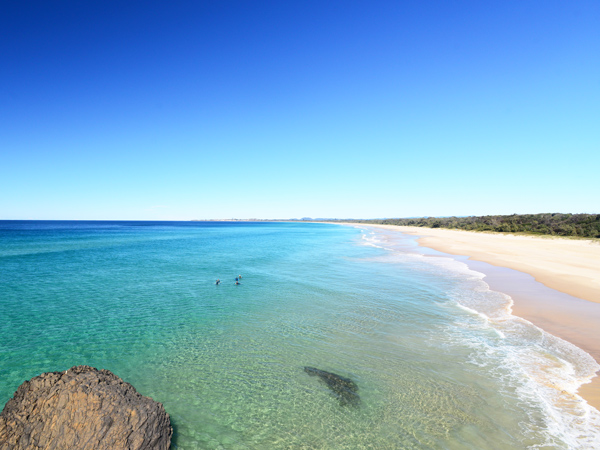
the pristine waters of Dreamtime Beach, NSW
Walk along the fine white sand of Dreamtime Beach.

Why you’ll love it

Twenty million years ago Mount Warning erupted, producing the current dramatic backdrop of black cliffs and unique formations such as the Giant’s Causeway out in the bay. Combined with stretches of fine white sand and lush green foliage, it’s pretty close to paradise.
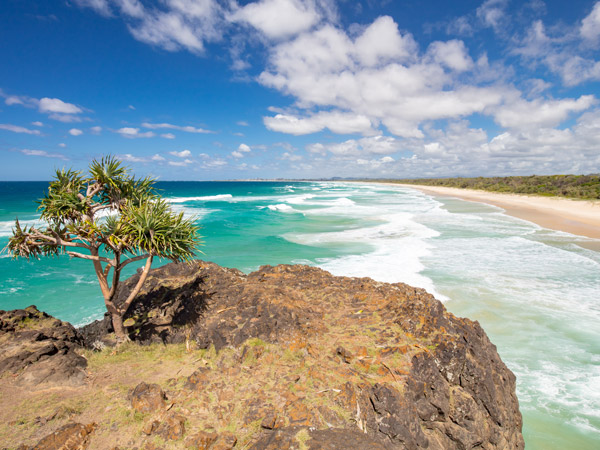
a rock formation on the side of Dreamtime Beach
You’ll find lush green foliage and rock formations on Dreamtime Beach.

5. Store Beach, NSW

Where is it?

A stone’s throw from Manly, but the only way to get there is by water. Hire a kayak at Manly Wharf – it will take you about 20 minutes to paddle to the beach. Just ask the kindly kayak keepers which way to point your nose.

Why you’ll love it

There’s hardly ever anyone there on weekdays and it’s a breeding ground for little penguins. Bliss out in the sun before heading back. You’ll feel like you’ve done your exercise for the day, too.
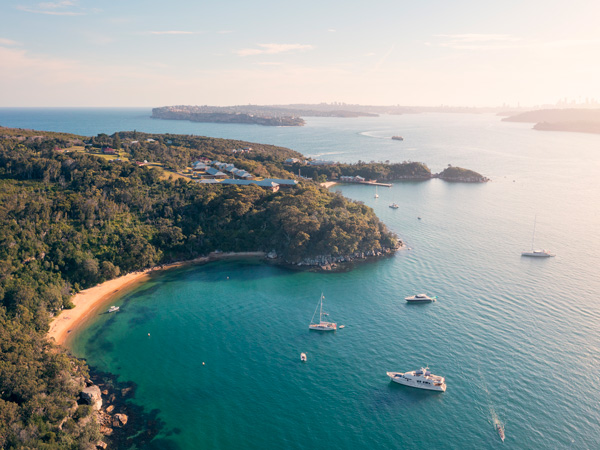
an aerial view of Store Beach, NSW
Store Beach is a stone’s throw from Manly. (Image: Destination NSW)

6. Camel Rock Surf Beach, NSW

Where is it?

The geological dream that is the Camel Rock Formation is found on Camel Rock Surf Beach , six kilometres from Bermagui on the NSW Sapphire Coast.

Why you’ll love it

Taking a photo of the unusual rock, of course! It was created by underwater avalanches over 450 million years ago. The result is that today, Camel Rock looks very much like a sitting camel. In addition, the rocky headland and the rock formation known as Camel Rock are a place of significance to the local Yuin people.

To get here, you can either park up at the Camel Rock Beach car park or at Wallaga Lake Reserve, from which you can take the 1.5-kilometre walking track from Murunna Point to the beach. Once here, snorkel, swim and fish in its rock pools to your heart’s content!
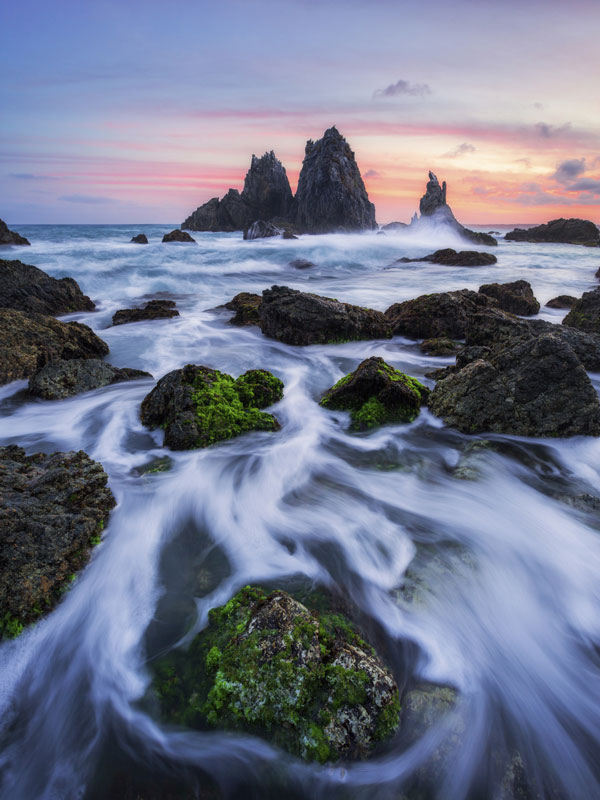
Sun setting over Camel Rock Bermagui
Camel Rock Formation is a geological dream. (Image: Destination NSW)

7. Mungo Beach, NSW

Where is it?

Mungo Beach stretches for more than 20 kilometres on the ocean side of Myall Lakes National Park , near Bulahdelah. It’s about 235 kilometres north of Sydney via the Pacific Highway and The Lakes Way. To access the beach, you will need a 4WD.
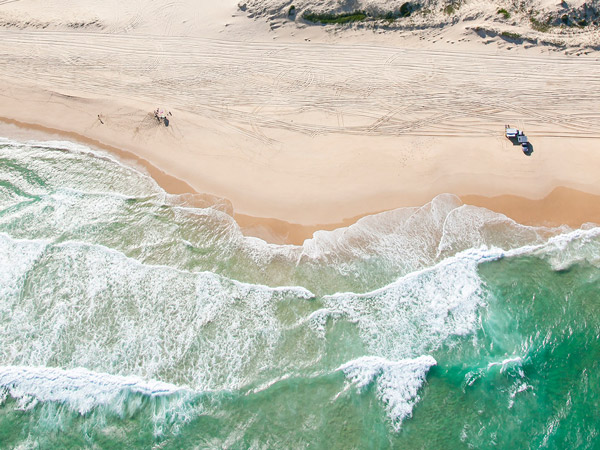
a drone shot of the shore at Mungo Beach, NSW
Spend laid-back days in the incredibly beautiful Mungo Beach. (Image: Destination NSW)

Why you’ll love it

If you’re into fishing and four-wheel-driving, this is the perfect place for you. Powerful rips and deep drop-offs mean this is not a beach for swimming, but the area is full of lakes to cool off in, too.

an aerial view of Mungo Beach, NSW
Drive a 4WD to access Mungo Beach. (Image: Destination NSW)

8. Kitty Miller Bay, Vic

Where is it?

You’ll find the beach off Kitty Miller Rd, on the southwestern side of Phillip Island. Phillip Island is 140 kilometres southeast of Melbourne (a 90-minute drive).

Why you’ll love it

This secluded cove at the base of an extinct volcano not only has great surf, but it boasts that windswept and interesting, rugged appeal you look for in a Victorian beach (well, more northerly Australian dwellers might, anyway).

the Kitty Miller Bay, Vic a sunset
Head to Kitty Miller Bay for an unpretentious beach retreat.

Strong rips and the odd shark sighting mean surfers should take care, and swimmers should look elsewhere for a dip. Go beachcombing instead. Also, keep an eye out for the shipwrecked remains of the SS Speke at low tide.
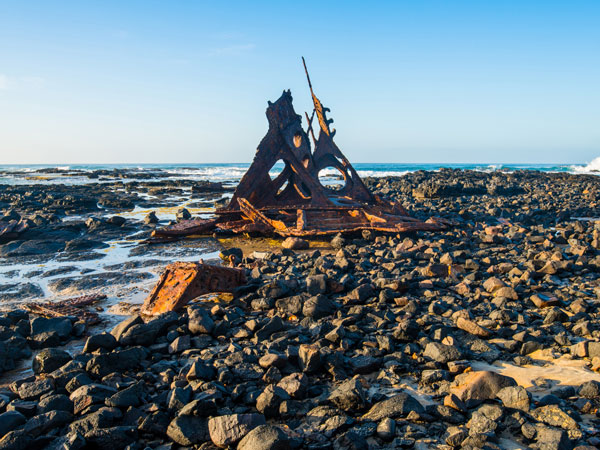
the shipwrecked remains of the SS Speke at Kitty Miller Bay
Spot SS Speke at low tide.

9. Golden Beach, Vic

Where is it?

Golden Beach is near Sale, 252 kilometres from Melbourne, and is just one of the delightful spots along Ninety Mile Beach – which is, of course, 90 miles (145 kilometres) of golden sand and rolling surf that stretches almost the entire length of Gippsland from Port Albert, near Yarram, north to Lakes Entrance.

a beach walk at Golden Beach, Vic
Venture a little further to the glowing sands of Golden Beach.

Why you’ll love it

You could find a spot to yourself anywhere along Ninety Mile Beach, but we rate Golden Beach for its great ocean fishing, surfing and wildlife. Be prepared to see heaps of kangaroos, native birds and even emus and echidnas – the reputed recluses of the animal kingdom – from the coastal tracks around here.
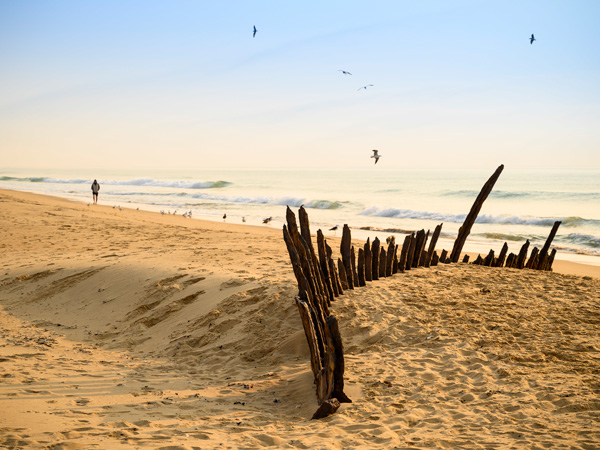
wood on the shore at Golden Beach, Vic
Keep your eyes peeled for native birds.

10. Sunshine Beach, Queensland

Where is it?

About seven kilometres south of Noosa, along David Low Way. It abuts Noosa National Park on the Sunshine Coast, so it’s a pristine environment well worth exploring.

Why you’ll love it

With 15 kilometres of sand stretching all the way down to Peregian Beach, there’s always somewhere to get away from the madding crowds. It’s one of those quintessentially Australian beaches that overseas guests go all open-mouthed about because it looks like it’s endless. It’s also got great surf and is dog friendly, and at the right time of year, you’re bound to spot a few dolphins and whales.
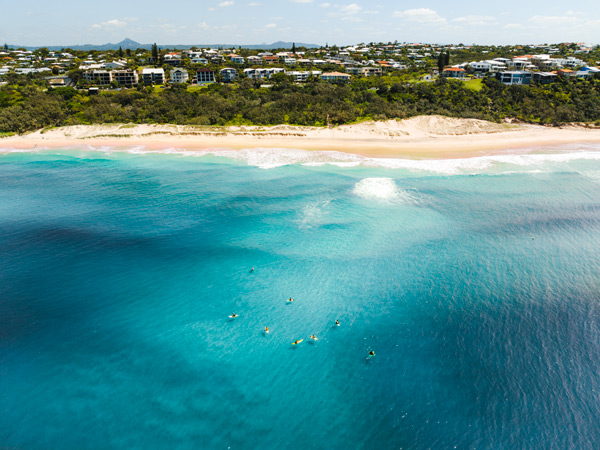
an aerial view of the Sunshine Beach, Queensland
Sunshine Beach is lapped by shimmering turquoise water. (Image: Tourism and Events Queensland; Reuben Nutt)

11. Nudey Beach, Qld

Where is it?

Nudey Beach is located on Fitzroy Island on the Great Barrier Reef, 45 minutes from Cairns by boat.

lush greenery on the shores of Nudey Beach, Qld
Nudey Beach is accessible from Cairns by boat. (Image: Tourism Tropical North Queensland)

Why you’ll love it

What beats a secret beach? A secret beach on a tropical island, of course. Nudey Beach – so named because of its ‘clothes optional’ past – is a fantastic option if you want to explore off the mainland of Tropical North Queensland.

Complete with sand so white it squeaks, turquoise waters and a lack of crowds, it’s no wonder that it was voted one of Australia’s best beaches. Need more time here? Fitzroy Island Resort has a range of options for overnighters, from camping to 4.5-star accommodation.

an aerial view of the stunning waters of Nudey Beach, Qld
The crystalline waters at Nudey Beach are perfect for a dip. (Image: Tourism Tropical North Queensland)

12. Agnes Water, Qld

Where is it?

Agnes Water is Queensland’s northernmost surf beach, about 485 kilometres north of Brisbane and halfway between Bundaberg and Gladstone in Central Queensland. While it’s no secret to locals, many out-of-towners have no idea this region is sitting here just waiting to be explored.

Why you’ll love it

What’s not to love about a pristine beach fringed by casuarinas and a ‘town’ (comprising a supermarket, couple of cafes, bakery, pharmacy, petrol station and not much else) that oozes laid-back charm?

Apart from Agnes Water’s main beach, there are loads of beaches nearby with hardly a soul on them. Because many are in the national park and only accessible by 4WD, you may find the only footprints on the sand are yours. It also makes a great starting point for a Great Barrier Reef visit and is great for diving, fishing and sailing.
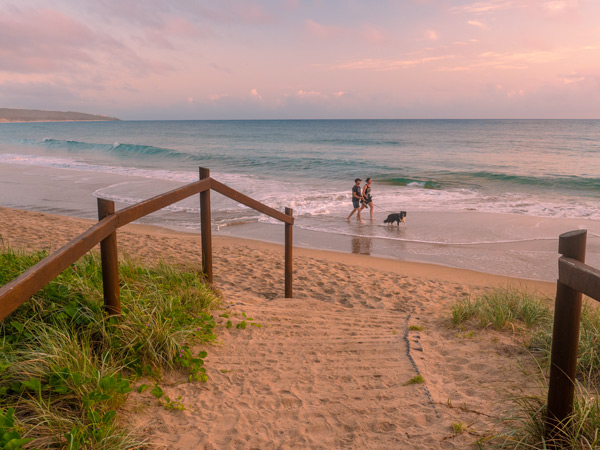
a beach walk along Agnes Water, Qld
Bask in the laid-back charm of Agnes Water Beach. (Image: Tourism and Events Queensland)

13. Maslin Beach, South Australia

Where is it?

Maslin Beach is on the Fleurieu Peninsula, about an hour’s drive from Adelaide, in South Australia.
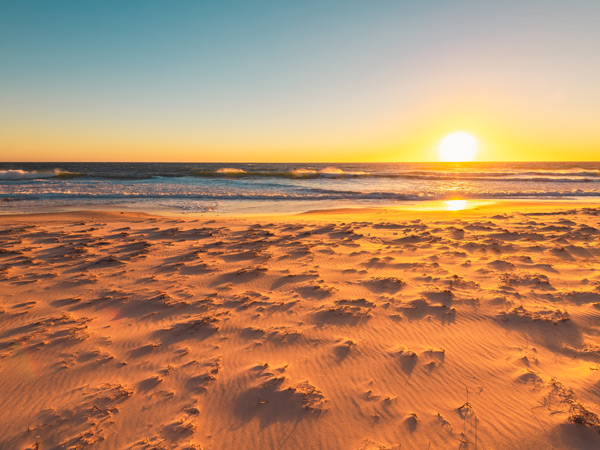
sunset at Maslin Beach, South Australia
Picture golden sunsets on Maslin Beach.

Why you’ll love it

In 1975 the southern section of the beach was declared Australia’s first official nude beach, but there’s plenty of room left over if you prefer swimming in Speedos.

Grab a snorkel and check out the leafy sea dragons (an actual creature, not a euphemism) or take a walk along the picturesque cliffs that flank the beach. You get a great view of the sunset from up there. Once you’ve had your fill of sun and sand, you can head off to sample what the nearby McLaren Vale wineries have to offer.

a woman admiring the views at Maslin Beach, South Australia
Soak up the scenic coast at Maslin Beach. (Image: Kristy Billing @gypsyandherwild)

14. Memory Cove, SA

Where is it?

It’s part of Lincoln National Park , 50 kilometres south of Port Lincoln and 650 kilometres south-west of Adelaide. Access to Memory Cove Wilderness Area is 4WD-only.

a group of people swimming in Memory Cove, SA
Spend the day frolicking in the blue waters of Memory Cove. (Image: Brad Griffin Photography)

Why you’ll love it

The five campsites here are right on the beach, the scenery is seriously stunning, the fishing excellent, and with no more than 15 vehicles allowed in at any one time, it’s never going to be crowded.

an aerial view of Memory Cove, SA
Breathtaking views of Memory Cove from above. (Image: SA Tourism Commission)

This is truly one of the most elite experiences you can have in Australia but without the five-star prices.
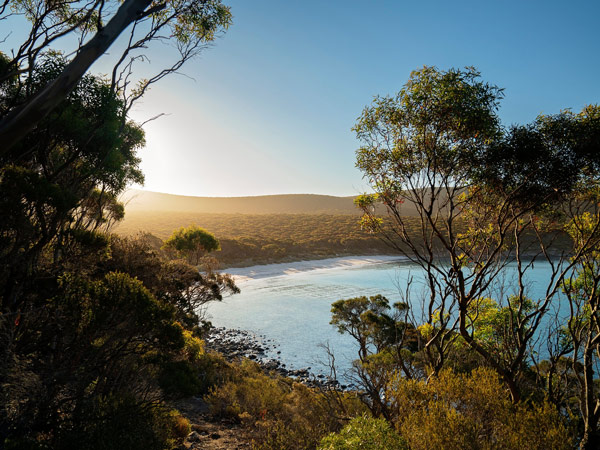
scenic nature views at Memory Cove, SA
Seek solitude in the uncrowded Memory Cove. (Image: Brad Griffin Photography)

15. Friendly Beaches, Tasmania

Where is it?

Within Freycinet National Park, Friendly Beaches are 20 kilometres south of Bicheno on Coles Bay Road.
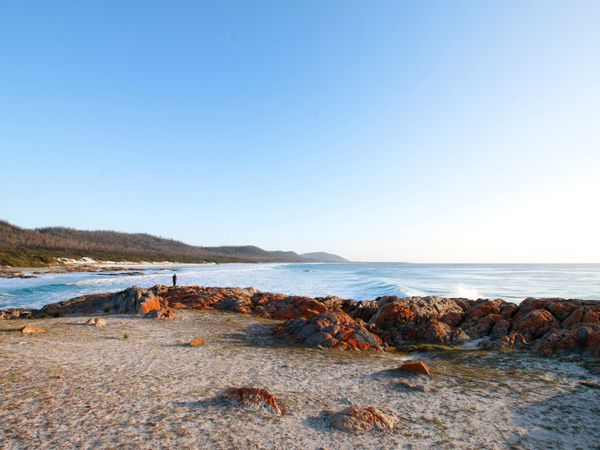
the scenic and quiet landscape at Friendly Beaches, Tasmania
Friendly Beaches are hidden away from the crowds. (Image: Kathryn Leahy)

Why you’ll love it

Freycinet is Tassie’s most popular coastal park, and the famous Wineglass Bay can get positively overrun (by Tasmanian standards) during summer holidays. Not so for Friendly Beaches, with their squeaky white silicone sand, crystal clear water and views that stretch forever.
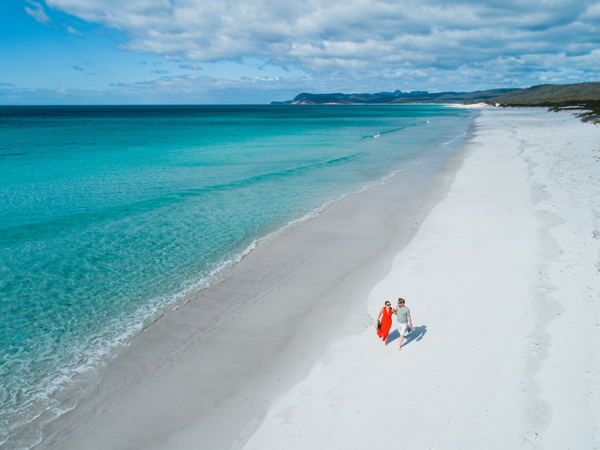
an aerial view of a couple walking along Friendly Beaches, Tasmania
Stroll along the long stretch of fine white sand and turquoise blue waters at Friendly Beaches. (Image: Stu Gibson)

With the pelican-covered Saltwater Lagoon at one end and Freshwater Lagoon at the other, in reality, Friendly Beaches are really just one very long stretch of pristine sand stroked by an aqua ocean. Because they’re so often completely people-free, it’s a good spot to try your hand (and the rest of your body) at skinny-dipping.

a rock-filled shore on Friendly Beaches, Tasmania
Friendly Beaches are completely people-free. (Image: Tourism Tasmania; Kathryn Leahy)

Just be careful of rips, because these are ocean beaches and at the mercy of strong tidal currents. That could get embarrassing for both you and the rescue party.

the rocky side of Friendly Beaches, Tasmania
The waves gently ripple on the rocks. (Image: Kathryn Leahy)

16. Lime Bay, Tas

Where is it?

This beautiful beachside camping spot is part of the Coal Mines Historic Site on the northeastern shore of the Tasman Peninsula, not far from Saltwater River, a 25-minute drive from Port Arthur.

Why you’ll love it

Leave behind the crowds of Port Arthur and wander freely through the evocative ruins of Saltwater River Convict Station with its dingy underground cells – and a waterfront view to die for. The beach is fringed by limestone rocks that have been sculpted by the wind, and there are ample opportunities for wildlife, wildflowers and bird spotting.

the Lime Bay, Tas fringed by limestone rocks
Lime Bay is perfect for beachside camping.

17. Ocean Beach, Tas

Where is it?

Six kilometres west of Strahan on Tasmania’s wild – and often wet – west coast.
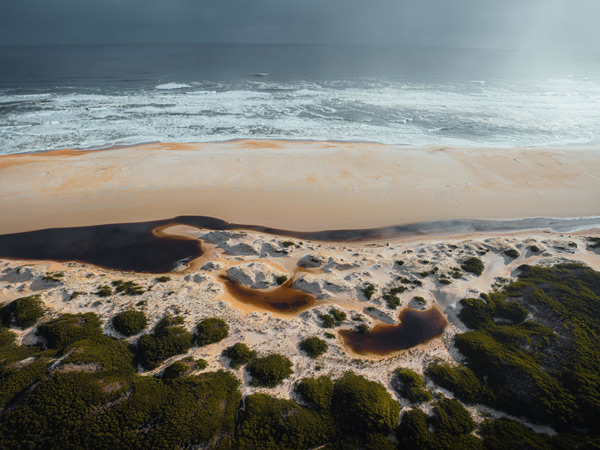
an aerial view of the shore at Ocean Beach, Tas
Ocean Beach is off the wild west coast of Tasmania. (Image: Jason Charles Hill)

Why you’ll love it

This 40-kilometre stretch of coast is Tasmania’s longest beach, with nothing but rolling waves and fresh air between you and the east coast of South America. Go horse riding along the beach, sandboarding on the dunes, or simply watch the sun sink into the sea at the edge of the world.

Sure, it might not be the best beach for swimming and sunbaking (you shouldn’t be doing the latter anyway!), but it is certainly one of the most beautiful and isolated beaches in the world.

a drone shot of people and a vehicle on the side of Ocean Beach, Tas
You’ll feel like you’re on the edge of the world at Ocean Beach. (Image: Jason Charles Hill)

18. Taroona Beach, Tas

Where is it?

Taroona is a mere 15-minute drive south of Hobart, via Sandy Bay Road.

Why you’ll love it

A great beach for rock hopping, the water is perfect for kids and there is a playground in the park nearby. It’s the ultimate spot to view the Sydney to Hobart yacht race when the participants come around Storm Bay and into the Derwent River.

You’ll find a wealth of shells and marine molluscs (anecdotally, Taroona is the local Aboriginal word for chiton, a type of mollusc). You’ll also see all sorts of birds such as cormorants, terns, gulls, herons and eagles.
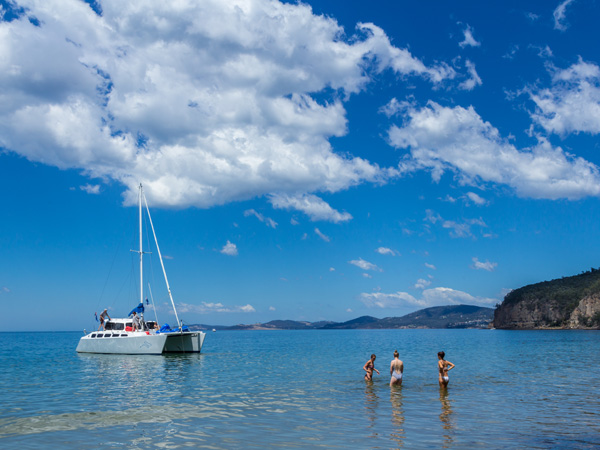
a group of people with a boat moored at Taroona Beach, Tas
Go rock hopping at Taroona Beach.

19. Cobourg Peninsula, Northern Territory

Where is it?

Garig Gunak Barlu National Park is around 570 kilometres (by road) northeast of Darwin and is accessible only by 4WD. It’s impassable during the wet season, November-April. Bring all your own food, unless you count on catching some fish (which practically jump onto your hook!).

an aerial view of a boat at the Seven Spirit Bay Cobourg Peninsula
Get whisked off to Seven Spirit Bay Cobourg Peninsula. (Image: Tourism NT; Tourism Australia)

Why you’ll love it

It’s a place of pristine beaches, carpeted in seashells, where turtles come up to lay their eggs and the world’s largest remaining herd of banteng (wild cattle) roam in the monsoon forests behind the high-tide mark. Even better, only 20 permits to enter the park are issued at any one time, so you know you’ve got the place pretty much to yourself. Forget about swimming though: this is saltwater crocodile country.

a piece of land at Cobourg Peninsula
Set up camp in your 4WD at Cobourg Peninsula. (Image: Tourism NT; Tourism Australia)

20. Bennion Beach, Western Australia

Where is it?

Bennion Beach is in the northern suburbs of Perth, about a half-hour drive from the centre of the city.

Why you’ll love it

You can stay in the heart of Perth and still savour the secluded nature of this incredible sheltered white-sand beach strewn with giant clusters of limestone. Most of the summer crowds hang at neighbouring Trigg Beach, so you can snorkel and explore the surrounding reef in peace.

People from the eastern states always get a kick out of a WA beach sunset, so stick around and watch the colours stain the sky.

a scenic view of Bennion Beach, Western Australia
Set foot on the secluded shores of Bennion Beach.

21. Point Ann, WA

Where is it?

Point Ann is in the western section of Fitzgerald River National Park, 180 kilometres northeast of Albany. The best access is via Bremer Bay; from the east, the best access is via Hopetoun or the Hamersley Drive from the South Coast Highway.

Why you’ll love it

It’s one of just two places in Australia (the other is Head of Bight in SA) where southern right whales come to calve in large numbers. There are two whale-watching platforms and the best time to go to make use of it is June through to October.

the grassy white-sand beach at Point Ann, WA
Watch out for whales at Point Ann, WA.

22. Lucky Bay, WA

Where is it?

Cape Le Grand National Park, 50 kilometres southeast of Esperance by sealed road.
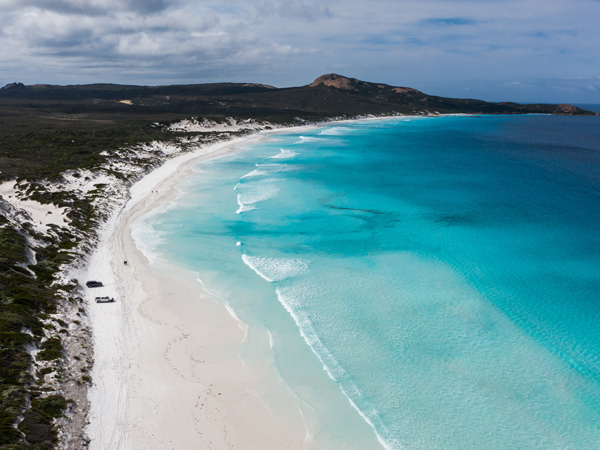
an aerial view of Lucky Bay, WA
Endless blues ripple across Lucky Bay. (Image: Tourism Western Australia)

Why you’ll love it

Breathtaking scenery, beachside camping and a fantastic 15-kilometre coastal walking trail from Le Grand Beach to Rossiter Bay along the edge of Cape Le Grand. You’ll find Lucky Bay at about the halfway point.
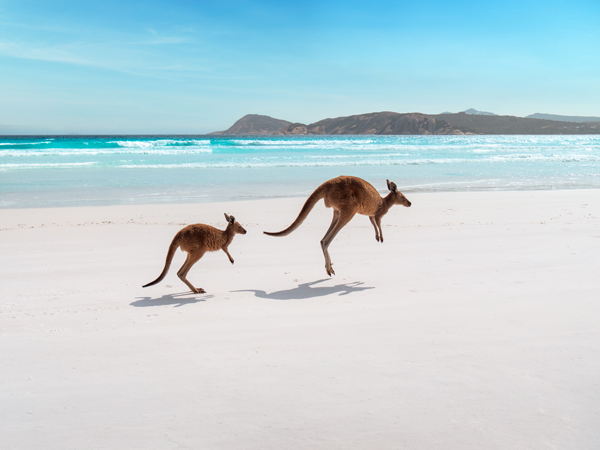
kangaroos on Lucky Bay, WA
Spot kangaroos happily hopping on the beach. (Image: Tourism Western Australia)

You’ll also find southern grey kangaroos sunning themselves on the beach. If there are too many fishermen here for your liking, head around the point to Thistle Cove, where you’re unlikely to find a soul.
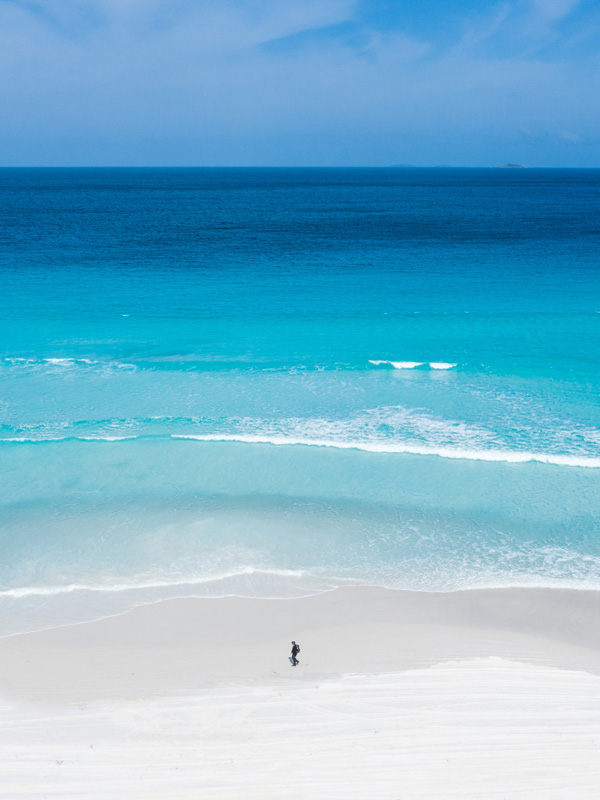
the pristine waters of Lucky Bay, WA
Go for a dip in the pristine waters of Lucky Bay.
Kate Bettes
Kate Bettes is a freelance travel writer. Whether having a picnic in Vietnamese jungle with new friends, or partying in the back of a limousine in Hollywood, Kate’s experiences have left her with the sneaking suspicion that the best travel memories happen when you least expect. It’s this feeling - and how to get it - that she loves to write about.
See all articles

This scenic Victorian region is the perfect antidote to city life

Video credit: Visit Victoria/Tourism Australia

The Grampians just might be the ultimate antidote for the metropolis, writes one returning Aussie ready to disconnect from the modern world and reconnect to the Great outdoors.

There are no kangaroos back in Chicago: they’re all here in the Grampians/Gariwerd . In the heart of the Grampians National Park’s main gateway town, Halls Gap, pods of eastern greys are eating grass beside my parked rental car beneath the stars. Next morning, when I see the backyard of my rented villa on the edge of town for the first time, there are kangaroos feeding beside a slow-moving creek, lined with river red gums.

Five hundred metres up the road, 50 or so of them are eating by the side of the road in a paddock. I pull over to watch and spot three emus. Yellow-tailed black cockatoos fly overhead towards the tall green mountains just beyond town.

‘Kee-ow, keee-oww’… their calls fuse with the maniacal cackle of a kookaburra (or 10). Gawd, how I’ve missed the sound of them. Far above, a wedge-tailed eagle watches, and there you go: the ‘great birds of Australia’ trifecta, all half a kay from the town limits.

Exchanging city chaos for country calm

kangaroos near Halls Gap, Grampians National Park
The park is renowned for its significant diversity of native fauna species. (Image: Visit Victoria/Robert Blackburn)

I’ve come to the Grampians to disconnect, but the bush offers a connection of its own. This isn’t just any bush, mind you. The Grampians National Park is iconic for many reasons, mostly for its striking sandstone mountains – five ridges run north to south, with abrupt, orange slopes which tumble right into Halls Gap – and for the fact there’s 20,000 years of traditional rock art. Across these mountains there are more than 200 recorded sites to see, created by the Djab Wurrung, Jardwadjali and Gunditjmara peoples. It’s just like our outback… but three hours from Melbourne.

I’ve come here for a chance at renewal after the chaos of my life in America’s third-largest city, Chicago, where I live for now, at the whim of a relative’s cancer journey. Flying into Melbourne’s airport, it only takes an hour’s drive to feel far away from any concept of suburbia. When I arrive in Halls Gap two hours later, the restaurant I’m eating at clears out entirely by 7:45pm; Chicago already feels a lifetime ago.

The trails and treasures of the Grampians

sunrise at Grampians National Park /Gariwerd
Grampians National Park /Gariwerd covers almost 2000 square kilometres. (Image: Ben Savage)

Though the national park covers almost 2000 square kilometres, its best-known landmarks are remarkably easy to access. From my carpark here, among the cockatoos and kangaroos on the fringe of Halls Gap, it only takes 60 seconds’ driving time before I’m winding my way up a steep road through rainforest, deep into the mountains.

Then it’s five minutes more to a carpark that serves as a trailhead for a hike to one of the park’s best vantage points, The Pinnacles . I walk for an hour or so, reacquainting myself with the smells and the sounds of the Aussie bush, before I reach it: a sheer cliff’s edge lookout 500 metres up above Halls Gap.

walking through a cave, Hollow Mountain
Overlooking the vast Grampians landscape from Hollow Mountain. (Image: Robert Blackburn)

There are hikes and there are lookouts and waterfalls all across this part of the park near town. Some are a short stroll from a carpark; others involve long, arduous hikes through forest. The longest is the Grampians Peaks Trail , Victoria’s newest and longest iconic walk, which runs 160 kilometres – the entire length of Grampians National Park.

Local activities operator Absolute Outdoors shows me glimpses of the trail. The company’s owner, Adrian Manikas, says it’s the best walk he’s done in Australia. He says he’s worked in national parks across the world, but this was the one he wanted to bring his children up in.

“There’s something about the Grampians,” he says, as he leads me up a path to where there’s wooden platforms for tents, beside a hut looking straight out across western Victoria from a kilometre up in the sky (these are part of the guided hiking options for the trail). “There are things out here that you won’t see anywhere else in Australia.” Last summer, 80 per cent of the park was damaged by bushfire, but Manikas shows me its regrowth, and tells me of the manic effort put in by volunteers from town – with firefighters from all over Australia – to help save Halls Gap.

wildflowers in Grampians National Park
Spot wildflowers. (Image: Visit Victoria)

We drive back down to Halls Gap at dusk to abseil down a mountain under the stars, a few minutes’ walk off the main road into town. We have headlamps, but a full moon is enough to light my way down. It takes blind faith to walk backwards down a mountain into a black void, though the upside is I can’t see the extent of my descent.

Grampians National Park at sunset
Grampians National Park at sunset. (Image: Wine Australian)

The stargazing is ruined by the moon, of course, but you should see how its glow lights up the orange of the sandstone, like in a theme park. When I’m done, I stand on a rocky plateau drinking hot chocolate and listening to the Aussie animals who prefer nighttime. I can see the streets of Halls Gap off in the distance on this Friday night. The restaurants may stay open until 8pm tonight.

What else is on offer in The Grampians?

a boat travelling along the Wimmera River inDimboola
Travelling along the Wimmera River in Dimboola. (Image: Chris McConville)

You’ll find all sorts of adventures out here – from rock climbing to canoeing to hiking – but there’s more to the Grampians than a couple of thousand square kilometres of trees and mountains. Halls Gap may be known to most people, but what of Pomonal, and Dimboola, and Horsham? Here in the shadow of those big sandstone mountains there are towns and communities most of us don’t know to visit.

And who knew that the Grampians is home to Victoria’s most underrated wine region ? My disconnection this morning comes not in a forest, but in the tasting rooms and winery restaurants of the district. Like Pomonal Estate, barely 10 minutes’ drive east of Halls Gap, where UK-born chef Dean Sibthorp prepares a locally caught barramundi with lentil, pumpkin and finger lime in a restaurant beside the vines at the base of the Grampians. Husband-and-wife team Pep and Adam Atchison tell me stories as they pour their prize wines (shiraz is the hero in these parts).

dining at Pomonal Estate
Dine in a restaurant beside vines at Pomonal Estate. (Image: Tourism Australia)

Three minutes’ drive back down the road, long-time mates Hadyn Black and Darcy Naunton run an eclectic cellar door out of a corrugated iron shed, near downtown Pomonal. The Christmas before last, half the houses in Pomonal burnt down in a bushfire, but these locals are a resilient lot.

The fires also didn’t stop the construction of the first art centre in Australia dedicated to environmental art in a nature-based precinct a little further down the road (that’s Wama – the National Centre for Environmental Arts), which opened in July. And some of the world’s oldest and rarest grape vines have survived 160 years at Best’s Wines, outside the heritage town of Great Western. There’s plantings here from the year 1868, and there’s wines stored in century-old barrels within 150-year-old tunnels beneath the tasting room. On the other side of town, Seppelt Wines’ roots go back to 1865. They’re both only a 30-minute drive from Halls Gap.

Salingers of Great Western
Great Western is a charming heritage town. (Image: Griffin Simm)

There’s more to explore yet; I drive through tiny historic towns that barely make the map. Still part of the Grampians, they’re as pretty as the mountains behind them: full of late 19th-century/early 20th-century post offices, government offices and bank buildings, converted now to all manner of bric-a-brac stores and cafes.

The Imaginarium is one, in quirky Dimboola, where I sleep in the manager’s residence of an old National Australia Bank after a gourmet dinner at the local golf club, run by noted chef and teacher, Cat Clarke – a pioneer of modern Indigenous Australian cooking. Just south, I spend an entire afternoon at a winery, Norton Estate Wines, set on rolling calico-coloured hills that make me think of Tuscany, chit-chatting with owners Chris and Sam Spence.

Being here takes me back two decades, when I lived here for a time. It had all seemed as foreign as if I’d driven to another planet back then (from Sydney/Warrane), but there seemed something inherently and immediately good about this place, like I’d lived here before.

And it’s the Australian small-town familiarity of the Grampians that offers me connection back to my own country. Even in the better-known Halls Gap, Liz from Kerrie’s Creations knows I like my lattes with soy milk and one sugar. And while I never do get the name of the lady at the local Ampol station, I sure know a lot about her life.

Kookaburras on a tree
Kookaburras are one of some 230 bird species. (Image: Darren Donlen)

You can be a local here in a day; how good is that? In Chicago, I don’t even know who my neighbour is. Though each day at dusk – when the kangaroos gather outside my villa, and the kookaburras and the black cockatoos shout out loud before settling in to sleep – I prefer the quieter connection I get out there in the bush, beneath these orange mountains.

A traveller’s checklist

Staying there

Sleep beside the wildlife on the edge of Halls Gap at Serenity .

Playing there

abseiling down Hollow Mountain
Hollow Mountain is a popular abseiling site.

Go abseiling under the stars or join a guided hike with Absolute Outdoors . Visit Wama , Australia’s first environmental art centre. Check out Dimboola’s eccentric Imaginarium .

Eating there

steak, naan bread and beer at Paper Scissors Rock in Halls Gap
Paper Scissors Rock in Halls Gap serves a great steak on naan bread.

Eat world-class cuisine at Pomonal Estate . Dine and stay at much-revered icon Royal Mail Hotel in Dunkeld. The ‘steak on naan’ at Halls Gap brewhouse Paper Scissors Rock , can’t be beat.

Dunkeld Arboretum in Grampians National Park
The serene Dunkeld Arboretum.

For Halls Gap’s best breakfasts head to Livefast Cafe . Sip local wines at Great Western’s historic wineries, Best’s Wines , Seppelt Wines and Norton Estate Wines .

two glasses of beer at Paper Scissors Rock in Halls Gap
Sink a cold one at Paper Scissors Rock.