Fall asleep under a blanket of stars and wake to some of the best views in the country at any of these picturesque campsites.
Australia really is the lucky country. Every state and territory is home to a diverse range of rich scenic grandeur that is ready and waiting to inspire and excite you. And camping gives you a front-row seat to the wonder of it all. Here, find our picks of the best campsites with a view.
Alpaca Magic Stud, Sutton, NSW
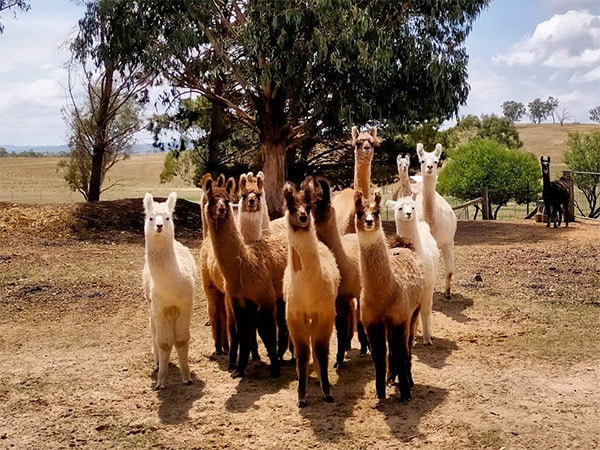
Canberrans, this one is for you. While this campsite is technically located just across the ACT border in NSW, it is only a 30-minute drive from the Canberra CBD. And you’ll be warmly welcomed by fields of alpacas, llamas, donkeys, and miniature cattle studs.
The gently rolling hills and seemingly endless grasslands also play host to an adjoining campsite that is available to book through hosting platform HipCamp. It is suitable for self-sufficient campers – which means BYO water, toilet and shower amenities – who leave no trace.
The views on offer at Alpaca Magic Stud are essentially in the name – fields upon fields of peacefully grazing animals. But if the view alone isn’t enough to entice you, book into one of the many workshops on offer: Conversations with Cows, Breakfast with the Alpacas & Llamas, Needle Felt workshops, Fleece Spinning workshops, and the very popular Llama Walking Experience.
First Sun Caravan Park, Byron Bay, NSW
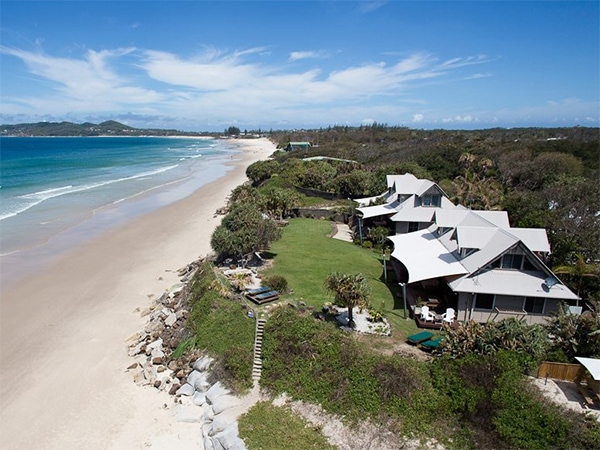
Cape Byron is the most easterly point of Australia’s mainland, and First Sun Caravan Park reaps the benefits of its plum position on the foreshore of Byron Bay’s main beach. Let’s just say you’re guaranteed to be the first to witness the sun each day.
For the most part, guests are also treated to unobstructed views of the ocean with sites located right alongside the beach. Yet, you’re also within strolling distance to all the major attractions, so you won’t skip a beat.
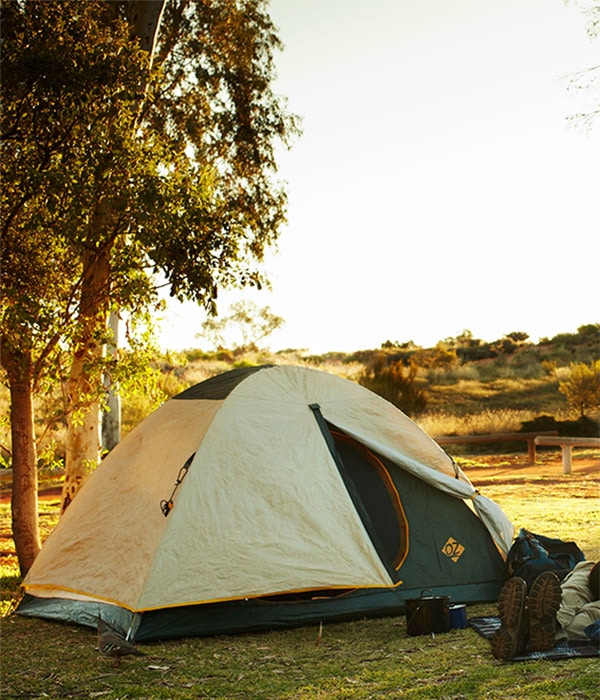
Uluru-Kata Tjuta National Park, NT
With its remote desert location, deep cultural significance and spectacular natural beauty, Uluru-Kata Tjuta National Park is home to one of Australia’s most unforgettable attractions – and, without a doubt, offers one of the best campsite views in the world.
Due to Uluru’s cultural importance to the local Pitjantjatjara and Yankunytjatjara people, the closest you can camp is 15 kilometres away in Yulara at the Ayers Rock Campground. But don’t worry, it isn’t called The Rock for no reason, you will still be treated to jaw-dropping views from this distance.
In addition to its grassy campsites, you’ll also have access to a swimming pool and it’s a great place to base yourself to explore the park’s numerous walking tracks, rockpools and Aboriginal rock art sites. It’s worth allowing a couple of days to explore and observe the changing moods of the Rock.
Arkaroola Wilderness Sanctuary, Flinders Ranges, SA
The rugged mountains that rise above grassy plains to form the Flinders Ranges are more than 600 million years old. The Aboriginal Dreamtime stories that tell the tale of how this area was created have been passed down between generations for more than 40, 000 years.
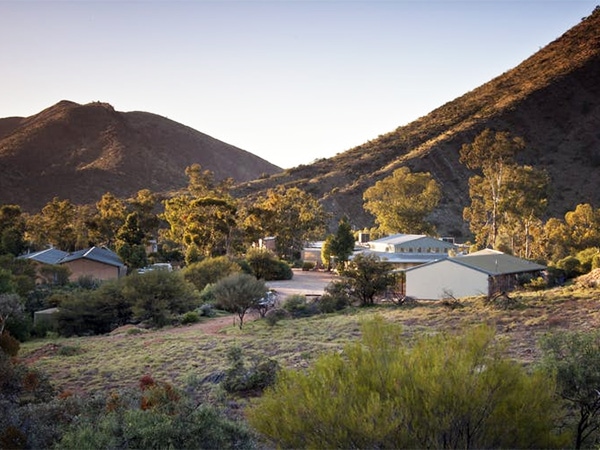
In the northern part of this epic location, you’ll find Arkaroola Wilderness Sanctuary. Its campsites deliver some of Australia’s most spectacular mountain views and offer numerous eco-tourism-accredited guided tours.
Whether you love birdwatching, bushwalking, geology, wildlife spotting or 4WD adventures, this wilderness sanctuary offers a multitude of activities for the outdoor enthusiast. They even have three fully equipped observatories, so you can get an even closer look at the incalculable number of stars at night.
Lucky Bay National Park, WA
Gone are the days of paying top dollar to sit around an overcrowded resort: your own personal paradise awaits at Lucky Bay.
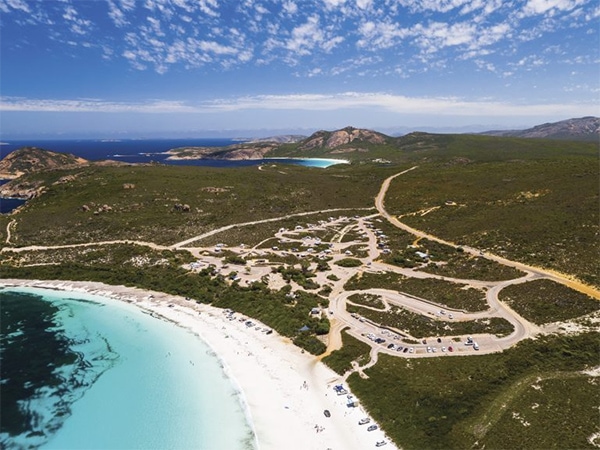
You’ll find Lucky Bay just past Esperance in WA’s far south, and the campsites, which are situated almost on top of the sand, couldn’t offer more luxurious views: lush, turquoise waters lapping at gloriously white sand, a dramatic framing of rocky outcrops and beach-going kangaroos lazing about in the sunshine (yes, really).
Swim, fish or opt for a bushwalk on one of the many trails that wind through the park past freshwater pools and a dazzling blanket of wildflowers (if you happen to be there in spring). Or just sit and marvel at the beauty of the natural world. Bliss!
Monkey Mia Dolphin Resort, Monkey Mia, WA
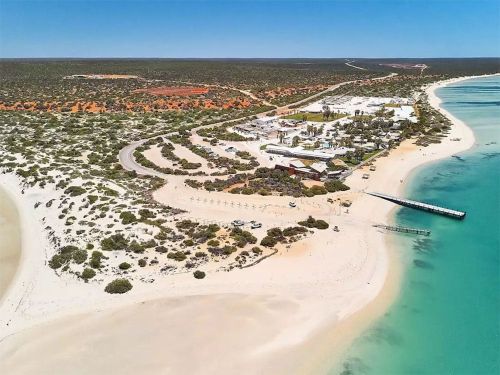
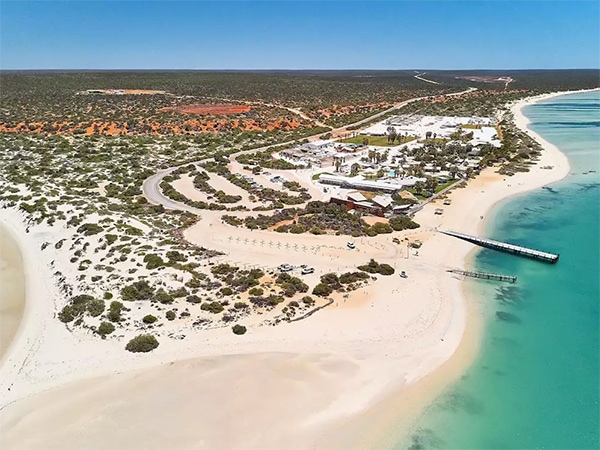
Monkey Mia is one of those rare places in Australia where dolphin visitation is daily, rather than seasonal, and the Monkey Mia Dolphin Resort offers a human-dolphin interaction program for free. This absolute beachfront camping resort is in the heart of the Shark Bay World Heritage Area. Spend your day’s snorkelling or boating in crystal clear waters, partaking in a camel ride or an Aboriginal Cultural Walk.
Green Patch, Jervis Bay, NSW
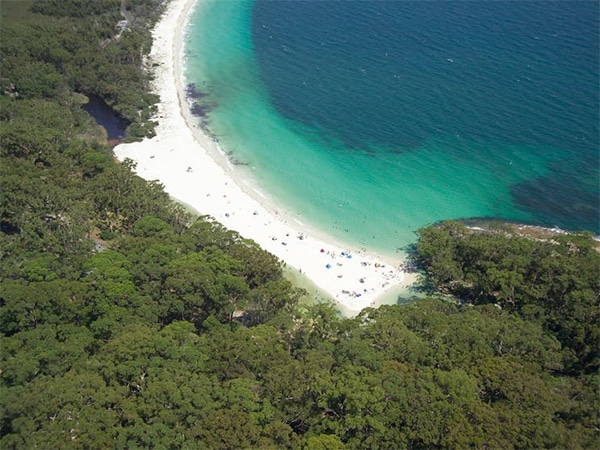
The campsites at Green Patch book out months in advance, so don’t delay. Find it tucked away in Booderee National Park in Jervis Bay on the NSW South Coast. The lucky few who get in early can expect white sandy beaches, crystal clear water, and kangaroos bounding in the distance.
The neighbouring beaches are perfect for swimming and sun-worshipping, while nearby bushwalking trails deliver several shaded picnic spots to sit and enjoy a meal with a view.
Bathrooms, hot showers and water are all in ready supply, as are barbecues and wood fireplaces – so bring plenty of supplies for a barbie under the stars and a nighttime bonfire. And don’t forget the wine.
Tidal River, Wilsons Promontory, Vic
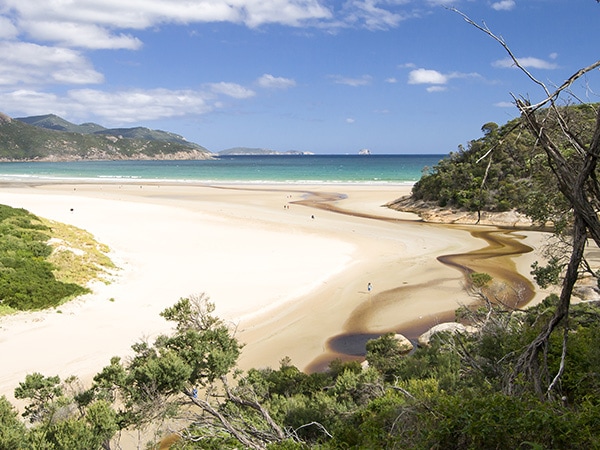
Wilsons Promontory is one of Victoria’s favourite national parks for good reason. The Prom’s main hub is the family-friendly Tidal River Campground (named for the tea tree-stained waterway that curls lazily around it), which offers family-friendly campsites and huts. You’ll need to book ahead, especially in peak season.
All modern amenities are available including hot showers, dish-washing stations, toilets and picnic spots with free gas barbeques.
Lizard Island National Park, Qld
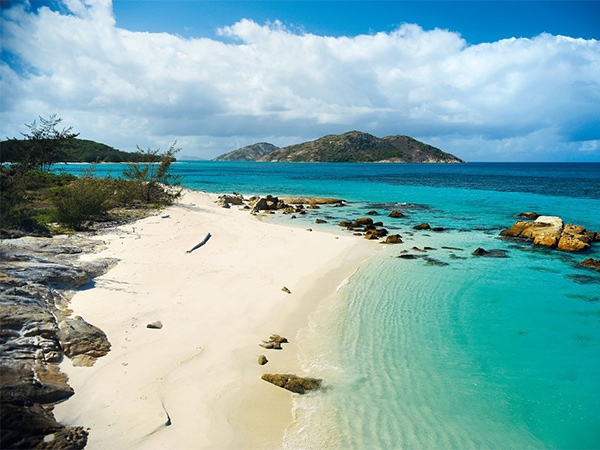
A room at Lizard Island resort could set you back $2000 a night – or, you could pitch a tent next door for less than $7. As far as facilities go, life on Lizard is pretty minimal. Campers must be self-sufficient in food, water, shelter and first-aid equipment. No supplies are available on the island but visitors are welcome at the resort’s Marlin Bar (although it is not open every day).
Camping on one of Australia’s most northern island’s guarantees easy access to the Great Barrier Reef. Nowhere else can a holidaymaker enjoy its spoils so freely and completely. On any other island, you’re confronted with a 90-minute journey from sand to coral. On Lizard, underwater gardens are within a minutes’ walk from your tent.
Karlu Karlu/Devils Marbles Conservation Reserve, NT
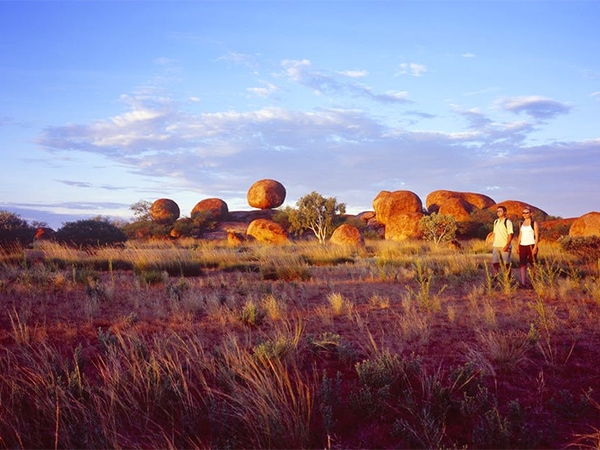
Spend a night or three here, and you’ll enjoy unparalleled views of one of Australia’s most extraordinary natural attractions: the Devils Marbles.
These huge, granite boulders scattered across a dramatic ochre-coloured landscape set the scene for the ultimate desert sojourn. Get ready to fall in love with the colours, sights and gentle solitude of the area.
You’ll need to bring your own drinking water, as well as firewood to kindle evening flames – as the temperature can drop dramatically at night.
Talia Caves, Eyre Peninsula, SA
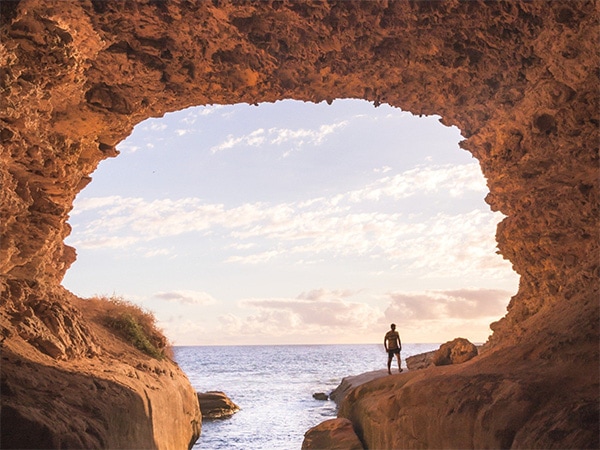
Camping on the Eyre Peninsula feels like you’ve pitched a tent on the edge of the world. Spending a night surrounded by rugged sandstone cliffs, empty beaches and eroded caverns is to experience the country at its most ruggedly beautiful and charming best.
Talia Caves Campground more than does the job. It comes without toilets or water, but 20 sites for bush camping. Pass the time by fishing, or simply by gazing at the beauty of the coastline. As a bonus, you can pitch your tent and watch the sunset over waters that, further west, are pounding against the Great Australian Bight.
Jan Juc Caravan Park, Great Ocean Road, Vic
Considered to be one of the world’s most scenic coastal drives, Victoria’s Great Ocean Road gives you the opportunity to see the iconic 12 Apostles, get up close to native wildlife, and take in iconic surf breaks, pristine rainforests and misty waterfalls.
The natural beauty of this area draws visitors from far and wide. To truly drink in the stunning scenery, pitch a tent at the Jan Juc Caravan Park . And if you also want to check out the world-famous Bells Beach surf break, the park is as close as you can sleep to the action. There are barbecues, powered and unpowered campsites and cabins available.
Freycinet National Park, Tas
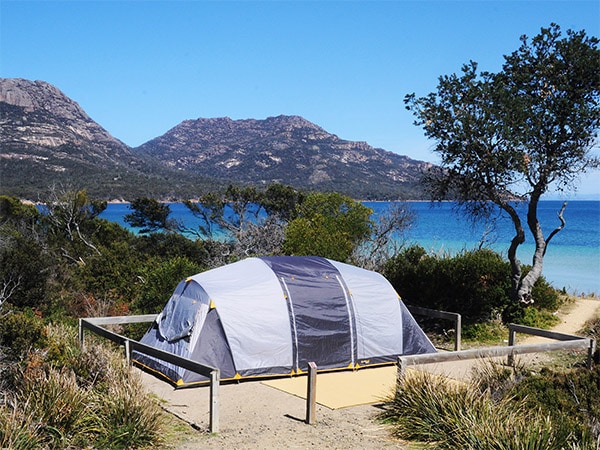
It’s no secret that Freycinet National Park is home to some of Tasmania’s most incredible camping spots, which may explain why you have to enter a ballot system to camp during peak times (Easter and Christmas).
Pitch a tent here to wake to breathtaking ocean views. Your days will be spent exploring the beautiful bays: Honeymoon Bay, Sleepy Bay and Wineglass Bay – with the panoramic views of wondrous Wineglass Bay the main drawcard for visitors.
For more camping holiday inspiration, head here.