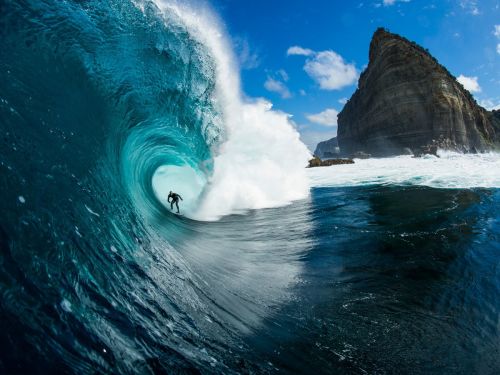
Australia’s 12 best surf breaks you can’t miss this summer

hero media
Looking for a new summer holiday destination to get your surf fix? These 12 surf breaks have you covered.

Some of the best surf breaks in the world are right here in Australia. In fact, there are some Australian towns that may not have been established were it not for the presence of barrelling waves and the surfers who travel far and wide to find a magical break. Here’s our guide on the top 12 best surf breaks around Australia, be it in a thick neoprene wettie, or boardies and bikinis.

Qld

1. Noosa, Queensland

No guide to Australia’s best surf breaks is complete without including Noosa, which became the 10th World Surf Reserve in 2020.

There she is, made up in green eye shadow, giving surfers the ‘come hither’ with her voluptuous curves that wrap around five kilometres of coastline from the mouth of the Noosa River to North Sunshine Beach.

All up, Noosa offers five world-class point breaks and three consistent beach breaks that everyone from learners to champions are comfortable with.

Sit by the sea and spectate or sign up to compete in The Noosa Festival of Surfing which scores extra points for offsetting more than 100 per cent of the carbon emissions produced as a result of the 10-day event held annually in March.
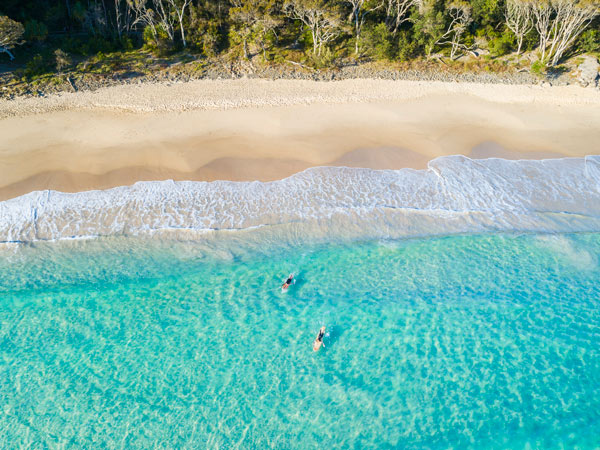
Two surfers paddling out to surf at Noosa Heads
Noosa offers five world-class point breaks and three consistent beach breaks. (Image: Tourism and Events Queensland)

2. Agnes Water

Agnes Water is not on most surfers’ radars, which makes it appealing for beginners and those who want to surf waves that are rarely crowded. It’s probably most well known for being the most northerly beach on the East Coast of Australia to attract swell served up by the Tasman Sea.

The best season to surf at the exposed point break in Agnes Water is summer and autumn when the wind direction is from the southwest. Forgo the wetsuit as the warm water makes surfing in boardies and bikinis doable.

Like the waves in Agnes Water, the pace of the place is slow, which means you can simply enjoy taking in Kellys Beach and Rules Beach along this stunning stretch of coastline, located on the southernmost point of the Great Barrier Reef.
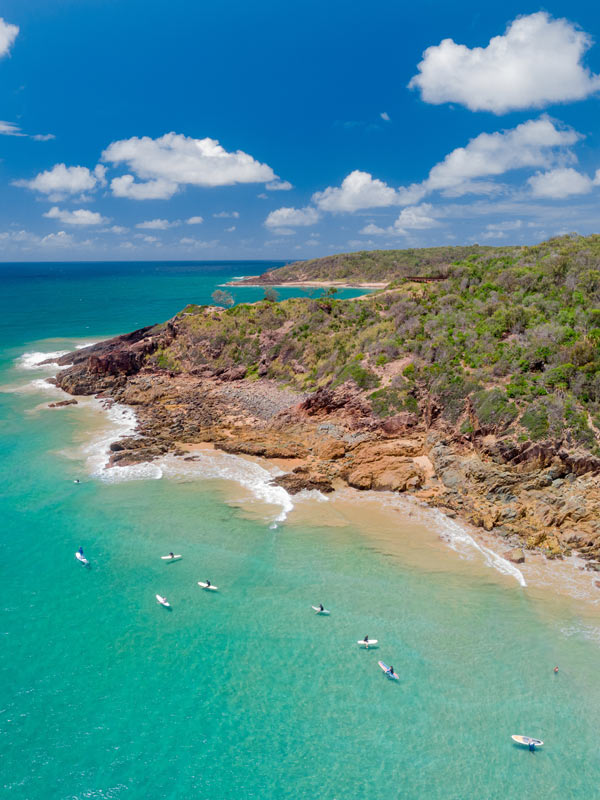
Surfers waiting for a surf break at Agnes Water Main Beach in Queensland.
The best season to surf at the exposed point break in Agnes Water is summer and autumn. (Image: Tourism and Events Queensland)

Tas

3. Shipstern Bluff, near Nubeena

This heavy break is for experienced surfers only. Named after the headland that towers above it like the prow of a ship, its remote location ensures that the crowds are kept to a minimum. Which is just how Tassie local Shaun Wallbank and his mates like it.

For decades, the wave he describes in Lonely Planet’s Epic Surf Breaks of the World (Lonely Planet, $44.99) as a man-eating leviathan, seemed more of a myth than a reality to mainlander Australians.

That all changed on a big southwest swell, on a low tide when Tracks magazine turned up with a photographer in tow and put the hellish righthander on the radar of surfers from around the world. Although the wave’s location, southeast of Hobart, was never disclosed, the secret was out attracting intrepid surfers to the ‘wave at the end of the world’ ever since.

The most defining feature of Shippies, according to Wallbank, is the ‘step’ which is what usually brings surfers undone as they try to take the drop.
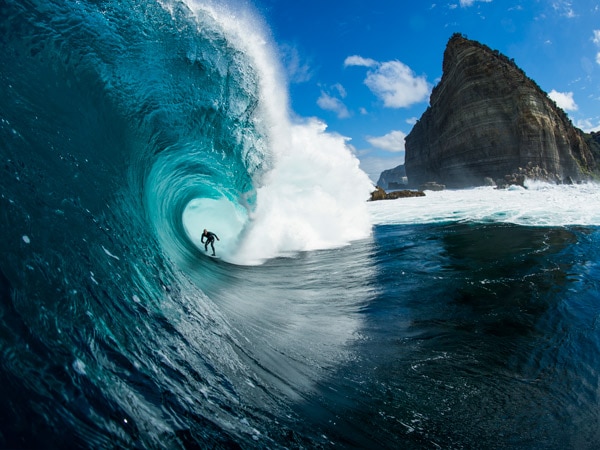
Man surfing a wave at Shipstern Bluff in tasmania
Shipstern Bluff is for experienced surfers only. (Image: Stu Gibson)

4. Martha Lavinia, near Currie, on King Island

Surfing doesn’t get any more scenic than while riding the coast of King Island, Tasmania, in the Bass Strait. This perfect A-frame wave is one of the best surf breaks in Australia and is formed as the swell wraps around both sides of the island, like curved parentheses.

This beautiful beach break is named in honour of the 52-tonne schooner, Martha Lavinia, which was wrecked on the reef in 1871.
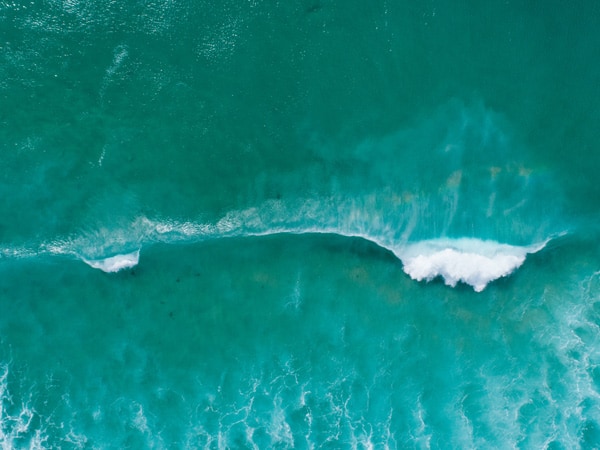
Drone shot of waves crashing at Martha Lavinia Beach on King Island in Tasmania
Surfers seek out this stretch of coastline. (Image: Stu Gibson)

Surfers seek out this stretch of coastline as much for its natural beauty as its barrelling beachie. The island is a drone photographer’s dream inlaid with the jewel that is Pennys Lagoon, one of the only perched lakes in the world. Book your flight to King Island when there’s a south-westerly on its way and camp on the beach under the stars. BYO 4/3 wetsuit and booties as it’s pretty close to Antarctica , the coldest continent on Earth.
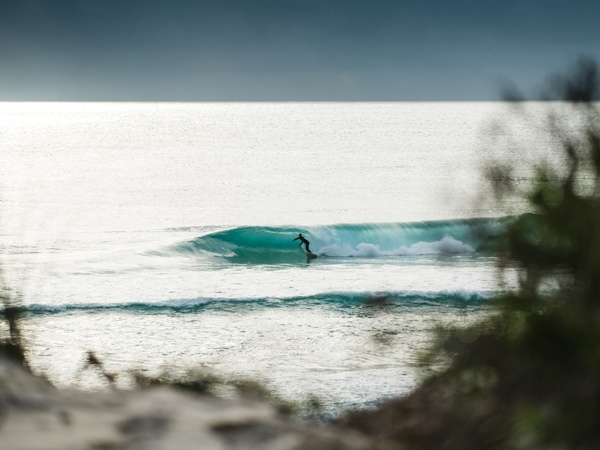
Surfing waves at Martha Lavinia Beach in Tasmania
Surfers seek out this stretch of coastline. (Image: Stu Gibson)

NSW

5. Black Rock (Aussie Pipe), Jervis Bay

Wreck Bay, also known as Black Rock, Summercloud Bay and Aussie Pipe, is featured in the book, The Pilgrimage: 50 Places to Surf Before You Die. While most surfers would probably avoid a book that had both ‘surf’ and ‘die’ in the title, this is somewhat of a bible for big-wave surfers from around the world.

Wreck Bay, located on the rugged edges of Booderee National Park, is where you will find Aussie Pipe which, when it’s firing, challenges even the most experienced surfers. Hands down one of the best surf breaks in the state.

The beachside haven is run by the Wreck Bay Aboriginal Community Council in Booderee National Park and the surrounding landscape remains very sacred to its Traditional Owners. Booderee means ‘bay of plenty’ and there are certainly waves aplenty here in the autumn and spring.

This is for experienced surfers only when the barrelling waves are at their best but if you hit a flat spell, there’s plenty more to do on the NSW South Coast.
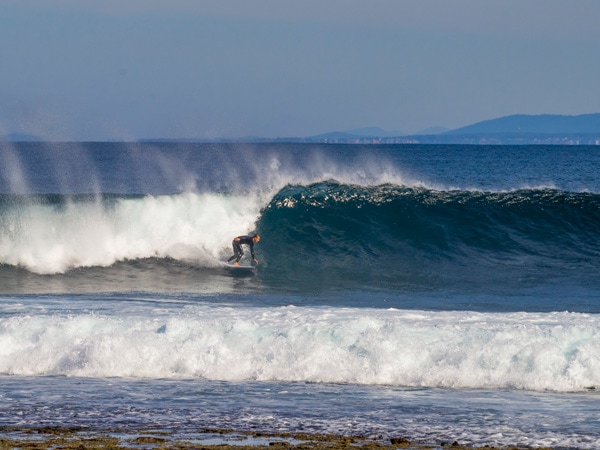
Surfer surfing waves at Wreck Bay in NSW
Wreck Bay is challenging for even the most experienced surfers. (Image: Dee Kramer)

6. Gaire Beach, near Heathcote

Garies is an exposed beach and reef break that is a swell magnet for much of the year. Located next to the town of Helensburgh, north of Wollongong and south of Cronulla, the break is popular with Shire locals, some of whom are lucky enough to have quirky holiday cabins at Little Garie, just around the headland. Head here when the winds are from the north northwest to get Garie at its best.

Garie Beach is a bit of a gem in the Royal National Park and is also popular with Sydneysiders who want to swim and fish, as well as surf. If you hike along the coastal track, you will discover lots of sandy outposts to stop at and picnic post-surf.

The region’s natural beauty is preserved here in Australia’s first national park, just a 20-minute drive from Bundeena, one of our best summer beach towns, where you will find pristine pools, rocky white cliffs, canyons and caves.
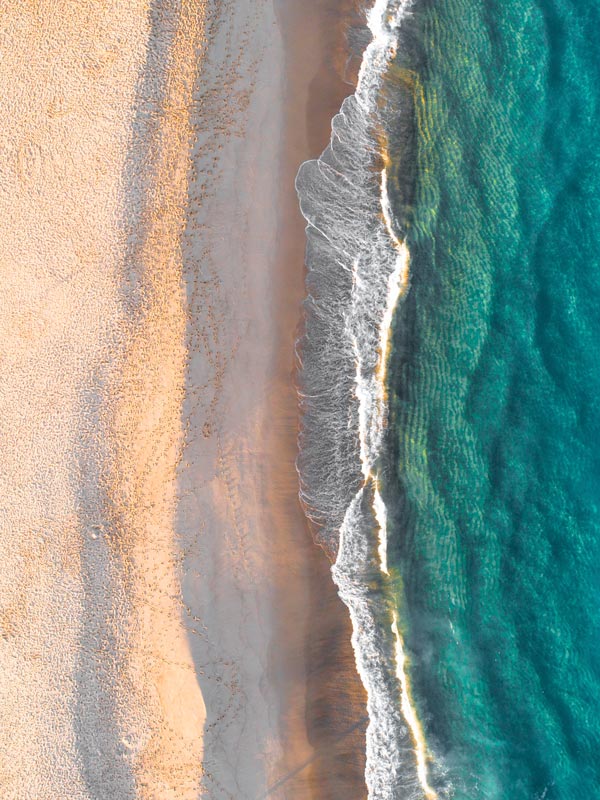
Drone aerial shot of Garie Beach in NSW
Garie Beach is a gem in the Royal National Park. (Image: Adam Krowitz)

WA

7. Red Bluff, near Beagle Bay, WA

Surfers in southwestern WA are known to drive for up to six and half hours from Perth to Red Bluff when they see a weather front forecast to roll in.  And arriving here as the sun puts a marigold light over the rugged red cliffs and the sea is creased with horizontal wrinkles is 100 per cent worth the epic road trip, considered one of the best in WA.

Red Bluff is a perfect lefthander, a wave that was pioneered by surfers from Margaret River in the 70s and remains the preserve of experienced surfers only. The wave starts breaking at about 4ft and holds up to a meaty 10ft as it thunders along a stretch of reef in the Indian Ocean.

The dramatic coastal cliffs around Red Bluff and the fact it’s located on a stretch of coast dubbed the humpback highway add to the allure of this sought-after surf spot.
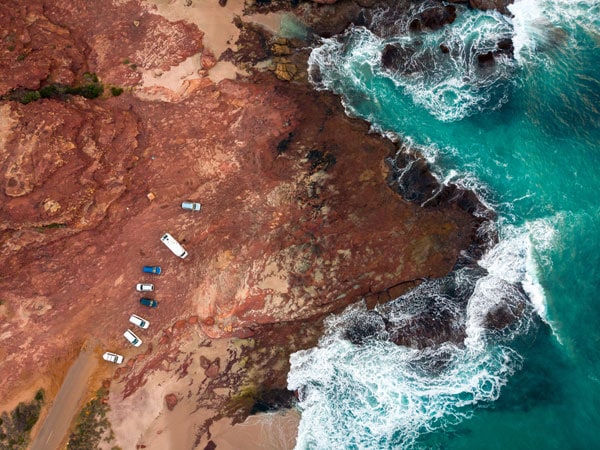
Drone shot of Red Bluff cliffs contrasting with the water.
The dramatic coastal cliffs around Red Bluff add to the allure of this sought-after surf spot. (Image: Tourism Western Australia)

8. Margaret River

This hippie town has been drawing discerning surfers to Australia’s Wild West for decades. Most of the surfers in the line-up are long-term locals who surf gnarly waves, and commune in the car park to shoot the breeze, before and after the dawn patrol. There’s also a sprinkling of salty-haired crypto bros, and #vanlifers road-testing their digital nomad fantasies.

It’s like a composite scene, collaged together from Tik Tok stills and old surf mags.

There are wineries to visit and humpback whales to watch out for in the season in seas that appear to have been lacquered blue.

Located 290 kilometres south of Perth, Margies is the affectionate local term for Margaret River Main Break and is for experienced surfers only. Bring a quiver of surfboards to tackle Surfers Point Beach, where walls of water can reach 25ft.
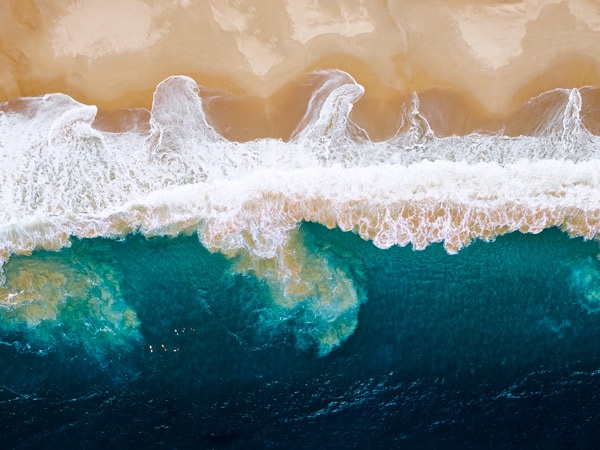
Aerial shot of Wyadup Rocks Injidup
Margies is the affectionate local term for Margaret River Main Break. (Image: Tourism Western Australia)

Vic

9. Ocean Grove, The Bellarine

Get in the surf groove at Ocean Grove, located in Greater Geelong & The Bellarine, located just over an hour southwest of Melbourne via the Princes Highway. If you’ve got non-surfers in the family and want another reason to visit Ocean Grove beyond the surf, you’ll find the popular beachside town surrounded by world-class wineries, pristine beaches and golf courses.

Book a lesson with an instructor at the local learn-to-surf school, Surf Sessions, who can be heard cheering on their students against the rumble and roar of the ocean at Ocean Grove main beach, where conditions are more often than not ideal for surfing lessons.

Check out the webcam on Magic Seaweed to see the swell and wind forecast before choosing a local break such as Thirteenth Beach, Quarantines and Point Londsdale.
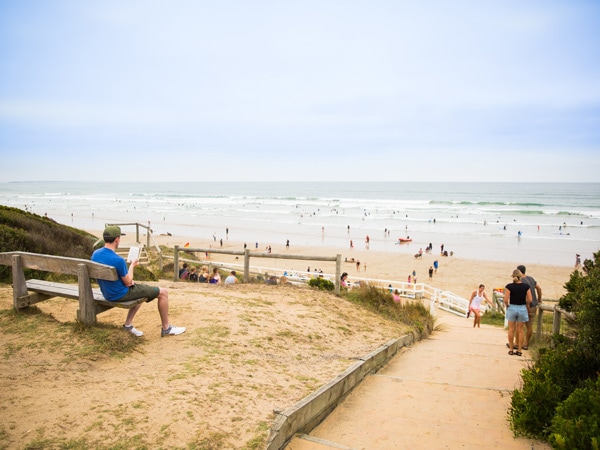
Wide shot overlooking Ocean Grove in Victoria
Book a lesson with the local learn-to-surf school at Ocean Grove.

10. Bells Beach, near Torquay

Pack your thruster. You’re gonna need it when Bells is firing. You’ll find the best conditions for this iconic right-hand reef break, made famous thanks to world-class events such as the Rip Curl Pro are found between April to September when low-pressure Southern Ocean storms start rolling toward the coast. Best wind directions range from the northwest to northeast, with low tides generally best.

Bells was a bucket-list wave well before it was referenced by Patrick Swayze’s character Bodhi in the climactic scene in Point Break where he paddled to his demise while chasing the famed 50-year swell. Fun fact: it wasn’t even filmed there.

But Bells was well known by the Traditional Owners of the land, the Wathaurong people, who are actively involved in the Australian Indigenous Surfing Titles, which are held here every year. When it’s working, Bells is one of the best surf breaks on the land. But it’s known for being inconsistent; if it’s not breaking, there are plenty of other attractions along the Surf Coast.
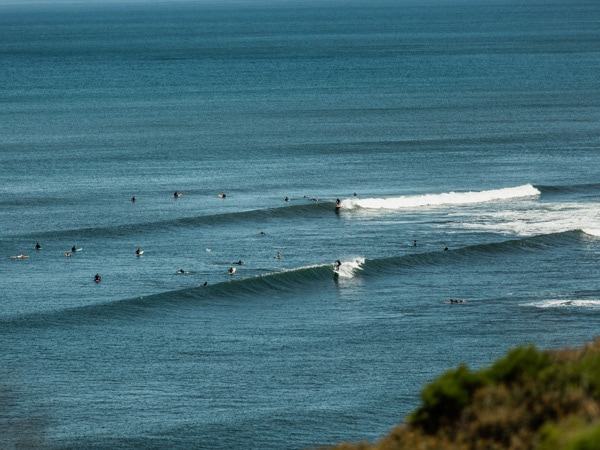
People surfing at Bells Beach in Victoria.
Bells Beach is a bucket list surf spot.

SA

11. Cactus Beach, near Penong

Head to Cactus Beach for dusk, when the sun is like a piece of polished amber, and you’ll likely find a few prickly locals making the most of the onshore conditions. The waters of the Southern Ocean off the Eyre Peninsula are brisk, to say the least, so bring an extra-thick wetsuit and a few extra blankets to build a nest in the sand post-surf.

Cactus is on the east side of the Great Australian Bight, some 870km northwest of Adelaide, and is a dream when the wind is funnelling in from the east-northeast.

While this is considered a special place for surfers, it’s a sacred place to the Wirangu Aboriginal people, who are the Traditional Owners of the land.

The area was declared a national surfing reserve in 2012. What better way to break up a road trip across the Nullabor Plain than to score a few waves at Cactus, Caves and Castles?
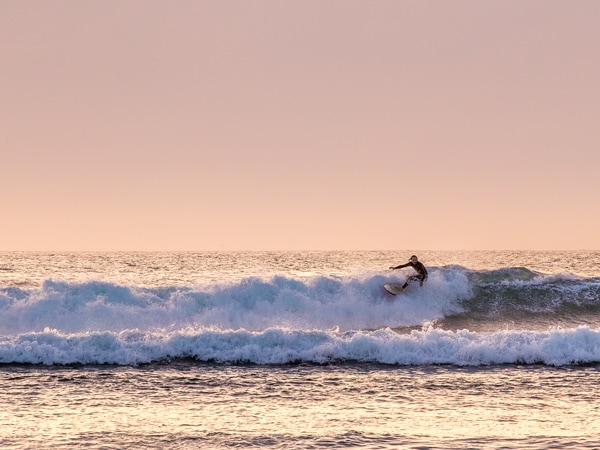
Surfing the waves at Cactus Beach in South Australia
Cactus Beach is a sacred place to the Wirangu Aboriginal people. (Image: Michael Waterhouse Photography)

12. Kangaroo Island

Kangaroos outnumber humans on Kangaroo Island, which is just one of many reasons it’s a popular spot for tourists. And while the food and wine scene is the main draw for visitors, KI is also known for its killer surf.

The south coast of the island gets hammered by swell year-round, but it’s so isolated it appeals to adrenalin-seekers only.

A flanno counts as formal wear on KI and it’s worth heading to one of the wineries, pubs, cafes or restaurants to make friends with locals who can steer you toward the best surf breaks and keep you company in the line-up.

Hanson Place is the holy grail for surfing, renowned as much for its epic swells as its rips and undertows. BYO Sharkbanz.
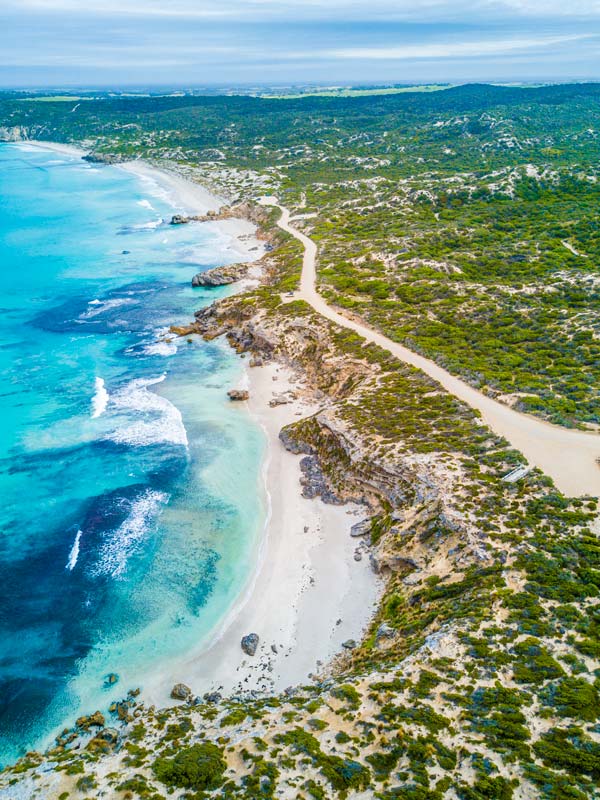
High shot of Pennington Bay on Kangaroo Island.
The south coast of Kangaroo Island gets hammered by swell year-round. (Image Isaac Forman)
Carla Grossetti
Carla Grossetti avoided accruing a HECS debt by accepting a cadetship with News Corp. at the age of 18. After completing her cadetship at The Cairns Post Carla moved south to accept a position at The Canberra Times before heading off on a jaunt around Canada, the US, Mexico and Central America. During her career as a journalist, Carla has successfully combined her two loves – of writing and travel – and has more than two decades experience switch-footing between digital and print media. Carla’s CV also includes stints at delicious., The Sydney Morning Herald, and The Australian, where she specialises in food and travel. Carla also based herself in the UK where she worked at Conde Nast Traveller, and The Sunday Times’ Travel section before accepting a fulltime role as part of the pioneering digital team at The Guardian UK. Carla and has been freelancing for Australian Traveller for more than a decade, where she works as both a writer and a sub editor.
See all articles
hero media

7 Kimberley experiences that need to be on your bucket list

From thundering waterfalls to ancient Indigenous art, Kimberley’s raw beauty will take your breath away.

Wild, pristine, and shaped by nature, the Kimberley Coast is one of Australia’s most spectacular landscapes. A remote and rugged frontier that remains a bucket list destination for many travellers. Its most breathtaking attractions – including Montgomery Reef, King George Falls and Horizontal Falls – are accessible only by sea or air, making a guided expedition cruise aboard Silversea’s luxury expedition ship, Silver Cloud, the ideal way to explore it.

From its intricate intertidal zones to ancient rock art, extreme tides and rare wildlife found nowhere else in Australia – or the world – this journey offers an unparalleled exploration of one of Earth’s last true wildernesses.

Why Silversea?

Silversea offers a 10-day expedition departing Broome, or an extended 16-day expedition voyage from Indonesia, including landings on the hidden gems of Palopo Sulawesi and Komodo. Accompanied by expert guides and specialists in marine biology, history and geology, guests gain a deeper understanding of the Kimberley’s dramatic landscapes, rich cultural heritage and extraordinary biodiversity.

Silversea offers one of the experiential travel industry’s leading crew-to-guest ratios. Along with all-suite accommodation (80 per cent with private verandah), 24-hour butler service, a swimming pool and four dining options. Silver Cloud also has an experienced crew of multilingual expedition guides and specialists in marine biology, history and geology to enhance your Kimberley Experience.

silversea cruise ship pool deck
Take a dip in the pool deck.

1. Koolama Bay

​​Before visitors see King George Falls, they hear them – a growing rumble in the distance, steady and foreboding as the Zodiac glides through the gorge, the sound echoing off sheer rock formations. At 80 meters tall, the twin cascades carve through the red cliffs, churning the waters below in a spectacular finale – but Koolama Bay holds secrets beyond its striking scenery.

Named after a ship that beached here following an aerial attack by Japanese bombers in World War II, the bay may seem desolate, yet it teems with life. With Silversea’s expert guides on their 10-day Kimberley itinerary, guests gain a sharper eye for its hidden wonders – rock wallabies darting across the cliffs, crocodiles lurking among dense green mangroves, and high above, the silhouette of a bird of prey circling the sky.

King George Falls at koolama bay excursion on Silversea Kimberley Cruise
Take a shore excursion to see King George Falls.

2. Freshwater Cove / Wijingarra Butt Butt

Connect with Country on a wet landing at Freshwater Cove, also known as Wijingarra Butt Butt. Considered one of the most special experiences on both the 16-day and 10-day Kimberley cruises, Silversea guests are welcomed by the traditional Indigenous custodians of the land, painted with traditional ochre, and invited to take part in a smoking ceremony.

Located on the mainland near Montgomery Reef, Wijingarra Butt Butt holds deep cultural significance to the local Indigenous community. Here, rock formations along the shore represent spiritual ancestors, and guests are guided to a nearby rock overhang filled with ancient art, where traditional owners share the stories and meaning behind these sacred paintings.

welcome to country on freshwater cove during silversea kimberley cruise
Take part in a smoking ceremony. (Image: Tim Faircloth)

3. Vansittart Bay (Jar Island)

Modern history, ancient culture and mystery converge in Vansittart Bay, which is also known as Jar Island. Here, the first thing to catch the eye is the dented, silver fuselage of a World War II-era C-53 plane – a striking relic of the past. Yet, the true cultural treasures lie just a short hike away where two distinct styles of Indigenous rock art – Gwion Gwion and Wandjina – can be found.

The Wandjina figures, deeply connected to Indigenous traditions, stand in stark contrast to the enigmatic Gwion Gwion (Bradshaw) paintings, which date back more than 12,000 years. Significantly different in form and style, the two different styles create a striking juxtaposition, offering a rare glimpse into the region’s rich and complex past.

aerial view of Vansittart Bay, See it in you Silversea Kimberley Cruise.
Explore ancient Gwion Gwion rock art at Vansittart Bay. (Image: Janelle Lugge)

4. Horizontal Falls

Part illusion, part natural phenomenon, the Kimberley’s much-lauded Horizontal Falls aren’t a waterfall, but a tidal and geographic spectacle that visitors have to see to comprehend. Known as Garaanngaddim, the phenomenon occurs when seawater rushes through two narrow gaps- one just twenty metres wide, and the other seven metres in width, between the escarpments of Talbot Bay.

With each tidal shift,  the force of the water creates whirlpools, furious currents and the illusion of a horizontal cascade as thousands of gallons of water are pushed and pulled in through the gap every six hours with relentless movement, making this one of the Kimberley ’s most mesmerising natural wonders.

Horizontal Falls are described as "One of the greatest wonders of the natural world". They are formed from a break in-between the McLarty Ranges reaching up to 25m in width. The natural phenomenon is created as seawater builds up faster on one side of the gaps than the other, creating a waterfall up to 5m high on a King tide.
Watch whirlpools and furious currents collide. (Image: Janelle Lugge)

5. Montgomery Reef

As the tide turns in Montgomery Reef, magic happens. With the Kimberley’s legendary tides varying up to ten metres, at low tide the submerged reef almost appears to rise from the depths: exposing up to four metres of the sandstone reef.

The impact is otherworldly: as the water drains, waterfalls cascade on either side of the channel,  turtles left exposed scramble and dive, and fish leap in search of sanctuary in shallow pools. Meanwhile, the dinner bell rings for the migratory seabirds dugongs, reef sharks and dolphins that scavenge and feast in the area.

Using zodiacs, guests cruise through one of the world’s most significant inshore reef systems navigated by experienced guides, exploring the most intricate and fascinating parts of a 300-square-kilometre-wide biodiversity hotspot.

aerial view of boat going along Montgomery Reef
Witness seabirds, dolphins and reef sharks on the hunt.

6. Mitchell Falls by Helicopter

Experiencing the Kimberley by sea allows you to feel the power of the tides, but travelling by helicopter reveals the sandstone tapestry of the Kimberley, a landscape geologists believe is over 1.8 billion years old.

One of Silversea’s most popular optional excursions , guests who opt to fly into the interior from the onboard helipad soar up above the rust-coloured landscape of the Mitchell plateau, taking in one of Australia’s most scenic waterfalls: Mitchell Falls, a series of four emerald-coloured pools gently cascades into each other, before plunging down to the river below.

Seeing the landscape from above reveals a landscape weaved and shaped by the power of the freshwater wet season, juxtaposed to the constant lapping of the relentless and powerful tide on the coast.

aerial view of mitchell falls on silversea helicopter excursion
See emerald pools cascade into the river below. (Image: Tim Faircloth)

7. Indigenous Art Caves, Wandjina Art

The Kimberley Region of Western Australia is home to some of the most striking and significant

Indigenous rock art in Australia. Dotted throughout the landscape are caves, cliffs and rock overhangs depicting the striking, ethereal image of Wandjina, the rainmaker spirit and creation being central to many of the Dreamtime stories in this region.

Some of the paintings are regularly repainted by traditional custodians, while others are believed to be over 4,000 years old. Each artwork serves as both a cultural record and a living connection to the past, offering a rare opportunity to engage with the enduring traditions of the Kimberley’s Indigenous communities.

Freshwater Cover Rock Art the kimberleys
Walk among cultural records preserved in stone. (Image: Tim Faircloth)

See the best of this incredible part of the world on a Silversea Kimberley cruise. Book your 10- or extended 16-day expedition voyage at silversea.com